
Bitunix card reviewed: a virtual USDT-to-USD Visa with no fees, but a narrow audience
 Available in US
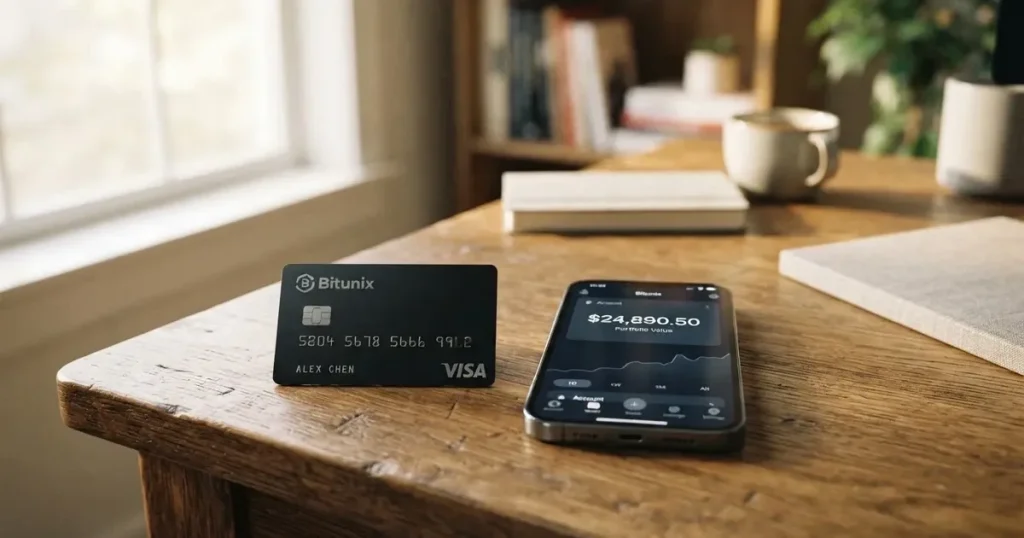
The Bitunix card is a virtual Visa that pulls from a balance you fund with USDT. If you already trade on Bitunix, the card is a tidy way to spend that balance online or in stores without first cashing out to a bank. If you do not, the card has very little to offer: it is virtual only at launch, it accepts one cryptocurrency on one funding route, and the company behind it is an exchange that critics have flagged for account freezes and slow support. The card has no issuance fee, no monthly fee and no annual fee, and the cashback it pays can be generous if you are a high-tier VIP, but most of the other advantages are conditional. I give it 5.3 out of 10.
These terms reflect what the Bitunix help center, the card agreement and the public Bitunix pages say, and they are current as of October 28, 2026.
Verdict
Bitunix positions this as a payment card for people who hold USDT on its exchange. The shape of the product lines up with that. Funding only from the Bitunix Spot, Futures or Earn accounts; the card sits in the Bitunix app; cashback rates climb with your exchange VIP tier. Anyone who already lives inside the Bitunix ecosystem will recognise the logic. Anyone who does not is being asked to adopt an exchange account just to use a prepaid card, and the exchange side of Bitunix has a mixed record.
The following scorecard summarises the key criteria for the card.
| Criterion | Mark | Reason |
|---|---|---|
| Who can get it | 7 / 10 | Open in many places, closed in 80 named countries and regions, and the list is described as not exhaustive. |
| Cost | 6 / 10 | No issuance, monthly or annual fee, but a 1.5% FX markup, a 0.5% cross-border fee on USD spending, a small inactivity fee after 12 months and platform-level limits on WeChat Pay and Alipay. |
| Top-up options | 3 / 10 | USDT only, moved internally from Spot, Futures or Earn — no direct blockchain deposits, no other coins, no bank funding. |
| Reliability and complaints | 4 / 10 | Company is Blue Rock Management Pte. Ltd.; the card issuer and licences are not named; the exchange has a 3.7/5 Trustpilot and reports of account freezes. |
| Everyday use | 5 / 10 | Virtual Visa only at launch, but it works with Apple Pay, Google Pay, WeChat Pay, Alipay, PayPal and others; no ATM access in this version. |
| Total | 5.3 / 10 |
The audience that fits best is narrow: Bitunix exchange users who already hold USDT and want to spend it online. Everyone else will get a better experience from a more general card, and I cover those in the alternatives section below.
Who will they give you the card
Bitunix publishes a restricted-jurisdictions list in its help center. The list contains 80 countries and regions and the help center warns that it is not exhaustive (“may include”). The named entries include the United States, Canada, France, Turkey, Ukraine, Singapore, Hong Kong, China, India, the United Arab Emirates, Cyprus, Serbia, Armenia, Kyrgyzstan, Tajikistan, Brazil, Israel, the Russian Federation and Belarus, among others. If your country is on that list, you cannot apply, and the rule is set by country of residence, not by citizenship, so living somewhere on the list is enough to disqualify you even if you hold a passport from a country that is not.
If your country is not on the list and not otherwise excluded, you can apply. Before that, you must complete identity verification including your residential address. The card agreement says KYC and a confirmed residential address are required, but the help center stops short of naming the specific documents, the minimum age or how long review takes, and a separate article lists the exchange’s general KYC levels without giving the card’s own tiers.
In practical terms, the geography is wide but the list of permitted places is partial, and the application rules are thin. You find out whether you qualify by signing up and starting the verification flow, not from a clear eligibility page.
How to get it
The flow on the Bitunix help center is four steps: sign up, complete verification, apply, and on approval your virtual card is ready. There is no waiting for a card to be mailed, because the card is virtual only. The agreement confirms that issuance and replacement are free. A physical card is described as planned for a future phase, and the help center suggests delivery of 7 to 20 business days once the physical card is available, with fees depending on the delivery location. The card issuer is referred to in the agreement as “the Issuer” and is not named, and there is no separate card mobile app — the card lives inside the Bitunix app.
You need an account first, then verification, then the application itself. Because the card is virtual, the moment you are approved you have a card number, expiry and CVV that you can use online or load into a wallet. That is the whole onboarding story right now.
Fees: what it really costs
The headline fees are zero and that is genuinely true. Issuance is 0, the monthly fee is 0 and the annual fee is 0. The card-to-card story is not quite that simple, because the live charges live in the spread, the FX markup and a handful of small print rules.
| Fee or limit | Value |
|---|---|
| Card issuance | 0 |
| Monthly fee | 0 |
| Annual fee | 0 |
| Crypto conversion fee | 0 |
| FX markup | 1.5% over the Visa rate |
| Cross-border fee | 0.5% on USD spending |
| Small-amount fee | USD 0.30 per transaction for settlements under USD 10, first 3 per month waived |
| Inactivity fee | USD 1 per month after 12 months of no transactions |
| Card replacement | 0 |
| Card cancellation | 0 |
| ATM (current virtual version) | Not supported |
| ATM (planned physical card, unverified) | 2% on amounts over USD 100/month, first USD 100/month waived; daily limit USD 1,500, monthly USD 15,000 |
| Spend limit per transaction | USD 10,000 |
| Spend limit per day | USD 10,000 |
| Spend limit per month | USD 50,000 |
| WeChat Pay / Alipay | Their own 3% fee on transactions over 200 CNY |
A few realistic payments make the structure clearer. If you spend USDT on a USD purchase inside the United States, the conversion from USDT to USD is at 1:1 with no fee, but if the merchant settles in a currency other than USD you pay the 1.5% FX markup on top of the Visa rate, and if your card is treated as cross-border by the network you pay a further 0.5%. If you are buying through WeChat Pay or Alipay and the payment is over 200 CNY, the wallet itself charges 3% on top, which is not Bitunix’s fee but it does come out of your balance.
A USD 4 coffee at a foreign merchant, settled in a non-USD currency, will trigger the small-amount fee of USD 0.30 unless it is one of your first three such transactions in the month. The first three under USD 10 in a month are waived. A larger regular payment in USD inside the United States is essentially fee-free, ignoring any cashback. A payment in euros while you are in Europe will cost you about 2% across the FX markup and the cross-border fee, before any network and acquirer charges.
So the “free” label is only true for a particular shape of spend: USD, domestic, and above USD 10. Outside that shape, the small charges stack up.
Top up: how to fund the card
Funding is the card’s biggest constraint. The card accepts USDT, and only USDT. You move it from your Bitunix Spot, Futures or Earn account into a dedicated Card Account inside the same app, and the balance is shown in USD after a 1:1 conversion. From there the card spends that balance.
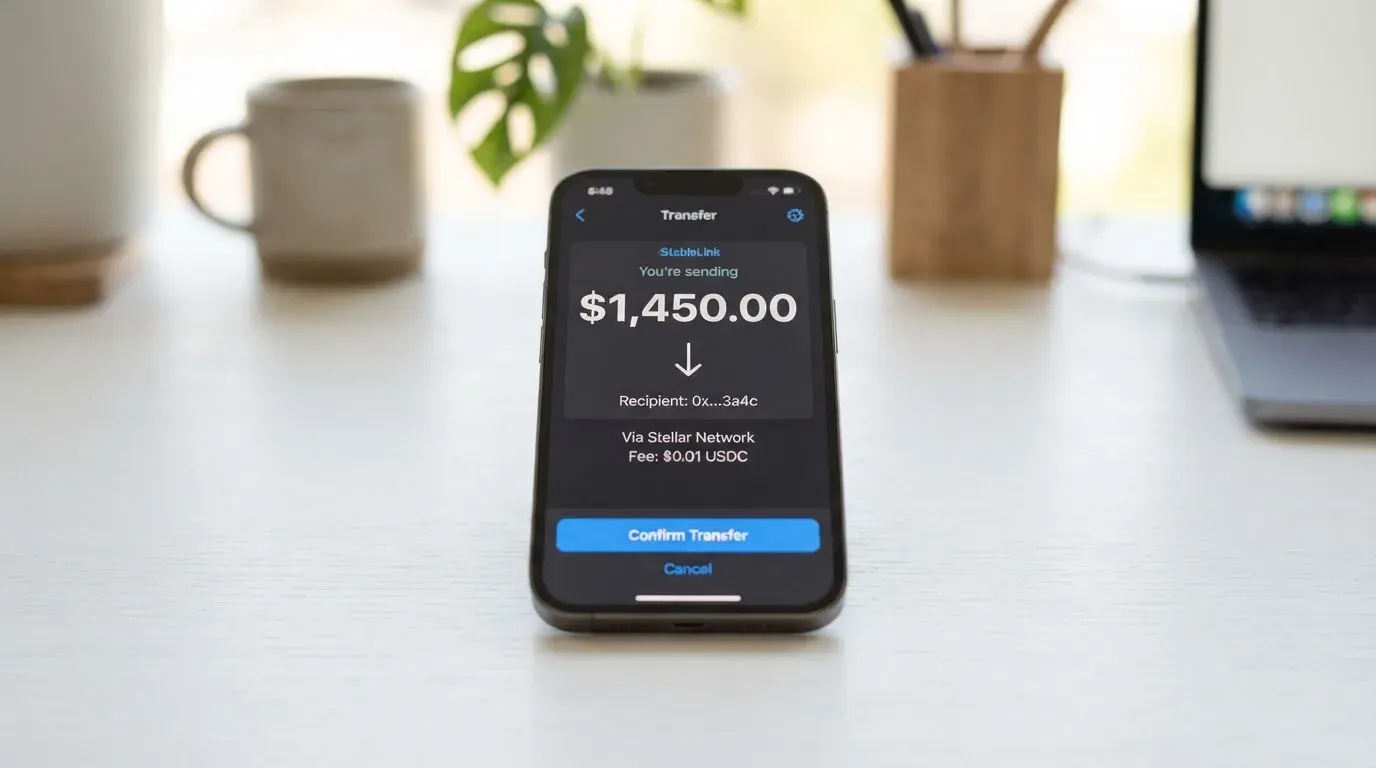
You cannot fund the card by sending USDT from an external wallet to a card address, and you cannot fund it with a bank transfer. Direct blockchain deposits to the card account are explicitly not supported, and there is no auto top-up from another balance. If your card balance runs out, the next payment is declined. The networks on which Bitunix accepts your USDT for this purpose are not stated, and the minimum top-up is not stated, so a user who wants to plan ahead has to discover the rules in the app.
The cashback you earn is paid back into the Card Account, and the help center says you can move that cashback to your Spot account and then withdraw it. The agreement does not describe moving the general card balance back out to your Spot account; it says a positive balance at closure is returned under applicable law and internal procedures, which may include identity verification, and may be held for a reasonable period to cover chargebacks. In other words, withdrawals out of the card balance are a narrow door today.
Paying with it every day
The card works anywhere Visa is taken online or in store, and it tokenises into the usual mobile wallets. The help center lists Apple Pay, Google Pay, WeChat Pay, Alipay, PayPal, LINE Pay, GrabPay and Samsung Pay, with the standard caveat that availability depends on the platform and on regional rules. There is no separate card app: the card sits in the Bitunix app, where you can freeze and unfreeze it, raise or lower limits, and review transactions.
Cashback is the feature Bitunix leans on, and it is paid in USDT back to the Card Account after settlement. The percentage depends on your exchange VIP tier: VIP 1 1%, VIP 2-3 2%, VIP 4-5 4%, VIP 6-7 6%, and VIP 8 8%. A company press release from July 2026 (an unofficial source, not a public Bitunix page) puts the headline figure at up to 8% cashback on eligible spending, capped at 1,000 USDT per month, and mentions yield “up to” 11.6% a year depending on the asset and conditions. I would not anchor decisions on that release: it is a press release, not the card terms, and the cashback table in the help center is the source that matters in practice. The release also says a referral reward is running until October 31. Cashback excludes refunds, chargebacks, cash-like transactions and certain merchant categories, and the full list of excluded MCCs is not published.
If something goes wrong, filing a dispute through the app is free; a formal Visa chargeback costs USD 50 per case, and the investigation can take several weeks and in some cases up to 90 days. Unauthorised transactions have to be reported within 14 days of the transaction or posting date. For a refund from a merchant the help center recommends contacting the merchant first, with refund turnaround of roughly 5 to 14 business days, and the card agreement does not guarantee chargeback rights and notes that cash-like transactions may be ineligible.
The card has no ATM access in this version. That is on the roadmap, but it sits behind a physical card that does not yet exist for most users.
What can go wrong
The main risks are not at the card level — they are at the platform level. The card agreement names Blue Rock Management Pte. Ltd. as the company behind the card, and the agreement’s “Last updated” line says 2026-07-22, but the issuer is called “the Issuer” throughout and is not named, and no licences are listed. That is unusual, and for a card product it is the kind of detail a reader should be able to find without asking.
The exchange itself has a mixed reputation. The Trustpilot profile for Bitunix reads 3.7 stars, with 819 reviews at the time of writing, 546 of them in the last 12 months. The same profile notes that the company “has received regulatory attention”. Recent reviews cluster around themes of account freezes followed by demands for additional verification, disputes over liquidations, and slow or blocked withdrawals. None of these complaints I read were about the card itself, but they are about the company that holds your USDT before you fund the card and that holds your card balance afterwards.
Other things to weigh:
- The card is USDT-only. If you hold BTC, ETH or anything else on Bitunix, you have to convert it to USDT before you can fund the card, and that conversion happens at the exchange rate on the Bitunix order book.
- The platform mix is wide (USDT to USD, then USD to local currency at the merchant) which means the final value of your payment depends on the exchange rate at the moment of conversion as well as the Visa rate and the FX markup.
- USDT itself is not a guaranteed 1:1 claim against the dollar in every circumstance, and although the card treats it as 1:1, the funding balance you are drawing from lives on a centralised exchange.
- Inactivity costs USD 1 a month after 12 months, and the help center does not say what counts as a “transaction” for that rule.
- The restricted-jurisdictions list is described as not exhaustive, so being in an unnamed country is not the same as being told you are allowed.
- The card does not have a deposit insurance guarantee, and the terms state that no entity assumes custody of fiat funds on the card on behalf of users. Card funds are not bank deposits.
- A USD 200 transaction triggers an email alert, and 2FA is recommended. The card can be frozen and unfrozen in Card Management or the app, and limits can be adjusted there as well.
This is a card backed by an exchange, and the risks of an exchange — freezes, slow support, regulatory questions — apply to the card too. Whether that is acceptable depends on how much you already trust the exchange, and for most readers that trust is something they will have to decide for themselves.
What to take instead
The honest case for the Bitunix card is the exchange tie-in. If that is not what you need, here are three alternatives that cover different ground. I keep these short and only flag the differences that matter, because the rest of each product is covered in its own review.
Young Card
- Score: 5.7 / 10
- Cashback is paid in YNG tokens and rises with the user’s Club tier: Essential 0.1%, Gold 1.8%, Platinum 3.6% (Bronze and Silver not stated on the public pages).
- The card is for users who want a token-denominated reward and are comfortable with a thin public fee schedule. Country availability, card type, fees and funding route are not stated on the official pages I could see.
Coinbase Card
- Score: 6.4 / 10
- Visa prepaid debit, virtual or physical, available in all US states except Hawaii; account opening follows the USA PATRIOT Act identity rules (name, address, date of birth, ID). No other countries are supported.
- Spends cash or crypto, and every crypto is converted to US dollars for purchases and ATM withdrawals. Coinbase states “zero spending fees and no annual fees”; a spread applies when Coinbase converts crypto at the moment of payment.
- Funded by linking a bank account or by direct deposit of part of a paycheck, with zero fees on those funding routes. Optional crypto rewards on every purchase, US Card users only, with the rate shown in the app and the user picking the asset from a rotating list.
OKX
- Score: 6.2 / 10
- Mastercard, euro-denominated virtual debit card linked to OKX Pay, available to users in the EU plus Norway as of 28 January 2026, with Iceland and Liechtenstein excluded (one source said “the entire EEA”, which is inconsistent with the country list). The card is issued via an unnamed European licensed payment provider, and a physical card is not mentioned in the public materials.
- The card has no fee per the May 2026 explainer; no transaction fee, no OKX FX fee, and a conversion spread of about 0.1% per the explainer (versus 0.4% in the launch press release, with the explainer being the newer source). Conversion to euro happens at the moment of purchase.
- Funding is USDC or USDG held in OKX Pay, either by converting other coins in-app or by an external deposit. There is no auto top-up and the payment is declined if the balance is insufficient. Cashback is paid only on USDG purchases, with tiered monthly caps in EUR; promos vary.
If you are inside the United States, the Coinbase Card is the most straightforward alternative, because it accepts multiple coins, comes with a clearer funding story and is regulated under US rules you can look up. If you are in the EU, OKX’s card is the most direct alternative and it is in euro, which removes the FX markup for eurozone spending. The Young Card is a different shape of product — a token-denominated reward with a thin published fee schedule — and it makes sense only if you are specifically interested in the YNG token.
Who I would recommend it to
I would recommend the Bitunix card to two groups of people and only to two groups. First, existing Bitunix exchange users who already hold USDT and want a frictionless way to spend it online or in stores without first selling it for fiat and wiring it to a bank. For them, the card is a clean extension of the account they already trust to some degree, and the 1:1 USDT-to-USD conversion is a clear story. Second, Bitunix VIP users with enough monthly spend to make the tiered cashback meaningful — anyone at VIP 4 or above, paying in USD, in the right merchant categories, will see enough cashback to offset the small costs.
I would not recommend it to anyone who does not already use Bitunix. The funding model is too narrow: USDT only, moved internally, no bank funding, no external deposits. The card is virtual only at launch, so there is no ATM access and no plastic for a wallet. The exchange has a mixed reputation for account freezes and slow support, and the card issuer and licences are not named on the public pages, which is a real gap in transparency. For a casual user who just wants to spend crypto, a card that accepts multiple coins, has a transparent issuer and ships in plastic is a better starting point. For a user in the United States, the Coinbase Card is the more natural option. For a user in the EU, OKX’s card is. For a user who already lives inside Bitunix, this card is fine.
Frequently asked questions
What is the Bitunix card?
It is a virtual Visa that draws from a balance you fund with USDT. Bitunix positions it as a payment card for exchange users who want to spend their USDT balance online or in stores. At launch the card is virtual only, and a physical version is described as a future phase.
How does the Bitunix card work?
You move USDT from your Bitunix Spot, Futures or Earn account to a dedicated Card Account inside the Bitunix app, where it converts to USD at 1:1. The card then spends that USD balance, and any non-USD transaction picks up a 1.5% FX markup over the Visa rate and a 0.5% cross-border fee on USD spending. There is no separate card app; the card lives inside the main Bitunix app.
Is Bitunix a bank?
No. Bitunix is a cryptocurrency exchange, and the card agreement names the company as Blue Rock Management Pte. Ltd. The card agreement states that no entity assumes custody of fiat funds on the card on behalf of users and that card funds are not bank deposits and not deposit-insured.
Is the Bitunix card available in my country?
It depends on where you live. Bitunix’s restricted-jurisdictions list contains 80 countries and regions and is described as not exhaustive, and the rule is by country of residence. The named entries include the United States, Canada, France, Turkey, Ukraine, Singapore, Hong Kong, China, India, the United Arab Emirates, Cyprus, Serbia, Armenia, Kyrgyzstan, Tajikistan, Brazil, Israel, the Russian Federation and Belarus, among others.
How do I apply for the Bitunix card?
The flow on the help center is four steps: sign up for Bitunix, complete identity verification including your residential address, apply for the card, and on approval your virtual card is ready. The card is virtual only at launch, so there is no waiting for delivery.
Does the Bitunix card require KYC?
Yes. The card agreement says KYC and a confirmed residential address are required before applying. The specific documents, minimum age and processing time for the card are not stated, and the help center lists general exchange KYC levels without naming the card’s own tiers.
How do I top up the Bitunix card?
You move USDT from your Bitunix Spot, Futures or Earn account to the Card Account inside the app. Direct blockchain deposits to the card account are not supported, and bank transfers are not supported. The minimum top-up and the supported networks are not stated in the public pages.
How do I add the Bitunix card to Apple Wallet or Google Pay?
The help center lists Apple Pay, Google Pay, WeChat Pay, Alipay, PayPal, LINE Pay, GrabPay and Samsung Pay as supported, subject to platform terms and regional rules. The card sits in the Bitunix app, where you can manage the tokenisation. There is no separate card app.
Is the Bitunix card safe?
It carries the same risks as the exchange behind it. The card issuer is not named, no licences are listed in the public pages, and the Trustpilot profile for Bitunix reads 3.7 with recurring complaints about account freezes, liquidation disputes and slow withdrawals. The card terms state that card funds are not bank deposits and not deposit-insured, and a USD 200 transaction triggers an email alert.
Is the Bitunix card worth it?
For a Bitunix exchange user who holds USDT and spends in USD inside the United States, the card’s fee structure is reasonable and the tiered cashback is real. For anyone who does not already use Bitunix, the funding model is too narrow and the regulatory gap is too wide to recommend it over the Coinbase Card (US) or OKX (EU). I would only commit to this card inside that narrow audience.
Exchange cards: your questions answered – cryptocardanswers
Content created by the «cryptocardanswers» team