
A Visa card you load with bitcoin, for EU residents who already spend crypto
 Available in US
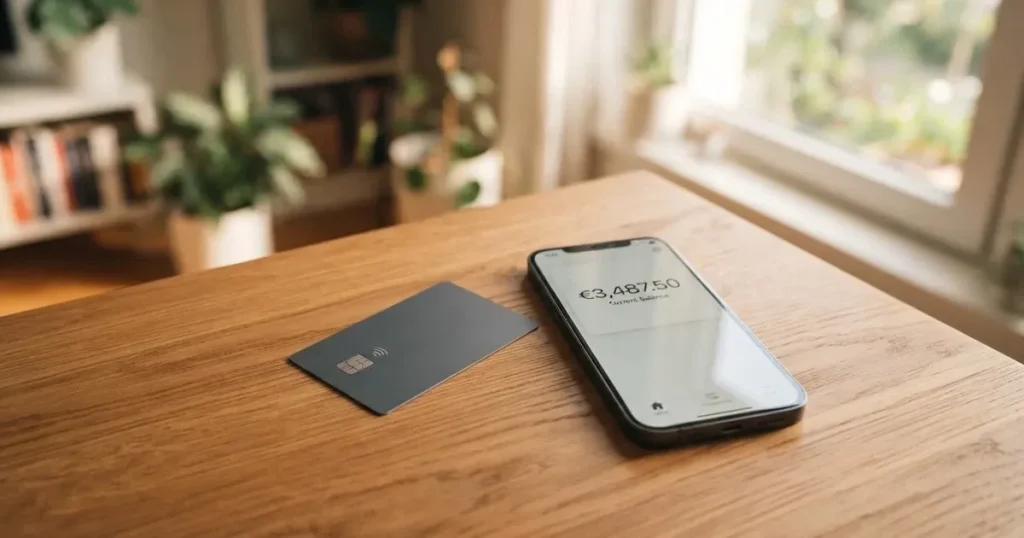
Bringin is a Visa card with a bitcoin-shaped top end. You send the card euros — by SEPA transfer or by sending bitcoin on-chain or over Lightning — and it lands as a euro balance in a personal vIBAN. The card then spends that balance like an ordinary prepaid card, in shops, online and at a cash machine. There is no stablecoin option, no non-euro currency, and the app is built by a Lithuanian company whose card programme runs on a partner licensed under MiCA.
My score for it is 5.7 out of 10. That is a passing mark, not an endorsement. The things it does, it does cleanly: the card is a real Visa, Apple Pay and Google Pay work, the daily spending ceiling is generous, and the conversion markup is small. What holds it back is narrower than that sentence suggests — the card is for EU residents only, it runs on a single euro balance with no stablecoins, and several things a buyer would want to know before paying money are simply not stated on the public pages.
Conditions described here are current as of October 28, 2026.
Verdict: 5.7 out of 10, and the audience is narrow
Bringin fits one reader well: someone living in the European Economic Area who already holds bitcoin or Lightning funds and wants a plain Visa card to spend them, who has been turned away by, or does not want to deal with, a traditional bank. If that is you, the card is usable and the fees are honest — a 1% conversion, a 0.5% markup, no FX fee, no per-payment fee. You are not fighting the card; you are using it.
For everyone else, one of three things is probably true. If you want to hold stablecoins like USDC or USDT rather than bitcoin, Bringin is the wrong card, because there is no stablecoin top-up — I explain why that matters in the top-up section. If you live outside the EEA, or hold a passport from a restricted country, the card is not for you at all; the eligibility rule is the first thing I check below. And if your priority is the widest possible acceptance and the cheapest possible spending, a card like Morse scores higher on my sheet and costs nothing to use online.
Here is the full breakdown, one row per criterion, with the reasons in my own words.
| Criterion | Mark | Why |
|---|---|---|
| Who can get it | 5 / 10 | Open to anyone 18+ with a valid EEA ID — 30 EU states plus Liechtenstein, Norway and Iceland — but not to anyone elsewhere, and the list of restricted countries is long |
| Cost | 5 / 10 | One plan at €37.69 for the year (€3.49 per month), no per-payment fee, 1% conversion plus a 0.5% markup, and 0% FX — fair, but not free, and only one plan exists |
| Top-up options | 4 / 10 | SEPA, bitcoin on-chain and Lightning only; everything is converted to euros and there are no stablecoins at all |
| Reliability and complaints | 7 / 10 | UAB Bringin in Lithuania, running on Lightspark Europe, which received a MiCA licence in June 2026; no official incidents and no user complaint threads found, but the issuing bank is not named |
| Everyday use | 8 / 10 | Visa in both physical and virtual form, Google Pay and Samsung Pay directly, Apple Pay through Curve, and €350 a day in cash |
The shape of that table is the review in miniature. The high mark is for everyday use, because this is the part that has been done well: a card that works in the shops you already go to. The low mark is for top-ups, because that is where the audience is defined — bitcoin yes, stablecoins no, no card-load, no multi-currency. The middling marks are honest middles. Bringin is not badly built; it is built for a narrow use, and a 5.7 is what a well-made narrow card should score.
One more thing before the detail. Bringin is not a bank. It is an e-money and card programme front end. That distinction matters more than it sounds, and I come back to it in the risk section.
Who they will give you the card
You need to be 18 or older and hold a valid ID from the EEA. That is the EU’s 30 member states plus Liechtenstein, Norway and Iceland — 30 countries in total. The card’s own pages say citizenship versus residence is not stated, which leaves a genuine question open: does a British citizen living in Warsaw qualify on a Polish residence document, or only on a passport? The public wording does not settle it, and if you fall in that gap it is worth asking before you upload anything.
There is a second condition that catches people out. The card cannot be used in restricted countries, and the list includes Belarus and Russia as well as Ukraine, Türkiye, the UAE, Nigeria, Egypt and others. Notice what this means in practice: the restriction is framed around where you *use* the card, but the framing matters for anyone with a connection to those places — family, a business, a second home. If your life touches one of those countries, read the restriction yourself before you rely on the card.
So the honest summary is this. Bringin is not a “crypto card for anyone with a phone” — it is a card for adults resident in Europe, with a euro balance, who already hold bitcoin. If you are outside the EEA, or you are looking for a stablecoin account, keep reading; the sections on top-ups and alternatives will tell you whether to keep going.
How to get it
The application is a standard identity-checked sign-up, and the steps are the familiar ones:
- Sign up for an account.
- Verify your ID — this is KYC, and it happens at sign-up.
- Fund the euro vIBAN that comes with the account.
- Create a virtual card, or order the physical one.
On the identity side, the card asks for a valid EEA ID and runs the check at sign-up. Proof of address is not stated on the public pages. That is common in this category, so I would not read a missing line as a red flag on its own, but it is also not something to guess at.
What you get at the end is a Visa, in two forms. There is a virtual card, which is instant, and a physical card, which is delivered to your registered address — the delivery time and cost are not stated. There are also unlimited virtual cards and one-time virtual cards, which is a genuinely useful feature if you want to hand a throwaway card to a single merchant.
One structural point about limits is worth flagging now because it affects everything later. Bringin says limits depend on your KYC verification level, but it does not publish the levels or the figures attached to them. So the limits below are the headline numbers, not a guarantee of what your particular account will carry. If a large payment matters to you, do not assume — check the figure in your app.
Fees and what a payment actually costs
Bringin has one plan and it costs €37.69, shown with a “10% Discount” and paid annually, which works out at €3.49 per month. There is no per-usage fee — in the card’s own words, “0 fee per usage” — and both the physical and the virtual card are free to issue. Then there are the fees that actually decide what a payment costs you.
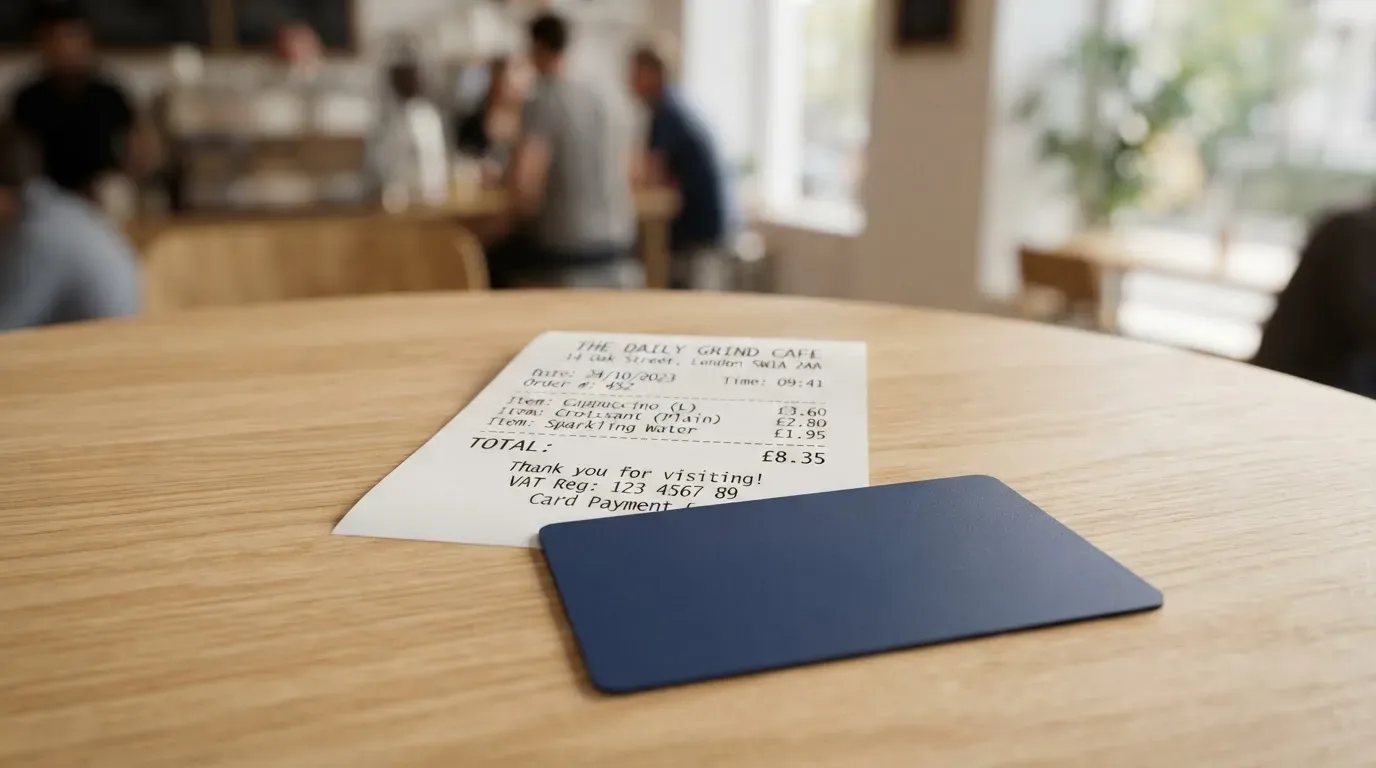
The one that matters most is conversion. Converting bitcoin to euros costs 1%, and on top of that Bringin adds a 0.5% markup to partner pricing. Currency exchange is 0%, and there is no forex fee on online payments. Cash withdrawals are possible but the ATM fee is not stated anywhere on the pages.
| Fee or limit | Value |
|---|---|
| Plan price | €37.69 (paid annually, €3.49 per month, shown with “10% Discount”) |
| Per-payment fee | “0 fee per usage” |
| Card issuance | Free, physical and virtual |
| Bitcoin-to-euro conversion | 1% |
| Bringin markup on partner pricing | 0.5% |
| FX fee | “0% FX fee”; no forex fee online |
| ATM withdrawal fee | Not stated |
| Cash withdrawals | €350 per day, €3,000 per month |
| Card payments | €10,000 per day, €15,000 per month |
| Currency | Euro only |
| Plans | One plan |
Now let me run three ordinary payments through that table, because an abstract fee list never tells you what a payment costs.
A €40 lunch, paid by card. You loaded the balance from bitcoin earlier, and the 1% conversion plus 0.5% markup was charged when the funds were converted, not at the till. At the till the payment itself carries the “0 fee per usage” promise, so the lunch costs €40. If you loaded from a SEPA transfer instead, there was no conversion fee at all — but you never had bitcoin in the picture.
A €30 subscription paid in dollars. Here the 0% FX fee is the reason to stay. The card charges no forex fee online, so a dollar-denominated service does not add a currency markup on top of whatever the network rate is. This is the strongest number on the table, and it is the one that makes a euro card usable for software and services priced in USD.
A €100 withdrawal from a cash machine. The withdrawal is within the €350 daily limit, so it will go through. Whether it is free depends on the ATM fee, which is not stated. If you take out cash regularly, this is the number to chase before you rely on it — and in most markets the ATM operator’s own charge is the bigger half of the cost anyway.
The pattern across those three is worth naming, because it is not the pattern most card reviews have. Bringin charges you for turning bitcoin into euros, not for using the resulting euros. If you top up by SEPA, your everyday spending is at zero stated fee. If you top up in bitcoin, you pay 1% plus a 0.5% markup, on the conversion. That is a defensible design — it makes the cost legible — but it means the number you care about depends entirely on how you fill the card.
Top up: SEPA, bitcoin, Lightning — and nothing else
There are three ways in, and that is the whole list. You can send a SEPA bank transfer, or send bitcoin on-chain from any wallet, or send bitcoin over Lightning. All three end in the same place: euros in your personal vIBAN, and the card spends from the IBAN balance. Fiat top-up is a euro bank transfer to the Bringin euro account, and only that.
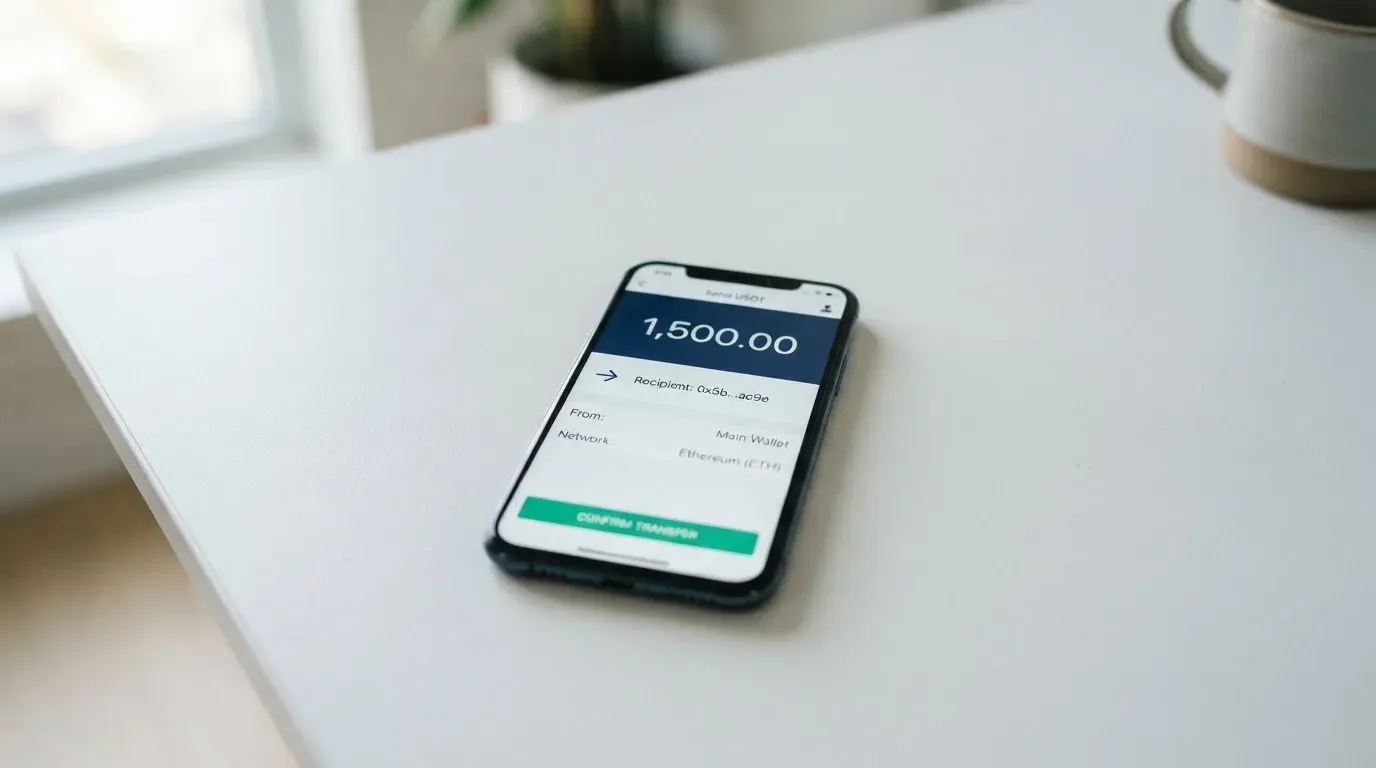
The minimum top-up and any top-up fee are not stated. What Bringin does say is that fees are displayed in the app before you confirm — which is the right way to do it, and the only figure I would rely on.
The omission that should make you pause is the absence of stablecoins. There is no USDC, no USDT, no load from an existing card balance. Everything you send is converted into euros. If your money is in stablecoins, you have two problems: Bringin cannot take them directly, and converting them somewhere else to euros first will cost you a fee that is not this card’s fault but lands in your total anyway. That single gap is most of the 4 / 10 in the table at the top, and it is why a reader whose holdings are stablecoin-heavy should read the alternatives section before anything else.
A word on the bitcoin route specifically, because it is where mistakes are expensive. Blockchain transfers are irreversible. If you send on a network Bringin does not support, or to an address belonging to another network, the funds can be lost or need manual support recovery, with no guarantee. Check the network in the app before you confirm the transfer, not after.
Getting money back out is a separate question. Withdrawals to your bank are said to be available “anytime”, with fees not stated. Closing the account is done by email — the page describing it is dated 24 July 2026 — and how the remaining balance is handled is not stated. If you are considering leaving, that last line is worth asking about in advance.
Paying with it every day
This is where Bringin is strongest, and I want to be specific, because “works in shops” is a vague thing to read before you have the card in your hand.
The card is a Visa, physical and virtual, denominated in euro. Wallets: Google Pay, Samsung Pay, Fitbit Pay and Garmin Pay work directly. Apple Pay works through the Curve app — direct support is described as planned. So if Apple Pay is how you pay, expect one extra app in the chain. Which categories are blocked is not stated.
The app itself is on iOS through TestFlight, on Android through Google Play, and on the web. I did not read store ratings, so I cannot tell you what users say about it, and I would rather say that plainly than imply I checked.
On rewards, there is no cashback. What there is instead: 10% off Alby subscriptions and 10% off the Koinly tax calculator. Whether either of those is worth anything to you depends entirely on whether you already use them.
The last thing in this section is the one the card does not tell you, and I would rather flag it than leave it for you to discover: the dispute process is not stated. If a payment goes wrong, how you contest it, who you go to, and how long it takes — none of that appears on the public pages. Given that a crypto-funded payment passes through a conversion step before it ever reaches the merchant, that is a gap worth thinking about before you rely on the card for anything you would mind losing.
What can go wrong
Let me take the risks in order of how likely they are to matter to you.
Bringin is not a bank, and its funds may not be bank deposits. The card is issued by UAB Bringin, a Lithuanian company, registry code 306317430, based in Vilnius. The programme is built on Lightspark Payments Europe AS, described as a MiCA-authorised CASP — Lightspark Europe received its MiCA licence in June 2026. The card issuer itself is not named on the pages. That last point is the one I would raise with anyone: you do not know from the public pages which institution is actually behind the plastic. In the EU, an electronic money institution must safeguard customer funds in dedicated accounts or insure them, but safeguarded e-money is not the same as a bank deposit and may not sit under a deposit guarantee scheme.
Key custody. The card page describes a self-custody wallet. That is the better of the two models, and it is a real point in Bringin’s favour — but understand what it means. The crypto stays in your wallet, and you bear sole responsibility for it: losing the key, falling for a phishing page, or having malware swap a copied address are all your problem, and blockchain transfers are irreversible by design. The card’s own security list is sensible — instant card freeze, real-time alerts, 3-D Secure on every transaction — though whether customer funds are safeguarded is not stated.
Acceptance abroad. A card issued in one country can look foreign to a shop in another, and some merchants decline prepaid or foreign-issued cards as a result. Address verification is generally unavailable for foreign-issued cards, which can cause declines. With euro-only and €10,000-a-day card limits, you are not planning a holiday in dollars; you are using a European Visa.
Prices and fees you cannot see. The ATM fee, the per-level limits, the dispute process, the delivery time and cost, the balance handling on closure — all not stated. Each one is a small thing to read around and an unpleasant thing to meet.
The category’s own history. Card programmes in crypto have closed before, and the pattern is familiar: a notice period, spending and loading stop, then you are asked to withdraw what is left. Visa terminated its agreements with FTX on 13 November 2022 and the FTX US debit card was wound down. WaveCrest, a Visa issuer that supplied crypto card brands, was suspended by Visa in Europe in 2018, closing all WaveCrest-issued Visa programmes. This is background about the category, not a prediction about Bringin — and I found no official incidents and no user complaint threads for Bringin itself. But it is the reason I would not leave a large idle balance parked here, whatever the card’s merits.
Counterparty risk, if you hold through the service. The alternative model, where a provider holds your keys, carries the risk that comes with it, and this category has a record: Mt. Gox (about US$350 million reported stolen, 2011–2014), Coincheck (about US$400 million, 2018), Ronin Network (US$625 million, 2022). Bringin’s self-custody approach is the reason this is context rather than a live worry here.
Support. Telegram chat, in-app chat, a help centre at help.bringin.xyz in 15 languages, and [email protected]. Russian is not among those 15 languages. Hours are not stated, which means nobody can tell you how long a Friday-night question will wait.
What to take instead
If Bringin scores 5.7, it is not the strongest card in its own category. Here is what the alternatives look like, and the honest reason each one might suit you better. I have pulled the key facts; anything marked unofficial comes from third-party sites and is not confirmed by the card itself.
| Card | Score | Cost | Key strength | Key limitation |
|---|---|---|---|---|
| Bringin | 5.7 / 10 | €37.69/year, €3.49/month; 1% conversion + 0.5% markup | Bitcoin and Lightning top-up for EU residents | No stablecoins, euro only |
| Morse | 7.5 / 10 | Issuance and monthly fee not stated; “Paying with the Morse Card, online and contactless, is free” | Zero FX fees or markups, real-time Visa rate; self-custodial wallet | Fully virtual only; eligibility by residence; some countries need an invite code |
| International Visa Card | 6.7 / 10 | $5 one-time virtual issuance, no maintenance fee; Classic free, Pro $9.00/month, Max $19.00/month | Deposits free, USDC or USDT into a USD account | Virtual only (physical “coming soon”); 2% FX fee on foreign currency |
| UNi Card | 6.1 / 10 | “No annual fee” and no foreign transaction fee | Spend-to-Earn rewards up to 3%; live OTC conversion rates | Mastercard multicurrency; top-up and eligibility not stated |
Morse is the one I would look at first if Bringin has failed you. It scores highest of the three, it charges “Zero foreign exchange fees or markups” using the real-time Visa exchange rate, and paying online or contactless with the card is free. Its wallet is self-custodial, like Bringin’s. USDC, USDG and EURC via Solana are free to deposit, other tokens and blockchains carry a fee. The catch is structural: the card is “fully virtual for now”, eligibility is by residence rather than citizenship, and a set of countries — the UK, Japan, Singapore, Switzerland, Australia and others — is in closed beta and needs an invite code. A few facts here are unofficial and not confirmed by the card.
The International Visa Card is the plainest of the three, and its shape will be familiar if you have held a virtual card before. It is a “U.S.-issued Platinum Visa card”, virtual, paying in USD, with a physical version listed as “Coming soon”. Virtual issuance is $5 one-time with no maintenance fee, and Classic is free, Pro is $9.00/month, Max $19.00/month. Deposits of USDC or USDT are free at 1:1, and the fee page says deposits of any kind are free; networks are not stated. Card use in USD is free on all plans. The catch is the 2% FX fee on foreign currency, which is expensive for a euro-based reader, plus a long list of countries where the account and card are not available — including India, Turkey, Ukraine and Russia — and blocked purchases in several more. FATF grey-list countries are reviewed case by case.
UNi Card is the rewards option. It is a multicurrency card on the Mastercard network that spends from a UNi.Global account balance, with “No annual fee or foreign transaction fee”, conversion at live OTC rates and “No hidden exchange fees”. Spend-to-Earn rewards go up to 3%. What I could not establish is the eligibility rules and the funding routes — not stated — and I would not want you to pick it on my word alone.
The honest comparison, then: Bringin wins on bitcoin and Lightning; Morse wins on cost of use and score; the International Visa Card wins on simplicity and USD stablecoin deposits, at a price in foreign-currency fees; UNi wins on rewards.
Who I would recommend it to
I would recommend Bringin to a person living in the EEA who holds bitcoin, has a valid ID from there, and wants a plain Visa card that spends euros without touching a traditional bank. If that is your situation, this card does its job: the fees are visible, the Apple and Google wallets work, and the €10,000 daily ceiling means you will not be caught out on an ordinary purchase.
I would not recommend it to someone whose money is in USDC or USDT. The absence of stablecoin top-up makes you convert elsewhere, at a cost that has nothing to do with Bringin and is not in its fee table. I would not recommend it to anyone outside the EEA, or who wants to know which bank stands behind the card — that name is not on the public pages. And I would think twice before treating it as a long-term home for a large balance, because the category has a history of programmes ending.
What I would actually do, in your place, is test it with a modest sum. Fund it with a SEPA transfer first — that path is free — pay with it for a month, and read the app’s own fee screen when you next top up. That tells you more in a month than any fee table, including mine.
Frequently asked questions
What is Bringin?
Bringin is a Visa payment card you fund yourself. You load euros into a personal vIBAN by SEPA transfer or by sending bitcoin on-chain or over Lightning, and the card spends that balance. It is a prepaid-style card, not a bank account, and Bringin is not a bank. The company is UAB Bringin in Vilnius, Lithuania, running its programme on Lightspark Payments Europe AS, which received a MiCA licence in June 2026.
How does the Bringin card work?
The card behaves like a prepaid Visa. You fund the balance, then pay as you would with any card, and the merchant is paid from that stored balance. Fees are concentrated on the funding side: 1% to convert bitcoin to euros, plus a 0.5% markup on partner pricing. The card itself carries “0 fee per usage”, and card payments are capped at €10,000 per day and €15,000 per month, with limits that depend on your KYC level.
Who can get a Bringin card?
You need to be 18 or older with a valid ID from the EEA — the 30 EU member states plus Liechtenstein, Norway and Iceland. Whether the rule runs on citizenship or on residence is not stated on the public pages, so if you are a citizen of one country living in another, ask before you apply. The card also cannot be used in restricted countries, a list that includes Belarus, Russia, Ukraine, Türkiye, the UAE, Nigeria and Egypt.
Is Bringin a bank, and who is behind it?
No. Bringin is a card and e-money programme, not a bank, and the card issuer is not named on its public pages. The company you are dealing with is UAB Bringin, registry code 306317430, based in Vilnius. The programme runs on Lightspark Payments Europe AS, described as a MiCA-authorised CASP. Funds are held under e-money safeguarding rules rather than as bank deposits.
Can I top up Bringin with USDC or USDT?
Not directly — and this is the card’s biggest limitation for a lot of people. Bringin’s top-up routes are a SEPA bank transfer, bitcoin on-chain, or bitcoin over Lightning, and everything is converted into euros. There are no stablecoins. If your holdings are USDC or USDT, you would have to convert them elsewhere to euros first, paying a fee that this card’s table will not show you. If stablecoins are your main holding, read the alternatives section instead.
What does a Bringin card cost to use?
One plan at €37.69, paid annually, which works out at €3.49 per month, and it is shown with a “10% Discount”. The physical and virtual cards are free to issue, and there is no per-usage fee. Converting bitcoin to euros costs 1% plus a 0.5% Bringin markup on partner pricing. FX is 0% with no forex fee online. Cash withdrawals are allowed at €350 per day and €3,000 per month, but the ATM fee is not stated.
Can I use Bringin with Apple Pay?
Yes, but through the Curve app rather than directly — Bringin describes direct Apple Pay support as planned. Google Pay, Samsung Pay, Fitbit Pay and Garmin Pay work directly, with no extra app in between. The physical card is delivered to your registered address, with delivery time and cost not stated, while the virtual card is available instantly.
Is the Bringin card safe?
The card’s own security measures are sensible: instant card freeze, real-time alerts, and 3-D Secure on every transaction. The wallet is described as self-custody, which means the crypto stays in your wallet until payment and you are responsible for key loss, phishing and wrong-network transfers, which are irreversible. I found no official incidents and no user complaint threads for Bringin. What is not stated on the public pages is whether customer funds are safeguarded, and what the dispute process is.
Is Bringin card worth it?
It is worth it for a specific reader: an EEA resident who already holds bitcoin and wants a plain Visa without a traditional bank. For that person the fees are transparent and the card works. It is not worth it if your money is in stablecoins, if you are outside the EEA, or if you want to know which bank backs the plastic — because that is not published. My test would be to load a modest sum by SEPA first, since that route carries no conversion fee, and see how the card performs for a month.
How do I close my Bringin account?
Account closure is handled by email, on a page dated 24 July 2026, so it is a request rather than a button in the app. Before you send it, note that how the remaining balance is handled is not stated — so ask about that in the same message rather than after a balance has sat there for weeks. Withdrawals to your own bank are described as available “anytime”, with fees not stated.
App and neobank cards: your questions answered – cryptocardanswers
Content created by the «cryptocardanswers» team