
A virtual USD Visa that runs on USDC — and the trade-offs that come with that
 Available in US
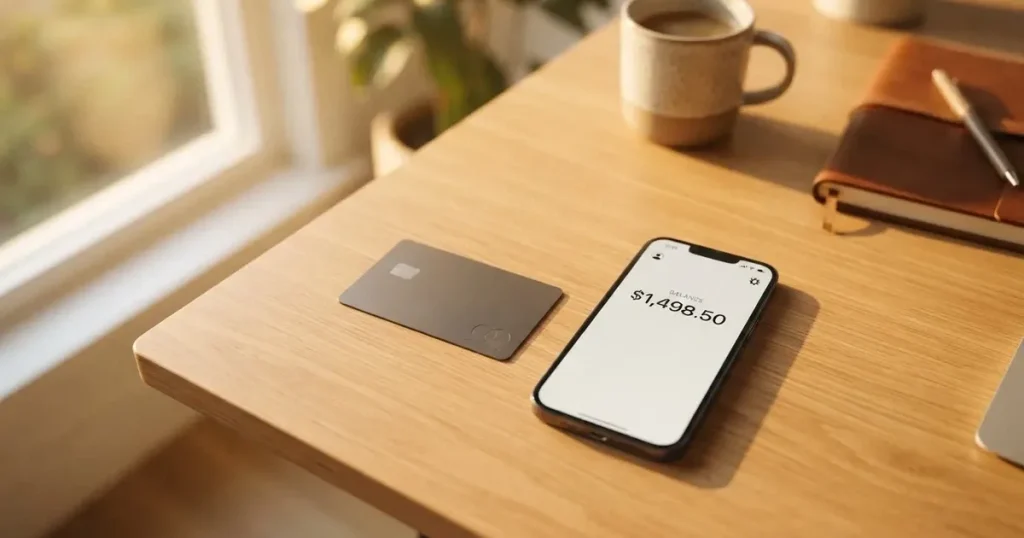
ZAR is one of the more unusual cards I’ve come across. It is a virtual USD Visa, run by a Singapore fintech, and you fund it with USDC on the Solana network. There is no physical card in your hand yet, no Google Pay disclosure, and almost no detail on what the card will cost in steady use. But the appeal is plain: if you already hold USDC and you have trouble getting a bank card, ZAR gives you a clean way to spend that balance at any Visa merchant, including Apple Pay, with “no foreign fees” stated on the site. My overall score after going through the card’s own documents, the App Store listing, and the alternatives is 7.3 out of 10 — not a verdict for everyone, but a genuine option in a narrow set of situations.
The conditions described here are current as of October 28, 2026.
Verdict
ZAR earns 7.3 out of 10, and the headline reason is that it does a few things very well and a few things not at all. It is built for someone who holds dollars in USDC, wants a virtual Visa, and wants to spend that balance anywhere Visa is taken, including at the ATM. Against that, the funding path is narrow (USDC on Solana, full stop, for now), the physical card is “coming soon” rather than available, and the card’s own pages leave large blanks on monthly fees, ATM charges, conversion fees and reward programmes.
The score is built from five marks, each one taken from the card’s own published documents and weighed against what readers typically want from a payment card. None of these marks is final on its own — a low mark in one area can be acceptable if it doesn’t bite the user in real life — and I’ll walk through how the numbers come out below the table.
| Criterion | Mark | Why it lands there |
|---|---|---|
| Who can get it | 8 / 10 | Broad country reach with a short, named sanctions-style exclusions list and a standard 18+ age rule |
| Cost | 9 / 10 | Account and virtual card free, “no foreign fees” stated, but monthly fee, conversion fee and ATM fee are not disclosed |
| Top-up options | 5 / 10 | USDC on Solana only for crypto funding; everything else is converted into USDC, with a real risk of loss on the wrong chain |
| Reliability and complaints | 7 / 10 | Singapore company, Circle-issued dollars, FDIC-insured deposit partner; no licence numbers and no chargeback process on the public page |
| Everyday use | 6 / 10 | USD Visa, Apple Pay, ATM withdrawal, but no physical card yet, no Google Pay disclosure, no published rewards |
That total of 7.3 reflects a card that solves one specific problem — paying with a USDC balance where no bank card is available — without yet being a complete daily card. If the physical card arrives, if a second stablecoin gets native support, and if the company publishes monthly and ATM fees, the score moves quickly. As it stands, ZAR suits the reader who already has dollars in USDC and needs a virtual card, and it suits the reader in one of the 100-plus countries it serves who can’t get anything else. It does not suit someone who wants a full-featured daily card, who funds with anything other than USDC, or who needs Google Pay today.
Who will they give you the card
ZAR’s reach is wide in a way that’s worth understanding before you sign up. The card’s own site says “100+ countries”, the App Store listing pushes the number to “110+ countries”, and Terms of Service add that ZAR may refuse service in certain locations, listing Russia and Belarus explicitly alongside Iran, Iraq, China, Japan, Vietnam and Venezuela, and saying the list is not exhaustive. You’re asked to be 18 or older and not under sanctions. The Terms don’t say whether the gate is citizenship or residence, only that the company can refuse service in certain locations — which is something to bear in mind if your situation is unusual.
The onboarding itself is the part most readers feel first. ZAR runs standard KYC and AML checks because the card needs bank connectivity and because card services in general require identity verification. Plaid handles the identity layer; passports and driver’s licences are accepted; PEP screening is part of the flow. The public pages do not state a separate proof-of-address requirement and do not give processing times. There is no tiered KYC: a single check, with the company reserving the right to suspend the account for fraud, legal requirements, or breach of the terms.
The practical effect is that a reader in a typical country with a passport and a few minutes to spare is likely to get through. A reader in one of the named excluded countries, or under sanctions, is not. And a reader whose country isn’t on the named list still has no guarantee, because the Terms explicitly allow refusal and the public list is not closed.
How to get it
Getting ZAR is a download-and-apply process, not a branch visit. The app is on iOS and Android, the product is a virtual Visa in USD, with a physical card “coming soon.” The single KYC check is the only one in the system: the company does not publish higher tiers with higher limits, and the Terms only say that limits are set on registration depending on currency, payment method, and the KYC/AML assessment. There are no published amounts for those limits on the public page.
What that means for you in practice: the steps are roughly install the app, create the account, complete identity verification, accept the virtual card. The site does not give a specific processing time, so the experience is one of “pass the check, then the card appears” rather than “wait N days for the card to arrive”. The delivery question — where the physical card would be sent, in what time, with what shipping options — is not addressed on the public page, which makes sense because the physical card is not yet in market.
A practical note: the sign-up is also the moment when the limits get set, so what you enter and what your documents show will determine your daily transaction ceiling. There is no public number to aim at.
Fees — what it really costs
The headline on cost is generous, and the detail is sparse. Opening an account and getting a virtual card are free; the physical card carries a fee that depends on the country; the monthly fee is not stated. “No foreign fees” is the company’s own line on the marketing side. Fees are shown to you before you confirm a transaction, and the company says it announces fee changes a week in advance.

The gaps are what I’d watch. The conversion fee is not stated — that is, the fee ZAR charges when it converts USDC into USD at spend time is not disclosed on the public page. The ATM fee and any free allowance are not stated either, only that the App Store says “Withdraw dollars as local currency from ATMs worldwide”. Limits are set on registration, depending on currency, payment method and KYC/AML, with no published numbers. The currency you spend in is USD.
A small table is the cleanest way to see the picture, because the line items on the public page are partly “free” and partly “not stated”.
| Fee or limit | Stated on the public page |
|---|---|
| Account opening | Free |
| Virtual card issuance | Free |
| Physical card issuance | Depends on country |
| Monthly fee | Not stated |
| Foreign transaction fee | “No foreign fees” |
| Conversion fee (USDC to USD) | Not stated |
| ATM fee and allowance | Not stated |
| Daily transaction limit | Set on registration; amounts not stated |
| Monthly limit | Not stated |
| Spend currency | USD |
What this means in three everyday situations:
- You pay for a coffee in New York with Apple Pay. The transaction is in USD, the card is in USD, so no foreign currency conversion is involved. The fee is whatever the conversion step from USDC to USD costs, and that fee is not on the public page.
- You pay a hotel in Berlin with the virtual card. “No foreign fees” suggests the hotel’s euro amount converts at the Visa rate with no ZAR markup. The conversion from USDC to USD is a separate step and is not separately disclosed.
- You take dollars out of an ATM in Bangkok. The App Store promises local-currency withdrawal; the ATM fee and the FX margin, if any, are not on the public page.
A reader who needs certainty on the running cost will be frustrated here. A reader who can tolerate a couple of “not stated” rows and who can test the card with a small amount first will not.
Top up — how to fund the card
Funding is the area where ZAR is most opinionated. The Terms of Service say that, at the moment, only USDC on the Solana network is accepted. Other stablecoins such as USDT may be accepted but are converted into USDC; sending on the wrong chain is presented as a real risk of losing the funds. The site also lists bank transfer and cash at a merchant as funding paths, so the card is not crypto-only on the funding side, but the crypto path is the one that is most precisely described.
The “you’ll always see the fee before you confirm” line is on the Terms, and bank transfer fees vary by method. The stablecoin minimum and the network fee for a USDC transfer on Solana are not stated on the public page. The account can be closed at any time, but the Terms add that all funds must be withdrawn first — and the fees for that withdrawal are not stated either.
In practice, the top-up path is straightforward if you already hold USDC on Solana: send USDC to the address ZAR provides, on Solana, wait for confirmations, see the balance appear. It is more involved if you hold USDT, because the Terms say the tokens are converted into USDC, which means a swap somewhere in the flow. And it is dangerous if you are not careful with the network, because the Terms are explicit that the wrong chain can lose funds — blockchain transactions are, in general, irreversible, so a misdirected transfer is not something a customer-support line can pull back.
A few things to check before your first top-up:
- Which network is your USDC actually on? If your USDC is on Ethereum, Polygon or another chain, you will need to bridge or swap before sending.
- The minimum top-up. It is not on the public page, so test with a small amount first.
- The network fee. On Solana it is typically small, but “small” is not “zero”, and the value is not given in the Terms.
- Whether the app is showing the same wallet address as the one on the website. Mismatched addresses are a common source of lost deposits.
If you would rather not deal with Solana at all, bank transfer is the alternative, with cash at a merchant as a third option. Both are mentioned on the site without further detail.
Paying with it every day
The day-to-day picture is a mix of what is on the public page and what is conspicuously absent. You get a USD virtual Visa and the app supports Apple Pay tap-to-pay — the site also lists “Tap to Pay” as enabled, which is consistent with that. There is no disclosure on Google Pay. There is no published rewards or cashback programme. The app is on iOS and Android, and the App Store rating in the UK store is 3.9 out of 5 from 44 ratings, which is acceptable for an early-stage product but not a strong endorsement.
A note on disputes and problem resolution, because it is unusual. The Terms say that disputes about the smart contract, the oracle, the API, the backend and account access go through an automated in-app resolution process, and the user waives litigation and arbitration for those. Other disputes are handled in Singapore courts. The card chargeback process — the standard mechanism for disputing a merchant on a Visa — is not stated on the public page. That gap matters, because a chargeback is often the most important protection on a payment card, and “not stated” is not the same as “not available”, but it is also not the same as a clear commitment.
What that means in practice is that ZAR works for routine payments where 3-D Secure passes and the merchant accepts the card, and where you are comfortable with the in-app dispute flow. It is harder to lean on for situations where a Visa chargeback would normally be the safety net, because the public page does not say what the process is.
A few things worth knowing about how the card sits inside the wider Visa system:
- A merchant can see from the card number that the card was issued by a particular bank, and may apply extra checks if the issuer country looks different from the billing address. For a USD card used abroad, this can occasionally cause a decline.
- Address Verification Service (AVS) — the system that compares the numeric parts of the billing address — is mostly available in the US, Canada and the UK, and is generally unavailable for foreign-issued cards. That can cause a decline at checkout, especially on US sites.
- Prepaid cards and certain BINs are declined by some merchants by policy. If you hit a hard decline, the cause is more often merchant policy than anything ZAR has done.
- 3-D Secure is the standard second-factor check at online checkout, and the issuer can require it for any payment, sometimes causing a friction that you would not see with a bank card.
None of this is specific to ZAR, but it is what you are signing up for with any non-bank Visa.
What can go wrong
The risk picture has three layers: the company, the funding path, and the limits of what a virtual card in this shape can do.
The company is Golden Age Dev Lab Pte Ltd, a Singapore fintech. The Terms are under Singapore law and the courts are Singapore courts. ZAR is described as “a fintech company, not a bank”. The dollars are issued by Circle, the USDC issuer; the banking partner is SSB, a Member FDIC bank, and customer funds held at SSB in custodial accounts are stated in the footer to be FDIC-insured up to US$250,000 per depositor, with the standard caveat that this insurance protects against the failure of SSB, not against the failure of ZAR. The card issuer is not named on the public page. The Terms also say ZAR is “not a money services business” and there are no published licence numbers, which is the kind of detail a careful reader will want to check against the local regulator where they live.
The Terms describe the wallet as “self-custodial wallet software” and the company says “we do not custody or control your funds”. That is an important sentence: it means ZAR is not a custodian in the way a centralised exchange is, and the usual protection of “the exchange holds my coins” does not apply. The App Store line “Bank-Grade Security” is marketing language, not a regulatory claim.
The funding path adds its own risk. USDC on Solana is fast and cheap, but it is also irreversible. Send on the wrong network and the funds can be lost; the Terms are explicit about that. A reader who is not used to handling network selection should test with a small amount first and should never paste a wallet address from the clipboard without checking it against a second source, because clipboard-hijacking malware that swaps copied addresses is a known category of attack against crypto users generally.
What is conspicuously absent is also a risk. I searched “ZAR app zar.app card review trustpilot reddit complaints” and found no ZAR reviews in the public sources and no Trustpilot page for the company. That is not a sign anything is wrong, but it is a sign there is no large body of public user experience to draw on, so the responsibility to test small and to read the latest Terms sits with you.
A short, practical list of things to keep in mind:
- Card issuer not named on the public page. The Terms describe ZAR as a fintech, not a bank.
- FDIC insurance covers SSB’s failure, not ZAR’s. The Terms are explicit on this.
- USDC is redeemable 1:1 for US dollars by Circle, and Circle publishes monthly reserve attestations. USDC has depegged before, briefly, in March 2023; it is not a risk-free dollar.
- The “self-custodial” description means lost seed phrases are not recoverable through ZAR.
- Wrong-chain transfers are explicitly flagged in the Terms as a way to lose funds.
- The card chargeback process is not stated on the public page.
What to take instead
ZAR is not the only virtual USD card on the market, and three alternatives are worth a look depending on what you actually need. I’ve kept the table short and focused on the points that change the decision.
| Card | Score | What it costs | What it costs to fund | Where it works | Rewards |
|---|---|---|---|---|---|
| ZAR | 7.3 | Account and virtual free; physical fee by country; monthly fee not stated | USDC on Solana only; bank transfer and cash at a merchant | 100+ countries (site), 110+ (App Store); named exclusions | Not stated |
| International Visa Card | 6.7 | Virtual $5 one-time; no maintenance fee; plans from free to $19/month | USDC/USDT into USD account free at 1:1; also USD, EUR, SEPA, SWIFT, FedNow | Long list of excluded residence/registration countries; purchases blocked in several of them | No cashback stated |
| UNi Card | 6.1 | “No annual fee”; issuance fee not stated | Not stated | Not stated | Spend-to-Earn up to 3% |
| Morse | 7.5 | Issuance and monthly fee not stated on the public page | Stablecoin transfer (USDC, USDG, EURC on Solana free), debit card, Account Details; BTC, USDT, ETH also supported | App in 140+ countries; local add/withdraw in 70+; card “available only in certain countries”; closed-beta countries need an invite | Not stated on card pages |
The pattern that emerges is that each card trades off something. The International Visa Card is more expensive in plans but is clearer on FX (“Visa exchange rate + 2% FX fee”) and on what you can fund with. UNi Card is honest about its reward rate and about “no annual fee, no foreign transaction fee”, but it is much less specific on where the card works and on what the funding path looks like. Morse is the most generous on FX (“zero foreign exchange fees or markups”, real-time Visa rate) and the most flexible on funding (USDC, USDG and EURC on Solana free; other tokens and chains with a fee; debit card and Account Details in USD, EUR, MXN, COP, BRL), and it is the strongest score at 7.5, but its closed-beta list of countries is long, and the card is “available only in certain countries” with the list not published on the card page.
If you are picking between these four, the question is which trade-off you can live with. ZAR wins on simplicity if your stack is already USDC on Solana. The International Visa Card wins on multi-asset funding and on a published FX fee, at the cost of plan fees. UNi Card wins on rewards and the no-fee headline, at the cost of detail. Morse wins on FX and funding breadth, at the cost of country coverage.
Who I would recommend it to
The reader I would point at ZAR is the one who already holds USDC on Solana and who needs a virtual USD Visa to spend that balance — whether because no bank card is available, or because the existing setup does not cover the merchant. The second reader is in one of the 100-plus countries ZAR serves, with a passport and a driver’s licence to hand for Plaid, and a willingness to test the card with a small top-up before committing. The third reader is someone who values Apple Pay, a USD balance, and the “no foreign fees” line enough that the unstated monthly fee, ATM fee and conversion fee can wait.
The reader I would point elsewhere is the one who funds with anything other than USDC on Solana, who needs a physical card today, who relies on Google Pay, who needs a published chargeback process, or who wants a known monthly fee to budget around. That reader is better served by a card that discloses those numbers on the public page.
ZAR is a real product with a real licence-shaped regulatory gap and a real funding constraint. It is also a card that solves a specific problem cleanly. Read the Terms, confirm the country is served, test the top-up with a small amount, and you will know within a day whether it works for you.
Frequently asked questions
What is the ZAR card?
ZAR is a USD Visa card run by Golden Age Dev Lab Pte Ltd, a Singapore fintech. It is currently virtual, in USD, and funded primarily by USDC on the Solana network, with bank transfer and cash at a merchant listed as alternative funding paths.
How does the ZAR card work?
You install the iOS or Android app, complete the single KYC/AML check via Plaid, and receive a virtual Visa in USD. You top the card up with USDC on Solana (or with a bank transfer or cash at a merchant), then spend the balance at any Visa merchant, including via Apple Pay, or withdraw at an ATM.
Is ZAR a bank?
No. The Terms describe ZAR as “a fintech company, not a bank”. Customer funds held at SSB are in custodial accounts and are FDIC-insured up to US$250,000 per depositor, but that insurance covers the failure of SSB, not the failure of ZAR.
Who owns ZAR?
Golden Age Dev Lab Pte Ltd, a Singapore-incorporated company, runs ZAR. The Terms are under Singapore law and disputes that are not handled by the in-app process go to Singapore courts. The card issuer is not named on the public page.
Is the ZAR card available in my country?
The site says 100+ countries, the App Store says 110+, and the Terms list Russia, Belarus, Iran, Iraq, China, Japan, Vietnam and Venezuela as excluded (the list is not stated to be exhaustive). The Terms also say ZAR may refuse service in certain locations, but they do not state whether the rule is by citizenship or by residence.
How do I get the ZAR card?
Install the app, create an account, complete the KYC check with a passport or driver’s licence, and accept the virtual card once Plaid approves. The site does not give a processing time, and a physical card is listed as “coming soon”.
Does the ZAR card require KYC?
Yes. KYC and AML checks are required for bank connectivity and for card services, and are handled by Plaid. Passports and driver’s licences are accepted, PEP screening is part of the flow, and you must be 18 or older and not under sanctions.
How do I top up the ZAR card?
The Terms say only USDC on Solana is accepted for the crypto path; other stablecoins such as USDT may be accepted but are converted into USDC. Sending on the wrong chain is explicitly flagged as a way to lose funds. Bank transfer and cash at a merchant are also listed as funding paths, with fees shown before confirmation.
How do I add the ZAR card to Apple Wallet?
The App Store confirms Apple Pay tap-to-pay support. Add the virtual card through the iOS app’s Apple Pay flow; the card number is replaced with a device-specific Device Account Number stored in the Secure Element, not on Apple’s servers. Google Pay is not addressed on the public page.
Is the ZAR card safe?
The Terms describe the wallet as self-custodial and state that ZAR does not custody or control your funds, which means lost seed phrases are not recoverable through ZAR. Banking is through SSB, a Member FDIC bank, and dollars are issued by Circle. The card issuer is not named, no licence numbers are published, and the chargeback process is not stated on the public page. As always, test the top-up with a small amount first.
App and neobank cards: your questions answered – cryptocardanswers
Content created by the «cryptocardanswers» team