
A virtual card funded with USDT or USDC, sold by a Hong Kong company that does not name its issuer or licences
 Available in US

Nero is a virtual payment card you top up with USDT or USDC and spend anywhere contactless payments work through Apple Pay or Google Pay. It looks like a quick route into card payments for someone holding stablecoins, but the more you read the site, the more important details are missing: which countries are served, what the fees are beyond the 4% top-up charge, who actually issues the card, and which licences back it. This review walks through what Nero does say, what it does not, and what that uncertainty means for the person thinking about signing up.
Conditions in this review are current as of October 28, 2026.
Verdict
Nero earns 4.8 out of 10. It delivers the basic promise of a virtual card funded with USDT or USDC and accepted through Apple Pay and Google Pay. The score is held back by gaps in the public information: the country list is not disclosed, the top-up fee of 4% is high for the category, the FX fee is not stated, the issuer and licences are not named, and the legal entity behind the product (Nero Sphere LIMITED, Hong Kong) does not appear in any public register of complaints, reviews or news. There are no user reports to lean on, and that is itself a piece of information — a card that nobody seems to be talking about publicly, in either direction, is harder to trust than one with a track record, good or bad.

How the score breaks down
| Criterion | Mark | Why |
|---|---|---|
| Who can get it | 5 / 10 | The site mentions restricted countries but does not publish the list; no statement about Russian, Belarusian or other residents |
| Cost | 3 / 10 | One-time issuance fee with no stated amount, 4% top-up commission, FX fee not disclosed |
| Top-up options | 6 / 10 | USDT or USDC accepted, converted to fiat at payment; supported networks not confirmed on readable pages |
| Reliability and complaints | 5 / 10 | Nero Sphere LIMITED (Hong Kong); issuer and licences unnamed; no complaints or reviews found |
| Everyday use | 6 / 10 | Virtual card with Apple Pay and Google Pay; ATM support not stated; rewards not stated |
| Total | 4.8 / 10 |
Nero is worth a closer look if you specifically want a virtual card that loads from USDT or USDC and you are comfortable with a provider that has not yet published the kind of detail most regulated competitors publish. If you want clarity on countries, fees, licences, dispute rights or rewards, the alternatives further down this page are better documented.
Who can get the Nero card
The short answer: the card issuer does not say. The site states that some countries are restricted, but the list itself is not published on the pages I could read. There is also no statement about citizenship or residency rules for specific jurisdictions — not for Russia, not for Belarus, not for any other country. That is unusual: most crypto cards spell out at least a list of unsupported countries, even if the legal details are buried in terms.
In practice this means the only way to know whether you are eligible is to start the sign-up flow and see whether the form accepts your details. That is workable, but it forces you to share personal information with a provider that has not first shown you the rules of the game. For anyone with strict privacy or compliance constraints — for example, residents of sanctioned jurisdictions, or anyone whose employer requires a clear paper trail for card spend — that ambiguity is itself a reason to look elsewhere.
The press release framing presents the card as accessible “globally” subject to those unspecified restrictions, and the sign-up flow is described as fully online with no bank-branch visit. If you are in a country where ordinary bank cards are hard to obtain — which is the position many readers of reviews like this one find themselves in — Nero’s accessibility pitch is real. The trade-off is that you do not know the eligibility rules in advance, and you only find out at the moment of trying.
How to sign up
According to the press release, registration, top-up and card issuance are fully online with no bank-branch visit. The site does not describe the KYC (know-your-customer) process in any detail — no list of documents, no indication of how long verification takes, no mention of whether a video call or selfie check is part of the flow. That is another piece of information that most crypto card issuers publish, even if only in a help-centre article.
What you do get is a virtual card with a standard number, expiry date and CVC. The card network (Visa, Mastercard or another) is not named on the readable pages, and the card currency is not stated. A “virtual only” description is the default reading; physical delivery is not discussed. So the card exists as a number you can punch into an online checkout, save in a browser, or load into a mobile wallet. There is no plastic to wait for and no shipping address to confirm, which is a plus if you are abroad or moving frequently.
The fact that the card is issued “within minutes of funding” (per the funding section) means the bottleneck is the top-up, not the application. If your verification is approved and your first stablecoin transfer lands, you are spending in minutes rather than days. That speed is a genuine advantage over cards that take a week to issue and ship.
What it really costs
This is where the review gets uncomfortable. The fee page is thin, and the most expensive line item is stated, while several others are not. Below is what is and is not known.
Costs
| Fee or limit | Value |
|---|---|
| Issuance | One-time fee, amount not stated |
| Monthly fee | Not stated |
| Top-up commission | 4% |
| Conversion to fiat | Happens at the time of payment |
| FX fee | Not stated |
| ATM withdrawal | Not stated |
| Daily limit | Not stated |
| Monthly limit | Not stated |
| Card tiers | Not stated |
The 4% top-up commission is the headline cost. To put that in context: a competitor like Card.fi charges 1.5% plus a fixed dollar amount on its Classic tier, and 1% on Premium. A 4% charge means that putting 1,000 USDT onto the card costs you 40 USDT before you have spent anything, and before any FX fee on the payment itself.
A few everyday scenarios help frame what this means in practice.
Coffee and small purchases. A 4-euro coffee paid with a card topped up by USDT carries roughly 16 eurocents of top-up commission on the underlying euro amount, plus any spread between the USDT-to-fiat conversion and the market rate, plus any FX fee the issuer may charge. Nero does not say what the conversion spread is, so the 16 cents is a floor, not a ceiling. For a card you tap once or twice a day, that is meaningful money over a month.
Online shopping in a foreign currency. If you top up with USDT, then pay a US-based merchant in US dollars, the conversion from USDT to USD happens at the moment of payment. Nero does not disclose whether that conversion includes a markup, or what the FX fee is when the merchant settles in a currency different from the card’s base currency.
A larger purchase, say a 500-euro item. A 4% top-up commission alone is 20 euros, before any other fees. The same purchase through a lower-fee competitor might cost 7 to 8 euros in total charges. The difference is the price of a decent dinner, paid each time you load the card.
The cost section is the weakest part of the Nero offering as it is publicly described, and it is the part most likely to be improved (or worsened) when the issuer eventually publishes full pricing. Until then, the conservative reading is to assume the 4% is not the only charge you will pay.
How to top up the Nero card
Top-up is the part of the flow Nero explains most clearly. You can load the card with USDT or USDC. When you spend, the stablecoin is converted to fiat at the time of payment. That is the “pre-loaded balance” model in plain English: you transfer crypto, it sits on the card as a fiat balance ready to spend, and the card cannot overdraw.
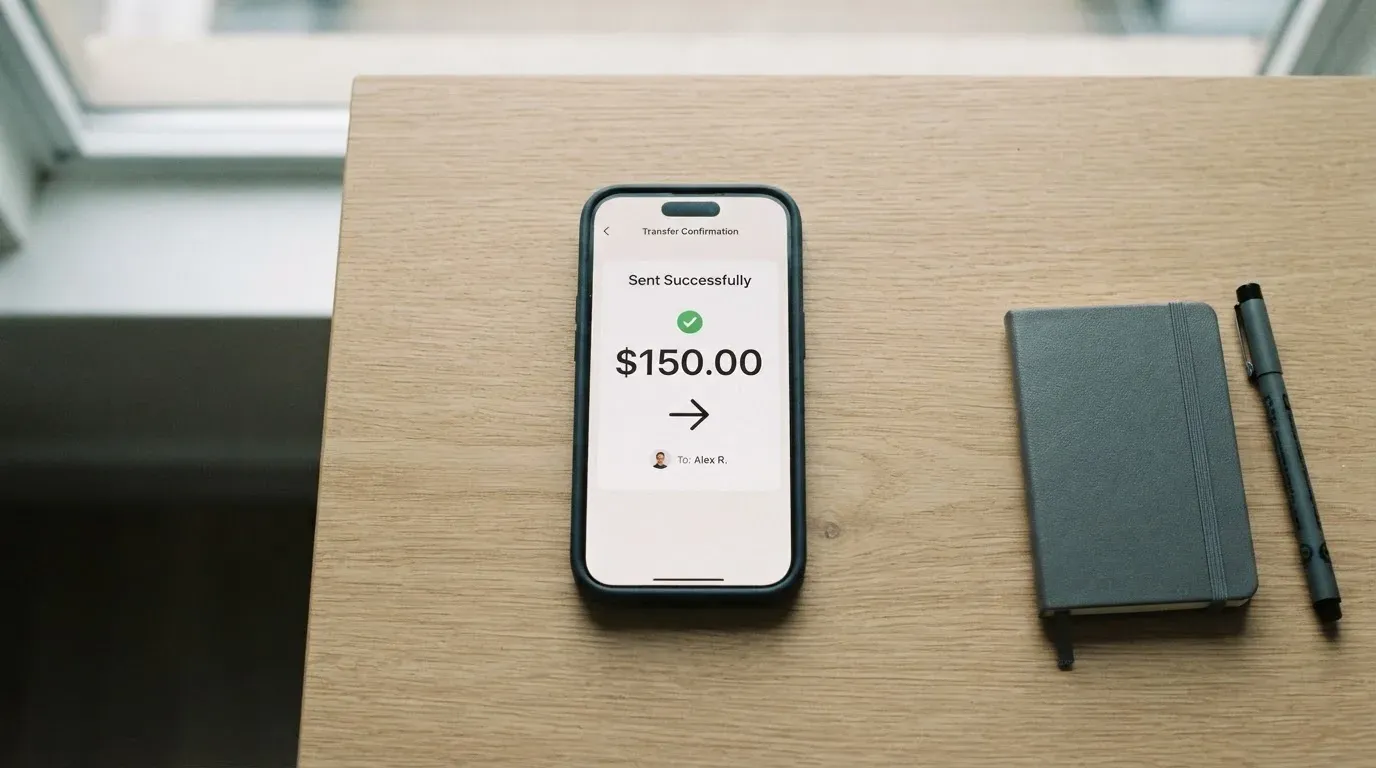
The 4% top-up commission applies to every load. The minimum top-up amount is not stated, the network fees (gas on Ethereum, bandwidth on Tron, and so on) are paid by you to the blockchain, not by Nero, and the question of who pays those fees — you at the source, or you as part of the transfer — is not addressed. Fiat top-up options (bank transfer, card) are not described.
Which networks Nero accepts USDT and USDC on is not confirmed on the readable pages. USDT and USDC are both issued on multiple chains — Ethereum, Tron, Solana, Polygon, Avalanche, and others — and sending on the wrong chain is one of the most common ways to lose crypto. Tether and Circle issue on different sets of networks, and not every card provider supports every chain. The press release does not list supported networks. Until Nero publishes that list, the safe assumption is that you need to check the deposit screen in-app or on the website before sending anything non-trivial.
The card is issued within minutes of funding. That is fast, and it lines up with the fully online sign-up story: no waiting for a physical card, no branch visit, no courier. If your first deposit is small and you are willing to lose that amount as a test, you can confirm the network and address in practice before committing more. That is not ideal, but it is workable for a small-amount first use.
A withdrawal function — moving fiat from the card back to a bank account — is not described. If Nero only supports spending, not cashing out, that matters for anyone who needs to convert stablecoin balances back into local currency.
Paying with Nero day to day
The card is virtual and works through Apple Pay and Google Pay for in-store contactless payments. That is the main everyday path: load stablecoin, add the card to a mobile wallet, tap to pay. Online checkout works in the usual way, by entering the card number, expiry and CVC.
Blocked merchant categories — gambling, adult content, cryptocurrency purchases, and so on — are not stated. Some issuers block gambling transactions by policy, others do not. Without a published list, you cannot know in advance whether a particular merchant will be declined.
Rewards, cashback, or any kind of spend incentive are not stated. Many crypto cards offer some form of return on spend; Nero’s public materials do not. That is another area where the absence of information is itself the answer.
A mobile app is not described; the service appears to be used through a website. If you prefer managing your card from a phone, that is a limitation worth noting. Dispute and chargeback procedures are not stated either. If a transaction goes wrong — duplicate billing, goods not received, fraud — the path to resolution is not described in the public materials, and you do not know in advance whether chargeback rights equivalent to standard EU or US protections apply.
What can go wrong
The honest list of risks here starts with the unknowns. Nero Sphere LIMITED is registered in Hong Kong. The press release contact is David Vance, Director of Growth, at [email protected]. The actual card issuer — the bank or e-money institution that holds the BIN and runs the card programme — is not named on the readable pages, and no licence is quoted. That matters because in this category the crypto brand is often only the front-end; the licensed entity behind the card is what gives you consumer protections.
I searched for complaints, reviews, Trustpilot entries and news articles about Nero on 21 October 2026 and found nothing. No official incidents, no user reports, and no Trustpilot page for the brand. That is not the same as a clean record — a card with no footprint at all is harder to evaluate than one with a long, mixed history — but it is also not a sign of trouble. The card is new, and the only confirmed milestone is a paid press release dated 25 June 2026 announcing the launch of virtual crypto cards with USDT and USDC top-up and Apple Pay and Google Pay support.
Security features (two-factor authentication, instant card freeze, spending limits, 3-D Secure on online payments) are not described in the public materials. Support is described as handled by staff, not automated systems, and the only contact channel published is the marketing email — which is not where you want to send a fraud report. Support languages and hours are not stated.
A few risks are worth flagging explicitly.
The 4% top-up fee compounds. Every load costs you 4% of the amount. If you top up frequently in small amounts, the effective cost is much higher than the headline 4%, because the fixed network fee on the underlying transfer is amortised over a smaller top-up.
Stablecoin transfers are irreversible. If you send USDT or USDC to a wrong address, on a wrong network, or to a wallet that is not the card’s deposit address, the funds are likely lost. The blockchain cannot reverse the transfer, and manual recovery from the issuer is not guaranteed.
Stablecoins themselves are not risk-free. USDT and USDC have largely held their peg, but USDC briefly lost its peg in March 2023 during the US banking crisis, and the larger stablecoin market has had collapses (TerraUSD in May 2022). Tether has also stated that it disables tokens in wallets on the OFAC sanctions list and has frozen funds tied to illicit activity — a reminder that stablecoins are not censorship-proof and that the issuer can act on balances in some circumstances.
Programme closures are a category risk. The crypto card category has seen programmes shut down — Visa terminated its global agreements with FTX in November 2022, and the WaveCrest suspension in 2018 closed a long list of European crypto card programmes at short notice. When a programme closes, users typically get a notice period, then spending stops, and any remaining balance has to be withdrawn within a deadline. The risk is small for any individual programme, but it is real, and the more opaque the issuer the harder it is to anticipate.
The company behind the card is a single Hong Kong entity. Hong Kong is a legitimate financial centre with its own regulatory regime, but the entity name (Nero Sphere LIMITED) and the lack of any quoted licence mean you are taking the card on the issuer’s word that the operation is sound. There is no public register entry to verify, and no fallback regulator whose logo you can point to if something goes wrong.
What to take instead
If the gaps in Nero’s public information give you pause, three alternatives cover a similar use case with more documentation behind them. None of these is a direct swap — fees, eligibility and features differ — but they are useful reference points.
CardFlow (4.9/10). Aimed at Nigeria and “global users” with no country list or exclusions stated. A virtual USD Mastercard created in about 3 minutes, free to issue, with no stated monthly fee. Top-up is in Bitcoin, USDT, ETH or Nigerian Naira bank transfer, with networks not stated. The score is similar to Nero’s, but the card network (Mastercard) is named, which Nero does not do.
HyperCard (4.7/10). A prepaid card with balance in USD or EUR. The App Store page says it works in “more than 176 countries” (acceptance, not eligibility) and the official pages do not publish a country list. Top-up is in crypto such as USDT, BTC, ETH, converted to USD or EUR on the card. Fees and networks are not stated on the pages I could read. The score is similar to Nero’s, with the trade-off being a more visible App Store presence and a stated number of acceptance countries.
Card.fi (6.6/10). This is the more substantial alternative. Cards ship to “200+ countries”, with terms barring residents of sanctioned jurisdictions; no separate citizenship rule. The product line is more developed: Virtual Classic, Virtual Premium, physical Classic and Premium, and a metal (stainless steel) card; every physical order includes a virtual card. Cards are issued “under licence from the relevant card schemes” — Visa and Mastercard are not named, but the framing is more transparent than Nero’s. Fees are stated: Virtual Classic $49, Virtual Premium $249 for issuance; no monthly, annual, inactivity or minimum-balance fee; top-up 1.5% plus $1.00 on Classic, 1% on Premium; FX 3.5% on Classic, 2.5% on Premium. Funding is in 32 coins across 5 networks (Ethereum, Base, BNB Chain, Solana, Kaanch), including USDT, USDC, ETH, BNB, SOL and KAANCH, with a deposit address per card and conversion at market rate on arrival. Cashback on spending is 0.8% on Classic (capped at 10 USDT per month), 1% on Premium, 1.2% or 2% on Metal depending on tier, with a 10% headline at coffee shops capped at 10 USDT per month and balances earning “up to 18%” on Metal (variable). The trade-off is a more complex fee structure and a higher entry price on the virtual card.
| Card | Score | Issuance | Top-up fee | FX fee | Networks | Rewards |
|---|---|---|---|---|---|---|
| Nero | 4.8 / 10 | Not stated | 4% | Not stated | Not confirmed | Not stated |
| CardFlow | 4.9 / 10 | Free | Not stated | Not stated | Not stated | Not stated |
| HyperCard | 4.7 / 10 | Not stated | Not stated | Not stated | Not stated | Not stated |
| Card.fi | 6.6 / 10 | $49 (Classic) / $249 (Premium) | 1.5% + $1 (Classic) / 1% (Premium) | 3.5% (Classic) / 2.5% (Premium) | 5 (ETH, Base, BNB, SOL, Kaanch) | 0.8% to 2% on spend |
Card.fi is the most expensive to set up but the cheapest to use once running, and the most transparent about the things Nero leaves unsaid. CardFlow and HyperCard sit closer to Nero in the cost-and-transparency trade-off, with slightly different geographic angles.
Who I would recommend Nero to
Nero is for someone who specifically wants a virtual card that loads from USDT or USDC, who is comfortable with a small new issuer, and who is not going to put a large balance on the card. The flow is online, the card is issued within minutes of funding, and Apple Pay or Google Pay covers the contactless side. If that is exactly the shape of product you want, Nero delivers it.
Nero is not for someone who needs to know the country rules in advance, who is loading five-figure sums, who needs a published FX fee before deciding, who wants a rewards programme, or who needs a chargeback path described in writing. The 4% top-up commission is also high for the category, and that alone is a reason to compare against Card.fi or HyperCard before signing up.
The reasonable way to use Nero, if you decide to use it at all, is the same way you would treat any new payment product from a small issuer: start with a small first top-up, confirm the deposit address and supported network, test a small purchase, and keep the balance low. Treat the card as a payment rail, not as a wallet.
Frequently asked questions
What is the Nero card?
The Nero card is a virtual payment card you top up with USDT or USDC and spend through Apple Pay, Google Pay or online checkout. It is sold by Nero Sphere LIMITED, a company registered in Hong Kong, and was launched in June 2026.
How does the Nero card work?
You sign up online, transfer USDT or USDC to the card’s deposit address, and receive a virtual card with a number, expiry and CVC. The crypto is converted to fiat at the time of payment, and the card is then used like any other contactless or online card.
Is Nero a bank?
No. Nero is a card programme, and the public materials do not name a bank or e-money institution as the issuer. The entity behind the product is Nero Sphere LIMITED, registered in Hong Kong, and no banking or e-money licence is quoted on the readable pages.
Who owns Nero?
The card is sold by Nero Sphere LIMITED, a Hong Kong company. The press release contact is David Vance, Director of Growth. The ultimate ownership of the company, and the licensed issuer of the card, are not named in the public materials.
Is the Nero card available in my country?
The site states that some countries are restricted, but the list is not published. There is no statement about specific country eligibility on the readable pages, and the only way to know is to start the sign-up flow and see whether your details are accepted.
How do I get a Nero card?
Registration is fully online, with no bank-branch visit. The card is virtual only and is issued within minutes of the first top-up. The KYC (identity verification) process is not described in any detail on the public pages.
Does the Nero card require KYC?
The press release confirms the flow is online, but the KYC requirements — what documents are needed, how long verification takes, and whether a video check is part of the process — are not described on the readable pages.
How do I add the Nero card to Apple Wallet or Google Pay?
The card supports Apple Pay and Google Pay for in-store contactless payments. The exact steps are not described in the public materials, but the standard process is to open the wallet app, choose to add a card, and enter the virtual card number, expiry and CVC.
Is the Nero card safe?
The card is new, the issuer and licences are not named, and no public complaints, reviews or Trustpilot entries were found as of October 2026. Security features (two-factor authentication, instant freeze, spending limits, 3-D Secure) are not described in the public materials. The 4% top-up fee and the irreversibility of stablecoin transfers are the most concrete cost and risk factors.
Is the Nero card worth it?
The card delivers the basic promise of a virtual card funded by USDT or USDC, but the 4% top-up commission is high for the category, the FX fee is not stated, and the issuer and licences are not named. It is worth it if you specifically need a small-balance virtual card from a new provider and are comfortable with the gaps in the public information; it is not worth it if you want full pricing transparency, a stated issuer, or a rewards programme.
Virtual cards: your questions answered – cryptocardanswers
Content created by the «cryptocardanswers» team