
A close look at a small virtual card funded by crypto, where the load fee alone is 5%
 Available in US

Nocturne is a virtual card you load with crypto, spend anywhere Visa or Mastercard is accepted, and top up with a stablecoin or a coin like Bitcoin or Monero. The pitch is small and simple. The reality, once you start reading the small print, is thinner than the marketing: the company behind it (Noctavel LLC) is hard to pin down, the official site is currently unreachable, and most of the numbers a normal card review would check are only listed by third-party directories. This review walks through what is actually known, what is not, and who would still find a card like this useful.
Conditions on this page are current as of October 28, 2026.
Verdict
Nocturne scores 4.3 out of 10. That is a low score for a payment card, and the reasons line up with what you would expect when a product’s public footprint is thin: the cost is heavy, the everyday experience is acceptable but not rich, and the long-term reliability of the programme is uncertain.
| Criterion | Mark | Reason |
|---|---|---|
| Who can get it | 5 / 10 | The official site is not reachable; no supported-country list is confirmed |
| Cost | 2 / 10 | Third-party directories report a $50 issuance fee, a 5% load fee, 1% FX fee and a $0.30 per-transaction charge |
| Top-up options | 7 / 10 | BTC, ETH, USDT, USDC, LTC and XMR are listed, though the networks to use are not |
| Reliability and complaints | 3 / 10 | The company is Noctavel LLC, jurisdiction and issuer are not confirmed; user reports mention declined payments and a domain trust score of 49/100; funds are held by the provider |
| Everyday use | 6 / 10 | Virtual card (Aurora), Apple Pay and Google Pay, ATM withdrawals listed as free |
The audience this product clearly aims at is users who want to fund a card with Bitcoin, Monero or USDT, and who would rather keep their identity out of the picture. If that describes you, the offer is at least coherent. If you are an ordinary cardholder looking for a cheap daily card, there is nothing here that beats the mainstream options. The rest of this review unpacks where the cost hits you, where the unknowns sit, and which other cards to compare it against.
Who can get the Nocturne card
The honest answer here is “we don’t really know, and the card’s own site is not currently reachable to confirm.” Third-party directories list a “Level 0, no KYC” tier, meaning no email, phone number, identity document, proof of address or selfie is required. If that is accurate, the card is one of the few on the market where the signup form genuinely is just a username and a payment. But that description comes from a directory, not from Nocturne itself, so treat it as unofficial and not confirmed by the card.
A few things flow from that, and they are worth thinking about before you sign up:
- The card’s own site was offline at the time of writing. That makes it hard to check the legal entity, the issuer bank or the licence behind the programme. The name attached to the product is Noctavel LLC, but the jurisdiction and the actual card issuer are not found in any official source I could verify.
- “No KYC” does not mean “no rules.” A card that runs on the Visa or Mastercard rails still has to be issued by a licensed entity, and that entity has to satisfy its own regulator. So the absence of a signup form is not the same as the absence of compliance behind the scenes.
- Prepaid cards in this category are usually aimed at adults (18 and over), and some issuers set higher minimums. The age rule is not stated for Nocturne specifically.
- Nationality is screened separately from country of residence in most programmes because sanctions and risk policy are usually applied to citizenship and country of birth, not just the address on your profile. The card does not state which countries or citizenships it excludes.
What that means in practice is that the eligibility question is genuinely “we don’t know.” If a country, sanctions or age restriction matters to you, you would have to find the answer directly from the card at signup time, which is hard to do when the site is unreachable.
How to get the Nocturne card
The signup flow, as described by third-party directories, is short: register, fund the card, get a virtual number, start spending. There is no physical card listed by the directory I checked; only the virtual Aurora card is described. Another directory page refers to Nocturne cards as “virtual Visa/Mastercard,” but the network itself is not listed by the primary directory I read, so it is worth confirming the brand before you commit money.
A few practical points:
- The directory lists two cards, Aurora and Shadow, but the link for Shadow currently points to Aurora’s page. So in practice you are picking one product.
- Delivery is not stated because there is no physical card to ship. Everything is virtual.
- KYC levels are not stated officially; the directory shows “Level 0, no KYC”. If your situation changes and the provider starts requesting documents later, that can happen at any time on any prepaid programme.
- Activation is not described step by step. A typical virtual card activates on first load, but the exact flow is not stated here.
The end result is a card you can start using quickly, on the assumption that the directory description is accurate. Because the card’s own site is the source that would normally confirm this, take a screenshot of what you see in the directory and keep the transaction ID of your first top-up in case you need to contact support later.
What the Nocturne card really costs (Fees)
This is where the card loses most of its points. The directory numbers add up to a fairly heavy bill for a product whose only differentiator is the coin list.

| Fee or limit | Amount (per directory, Oct 2026) |
|---|---|
| Issuance | $50 (one-off, per directory) |
| Monthly fee | Free (per directory) |
| Load / top-up fee | 5% of the amount loaded |
| Foreign-exchange fee | 1% |
| Per-transaction fee | $0.30 flat |
| ATM fee | Free (per directory) |
| ATM withdrawal limit | Unlimited (per directory) |
| Daily spend limit | $30,000 (unofficial; per directory; a sponsored banner on the same site says $50,000 — the two disagree) |
| Monthly spend limit | $600,000 (unofficial; per directory) |
The official site does not publish these numbers. A starting data sheet associated with the card mentions a 5% balance-load fee, which is consistent with the directory figure but is also not verified on the live site. Treat every figure in this section as unofficial and not confirmed by the card.
Three everyday payments, with the fees laid out
These examples use the directory’s numbers. They show why the 5% load fee matters far more than the per-transaction charge.
- A $100 coffee, paid from a balance you loaded earlier. You already paid $5 when you topped up (5% of $100), so the effective cost of that coffee is $105 in crypto terms. The $0.30 per-transaction fee is small in comparison. The FX fee only bites if the merchant settles in a currency other than the card’s USD balance.
- A $50 online subscription, paid monthly. Each month you pay $0.30 plus any FX fee, but the load fee is the bigger drag if you top up small amounts often. Loading $50 three times a month is $7.50 in load fees versus $2.50 for one $150 top-up.
- A $200 foreign-currency purchase where the merchant charges in euros. The directory’s 1% FX fee adds $2.00, the $0.30 per-transaction fee is layered on top, and you already absorbed 5% when you loaded the card. That single purchase has cost you roughly $12.30 above the merchant’s sticker price before any network gas fee you paid to send the crypto in.
The honest summary is that the load fee is the number to focus on. ATM withdrawals are listed as free with no limit, which is unusually generous and is another figure to verify before relying on it.
Top up options (Top up)
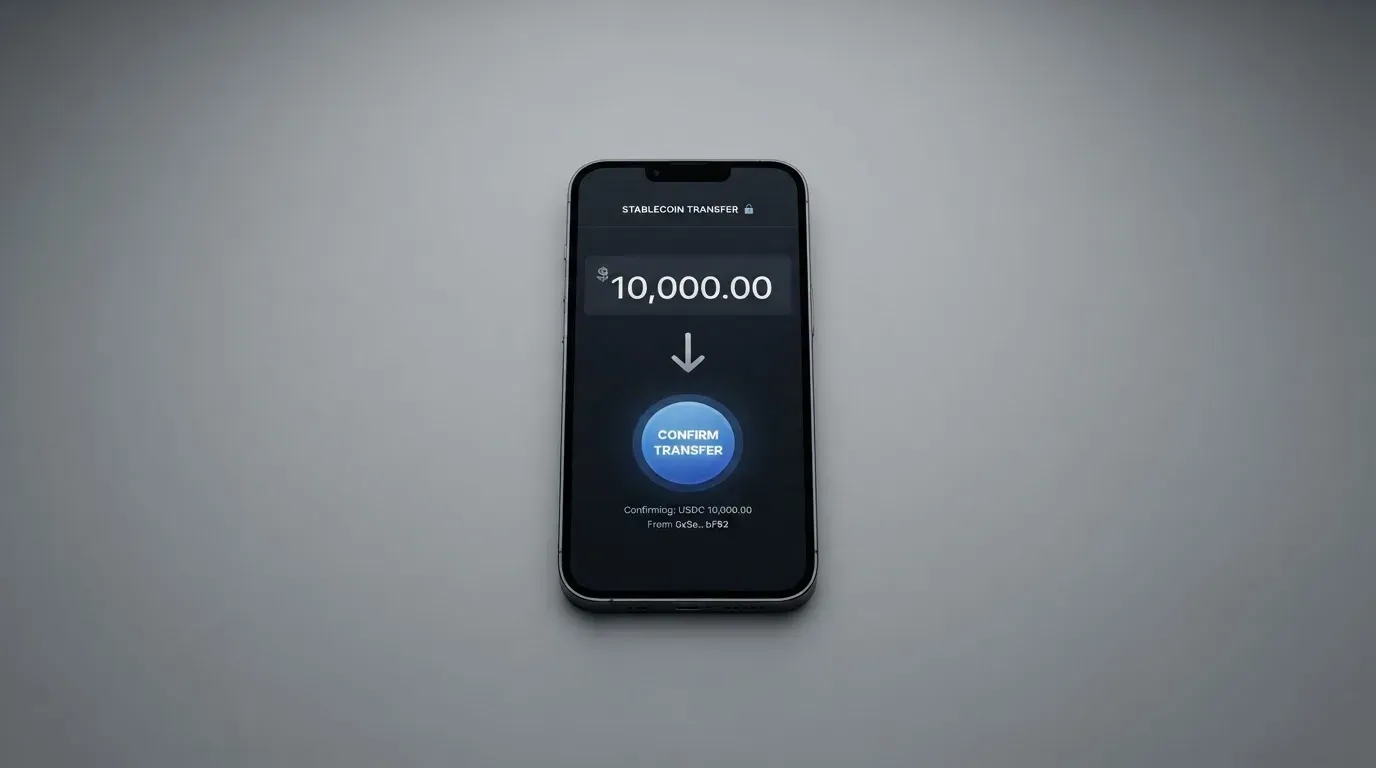
The coin list, as reported by third-party directories, is the strongest part of the product:
- Bitcoin (BTC)
- Ethereum (ETH)
- Tether (USDT)
- USD Coin (USDC)
- Litecoin (LTC)
- Monero (XMR)
The networks to use for each coin are not listed by the directory. That is the part to be careful with. Crypto transfers are irreversible, and a deposit sent on a network the provider does not support, or to an address on a different chain, can be lost or stranded. In the stablecoin world this matters even more than it sounds: USDC and USDT exist on Ethereum, Tron, Solana, Polygon, Avalanche and several other chains, and the same ticker symbol can sit on all of them. Send USDT on a network the card does not accept and the funds are usually gone for good, with manual support recovery at the provider’s discretion and no guarantee of a refund.
A few practical notes for the top-up flow:
- A note in the card’s starting data sheet says deposits are converted to a USD balance on arrival. Other card currencies are not stated. So the card’s working currency is the US dollar and any non-USD spend goes through the FX fee.
- The directory’s “load fee 5%” is what you pay on top of the network gas. The on-chain fee is charged by the blockchain, not by Nocturne, and you cannot avoid it by choosing a different card.
- The directory does not list a withdrawal feature (moving money from the card back out to your own wallet or bank). If that turns out to be accurate, the card is one-way: load crypto, spend fiat, no cashing out.
A self-custody setup, where you keep the coins in your own wallet until the moment of payment, gives you more control and less counterparty risk. A custodial setup, where the provider holds the funds, is simpler but means you are trusting the company with the balance. The directory describes Nocturne as custodial, so the funds sit with Noctavel until you spend them.
Paying with the Nocturne card every day
In normal use, the card behaves like a standard prepaid virtual card: you present it at a merchant, the network routes the authorisation, and your USD balance is debited.
A few things to know about the everyday experience:
- The directory lists Apple Pay and Google Pay support, plus contactless. Adding the card to a phone wallet is the usual route for a virtual card, because a card number on its own has no physical form to tap.
- Blocked merchant categories are not stated. Many issuers block gambling (MCC 7995) and a few other categories by policy rather than by law, and the exact list varies. If a particular category matters to you, check at signup.
- Cashback is not listed. The directory’s rewards section shows 0% cashback, with a $15 referral bonus for inviting another user. Treat that as unofficial and not confirmed by the card.
- There is no app described in the directory, and no Play Store sentiment is recorded. That usually means either the card is used through a web dashboard, or the app exists but is too new to have been rated. Either way, do not expect the polish of a mature banking app.
- Disputes and chargeback handling are not stated. A chargeback is a refund the issuer orders when a cardholder disputes a transaction, with reason codes for fraud, duplicate billing or goods not received. With a card whose issuer is not clearly identified, the dispute path is harder to predict, and US-style reversal rights (Regulation E for debit, Regulation Z for credit) do not automatically extend to prepaid cards.
The day-to-day experience, in other words, is functional but minimal. It will pay for coffee and online subscriptions; whether it will reliably handle a disputed hotel booking or a refused in-store payment is a different question.
What can go wrong
The risks fall into three groups: the company behind the card, the way the card is funded, and the way it is used.
The company and the programme
- Noctavel LLC is the only name attached to the product. The jurisdiction, the issuing bank or e-money institution, and the regulator are not identified. With any payment card, the licensed entity behind it is what gives you consumer protection; a card without a clear issuer is harder to hold to account if something goes wrong.
- A domain trust scanner scored the card’s site 49 out of 100, and user reports mentioned in the directory describe declined payments, complaints about support and doubts about the card’s origin and longevity. None of these are proof of a problem, but they are signals worth taking seriously.
- The official site is currently unreachable. That alone is a major reliability flag for a financial product, and it is the reason most of this review relies on third-party directories rather than the card’s own pages.
- The card is custodial, meaning Noctavel holds your balance between top-up and spend. Custodial platforms have a record of failure: Mt. Gox (around US$350 million reported stolen between 2011 and 2014), Coincheck (around US$400 million in 2018) and the Ronin Network bridge (US$625 million in 2022). A card that holds your balance in this way carries the same counterparty and hack risk as any custodial crypto service.
- The directory shows a community rating of 7.1/10 overall, with 7.8/10 across 9 community sources, but no Trustpilot or Reddit reviews were found for the card’s domain. The single digit of reviews and the lack of a verifiable issuer make it hard to draw a strong conclusion either way.
The funding model
- Transfers on a blockchain are irreversible, and a deposit sent on a network the card does not support, or to an address on another chain, can be lost. For stablecoins, the same ticker symbol (USDT, USDC) exists on multiple networks, and the wrong choice is the most common way users lose funds.
- Stablecoins are not necessarily stable. USDT and USDC aim to hold a value against the US dollar, but depegs have happened: TerraUSD collapsed in May 2022 and USDC briefly lost its peg in March 2023 during the US banking crisis. A balance that looks safe on a quiet day can move sharply on a stressful one.
- Stablecoins are not censorship-proof. Tether, for example, has frozen funds tied to illicit activity and disables tokens in wallets on sanctions lists.
- On-chain network fees (gas, bandwidth) are charged by the blockchain, not by the card. A user with USDT in an Ethereum wallet but no ETH to pay gas cannot send at all, because gas on Ethereum is paid in ETH.
- Load fees are taken by the card provider, but gas is paid on top, so the actual cost of a top-up is the 5% load fee plus the network fee for the chain you use. On Ethereum mainnet during a busy period that network fee can be a meaningful share of a small top-up.
The card payment
- A merchant category code (MCC) is the four-digit number a merchant is given when it starts accepting cards, and it tells the issuer what kind of business it is. Many issuers block certain MCCs (most commonly gambling) by policy. The blocked list for Nocturne is not stated.
- Some merchants decline prepaid or foreign-issued cards outright because the BIN lookup reveals the card type and issuer country. With a virtual card whose issuer country is not clearly stated, this risk is harder to predict.
- 3-D Secure adds an identity check to online payments, and Address Verification Service (AVS) compares parts of the billing address with the issuer’s records. AVS is mainly offered in the US, Canada and the UK and is generally unavailable for foreign-issued cards, which can cause declines. Identity-check flows on a card without a full KYC profile can also behave inconsistently.
- A declined authorisation can leave a temporary hold on funds for several days (typically up to 7), even if the merchant never actually charged you.
- If the programme shuts down, programme closures usually follow a pattern: a notice period, then a stop on new loads, then a stop on spending, then a window to withdraw the remaining balance. Because the card’s issuer is not clearly identified, the practical question of who you withdraw from is harder to answer.
What to take instead
Three alternative cards cover the same basic job (a virtual card you fund with crypto) with different trade-offs. They are not endorsements, just a way to see the shape of the market.
CardFlow
CardFlow scores 4.9 out of 10. It is aimed at “Nigerians and global users” and advertises a virtual USD Mastercard that you can create in minutes. The site says creating a virtual card is free, though the monthly fee is not stated, and the broader fee schedule is not listed on the pages I could read. You fund it with Bitcoin, USDT, ETH or a Naira bank transfer. If you are in Nigeria or send money to Nigeria, that direct Naira on-ramp is the main practical advantage.
HyperCard
HyperCard scores 4.7 out of 10. The official pages do not list a country eligibility rule; the App Store says the card is accepted in “more than 176 countries,” which is an acceptance figure, not an eligibility one. The product is a prepaid HyperCard with a balance in USD or EUR, and you deposit USDT, BTC or ETH in the app, which converts to the card currency. Fees are not listed on the pages I read, so the comparison is mainly on the coin set and the currency options.
Card.fi
Card.fi scores 6.6 out of 10 and is the most expensive in absolute terms but the most transparent. A banner says cards ship to 200+ countries, with terms barring residents of, or orders from, sanctioned countries. The card range is wide: Virtual Classic ($49 once), Virtual Premium ($249 once), physical Classic and Premium cards and a metal card; every physical order includes a virtual card. Card.fi is open about the fees: a 1.5% + $1 top-up fee on Classic and 1% on Premium, an FX fee of 3.5% on Classic and 2.5% on Premium, with the conversion fee shown before each top-up. Funding is the deepest of the three, with 32 coins across 5 networks (Ethereum, Base, BNB Chain, Solana and Kaanch) including USDT, USDC, ETH, BNB, SOL and KAANCH. Cashback runs from 0.8% on Classic to 2% on Metal, with a 10% headline rate at coffee shops capped at 10 USDT a month and balance earnings of up to 18% on Metal. The catch is the price of entry and the FX fee, which is much higher than Nocturne’s 1%.
In one sentence: CardFlow is a free virtual card with a Naira hook, HyperCard is a quiet multi-currency option, and Card.fi is the most expensive but the most complete.
Who I would recommend the Nocturne card to
The card only makes sense for a narrow reader.
You are a good fit if all of the following are true: you specifically want to fund a card with Bitcoin, Monero or USDT (or one of the other listed coins), you are comfortable with a 5% load fee on top of network fees, you understand that the company behind the card is small and the issuer is not clearly identified, and you are willing to keep the balance on the card small because you do not have a strong reason to trust the custodian. If the card’s site is back online and the legal pages name an issuer and a regulator, the calculation changes immediately.
You are not a good fit if you want a cheap everyday card, if you want a card with a clear dispute and chargeback path, if you want cashback, or if you want the protection of a major issuer bank behind the card. For any of those, mainstream prepaid cards or one of the alternatives above is a more honest choice.
The single most useful thing to do before topping up is to send a very small test amount first, on the network the directory (or, if it is back online, the card itself) confirms, and to wait for it to land as a USD balance before sending anything more. With an irreversible transfer and a 5% load fee, that small test is the cheapest insurance you can buy.
Frequently asked questions
What is the Nocturne card?
The Nocturne card is a virtual prepaid card you fund with cryptocurrency. The card’s working balance is in US dollars, you spend that balance anywhere Visa or Mastercard is accepted, and the provider (Noctavel LLC) holds your funds between top-up and spend. The official site is currently unreachable, so most of the public details come from third-party directories.
How does the Nocturne card work?
You send crypto from your own wallet to the card’s deposit address, the provider converts it to a USD balance on the card (at a 5% load fee, per third-party directories), and you then spend that balance in person, online or through a mobile wallet. The directory lists Apple Pay and Google Pay support alongside the virtual card number.
Is Nocturne a bank?
No. Nocturne is operated by Noctavel LLC, which is not identified as a bank in any official source I could find. The actual card issuer (the bank or e-money institution licensed to issue cards on the Visa or Mastercard rails) is not stated publicly, and the regulator is not named either.
Who owns Nocturne?
The product is run by Noctavel LLC. The ownership of that entity, the jurisdiction it sits in and the licensed issuer behind the card programme are not stated on the card’s own pages, and the card’s own site is currently unreachable, so it is not possible to confirm who is behind the brand from public information alone.
Is the Nocturne card available in my country?
The official site does not publish a supported-country list, and the directory I checked does not list one either. Because the issuer and regulator are not identified, the country rule is not publicly verifiable. If country availability matters to you, you would need to confirm it at signup time, which is hard to do while the site is offline.
Does the Nocturne card require KYC?
The directory I checked describes Nocturne as “Level 0, no KYC,” meaning no email verification, phone number, identity document, proof of address or selfie is required to sign up. That description is unofficial and not confirmed by the card itself, and any licensed issuer can request documents at any time.
How do I top up the Nocturne card?
You send crypto to a deposit address. The directory lists Bitcoin, Ethereum, Tether, USD Coin, Litecoin and Monero as supported coins, but does not list the networks to use. Because crypto transfers are irreversible, send a small test amount on the network the directory (or the card, if its site is back online) confirms before sending more.
How do I add the Nocturne card to Apple Wallet or Google Pay?
The directory lists Apple Pay and Google Pay support for the virtual card. The standard flow on a virtual card is to open the wallet app on your phone, choose to add a card, and either type the card details or scan them. Because the directory describes the card as contactless, adding it to a phone wallet is the usual way to pay in store.
Is the Nocturne card safe?
The card uses standard virtual-card mechanics (a USD balance, a card number, mobile-wallet tokenisation) and stores funds with the provider rather than in your own wallet, so it carries the same counterparty and hack risk as any custodial crypto service. The official site is currently unreachable, the issuer is not clearly identified, and user reports mention declined payments, which together make it a higher-risk option than the alternatives in this review.
Is the Nocturne card worth it?
For most readers, no. The 5% load fee is heavy, the FX fee is 1% on top, the per-transaction fee is $0.30, and the company behind the card is small and partly undocumented. The case for the card is narrow: you specifically want to load it with a coin like Monero or USDT, you accept the cost, and you keep the balance small because the custodian is not one you would trust with a large amount.
Virtual cards: your questions answered – cryptocardanswers
Content created by the «cryptocardanswers» team