
A Pro card review: a virtual dollar card for Russian clients, rated 3.6 out of 10
 Available in US
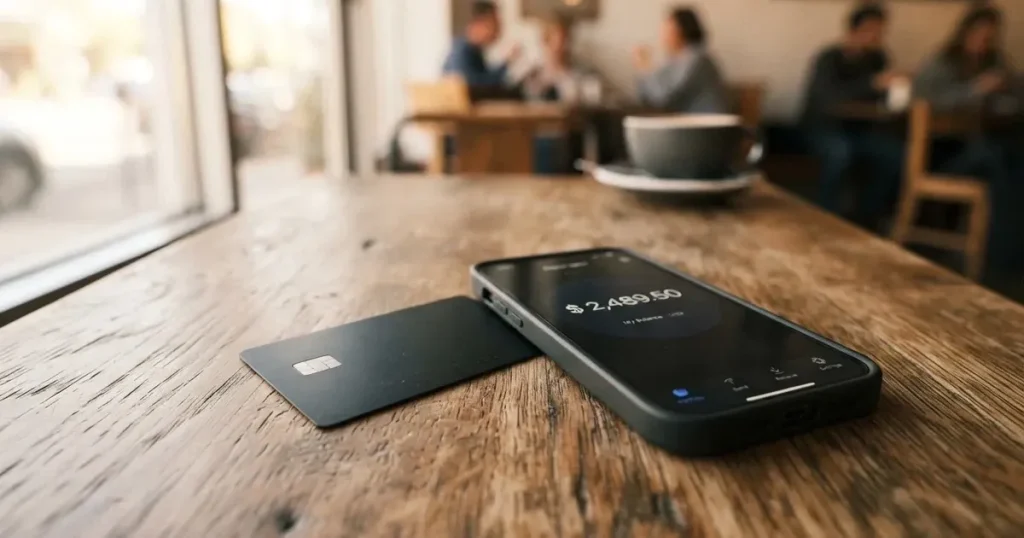
A Pro is a virtual payment card with a US dollar balance, aimed at clients from Russia who need to pay abroad and who have trouble getting an ordinary bank card. It is issued online in about 30 seconds, there is no plastic, and there is no cash withdrawal. On paper that is a narrow, honest product. What makes it hard to recommend is everything around it: the operator is a Panama company that is not a bank and not a card issuer, the cards themselves come from third-party providers, the public pages do not say who holds your money or what protections apply, and the price list has changed shape often enough that third-party reviews quote something quite different from the card’s own page.
My score for the card is 3.6 out of 10. That is not a rounding of “bad, but usable” — it is closer to “the idea is fine, the disclosure is not”. If you meet the issuance requirements, you can get one, you can pay with it in most of the world, and it will probably work. The card page says issuance is for clients from Russia, so the question of your country is not a detail. If you are holding crypto and hoping to spend it through this card, note that the card does not need crypto: you fund it in rubles and it spends dollars.
The conditions below are current as of October 28, 2026.
Verdict: 3.6 out of 10, and here is where each mark comes from
| Criterion | Mark | Why |
|---|---|---|
| Who can get it | 3 / 10 | Issued to clients from Russia, works in 190 countries, no closed-country list, sanctioned persons not served — but that leaves the actual eligibility narrow and the rules thin |
| Cost | 4 / 10 | Main offer 5,000 ₽ at list price and 2,190 ₽ with a promo code; Subscriptions 4,990 ₽ and 1,290 ₽ with a promo; maintenance and top-up shown as 0 USD; a 0.8 USD purchase fee on Subscriptions; third-party reviews quote quite different numbers |
| Top-up options | 2 / 10 | Rubles via SBP from a Russian bank card, credited to a USD balance; crypto not needed for the card, and a separate crypto withdrawal service exists with no terms shown |
| Reliability and complaints | 4 / 10 | Operator is CRYPTOBRIDGE, CORP. in Panama, not a bank and not an issuer; cards come from third-party providers; around 29 reviews on a partner site complain about refunds, support, suspected scams and withdrawal checks |
| Everyday use | 5 / 10 | Virtual Visa or Mastercard only, issued in about 30 seconds, Apple Pay and Google Pay supported, no ATM |
Read that table as five separate things rather than one verdict. The everyday-use score is the highest and it is fair: as a payment instrument, this card does a simple job quickly. The top-up score is the lowest, and that is the honest one — one funding route, no stated network fees, no stated crypto terms, nothing about who holds the funds. Reliability sits at 4 because the structure is fragile by design (a non-bank programme manager on top of outside issuers) even though I found no official record of incidents at this operator. Cost sits at 4 because the entry price is genuinely low and genuinely unstable between official and unofficial sources.
So who does this suit? It suits clients who have a Russian bank card that works with SBP, want a virtual dollar card for subscriptions and travel bookings, are comfortable paying in dollars, and treat the balance as spend-it-soon money rather than savings. Who it does not suit: anyone who needs cash, anyone in a country ineligible for issuance, anyone who wants to hold a balance for months, anyone who wants to know precisely whose balance they are trusting, and anyone for whom a 30-day complaint window and a possible court or arbitration afterwards is a slow answer to “my money is stuck”.
Will they give you the card
Yes — if you are a client from Russia. That is the stated scope of issuance, and the card page says the cards work in 190 countries, naming the United States and Turkey among them. What matters is the difference between those two facts. Where the card works and who can be given one are different questions, and this card answers the first generously and the second narrowly. There is no list of blocked countries on the page. People on sanctions lists are not served, and the terms ask you to confirm yourself that using the card does not break the law of your country of citizenship or residence.
That last part is the clause to sit with. It puts the compliance burden on you, not on the card, and “the law of your country” is a phrase with wide reach — currency controls, capital controls, tax reporting on foreign spending. If you are a cardholder living and paying abroad, that clause is doing real work in both directions: it is how the operator justifies offering you the card, and it is a reminder that the card’s availability to you does not by itself settle your local obligations.
If you are not from Russia, the answer from the card’s own pages is that issuance is not aimed at you. Note what is not stated rather than what is: there is no blocked-country list, and there is no statement that residents of some other country are welcome. Where the card page does not say, it does not say.
How to get it
The route is short. You register with an email address and a confirmation code, pick a level of verification, and the virtual card appears in about 30 seconds. There is no plastic version, no delivery to wait for, and no courier — details are in your account in about 30 seconds.
Four verification levels run from lightest to heaviest, and the level sets both what you must hand over and what your limits are:
- Basic — registration only. Deposits allowed, and card applications are allowed. No document check.
- Advanced — an identity document.
- Professional — proof of residential address on top.
- Ultra — a bank statement or property documents.
Age is 18+. The card is virtual with a US dollar balance, in either Visa or Mastercard flavour, and it is a debit card with no credit line — you can spend what is on the balance and no more. Universal and Standard cards are valid for 3 years; the Subscriptions card is valid for 2 years. Singapore is listed as the issuing country.
The catch is the waiting time, and it is not the 30 seconds. Review can take up to 30 business days and may be extended. Checks may include a selfie with your document and a video call. In practice issuance is often minutes, but with extra checks it can be hours. And a refusal has causes worth knowing in advance: forged documents or data that does not match cause the application to be declined. Plan for a review that ends in “no” as a real outcome, not a formality.
What it really costs: Fees
The cheapest way into the card is the one that matters if you only want to try it, and it is cheap: 2,190 ₽ with a promo code. At list price the main Universal A Pro offer is 5,000 ₽. The picture across the range is worth seeing in one table, because the price list is not one number.
| Item | Value |
|---|---|
| Universal A Pro, list price | 5,000 ₽ |
| Universal A Pro, with promo code | 2,190 ₽ |
| Universal, list price | 4,990 ₽ |
| Universal, with promo code | 2,490 ₽ |
| Subscriptions card, list price | 4,990 ₽ |
| Subscriptions card, with promo code | 1,290 ₽ |
| Universal PREMIUM | 4,990 ₽ |
| Maintenance | 0 USD |
| Top-up fee | 0 USD on Subscriptions and Universal |
| Purchase fee | 0.8 USD on Subscriptions, 0 USD on Universal |
| Issuance | shown on the page as 0 ₽ |
| Cash withdrawal | not provided |
| Minimum top-up | $10 |
| Maximum top-up per transaction | $10,000 |
| Maximum single operation | $15,000 |
| Daily account limit, Advanced (USDT equivalent) | 100,000 cashless |
| Daily account limit, Professional (USDT equivalent) | 300,000 cashless |
| Daily account limit, Ultra | none stated |
Two things in that table are contradictions rather than data. The page shows maintenance at 0 USD and issuance at 0 ₽, which are different currencies on the same page for what a reader assumes is the same kind of charge. And third-party Russian review blogs on dtf.ru, writing in 2025 and 2026, quote the purchase fee as “$1 + 0.4%” and top-ups “from 3.5%” — figures that conflict with the card’s own page, which shows a 0.8 USD purchase fee and 0 USD top-ups. Those unofficial numbers are not confirmed by the card. Treat them as a warning that pricing here moves and that the checkout screen, not a cached review, is the truth.
Now the three payments you will actually make.
A subscription in dollars. If you are paying a service that bills in USD from a USD balance, the 0 USD top-up and 0 USD maintenance apply, and on Universal the purchase fee is 0 USD. On the Subscriptions card the purchase fee is 0.8 USD. This is the cheapest way to use the card and the reason the Subscriptions tier exists.
A purchase in euros or another non-dollar currency. The card does not say this costs nothing. Non-USD purchases may involve a conversion, and the rate and any other fees are shown to you before you confirm. The single currency of the account is USD, so every euro payment is a conversion, and the number that decides how much you actually pay is the one on the confirmation screen. Read it; it is the only place the real rate appears.
A payment from a Russian bank card into the balance. Top-ups are free on Subscriptions and Universal, with a minimum of $10 and a maximum of $10,000 per top-up. The rubles you send are converted to dollars — who sets that rate is not something I could find on the public pages, and it matters if you top up in bulk.
What the card never does: hand out cash. Cash withdrawal from the virtual card is not provided at all, so there is no ATM question to ask, and no ATM fee to worry about — and no way to reach physical money.
How to Top up the card
Rubles, from a Russian bank card, through SBP — the Russian instant payment system. The amount lands on your USD balance. That is the whole funding story on the public pages.
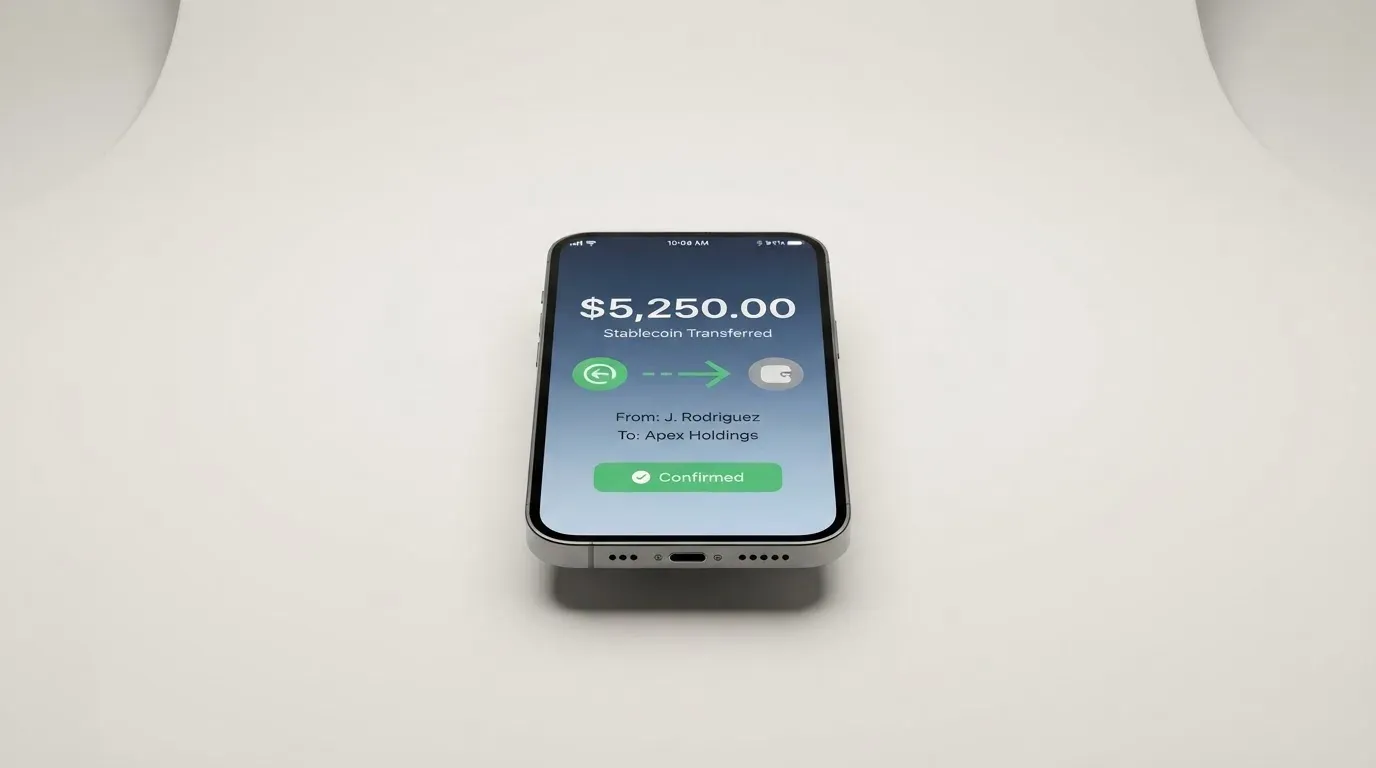
Three things follow. First, you do not need crypto. The card page states this directly, which is unusual for a product in this category and worth saying plainly, because many people arrive assuming a crypto card means crypto. Here it means a dollar card with ruble funding.
Second, that one route is the whole route. If your Russian bank card cannot send SBP transfers, this card does not work for you, and there is no bank-transfer alternative listed. The $10 minimum and $10,000 per-transaction maximum are the boundaries of the route as described.
Third, and this is the loose end, there is a separate service called “Withdraw crypto to card” and its terms are not shown. So the crypto path exists as a product name and not as a set of conditions — which network, which minimum, which fee, how long. Who pays the network fee for a top-up is also not stated. If crypto funding matters to you, that absence is the thing to raise with support before you rely on it, not after.
One more cost to know about, not in the fee list: the terms allow a fee for returning or closing a balance, set by the tariff, with no amount published. And if you close, the remaining balance is paid out after AML checks — with the checks themselves undefined in length. That is the same freeze-and-check pattern that shows up in the complaints below.
Paying with it every day
In a shop or online, the card behaves like an ordinary virtual Visa or Mastercard: it works in 190 countries, Apple Pay and Google Pay are supported, and you add it to your phone wallet. Support for the mobile wallets depends on the card, the device, the region and the issuer — so treat “supported” as “usually possible” rather than “always”.
Some categories are not described. Blocked merchant categories are not stated on the card’s pages, which means you cannot tell in advance whether gambling, adult content or similar will decline. This matters more than it sounds, because declines are often silent: an authorisation that fails can leave a hold on the balance that stays for several days, typically up to seven, before it releases. A card that “doesn’t work” in a shop may be a merchant declining a prepaid or foreign-issued card number rather than a fault in your account — the merchant can look up the issuing institution and country from the first six or eight digits of the card number and apply extra scrutiny.
There are no cashback or loyalty benefits. No cashback programme is described, and the only extras on offer are promo codes — the same ones that cut the entry price in half. There is no app rating to look at: the service is a web service, and no App Store or Google Play listing surfaced.
And here is the part that ages badly: how long the card is valid for is 3 years on Universal and Standard, 2 years on Subscriptions. You are not buying a permanent instrument.
One reassurance, of a sort, about money going missing. Card-related refunds and chargebacks are handled by the card providers rather than by the crypto operator. To complain you write to support, the operator answers within 30 calendar days, and after that the route is court or arbitration. Confirmed exchanges are final. In the EU, a prepaid or virtual card is a payment instrument rather than a bank deposit, so deposit-guarantee thinking does not apply to a balance here — which is true of almost every card of this kind, but is worth stating plainly when you are weighing how much to leave on it.
What can go wrong
I found no official record of incidents at this operator. What I did find is user reports, and they cluster around one theme: money and money-back. On a review partner site the header shows 29 reviews with an average of about 7.8 out of 10 across the visible scores. The complaints reported there include a stalled refund with contradictory support on 9 June 2026, an alleged scam through an exchange operator on 2 May 2026, and holds on withdrawal verification in April and November 2025. Russian press notes the association between searches for the word “scam” and this service. No Trustpilot page was found.
Twenty-nine reviews is not a body of evidence. It is a signal, and it is the signal that matches the structure: a crypto side operated by a Panama company, cards issued by outside providers, a support function that answers in writing within 30 days, and a withdrawal process with published checks but no published timelines.
The structural risks are worth naming separately from the complaints, because they would still be there if nobody had complained:
- Who holds the funds is not stated. The card page does not say where custody sits. Since this card spends a balance rather than a bank account, “not stated” is a real gap, not a technicality.
- Cards can be frozen. The terms reserve the right to block accounts and freeze funds on AML and sanctions grounds. That is normal and legal; the point is that it is a power someone else holds over your money.
- The operator is not an issuer. CRYPTOBRIDGE, CORP. in Panama (Folio Mercantil 155787480) is responsible for the crypto side only. Cards are issued through golden-card.ru by third-party providers. Aifory Pro states it is not a bank and not a card issuer. Licences are not stated. So there are three parties between you and the card network, and only one of them answers your support mail.
- Balances can be returned slowly. A fee may apply on return or closure, the amount is set by the tariff without a published figure, and payout follows AML checks.
- Card programmes can end. This is a category risk with a track record: Visa terminated its global agreements with FTX on 13 November 2022, and the FTX US debit card was wound down. WaveCrest, a Visa issuer that supplied crypto card brands, was suspended by Visa in Europe in 2018, closing all its Visa programmes. When a programme closes, the sequence is notice, then spending stops, then you are asked to withdraw what is left.
Support is reachable — [email protected], Telegram @AiforyPro_Tech_support, phone +7 (918) 716 07 60, and a contact form. Hours are not stated. I would treat that as a practical question to ask yourself: if your money is frozen at 2am Moscow time, what is your plan.
What to take instead
If your problem is that you cannot get a normal bank card, the honest comparison is not card against card — it is card against whatever else answers your problem. Here is where the three closest alternatives stand, on what their own pages say.
| A Pro | CardFlow | HyperCard | Card.fi | |
|---|---|---|---|---|
| My score | 3.6 / 10 | 4.9 / 10 | 4.7 / 10 | 6.6 / 10 |
| Who it is for | clients from Russia; works in 190 countries | aimed at Nigeria — “Nigeria’s smartest fintech card platform” and “Nigerians and global users”; no country list or exclusions stated | no country list on official pages; App Store says the card works in “more than 176 countries” — acceptance, not eligibility | ships to “200+ countries”; terms bar residents of, or orders from, a sanctioned country |
| The card | virtual USD Visa or Mastercard, issued in ~30 seconds; 2–3 year validity | virtual USD Mastercard, created in about 3 minutes | prepaid card; network not stated on the App Store page; balance in USD or EUR | virtual and physical, Classic and Premium, metal option; network not named |
| Entry cost | 2,190 ₽ with a promo (5,000 ₽ list) | “Creating a virtual card is completely free”; monthly fee not stated | not stated; the App Store page lists no fees | one-time $49 Virtual Classic, $249 Virtual Premium; physical and metal prices not listed; no monthly, annual, inactivity or minimum-balance fee |
| Paying | 0.8 USD purchase fee on Subscriptions, 0 USD on Universal; conversion may apply on non-USD purchases | fees not stated | fees not stated on the pages I could read | Classic: top-up 1.5% + $1.00, FX 3.5%; Premium: top-up 1%, FX 2.5% |
| Funding | rubles via SBP from a Russian bank card; no crypto needed for the card | Bitcoin, USDT, ETH or Naira bank transfer; networks not stated | deposit crypto such as USDT, BTC, ETH in the app, converted to USD or EUR; networks not stated | 32 coins across 5 networks; converted at market rate on arrival |
| Rewards | none described; promo codes only | not stated | not stated | cashback on spending: Classic 0.8% capped at 10 USDT/month, Premium 1%, Metal 1.2% or 2% with caps |
| The catch | not a bank, not an issuer; custody not stated; no cash withdrawal | everything beyond the free creation is not stated | the “176 countries” line is about where the card is accepted, not who can sign up | depositing on the wrong chain risks permanent loss |
Three readings from that table.
CardFlow says the least about its costs and the most about its audience: it is built for Nigeria, and if you are not there, the “smartest fintech card platform” is aimed at someone else. HyperCard’s acceptance figure is the trap to notice — “works in more than 176 countries” tells you where the card will be accepted, not who can open an account, and the second question is not answered.
Card.fi is the one that looks most like a conventional card product: real physical options, metal, published fees, and cashback on spending. It also costs $49 or $249 before you spend anything, and its funding route is the most dangerous of the four for a beginner. It supports 32 coins across 5 networks, and the terms are explicit that sending on the wrong chain risks permanent loss. Transfers are irreversible in general — a deposit on an unsupported network, or to an address belonging to another network, can be gone or can need manual recovery with no guarantee. One more detail if you go that way: on the Ethereum network, fees are paid only in ETH, so a wallet holding USDT and no ETH cannot send at all.
The right conclusion is not that one of these is safe and the others are not. It is that disclosure differs enormously, and Card.fi is simply more willing to put prices on its page. A Pro’s problem is the opposite: low prices, some of them attractive, and silence on the things that decide how much you can trust it.
Who I would recommend it to
I would recommend A Pro to one specific person: a Russian client who already has a working Russian bank card, needs a virtual dollar balance for subscriptions and travel bookings this month, and treats everything they load as money they are about to spend rather than money they are about to save. If that is you, 2,190 ₽ with a promo code is a cheap experiment and the 30 seconds between applying and holding a card is genuinely pleasant. Just load what you need and no more.
I would not recommend it to you if any of these are true:
- You are not a client from Russia. The card page says issuance is for clients from Russia, and you should not spend effort on an application aimed elsewhere.
- You need physical money. There is no cash withdrawal, so this is not that card.
- You want to know whose balance you are trusting. Custody is not stated, the operator is not a bank, and the cards come from third-party providers.
- You plan to keep a balance for months. A 2-year or 3-year validity, a possible closure fee at an unpublished amount, and payout after AML checks all argue for a spend-it-now balance.
- You are in a country where holding or spending a foreign-currency balance online is itself regulated. The terms ask you to confirm the law of your country of citizenship and residence; that is your question to answer, not mine.
- Your main worry is a frozen refund. The formal answer is 30 calendar days and then court or arbitration.
My honest suggestion is to look at a provider that publishes its countries, its fees and its licences — that is why Card.fi scores higher on my list even at $49 to start. If you want a dollar card mainly to pay foreign services, compare the entry prices first and then read the confirmation screen before every non-dollar payment, because that screen carries the real conversion rate and the card’s own pages do not.
Frequently asked questions
What is A Pro card?
A Pro is a virtual payment card with a US dollar balance, issued to clients from Russia and accepted in 190 countries, including the US and Turkey. There is no plastic version. You register with an email, pick a verification level, and the card appears online in about 30 seconds. It is a debit card drawing on a stored balance, with no credit line and no cash withdrawal.
How does A Pro card work?
You fund a dollar balance, then spend it. The card page says crypto is not needed for the card: you send rubles via SBP from a Russian bank card, the money is credited to your USD balance, and you pay with that balance in shops and online. Apple Pay and Google Pay are supported, subject to card, device, region and issuer.
Is A Pro a bank?
No, and the provider says so. The platform operator is CRYPTOBRIDGE, CORP. in Panama (Folio Mercantil 155787480), responsible for the crypto side only, and Aifory Pro states it is not a bank or a card issuer. Cards are issued through golden-card.ru by third-party providers. Licences are not stated, and custody of the balance is not stated either.
Who owns A Pro?
Ownership is not stated on the public pages. What the pages do say is that CRYPTOBRIDGE, CORP. is the platform operator and that cards are issued by third-party providers through golden-card.ru. So the name you see is a programme operator rather than a bank, and the entity on the other side of the card is somebody else again.
Can I use A Pro card in my country?
The cards work in 190 countries, with the US and Turkey named, and there is no list of blocked countries. Whether you can be given one is a different question: the card page says issuance is for clients from Russia. If you are elsewhere, ask support before you invest time in an application.
How much does A Pro card cost?
The main Universal A Pro offer is 5,000 ₽ at list price and 2,190 ₽ with a promo code. Subscriptions is 4,990 ₽ or 1,290 ₽ with a promo. Maintenance and top-up are shown as 0 USD, with a 0.8 USD purchase fee on Subscriptions and 0 USD on Universal. Unofficial third-party reviews quote different figures, so trust the screen at checkout.
Does A Pro card require KYC?
It depends on the level you choose. Basic needs no document check, Advanced requires an identity document, Professional adds proof of residential address, and Ultra adds a bank statement or property documents. Age is 18+. Review can take up to 30 business days, checks may include a selfie and video, and forged or mismatched documents cause refusal.
How do I top up the A Pro card?
Send rubles from a Russian bank card through SBP, and the amount is credited to your USD balance. The minimum top-up is $10, the maximum per transaction is $10,000, and the maximum single operation is $15,000. A separate “Withdraw crypto to card” service exists but its terms are not shown, and who pays the network fee is not stated.
Can I get cash from an A Pro card?
No. Cash withdrawal from the virtual card is not provided, so there is no ATM access and no ATM fee. If you need physical money, this is the wrong instrument, and that is a design choice rather than a temporary limitation.
Is A Pro card safe?
Judge it on structure rather than promises. There is no cashback, no custody arrangement is described, the terms allow accounts and funds to be blocked on AML and sanctions grounds, and the operator is not a bank while the cards come from third-party providers. Reviews on a partner site number about 29 and complain about refunds, support and verification holds. Load small amounts, spend them, and ask support directly about custody.
Virtual cards: your questions answered – cryptocardanswers
Content created by the «cryptocardanswers» team