
PayitFast: a self-custody crypto card with a big gap where the price should be
 Available in US
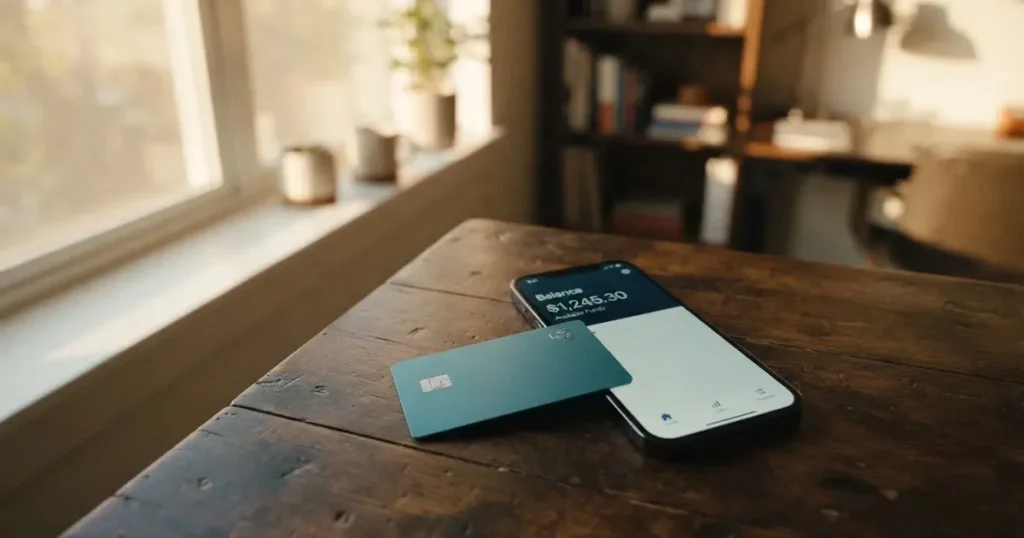
PayitFast is a crypto payment card that spends straight from a wallet you hold yourself, with a virtual Visa you can put in Apple Pay or Google Wallet and up to 10% back in USDT on eligible transactions. What I like about it is the shape of the thing: your crypto is never handed to the provider, and the company behind it is an e-money business in British Columbia registered with FINTRAC and supervised by the Bank of Canada. What I cannot get past is the silence on price. PayitFast’s own public pages, as far as I could read them, do not state what the card costs, what a currency conversion costs, what the limits are, or even which currency the card holds. That is not a small gap. A card without a visible fee schedule is a card you are asked to trust on a point nobody will put in writing.
So my mark is 6.9 out of 10. That is not a rejection. It is a card with good bones — self-custody, a clear regulatory identity, a virtual card you can use immediately — held back by the absence of the numbers you need to decide whether it is worth using at all.
The conditions described on this page are current as of October 28, 2026.
Who this suits, and who it does not:
- It suits you if you already keep your crypto in a self-custody wallet, you are comfortable sending blockchain transfers yourself, and you want a Visa number that draws on that balance without the provider taking custody.
- It suits you if you spend in US dollars, since that is where the card’s cost picture looks least bad.
- It does not suit you if you need an ordinary bank card and have been turned down elsewhere — the card is designed around a crypto balance, not around an account with a banking history.
- It does not suit you if you cannot get a physical card quickly. The physical card is waitlist-only, and the waitlist details are not stated.
- It does not suit you if you want to know exactly what you will pay. The fee numbers you will find quoted for PayitFast come from third parties, and one of those third parties flags a conflict with the card’s own agreement.
| Criterion | Mark | Why |
|---|---|---|
| Who can get it | 8 / 10 | Officially “varies by jurisdiction”; unofficially 189 countries |
| Cost | 4 / 10 | Officially not disclosed; unofficially 3% a year, 2.2% on operations not in USD |
| Top-up options | 8 / 10 | Self-custody wallets (MetaMask, Trust Wallet, Binance Wallet); stablecoins, USDT, Bitcoin, Ethereum; networks not named |
| Reliability and complaints | 8 / 10 | Silverleaf E-Money Services Ltd., FINTRAC MSB registration M23026009, oversight by the Bank of Canada under the RPAA; unofficially issued via Third National Bank; no complaints found |
| Everyday use | 7 / 10 | Virtual Visa, Apple Pay and Google Wallet, an ATM mentioned without conditions; physical only by waitlist |
| Total | 6.9 / 10 | A good structure held back by undisclosed costs |
Let me be precise about what I mean by “unofficial.” Where I write that a figure is unofficial, it comes from a third-party site, not from PayitFast’s own pages, and the card itself has not confirmed it. I am telling you it because leaving it out would leave you with nothing, but you should treat it as a lead to check, not as a published price.
Will they give you the card?
The honest answer is: it depends, and PayitFast will not tell you in a way you can plan around. The company’s own wording is that availability “varies by jurisdiction and is subject to regulatory approval”. It adds that certain countries may be temporarily unavailable, and that if your country does not appear in the verification list, onboarding is simply not available there.
That last part is the one to sit with. There is no country list published. So the practical test is not “is crypto cards legal where I live” but “does my country appear inside the app’s verification flow”. If you cannot pass that screen, nothing else on this page matters.
Third-party trackers put the reach at 189 countries, which is a wide claim — wide enough to cover almost everywhere, narrow enough that it clearly excludes someone. It is not confirmed by the card. Treat it as a hint about ambition, not as a guarantee.
One more thing about who gets the card: because the model is self-custody, the people who can actually use it are the people who already hold crypto in a wallet they control. If your crypto is sitting on an exchange account, PayitFast is not a bridge out of that — you would need to withdraw to your own wallet first, which is a separate set of risks and a separate set of fees.
How to get it
The route is the app. Identity verification happens in the app, and the card arrives as a virtual Visa you can start using straight away.
What the verification rejects is stated clearly, and this is worth reading twice because it is unusually specific. Documents are refused if they are expired, damaged, unclear, mismatched, or from an unsupported country. Support cannot manually approve or override a rejection — there is no appeals path through a human being. That is a hard edge. If your passport is scuffed, the answer is no, and no one on the support side can wave you through.
What is not stated: the document types accepted, whether proof of address is required, and any age requirement. The card does not publish them. You will find out by trying.
On the card itself:
- Network: Visa. Not Mastercard — worth noting, because the two networks behave differently at foreign merchants.
- Form factor: a virtual card in the app. A physical card is waitlist-only, and the details of that waitlist are not stated.
- Card currency: not stated. This one bothers me more than it might seem, and I will come back to why in the cost section.
What it really costs: the Fees, the fees, and the silence
This is the weak point of the whole card, and I want to be blunt about it: PayitFast’s public pages do not state the cost of the card. Not the monthly fee, not the annual fee, not the conversion fee, not the foreign-exchange fee, not the ATM fee, not the spending limits. The absence is confirmed by reading the pages. Everything numeric below that isn’t marked unofficial comes from an earlier check of the card’s own materials; everything marked unofficial comes from a third party and is not confirmed by the card.

Here is the honest picture:
| Fee or limit | What PayitFast’s pages state |
|---|---|
| Issuance | Not stated |
| Monthly fee | Not stated |
| Conversion | Not stated officially; an earlier check of the card’s own material recorded 0.75% per transaction for crypto conversion |
| FX / non-USD transactions | Not stated officially; unofficial sources report 2.2% on transactions not in USD |
| ATM | The page says “withdraw at any contactless ATM”; fee and allowance not stated |
| Daily and monthly limits | Not stated; an earlier check recorded that the spending limit is collateral-based |
| Annual fee | Not stated officially; unofficial sources report 3% a year, with one tracker noting the pricing page differs from the card agreement |
| Card currency | Not stated |
That 0.75% conversion figure deserves a note about how it works. It is not a flat “we take 0.75% and you buy coffee for 0.75% more” number — it is attached to the act of converting, which is the step between crypto and spendable balance. If you hold a token that needs converting at the moment of payment, that step is where the cost lands. If your token is already in the right form, it may not apply the same way. The card does not break this down, so I cannot tell you which case you are in.
The unofficial 3% annual figure is the number I would push hardest on, because of what it implies. A card that charges a percentage of your balance every year behaves nothing like a normal debit card. It behaves like a managed account with an annual haircut. If you keep $2,000 loaded, a 3% annual charge is $60 a year for the privilege of having money sit there — and unlike an ATM fee you pay once, this recurs whether you use the card or not. I am not telling you it is definitely 3%. I am telling you that if it is, it changes how you should think about how much you leave loaded.
The note that the pricing page differs from the card agreement is the part I would not sleep well on. When a tracker’s numbers and a provider’s contract disagree, the contract is what binds you. I have not seen the contract, so I cannot tell you which one is current or whether the tracker is reading an old version. That is exactly why I am marking cost at 4 out of 10. Not because the price looks high — because I cannot verify it.
Let me now do the thing I wish someone had done for me, which is to run three ordinary payments through this and see what actually applies.
Coffee, 4 dollars, in New York. You would spend from your loaded balance. The conversion fee, if a conversion happens, is the one that bites. The non-USD fee, unofficial at 2.2%, does not apply to a USD transaction. If you pay in US dollars, you are in the cheapest corner of this card’s cost structure — which is an argument for loading and spending in dollars rather than converting at the till.
A 30-euro subscription. Now the unofficial 2.2% applies, on top of whatever conversion is involved. If that lands as described, the effective cost of that purchase is meaningfully more than 30 euros, and it recurs every month because subscriptions recur. This is the case where a card with undisclosed pricing hurts most, because the amount is large enough to notice and small enough that you pay it without thinking.
Withdrawing cash at an ATM. The page promises “withdraw at any contactless ATM” without saying what it costs or how much you may take. You are trusting a blank. Note also that a cash withdrawal is the one card action that tends to attract the most scrutiny and the most fees across the whole industry, so a provider staying silent here is silence you should read as “ask first”.
Two further details sit under the fee heading. PayitFast has Master Terms and Elite Terms, and the contents of those tiers were not retrieved — so if you are in a tier, you do not know from public pages what the tier does for you. And the card currency being unstated means I genuinely cannot tell you whether a euro payment is a foreign-currency transaction or a native one. That single missing fact determines whether the 2.2% applies. I would ask support before you rely on either way.
How to Top up
Top up by connecting your own wallet and sending crypto in. This is the part of PayitFast that is genuinely better designed than most of its competitors, and it deserves credit.
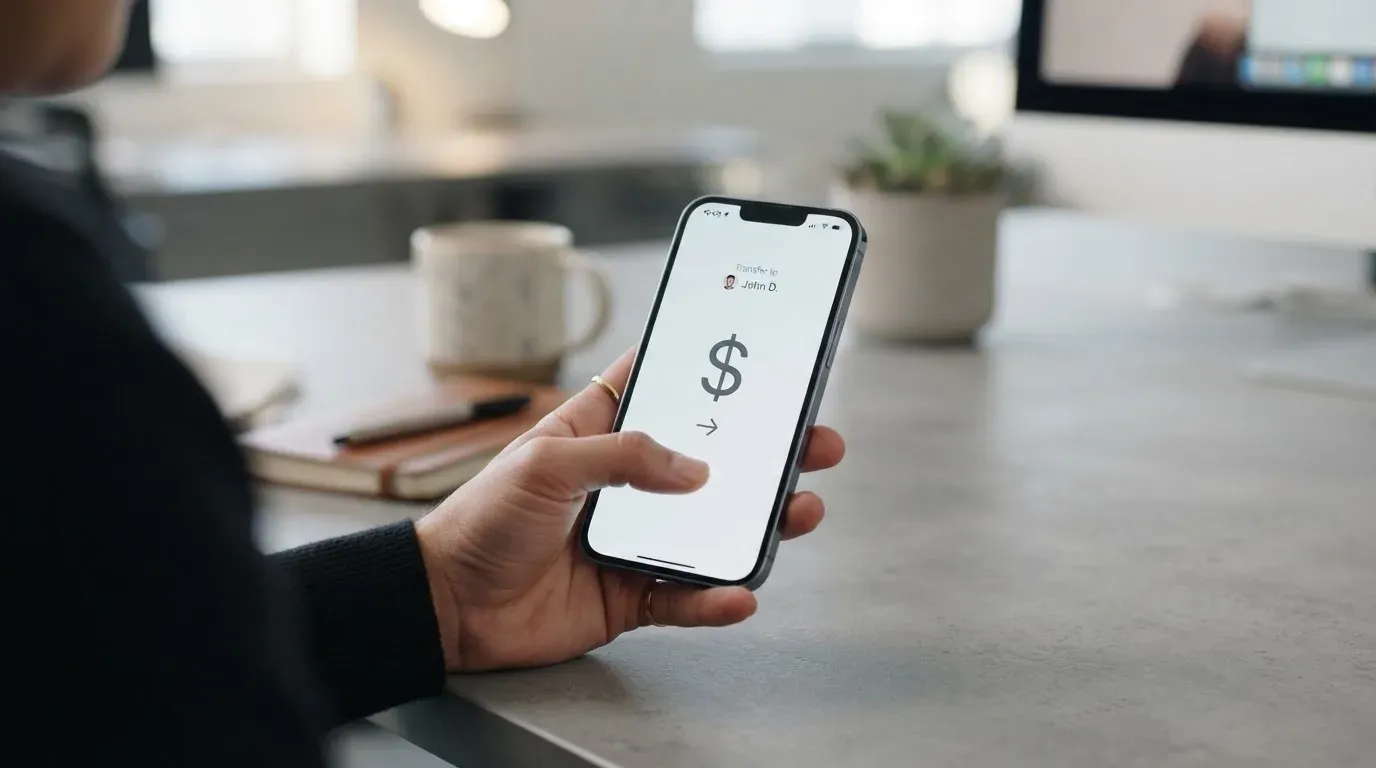
The card states it accepts self-custody wallets — MetaMask, Trust Wallet, Binance Wallet, or any other — and accepts stablecoins, USDT, Bitcoin and Ethereum. That is a wide asset list for a card, and it means you are not forced into one ecosystem. For someone who already holds funds across several wallets, that is a real convenience: you top up from the wallet the funds are actually sitting in, rather than first moving them to an exchange account that holds them for you.
The catch is the one that catches everyone in this category: the networks are not stated. Not which networks PayitFast supports for deposits, not whether sending USDT over Tron works, not whether you need the native token of the chain to pay the fee. Here is why that matters concretely.
If you hold USDT on Ethereum, the token standard is ERC-20 and gas is paid only in ETH. A wallet with USDT and no ETH cannot send. If you are on Tron, fees are handled through bandwidth and energy and often burn TRX. If you send on a network the provider does not support, the transfer can be lost or need manual recovery with no guarantee — blockchain transfers are irreversible. This is not a PayitFast quirk; it is how the rails work, and it is the single largest practical risk in topping up a crypto card.
So before your first deposit, I would do this: open the app, find the supported network and the deposit address it gives you, confirm the address is for the network your funds are on, and check that you hold the chain’s native token for the fee. A support agent can tell you this, and asking costs you nothing. Guessing costs you the deposit.
Two more points on money movement:
- If a deposit does not arrive, PayitFast says it is handled through support using the transaction ID. That is a reasonable process, and having the TXID is the single most useful thing you can keep.
- Withdrawals from the card may be held pending for compliance checks, Travel Rule requirements, network congestion, or a large-amount review. And there is a rule that catches people out: promotional credits, referral rewards, cashback and bonus funds are non-withdrawable. Fees for withdrawals are not stated.
Read that last point again, because it touches the rewards. Cashback goes in, but it does not come out.
Paying with it every day
Day to day, this is a virtual Visa you add to Apple Pay or Google Wallet and use like any other contactless card. That is the whole pitch, and for most spending it works.
Apple Pay matters more here than it might seem. When you add a card to Apple Pay, the card number is replaced with a device-specific Device Account Number held in the Secure Element, not on Apple’s servers, and each payment carries a one-time dynamic security code. In practical terms the tokenised number in your phone is safer to lose than a plastic card, and harder to use by someone who finds it. Mastercard’s equivalent is Identity Check; on Visa the brand is Visa Secure.
Where you will meet friction:
- Merchants who look at the BIN. The first six or eight digits of a card number identify the issuing institution and country. A shop can look that up and, if the issuer country differs from your billing address, apply extra scrutiny. Some merchants decline prepaid or foreign BINs outright. This is why a crypto card can be declined in a shop in your own city.
- Address verification. The Address Verification Service compares the numeric parts of the billing address you type with the issuer’s records. It is mainly offered in the US, Canada and the UK, and is generally unavailable for foreign-issued cards — which can cause declines at checkout.
- Declines that leave a hold. A declined authorisation may leave a hold on your funds that persists for several days, typically up to seven. If you are watching a balance, that gap can look like a problem that is not there.
- 3-D Secure. Online payments add an identity check, which may be frictionless or may challenge you with a one-time code. Note that under 3-D Secure, liability for fraudulent online payments can shift — critics say it can shift onto you rather than the bank.
- Blocked categories. What the card blocks is not stated. In the wider industry, gambling (MCC 7995, covering casinos, betting and lotteries) is a common block, applied by issuer policy rather than by law, and the list varies. Since PayitFast does not publish its list, assume nothing is blocked until you hit it.
- Disputes and chargebacks. Not stated. A chargeback is a refund ordered by the issuer to settle a dispute, with reason codes for fraud, duplicate billing or goods not received. Whether you have this protection on a PayitFast card is something only support can tell you. In the US, debit reversal rights come from Regulation E and credit card rights from Regulation Z, and prepaid-card coverage varies — so do not assume.
The rewards. Up to 10% back on eligible transactions, paid in USDT to the PayitFast wallet, described as immediate. Now let me put my finger on the four words that do the work: *eligible transactions*. Eligible transactions are not defined on the pages. The rate depends on which eligible asset you spend. And the cashback is non-withdrawable — usable on eligible card transactions only.
So the honest reading is that the headline 10% is a ceiling, not a rate, and the money it produces is a spending coupon rather than money you can bank. That does not make it worthless; a few percent back on ordinary spending is real. But I would not include it in any calculation about whether the card is worth using. Calculate on the fees alone, then treat the cashback as a bonus.
The app itself: iOS (App Store ID 6764277245), Android (co.payitfast.com’s Android app) and a web version at app.payitfast.com. Store ratings were not retrievable on 2026-10-21 because the store pages did not load — so I have no read on user sentiment from ratings. Local QR Payments, Send Money and Business are all marked “Soon”.
What can go wrong
Two kinds of risk here, and the second is the one that should worry you more.
The company’s position is solid on paper. PayitFast is Silverleaf E-Money Services Ltd., trading as PayitFast, incorporated in British Columbia, Canada. It holds FINTRAC MSB registration M23026009 and is supervised by the Bank of Canada under the RPAA — the Retail Payment Activities Act regime. Third-party sources report Visa issuance through Third National Bank; the card’s own pages do not name the issuing bank officially. An e-money institution is a regulated category, and being supervised under Canadian law means there is a regulator to complain to. That is a genuine mark of legitimacy and it is why I scored reliability 8 rather than 6.
I also found no user complaints about PayitFast, and no Trustpilot page for it. Read that carefully: absence of complaints is weak evidence. A young product with a small user base will not have a complaint record either way. It is not a reason to trust; it is simply not a reason to worry.
The card can be restricted. The card states plainly that cards can be restricted for repeated declines, unusual activity, or compliance reviews. That is normal, and every issuer does it. But it means your money can become unusable while your balance sits there. Add two more restrictions that are not stated: whether two-factor authentication and instant card freeze exist on this app, and how a card freeze would even work when the card is a virtual number in a phone wallet.
Self-custody cuts both ways. The same property that means PayitFast cannot lose your funds is the property that means you cannot get them back. With a self-custody-linked card, the funds stay in your wallet until the moment of payment — and you bear sole responsibility for key loss, for phishing, and for clipboard-hijacking malware that swaps a copied address. Your seed phrase, typically 12 to 24 words, is the private key in plain text: anyone who obtains it can restore the wallet and spend the funds, and there is no recovery mechanism, because the network cannot freeze or return what has left.
The history is the argument for caution. Custodial platforms have failed repeatedly: Mt. Gox (about US$350 million reported stolen, 2011–2014), Coincheck (about US$400 million, 2018) and Ronin Network (US$625 million, 2022). Self-custody removes that counterparty risk and replaces it with your own operational security. Neither is free. It is a trade, not an upgrade.
Programme risk is real and it happens. A card programme can close. WaveCrest, a Visa card issuer that supplied crypto card brands, was suspended by Visa in Europe in 2018, closing all WaveCrest-issued Visa programmes. Visa terminated its global agreements with FTX on 13 November 2022 and the FTX US debit card was wound down. Closures follow a pattern: a notice period, then spending and loading stop, then you are asked to withdraw what remains. Note that in a self-custody model the danger is softer — your crypto never left your wallet — but any balance sitting on the card at that moment is exposed.
A note on deposits and sanctions. Tether says it disables tokens in wallets on the OFAC sanctions list and has frozen funds tied to illicit activity. Stablecoins are not censorship-proof, and neither are they anonymous. I am not going to describe ways around anything here, and I will say plainly: there are none worth having. Sanctions and country rules apply to this card as they apply to any financial service.
What to take instead
The honest comparison is awkward, because PayitFast’s missing numbers mean I cannot compute a like-for-like cost. What I can do is show you what the alternatives publish, and let you see how much more you learn.
| PayitFast | TokenPocket | MetaMask | KAST | |
|---|---|---|---|---|
| Score here | 6.9 / 10 | 5.8 / 10 | 7.1 / 10 | 6.1 / 10 |
| Card | Visa, virtual; physical by waitlist | Mastercard/Visa debit; Fiat24 cards are virtual | Mastercard; Virtual instant, Metal pre-order | Virtual and physical, up to 10 cards; Visa Platinum, Infinite metal, Infinite gold |
| Who can get it | Varies by jurisdiction, subject to regulatory approval | Visa for a list of European countries/territories; Mastercard for Australia, Canada, Hong Kong, Japan, Taiwan, New Zealand, Singapore, South Korea, UK and others; Americas planned for Q2 2025 | Sign-up open in 45 listed countries/territories; other regions on a waitlist; US and UK sign-ups temporarily closed | Residence-based list at KYC; ID from a restricted region can still disqualify you |
| Issuance cost | Not stated | NFT creation fee partly covered by TokenPocket, user pays a small portion | Virtual free; Metal $199/year | Standard $0, Premium $1,000/year, Private $10,000/year |
| Transaction fee | Not stated officially; 0.75% conversion recorded earlier | 1% on crypto deposits, refunded later via rewards | “Minimal fee for each transaction”, amount not stated on pages read; no additional MetaMask fees | USD spend 0%; non-USD FX 0.5%–1.75%; declined transaction $0.50 |
| Cashback | Up to 10% in USDT on eligible transactions, non-withdrawable | None; the 1% deposit fee is refunded later | 1% (Virtual); Metal headline 3%, footnote caps 3% to the first $10,000 then 1% | 1.5% / 2% / 3% USD on the first $2,000 / $10,000 / $40,000 per month |
Read that table twice. Three of the four competitors publish a number. MetaMask publishes a free virtual card and a $199 metal card. KAST publishes a whole tier ladder. TokenPocket at least names its 1% deposit fee. PayitFast’s row is the one with nothing in it.
TokenPocket scores lowest here at 5.8, and the reason is its fee structure: a 1% fee on every crypto deposit, to be refunded later through rewards or reduced transaction fees. A refund is not a price. You pay now and hope later. Its geographic split also means you need to know which card you are actually getting before you can compare anything.
MetaMask is the closest thing to a real competitor, at 7.1. It is a Mastercard, the virtual card is instant, and the virtual is free with no annual or maintenance fee. It requires proof of residency, operates in 45 listed countries and territories with others on a waitlist, and supports spending directly from the connected wallet across Linea, Base, Monad and Solana, with tokens including mUSD, wETH, EURe, GBPe, USDC and USDT. It also has its own catches: the metal card is $199 a year, US and UK sign-ups are temporarily closed, and its cashback footnote quietly turns the headline 3% into 1% after $10,000 spent. The MetaMask fee table is linked from the page even though the amount was not in the text I read — so the information exists, which is itself the difference.
KAST is the most transparent and the most expensive, at 6.1. It publishes zero fees on stablecoin top-ups and USD spending, a 0.5%–1.75% FX fee depending on where you live and where you are spending, and a clean cashback ladder. But the entry tiers are a membership product: $1,000 a year for Premium, $10,000 for Private, billed annually upfront with no monthly option, plus a $1 a month inactivity fee after twelve months. And its eligibility rule is the strictest of the four — you can live in a supported country and still fail KYC if your ID is from a restricted region.
My read on the comparison: PayitFast is the right shape of product with the worst disclosure. MetaMask and KAST cost you more in ways they at least name. If you have to choose between a card whose fees you cannot see and a card whose fees you can, I lean toward the one you can see.
Who I would recommend it to
I would recommend PayitFast to a specific person. You hold your own crypto in MetaMask, Trust Wallet, Binance Wallet or similar, you are technically confident enough to check a network before you press send, you spend mostly in US dollars, and you have already accepted that you will not be told the fee schedule in advance. You want a Visa number that spends from your wallet without giving a provider custody, and you are patient about waiting for a physical card. If that is you, this is a reasonable card and the self-custody model is genuinely the safer default in a category where providers have failed repeatedly.
I would not recommend it to you if any of the following is true:
- You are trying to get a normal bank card. This is not a fallback for a declined bank account. It needs a crypto balance, a wallet, and an on-chain transfer.
- You need the physical card now. Waitlist only, details unstated.
- You are on a budget tight enough that 2.2% on non-USD spending would hurt. Not because it definitely is 2.2%, but because you cannot check.
- You want to withdraw your balance to your bank. Cashback, referral rewards, promotional credits and bonus funds are non-withdrawable, and withdrawal fees are not stated.
- You are not comfortable being the only line of defence for your keys. No seed phrase, no support override, no recovery. Support cannot manually approve a rejected document, and the same logic runs through everything else here.
Before you commit, do three things. Ask support what the card currency is — that determines whether your euro spending attracts the non-USD fee. Ask what the supported deposit networks are, and make sure you hold the native token for the fee on the one you use. And ask for the current fee schedule in writing, so that what you are told sits next to whatever you find in the card agreement later.
Frequently asked questions
What is the PayitFast card?
PayitFast is a Visa payment card that draws on crypto you hold yourself, in a wallet you control. You connect MetaMask, Trust Wallet, Binance Wallet or another self-custody wallet, load the card from it, and spend the balance as you would any Visa. It is issued by Silverleaf E-Money Services Ltd. of British Columbia, Canada. You get a virtual card immediately; a physical one is by waitlist only.
How does the PayitFast card work?
Your crypto stays in your own wallet until the moment of payment, so the provider never takes custody. You send funds to a deposit address, the card spends a loaded balance, and the virtual card can sit in Apple Pay or Google Wallet for contactless payments. The catch is that supported deposit networks are not stated on the public pages, so you must confirm the network before sending anything irreversible.
Is PayitFast a bank?
No. PayitFast is Silverleaf E-Money Services Ltd., an e-money company incorporated in British Columbia, Canada, with FINTRAC MSB registration M23026009 and supervision by the Bank of Canada under the RPAA. An e-money institution can hold and pay out funds but cannot lend. Third-party sources name Third National Bank as the Visa issuer, though PayitFast’s own pages do not confirm it officially.
Who owns PayitFast?
The operator is Silverleaf E-Money Services Ltd., trading as PayitFast, a Canadian company registered in British Columbia. Visa and Mastercard do not issue consumer crypto cards themselves; they licence issuers, so PayitFast operates under a network licence through a regulated issuer rather than owning the card programme outright.
Is the PayitFast card free?
Not stated. PayitFast’s public pages do not disclose an issuance fee, monthly fee or annual fee. Unofficial sources report a 3% annual fee, and one tracker notes its figure differs from the card agreement. Since a percentage charged yearly recurs whether you use the card or not, ask for the current schedule in writing before you load a meaningful balance.
What fees does PayitFast charge?
Officially, the pages state almost nothing: no monthly fee, no conversion rate, no FX fee, no ATM fee, no limits. An earlier check of the card’s own material recorded a 0.75% crypto conversion fee per transaction, and unofficial sources report 2.2% on transactions not in USD. Withdrawals are said to be possible at any contactless ATM, but no fee or allowance is given.
Does PayitFast require KYC?
Yes. Identity verification happens in the app. Documents are rejected if expired, damaged, unclear, mismatched, or from an unsupported country, and support cannot manually approve or override a rejection. Document types, proof of address and any age requirement are not stated on the pages I read — you learn them by attempting the check.
How do I top up the PayitFast card?
You send crypto from a self-custody wallet — MetaMask, Trust Wallet, Binance Wallet or any other — to the address the app gives you. Stablecoins, USDT, Bitcoin and Ethereum are accepted. Networks are not stated publicly, so confirm yours first, and remember gas on Ethereum must be paid in ETH while Tron fees burn TRX. If a deposit is missing, support handles it using the transaction ID.
Is the PayitFast card safe?
It is reasonably well regulated: a FINTRAC-registered MSB supervised by the Bank of Canada under the RPAA, with no user complaints found, though absence of complaints on a young product is weak evidence. The real risks are elsewhere — cards can be restricted for repeated declines or compliance reviews, blockchain transfers are irreversible, and with self-custody a lost seed phrase means lost funds with no recovery.
Can I withdraw money from PayitFast?
Withdrawals can be held pending for compliance checks, Travel Rule requirements, network congestion, or a large-amount review. Cashback, referral rewards, promotional credits and bonus funds are non-withdrawable and can only be spent on eligible card transactions. Fees for withdrawal are not stated, so if moving money back out is central to your plan, ask what it costs first.
Wallet cards: your questions answered – cryptocardanswers
Content created by the «cryptocardanswers» team