
A crypto-funded Visa with a high entry price and more questions than answers
 Available in US

Crydit is one of the newer names in the crypto card market. It promises a Visa you can load with a wide range of cryptocurrencies and spend almost anywhere cards are accepted, with no annual fee. The pitch is appealing to anyone who holds crypto and wants a straightforward way to convert it into everyday purchases. But once you start digging into the actual numbers, the picture becomes less clear. The card carries a $199 issuance fee, charges on every top-up, and a spending fee that applies to each transaction. Some of its headline claims, such as being available in 210+ countries, are contradicted by independent sources, and the company itself publishes very little about who can actually get the card or what the day-to-day experience looks like.
This review goes through what the card costs, who it suits, and where the gaps are, so you can decide whether it earns its place in your wallet.
Conditions are current as of October 28, 2026.
Verdict
Crydit earns 5.5 out of 10. That score reflects a card that does the basic job of converting crypto into a spendable Visa balance but charges a lot for the privilege, publishes surprisingly little about its own product, and is hard to verify independently. The good news is the breadth of accepted crypto, the custodial setup with established custody providers, and a generous daily spending ceiling. The bad news is the upfront cost, the per-transaction charges that add up quickly if you use the card for small purchases, and the lack of published information on many practical questions, from card currency to which networks you can deposit on.
The card suits someone who already holds crypto, wants a Visa for larger purchases rather than coffee runs, and is comfortable paying a premium for convenience. It does not suit someone looking for a low-fee daily card, a card that works with mobile wallets, or a provider with a long public track record.
| Criterion | Score | Why |
|---|---|---|
| Who can get it | 8 / 10 | Officially available in 210+ countries, though no exclusion list is published |
| Cost | 2 / 10 | $199 to issue, 1% top-up fee, 0.8+1.5% per transaction, 2.5% ATM withdrawal |
| Top-up options | 6 / 10 | Up to 1,000 cryptocurrencies, 160+ fiat currencies, but networks are not specified |
| Reliability and complaints | 6 / 10 | Company claims MSO and VASP licences; assets held by Cobo and Ceffu; little independent feedback |
| Everyday use | 6 / 10 | Physical Visa with NFC and ATM access, plus virtual cards; Apple Pay not yet available |
| Total | 5.5 / 10 |
The core idea, funding a Visa card with a wide choice of crypto, is sound, but the execution here carries enough friction and uncertainty that you should weigh it carefully against the alternatives.
Will they give you the card
Crydit’s official site says the card is “used in 210+ countries and regions around the world” and lists “supported countries 210+” without publishing any exclusion list. There is no published rule on whether eligibility depends on citizenship, residence, or both. The card programme page does not say whether you need to be in a specific country to apply, nor does it list any countries where the card is unavailable. For anyone whose situation depends on a specific country rule, that silence is itself an answer: you will have to ask support directly, and even then you may not get a clear answer.
One independent review, CryptoCardHub, last updated in August 2026, presents a different picture. It shows a map of 54 supported countries and names Cuba, Iran, North Korea, Russia, Syria, and the United States as restricted. That figure of 54 conflicts directly with the official “210+” claim, and the discrepancy is not explained on either side. I have not been able to confirm the smaller number from any official source, and you should treat it as unofficial. The restricted list (the five countries plus the US) overlaps with common sanctions and regulatory caution lists, which makes it plausible, but it is still unofficial until Crydit publishes a definitive country list.
The company behind the card is CRYDIT CAPITAL LIMITED, named in the footer. The country of incorporation is not given on the pages I read. Unofficial sources point to Hong Kong for the parent, with related entities in the British Virgin Islands, the Czech Republic, and Denmark. If you are evaluating this card for compliance reasons, the absence of a published issuer country and the lack of a clear excluded-country list are both reasons to pause.
The bottom line: Crydit is broadly available by the company’s own account, but the picture is muddier than the marketing suggests, and if your country might be on a restriction list, you will need to confirm with support before paying the issuance fee.
How to get it
The application process is presented in three steps on the official site. First, you choose the card. Second, you “complete KYC certification,” which the site claims takes five minutes. Third, you activate the card and deposit crypto to start using it.
The catch is the comparison table on the same page, which lists “KYC duration: 7 business days.” So you have two official numbers for the same process: five minutes and seven business days. Unofficial reporting from CryptoCardHub suggests the longer figure is closer to reality, with Visa KYC approvals taking three to five business days, and that the documents required include a government ID, a selfie, and (for the Mastercard programme, which is separate) proof of address. Documents and minimum age are not stated on the official pages.
There is a single KYC step shown, not a tiered verification system. What each tier unlocks, or what causes a rejection, is not described. If your KYC is delayed, the unofficial sources say support is slow to respond, which is worth keeping in mind if you are on a tight timeline.
Once KYC clears, you deposit crypto and the card becomes active. The card is a Visa, available as a physical card (with ATM, NFC, and contactless) and as a virtual credit card (VCC). The card currency is not stated. Delivery times are not stated on the official site; unofficial sources say global shipping is included in the issuance fee, with a £35 fee for lost-card replacement and £50 for replacement at expiry, but these are not official numbers.
In short: the process is straightforward in outline, but the official information is thin, and you may wait longer than the marketing suggests.
What it really costs: the Crydit card Fees breakdown
The headline cost picture is the weakest part of Crydit’s offer. The card costs $199 to issue according to the comparison table on the official site (a second figure, $249, appears in the same page’s mobile layout, and unofficial sources cite $249 as the standard issuance fee). The annual or management fee is listed as 0. There is one card tier, with no premium or standard version priced.

The per-transaction charges are where the cost adds up. The top-up fee is 1% of the amount you load. The spending fee is “0.8U+1.5% per transaction,” as written on the official page; the “U” likely refers to a unit or USD, but it is not spelled out, which is unusual for a fee description. ATM withdrawals carry a 2.5% fee. The official page does not state a foreign-exchange fee at all. Unofficial sources put the conversion fee at 1.5% with no FX markup (using ECB rates), and the top-up fee at 1.5% rather than 1%, but those numbers conflict with the official 1% top-up figure, so treat them with caution.
| Fee or limit | Amount |
|---|---|
| Issuance fee | $199 (table) / $249 (mobile) |
| Annual or management fee | 0 |
| Top-up fee | 1% |
| Spending fee | 0.8U + 1.5% per transaction |
| ATM withdrawal fee | 2.5% |
| Foreign-exchange fee | Not stated officially |
| Daily spending limit | Unlimited |
| ATM daily limit | Not stated officially; unofficial £2,000 |
| Free ATM allowance | Not stated |
Let me walk through how these fees work in practice. When you load the card, you pay a 1% top-up fee. When you use the card, you pay a spending fee based on the formula of 0.8 (units) plus 1.5% of the transaction amount. This fixed 0.8 component is particularly significant on small purchases, where it represents a larger share of the total cost than on larger transactions. That is the real danger of a per-transaction spending fee with a fixed component: it is more expensive relative to the purchase amount for small payments, which can make everyday use costly.
A $200 ATM withdrawal would cost you 2.5%, or $5, plus whatever your bank charges. If you make ten small purchases in a day, the fixed component alone eats $8 of your balance, before the percentage adds more.
The “unlimited” daily spending limit is a strong point. The absence of a free ATM allowance is not. Without knowing how often you plan to use ATMs, the 2.5% fee may or may not matter to you, but it is worth budgeting for.
How to top up the Crydit card
The top-up flow is a two-step process. You deposit crypto into your Crydit wallet, then “transfer to card” so that the balance becomes spendable fiat. The official page claims support for 1,000 cryptocurrencies and 160+ fiat currencies, with 300 payment channels listed under “supports.” Elsewhere on the same site the figures shift to “12K+ cryptocurrencies” and “150+ fiat currencies,” so even the marketing is inconsistent.
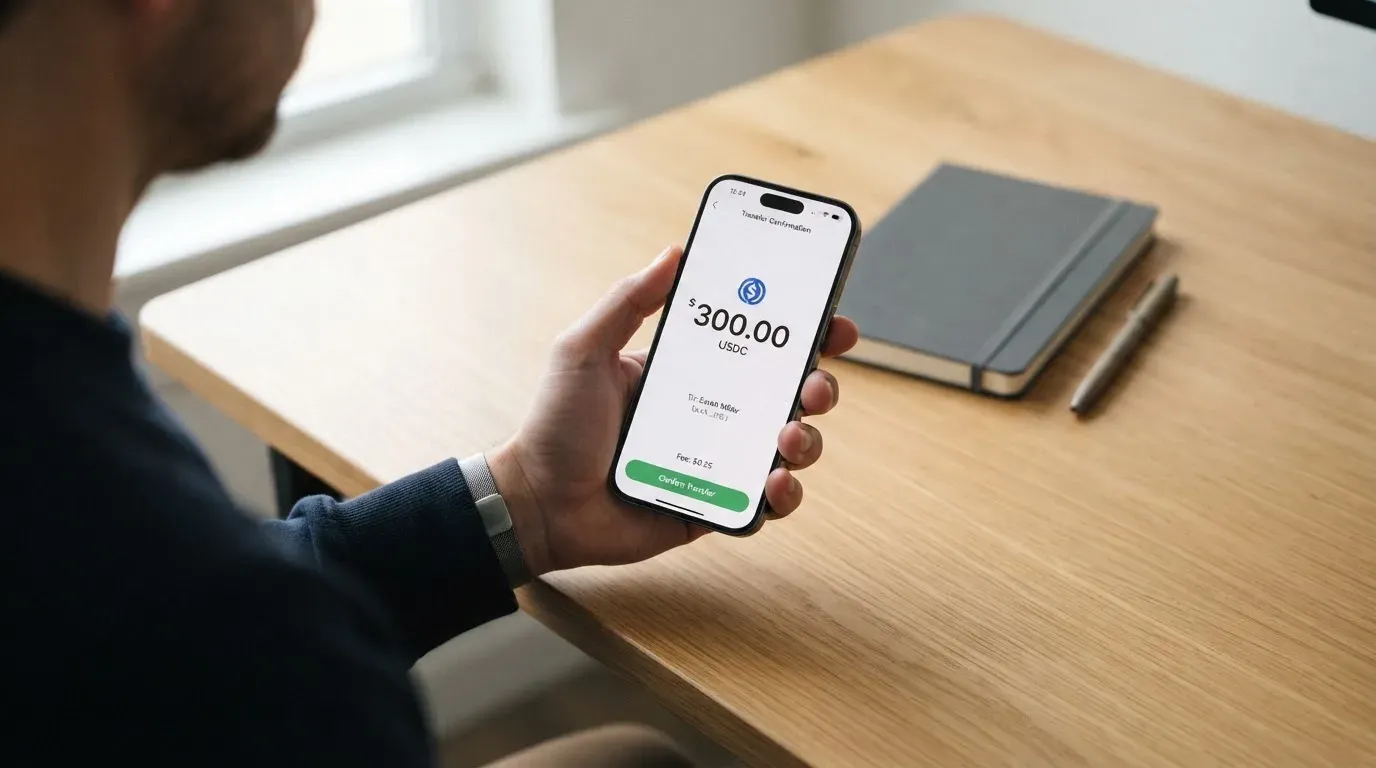
The top-up fee is 1%, applied to each load. The minimum top-up, the party that pays network fees (gas on Ethereum, bandwidth on Tron, and so on), and any additional fees for fiat top-up channels are not stated on the official pages. The deposit address and the network you must use are also not specified on the public-facing site. That is a meaningful gap. If you send USDT on the wrong network, or to a wallet address for a network the provider does not support, the funds can be lost. Crypto transfers are irreversible, and even if support can help, recovery is not guaranteed and may take time. Always confirm the correct network and address before sending anything.
Custody of deposited crypto is provided by Cobo and Ceffu, both established institutional custody providers. That is a point in Crydit’s favour: your funds are not sitting in a homemade hot wallet, but with companies that serve institutional clients. The trade-off is that this is a custodial setup. You do not hold your own private keys, which means you are trusting Crydit (and by extension its custodians) to safeguard your balance.
There is a “withdrawal” feature for getting value back off the card, with a fee of 2.5%. The method to return a balance to crypto or to a bank account, and what happens to any remaining balance if you close the account, is not described on the official pages.
Paying with it every day
In physical form, the card is a Visa with NFC for contactless payments and ATM access. Virtual cards are also available, which work for online purchases. The card currency is not published, which makes it hard to know whether your balance sits in USD, EUR, or something else. If you spend in a currency other than the card’s base, a conversion will take place, and the cost of that conversion is not clearly stated.
Apple Pay support is “currently under preparation and will be rolled out progressively in the future,” according to the official site. Google Pay is not mentioned at all. If you rely on mobile wallets for tap-to-pay, Crydit is not ready for you yet. That is a real limitation, because a growing share of in-person card payments now goes through phones and watches.
Cashback and rewards are not described on the official site. Unofficial sources suggest cashback is paid in crypto, varies by VIP tier, and is only visible after login, with marketing claims of up to $110,000 in aggregate rewards at the top tier. Without official confirmation, you should treat these numbers as marketing material.
The mobile app is available on iOS through the Hong Kong storefront, where it holds a 5.0 rating from six reviews, a tiny sample that tells you very little. Google Play availability is not stated. The app includes instant card freeze, 3-D Secure support, and multi-factor authentication, all standard safeguards.
If your card is lost or compromised, you can suspend it in the app and request a replacement. The official site uses a placeholder, “within X business days,” with no actual number. For unauthorised transactions, the site says “Crydit’s risk control team will intervene and initiate a formal dispute process,” but does not give a timeframe. Chargeback periods, the windows during which you can dispute a transaction, are not stated. Compared with banks and established card issuers, which typically have clearly defined dispute windows, this lack of specificity is a gap.
What can go wrong
The most immediate risk is the cost structure. If you use the card for many small purchases, the per-transaction spending fee (with its fixed component) will eat into your balance faster than the marketing suggests. The $199 issuance fee is also a sunk cost; if you decide the card is not for you after a few months, you do not get it back.
The second risk is regulatory uncertainty. Crydit claims to hold MSO (Money Service Operator) and VASP (Virtual Asset Service Provider) licences, but the country of incorporation is not given on the pages I read, and the licensed entity is not identified by jurisdiction. Unofficial sources point to a Hong Kong MSO licence and a European VASP registration, but those are not confirmed on the official site. If your country requires its own licensing for crypto card products, you should verify that Crydit’s setup covers you before applying.
The third risk is operational. Unofficial sources report that KYC delays and slow support are common complaints. There is no Trustpilot page for Crydit, and no Reddit thread I could find, so independent user feedback is limited. The company has not published any incident notices, which is either reassuring (nothing has gone wrong) or simply a function of being too new to have weathered a major event.
The fourth risk is the nature of crypto cards in general. Your funds are held by custodians (here, Cobo and Ceffu), not by you. If Crydit or its custody partners were to fail, your balance would be at risk. The official site does not describe how customer funds are safeguarded, whether they are segregated, or whether they are covered by any insurance or compensation scheme. In the EU, e-money institutions must segregate customer funds, but whether Crydit’s structure falls under that regime is unclear from the public information.
Finally, there is the network risk on deposits. Sending crypto on the wrong network is a common and irreversible mistake. The official site does not list supported networks, so you have to discover that information in the app or through support, after you have already paid the issuance fee.
What to take instead
Crydit is not the only crypto-funded card on the market, and depending on what you need, one of these may fit better.
CardFlow
CardFlow is aimed primarily at Nigeria, with a pitch of “Nigeria’s smartest fintech card platform” and a stated audience of “Nigerians and global users.” It offers a virtual USD Mastercard that can be created in a few minutes, with creation listed as free (note: these details are from unofficial third-party sources and not confirmed by the card issuer). The monthly fee is not stated, and other fees are not described. Funding accepts Bitcoin, USDT, ETH, or Naira bank transfer, with networks not specified. Cashback is not stated. If you are in Nigeria or sending money there, CardFlow is worth a look; if you are elsewhere, the lack of published fees and country coverage is a concern.
HyperCard
HyperCard is a prepaid card with a USD or EUR balance, funded by depositing crypto such as USDT, BTC, or ETH in the app and converting on the way in. The card network is not stated on the App Store page, which is a gap. The App Store description says the card works in “more than 176 countries,” but that refers to acceptance (where Visa or Mastercard is taken), not eligibility (where you can apply from). Cost, fees, and cashback are not stated on the pages I could read. HyperCard may suit someone who wants a simple crypto-to-fiat conversion without a heavy fee structure, but you will need to dig into the app to see the real numbers.
Card.fi
Card.fi is a more transparent option, with a published fee structure and broad country coverage. The banner says cards ship to “200+ countries,” and the terms bar residents of or orders from “a country subject to sanctions that would prohibit the service.” The card comes in Virtual Classic ($49), Virtual Premium ($249), physical Classic and Premium, and a metal (stainless steel) option. Every physical order includes a virtual card. The issuer is described as operating “under licence from the relevant card schemes” (Visa or Mastercard not named on the public page).
Fees are spelled out: top-up is 1.5% + $1.00 for Classic, 1% for Premium; FX is 3.5% for Classic, 2.5% for Premium; conversion fees are shown before each top-up. Funding accepts 32 coins across 5 networks (Ethereum, Base, BNB Chain, Solana, Kaanch), with a deposit address per card and conversion at market rate on arrival. Wrong-chain deposits risk permanent loss. Cashback is paid on card spending only: 0.8% for Classic (capped at 10 USDT per month), 1% for Premium, 1.2% for Metal (with a 250 USDT monthly cap at the higher rate or 100 USDT at the lower), and a headline 10% at coffee shops capped at 10 USDT per month. Metal holders can also earn on balances “up to 18%,” variable. Card.fi scores 6.6 out of 10 in my assessment, higher than Crydit, largely because the costs and limitations are stated openly.
Who I would recommend it to
Crydit is a niche product, and the people who will be happiest with it are a specific group. If you hold crypto in volume, want a Visa for occasional large purchases, and are willing to pay $199 up front plus 1% on each top-up and roughly 1.5% on each transaction, the card does the job. The unlimited daily spending limit is a plus for bigger buyers, and the custody with Cobo and Ceffu is more reassuring than an unknown setup.
If you are looking for a card to use multiple times a day for small purchases, the per-transaction spending fee (with its fixed component) will hurt. If you need Apple Pay or Google Pay, Crydit is not ready. If you want a clearly stated country list, a named issuer country, or published information on supported deposit networks, Crydit will frustrate you. And if low cost is your priority, Card.fi or one of the established crypto card brands will serve you better.
For the reader who holds crypto and just wants a way to spend it without going through a centralised exchange every time, Crydit works, but it is not the cheapest or the most transparent option available. The 5.5 score reflects that balance: functional, but with enough friction and cost to give pause.
Frequently asked questions
What is the Crydit card?
The Crydit card is a Visa payment card linked to a crypto wallet. You deposit cryptocurrency, it is converted to a spendable balance, and you can use the card wherever Visa is accepted, online, in store, and at ATMs. Crydit offers both a physical card and virtual cards.
How does the Crydit card work?
You apply, complete a KYC (identity verification) step, and once approved you deposit crypto to your Crydit wallet. You then transfer the balance to the card, and the card spends from that loaded balance. The model is closer to a prepaid card than a traditional debit card, since it draws on a pre-loaded amount rather than a bank account.
Is Crydit a bank?
No. Crydit is a crypto card provider, not a bank. The footer names the operating entity as CRYDIT CAPITAL LIMITED, and the company claims to hold MSO and VASP compliance licences. It works with Danske Bank, according to the official site, but Crydit itself is not a bank and your balance is not a bank deposit.
Who owns Crydit?
The official site does not disclose ownership beyond the corporate name CRYDIT CAPITAL LIMITED. Unofficial sources point to a group of entities: Crydit Capital Limited (Hong Kong), Crydit Inc. (BVI), ArcaneQuantix Ltd (Czech Republic), and Crydit Venture Investments Aps (Denmark). These are not confirmed by official Crydit pages.
How do I get a Crydit card?
You go to the official site, choose the card, complete KYC, pay the $199 issuance fee, and once approved you deposit crypto and activate the card. The KYC step is officially said to take five minutes, though the same page’s comparison table says seven business days, and unofficial sources put realistic approvals at three to five business days.
Does Crydit require KYC?
Yes. The official site lists “complete KYC certification” as a required step. Documents are not listed officially; unofficial sources say you will need a government ID and a selfie, and for the related Mastercard programme, proof of address. Without completing KYC, you cannot activate the card.
How do I top up the Crydit card?
You send cryptocurrency to your Crydit wallet, then use the “transfer to card” function to move the balance to the card for spending. The official site claims support for 1,000 cryptocurrencies and 160+ fiat currencies, but it does not publish the networks you can use for deposit. Always confirm the correct network before sending, since crypto transfers are irreversible and wrong-network deposits can be lost.
Can I use Apple Pay with Crydit?
Not yet. The official site says Apple Pay “is currently under preparation and will be rolled out progressively in the future.” Google Pay is not mentioned. If mobile wallet support matters to you, check the current status before you apply.
How much does the Crydit card cost?
The issuance fee is $199 (or $249 on the mobile layout; unofficial sources say $249 is the standard). There is no annual fee. Top-up is 1% per load, spending is 0.8 (units) + 1.5% per transaction, and ATM withdrawal is 2.5%. The foreign-exchange fee is not stated officially.
Is the Crydit card safe?
The card uses established custody providers (Cobo and Ceffu) and standard safeguards including 3-D Secure, app-based card freeze, and multi-factor authentication. However, the official site does not describe how customer funds are safeguarded, whether they are segregated, or whether any compensation scheme covers them. The company is also relatively new, with limited independent user feedback available.
Virtual cards: your questions answered – cryptocardanswers
Content created by the «cryptocardanswers» team