
Solid everyday spending from your own crypto wallet — with a shutdown date already in the diary
 Available in US
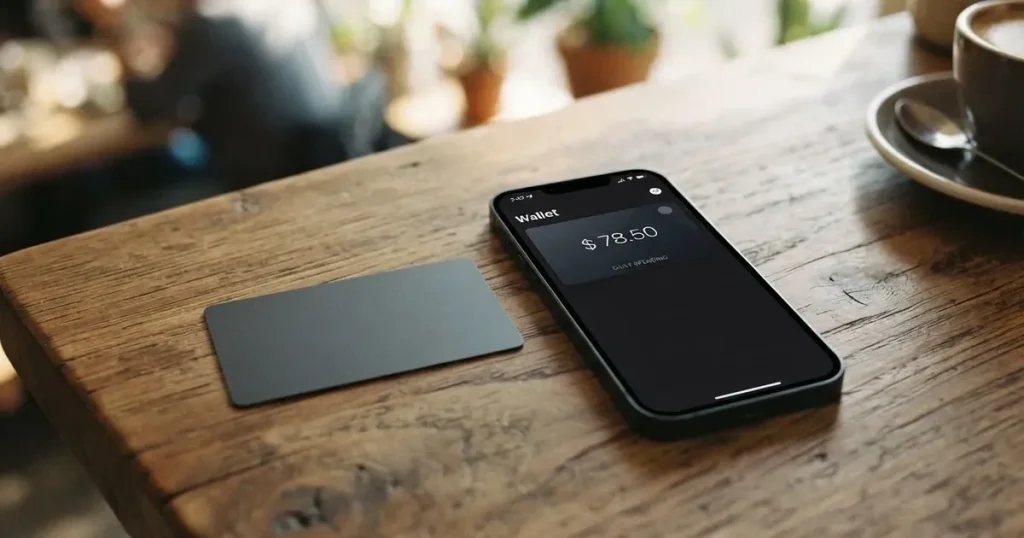
The Zeal card is a Visa debit card that spends stablecoin balances held in your own wallet — no exchange account, no custodian holding your coins, and no fee from Zeal when the card converts currency. For people already holding euro, dollar or sterling stablecoins in self-custody, that is a genuinely useful everyday tool. You add the card to Apple Pay, spend at shops in 150+ countries, earn up to 4% cashback in GNO, and your money never leaves your wallet until you pay for something. That is the promise, and for daily spending it holds together well.
The problem is not the card. The problem is what stands behind it. Gnosis Pay, the programme running the consumer card, has announced it will close that card and its web app at 23:59 UTC on 2026-12-20 and move to business customers. Cardholders are told to move to partner apps — MiniPay is named — for a replacement. The GNO cashback eligibility ended on 2026-09-30. My score for the Zeal card is 6.1 out of 10, and the single biggest reason it is not higher is that clock: you would be adopting a card that its own issuer has scheduled to end, and relying on a partner app you have not met yet to replace it.
The conditions described here are current as of October 28, 2026.
The score, and who this card is for
The score breaks down into five parts, and the shape of those five parts tells you almost everything about whether Zeal fits your situation. The card is excellent at what it does on a normal day and uncomfortable about everything that happens off a normal day.
| Criterion | Mark | Why |
|---|---|---|
| Who can get it | 7 / 10 | Spending in 150+ countries; issuance depends on eligibility and region. Live in the EU, UK, Brazil, Colombia, Mexico, Japan, Singapore, Philippines, Indonesia, Thailand. |
| Cost | 8 / 10 | No official fee totals; Zeal charges no additional FX fee. Unofficial figures: free order and delivery, 4.99 replacement, 0 monthly, first 5 ATM withdrawals free, then 2%. |
| Top-up options | 5 / 10 | Spends Safe balances in EUR, USD and GBP stablecoin accounts on Gnosis Chain and Celo. The exact coins are not named for Zeal. |
| Reliability and complaints | 2 / 10 | Gnosis Pay closes the consumer card at 23:59 UTC on 2026-12-20; cashback ends 2026-09-30; an ERC-1271 module exploit on 2026-06-01. Trustpilot 3.5/5 from 17 reviews; issuer Gnosis Pay 2.3. |
| Everyday use | 8 / 10 | Virtual and physical Visa, Apple Pay; ATMs possible on Gnosis Pay terms. Unofficial: Google Pay supported. |
| Total | 6.1 / 10 | — |
This card is for self-custody wallet users who already hold euro, dollar or sterling stablecoins and want to spend them without sending them to an exchange. If you are holding nothing but volatile tokens, there is nothing here for you — the card spends stablecoin balances, not coins you hope will go up. If you already have a functioning bank card in your country, this is a second, not a first, and you should ask why you need it.
The card is *not* for anyone planning beyond December. If you need a card that will be there for the long term, this one has already told you it is leaving.
Will they give you the card?
Sometimes, yes — and the answer turns on where you are, in a way that is messier than the marketing suggests. Zeal’s own materials say the card spends in 150+ countries, and that issuance “depends on eligibility and regional availability”. The Gnosis Pay documentation lists the programme as live in the EU, the UK, Brazil, Colombia, Mexico, Japan, Singapore, the Philippines, Indonesia and Thailand. Zeal’s own app update notes have recently added card support for Mexico, Colombia and Bolivia.
So there are two different questions people conflate. Where can I *spend*? Very widely — 150+ countries. Where can I *hold the card*? Far more narrowly, and that is the list above. A card you cannot be issued is useless no matter how many countries would accept it.
Third-party trackers add detail the official pages do not. Unofficial, and not confirmed by Zeal or Gnosis Pay: the EEA and the UK are listed as the requirements; the order screen shows the EU plus Switzerland, Iceland and Norway; the card is unavailable in the US and in much of Asia-Pacific, according to one review site from September 2026. Another site from August 2026 counted 36 countries available and 21 restricted, listing Latin America as Argentina, Brazil, Colombia and Mexico, and showing Bolivia as both supported and “coming soon” at the same time. If Bolivia is on both lists, that is a fair signal of how much precision to expect from secondary sources.
The point for you: check your own country against the official list before you spend an hour on the application. And if your country is not on it, the honest answer is that you cannot have this card, not that it is “probably fine”.
How to get it
The route is short and mostly not documented in public. Zeal’s site does not state its own KYC requirements; it points to Gnosis Pay, whose onboarding includes identity verification after you sign in with Ethereum, with verification handled by Sumsub. Zeal does not publish which documents are required, what age it wants, how long verification takes, or why an application would be refused. That is not stated, and it is worth knowing before you start — an unexplained refusal is the sort of thing you cannot plan around.
The card itself is a Visa, offered in virtual form for online use and addable to Apple Pay. Zeal’s site describes a Visa debit card issued by Monavate Limited together with Gnosis Pay Co Ltd, available as both virtual and physical. Accounts exist in euro, dollar and sterling. Whether a physical card is issued for your country, how long it takes to arrive and what it costs — not stated. Zeal’s site says physical cards are offered, but gives no country list, no time, no price.
Unofficial figures, from August and September 2026 reviews and not confirmed by the card: full identity and address verification; age 18+; a government ID or passport plus proof of address issued within the previous three months; verification through Sumsub; and an explicit warning that uploading documents does not guarantee approval. Physical shipping is said to be free, with delivery time not stated. An older fee page, of unclear date, said delivery within 10 days of shipping verification and listed a card purchase fee of EUR 30.23 including shipping — which sits awkwardly beside the free-shipping claims, and is the kind of thing you should expect the app itself to show you rather than a cached page.
Activation is not something Zeal describes publicly. If you are the kind of person who wants to know the button sequence in advance, that is a gap.
What it really costs
The honest short answer: Zeal publishes no fee schedule at all — not on its website, not in its App Store listing. It is not stated. What Zeal does state clearly is the part that matters most for daily use: no additional FX fee, and conversion at the Visa wholesale rate. That is a real advantage over most cards in this category, where foreign-currency spending quietly costs 1% to 3%.
Everything else — the ATM costs, the transaction limits — sits with Gnosis Pay rather than with Zeal, and Zeal’s site points at Gnosis Pay’s fee and limit documents, which were not retrievable when I checked. So treat the table below as the unofficial shape of the card, assembled from third-party reviews of August and September 2026, not as published terms.
| Fee or limit | What is published, and by whom |
|---|---|
| Issuance | Not stated on zeal.app or the App Store. Unofficial: card order free, physical shipping free. |
| Monthly fee | Not stated. Unofficial: 0 monthly and annual fee. |
| Replacement card | Not stated. Unofficial: 4.99, in EURe, GBPe or USDCe. |
| Currency conversion | Official: Visa wholesale mid-market rate, no additional FX fee from Zeal. |
| FX | Official: no additional FX fee. |
| ATM | Official: withdrawals possible, subject to Gnosis Pay fees, amount and allowance not stated. Unofficial: first 5 withdrawals or 200 units per month free, whichever comes first; then 2% per withdrawal; 250 per withdrawal; 500 per day. |
| Per-transaction limit | Not stated. Unofficial: 5,000. |
| Daily limit | Not stated. Unofficial: 8,000 on a rolling 24-hour basis, in EURe, GBPe or USDCe. |
| Earn accounts | Available in USD or EUR. |
Three everyday payments, to make this concrete:
- A 30-euro lunch in Paris, paid from a euro balance. No conversion happens, so the only thing that could cost you is a Gnosis Pay fee that is not stated. This is the cleanest case the card has.
- A 40-dollar purchase from a US site, paid from a sterling balance. The conversion runs at the Visa wholesale rate with no Zeal FX fee. You eat the spread that Visa itself quotes, and you should know the rate you will actually get before you commit to a large purchase.
- A 200-unit ATM withdrawal. Under the unofficial schedule, the first 5 withdrawals of the month, or 200 units, are free; after that, 2% per withdrawal. This is the number to watch, because 2% on a large withdrawal is real money and it is the most likely fee you will actually meet.
There is also one thing that is not a fee but behaves like one. Cashback runs at up to 4% and is paid in GNO on Gnosis Chain — but GNO must be held in the card Safe to qualify, and rates can change. The App Store also advertises up to 5% variable APY on EUR and USD balances. Treat both as a variable bonus, not a reason to hold money you would not otherwise hold, and note that the cashback’s eligibility ended on 2026-09-30.
How to top it up
Top-up is where this card is least clear, and it is the reason the top-up score is the lowest of the five. The card spends from balances in your card Safe — euro, dollar and sterling stablecoin accounts, on Gnosis Chain and Celo per the documentation. Which specific coins Zeal accepts is not stated. That single omission matters: if you hold USDC but Zeal expects a different token on a specific network, you will find out at the point of transfer, when a blockchain transfer cannot be undone.
Bank transfer routes are named but not priced. Euro transfers are processed by Monerium ehf; other transfers by Unblock LT UAB. Their fees are not stated, and network fees for a crypto top-up are not stated. The card’s top-up fee and minimum are not stated either.
Unofficial, from a September 2026 review: the card accounts hold EURe, GBPe and USDCe; a SEPA top-up arrives in 1–2 business days; and conversion, off-ramp and gas fees are quoted at 0%, though bridging on Ethereum still needs gas. Zero gas is worth believing only once you have seen it in the app, because the general rule for this category is that on-chain network fees are charged by the blockchain, not by the card provider.
Withdrawals are the one place the design is clearly right. Zeal is self-custodial: the funds stay in your own wallet or Safe. Earn balances in USD or EUR can be withdrawn 24/7 with no lockups. What happens to your card balance if you close the card is not stated by Zeal — a fair question to ask the app before you ever close anything.
Paying with it every day
Everyday use is this card’s best argument. You get a virtual Visa for online spending, addable to Apple Pay, and a physical Visa too. Apple Pay is supported through the virtual card in the App Store. Google Pay support is not stated by Zeal; unofficial, per an August 2026 review, it is supported and not subject to the physical-card contactless limit. Blocked merchant categories are not stated either — and that is not a detail, because gambling (MCC 7995) and similar categories are routinely blocked by policy on cards like this, and the list varies by issuer.
The app is iPhone-only as far as the material goes: iOS 16.2 or later, or a Mac with M1 or later, or Vision Pro. Its App Store UK rating was 4.5 out of 5 from 17 ratings when I read it, version 0.33.3 dated 1 September. The Google Play rating was not read — so if you are on Android, you are outside what I can vouch for here.
Two things can interrupt a normal day, and neither is Zeal’s fault. A declined authorisation can leave a hold on your funds that stays for several days, typically up to 7. And because merchants can look up the card’s issuing country and apply extra scrutiny when it differs from the billing address, a Zeal card can read as foreign in a shop in your own country. That is a known property of card-issued-in-one-country, used-in-another, and it is the kind of thing that produces a decline at the till with no obvious cause.
Dispute handling — what happens when a transaction is fraudulent or a purchase goes wrong — is not stated on Zeal’s site or its App Store listing, and unofficial sources add nothing. Zeal did reply on Trustpilot that card disputes take time. You should read that as an answer and not as a comfort.
What can go wrong
This is the section where the card earns its lowest mark, and the reasons are structural rather than a run of bad luck.
The programme is closing. Gnosis Pay announced it will close its consumer card and web app at 23:59 UTC on 2026-12-20 and move to business customers. A notice to cardholders is dated 2026-09-21, and other outlets reported it on 2026-09-25. Users are told to move to partner apps — MiniPay is named — for a replacement card; Safe funds stay accessible, and the web app remains in limited form for withdrawals. This is the normal shape of a programme closure: a notice period, then spending and loading stop, then you withdraw what is left.
The cashback has already ended. GNO cashback eligibility ended on 2026-09-30. Whatever the headline rate says today, it is not a rate you can bank on.
There was a security incident. An ERC-1271 module exploit on 2026-06-01 affected Card Safes, per a third-party report. It is worth asking what class of funds were exposed — Card Safes are card balances, not your long-term holdings, but the incident is a reminder that self-custody protects you from institutions seizing funds, not from bugs in the code you connect to.
Nobody has confirmed what Zeal itself will do. One secondary report says Zeal has not confirmed its future plans, and Zeal’s own statement could not be found. So the card you are reading about is a front-end whose own future is publicly unconfirmed while its card programme has a fixed end date.
Complaints are thin but pointed. Zeal’s Trustpilot page showed 3.5 out of 5 from 17 reviews when I read it on 2026-10-20 (the page also shows 3.7). A January 2026 one-star review described support requests going unanswered for two weeks, and Zeal apologised publicly. Another 2026 review concerns a scam transaction with slow dispute handling. App Store reviews mention problems transferring from balance to card and slow support — individual reports, unverified, but consistent with each other. The issuer’s own Trustpilot is worse: Gnosis Pay at 2.3 out of 5 from 38 reviews, with 58% one-star, described as slow or unanswered tickets. No official incident was found.
Support is thin too. The listed channels are Discord (discord.zeal.app) and X (@zealwallet). No email, no live chat, no published hours. The site runs in English, French, German, Spanish and Italian — Russian is not offered, and the App Store listing is in English. If Discord is not how you like to resolve a problem with money, factor that in now.
And the balance of risk runs the other way too. Because Zeal is self-custodial, no bank or company can freeze or seize your funds — that is the genuine appeal. The cost of that is that lost funds are likely unrecoverable. You get biometric passkey authentication, real-time transaction alerts, the ability to freeze the card in the app, an audited wallet with a published security policy, Safety Checks and transaction previews. But deposits are not insured, and Zeal’s own words are that “your principal is at risk.”
What to take instead
Three alternatives came up in the comparison, and each solves a different part of the problem.
MetaMask (7.1 / 10) is the strongest of the three on everyday usefulness. It issues a Mastercard — virtual first, instantly, with a metal version pre-orderable in-app after approval, one card per user, issued by Monavate. Sign-up is open in 45 listed countries and territories, with proof of residency required; other regions go to a waitlist, and US and UK sign-ups are temporarily closed. It spends directly from a connected wallet on Linea, Base, Monad and Solana, holding mUSD, wETH, EURe, GBPe, USDC and USDT. The virtual card is free with no annual fee; metal is $199 a year. Fees are described only as “minimal” with no figure stated, no additional MetaMask fees, no foreign transaction fee, Mastercard rate used. Cashback is 1% on Virtual and 3% on Metal — capped at the first $10,000 spent — paid in mUSD. The catch is the metal price and the waiting list, and no card currency is stated.
TokenPocket (5.8 / 10) is the low-friction one. Visa debit for a list of European countries and territories, Mastercard debit for Australia, Canada, Hong Kong, Japan, Taiwan, New Zealand, Singapore, South Korea and the UK, with the Americas planned. It runs on Arbitrum, the cards described are virtual, balances are in EUR24 and USD24. Apart from an NFT creation fee partly covered by TokenPocket, it says it charges no additional fees — but a 1% fee is charged on depositing cryptocurrency into the card, to be refunded later through rewards or reduced transaction fees. Specific coins and networks are not listed. No cashback is stated.
KAST (6.1 / 10) is the one with a card for every taste, and the widest fee table. Visa Platinum, Infinite metal, Infinite gold plated, plus Pengu, Solana and Bitcoin designs; up to 10 cards per user; balance in USD with stablecoin deposits converted 1:1 at 0% spread. Stablecoin top-up 0%, card spend 0%, transaction fee 0%, Apple and Google Pay 0%. Then the catches: annual membership of 0 for Standard, $1,000 for Premium and $10,000 for Private, billed annually upfront; Standard physical card 0 plus $40 delivery; an inactivity fee of $1 a month after 12 months; a non-USD FX fee of 0.5%–1.75% depending on where you live, where you spend and which programme you hold; $0.10 on non-USD transactions under $25; $0.50 for a declined transaction. Cashback is 1.5% to 3% depending on tier, but capped on the first $2,000, $10,000 or $40,000 a month. Its eligibility rules are also the strictest: a residence list shown at KYC, citizenship and ID mattering separately, dual citizens able to pass with a supported-country ID, only the account holder’s own ID accepted, and VPN not a way around it.
My read on the three: if your problem is “no ordinary card”, MetaMask is the one with the most credible everyday proposition. If your problem is “spend a specific stablecoin cheaply on a specific chain”, TokenPocket may fit. If you want a card that looks like something and will pay for the privilege, KAST does that at a price. None of them removes the general lesson: card programmes end, and every one of these has a licence and an issuer standing between you and the money.
Who I would recommend it to
I would recommend the Zeal card, with eyes open and a date in the diary, to exactly one kind of person: someone who already holds euro, dollar or sterling stablecoins in a self-custody wallet, who wants to spend them at ordinary shops without opening an exchange account, and who will check out before 2026-12-20 and move to whatever MiniPay or other partner becomes the successor.
I would not recommend it to you if you need a card you can rely on for years, if you are on Android, if you are in a country not on the official list, if support through Discord is a problem, or if you are holding volatile tokens rather than stablecoins. And I would think twice about the cashback — with eligibility already ended, it is a number on a page rather than a benefit.
The genuine irony of this card is that the thing that makes it attractive — it is not a bank, it is not a custodian, your keys are your own — is also the thing that means nobody is obliged to keep it alive past December. When the card disappears, the money does not. It sits in your Safe, and you take it with you. That is not nothing. It is, in fact, the design working as intended.
Frequently asked questions
What is the Zeal card?
The Zeal card is a Visa debit card that spends stablecoin balances you hold yourself. It is issued by Monavate Limited with Gnosis Pay Co Ltd, comes as a virtual card for online use and a physical one, and is addable to Apple Pay. Your funds stay in your own wallet or Safe rather than with an exchange. Spending works in 150+ countries, though issuance depends on eligibility and regional availability.
How does the Zeal card work?
You hold stablecoin balances in your card Safe in euro, dollar or sterling accounts, on Gnosis Chain and Celo. When you pay, the balance is converted at the Visa wholesale rate and Zeal adds no FX fee of its own. There is also an Earn balance in USD or EUR, withdrawable 24/7 with no lockups. Which specific coins Zeal accepts is not stated on its public pages.
Is Zeal a bank?
No. Zeal is self-custodial software, not a regulated bank. The developer is grwth lbs ltd. Cards are managed by Gnosis Pay Co Ltd, and the issuer is Monavate Limited, an FCA-authorised e-money institution licensed by Visa Europe. An e-money institution can hold funds and issue cards but cannot lend. That structure is why no bank can freeze your money, and also why no bank stands behind it.
Does the Zeal card require KYC?
Zeal does not publish its own KYC terms, and points to Gnosis Pay, whose onboarding includes identity verification after you sign in with Ethereum, handled by Sumsub. Unofficial, unconfirmed by the card: full identity and address verification, age 18+, a government ID or passport plus proof of address issued within the previous three months. Uploading documents is said not to guarantee approval. KYC levels and timing are not stated.
Is the Zeal card free?
No official fee schedule is published on zeal.app or in the App Store listing — that is not stated. Unofficial figures from third-party reviews are: card order free, physical shipping free, monthly and annual fee 0, replacement card 4.99. An older fee page of unclear date listed a card purchase fee of EUR 30.23 including shipping, so confirm in the app rather than trusting a cached page.
What are the fees on a Zeal payment?
The one fee Zeal states clearly: none for FX, with conversion at the Visa wholesale rate. Everything else sits with Gnosis Pay and is not stated on Zeal’s pages. Unofficial: the first 5 ATM withdrawals or 200 units per month are free, then 2% per withdrawal, with 250 per withdrawal and 500 per day. Cashback runs up to 4% in GNO, payable only if you hold GNO in the card Safe, and its eligibility ended on 2026-09-30.
How do I top up the Zeal card?
You top up by sending assets to your card Safe, or by bank transfer. Euro transfers are processed by Monerium ehf and other transfers by Unblock LT UAB; their fees are not stated, nor are the card’s top-up fee, minimum, or crypto network fees. Unofficial, from a September 2026 review: card accounts hold EURe, GBPe and USDCe, SEPA top-up arrives in 1–2 business days, and conversion and off-ramp fees are 0% — though bridging on Ethereum still costs gas.
Can I use the Zeal card in my country?
Spending works in 150+ countries, but being issued the card is a narrower question. The programme is live in the EU, UK, Brazil, Colombia, Mexico, Japan, Singapore, the Philippines, Indonesia and Thailand, with recent update notes adding Mexico, Colombia and Bolivia. Unofficial trackers list the EEA and UK as requirements, and report the card as unavailable in the US and much of Asia-Pacific. Check your own country against the official list before applying.
Is the Zeal card safe to use?
It depends on what you mean by safe. Zeal is self-custodial, so no institution can freeze or seize your funds, and it offers passkey authentication, real-time alerts, in-app card freeze, and an audited wallet with transaction previews. But deposits are not insured, Zeal states “your principal is at risk”, and lost funds are likely unrecoverable. An ERC-1271 module exploit affected Card Safes on 2026-06-01, so self-custody protects against institutions, not against code bugs.
Is the Zeal card worth it given it is closing?
Probably not as a long-term home, and possibly yes as a stopgap. Gnosis Pay will close the consumer card and web app at 23:59 UTC on 2026-12-20 and move to business customers, with cardholders pointed to partner apps — MiniPay is named. One secondary report says Zeal has not confirmed its own plans. If you adopt it, adopt it with a move planned: your Safe funds stay accessible, and the web app remains in limited form for withdrawals.
Where can I use the Zeal card, and does it work in Apple Wallet?
Apple Pay is supported on the virtual card through the App Store, and the card works at shops in 150+ countries, so a phone in your hand covers most of what you would buy day to day. Google Pay is not stated by Zeal; unofficial, it is supported and not subject to the physical-card contactless limit. The app needs iOS 16.2 or later, or a Mac with M1 or later, or Vision Pro. Blocked merchant categories are not stated.
Wallet cards: your questions answered – cryptocardanswers
Content created by the «cryptocardanswers» team