
Toku pays you in stablecoins and gives you a Visa to spend them — but almost every fee is left unsaid
 Available in US

The Toku card is not a card you open yourself so you can buy things with cryptocurrency. That difference decides everything else about whether it fits you. It is a spending card handed to contractors and freelancers who are paid in stablecoins by companies that run their payroll through Toku. Your employer pays into a connected Rain wallet, the money settles, and the card draws down that settled balance. You are not depositing your own coins, and you are not opening an account in the hope of getting a card. You are receiving one because someone is paying you.
That is a narrow, useful product for a narrow, useful job, and it works exactly as long as your situation matches it. If you are paid in stablecoins by a Toku customer, this is close to the thing you actually want. If you are looking for a general crypto card to load with your own funds and spend anywhere, this is the wrong card, and the honest thing to tell you is that Toku’s own public pages do not describe that card at all. I’ve gone through the card’s terms, pages and public reports and marked below every point that is stated, every point that is an unofficial report, and every point the pages simply do not say. Conditions are current as of October 28, 2026.
Verdict: 5.2 out of 10
I score the Toku card 5.2 / 10. That number is not a judgement of the product being bad; it is a judgement of how little the card’s own public pages let a reader judge for themselves. A payroll card that does one narrow job cleanly can be a good card. But Toku publishes almost no numbers — no issuance cost, no conversion fee, no ATM fee, no daily or monthly limits, no card currency, no tiers — so the reader is asked to trust rather than to compare. The single most useful thing I can tell you is that this card suits a specific person, and I have tried to say exactly who.
Here is the score broken down by criterion, with the marks exactly as they stand:
| Criterion | Mark | Why |
|---|---|---|
| Who can get it | 5 / 10 | Available now for recipients in the US and Latin America (Mexico, Colombia, Brazil named); APAC listed as “APAC Q2 2026” |
| Cost | 5 / 10 | Issuance cost, conversion fee and ATM fee are not disclosed |
| Top-up options | 4 / 10 | You do not top up: the employer pays in stablecoins to a connected Rain wallet and the card spends the settled balance; Rain supports USDG, USDC, RLUSD |
| Reliability and complaints | 6 / 10 | Card issued by a partner under a Visa licence; for Rain, Cross River Bank is named but whether it relates to the Toku card is not disclosed; Trustpilot 3.2 from one review |
| Everyday use | 6 / 10 | Virtual immediately, physical “where applicable”; Apple Pay, Google Pay and ATM are not disclosed |
The total is 5.2 / 10. Two of the five marks sit at or below 5, and those are the two that matter most for whether the card is genuinely useful day to day: what it costs, and how you fill it. Costs are simply not published. Funding does not exist in the way you would expect — you cannot top the card yourself. Those two facts pull the score down more than the availability question does.
Who does this card suit? It suits a contractor or freelancer who is paid in stablecoins by a company whose payroll runs through Toku, who is in the US or Latin America where it is already available, and who wants the money to arrive and then be spendable without touching an exchange. That last point is the real value: the card turns a stablecoin payment into something that behaves like ordinary money at an ordinary till, which is exactly the friction that makes getting paid in crypto awkward in the first place.
Who does it not suit? It does not suit someone who wants to load their own crypto from their own wallet — there is no top-up path for that. It does not suit someone outside the US and Latin America today, and it only possibly suits them from “APAC Q2 2026”, which is a date, not a guarantee. It does not suit anyone who needs to know exactly what a payment will cost, because Toku does not tell you. And it does not suit someone who wants to withdraw back to a bank account, because how (or whether) you can withdraw is not stated. I would also flag one report, unofficial and not confirmed by Toku, that a business applicant was told “we are not right fit for you business at this time” after a business-verification inquiry — a single data point, not a pattern, but worth knowing if you are a company rather than an individual.
Who will give you the card
The Toku card is issued to recipients of payroll from companies that use Toku. Issuance is “available now” for recipients in the US and Latin America, and it names Mexico, Colombia and Brazil specifically. The Asia-Pacific region is listed as “APAC Q2 2026” — so if you are in, say, Singapore or the Philippines today, the card’s own page does not say you have it yet. If you are in Europe, the page does not put you in the available-now group at all.
So the answer to “will they give you the card” is not really about your country on its own; it is about the relationship. You need two things to line up: you need to be a payroll recipient of a Toku customer, and you need to be in a region where issuance is live. A company can run payroll through Toku and you can still be in a place the card has not reached. The card is tied to that payroll relationship more than to your nationality or residence.
It is worth being precise about what I do not know. The card’s public pages do not spell out eligibility rules beyond that availability statement, and they do not state what happens if your employer uses Toku but your own country is not on the available list. What I have said above is what the page says, not a promise about how any individual application will be decided.
How to get it
There is no shop to walk into and no button labelled “apply for a Toku card” that a private individual presses to open an account. You get the card because you are on a payroll: an employer who uses Toku pays you, and the card comes with that arrangement. The card is a Toku-branded Visa card — the page says Visa network only, and Mastercard is not mentioned. The virtual card is available immediately, and the physical card is “where applicable” and shipped in supported regions; the time and cost of delivery are not stated. The card currency is not stated.
Verification works like this: there is a “standard KYC process at issuance”. Recipients verify their identity once. Beyond that sentence the pages do not tell you much — the specific documents, whether proof of address is required, and what age threshold applies are not stated, and no tiered or graduated KYC levels are published. This is a single standard check at the moment the card is issued, not a system that tightens later.
Because this is framed as a payroll product, I want to be careful about one thing the searches ask repeatedly: whether Toku is a bank. It is not. Toku (WorkCo Inc per starting data) provides payroll and compliance infrastructure; the page says the card is “issued by partner under Visa license”. The wider setup is worth understanding without getting lost in it — see the background section below for how a crypto card is normally put together, because the general structure explains why several details here are pointed at rather than stated.
There is one more thing to know about how you get the card, and it is about identity rather than paperwork. These searches also ask how to activate a Toku virtual card, how to use it, and how to add it to Apple Wallet. On the last point I have nothing to tell you: no dedicated card app is stated and store ratings were not checked, so whether there is an Apple Pay or Google Pay flow, and how you would add the card, is simply not published. Likewise no card-specific support channels, languages or hours are stated — questions go to the Toku team via a demo call or a general support link, which is a payroll relationship, not a consumer card helpdesk.
Fees: what the card really costs
This is the section I wish I could write differently. Here is the honest situation: the Toku card’s public pages do not state the cost of issuance, do not state conversion fees, do not state ATM fees, do not state daily limits or monthly limits, and do not state the card currency. No tiers are published. That is not me being unable to find them; it is that they are not stated.

I want to show you that table anyway, because absence of a number is itself information you should weigh, and an empty cell tells you something a sentence would not.
| Fee or limit | What Toku’s pages say |
|---|---|
| Issuance / card cost | Not stated |
| Monthly fee | Not stated |
| Conversion fee (crypto to fiat) | Not stated |
| Foreign exchange (FX) fee | Not stated |
| ATM fee | Not stated |
| Daily limit | Not stated |
| Monthly limit | Not stated |
| Card currency | Not stated |
| Tiers | None published |
So what do those gaps mean for you at a till? Let me walk through three everyday payments and name which fees would apply if there are any — bearing in mind the card does not tell me they exist, only that they are not excluded.
- A coffee in your local currency. If your balance and your spending currency are the same, this is the payment where the fewest unknowns bite. The main thing that could apply is a foreign exchange fee, if the balance is held in a currency other than the one the café charges. Toku does not state an FX fee, and it does not state the card currency, so I cannot tell you whether this is your cheapest everyday payment or not.
- An online purchase in a different currency from your balance. This is where a conversion or FX fee, if one exists, would apply, and this is also the payment most likely to involve a 3-D Secure identity check (one-time code or biometric) and, at some merchants, an address check. Neither Toku’s page nor the general category pages tell me Toku’s exact conversion rate or FX markup.
- Taking money out at a cash machine. An ATM fee would apply if you use an ATM, and Toku does not state whether ATM withdrawal is offered at all, nor at what fee. Treat this as an open question for you, not a resolved one.
The absence of published fees is not the same as the absence of fees. Most cards in this category charge something on conversion, something on FX, something on cash, or several of the three. I am not going to guess Toku’s numbers, because guessing would be inventing facts you might rely on. The practical takeaway: before you rely on this card for day-to-day spending, ask Toku directly for the conversion rate, the FX fee, the ATM fee and your daily and monthly limits, and get the answers in writing. If those numbers do not make sense for how you spend, that is a legitimate reason to stop.
How to top up the card
You don’t, and this is the single most important thing to understand about the Toku card. It is not topped up by the user. Payroll settles in stablecoins to a connected Rain wallet, and the card draws on that settled balance. Rain supports USDG, USDC and RLUSD. Put plainly: your employer pays you in stablecoins, the money lands in your connected Rain wallet, and the card spends from that balance as it settles.
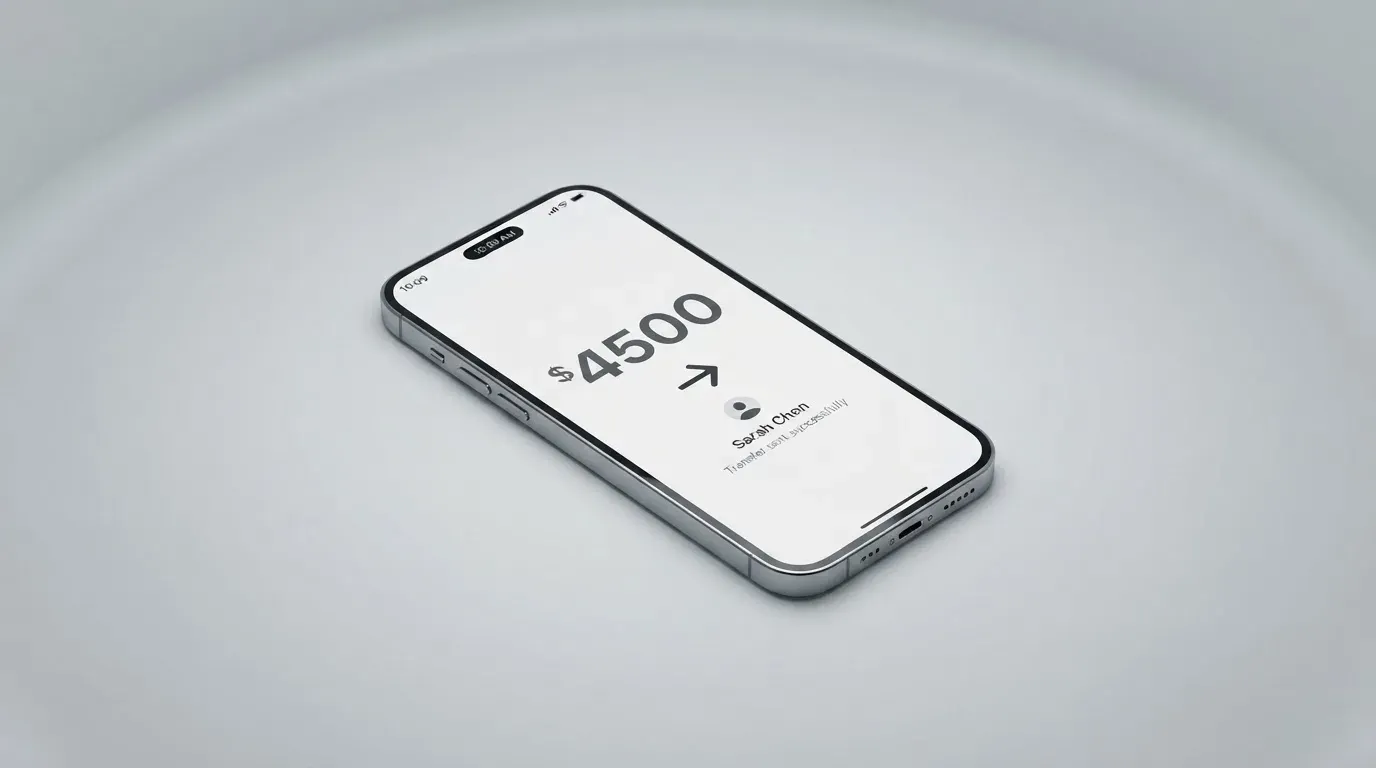
This is a genuinely different model from most crypto cards, where you personally convert or deposit crypto to load a balance you control. Here the flow is employer → stablecoins → your connected Rain wallet → the Toku card spends the settled balance. There is no user top-up path, and the card does not state one. If your plan was “I hold some USDC and I want a card to spend it”, this card is not built that way, and you should read the funding and wallet facts as a description of a payroll flow, not as a deposit facility.
Two further funding facts to hold in mind. Whether you can withdraw money from Toku back out to a bank or wallet is not stated — the withdrawal question is one the searches ask constantly, and Toku’s public pages do not answer it. And no withdrawal or transfer fee is published, for the same reason no other fee is.
The stablecoins named here (USDG, USDC, RLUSD) are dollar-pegged tokens, which is worth a sentence of background: a stablecoin aims to hold a stable value against a fiat currency, but as the general category notes put it, “despite the name, stablecoins are not necessarily stable”. USDC and USDT are US-dollar-pegged and together made up about 90% of stablecoin market capitalisation as of a July 2025 BIS estimate. So a payroll paid in stablecoins arrives with dollar value, subject to the peg holding and to the settlement mechanics, which is a background risk rather than a Toku-specific one.
Paying with it every day
Day-to-day use is where the card’s structure shows. It is a Toku-branded Visa (network only), with a virtual card available immediately and a physical card “where applicable”. You pay with it as you would any Visa — the virtual card is the one you have from the start, and if a physical card is issued to you it arrives by post in supported regions on a timeline Toku does not publish.
Here is what I can and cannot tell you about the everyday experience. No dedicated card app is stated, and store ratings were not checked, so there may or may not be an app in the ordinary sense. Whether you can add the card to Apple Pay or Google Pay is not stated. ATM availability and cost is not stated. Whether there are any rewards or cashback is not stated. Whether there is any associated wallet functionality beyond the connected Rain wallet is not stated. And if a payment goes wrong, the dispute or chargeback process is not stated — see the risk section, because that gap matters.
Some of what makes or breaks a card day to day is not Toku’s to publish and is worth knowing as general background, because it applies to any card and helps you read the gaps above. Payments made with a mobile wallet replace the card number with a device-specific number and use a one-time code per payment, which is generally one of the safer ways to pay online. Three-D Secure adds an identity step to online payments — Visa’s brand of it is Visa Secure — and the issuer either approves it silently or challenges you with a code or biometric. Address verification, which some merchants use, is mostly offered in the US, Canada and the UK and is often unavailable for foreign-issued cards, which can cause a decline at checkout for reasons that have nothing to do with you. And some merchants decline prepaid or foreign cards outright, because the card lookup reveals the issuer and country. So when you ask “where can I use the Toku card”, part of the honest answer is: wherever a Visa is accepted, minus the places that refuse prepaid or foreign cards, minus anything the issuer declines — and Toku does not publish the limits that would tell you where that boundary is for you.
What can go wrong
Let me take this in order of how much it should actually worry someone in your position.
Spending limits you don’t know about. Daily and monthly limits are not stated. This is the risk I would rank highest for a daily-use card, because an undisclosed limit is an unpleasant surprise at a checkout rather than a fine. You cannot plan spending against a number that is not published.
No published fee schedule. Conversion, FX and ATM fees are not stated. The risk is not that a fee exists — most likely one does — but that you cannot predict what a payment will cost or compare the card on price at all.
Withdrawal not addressed. Whether and how you withdraw is not stated. If your plan involves getting money back out to a bank account, that plan is currently unverified.
Who issues the card, and whose balance you trust. The page says the card is “issued by partner under Visa license”. Rain’s general footer says its Visa debit cards are issued by Cross River Bank, Member FDIC, under a Visa U.S.A. Inc. licence, with Rain Products, Inc. as programme manager and explicitly not a bank. Whether that arrangement applies to the Toku card is not stated. This matters because of how these cards are built generally: the card network (Visa) routes messages and sets rules, a licensed issuer (a bank or e-money institution) holds the programme, and the crypto brand is often only a programme manager or front end. So you are trusting a licensed issuer for the money side and a payroll partner for the relationship. Rain says it is not a bank, exchange or asset custodian. Spending controls such as 2FA or an instant freeze are not stated.
Complaints — thin, not clean. I found no official incidents, and no Reddit or forum complaints in the reviews I searched. The single Trustpilot data point is 3.2/5 from one review. There is one unofficial user report, dated January 2026, that a business applicant was told “we are not right fit for you business at this time” after a business-verification inquiry. This is one person’s account, not confirmed by Toku, and with only one review there are no themes to draw. I am flagging it because business applicants should know it exists, not because it establishes a pattern.
The category risks that are not Toku’s fault. Two are worth knowing. First, funding sits behind a stablecoin: if the token loses its peg, your balance’s dollar value moves with it, and the category is not immune — USDC temporarily lost its peg in March 2023. Second, disputes: because the dispute or chargeback process is not stated for this card, and because coverage for prepaid-style cards varies and should not be assumed, I would not lean on the assumption that a card-network dispute right will be handled the way a bank’s is. If you need that protection, ask what stands behind it.
Programme risk, as general background. Cards in this space can be wound down. Visa terminated its global agreements with FTX in November 2022 and the FTX US debit card was wound down by its issuer; Visa also suspended WaveCrest in Europe in 2018, closing all WaveCrest-issued Visa programmes. Closures typically mean a notice period, then spending and loading stop, then you are asked to withdraw remaining balances. This is not a prediction about Toku — it is the backdrop against which any payroll card runs, and a reason not to treat a card balance as a savings account.
What to take instead
If the Toku card does not fit — because you are outside the US and Latin America, because you want to top it up with your own crypto, because you need published fees — there are other crypto cards that publish more. I have pulled three comparators out of the same research pool. None is a payroll card; they are general spending cards, which is precisely why they are alternatives for a reader who wants self-funding. I am not endorsing any of them; run the same check on each that I ran on Toku.
| TokenPocket | MetaMask | KAST | |
|---|---|---|---|
| My score | 5.8 / 10 | 7.1 / 10 | 6.1 / 10 |
| Card | Visa/Mastercard debit on Arbitrum | Mastercard | Visa tiers (Platinum/Infinite) |
| Where | Visa for European countries/territories; Mastercard for Australia, Canada, HK, Japan, Taiwan, NZ, Singapore, South Korea, UK; Americas planned | 45 listed countries/territories, others on a waitlist | Residence-based, country list not published |
| Card cost | NFT creation fee partly covered, user pays “a small portion” | Virtual free; Metal $199/year | Standard 0; Premium 1,000/yr; Private 10,000/yr |
| Funding | Crypto deposits from wallet | Spends from connected wallet | Stablecoins incl. USDT, USDC |
| Rewards | 1% deposit fee “refunded later via rewards” | Cashback 1% virtual / up to 3% metal, in mUSD | Cashback up to 3% by tier |
TokenPocket is the closest in shape to a self-crypto card but is thin on disclosure too, and it carries one fee quirk: a 1% fee on depositing crypto, which it says will later be refunded through rewards or reduced transaction fees. The refund is a promise of future benefit, so treat the 1% as a real upfront cost until you see it back.
MetaMask scores highest of the three at 7.1, mainly because it publishes its two prices plainly (free virtual; $199/year metal), states minimal per-transaction fees with no additional MetaMask fees and no foreign transaction fee, and pays cashback in a stablecoin. Its own constraints are worth reading: sign-up is limited to 45 listed countries and residency is required, other regions join a waitlist, and US/UK sign-ups are temporarily closed. It spends from your connected wallet across several networks, so it is genuinely a self-funding card.
KAST is the one with the most explicit tier structure and fee table, which is why it is useful to look at even if the entry tiers are priced for a different kind of user. It publishes its non-USD FX fee (0.5%–1.75% depending on residence country, transaction country and card programme), a small fixed fee on non-USD transactions under $25, a fee on declined transactions, and cashback by tier. It also has the most elaborate eligibility wording of the three — the KYC country list is not published, and holding only an ID from a restricted region can still make you ineligible even if you live in a supported country.
Set against those three, Toku’s distinguishing feature is not price or rewards; it is that it is a payroll card funded by an employer rather than a self-funded card. That is a genuine strength for its audience and no substitute among these. For everyone else, the comparison table above is a fairer starting point than Toku is, simply because more of the numbers are visible.
Who I would recommend it to
I would recommend the Toku card to a specific person: a contractor or freelancer in the US or in Latin America — Mexico, Colombia or Brazil — who is paid in stablecoins by an employer whose payroll runs through Toku, and who wants those payments to be immediately spendable without converting them at an exchange. If that is you, this card does the one job it was built for, and the virtual card being available immediately means you are not waiting on plastic to spend what you have already earned. You should go in knowing you cannot top it up yourself, you cannot currently see its fees, and you cannot currently see its limits, so confirm those with Toku and keep a buffer in mind.
I would not recommend it if any of these are true of you: you want to fund the card with your own crypto; you are outside the US and Latin America and cannot wait on an “APAC Q2 2026” that may slip; you need to know exactly what a payment costs before you spend; you need to withdraw back to a bank account; or you are a company rather than an individual, in which case you should be aware of the one unofficial report of a business applicant being turned down. If the card does not come to you through payroll, this is not your card, and one of the self-funded alternatives above is a better place to look.
The honest summary is that Toku has built a card for a job most crypto cards ignore — turning stablecoin payroll into spendable money — and done it in a way that leaves the reader, you, with fewer published numbers than you need to judge it on price. The product may well be fine. The disclosure is what holds the score to 5.2.
Frequently asked questions
What is the Toku card?
The Toku card is a spending card for contractors and freelancers paid in stablecoins through Toku’s payroll service. It is a Toku-branded Visa that draws on a stablecoin balance settled in a connected Rain wallet after your employer pays you. It is not a general crypto card you open yourself to load with your own funds; it comes to you through a payroll relationship rather than a personal application.
How does the Toku card work?
Your employer, which uses Toku for payroll, pays you in stablecoins — Rain supports USDG, USDC and RLUSD — and that settles to your connected Rain wallet. The Toku card then spends the settled balance like an ordinary Visa, virtual immediately and physical where applicable. You do not personally deposit or top up the card; the flow is employer to stablecoins to your connected Rain wallet to card spending.
Is Toku a bank?
No. Toku (WorkCo Inc per starting data) provides payroll and compliance infrastructure, and its page says the card is issued by a partner under a Visa licence. Rain’s general footer describes its Visa debit cards as issued by Cross River Bank, Member FDIC, with Rain Products, Inc. as programme manager and explicitly not a bank. Whether that specific arrangement applies to the Toku card is not stated.
Is the Toku card free?
Toku’s public pages do not state a card cost, a monthly fee, a conversion fee, an FX fee or an ATM fee. That is not the same as saying it is free — most cards in this category charge something — it means the price is not published. Before you rely on it day to day, ask Toku for the conversion rate, FX fee, ATM fee and your limits, ideally in writing.
Does the Toku card require KYC?
Yes. The card’s page describes a “standard KYC process at issuance”, and recipients verify their identity once. The specific documents, whether proof of address is needed, the age threshold and any tiered KYC levels are not stated. Because this is standard anti-money-laundering customer due diligence, expect identity checks as part of receiving the card.
Who can get the Toku card?
It is for payroll recipients of Toku customers. Issuance is listed as available now for recipients in the US and Latin America, with Mexico, Colombia and Brazil named, and the Asia-Pacific region listed as “APAC Q2 2026”. Eligibility therefore depends on both your being paid by a Toku customer and your being in a live region; the pages do not give a detailed eligibility test beyond that.
How do I top up the Toku card?
You do not. The card is not user-topped-up: payroll settles in stablecoins to a connected Rain wallet and the card draws on the settled balance. Rain supports USDG, USDC and RLUSD. If you were hoping to deposit your own crypto from your own wallet, this is not the mechanism — you would want a self-funded card instead.
Can I use the Toku card with Apple Pay or Google Pay?
The card’s public pages do not state whether Apple Pay or Google Pay are supported, and no dedicated card app is stated. So how you would add the card to a mobile wallet, if at all, is not something the card currently documents. In general, mobile wallet payments replace your card number with a device-specific number and use a one-time code per payment, which is a safer way to pay online when it is available.
Where can I use the Toku card, and can I withdraw money?
You can spend it wherever a Visa is accepted, subject to the issuer’s limits and the usual exceptions: some merchants decline prepaid or foreign-issued cards, and some online checkouts use an address verification that often does not work for foreign-issued cards. Toku does not state daily or monthly limits. Whether you can withdraw money from Toku back to a bank account is also not stated, so treat getting money out as an open question to confirm with them.
Is the Toku card safe?
There are no safety guarantees I can make, and you should treat the unknowns as the risk. No official incidents were found, but complaints data is extremely thin — Trustpilot shows 3.2/5 from a single review, and an unofficial January 2026 report described a business applicant being declined after a verification inquiry. Spending controls such as 2FA or an instant freeze are not stated, the dispute process is not stated, and because the balance sits in stablecoins it carries peg risk. Know who issues the card and what protections stand behind it before you hold a balance you would miss.
Wallet cards: your questions answered – cryptocardanswers
Content created by the «cryptocardanswers» team