
KeyOne gives you a free virtual Visa drawn on a crypto balance, and asks the fewest questions of any card in this guide
 Available in US
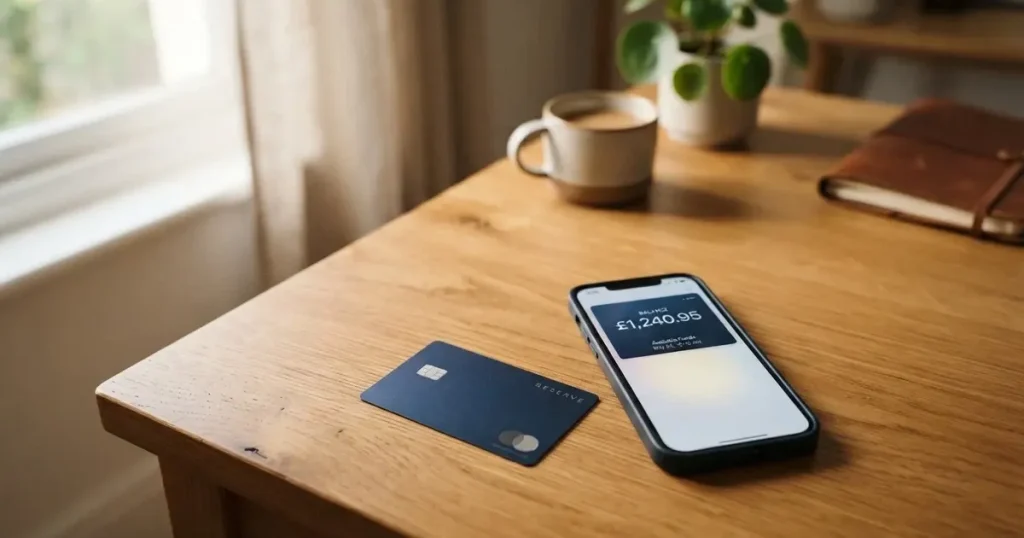
The KeyOne card is a virtual Visa that spends a balance you fund from crypto or a bank transfer. There is no physical card, no monthly fee on the free plan, and card payments in your balance currency cost nothing. In exchange you get a narrow product: one virtual card, no Apple Pay rivals beyond it, no cashback mentioned anywhere, a withdrawn-complain record that is also an empty one, and an issuer relationship that the card’s own documents spell out plainly. I scored it 6.8 out of 10. That is not a dismissal and not a recommendation — it is what the card is worth once you know what it is and what it is not.
The conditions described below are current as of October 28, 2026.
What the score comes from
My score is the sum of six criteria, each marked out of 10, and I do not move them after the fact. The reasons matter more than the number, so read the last column before you decide whether the total means anything to you.
| Criterion | Mark | Why |
|---|---|---|
| Who can get it | 7 / 10 | Cards are for residents of 70 listed countries: Europe, Asia, the UAE, Africa, Latin America, Australia |
| Cost | 8 / 10 | Free EUR 0 plan: issuance and monthly service free; payments in the balance currency 0%, conversion up to 1%; crypto top-up 0.8% plus network fee |
| Top-up options | 7 / 10 | USDC and USDT, network not named; also SEPA, ACH and top-up from a Visa/Mastercard; crypto withdrawal only on the Base network |
| Reliability and complaints | 7 / 10 | The card is issued by Wirex (Visa); KeyOne Solution Ltd is the technology interface, not a bank; no complaints found, no App Store rating yet |
| Everyday use | 4 / 10 | Virtual Visa only, Apple Pay exists, Google Pay not disclosed; ATM not disclosed |
| Total | 6.8 / 10 | — |
The 8 for cost is the strongest single mark and it is easy to see why: a card with no issuance fee and no monthly fee is rarer than it should be, and the payment fee in the balance currency is genuinely zero. The 4 for everyday use is the one that should govern your decision if you are comparing this to a normal bank card, because everything you might want from a card — a plastic piece of plastic in your wallet, cash from an ATM, a phone wallet for Android, cashback, merchant categories you can rely on — is either absent or simply not disclosed.
Who this suits, in short. Residents of Georgia, Serbia or Kazakhstan who want a card with no monthly fee, who are comfortable holding money in a crypto account rather than a bank account, and who do not need a physical card or an ATM. Everyone else should read the risk section before spending anything, because the balance you top up is not a bank deposit.
Will they give you the card
Yes, if you live in one of 70 listed countries and you are an adult with a government-issued ID that matches your application. The rule is residence-based, not citizenship-based.
The list is wide and deliberately unglamorous: Europe, including Georgia, Moldova, Ukraine, Serbia and Azerbaijan; Asia, including Kazakhstan, Uzbekistan, Japan and Thailand; the UAE and Bahrain; Nigeria, Ghana, Kenya, South Africa and Uganda; Mexico, Brazil, Argentina and others; Australia. Russia and Belarus are not on the list, and for any country not on it the page says plainly that you cannot apply for a KeyOne card yet.
That distinction matters more than it first appears. The rule is about where you live, not what passport you hold. I found no excluded list and no statement about Russian or Belarusian citizens specifically, so I cannot tell you that a citizen of an unlisted country living in a listed one is approved — the card’s own wording is about residents, and residence is what it will check.
What I will say is this: the countries on the list include several where an ordinary bank card is genuinely hard to open from abroad or online, and that is the audience the card is built for. If you are a resident of one of them, you are in the intended group, not an edge case.
How to get it
The application is short and standard. Four steps, and the fourth is the one that surprises people: the card arrives inside the app, not in the post.
- Check that your country is supported.
- Submit a government-issued ID — passport, ID card, driving licence or residence permit, with the accepted types varying by the country of the ID — along with a selfie.
- Provide proof of address if it is asked for after the ID check.
- Receive the card in the app: once approved, the card number, expiry date and CVV appear there.
Age is 18 and over, stated on the home page. Prepaid and debit cards are generally available to adults at 18+ as a category, so there is no unusual threshold here.
On the identity check itself: the name and date of birth on your document must appear and match what you entered in the application, the photo on the document is matched to your selfie, and the validity date must be visible and in the future. There are no named tiers — no “level 1”, “level 2”, “level 3” — because there is only one path. Proof of address may be requested, and your eligibility for the card depends on the residence that document shows, which is how the country rule gets enforced in practice rather than on paper. Additional checks may be required, which is regulatory language for “we might ask you for more”.
Processing time is not stated. The card says it may vary, and that support can tell you where your application stands. That is worth knowing before you plan a trip.
The card you get is virtual, and virtual only. The cardholder agreement is written around a balance in EUR.
What it really costs: Fees
The honest version: the free plan costs nothing to hold, nothing to open, and nothing to spend in euros, but it charges on almost every way of getting money in. The Premium plan costs EUR 149 for twelve months, paid once from the balance, and cuts the top-up fees roughly to a third.

Here is what the card states about its costs and limits, as published:
| Fee or limit | Free (EUR 0) | Premium (EUR 149 / year) |
|---|---|---|
| Card issuance | free | free |
| Monthly service | free | — |
| Payment in the balance currency | 0% | 0% |
| Currency conversion | up to 1% | up to 1% |
| Crypto top-up (USDC/USDT) | 0.8% + network fee | 0.33% |
| SEPA / ACH top-up | 0.8% | 0.3% |
| Top-up from another Visa/Mastercard | ~4.5% | ~4.5% |
| In-app exchange | 0.3% on the first EUR 1,000/month, then 1.25% | 0.3% on the first EUR 2,000/month, then 1.25% |
| Cards included | 1 virtual card | 3 virtual cards |
| Extra cards | not available | EUR 10 each |
| Card spend per card per month | EUR 20,000 | EUR 30,000 |
| Single transaction | EUR 20,000 | EUR 30,000 |
| SEPA in/out | EUR 20,000 per month | EUR 20,000 per month |
| ATM | not stated | not stated |
Three everyday payments, and which fees apply to each. This is the part I would want you to picture before you decide anything.
- A coffee in euros, in a country where the euro is the balance currency. No conversion, so 0%. This is the free plan’s best case and it is a real one. If the shop is in Germany, France or Spain and you have euros on the balance, the payment costs exactly what the coffee costs.
- The same coffee in dollars, or in pounds, or anywhere outside the euro area. The cardholder agreement, section 5, says payments in the balance currency carry no fee and other currencies carry a conversion fee of up to 1%. “Up to” is doing real work in that sentence: the top of the range is the number you should plan for. A 1% fee on a daily coffee is nothing; on a monthly spend it becomes a line item.
- Topping up with USDC or USDT from a crypto exchange. 0.8% on the Free plan, plus the network fee charged by the blockchain itself, which the card provider does not set and which varies with network conditions. This is where the free plan quietly becomes the expensive plan, and it is the number I would hold in your head before you choose Free over Premium.
Two more things the table does not show, because they are not fees but behave like them. The exchange rate you get when you convert inside the app is not stated — only the fee is — and the card currency itself is not specified in the agreement, though the home page describes the balance as EUR. And merchant refunds go back to the KeyOne balance, and section 7 warns they may arrive in a currency different from the charge. A refund is therefore not a clean undo.
ATM fees are not stated. Since the card is virtual, I would plan as though cash is not part of this product at all rather than assume a free allowance.
Individual limits may be lower than the published ones due to partner compliance checks. That is standard regulatory wording, but it is worth remembering that EUR 20,000 is a ceiling, not an entitlement.
How to top up
Four ways in, and the crypto route is the one the card is actually built around. USDC and USDT are accepted; the network is not specified for deposits, which is the single most important gap on this page. SEPA and ACH bank transfers work. You can top up from another Visa or Mastercard for about 4.5%. Crypto withdrawal out works on the Base network only.
| Route | Free (EUR 0) | Premium | Notes as stated |
|---|---|---|---|
| USDC / USDT deposit | 0.8% + network fee | 0.33% | network not specified |
| SEPA transfer | 0.8% | 0.3% | EUR 20,000 per month in and out |
| ACH transfer | 0.8% | 0.3% | ACH is listed for the UK only |
| Faster Payments (GBP) | — | — | listed for the UK only |
| From another Visa/Mastercard | ~4.5% | ~4.5% | the most expensive way in |
| Crypto withdrawal out | no KeyOne fee | no KeyOne fee | Base network only |
The bank-transfer geography is narrower than “SEPA and ACH” suggests at first glance. SEPA is available for many EU countries and the UK; Faster Payments in pounds and ACH in dollars are listed for the UK only. If you are outside Europe and want to top up by bank transfer, the card’s own pages do not tell me you can.
The unnamed deposit network is the thing I keep coming back to. The card accepts USDC and USDT but does not say on which chains you send them. In this category that single detail decides whether a transfer costs a network fee of a fraction of a dollar or lands on a chain you did not intend and needs manual recovery. Circle’s USDC is natively supported on 38 networks as of 16 September 2026, including Ethereum, Solana, Base, Polygon PoS, Avalanche, Arbitrum and Stellar; USDT has been issued on Ethereum, Tron, Solana, Polygon, Avalanche and others. The overlap is broad, which means a wrong choice is easy to make and, once made, hard to undo — blockchain transfers are irreversible, and a deposit sent on a network the card provider does not support can be lost or need manual support recovery with no guarantee. Send a small test amount first. That is not advice about the crypto, it is just the mechanics of an irreversible transfer.
Two mechanics worth knowing before your first transfer. On Ethereum, gas is paid only in ETH, so a wallet holding USDT and no ETH cannot send. On Tron, fees are paid through bandwidth and energy and often burn TRX. And Tether says it disables tokens in wallets on the OFAC sanctions list and has frozen funds tied to illicit activity, so stablecoins are not censorship-proof — true of every stablecoin, and worth remembering when a friend asks you to be the middle person.
Getting money back out has two paths, and they behave differently. Crypto withdrawal is Base-only and carries no KeyOne fee. Bank transfers out (SEPA/ACH) may carry a partner fee, shown to you before you confirm. The minimum top-up is not stated.
And you can leave. The card can be closed in the app at any time without affecting the balance, and the terms say you may stop using the services and withdraw funds at any time. Account deletion is requested in the app (Profile > Support) or by email; you withdraw remaining balances first, and the card and accounts are closed with Wirex, with deletion completed within 30 days. KYC and transaction records are kept for five years, which is a legal retention period rather than anything about you.
Paying with it every day
A virtual Visa, spendable in the app, addable to Apple Pay in one tap. That is the daily-use story in full, and the gaps in it are the reason this section is short.
What works:
- Card details in the app, with a number, expiry and CVV after approval.
- Apple Pay, described as one tap to add.
- Online payments protected by 3-D Secure, where you approve or decline in the app.
- Freezing a compromised card in the app.
- Spending up to EUR 20,000 per card per month on Free, EUR 30,000 on Premium.
What is not disclosed, and I mean undisclosed rather than absent:
- Google Pay is not mentioned. If your phone is Android, Apple Pay is not your answer.
- ATM is not mentioned. Combined with the virtual-only card, I would not treat this as a card that can produce cash.
- Cashback or rewards are not mentioned.
- Restricted merchants and countries — the card says “some countries, merchant categories and transactions are restricted”, and does not publish the list.
That last one deserves a moment of your attention, because in this category a block list is normal and not usually published. Gambling is the classic example: merchant category code 7995 covers casinos, betting and lotteries, and many issuers block it by policy rather than by law, with the list varying by issuer. If you expect to use this card for anything sensitive, the honest thing is to assume some categories will be declined and find out which.
The apps are iOS “KeyOne: Crypto Card & Wallet” — iPhone on iOS 17 and later, version 1.0.10, in English, Russian and Serbian — and Android under com.keyonesolution.keyone, whose rating I could not retrieve. There is a web app at app.keyonepay.com. The App Store listing in Ireland shows no rating, because it “has not received enough ratings”. A version 1.0.10 and no app rating is a young product, and I would rather tell you that plainly than round it up.
If a transaction you do not recognise is wrong, the cardholder agreement says to contact support, which helps you file a dispute with the issuer. No time frames are given, the word chargeback is not used, and the terms set no refund deadlines. Blockchain transactions are irreversible. Merchant refunds go to the KeyOne balance.
What can go wrong
This is the section that decides whether KeyOne is right for you, and the honest headline is that there is no track record to lean on — in either direction.
The balance is not a bank deposit. KeyOne states it is “not a bank”. It is KEYONE SOLUTION LTD, incorporated in Saint Christopher and Nevis, company number C 63589. The card is issued by Wirex under Wirex’s own regulatory permissions — the Cardholder Agreement and Terms were both last updated 12 October 2026 — and KeyOne Solution Ltd is the technology interface. Wirex became a Visa principal member in Europe in December 2020. So the card sits on a real Visa issuer, but your relationship with the brand on the app icon is with a Saint Christopher and Nevis company that says outright it is not a bank, and whose Terms are governed by the law of Saint Christopher and Nevis. Crypto balances are not covered by any deposit guarantee or investor compensation scheme.
Nobody complains because nobody has. I searched for complaints and found none — no Trustpilot page, no Reddit thread, nothing about KeyOne itself in two searches on 20 October 2026, no user reports, no news. The only hits were unrelated companies whose names happen to be similar. That sounds reassuring and is not: a product with no ratings and no complaints is a product with no independent history. You are not inheriting a reputation, and nobody else’s failure has warned you yet.
Programmes like this have closed before. Visa terminated its global agreements with FTX on 13 November 2022 and the FTX US debit card was wound down. WaveCrest, a Visa issuer that supplied crypto card brands, was suspended by Visa in Europe in 2018, closing all WaveCrest-issued Visa programmes. Closures typically follow a pattern: a notice period, then spending and loading stop, then you are asked to withdraw remaining balances. If that happened to you here, you would be dealing with the Base network as your only exit for crypto and a partner fee on bank transfers out. I am not predicting it; I am telling you the shape of the risk exists.
Lost device means lost money. The self-custody wallet is the good part: private keys are created and stored on your device through an embedded wallet provider, and KeyOne says it cannot move your crypto without your signature. That is a real improvement on custodial platforms, where the provider holds the credentials and Mt. Gox, Coincheck and Ronin Network show what that can cost. The cost is that the recovery is entirely yours — the card’s own FAQ says that losing your device or PIN can mean permanent loss of funds. Nobody can restore a wallet for you.
Some cards get declined for reasons that have nothing to do with you. A card number starts with an issuer identification number, a BIN or IIN, of 6 or 8 digits that identifies the issuing institution. Merchants can look it up and see the institution and country, and may apply extra scrutiny when the issuer country differs from the billing address — which is why a card issued in one country can look foreign to a shop in another. Address verification, which compares the numeric parts of the billing address the buyer typed against issuer records, is mainly offered in the US, Canada and the UK and is generally unavailable for foreign-issued cards. A declined authorisation can also leave a hold on your funds that stays for several days, typically up to seven. None of this is a trick being played on you; it is the plumbing.
Two licences, two rules. A card is a payment service regulated separately — e-money or payment-services law — while MiCA, the EU’s markets-in-crypto-assets regulation, covers custody, exchange and transfer on the crypto side. ESMA states MiCA took legal effect in June 2023, with the rules on stablecoins applying from 30 June 2024 and the rest, including the crypto-asset service provider rules, from 30 December 2024. Under MiCA, e-money tokens may be issued only by a credit institution or an electronic money institution. So a crypto card often depends on two permissions, and it is worth knowing which body you could complain to if something goes wrong.
Do not read the compliance rules as advice to route around. Identity checks here are the ordinary kind: in the EU, customer due diligence covers name, address, date of birth, nationality and documentation, a sanctions check, the purpose of the relationship and whether you are a politically exposed person; in the US the customer identification programme requires name, date of birth, address and an identification number. Nationality is screened separately from residence, because sanctions rules apply to citizenship and country of birth as well as to your address. If due diligence cannot be completed, the institution has to decline, and where necessary end the relationship — which is why accounts close or freeze pending documents. Any service that promises to skip this for you is offering you a different risk, not a safer one.
Tax is yours to work out. This is not advice, just the shape of it: the IRS treats digital assets as property, so exchanging them for goods, services or dollars generally produces a taxable gain or loss, measured in local fiat currency at fair market value on the date of the transaction — which can make each card payment funded from crypto its own disposal event. Rules elsewhere differ. Work it out with a professional in your own country.
What to take instead
I looked at three alternatives and none of them is clearly better; they fail in different directions. The comparison below uses only what each service publishes.
| KeyOne | CardFlow | HyperCard | Card.fi | |
|---|---|---|---|---|
| Score | 6.8 / 10 | 4.9 / 10 | 4.7 / 10 | 6.6 / 10 |
| Who it is for | Residents of 70 listed countries | Nigeria and “Nigerians and global users” | No country list; card accepted in more than 176 countries | Ships to 200+ countries; sanctions-restricted countries excluded |
| Card | Virtual Visa | Virtual USD Mastercard, about 3 minutes | Prepaid, network not stated | Virtual and physical, incl. metal |
| Cost | Free plan at EUR 0; Premium EUR 149/year | Virtual card free; monthly fee not stated | Not stated | Virtual Classic $49, Virtual Premium $249; no monthly fee |
| Fees | 0% in balance currency; conversion up to 1% | Not stated | Not stated | Top-up Classic 1.5% + $1.00, Premium 1%; FX 3.5% / 2.5% |
| Funding | USDC/USDT, SEPA, ACH, Visa/Mastercard; Base withdrawal | BTC, USDT, ETH, Naira transfer | USDT, BTC, ETH | 32 coins across 5 networks |
| Rewards | Not stated | Not stated | Not stated | Cashback 0.8% / 1% / up to 2% depending on tier |
| Honest gap | No physical card, no ATM, no Google Pay stated | Almost nothing about fees is published | Nothing about fees is published | Expensive up front; wrong-chain deposits risk permanent loss |
My reading, one at a time.
- CardFlow is aimed squarely at Nigeria, which makes it the closest thing here to a card built for a country where an ordinary card is hard to get. But a virtual USD Mastercard you can create in three minutes, free, is only interesting if you are in that market — and the fee picture is not published at all. You would be signing up without knowing what a payment costs.
- HyperCard is the least transparent of the three. Its App Store page says the card works in more than 176 countries, but that is where the card is accepted, not who can get it, and the pages I could read state no country list, no network, no fees. Deposit crypto such as USDT, BTC or ETH in the app and it converts to USD or EUR on the card — that is the whole idea — but you are choosing it on the strength of an app-store listing.
- Card.fi is the real alternative, and the closest on score at 6.6. It ships to 200+ countries, gives you a physical card and even a metal one, and is the only one of the four that publishes a cashback rate: 0.8% a month capped at 10 USDT on Classic, 1% on Premium, and 1.2% or 2% on Metal depending on the tier, plus a headline 10% at coffee shops capped at 10 USDT a month, and interest on balances quoted as “up to 18%” on Metal, variable. What you pay for that is money up front — $49 for a Virtual Classic, $249 for a Virtual Premium — and a materially heavier fee structure: 1.5% plus a dollar on Classic top-ups, 3.5% in FX. It also accepts 32 coins across five networks including Ethereum, Base, BNB Chain, Solana and Kaanch, with a deposit address per card, converted at market rate on arrival; sending on the wrong chain risks permanent loss, exactly as with KeyOne.
If you need a physical card, a card that pays cash back, or Android wallet support, Card.fi is worth a look and KeyOne is not the answer. If you want the cheapest hold cost in this comparison and can live without any of those, KeyOne stays ahead.
Who I would recommend it to
To residents of Georgia, Serbia, Kazakhstan and the other listed countries who want a card with no monthly fee, are comfortable holding money in a crypto account rather than a bank account, and have no need for plastic, an ATM or a cashback programme. To people who already hold USDC or USDT and want to spend it without converting it somewhere else first. And to anyone who values being able to see a card in an app and freeze it instantly more than they value a long public track record.
I would not recommend it to you if your priority is a card you can hand over in person, or if you take cash out regularly, or if your phone is Android and Google Pay is non-negotiable, or if you plan to keep meaningful sums in the balance — because “not a bank” is the card’s own description of itself and no deposit guarantee stands behind that balance. Nor would I recommend it as your only card. If you can hold a normal bank card alongside it, the downside of anything going wrong here becomes an inconvenience rather than a crisis.
The name of the thing to check first, before you top up, is simple: ask support which network to send your USDT or USDC on. Everything else on this page, I can tell you from the card’s published terms. That one detail is the one I could not find, and it is the one that costs you money if you guess.
Frequently asked questions
What is the KeyOne card?
KeyOne is a virtual Visa card that spends a balance you top up with crypto or a bank transfer. There is no physical card. The balance is described as EUR, and the card is issued by Wirex under its own regulatory permissions, while KeyOne Solution Ltd is the technology interface. KeyOne states it is not a bank, so the balance is not a bank deposit and carries no deposit guarantee.
Who can get a KeyOne card?
Residents of 70 listed countries, including Georgia, Moldova, Ukraine, Serbia, Azerbaijan, Kazakhstan, Uzbekistan, Japan, Thailand, the UAE, Bahrain, Nigeria, Ghana, Kenya, South Africa, Uganda, Mexico, Brazil, Argentina and Australia. The rule is about residence, not citizenship. Russia and Belarus are not on the list, and the page says that for any unlisted country you cannot apply yet. You must be 18 or over.
How do I apply for a KeyOne card?
Check your country is supported, then submit a government-issued ID — passport, ID card, driving licence or residence permit — plus a selfie. The name and date of birth on the document must match your application, the photo is matched to the selfie, and the expiry date must be visible and in the future. Provide proof of address if asked. On approval the card number, expiry and CVV appear in the app.
Is the KeyOne card free?
The Free plan costs EUR 0 for issuance and EUR 0 a month, and card payments in your balance currency cost 0%. But it charges on getting money in: 0.8% plus the network fee for USDC or USDT, 0.8% for SEPA or ACH, and about 4.5% from another Visa or Mastercard. Premium costs EUR 149 for twelve months and cuts those to 0.33% and 0.3%.
What does a KeyOne card payment cost?
A payment in the balance currency costs nothing, according to section 5 of the cardholder agreement. A payment in another currency carries a conversion fee of up to 1%. The card currency itself is not specified in the agreement, though the home page describes the balance as EUR. Merchant refunds return to the KeyOne balance and may arrive in a different currency than the original charge, so a refund is not a clean undo.
How do I top up a KeyOne card?
Four routes. Deposit USDC or USDT, though the network is not specified and I would send a small test amount first because blockchain transfers are irreversible. Or transfer by SEPA or ACH, with SEPA for many EU countries and the UK and Faster Payments and ACH listed for the UK only. Or top up from another Visa or Mastercard at about 4.5%. Spending limits are EUR 20,000 per card per month on Free and EUR 30,000 on Premium, and the minimum top-up is not stated.
Can I use the KeyOne card in Apple Pay and Google Pay?
Apple Pay yes — the card says you can add it in one tap. Google Pay is not mentioned, so if your phone is Android, treat it as unavailable rather than probable. The card is virtual only, and ATM use is not stated either, so I would plan around having no cash and no plastic.
Is the KeyOne card safe?
Split the answer. The crypto side is self-custody: private keys are created and stored on your device, and KeyOne says it cannot move your crypto without your signature. That also means losing your device or PIN can mean permanent loss of funds, with no one able to restore it. The money side is not a bank deposit, there is no deposit guarantee, and the product has no public track record — no complaints found, and too few App Store ratings to show a score.
How do I withdraw money or close my KeyOne account?
Crypto withdrawal works on the Base network only, with no KeyOne fee. Bank transfers out by SEPA or ACH may carry a partner fee shown before you confirm. You can close the card in the app at any time without affecting the balance. To delete the account, request it in the app under Profile > Support or by email, withdraw remaining balances first, and the card and accounts are closed with Wirex within 30 days, with KYC and transaction records kept for five years.
Is a KeyOne card worth it?
Worth it if you want a card with no monthly fee, already hold stablecoins, and can live without a physical card, an ATM or cashback — particularly if you are in Georgia, Serbia or Kazakhstan. Not worth it as your only card, or if you need to take out cash, or if you plan to hold large sums in the balance given that KeyOne says it is not a bank. Before your first transfer, ask support which network to use: it is the one detail I could not find published, and it is the one that costs money if you guess.
Virtual cards: your questions answered – cryptocardanswers
Content created by the «cryptocardanswers» team