
CasperCard review: a virtual Visa for Monero, XRP and other coins — at a price
 Available in US

CasperCard is a virtual Visa you can load from a crypto wallet, designed to spend USDT, USDC, BTC, ETH, XRP, SOL and XMR wherever Visa is accepted. The promise is simple: open an account, top up from your own wallet, pay in the real world, and the crypto gets converted at the till. The reality is more interesting than the marketing — and a bit more expensive on a free tier. This review walks through who CasperCard is built for, what it really costs, and where it can catch you out.
Conditions are current as of October 28, 2026.
Verdict
CasperCard lands at 5.0 out of 10. That is not a bad score, but it is honest about the trade-offs: the card is unusual for the cryptocurrencies it accepts — including Monero and XRP — and that alone is a reason some readers will end up here. The catch is that the cheapest tier (Whisper) charges a 7.5% stablecoin top-up fee on top of a 1.75%–2.00% conversion fee, which together make small or casual use expensive. Reliability is also an open question: the issuing partner is not named, the country of registration is not stated, and there are no Trustpilot or Reddit reviews to lean on. Apple Pay and Google Pay support is a real plus, but the absence of a physical card and an ATM policy will rule the card out for some.

I would point CasperCard at a fairly narrow group: people who want a virtual Visa paid directly from a self-custody wallet, who specifically need Monero, XRP or other coins that mainstream cards do not list, and who are willing to pay a high top-up fee in exchange for that flexibility. If you only need USDT or USDC, there are cheaper, more established options further down this page.
Score breakdown
| Criterion | Mark | Why |
|---|---|---|
| Who can get it | 6 / 10 | Issuance is “subject to eligibility”, and CasperCard has not published a list of supported or excluded countries. |
| Cost | 2 / 10 | The free Whisper tier charges a 7.5% top-up fee plus 1.75%–2.00% conversion; Phantom and Wraith are cheaper but carry monthly fees of €50 and €500. |
| Top-up options | 8 / 10 | USDT, USDC, BTC, ETH, XRP, SOL and XMR are accepted, which is unusually broad — though the networks you send them on are not stated. |
| Reliability and complaints | 5 / 10 | The licensed issuing partner is not named, the registration country is not stated, and no user reviews or complaints were found. |
| Everyday use | 5 / 10 | Virtual Visa only, no physical card, no ATM policy in the FAQ; Apple Pay and Google Pay are supported. |
| Total | 5.0 / 10 |
Who will they give you the card
CasperCard’s own page says card products are “subject to eligibility, identity verification and availability”, which is the language most card programmes use when they want to leave the door open to refuse an applicant without listing why. The FAQ does have a question about which countries can apply, but the answer is the FAQ asking the reader to contact support — it does not publish a list of supported or excluded countries. If you are outside Western Europe, do not assume your country is covered; the safe move is to write to support before you start the sign-up flow.
Age is the usual one: as with any prepaid or debit card, you should expect to be 18 or over. Beyond that, the only hard rule on the site is that the card is “subject to eligibility” — meaning the issuer makes the call.
Two things are worth keeping in mind as you read the rest of the page:
- CasperCard only offers a virtual Visa. There is no physical card, no plastic in the post, nothing to swipe at a hotel kiosk that does not accept tap. If your life runs on a physical card, this is a deal-breaker.
- The card currency is not stated on the public pages. Crypto is converted to the local currency at the moment of payment, which works in most countries, but it does mean the card balance itself is not in euros or dollars — it is whatever you have topped up.
How to get it
Sign-up is by email. The home page says “you do not need to verify your identity to access our services” — that is the key sentence, and it is the reason people who cannot pass traditional bank KYC sometimes look at cards like this. The blog takes a different tone and calls identity verification a one-time step at sign-up that takes minutes; it also says you only see the full card number and CVV once you are verified. The two statements are not the same: the home page lets you believe there is a fully no-KYC path, while the blog makes it sound like verification is part of getting a working card.
In practice, the way these cards usually work — and the way CasperCard’s blog describes it — is that you can open an account and probably see a masked card number, but real spending and the unmasked PAN are gated behind an identity check. Treat “no KYC” as marketing, not as a promise. Verification may also be triggered later “for specific card features, higher limits or to meet a provider’s requirements”. You do not choose your KYC level in advance; the issuer does.
What you do get at sign-up is a virtual card. Details are shown right after sign-up, which is the standard pattern for a virtual Visa: 16-digit number, expiry, CVV, ready to add to a wallet. There is no physical card and no delivery to wait for, but there is also no plastic to fall back on.
There are no stated tiers of KYC beyond “verified” and “not verified”; the public pages do not say what unlocks what, or what the higher limits are tied to.
What it really costs
This is where the score has to drop. CasperCard offers three named tiers, and the headline “free” is only half the story.
Costs
| Fee or limit | Whisper | Phantom | Wraith |
|---|---|---|---|
| Monthly fee | €0 | €50 | €500 |
| Stablecoin top-up fee | 7.5% | 6% | 4.5% |
| FX / conversion fee | 1.75%–2.00% | 1.75%–2.00% | 1.75%–2.00% |
| Issuance fee | not listed | not listed | not listed |
| ATM fee | not stated | not stated | not stated |
| Virtual cards per month | 1 | 3 | 20 |
| Monthly spend limit | €25,000 | €70,000 | €100,000–€500,000 on request |
| Daily spend limit | not stated | not stated | not stated |
A few things to notice on the table:
- The top-up fee is on top of the conversion fee. Both apply. The card converts crypto to fiat at the moment of payment, and a 1.75%–2.00% conversion is set by the issuing bank. Then the tier-based top-up fee is charged separately. On the free Whisper tier, a €100 USDT top-up therefore costs you about €7.50 in top-up fee before you have paid for anything.
- The monthly fee on Phantom and Wraith only makes sense if you are moving meaningful volume. At 4.5% Wraith, you need a few thousand euros a month of card spend before the lower top-up fee outweighs the €500 monthly cost.
- There is no stated ATM fee because there is no stated ATM policy. If you can find an ATM that works with a virtual Visa via mobile wallet, your mileage will vary.
Three everyday payments
To make that less abstract, here is what three everyday payments look like on the free tier.
- Coffee for €4. You top up €4 of USDT. The 7.5% top-up fee takes €0.30, so €3.70 is loaded. The 1.75%–2.00% conversion fee takes another €0.06–€0.07. You are paying roughly €0.36–€0.37 of fees for a €4 coffee.
- Groceries for €120. Same maths, scaled: about €9 from the top-up fee, plus about €2.10–€2.40 from conversion. Total fees on €120 are around €11.10–€11.40.
- A €1,000 flight. About €75 from the top-up fee, plus about €17.50–€20.00 from conversion. Total fees are around €92.50–€95.00 — which is comparable to a high street FX markup on a debit card, before the original cost of converting your own crypto to USDT in the first place.
These are the numbers, not a prediction of your experience. They assume the conversion and top-up fees both apply, which the public pages say they do. The conversion is done “at the moment of payment”, so the rate you get on a price-stablecoin top-up can drift a few basis points between the top-up moment and the moment of payment if the card is not pre-funded.
The heading contains “Fees” as required: see the costs table above and the worked examples just below it.
Top up
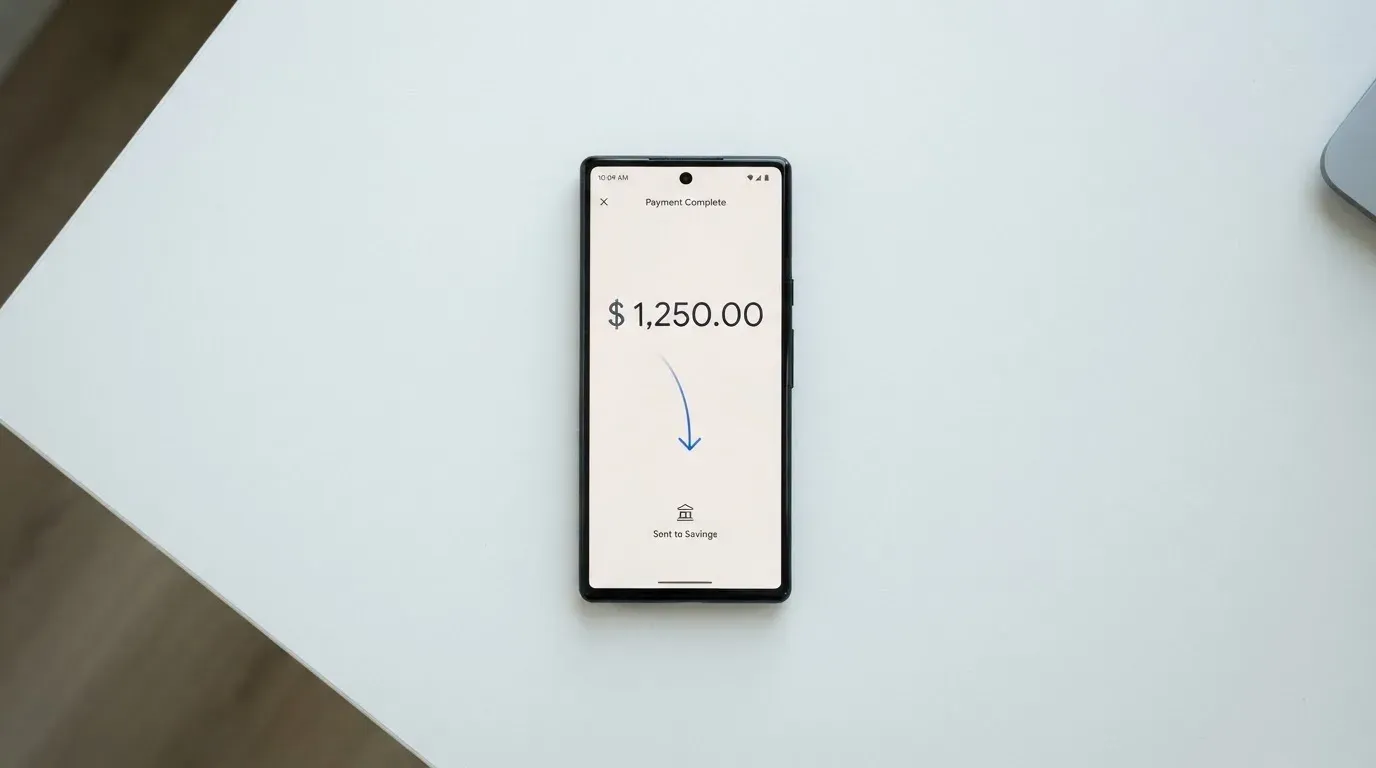
You top up CasperCard by sending crypto from your own wallet to an address the app provides. Accepted coins are USDT, USDC, BTC, ETH, XRP, SOL and XMR. The list is broader than most cards — Monero in particular is unusual — and the score reflects that, even with the fee problem.
A few things the public pages do not say:
- The blockchain networks are not specified. USDT, for example, exists on Ethereum, Tron, Solana and several other chains; “USDT” on its own is not enough to know which one CasperCard wants. Sending USDT on the wrong network is the single most common way to lose a crypto deposit, and there is no on-page guidance to help you pick.
- The minimum top-up is not stated.
- Fiat top-up is not stated — the public pages describe only crypto in.
- The withdrawal path is not stated. If you want to move balance back out, the documentation does not say how.
The fees and the mechanics of a top-up are the same across tiers, but the percentages differ: 7.5% on Whisper, 6% on Phantom and 4.5% on Wraith. Network fees — the gas or bandwidth you pay to send the transaction — are charged by the blockchain, not by CasperCard. The card provider does not refund or subsidise them.
The heading contains “Top up” as required; the table above is the cost reference, and the warnings on networks are the part most worth re-reading.
Paying with it every day
The card works wherever a Visa is taken online, in apps and at contactless terminals via a mobile wallet. Apple Pay is supported on iPhone, Apple Watch and Mac; Google Pay is supported on Android and on the web. That covers most everyday spending. What is not stated on the public pages is the merchant category list — there is no published list of blocked categories such as gambling or crypto purchases. Most prepaid Visas block at least gambling, and a few block other MCCs; the public CasperCard pages simply do not say.
There is no physical card and no ATM policy. If you live in a country where contactless is universal, a virtual card in a mobile wallet is fine; if you regularly hand a card to a waiter or use ATMs, you are out of luck.
Cashback is built in, but it is narrow. CasperCard runs a partner-shop programme: 10% back at Ledger and 20% back at EncryptedOS, paid when you shop through CasperCard and pay with the CasperCard Visa. Cashback is credited to the CasperCard wallet. The currency, caps, minimums and whether it stacks with anything else are not stated. Treat it as a small perk for a specific shopping list, not a rewards programme.
The site refers to “the app” for freezing the card and reviewing transactions as they happen, but does not state which platforms the app is on, or what its store ratings are. So I cannot tell you whether the iOS app is rated 4.7 on the App Store, for example — that information is not on CasperCard’s public pages.
Disputes and chargeback rights are not stated. For a Visa-branded card, the network rules still apply, but how CasperCard handles a chargeback request is not described on the public pages. If chargeback handling matters to you — and for many online purchases it does — this is a question to ask support before you rely on the card.
What can go wrong
A few risks to weigh, in plain language.
- The issuer is unnamed. CasperCard says cards are “issued by a licensed issuing partner”, but the partner is not named on the public pages. The country of registration and the licences the issuer holds are not stated either. The conversion fee is set by that issuing bank, so the entity setting a part of your cost is not identified on the site.
- There is no public track record. No Trustpilot page was found for CasperCard, and no Reddit threads surfaced. That does not mean the card is bad — a new card may simply have few reviews — but it does mean there is no third-party confirmation that it works as advertised. Treat early use as a small-scale test, not a commitment.
- Stablecoin top-up fees are high. 7.5% on the free tier is far above the cost of converting stablecoins on a major exchange. If you top up often, the difference between Whisper and a well-priced exchange is the single biggest cost on the card.
- Conversion and top-up fees stack. Two fees, one card, no bundling. The total cost of moving €100 of USDT onto a Whisper card and spending it is around €9 before any network fees or your own conversion costs.
- No physical card and no ATM. Plan around that, especially for travel and offline use.
- Custody model is not stated. The card is described as being topped up from your own wallet, which is closer to a self-custody model — but the public pages do not say whether CasperCard holds the converted balance itself, and if so how. Custodial platforms have failed before; a card that holds your balance is exposed to that risk.
- The KYC story is mixed. The home page suggests no KYC is needed; the blog and the card-number visibility rules say it is. The actual policy is that you may be asked later, including for higher limits. If the reason you are looking at CasperCard is to avoid KYC, the public wording is not a guarantee.
- Network choice is on you. The coins are listed; the networks are not. Sending USDT on the wrong chain is a common way to lose a deposit permanently.
- Support is by email and Telegram. [email protected] and t.me/caspercardapp are the listed channels. There is no stated phone line, no stated live chat, and no published support hours. The blog is published in English, Spanish, German, Italian and Albanian.
Two blog posts from late September and early October 2026 (24 Sep, 27 Sep, 2 Oct) cover crypto Visa cards, KYC and fees; nothing in the public record announces a new issuer, licence or country expansion.
What to take instead
A few alternatives, kept short. The score for each is the same kind of review score, in the same scale, not a metric from CasperCard.
- CardFlow — 4.9 / 10. Aimed at Nigeria (“Nigeria’s smartest fintech card platform”) and “Nigerians and global users”; no country list or exclusions published. Virtual USD Mastercard, created in minutes. Creating a virtual card is described as free, but a monthly fee is not stated. Funding options are Bitcoin, USDT, ETH and Naira bank transfer; networks are not stated. Rewards are not stated.
- HyperCard — 4.7 / 10. Official pages do not publish a country list; the App Store says the card works in “more than 176 countries”, but that is acceptance, not eligibility. Prepaid “HyperCard”, network not stated; balance in USD or EUR. Costs and fees are not stated on the public pages I could read. Funding is deposit of USDT, BTC or ETH in the app, converted to USD or EUR on the card; networks are not stated.
- Card.fi — 6.6 / 10. Banner says cards ship to “200+ countries”; terms bar residents of, or orders from, sanctioned countries. Virtual Classic, Virtual Premium, physical Classic, physical Premium, and a metal (stainless steel) card; every physical order includes a virtual card; cards issued “under licence from the relevant card schemes”, with Visa or Mastercard not named on the page. One-time fees: Virtual Classic $49, Virtual Premium $249; physical and metal prices not listed; no monthly, annual, inactivity or minimum-balance fee. Top-up fee 1.5% + $1.00 on Classic, 1% on Premium; FX 3.5% on Classic, 2.5% on Premium; conversion fee shown before each top-up. Funding is 32 coins across 5 networks (Ethereum, Base, BNB Chain, Solana, Kaanch); wrong chain risks permanent loss. Cashback on card spending: Classic 0.8% (cap 10 USDT/month), Premium 1%, Metal 1.2% (cap 100 USDT/month, 5,000 USDT) or 2% (cap 250 USDT/month, 20,000 USDT); headline 10% at coffee shops capped at 10 USDT/month; earn on balances “up to 18%” on Metal, variable.
The trade-off is consistent. Card.fi is the only one of the three with a clear fee schedule, a physical card option and a broad funding set, and its score reflects that. HyperCard is light on stated information. CardFlow is the most regional of the three.
Who I would recommend it to
CasperCard is a reasonable fit if you:
- Specifically want to spend Monero, XRP, SOL or other coins that most crypto cards do not list, and you are willing to pay a premium for that.
- Are happy with a virtual card in a mobile wallet, and do not need plastic or ATM access.
- Are topping up from a self-custody wallet, accept that you bear the cost of getting crypto to a stablecoin in the first place, and want a Visa as the spending layer.
- Are based in a country where CasperCard confirms eligibility via support before you sign up, and you are prepared to complete KYC if and when it is asked for.
- Are moving enough volume to justify the Phantom or Wraith monthly fees, or are only spending small amounts and accept the 7.5% Whisper top-up fee as the price of access.
CasperCard is not a good fit if you:
- Want a physical card or ATM withdrawals as part of your daily life.
- Care about a transparent, low-fee structure: 7.5% + 1.75%–2.00% on the free tier is high, and the cheaper tiers carry €50 or €500 monthly fees.
- Need a named, regulated issuer, an established support operation and a public track record. The issuing partner and the registration country are not stated, and there are no third-party reviews.
- Are risk-averse about custody. The custody model is not stated, and the public pages do not say how the converted balance is held.
- Are not able to confirm your country is supported. Eligibility is decided case by case, and there is no list.
If CasperCard does not fit, Card.fi is the next stop on the list, with a more transparent fee schedule and a physical card option; HyperCard is the choice if acceptance in many countries matters more than stated detail; and CardFlow is the regional option for Nigeria and adjacent markets.
Frequently asked questions
What is CasperCard?
CasperCard is a virtual Visa that lets you spend crypto. You sign up with an email, top up the card by sending USDT, USDC, BTC, ETH, XRP, SOL or XMR from your own wallet, and the card converts the crypto to local currency at the moment of payment. It is virtual only and is accepted wherever Visa is taken.
How does CasperCard work?
You open an account, get a virtual card, send crypto from your wallet to a top-up address, and the card holds the balance in fiat after conversion. When you pay, the card converts any remaining crypto at the till and charges the merchant in the local currency. Conversion fees of 1.75%–2.00% and a tier-based top-up fee apply on every load.
Is CasperCard a bank?
No. CasperCard is a programme manager that works with an unnamed “licensed issuing partner”. The issuing partner is the entity that actually issues the card, and the country of registration and the licences held are not stated on the public pages. Treat it as a card programme, not a bank.
Who owns CasperCard?
CasperCard’s public pages do not name the owners, the parent company, the registration country or the licences held. The site is marked © 2026 CasperCard. If ownership matters to you — and for a card holding your balance it often does — write to support before signing up and ask.
Is CasperCard available in my country?
CasperCard’s FAQ has a question on country availability but does not publish a list of supported or excluded countries. The general rule is “subject to eligibility, identity verification and availability”, which is decided case by case. Write to [email protected] and ask before you start the sign-up flow.
How do I get a CasperCard?
Sign up on the website with an email address. The virtual card details are shown right after sign-up. The full card number and CVV are gated behind identity verification, and verification can be requested later for higher limits or specific features. There is no physical card and nothing to wait for in the post.
Does CasperCard require KYC?
The home page says identity verification is not required to access the services, while the blog describes verification as a one-time sign-up step and says the full card number is only shown to verified users. The safest reading is that you can open an account, but real spending and a usable card number may require verification, and KYC can be triggered later for higher limits.
How do I top up CasperCard?
You send USDT, USDC, BTC, ETH, XRP, SOL or XMR from your own wallet to an address the app provides. The blockchain network to use is not specified on the public pages, so confirm the network in the app before sending. Stablecoin top-up fees of 7.5% (Whisper), 6% (Phantom) or 4.5% (Wraith) apply, plus network gas paid to the blockchain.
How do I add CasperCard to Apple Wallet or Google Pay?
CasperCard supports Apple Pay on iPhone, Apple Watch and Mac, and Google Pay on Android and on the web. Add the card from the app or directly from the wallet app on your phone. The mobile wallet replaces the card number with a device-specific token, so the original PAN is not stored on Apple or Google servers.
Is CasperCard safe?
The card supports standard safeguards: a freeze button in the app, transaction review, and 3-D Secure-style online authentication. The licensed issuing partner is not named, the registration country is not stated, and there are no third-party reviews to lean on. The custody model for the converted balance is also not stated. As with any prepaid or card product, treat early use as a small-scale test.
Virtual cards: your questions answered – cryptocardanswers
Content created by the «cryptocardanswers» team