
A crypto payment card that works like a prepaid card — open in many countries, clear on fees, and quiet on the bank behind it
 Available in US
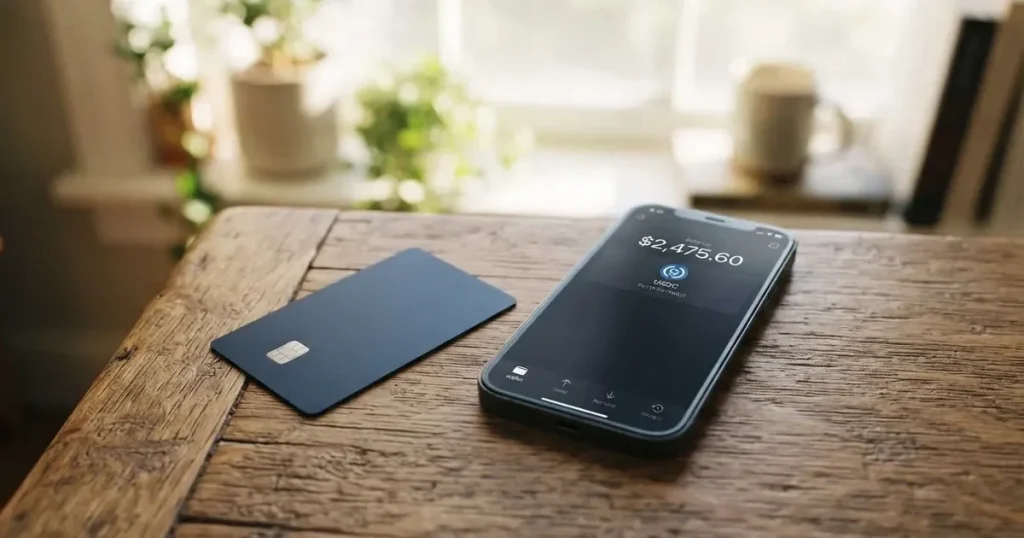
The PEXX card comes out of my review at 6.8 out of 10. It is a sensible option for one particular kind of person: someone who already holds dollars or dollar-pegged stablecoins, needs a card with high spending limits, and lives in one of the many countries where PEXX says it issues. If that is you, the card does the basic job. If you are choosing between cards on the strength of cashback, savings rates or a named bank relationship, PEXX is harder to justify — it does not publish enough about its banking partner to give you that reassurance.
The conditions described below are current as of October 28, 2026.
| Criterion | Mark | Why |
|---|---|---|
| Who can get it | 7 / 10 | Country of residence is what decides: Europe, Australia, Japan, Latin America, Africa, the UAE, Georgia, Kazakhstan and others |
| Cost | 6 / 10 | 0.6% platform fee on every transaction, a 1.2% markup on non-USD payments, and no disclosed issuance fee |
| Top-up options | 6 / 10 | USD, USDT and USDC; networks are not named; the USD account is funded via ACH, Fedwire and SWIFT |
| Reliability and complaints | 7 / 10 | PEXX Technology Pty Ltd, AUSTRAC DCE and FinCEN MSB; no bank partner named; Trustpilot 3.5 out of 5 on 3 reviews, with complaints that fees exceed what was advertised |
| Everyday use | 8 / 10 | Physical and virtual cards, Apple Wallet and Google Pay; ATM terms not disclosed |
Total: 6.8 / 10. The marks are unchanged from my notes; the reasoning in each row is mine.
Will they give you the card?
Short answer: probably, if you live in one of the listed countries — but PEXX does not publish a clean eligibility list, and that is the first thing to check before you get your hopes up.
The card’s own pages do not state the eligibility conditions or the exclusions in one place. What is stated is this: card availability is decided by country of residence, and the list runs to about 35 European countries and territories, including the UK, France, Germany, Italy, Spain and Switzerland; then Australia, Japan, Macao, Malaysia, the Philippines, South Korea, Taiwan and Thailand; then Argentina, Brazil, Chile, Colombia, Ecuador, El Salvador, Mexico, Panama and Peru; then Bahrain, Ghana, Kenya, Nigeria, South Africa, Uganda and the UAE; then Azerbaijan, Georgia, Guernsey, the Isle of Man, Jersey, Kazakhstan, Moldova, Ukraine and Uzbekistan.
Note what that list is and is not. It is a residence list. Citizenship is not mentioned anywhere in what PEXX publishes about this card, and citizenship still matters behind the scenes in ways you will not see: sanctions screening is usually applied to citizenship and country of birth as well as to country of address. So a citizen of a sanctioned country living in, say, Georgia may not get a card even though Georgia is listed. That gap is not PEXX-specific — it is how regulated financial screening works in general — but it means the honest answer to “can I get it” is “check with PEXX”, not “check the list”.
One more thing the public pages leave unsaid: proof of address and age requirements. Neither is stated. In practice, prepaid and debit cards are generally available to adults (18 and over), and some issuers set higher limits, but PEXX does not publish its own rule.
How to get it
The route is short and mostly self-explanatory: you sign up in the app, verify your identity, and the card arrives. Two of the three products are the card itself.
- PEXX Physical — loaded with USD and stablecoins, delivered to you.
- PEXX Virtual — issued instantly, for online use.
- US virtual bank account — a separate product; it requires “level 1 KYC”.
The card application sits at “In Review” usually for one to two business days. The page title refers to both Visa and Mastercard; the card currency is USD by implication, though not stated explicitly. The virtual card appears within one minute after a confirmed deposit, while the physical card’s delivery time, delivery cost and replacement cost are not stated.
For verification you need a valid ID and a phone number. The US virtual bank account additionally needs “level 1 KYC”, and there is an extra identity check to activate the card — that appears as a FAQ title rather than as a described process. The card’s own pages do not list the reasons an application can be rejected.
Your identity check is not a formality, and it is worth knowing why. KYC rules require regulated businesses to verify customers and assess risk as part of anti-money-laundering and counter-terrorism-financing law, including ongoing transaction monitoring and suspicious-activity reporting. In the EU, customer due diligence covers name, address, date of birth, nationality and identity documentation, a sanctions check, the purpose of the relationship, and whether you are a politically exposed person. In the US, the customer identification programme requires name, date of birth, address and an identification number. If due diligence cannot be completed, the institution is required to stand back from the transaction or the relationship, and where necessary to end it. That is why accounts get closed or frozen pending documents — it is the rule working, not a quirk of PEXX.
What it really costs: Fees and limits
The headline numbers are simple, and there are only two of them. Everything else — issuance, monthly fee, cash machine — the card does not say.
- 0.6% platform fee on every card transaction. This is the number to hold on to.
- 1.2% FX markup on non-USD purchases, on top of what PEXX calls “true mid-market pricing”.
| Fee or limit | What the card states |
|---|---|
| Issuance fee | Not stated |
| Monthly fee | Not stated |
| Platform fee per transaction | 0.6% |
| FX markup on non-USD purchases | 1.2% |
| Cash machine (ATM) terms | Not stated |
| Daily limit | $30,000 |
| Per-transaction limit | $30,000 |
| Monthly limit | $70,000 |
| Spending limits generally | “There are currently no spending limits” |
| Multi-currency balance | Not stated |
| Cashback or rewards on spending | No cashback stated |
Here is what those limits mean in practice, because the two statements about limits read as contradictory and are not.
A coffee in your own country. Suppose you are in France and buy a €4.50 coffee on a card funded from dollars. The 0.6% platform fee applies to the transaction. Because the purchase is not in USD, the 1.2% FX markup applies on top. You are paying the 0.6% platform fee and the 1.2% FX markup for the privilege, before you account for the spread Visa or Mastercard charges the issuer. On a €4.50 coffee that is about eight cents. Nobody cares about eight cents.
A laptop bought in euros. Same card, same rules: 0.6% plus 1.2% of the purchase. On a €1,500 machine that is about €27. Now you care.
A subscription in dollars while you live somewhere else. The 0.6% platform fee still applies, and if the merchant bills in dollars there is no FX markup at all. This is where the card is genuinely cheap, and it is worth saying plainly: the 1.2% markup is not universal, it is charged on non-USD purchases, so paying in dollars is where the fee structure works in your favour.
Two structural points about the money side. First, cards are loaded with USD and stablecoins, and there is no multi-currency balance — so if you want to spend euros without the markup, you have to convert first, at whatever rate that conversion costs. Second, there are no tiers. PEXX has two products, Physical and Virtual, plus the US virtual account, and no tier ladder to climb. The “no spending limits” line sits alongside hard daily, per-transaction and monthly caps of $30,000 and $70,000, so read the caps, not the headline.
Why those fees add up the way they do is worth understanding. A card payment involves several parties: the network routes the messages and sets the rules, the issuer holds the card programme, and the crypto brand is often only a programme manager or front-end. A card number starts with a six- or eight-digit issuer identification number that any merchant can look up, which is why a card issued in one country can look foreign to a shop in another. And in the “pre-loaded balance” model this card uses, your crypto is converted and loaded as a fiat balance, which the card then spends — the card cannot overdraw, and every swap of that balance is a conversion, which is where the platform fee lives.
How to Top up the card
Three assets, three very different routes. The stablecoin route is fast but you must get the network right; the bank route is slower but unambiguous.
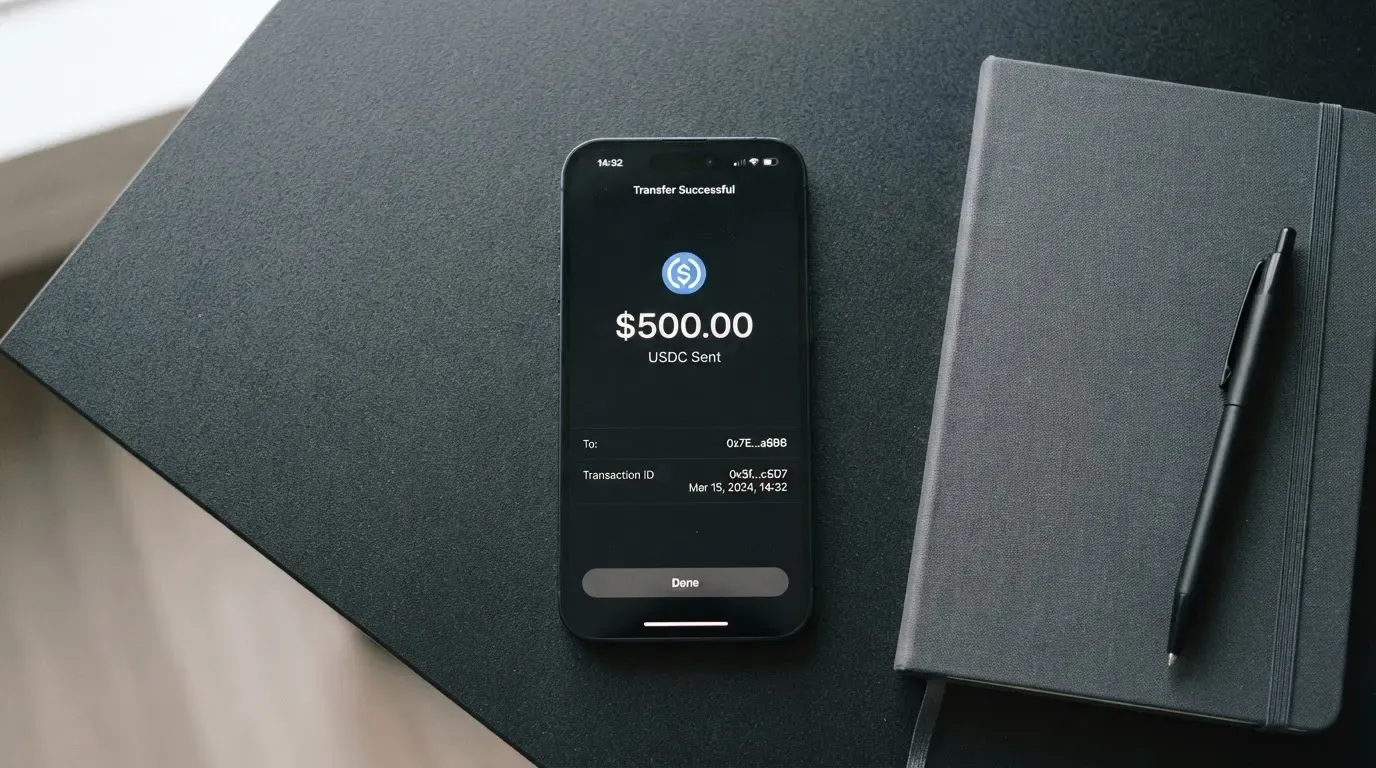
- USD — deposits into the USD account via ACH (1–3 US business days), Fedwire (a few hours to 1 business day) or SWIFT (1–5 US business days).
- USDT — blockchain transfer.
- USDC — blockchain transfer.
No deposit fee is listed. The card’s public pages do not name which blockchain networks are accepted, and they do not state a minimum top-up. Those are the two details I would want in writing before sending real money.
The network question is not a technicality. Stablecoins exist on many chains, and the provider may accept only some of them: Circle lists USDC as natively supported on 38 networks as of 16 September 2026, including Ethereum, Solana, Base, Polygon PoS, Avalanche, Arbitrum and Stellar, and Tether has issued USDT on Ethereum, Tron, Solana, Polygon, Avalanche and others. A deposit sent on a network PEXX does not support, or to an address belonging to a different network, can be lost or may need manual support recovery with no guarantee — transfers are irreversible. There are edge cases worth knowing: ERC-20 fees are paid only in ETH, so a wallet holding USDT and no ETH cannot send, and Tron prices its transactions in bandwidth and energy, often burning TRX. Stablecoins are also not censorship-proof: Tether says it disables tokens in wallets on the OFAC sanctions list and has frozen funds tied to illicit activity.
On the bank side, the timing above is the useful bit. Fedwire lands within hours to a day if you need it fast; SWIFT can take five business days. Any network or address fee is charged by the blockchain, not by PEXX.
One more product sits alongside the card: PEXX Earn, which pays daily interest tied to U.S. Treasury bill rates and has no minimum balance, and whose funds “can withdraw anytime”. Two cautions. The card’s pages state that USD deposits are held with licensed partners and are not FDIC-insured. And where crypto sits with a custodian, there is counterparty and hack risk: Mt. Gox (about US$350 million reported stolen, 2011–2014), Coincheck (about US$400 million, 2018) and Ronin Network (US$625 million, 2022) are the standing examples. Withdrawal from the card balance itself and account closure terms are not stated on the pages I read.
Paying with it every day
Everyday use is where PEXX scores best, and in practice this is a card that behaves like an ordinary prepaid card in an ordinary wallet.
You get both a physical card and an instant virtual one. You add the card to Apple Wallet or Google Pay from the Cards tab in the app, authenticated with a one-time password by email or SMS. That last point is genuinely good: Apple Pay replaces the card number with a device-specific number stored in the Secure Element, never on Apple servers, and each payment carries a one-time dynamic code — so a stolen card number is far less useful than it looks.
Two things the card’s pages do not tell you: whether Apple Pay and Google Pay are supported in your region specifically, and which merchant category codes are blocked. The second matters more than it sounds. MCC 7995 covers gambling, and many issuers block it on specific cards by policy rather than by law, with the blocked list varying by issuer. PEXX does not publish its list. If gambling or a similar category matters to you, ask.
Three more everyday realities that are not PEXX’s fault but will shape your experience:
- Some merchants decline prepaid or foreign-issued cards, because the BIN lookup reveals the card type and the issuer country.
- Address Verification Service is mainly a US, Canada and UK service and is generally unavailable for foreign-issued cards, which can cause declines.
- A declined authorisation can leave a hold on your funds for several days — typically up to seven — even though you never spent anything.
Spending limits are generous rather than tight: $30,000 a day, $30,000 per transaction, $70,000 a month, alongside the “no spending limits” statement. For a person who needs high spending limits, that is the PEXX argument in one line.
The app itself is thin evidence. The Australian App Store listing shows 5.0 out of 5 from 3 ratings, version 3.6.2, requiring iOS 16.0+, in English. Three ratings is not a rating. A Google Play app exists but I did not read its rating.
What can go wrong
Four risks, in descending order of how likely they are to bite you.
The fee you agreed to may not be the fee you see. This is the most concrete complaint against PEXX and it comes from users, not from me. A January 2026 one-star Trustpilot review says fees were higher than advertised, naming a “0.5$ per transaction” charge and deductions with no visible history; other reviews, including from February 2026, mention fees above what was stated and a failed crypto deposit that was only partially refunded. A December 2025 five-star review praises fees and speed. On Trustpilot, pexx.com sits at 3.5 out of 5 from 3 reviews as of 2026-10-20 — three reviews is far too few to mean anything statistically, but the direction of the complaints is consistent: small per-transaction charges appearing on statements that the headline fee does not explain. Keep your own records.
The bank behind the card is not named. PEXX Technology Pty Ltd is an Australian company, registered as AUSTRAC Digital Currency Exchange DCE100851583-001 and remittance dealer IND100851583-001, and as FinCEN MSB 31000288010318. That is real regulatory registration and worth something. But the issuer is described only as a “partner bank” or “licensed partners” — no name is given. So you cannot look up the actual issuer’s licence, and PEXX is not itself a bank. If the answer to “is PEXX a bank” matters to you — and for some people it is the whole question — the honest answer is no, and the licence you would want to check belongs to a partner that is not identified.
Card programmes end. This is a category risk, and the history is not gentle. Visa terminated its global agreements with FTX on 13 November 2022 and the FTX US debit card was wound down by its issuer. WaveCrest, a Visa issuer that supplied crypto card brands, was suspended by Visa in Europe in 2018, closing all WaveCrest-issued Visa programmes. The typical closure sequence is a notice period, then spending and loading stop, then you are asked to withdraw remaining balances. With PEXX’s unnamed issuer and undisclosed physical-card terms, you cannot model how quickly you would get your money out.
A stablecoin can lose its peg. The premise behind spending a dollar-pegged token is that it holds a dollar. TerraUSD collapsed in May 2022; USDC temporarily lost its peg in March 2023 during the US banking crisis. The BIS put about 90% of stablecoin market capitalisation in USDT and USDC as of July 2025, which concentrates the exposure rather than diversifying it.
On the positive side of the risk column: PEXX states it follows AUSTRAC guidelines and runs an AML/CTF programme with enhanced due diligence, offers “bank-grade encryption” and real-time alerts, and has an in-app payment approval feature. Your deposits are held with licensed partners and are not FDIC-insured. Card freeze and card insurance are not stated. Support is in-app or by email, with an FAQ site at faq.pexx.com and Telegram, X, Instagram and Medium channels; the site is English only, hours are not stated, and Russian is not offered — worth knowing if you would rather not deal with an English-only support desk.
If something goes wrong, the dispute route is real but slow and not free. Disputes go through PEXX support and are submitted through the card network, only successful transactions are eligible, you have 120 days, the process takes 60 to 90 days, chargeback rights may be limited for unauthorised claims where 3-D Secure was used, and a USD 25 administration fee may apply if the dispute fails. In the US, debit card reversal rights come from Regulation E and credit card rights from Regulation Z; prepaid-card coverage varies and should not be assumed.
One more thing you should decide for yourself rather than take from a review: paying with crypto-linked funds can be a taxable event. The IRS treats digital assets as property, so exchanging them for goods, services or dollars generally produces a gain or loss, measured in local currency at fair market value on the date of each transaction. That is information, not advice — check with a professional in your own country before you build a habit around it.
What to take instead
Three alternatives, and the honest comparison is close. Here is how they stack up.
| PEXX | International Visa Card | UNi Card | Morse | |
|---|---|---|---|---|
| Score in my review | 6.8 / 10 | 6.7 / 10 | 6.1 / 10 | 7.5 / 10 |
| Networks and form | Physical and virtual, Visa and Mastercard per page title | U.S.-issued Platinum Visa, virtual only; physical “coming soon” | Multicurrency on Mastercard; physical/virtual not stated | Fully virtual Visa prepaid debit |
| Issuance / monthly | Not stated / not stated | $5 one-time; no maintenance fee (plans: Classic free, Pro $9.00/month, Max $19.00/month) | Issuance not stated; “No annual fee” | Not stated; “Fees may apply. See Cardholder Agreement” |
| FX | 0.6% per transaction plus 1.2% on non-USD | Visa exchange rate plus 2% FX fee; use in USD free | “No foreign transaction fee”; converted at live OTC rates | “Zero foreign exchange fees or markups”; card spending online and contactless free |
| Funding | USD, USDT, USDC; USD account via ACH, Fedwire, SWIFT | USDC/USDT free at 1:1, plus USD, EUR, SEPA, SWIFT, FedNow | Not stated | Debit card, stablecoin transfer, Account Details (USD, EUR, MXN, COP; BRL needs Brazilian CPF); USDC, USDG, EURC free via Solana |
| Rewards | No cashback; PEXX Earn pays daily interest tied to U.S. T-bill rates, not FDIC-insured | No cashback stated | Spend-to-Earn up to 3% | Not stated on card pages |
| Restrictions | Availability by country of residence; eligibility and exclusions not listed | Not available to residents or registrants of Belarus, mainland China, North Korea, Cuba, India, Iraq, Iran, Israel, Myanmar, Nepal, Nicaragua, Russia, Syria, Turkey, Ukraine, Venezuela, Vietnam; purchases blocked in North Korea, Cuba, Iran, Russia, Syria, Ukraine, Venezuela | Not stated | Residence-based, 18+; app in “over 140 countries”; cannot serve customers subject to US, UK, EU or UN sanctions |
Three observations from that table.
Morse scores highest (7.5/10), mainly on fees. Zero FX markup, free card spending, and a self-custodial wallet are a genuinely better cost structure. But eligibility is narrower than it looks: the card is available only in certain countries, the list is not published on the card page, and a set of countries including the UK, Australia, Japan, Singapore, Switzerland, New Zealand and Hong Kong SAR China is in closed beta and needs an invite code. If you are in one of those, Morse’s headline numbers are not available to you.
The International Visa Card is the cleanest fit for a euro or sterling spender. Its cost is transparent — $5 to issue, no maintenance, 2% FX, USD use free — and it takes USD, EUR, SEPA, SWIFT and FedNow. What it costs you in flexibility is its exclusion list, which is long and includes Ukraine and Turkey, and its physical card is still “coming soon”.
UNi Card is the weakest of the four on evidence. Its published terms are attractive — no annual fee, no FX fee, live OTC rates, up to 3% back — but eligibility and funding routes are both unstated, and I could not verify them from the public pages.
Why these fees differ at all. It comes down to who holds your money and who issues the card. An electronic money institution in the EU can issue e-money and payment cards but cannot lend, and must safeguard customer funds in dedicated accounts or by insurance — which is not the same as a bank deposit and may not sit under a deposit guarantee scheme. Visa and Mastercard do not issue crypto cards to consumers themselves; they license issuers and can suspend a programme, which is exactly what happened with FTX and WaveCrest.
Who I would recommend it to
Recommended to: dollar and stablecoin holders who need high spending limits and live in one of the listed residence countries. If you are paid in dollars or hold USDT or USDC, want to spend at scale without a bank’s approval process, and want both a physical card and a virtual one you can add to Apple Wallet or Google Pay in a minute, PEXX fits. The 0.6% platform fee is only painful on large non-USD purchases, and the $30,000 daily and $70,000 monthly limits are the most generous numbers in this comparison.
Not recommended to: anyone choosing a card for cashback or rewards, because none is stated; anyone who needs a named, checkable bank issuer; anyone who lives in a currency they spend in daily and would rather not pay 1.2% on every purchase. If you are in the United Kingdom or Japan and want the lowest FX markup, look at Morse first and check whether you are inside its closed beta. If you are in the EU and want an FX fee of 2% with a $5 issue fee and no monthly charge, the International Visa Card is the more transparent deal — assuming you are not on its exclusion list.
My own order of preference, for what it is worth: Morse if you can get it, PEXX if you need the higher limits and live somewhere it is open, the International Visa Card if transparency matters more than flexibility, UNi Card last.
Two open questions I could not close, both of which you should ask PEXX directly: which banking partner issues the card, and what it costs in issuance, monthly and ATM fees. Everything else in this review I could check against published terms; those three numbers I could not.
Frequently asked questions
What is the PEXX card?
PEXX is a payment card that spends from a balance you load with dollars or dollar-pegged stablecoins. It comes as a physical card and as a virtual one issued instantly, with the page title referring to both Visa and Mastercard. It behaves like a prepaid card: you top up, the balance is converted where needed, and the card spends only that balance, so it cannot overdraw.
How does the PEXX card work?
You convert or top up a balance in USD, USDT or USDC, and the card spends that balance. Every transaction carries a 0.6% platform fee, and purchases not in USD add a 1.2% foreign-exchange markup. You can add the card to Apple Wallet or Google Pay from the Cards tab, using a one-time password by email or SMS.
Is PEXX a bank?
No. PEXX Technology Pty Ltd is an Australian company registered with AUSTRAC as a digital currency exchange and remittance dealer, and with FinCEN as a money services business. The actual card issuer is described only as a “partner bank” or “licensed partners” and is not named, so you cannot look up the issuer’s own licence from the public pages.
Which countries can get a PEXX card?
Availability is by country of residence, covering about 35 European countries and territories, several Asia-Pacific countries, much of Latin America, a group of African countries, the UAE, and a set of Caucasus and Central Asian countries. Citizenship is not mentioned in the card’s published terms. Proof-of-address and age requirements are not stated, so check with PEXX before applying.
Does the PEXX card require KYC?
Yes. You need a valid ID and a phone number, and the US virtual bank account additionally requires level 1 KYC. An extra identity check is part of activating the card. Applications usually sit at “In Review” for one to two business days, and the card’s pages do not list the reasons an application can be rejected.
How much does the PEXX card cost?
The stated charges are a 0.6% platform fee on every transaction and a 1.2% FX markup on non-USD purchases, on top of what PEXX calls true mid-market pricing. Issuance and monthly fees are not stated, and neither are ATM terms. No cashback or spending rewards are stated. PEXX Earn pays daily interest tied to U.S. T-bill rates, but that money is not FDIC-insured.
How do I top up the PEXX card?
You can fund it with USD, USDT or USDC. The USD account is funded by ACH, taking 1–3 US business days, by Fedwire, taking a few hours to one business day, or by SWIFT, taking 1–5 US business days. No deposit fee is listed. The blockchain networks accepted for USDT and USDC are not named, and no minimum top-up is stated, so confirm both before sending a transfer.
Can I use the PEXX card in Apple Wallet?
Yes — you add the card to Apple Wallet or Google Pay from the Cards tab in the app, authenticating with a one-time password sent by email or SMS. The card’s pages do not state whether both mobile wallets are supported in your particular region, so the app is the place to confirm before you rely on it.
What are the PEXX card’s limits?
The card states there are currently no spending limits, while also listing $30,000 per day, $30,000 per transaction and $70,000 per month. Read the caps rather than the headline. There are no spending tiers; the products are PEXX Physical, PEXX Virtual and the US virtual bank account.
Is the PEXX card safe?
Treat it as a prepaid card with a registered crypto business behind it, not as a bank account. PEXX is registered with AUSTRAC and FinCEN and states it runs an AML/CTF programme with bank-grade encryption and real-time alerts, but deposits are held with licensed partners and are not FDIC-insured. User reviews on Trustpilot (3.5 out of 5 from 3 reviews) mention fees above what was advertised, so keep your own transaction records.
App and neobank cards: your questions answered – cryptocardanswers
Content created by the «cryptocardanswers» team