
Payth card review for anyone considering a virtual crypto card with ATM access
 Available in US

Payth is one of those newer names in the crypto card space that markets itself on a single, very practical promise: load your crypto into a wallet, get a virtual card, and spend at “millions of merchants and ATMs worldwide” with what the company calls “zero transaction fees”. The card is aimed squarely at crypto holders who already have Bitcoin, Ether or USDT and want a fast, app-based way to turn that balance into everyday purchases and cash withdrawals, without the friction of a full bank account.
Conditions are current as of October 28, 2026.
That pitch is appealing, and on the surface the product looks tidy. What sits underneath, though, is a card whose operator, licensing and country background are not stated in a way that would satisfy a careful reader, and whose published fee schedule is thin. This review walks through what is actually confirmed, what is missing, and where you should pause. The score in the verdict below is anchored at 6.2 out of 10, with strengths concentrated in the “who can get it” and “what it costs to spend” categories, and weaknesses in reliability and everyday convenience.
The official materials were reviewed on 2026-10-20. Where the card’s own pages did not say something, it is stated plainly rather than filled with guesswork.
Verdict
A score of 6.2 out of 10 is middling for a product that does a few things competently but leaves a long list of important questions unanswered. If you hold BTC, ETH or USDT, want a virtual card you can create from your phone, and are not too worried about the company behind the curtain, the basic offer — zero transaction fees, a 2% ATM withdrawal fee, global reach with a list of restricted countries — sounds reasonable. The day-to-day story is weaker: no rating on the App Store yet, no mention of Apple Pay or Google Pay, no published issuance or monthly fee, and a custodial wallet where Payth holds your funds.
How the score breaks down
| Criterion | Mark | Why it scored that way |
|---|---|---|
| Who can get it | 8/10 | Issued globally with a published restricted-country list, but the rule is by residence and the underlying licence is not stated |
| Cost | 7/10 | “Zero transaction fees” and a 2% ATM fee are clearly stated; issuance, monthly, FX and conversion fees are not |
| Top-up options | 6/10 | BTC, ETH and USDT are accepted, but supported networks are not named and a fiat top-up path is not described |
| Reliability and complaints | 4/10 | Operator is POPPO LLC with no stated country, no named issuing bank, no licence; no Trustpilot page or Reddit thread; App Store shows no rating, version 1.0.6 |
| Everyday use | 5/10 | Virtual card only, ATM access, but mobile wallets (Apple Pay/Google Pay), merchant-category blocks and dispute handling are not described |
| Total | 6.2/10 | A practical crypto-to-card product with a thin disclosure footprint |
The audience that fits this card best is someone who wants a virtual card tied to a crypto balance, with the option of cash withdrawals at an ATM, and who is comfortable with a custodial wallet run by a less well-known operator. The audience it does not suit is anyone who needs a physical or metal card, anyone who wants to pay with their phone at the till, anyone who relies on a strong regulator’s name on the issuing licence, and anyone whose country is on the restricted list.
Who will they give you the card
Payth positions itself as a global product, with one important asterisk. The official page lists a set of countries the company “cannot serve”, and that list is “updated periodically based on issuer policies”. Among the named restricted countries are Afghanistan, Russia, Ukraine, Iran and Syria. Belarus also appears on the restricted list. The restriction is stated by residence, not by citizenship, so where you actually live is what counts.
That wide net is the single biggest reason the “who can get it” score sits at 8. A lot of people who would otherwise find it hard to get an ordinary bank card — people in regions where banks are conservative, or where card issuance is patchy — could in principle walk through Payth’s door. The flip side is that the issuer is not named, the licence is not stated, and the country where the programme is registered is not stated, so you cannot independently check who is really making the call on whether to take you on.
The KYC process is run through Sumsub, a third-party identity-verification provider. The published detail is limited: Sumsub “only accepts IDs or passports issued by the same country as your ID”, which means the document you upload has to come from the country that issued your ID. The review is described as typically taking 5 to 10 minutes, though that is a typical time, not a guaranteed one. The official flow has four steps: register in the app, verify your identity, deposit crypto into the Payth wallet, and get a virtual card.
A few things are not stated. Proof of address is not mentioned as a requirement, the minimum age is not stated (though in most regulated card programmes that is 18), and the card issuer is not named. There is no published tier system — a single KYC level is described, with the company saying that declines “may be due to a high-risk flag”. If you are refused, you will not be given a tier to climb; you will simply not be served.
So in practice, the answer to “will they give me the card?” is: probably, if you live outside the restricted list, you have an ID document from the country you live in, and you do not trip a high-risk flag. The answer to “who exactly is giving me the card?” is less clear, and that uncertainty is something you should weigh against the convenience.
How to get it
The sign-up path is built around the app, which is available on iOS and Android (and as a direct Android APK download). The official steps, in order, are:
- Register in the Payth app.
- Verify your identity with Sumsub.
- Deposit crypto into the Payth wallet.
- Get a virtual card.
The card you get is virtual, and the marketing material refers to “multiple virtual card options”. The card network (Visa or Mastercard) is not stated, and the card currency is not stated. There is no mention of a physical card or a metal card, and delivery details are not stated because there is nothing to ship. If you want a piece of plastic in your wallet, Payth is not that product.
The App Store listing, read on 2026-10-21, is a useful reality check. The app is at version 1.0.6, and it has not yet received enough ratings or reviews to display an overview. The Google Play rating could not be read at the time of writing. None of this is fatal — many fintech apps launch quietly — but it is a reminder that this is a young product with a thin public footprint, and that is worth keeping in mind when you read the rest of this review.
What it really costs — the Fees, FX and limits
The pricing picture is the part of Payth that is both its strongest selling point and its most incomplete. The headline is “zero transaction fees”, and the only fee that is published in clear numbers is the 2% ATM withdrawal fee. Everything else is either described in vague terms or not stated at all.

Here is what is confirmed, and what is missing, in one place:
| Fee or limit | What Payth says |
|---|---|
| Card issuance | Not stated |
| Monthly or annual fee | Not stated |
| Transaction fee on spending | “Zero transaction fees” |
| Crypto conversion rate | “Competitive rates”, no percentage given |
| FX fee on non-card-currency spend | Not stated |
| ATM withdrawal fee | 2% |
| Free ATM allowance | Not stated |
| Daily spending limit | Not stated |
| Monthly spending limit | Not stated |
| Card currency | Not stated |
The “zero transaction fees” line is the cleanest part of the offer. If you are paying at a shop, the swipe itself does not carry an extra Payth markup. The 2% ATM fee is also explicit, and it is not unusual in this category — comparable crypto cards often charge between 1% and 2% for ATM withdrawals. What is harder to evaluate is the spread Payth takes when it converts your crypto into the currency the merchant receives, because the company describes this only as “competitive rates”. Without a number, you have nothing to benchmark against.
To make that more concrete, three everyday scenarios:
- A coffee at a local café, paid in the local currency with a USD-denominated card. The merchant sees a normal card transaction, the network applies its own cross-border fee if any, and Payth says it does not add a transaction fee. What you do not know is how much of your USDT or BTC was converted at what rate, or whether the FX margin between the mid-market rate and Payth’s rate ate into your balance.
- A cash withdrawal at an ATM abroad. The 2% Payth fee is the known cost. On top of that, the ATM operator may apply its own surcharge (a fee charged by the ATM, separate from Payth’s fee), and if your card is denominated in a currency different from the one you are withdrawing, any FX margin Payth applies is invisible to you.
- An online subscription billed in a third currency. With no FX fee disclosed and no transaction fee, the only moving part is again the conversion rate. The merchant receives the local amount, but your crypto is sold at whatever rate Payth applies at the moment the transaction settles. That rate is the part you cannot see before you tap “pay”.
The honest read is that the published fees are low, the un-published fees are the ones that matter, and you should treat any quoted example as a best case until the company publishes full numbers.
How to top up Payth
The top-up flow is short. You transfer BTC, ETH, or USDT into your Payth wallet, and the app is meant to give you “spending credit instantly”. The App Store listing adds that “multiple cryptocurrencies” are supported, naming USDT and BTC as examples. The earlier research for this card noted that crypto is converted to fiat at the point of sale rather than at top-up, which is a useful detail to keep in mind: the balance you see in the app may be a crypto balance, and the conversion happens when you actually spend.
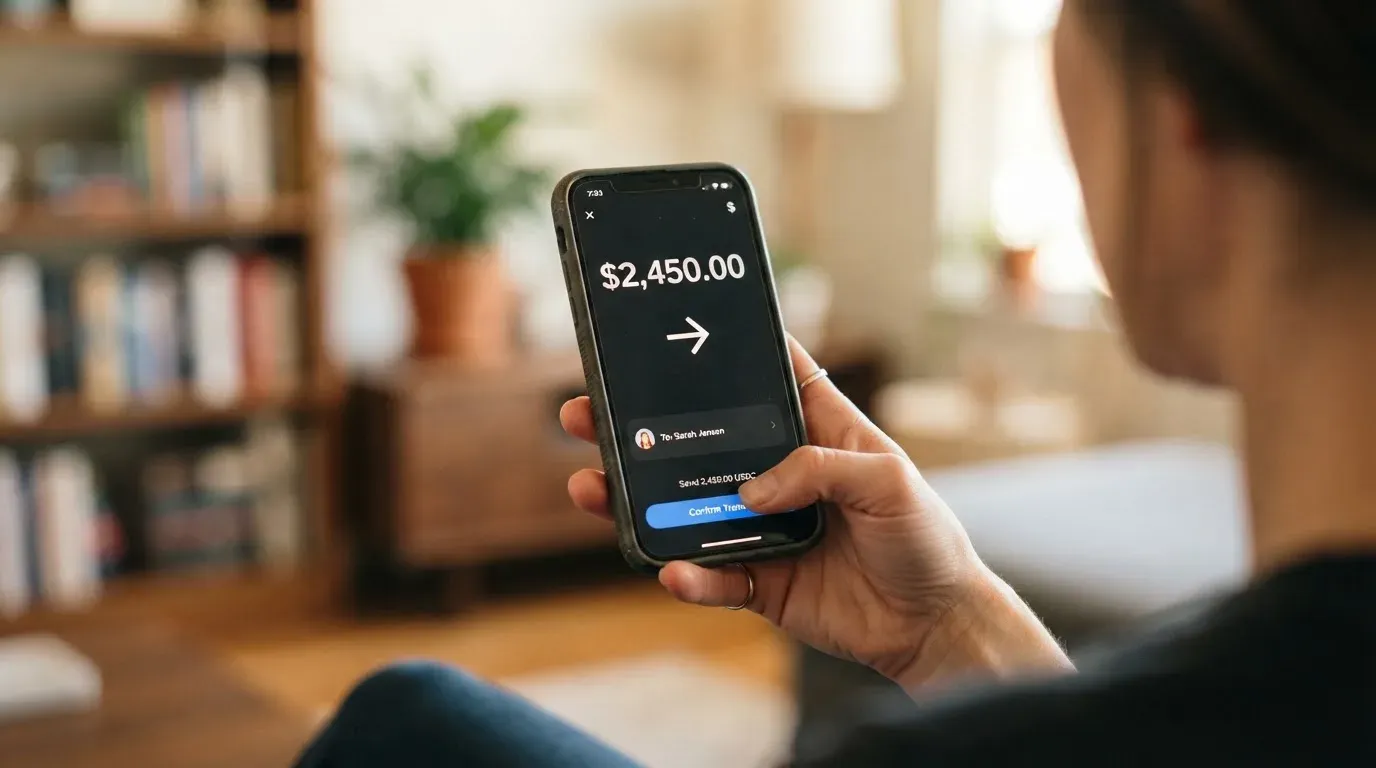
What is not stated is just as important as what is. The list of supported networks is not published. For USDT in particular, that matters: Tether has issued USDT on Ethereum, Tron, Solana, Polygon, Avalanche and others, and Circle no longer supports USDC on Tron after stopping it in February 2024. If you send USDT on a network Payth does not watch, the transfer may sit uncredited or, worse, be lost. In crypto, a deposit to the wrong network is typically irreversible. Payth is unlikely to refund an amount sent to a deposit address on a chain it does not support.
A few other top-up details are not stated:
- The deposit fee, if any, on Payth’s side.
- The minimum top-up amount.
- Who pays the on-chain network fee (gas on Ethereum, bandwidth/energy on Tron) — typically the sender, but it is worth confirming.
- Whether there is a fiat top-up at all — buying crypto inside the app with a card or bank transfer, or sending in euros or dollars directly, is not described.
If you already hold crypto on a mainstream exchange or in your own wallet, the practical question to answer before you sign up is: which network does Payth’s deposit address point to, and can I send to it from where my funds sit? That single piece of due diligence will save you more trouble than any other step.
Paying with Payth every day
Once you have a virtual card and a balance, the everyday experience depends on three things: where the card is accepted, what mobile wallets it works with, and how the app handles the boring problems — declined transactions, holds, refunds.
On the first point, Payth says the card is usable “at millions of merchants and ATMs worldwide”. That is the same marketing language most card networks use, and it is roughly true: any merchant that takes Visa or Mastercard (whichever network the card runs on, and Payth does not say which) will accept a Payth card in principle. In practice, virtual cards can be declined by some merchants — for example, merchants who do not accept prepaid cards, or who add the card to a list of foreign-issued BINs they do not want. Payth does not publish a list of blocked merchant categories, so you do not know in advance whether your favourite subscription, gambling site or hotel chain will let the payment through.
On mobile wallets, the official pages do not mention Apple Pay or Google Pay. There is no published tokenisation support. If tap-to-pay on your phone is part of how you normally pay, treat that as a gap rather than a confirmed missing feature, but plan for it to be missing.
On rewards, the page does not describe any cashback or loyalty programme. The App Store listing does not mention one either. So unlike some crypto cards that give you a percentage back in crypto or stablecoins on every spend, Payth is a straight pass-through: you load, you spend, you do not earn.
A few details that matter for day-to-day use:
- The app has a built-in spend flow and, per the App Store listing, “built-in risk controls”. Whether those include an in-app card freeze, a transaction limit toggle, or 2FA on login is not stated.
- The official FAQ lists questions for two common pain points — regarding delayed transaction refunds and failed payments despite balance deductions — without published answers or time frames. That is a soft warning sign: the questions exist, which means the issues exist, but the company has not published a clear answer to them.
- Authorisation holds, where a merchant puts a temporary block on your balance even though the payment is not yet complete, can leave funds unavailable for several days (typically up to a week). Payth does not say how it handles these, so plan for a buffer between your balance and what you can actually spend at any given moment.
The overall everyday-use picture is functional but bare. You can pay, you can take cash out, and that is about all the public material confirms.
What can go wrong
This is the section where an honest review of a young crypto card is important, because the fees saved on a “zero transaction fees” card are not worth it if the company behind the card runs into trouble. The risk picture for Payth has three layers: the company’s own transparency, the product’s design, and the wider category risk that every crypto card carries.
On the company. The App Store developer is listed as POPPO LLC. The country of registration is not stated. The issuing bank is not stated. Licences — payment, e-money, money transmission — are not stated. A search for Trustpilot and Reddit returned no complaints and no reviews of substance, but only because the brand does not seem to have a footprint there yet. A search for “payth” returns enough unrelated names (PayThem, Payy) that you have to be careful. The lack of complaints is not the same as the existence of satisfied users; it is closer to the absence of a public conversation.
On the product. Payth is a custodial wallet. When you deposit crypto, you are not holding your own private keys; Payth is. That makes the product convenient, but it also means that if POPPO LLC has a security incident, freezes operations, or simply disappears, your balance is at risk in a way it would not be if you held the keys yourself. History in this category is not reassuring: major custodial failures — Mt. Gox, Coincheck, the Ronin Network bridge, the FTX collapse that led Visa to terminate its global agreements with FTX in November 2022 — have wiped out customer balances. Most of those were exchanges, not card issuers, but the principle is the same: a custodian holds your funds, and the custodian can fail.
On the card and the wider system. The card is virtual only, and the network is not stated. Some merchants decline prepaid or foreign-issued BINs, which can show up at checkout as a generic “payment failed” message with no explanation. Stablecoin de-pegging is rare for the majors but not impossible: USDC briefly lost its peg during the US banking turmoil in March 2023. If you are topping up with USDT or USDC and the peg wobbles even briefly, the value of your balance can dip before you spend. And because blockchain transfers are irreversible, a deposit sent to the wrong network, or to a deposit address that has changed, can be lost.
On regulation. Crypto cards in the EU sit at the intersection of payment-services law and crypto law. Under MiCA, e-money tokens may be issued only by a credit institution or an electronic money institution, and the broader crypto-asset service provider rules applied from 30 December 2024. The transitional period runs until 1 July 2026 or until a provider gets (or is refused) a MiCA authorisation. If Payth is relying on a partner bank or e-money institution, the public pages do not name it. If it is operating without one, the regulatory position is unclear.
On card-programme closures. Card programmes do get shut down. WaveCrest, a Visa card issuer that supplied several crypto card brands, was suspended by Visa in Europe in 2018, closing every programme it ran. When a programme closes, the typical pattern is a notice period, then a stop on new loads, then a stop on spending, then a window to withdraw remaining balances. There is no reason to think Payth is at imminent risk of this, but a reader should know it is how the category has worked before.
On the app. Version 1.0.6 in late September, with no App Store rating to speak of, tells you this is a young product. Young products iterate quickly, which can mean rough edges, broken flows, and changes to fees and supported networks without much warning.
None of this is a prediction that Payth will fail. It is a reminder that the convenience of a custodial crypto card is paid for in trust, and the published information is not enough on its own to establish that trust. The minimum required before committing a meaningful balance is: a named issuing bank, a stated regulatory licence, a published full fee schedule, and a working customer-support channel that responds in a documented time frame. As of writing, none of those are clearly established in the public materials.
What to take instead
If you are reading this far and Payth feels like the right idea but the wrong company, three alternatives in roughly the same space are worth a look. None of them are drop-in replacements — each makes different trade-offs — but together they show what a more transparent crypto card product looks like.
CardFlow (4.9/10) is the most directly comparable in feel: a virtual card, created in about 3 minutes, funded by Bitcoin, USDT, ETH or a Nigerian Naira bank transfer. It is explicitly aimed at “Nigerians and global users” and markets itself as “Nigeria’s smartest fintech card platform”, which is a narrower geographic focus than Payth’s “global” claim. Card creation is “completely free” per the FAQ; monthly fees are not stated. There is no public country restriction list and no detailed fee schedule in the materials I read, and the score reflects how thin that disclosure is.
HyperCard (4.7/10) is a prepaid card with balances in USD or EUR. The App Store page says the card works in “more than 176 countries”, but that is an acceptance figure, not an eligibility list — the official pages do not publish a country eligibility list. Funding is by depositing crypto such as USDT, BTC or ETH in the app, which is then converted to USD or EUR on the card. Networks are not stated, and the page I read listed no fees. The low score reflects the same lack of disclosure as CardFlow, not a known problem with the product.
Card.fi (6.6/10) is the most transparent of the three and the one that, on paper, comes closest to a fully-featured crypto card. Cards are shipped to “200+ countries” with a sanctions-based exclusion; the terms bar residents of, or orders from, “a country subject to sanctions that would prohibit the service”. The product line includes Virtual Classic, Virtual Premium, physical Classic, physical Premium, and metal (stainless steel), with every physical order including a virtual card. The cards are issued “under licence from the relevant card schemes”, which is a more careful way of saying Visa or Mastercard without naming them. The one-time prices are published: Virtual Classic $49, Virtual Premium $249; physical and metal prices are not listed. There is no monthly, annual, inactivity or minimum-balance fee. Top-up fees are explicit — Classic 1.5% plus $1.00, Premium 1% — and FX fees are explicit — Classic 3.5%, Premium 2.5%. Rewards include cashback on card spending (0.8% on Classic up to 10 USDT a month, 1% on Premium, 1.2% on Metal capped at 100 USDT a month or 5,000 USDT lifetime, and 2% on a higher Metal tier capped at 250 USDT a month or 20,000 USDT), plus a 10% cashback headline at coffee shops (capped at 10 USDT a month) and a balance-earn rate “up to 18%” on Metal. Funding accepts 32 coins across 5 networks (Ethereum, Base, BNB Chain, Solana, Kaanch), with USDT, USDC, ETH, BNB, SOL and KAANCH among the examples; deposits are converted at the market rate on arrival, and the terms warn that sending on the wrong chain can permanently lose the funds. Compared with Payth, Card.fi is more expensive to acquire and to fund, but the disclosure and the rewards programme are much more developed.
The short version: if Payth’s low-cost, virtual-only model appeals to you, CardFlow is the closest alternative for someone outside Nigeria; if you want a more complete card with a published fee schedule, Card.fi is the stronger choice, at the cost of a higher entry price.
Who I would recommend Payth to
Putting the verdict and the risks together, the recommendation is framed as follows.
Payth is worth a look if you:
- Already hold BTC, ETH or USDT in a custodial or exchange wallet and want a fast way to turn that balance into card spending and ATM cash.
- Are comfortable with a virtual-only card and do not need a physical or metal card.
- Are comfortable using a custodial wallet where the company holds the funds, and you only keep a small working balance on the card.
- Live outside the restricted country list, and you can verify with an ID from the country you live in.
- Are willing to do the small piece of due diligence on which network the deposit address uses before you send funds.
Payth is not for you if you:
- Need a physical or metal card, or expect Apple Pay or Google Pay support.
- Want a clearly named issuer, a clearly stated regulatory licence, and a complete published fee schedule including FX and conversion.
- Plan to keep a large balance on the card for any length of time — a custodial wallet with a thinly-disclosed operator is not the place for that.
- Live in one of the restricted countries, including Russia, Ukraine, Belarus, Iran, Afghanistan or Syria, or your ID document is from a different country than your current residence.
- Need a strong rewards or cashback programme — Payth does not describe one.
- Want a fiat top-up path (buying crypto inside the app or sending in euros or dollars directly) — that is not described.
A reasonable way to use Payth, if you decide to try it, is as a small working balance topped up from your main wallet, sized to a week or two of spending, with a quick withdrawal plan back to your own custody when the balance is no longer needed. That is not a recommendation to use Payth; it is a description of how a careful user would limit the downside of using any young, thinly-disclosed custodial product.
Frequently asked questions
What is the Payth card?
Payth is a virtual payment card offered through a mobile app, with the balance funded by crypto. You deposit Bitcoin, Ether or USDT into the Payth wallet, and you get a virtual card you can use to pay at merchants and to withdraw cash at ATMs. The card is operated by POPPO LLC, the country and issuing bank are not stated, and the card network (Visa or Mastercard) is not stated.
How does the Payth card work?
You register in the app, load your Payth wallet with BTC, ETH or USDT, At the point of sale, your crypto balance is converted and the card is charged in the merchant’s currency. The company describes the conversion rate as “competitive” without publishing a number, and says transaction fees are zero, with a 2% ATM withdrawal fee.
Is Payth a bank?
No. Payth is not described as a bank. It is a card product from POPPO LLC, and the materials I read do not name a banking partner, an e-money institution, or a payment-services licence. That is one of the reasons the “reliability and complaints” score sits where it does.
Who owns Payth?
The App Store developer is listed as POPPO LLC. The country of registration, the ownership structure, the issuing bank, and any licences are not stated in the public materials I checked.
Is the Payth card available in my country?
Payth says it serves residents of most countries with a published restricted list that includes Afghanistan, Russia, Ukraine, Belarus, Iran and Syria among others. The list “is updated periodically based on issuer policies”. The restriction is by residence. Your passport or ID also has to be from the same country as your current address, because Sumsub only accepts documents from the country that issued your ID.
How do I get a Payth card?
You download the app (iOS or Android, with a direct Android APK option), register an account, send BTC, ETH or USDT into the Payth wallet, Reviews “typically take 5 to 10 minutes” according to the company. There is no physical card.
Does Payth require KYC?
Yes. KYC is run through Sumsub and requires an ID or passport from the country you live in. Proof of address, minimum age and tier levels are not stated. The company says declines “may be due to a high-risk flag”.
How do I top up the Payth card?
You send BTC, ETH or USDT into the Payth wallet. The supported networks are not stated, and the App Store listing adds that “multiple cryptocurrencies” are accepted. Sending on a network Payth does not support risks the funds, because blockchain transfers are irreversible. Fiat top-up is not described.
How do I add the Payth card to Apple Wallet or Google Pay?
The public materials do not describe Apple Pay or Google Pay support for the Payth card. Treat mobile-wallet tokenisation as not supported until the company says otherwise.
Is the Payth card safe?
The app is built around a custodial wallet, which means Payth holds the funds rather than you holding your own private keys. That is convenient, but it concentrates risk in POPPO LLC, whose country, banking partner, licences and security setup are not stated. Young crypto card products have a history of programme closures (WaveCrest in 2018, FTX’s card programme wound down in November 2022). Limiting the balance you keep on the card is the simplest way to keep that risk manageable.
Virtual cards: your questions answered – cryptocardanswers
Content created by the «cryptocardanswers» team