
The card spends USDT directly, and the paperwork behind it is thin
 Available in US
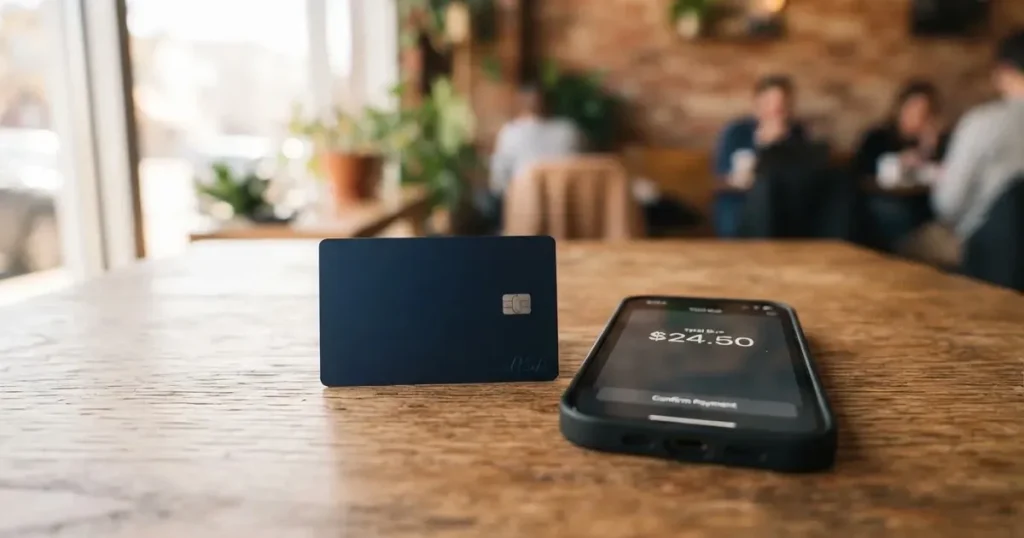
The CoinW card is a virtual or physical card that spends USDT directly from your CoinW balance, launched as a free virtual card in Singapore dollars in August 2025. That is genuinely useful if you already hold USDT and already trust the exchange. If you are coming to CoinW because ordinary bank cards are proving difficult to get where you live, this is not a convincing answer to that problem: the pages I could read do not name the issuing entity, do not publish a fee schedule, and do not say who is eligible. My score is 5.2 out of 10.
The conditions described here are current as of October 28, 2026.
Verdict: 5.2 out of 10
I scored this card on six criteria. Here is the whole picture, with the reasoning behind each mark.
| Criterion | Mark | Why |
|---|---|---|
| Who can get it | 7 / 10 | Unconfirmed starting data suggests 176+ countries for the exchange and 45 regions for the iPay Card variant, with the US, UK, Canada and mainland China excluded. The card’s own readable pages say nothing about eligibility. |
| Cost | 6 / 10 | Per the August 2025 release: the virtual card is free to issue and free monthly. Unofficial sources quote $15 virtual and $98 physical issuance, a 1% fee, and 2% for non-USD. |
| Top-up options | 4 / 10 | The card spends USDT directly, which removes a manual conversion step. There is only one named asset, and unofficial sources quote a 2% top-up fee. |
| Reliability and complaints | 2 / 10 | No legal entity named on the readable pages. Trustpilot shows the exchange at 1.7 out of 5 across 143 reviews, with frozen accounts and reversed profits. Unofficial sources mention a 2023 hack. |
| Everyday use | 6 / 10 | Virtual or physical, with ATM withdrawals worldwide up to $20,000 per transaction. Apple Pay and Google Pay support are not disclosed. |
| Total | 5.2 / 10 | A workable spend mechanism bolted onto an exchange with a thin public record. |
The card suits one person clearly: someone who already has an account at CoinW, already holds USDT, and simply wants to spend it without converting by hand each time. That person gets the single most useful feature the card offers — the balance is spent directly, no manual withdrawal step.
The card does not suit the person I suspect is reading this. If you have trouble opening an ordinary bank card where you are, a card whose public pages do not name the issuing bank, do not state the eligibility criteria, do not publish fees, and sits on an exchange with a 1.7 Trustpilot score is a risk transfer, not a solution. The problems that stopped you from getting a bank card are mostly about identity, jurisdiction and counterparty risk, and this product keeps all three unresolved while adding a new layer: a stablecoin on a blockchain.
One more framing before the detail. The card is cheap or free according to the company’s own August 2025 announcement, and that is the strongest thing in its favour. But the score is not “expensive”. It is “unverified”. A card that publishes nothing can be cheap for reasons you would not accept if you could see them.
Will they give you the card?
Short answer: I could not find a published answer on the card’s own readable pages, and the data that does exist comes from unofficial sources.
Here is what I could verify. Nothing about eligibility is stated on the readable official pages — not the countries, not the age, not the residency requirement, not the document list.
What circulates instead is starting data, and I want to be clear about its status: according to unofficial sources, the exchange itself operates in 176+ countries, the iPay Card variant is limited to 45 regions, and accounts cannot be opened in the US, the UK, Canada, mainland China and other restricted jurisdictions. I have not confirmed any of that against the card, and “45 regions” is an oddly precise number to appear nowhere official.
If you are outside those areas, nobody has told me you are excluded. If you are inside them, do not assume the door is open. Note also that nationality and residence are recorded separately in this industry, because sanctions screening is usually applied to citizenship and country of birth as well as to your address. Being resident somewhere legal does not by itself settle the question.
What I would want to see before applying anything: the name of the legal entity you are contracting with, the issuing bank, and a written statement of which countries are served. None of that is on the pages I could read. If you cannot find it yourself before signing up, that absence is the answer.
How to get it
The practical path runs through the exchange rather than through a bank: create a CoinW account, get it verified to whatever level the exchange requires, and request the card from the account. But I want to be honest about how much of that I can actually confirm.
Not stated: the KYC requirements. Not stated: which documents are needed, whether there are verification tiers, how long approval takes. Not stated: how the card is delivered, or what activation looks like.
What is stated is the product itself. Per the CoinW release of August 2025, the card comes in virtual or physical form, is denominated in SGD, and spends USDT directly.
Unofficial, from a third-party card comparison site and not confirmed by CoinW: the card runs on Visa or Mastercard and is issued by a Singapore bank. That issuer’s name is not given, and I would not build anything on an unnamed institution.
You will notice the pattern by the end of this review. The mechanism is public. The accountability is not.
Fees and limits: what a CoinW payment actually costs
Here is the honest position: CoinW does not publish a fee schedule on the pages I could read, so a large part of this section is me telling you what is missing rather than what is charged. That is itself the finding.
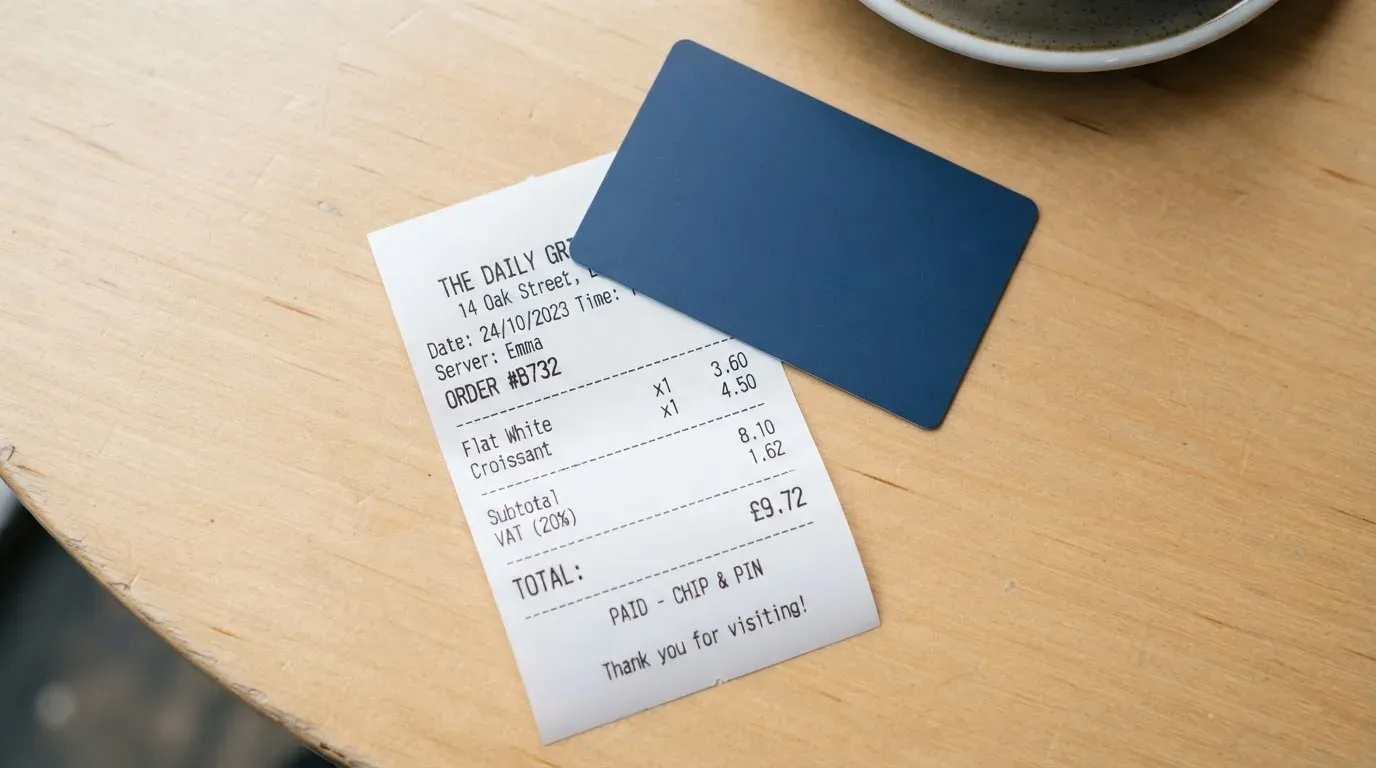
Per the CoinW release of August 2025, the virtual card is free to issue with a zero monthly fee, and physical card fees are up to 50% off during a launch period. A launch discount with no stated end date is a price that can change.
Unofficial figures from a third-party site: $15 for the virtual card and $98 for the physical card, with no annual fee. That source contradicts the release on the virtual price — free versus $15 — so at least one of them is out of date or wrong. The $98 physical figure is likewise unconfirmed.
Unofficial fee figures from the same source: 1% per transaction, and 2% for non-USD. Both unconfirmed. For a card whose whole premise is spending a dollar-pegged token, a 1% charge on every purchase is not a rounding error; on a $60 grocery shop it is $0.60 for the privilege of not opening the exchange app.
Let me walk through three ordinary payments against what is known.
Buying coffee in your home currency. If your balance is USDT and the card converts to SGD at the point of sale, the 1% unofficial transaction fee and the 2% unofficial non-USD fee may both apply, plus whatever spread sits inside the conversion rate — and the conversion rate is not published. This is the payment where you are most exposed to an unknown.
Paying a subscription billed in USD. Cleanest case: USDT to USD, no currency conversion, so the unofficial 1% may be the only layer. But whether recurring payments are supported at all is not stated.
Paying a merchant that treats your card as foreign. Your card is denominated in SGD. Merchants can look up the issuing country from the card’s first digits and may apply extra scrutiny when it differs from your billing address. Address verification, which compares the numeric parts of the billing address a buyer typed against issuer records, is mainly offered in the US, Canada and the UK and is generally unavailable for foreign-issued cards. A decline here is about your card’s origin, not your behaviour.
Also worth knowing: cardholders in some tiers may get fee discounts through what the release calls the Fast-Track Access Program. I did not read the details, so I cannot tell you what it requires or what it saves.
One conflict to keep in view: the release says SGD, unofficial starting data says USD or EUR. If you are budgeting a foreign purchase, ask which denomination your card actually carries.
Top up
The headline is the good part, and it is worth understanding precisely why.
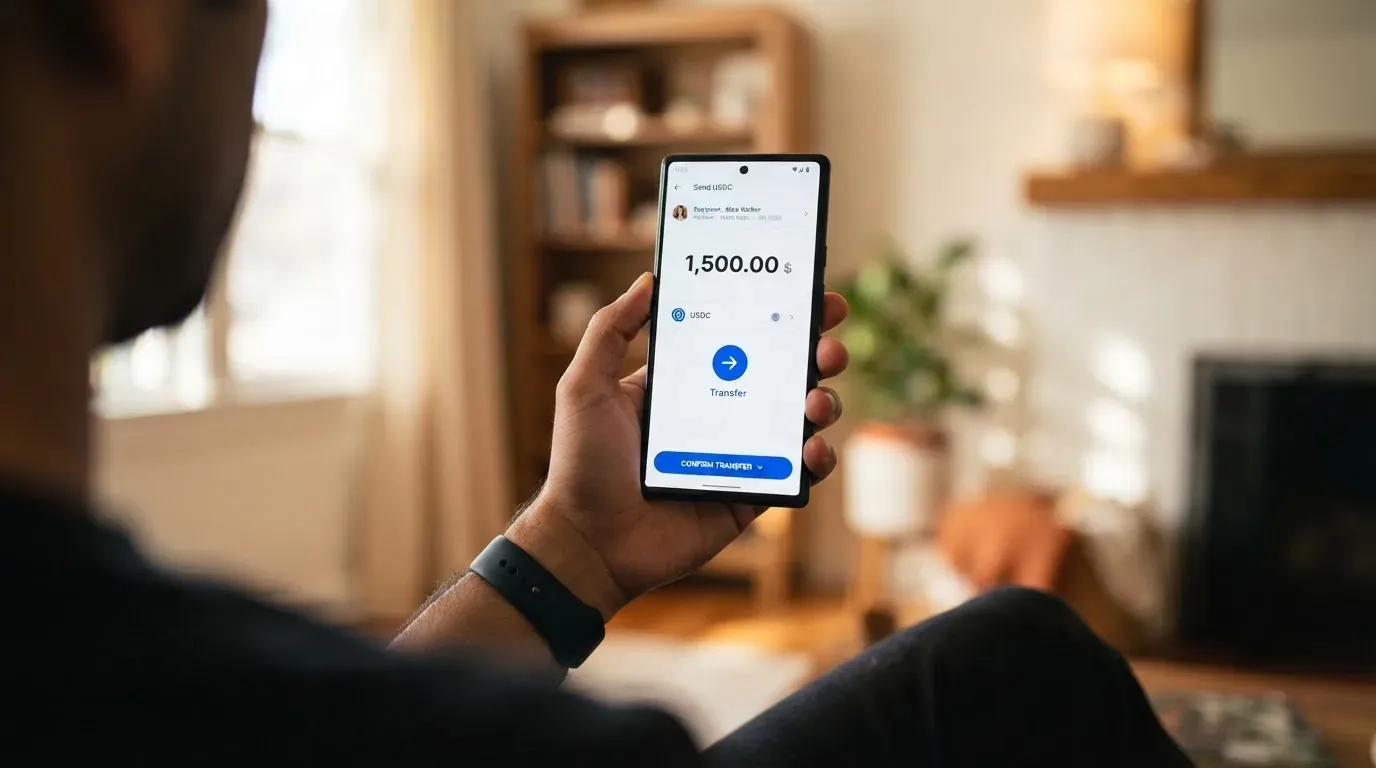
Per the CoinW release, the card spends USDT directly without manual withdrawals. You do not convert, you do not move funds to a separate card balance — you spend the USDT you already hold. For an existing CoinW user holding USDT, that is the entire value proposition, and it is real.
Everything around it is thin. Not stated officially: how the card is topped up, which networks are supported, minimums, or any fee.
Unofficial: a 2% top-up fee, from the same third-party site that got the virtual card price wrong. Treat it as a possibility, not a number.
Withdrawal from the card is not stated either.
If you do end up transferring USDT in, the mechanics outside CoinW matter more than people expect. On Ethereum, fees are paid only in ETH, so a wallet holding USDT but no ETH cannot send at all. On Tron, fees are paid through bandwidth and energy resources, often burning TRX. And blockchain transfers are irreversible: a deposit sent on a network the provider does not support, or to an address belonging to a different network, can be lost outright or need manual support recovery with no guarantee. Check the network before you send anything, because there is no undo.
Worth knowing for context: Tether describes USDT as issued across several chains including Ethereum, Tron, Solana, Polygon and Avalanche, while Circle lists USDC as natively supported on 38 networks as of 16 September 2026 — Ethereum, Solana, Base, Polygon PoS, Avalanche, Arbitrum and Stellar among them. So “the right network” is a real question with a lot of possible answers, and Circle stopped supporting USDC on Tron in February 2024, meaning the popular TRC20 route is not always open.
Paying with it every day
Where it works: the physical card does ATM withdrawals worldwide, with a single transaction limit up to $20,000 per CoinW release. The fee on that withdrawal is not stated. Other limits are not stated.
What is not disclosed, and these are the four things you would look up first: which wallets are supported, what rewards or cashback exist, what the app is like, and how disputes work.
Not stated: Apple Pay. Not stated: Google Pay. For many people that is not a detail — tokenised mobile wallets are how a card stops feeling risky, because the number never leaves the device’s secure element and each payment carries a one-time code. If phone payments are non-negotiable for you, this is a hard blocker.
The reward question deserves a blunt answer: I found nothing. Compare that with the alternatives below, where cashback is a headline feature with published rates. A card with no rewards and possibly 1–2% in fees is a cost, not a benefit.
Two more everyday realities. Declined authorisations can leave a hold on your funds that stays for days. And card payments in this category carry merchant-category friction: gambling, for instance, sits under a four-digit category code that many issuers block on specific cards by policy rather than by law, and the blocked list varies by issuer. Nobody has told me CoinW’s policy.
What can go wrong
This is where the card’s thin disclosure starts to matter, and I would be doing you a disservice to keep it short.
The issuing entity is not named. I could not find the legal entity on the readable pages. That matters more than it sounds. A card payment involves several parties: the network routes the messages and sets the rules, the issuer actually holds the card programme and your money, and the crypto brand is often only a programme manager or a front-end. Visa and Mastercard do not issue crypto cards to consumers themselves — they license issuers, and they can suspend a programme. When Visa terminated its global agreements with FTX in November 2022, the FTX US debit card was wound down by its issuer. If you cannot name the entity standing behind your balance, you cannot tell who would actually return it.
The exchange’s own record. On Trustpilot, CoinW sits at 1.7 out of 5 from 143 reviews, read 21 October 2026, with 76% one-star. The company replies to all negative reviews, which is better than silence. The user reports cluster around these themes: frozen or restricted accounts and withdrawals under anti-money-laundering flags between June and October 2026; profit rollbacks and clawbacks in September 2025 and March 2026; and withdrawals delayed from weeks to two months, in August 2025 and February 2026. Templated support replies are a common theme. None of these reports are about the card specifically — they are about the exchange the card depends on, which is exactly the point.
Company background. Not stated on the readable pages. A third-party summary says the exchange was founded in 2017 in Dubai and was hacked in 2023. Unofficial, but it fits the category: custodial platforms have a documented history of failure, including Mt. Gox at about US$350 million reported stolen between 2011 and 2014, Coincheck at about US$400 million in 2018, and Ronin Network at US$625 million in 2022.
The premise of the asset. A stablecoin aims to hold a stable value against a fiat currency, but stablecoins are not necessarily stable. TerraUSD collapsed in May 2022; USDC temporarily lost its peg in March 2023 during the US banking crisis. Tether and Circle account for about 90% of stablecoin market capitalisation per the BIS in July 2025. Circle says USDC is redeemable 1:1 for USD and 100% backed by cash and cash equivalents, mostly in an SEC-registered government money market fund, with monthly reserve attestations. Tether says it disables tokens in wallets on the OFAC sanctions list and has frozen funds tied to illicit activity, so stablecoins are not censorship-proof either.
Nothing about security or account closure. Not stated: what security features exist, whether 2FA or instant freeze are offered, what happens if you want to delete your account. There is a support address — the company points Trustpilot users to [email protected] or in-app chat — but languages and hours are not stated. And this is the category where KYC is not optional. Regulated businesses must verify customers and assess risk under anti-money-laundering law, with ongoing monitoring and suspicious-activity reporting. In the EU, due diligence covers name, address, date of birth, nationality and identity documents, a sanctions check, the purpose of the relationship, and politically-exposed-person status. If it cannot be completed, rules require the institution to refrain from the transaction or end the relationship — which is precisely why accounts get frozen pending documents. If your trouble with ordinary banking is a document or a nationality problem, expect to hit the same wall here.
Getting your money back. Not stated: withdrawal rules. And your protection depends on structure. Electronic money institutions must safeguard customer funds in dedicated accounts or insure them, but such funds are not the same as bank deposits and may not sit under a deposit guarantee scheme. In the US, debit card reversal rights come from Regulation E and credit card rights from Regulation Z, and prepaid-card coverage varies and should not be assumed. A chargeback is a refund ordered by your issuer with a reason code such as fraud or goods not received — you need to know who your issuer is to use one.
I am not giving tax or legal advice here, and you should not take this page as either. One flag to raise with a professional in your own country: the IRS treats digital assets as property, so exchanging them for goods or dollars generally produces a taxable gain or loss measured in local currency at the transaction date. If every card payment counts as a separate disposal in your jurisdiction, that is a bookkeeping cost of using this card that no fee table will show you.
What to take instead
Two things this card lacks that its competitors publish outright: a named fee schedule and a rewards rate. Here is how the alternatives compare, and I want to be straight that these are better documented, not automatically safer.
| Card | Score | Cost | Fees | Rewards | Availability |
|---|---|---|---|---|---|
| CoinW | 5.2 / 10 | Free virtual per Aug 2025 release; unofficial $15 virtual, $98 physical | Unofficial 1%, 2% non-USD | Not stated | 176+ countries and 45 iPay regions per unofficial data; US, UK, Canada, mainland China excluded |
| Young Card | 5.7 / 10 | Not stated officially | Not stated | Cashback in YNG tokens by Club tier: Essential 0.1%, Gold 1.8%, Platinum 3.6% | Not stated |
| OKX | 6.2 / 10 | No card fee per explainer, May 2026 | No transaction or FX fee; conversion spread 0.1% per explainer vs 0.4% in launch release | Cashback on USDG purchases only, capped monthly in EUR: Regular 2% cap 10, VIP1 4% cap 300, VIP2 4.5% cap 450, VIP3 5% cap 1,000, VIP4+ 10% cap 1,000; launch promo up to 20% VIP / 15% regular | EU plus Norway from 28 January 2026; Iceland and Liechtenstein excluded |
| Coinbase Card | 6.4 / 10 | Zero spending fees, no annual fees | No Coinbase transaction fees, but a spread applies when crypto is bought, sold or traded | Optional crypto rewards per purchase, US Card users only, variable rate shown in app | All US states except Hawaii |
OKX is the closest comparison and the most transparent on price. It is a Mastercard, euro-denominated virtual debit card linked to OKX Pay, issued through an unnamed European licensed payment provider — the same unnamed-issuer problem in a different jurisdiction. No transaction fee, no FX fee, and a conversion spread of 0.1% per the explainer as of May 2026, against 0.4% quoted in the launch press release; the newer figure is the one to plan on. You fund it with USDC or USDG held in OKX Pay, and any other coin must be converted first. There is no auto top-up — if the balance is short, the payment is simply declined. Its own rewards table is internally inconsistent (the text says 2–5% while the table shows 10%), which is a small warning sign. Availability is genuinely narrow: the EU plus Norway, excluding Iceland and Liechtenstein.
Coinbase Card is the most conventional and the least useful if you are not American. Visa prepaid debit, virtual or physical, spends cash or crypto, with zero spending fees and no annual fees — but all crypto is converted to US dollars, so the rate spread applies at payment time. Identity follows the US PATRIOT Act rules: name, address, date of birth and ID. Available in all US states except Hawaii, no other countries. Optional crypto rewards are US-only.
Young Card scores just above CoinW and has the one thing CoinW does not: published cashback, paid in YNG tokens, 0.1% on Essential rising to 1.8% on Gold and 3.6% on Platinum, with Bronze and Silver not stated. Everything else about it is not stated either.
The pattern across all four is the same one I hit with CoinW: the mechanics are documented, the accountability is thinner. Coinbase at least tells you which country’s rules apply to you.
Who I would recommend it to
Three groups, in order.
Someone already inside CoinW. You have an account, you hold USDT, you want to spend it without a manual conversion step, and you accept that the balance sits with an exchange whose Trustpilot score is 1.7 out of 5. The card does exactly one thing and does it directly. That is a legitimate reason to hold it.
Someone who wants to test the idea cheaply. The virtual card is reported as free to issue with no monthly fee. If you want to see whether card-funded USDT spending works for you before committing money, that is a sensible way to find out — provided you transfer small amounts and remember transfers are irreversible.
Nobody who cannot get a bank card. If ordinary banking has closed on you, this card closes the same doors. It keeps you inside one custodial provider, adds a blockchain transfer you cannot reverse, offers no published dispute process, and gives you no way to verify who holds your money. You would be trading a visible problem for an invisible one.
Before you decide anything, do three checks I could not do for you. Find the legal entity and the issuing bank in writing. Find the fee schedule. Find out what happens to your balance if the exchange restricts your account — because between June and October 2026, users report exactly that happening, and a card is only as usable as the wallet behind it.
If those three answers exist and are acceptable to you, the card is fine for small everyday spending. If any of them is a shrug, the missing answer is the answer.
Frequently asked questions
What is the CoinW card?
It is a virtual or physical payment card that spends USDT directly from your CoinW balance, announced in August 2025 in a virtual form denominated in SGD. Rather than converting and loading a separate card balance first, you spend the stablecoin you already hold. An unofficial source names Visa or Mastercard with a Singapore bank as issuer, unconfirmed by CoinW.
How does the CoinW card work?
Per the August 2025 release, it draws on USDT in your CoinW account without manual withdrawals, converting as needed at the point of payment. As with any prepaid-style card, it spends a stored balance rather than overdrawing a bank account, so it cannot go negative. The network routes the payment, an issuer holds the programme, and CoinW appears to sit in front — though that entity is not named publicly.
Is CoinW a bank?
Not on the evidence I could find. No legal entity is named on the readable pages, and an unofficial source points to a Singapore bank issuing the card while CoinW itself is described as an exchange founded in 2017 in Dubai. A third-party summary also mentions a 2023 hack, unofficial. The card and the exchange are related; whether that makes one a bank is not something I would assume.
Who owns CoinW?
Not stated on the pages I could read. What circulates is an exchange founded in 2017 and based in Dubai, which would make it a private company rather than a bank or a regulated EU institution. Ownership matters here because an electronic money institution must safeguard customer funds, and those funds are not the same as bank deposits.
Can I get the CoinW card in my country?
I cannot tell you, and that is the honest answer. Eligibility is not stated on the readable official pages. Unofficial starting data claims 176+ countries for the exchange and 45 regions for the iPay Card variant, with accounts blocked in the US, UK, Canada and mainland China. Check with the exchange directly before assuming either way.
How much does the CoinW card cost?
The August 2025 release says the virtual card is free to issue with a zero monthly fee, and physical card fees were up to 50% off during launch. Unofficial sources quote $15 virtual and $98 physical with no annual fee — contradicting the release on the virtual price — plus a 1% transaction fee and 2% for non-USD. On a $60 shop, 2% is $1.20 for convenience.
What are the CoinW card limits?
The physical card does ATM withdrawals worldwide with a single transaction limit up to $20,000, per the release; the withdrawal fee is not stated. Other limits are not stated. Daily and monthly spending caps, which most people check first, simply do not appear on the pages I could read.
Does the CoinW card require KYC?
Not stated for the card specifically, though opening an exchange account in most jurisdictions involves identity checks under anti-money-laundering law. In the EU, due diligence covers name, address, date of birth, nationality, identity documents, a sanctions check and politically-exposed-person status. If it cannot be completed, rules require the institution to decline the transaction or end the relationship.
Can I add the CoinW card to Apple Pay?
Apple Pay support is not disclosed. I found nothing about Google Pay either, and I would treat that as unconfirmed rather than absent until you see it in the app. What is documented in general: Apple Pay replaces the card number with a device-specific number stored in the secure element, never on Apple’s servers, and each payment uses a one-time code.
Is the CoinW card safe?
Safe from fraud, nothing is safe from provider risk. CoinW’s exchange sits at 1.7 out of 5 on Trustpilot from 143 reviews, with reports of frozen withdrawals, profit rollbacks and delays of weeks to two months. USDT is also not perfectly stable, and Tether has frozen funds tied to illicit activity. I would not call this unsafe outright — I would call it unverified.
Exchange cards: your questions answered – cryptocardanswers
Content created by the «cryptocardanswers» team