
The honest verdict on the OKX card: cheap to spend, thin on the details
 Available in US
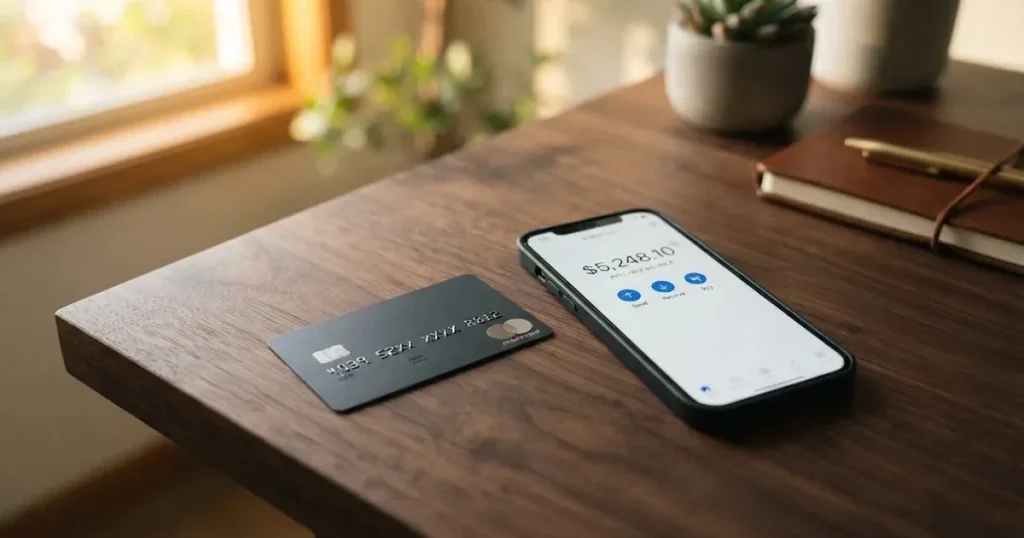
The OKX card is one of those crypto payment cards that promises the simple thing: load a balance, tap a phone, buy a coffee. I went through its public materials carefully, checked where the numbers come from, and looked at what users actually complain about. My honest conclusion: this is a well-priced virtual card for people in the EU who already sit on USDC or USDG, and a poor fit for almost anyone else. It scores 6.2 out of 10. The conditions described below are current as of October 28, 2026.
The verdict: 6.2 out of 10, and who it suits
The single strongest thing about this card is its cost. There is no card fee, no per-transaction fee, and no FX fee charged by OKX itself, with only a small conversion spread on top. That pricing is hard to argue with. What pulls the score down is everything around it: the card is virtual only (a physical card and ATM access are never clearly promised), top-up runs through a narrow stablecoin route, and a surprising number of the details a person actually needs — age, delivery, limits, ATM fees — simply are not stated publicly. So this is not a card for someone who wants a normal-looking piece of plastic in their wallet. It is a card for someone comfortable holding stablecoins and tapping their phone.
Who it suits: EU users who already hold USDC or USDG, who are happy to spend from a stablecoin balance rather than from a bank account, and who want very low day-to-day spending costs. Who it does not suit: anyone outside the EU (it is not there), anyone wanting a physical card or ATM withdrawals, anyone who wants cashback on USDC, and anyone who needs published spending limits before signing up. Let me walk you through the score, criterion by criterion, so you can see exactly where the strengths and the gaps are.
| Criterion | Mark | Why |
|---|---|---|
| Who can get it | 5 / 10 | EU plus Norway, launched 28 January 2026; Iceland and Liechtenstein excluded. Tied to the MiCAR-licensed OKX Europe Ltd. entity. |
| Cost | 9 / 10 | No card fee, no transaction fee, no OKX FX fee; conversion spread quoted as 0.1% by the explainer and 0.4% in the launch release. |
| Top-up options | 5 / 10 | USDC or USDG on the OKX Pay balance via Convert or an external deposit; other coins must be converted first and networks are not named. |
| Reliability and complaints | 6 / 10 | OKX Europe Ltd. holds a MiCAR licence; the issuer is unnamed officially (third parties say Monavate). Complaints centre on asset holds, account limits and slow support. |
| Everyday use | 5 / 10 | Virtual euro Mastercard with Apple Pay and Google Pay; a physical card and ATM access are not named. |
| Total | 6.2 / 10 | A cheap-to-spend virtual card, but thin on the practical details. |
Will they give you the card?
Eligibility is narrower than you might expect. The card is offered to EU users plus Norway, and it launched on 28 January 2026. Iceland and Liechtenstein are excluded. The catch is that “EU” here means users of OKX Europe Ltd., the MiCAR-licensed entity — that is the regulated arm you have to be inside of. One of OKX’s own explainers concludes the card covers the “entire EEA,” but that contradicts the more careful EU-plus-Norway framing, so I would trust the narrower scope. If you are in Iceland or Liechtenstein, this is not for you.
Beyond geography, you must pass full identity verification before the card is offered. This is not optional: for EU users the KYC rules sit under MiCAR and the EU anti-money-laundering framework. More on what that check involves in the next section.
How to get it
Applying is not a long form-filling slog, but it is not frictionless either. The steps the materials give are short: complete full identity verification with a valid ID document and proof of address, activate the card in the OKX app, and hold USDC or USDG in OKX Pay. There is a single verification level for the card — a valid ID document plus proof of address — with no tiers to climb.
A few honest gaps. The card’s minimum age is not stated. How long verification takes, and the common reasons a check gets rejected, are also not stated, so do not expect a predictable timeline. Delivery is not stated either, but the card is virtual, so the materials only ever talk about activating it in the app rather than posting anything to you. In practice: verify, activate in-app, make sure a stablecoin balance is sitting in OKX Pay, and you are ready to spend.
Fees and what a payment really costs
This is where the card wins. The day-to-day cost of using it is genuinely low, and the fee table below is the heart of the case for it.

| Item | Value |
|---|---|
| Card (issuance) fee | None |
| Monthly fee | None |
| Per-transaction fee | None |
| OKX FX fee | None |
| Conversion spread | 0.1% (explainer) / 0.4% (launch press release) |
| ATM withdrawal fee | Not stated |
| Daily spending limit | Not stated |
| Monthly spending limit | Not stated |
Two numbers for one spread is a small blemish, and here is how I read it: the launch press release quoted a 0.4% market spread, while the explainer later says 0.1%. The explainer is the newer document, so I lean toward the lower figure, but the discrepancy is unresolved in the official text and I will not pretend otherwise.
Now let me put that through a couple of ordinary payments so you can feel it. Coffee: suppose your coffee costs EUR 3 and you pay from USDG. OKX converts USDG to euro at the point of purchase, there is no transaction fee and no OKX FX fee, and the only cost is the conversion spread — 0.1% on the explainer’s figure, so about a fraction of a cent. A EUR 40 train ticket is the same story at the same rate: the spread is the only thing you pay on top of the price. Buying something priced in dollars while your card is euro-denominated is where the spread still applies, because the euro conversion happens at purchase regardless. What you will not find charged here is any hidden OKX FX markup, because OKX says it charges none — that is the whole appeal of the card.
What the fee table cannot tell you: the ATM fee, and any daily or monthly spending limits, are simply not published. One unofficial German deals-forum post claims a monthly limit of EUR 50 was set for a cashback promotion, but that is unverified third-party chatter and may not be the real card limit, so do not plan around it.
Top up options
The top-up route is narrow and worth understanding before you commit. You fund the card by holding USDC or USDG in OKX Pay — the card’s balance lives there, and the stablecoins stay in your wallet until the moment of purchase. You get funds in two ways: through Convert inside OKX Pay, or by depositing USDC/USDG from an external wallet.

If you hold something other than those two stablecoins, you have to convert it to USDC or USDG first; the card does not spend, say, BTC or ETH directly. A few things are not stated and matter: there is no deposit fee mentioned, but the minimum top-up and any network fees for an external transfer are not published, and the specific blockchain networks for a deposit are not named. There is also no auto top-up feature — if your balance is short when you tap, the payment is simply declined. So the sensible habit is to keep a buffer of USDC or USDG in OKX Pay and top up before you run low, rather than relying on the card to catch you.
Paying with it every day
Everyday use is where this card shows its age. It is a euro-denominated virtual Mastercard debit linked to OKX Pay, issued through a European licensed payment provider. You spend it by tapping with Apple Pay or Google Pay — both are supported from launch — which is the main way anyone would actually use it day to day.
A few things are simply not stated, and they are the kind of details that decide whether a card is smooth or annoying: whether any merchants are blocked, and how disputes are handled if something goes wrong with a purchase. Cashback is the other wrinkle. It pays only on USDG purchases, so USDC earns nothing. The rate depends on your OKX VIP level: Regular 2% capped at EUR 10 a month; VIP1 4% capped at 300; VIP2 4.5% capped at 450; VIP3 5% capped at 1,000; VIP4 and above 10% capped at 1,000. There is some inconsistency in how these caps are written (the text says 2–5%, the table shows 10% at the top tier), and a 30-day launch promo of up to 20% for VIP / 15% for regular users was also advertised. Promotions vary, so treat the headline rate as a ceiling, not a promise. Finally, the app you use is the main OKX app, not a card-specific one; its App Store rating is about 4.6/5 from roughly 23K ratings, and an unofficial mirror puts Google Play at 4.4/5 from a much larger review count.
What can go wrong
Nothing is broken here, but a few things deserve a sober look. First, the practical risk of any crypto card is the balance sitting with a provider. Card payments involve several parties — the card network routes the message, a licensed issuer holds the programme, and the crypto brand is often just the front end. OKX itself says the stablecoins stay in your self-custody wallet until checkout, which is a good sign, but the money still passes through a regulated platform between purchases. Custody has a scar tissue: Mt. Gox (around US$350 million reported stolen, 2011–2014), Coincheck (around US$400 million, 2018) and Ronin Network (US$625 million, 2022) are the cautionary names.
Second, the complaints. Aggregated user reviews of OKX commonly cite slow support, assets held with no clear reason, account restrictions that block access to funds, and withdrawal holds; on Trustpilot, OKX carries roughly 1,619–1,621 reviews and OKX Europe scores 4.3 from 29 reviews, with the same negative themes echoed in App Store reviews. Verification and withdrawal experiences also vary by region, and regional availability drives mixed card and fiat experiences. None of that is a reason to avoid the card on its own, but it is a reason to not treat it as if your money is unreachable-proof.
Third, the regulatory fine print. OKX Europe Ltd. is the MiCAR-licensed entity for EEA users, and the card is issued through an unnamed European licensed payment provider. MiCAR requires e-money tokens to be issued only by a credit institution or an electronic money institution, and EMIs must safeguard customer funds — but those safeguarded funds are not the same as bank deposits and may not sit under a deposit guarantee scheme. Stablecoins themselves can move: USDC briefly lost its dollar peg in March 2023 during the US banking crisis, and TerraUSD collapsed outright in May 2022. So “stable” is a description, not a guarantee. Finally, the geography trap I mentioned earlier applies to cards generally: a card issued in one country can look “foreign” to a shop in another, and merchants sometimes decline prepaid or foreign-issued cards. If you travel, expect occasional friction.
What to take instead
If the OKX card does not fit you, the honest comparison is with the other crypto cards I looked at. None of them is dramatically better on cost; they differ most on where you live and what you hold.
| Card | Score | Where it is | Card and cost | Top-up and rewards |
|---|---|---|---|---|
| OKX | 6.2 / 10 | EU + Norway | Virtual euro Mastercard; no card fee, no transaction fee, small conversion spread | USDC/USDG via OKX Pay; cashback on USDG only, tier-based caps |
| Coinbase Card | 6.4 / 10 | All US states except Hawaii | Visa prepaid, virtual or physical; zero spending fees, no annual fees; a spread applies when crypto is bought/sold/traded | Link a bank account or deposit part of a paycheck (zero fees); optional crypto rewards, US users only, rate shown in-app |
| BingX | 5.8 / 10 | Europe (EEA), APAC, LATAM and other selected regions; no country list, contact support | Virtual (instant) and metal (mailed 15–30 business days); Visa debit settling in USD; fees not stated | USDT only, from the BingX Fund Account; no cashback mentioned |
| Young Card | 5.7 / 10 | Eligibility not stated | Card type and fee not stated officially | Cashback paid in YNG tokens by Club tier: Essential 0.1%, Gold 1.8%, Platinum 3.6% |
How I would read this table: the Coinbase Card edges OKX on the headline score and is clearer about what it is (a prepaid Visa, virtual or physical, US-only), but it is locked to the US and converts everything to dollars. BingX offers a physical metal card and a wider regional reach than OKX, but works only with USDT and says nothing about fees. Young Card’s rewards are paid in its own token, which is a different kind of bet entirely. If you are in the US, Coinbase is the more conventional choice; if you are in the EU holding USDT rather than USDC, BingX is worth a look; if you are in the EU holding USDC or USDG, OKX remains the cheapest of the three. Whichever you consider, do your own check on the current terms — this comparison is a snapshot, not advice.
Who I would recommend it to
I would point this card at a specific person: someone in the EU who already holds USDC or USDG, pays for most things by phone, and wants to spend a stablecoin balance at genuinely low cost without an FX markup added by the exchange. If that is you, the OKX card does what it says at a price that is hard to beat, and the missing details — physical card, ATM, published limits — are details you have already accepted not to rely on.
I would steer everyone else away or at least toward reading further first. If you need a physical card, or you plan to take money out at an ATM, or you want to be sure of a spending limit before you commit, this card cannot promise you those things, because the materials do not state them. If you are outside the EU plus Norway, it is not offered. And if you are the kind of person who wants a bank-like relationship with your money, read the complaints section above first; the platform is regulated, but the user-reported experiences around holds and slow support are real enough to weigh.
My advice, plainly: if it fits the profile above, apply — the cost case is strong. If any of your must-haves are missing from the published details, treat that as the answer, not a small gap to look past.
Frequently asked questions
What is the OKX card?
The OKX card is a virtual Mastercard debit card, denominated in euros, that spends a stablecoin balance held inside OKX Pay. You tap it with Apple Pay or Google Pay, and at the moment of purchase your USDC or USDG is converted to euro. It is issued through a European licensed payment provider, with OKX Europe Ltd. as the MiCAR-licensed entity serving EEA users. There is no card fee and no per-transaction fee; the only cost is a small conversion spread.
How does the OKX card work?
You top up OKX Pay with USDC or USDG — either through Convert inside the app or by depositing from an external wallet. When you pay, the stablecoin is converted to euro at the point of purchase and the virtual Mastercard is charged. The stablecoins stay in your wallet until checkout, and there is no auto top-up, so if your balance is too low the payment is declined. That is the whole loop.
Who can get the OKX card?
It is offered to users in the EU plus Norway, launched on 28 January 2026, and it excludes Iceland and Liechtenstein. Eligibility also means being a user of OKX Europe Ltd., the MiCAR-licensed entity. You must pass full identity verification with a valid ID document and proof of address. One explainer claims “entire EEA” coverage, but that conflicts with the narrower EU-plus-Norway scope, so assume the narrower one.
Is the OKX card free?
There is no card fee and no monthly fee, and OKX charges no transaction fee and no FX fee of its own. The only cost is a conversion spread when USDC or USDG is turned into euro at purchase. That spread is quoted as 0.1% in the explainer and 0.4% in the launch press release — the explainer is newer, so the lower figure is the better guide, but the discrepancy is unresolved. ATM fees and spending limits are not stated publicly.
How do I top up the OKX card?
You fund it by holding USDC or USDG in OKX Pay. You can convert within OKX Pay using Convert, or deposit USDC/USDG from an external wallet. Any other coin must be converted to USDC or USDG first, since the card spends only those two. No deposit fee is stated, but the minimum top-up, any network fees, and the supported blockchain networks are not published, and there is no automatic top-up — keep a balance buffer so a tap is not declined.
Does the OKX card give cashback?
Yes, but only on USDG purchases — USDC earns none. The rate follows your OKX VIP level: Regular 2% capped at EUR 10 a month; VIP1 4% capped at 300; VIP2 4.5% capped at 450; VIP3 5% capped at 1,000; VIP4 and above 10% capped at 1,000. A 30-day launch promo of up to 20% for VIP and 15% for regular users was also advertised. Promotions vary and the published figures are written inconsistently, so read the current terms in the app.
Is there a physical OKX card or ATM access?
Neither is clearly promised. The card materials describe a virtual Mastercard, activated in the OKX app, and Apple Pay and Google Pay tap-to-pay; a physical card and ATM withdrawal are not named, and ATM fees and cash-out details are not stated. Some alternatives do offer a physical card — BingX, for example, mails a metal card in 15–30 business days. If a physical card or ATM is essential to you, this is not the card.
Is the OKX card safe, and is OKX a bank?
OKX is a crypto exchange, not a bank. It is regulated where it serves you — OKX Europe Ltd. holds a MiCAR licence, the EU’s crypto-asset regulation — and the card is issued through a European licensed payment provider. Funds held by an electronic money institution are safeguarded but are not the same as bank deposits and may not be covered by a deposit guarantee scheme. OKX says your stablecoins stay in self-custody until checkout, but user reviews do cite asset holds and withdrawal delays.
How do I add the OKX card to Apple Wallet?
Both Apple Pay and Google Pay tap-to-pay are supported from launch, and adding the card is done through the OKX app rather than Wallet directly. The app provisions a tokenised card number for your phone; each tap uses a one-time security code, and the number itself is not stored on Apple’s servers. You do not need a physical card in hand because the card is virtual to begin with — activate it in OKX Pay and add it to your wallet from there.
Is the OKX card worth it?
Worth it if you are in the EU plus Norway, already hold USDC or USDG, and tap your phone for most purchases — the cost case is genuinely strong, with no card fee, no transaction fee, no OKX FX fee and only a small spread. Not worth it if you need a physical card, ATM withdrawals, published spending limits, or cashback on USDC, or if you are outside the eligible region. Those gaps are in the published details, not things that are merely inconvenient, so judge the card against what you actually need.
Exchange cards: your questions answered – cryptocardanswers
Content created by the «cryptocardanswers» team