
A genuinely free virtual Visa wrapped in a lot of silence
 Available in US
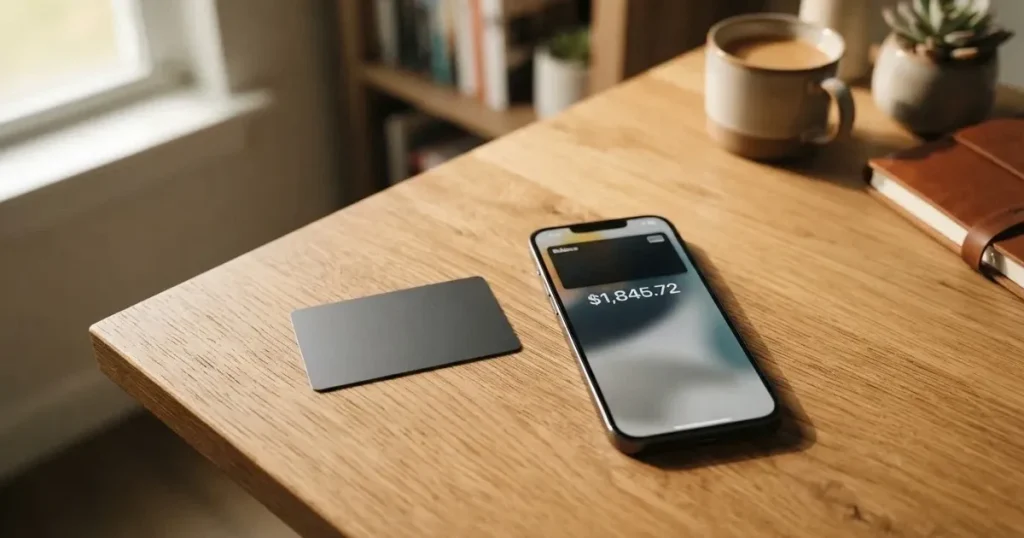
If you are weighing Kryptonim, you are probably asking one of two questions. Either you have a Kryptonim wallet already and want a card that spends from it without a monthly bill, or you are someone who cannot get an ordinary bank card and is looking for any Visa that will work. The first reader gets a straightforward answer. The second one gets a lot of unanswered questions.
My score is 6.1 out of 10. That number is not a hedge, it is the arithmetic of a card that publishes one clear promise — a virtual Visa with no monthly fee — and leaves almost everything around that promise unsaid. The card pages name no country list, no issuer, no fee schedule, no spending limits and no card currency. There is no honest way to award a 7 or an 8 to something whose costs are not disclosed on the card pages.
Everything below is current as of October 28, 2026.
Verdict
| Criterion | Mark | Why |
|---|---|---|
| Who can get it | 5 / 10 | No country list published; the card works “where VISA cards are accepted” |
| Cost | 8 / 10 | Virtual card free, no monthly fee; on a demo top-up of 1.00 EUR the fee and network fee were 0.00 EUR; physical card price and FX costs not disclosed |
| Top-up options | 5 / 10 | Top-up by QR code in Kryptonim Wallet, automatic conversion of digital assets; coins and networks not named |
| Reliability and complaints | 6 / 10 | Kryptonim structures include Swaps Ltd (FCA), QuantiPay AG, KTM Virtual Services (FINTRAC); the card issuer is not named; no card complaints found; the main service has an unofficial Trustpilot score of 3.2 from 166 reviews |
| Everyday use | 6 / 10 | Virtual or physical Visa, Google Pay available; Apple Pay and ATM use not disclosed |
| Total | 6.1 / 10 |
The card suits one reader particularly well: someone who already holds a Kryptonim wallet, wants a free virtual Visa, and can live with paying in whatever currency the balance happens to hold. For that person the free virtual card is a genuine benefit and I can recommend exploring it.
It does not suit someone who needs to know, before opening the app, exactly what a coffee will cost them. It does not suit anyone in a country whose eligibility is unclear to them, because the card pages never say which countries can apply. And it does not suit anyone whose main worry is a locked balance with no clear answer in front of them.
Here is the pattern I keep seeing in crypto cards generally, and it shapes every section below. A card number starting with a six- or eight-digit issuer identification number tells a merchant which institution issued it and from which country, and a shop may apply extra scrutiny when the issuer country differs from the billing address. That is why a card issued in one country can feel “foreign” in another. Add to that the fact that Visa and Mastercard do not issue crypto cards themselves — they license issuers and can suspend a programme — and you can see why “who actually stands behind this card” is the first question, not a technicality.
Will they give you the card?
The short answer is: the card pages do not publish a country list, so you cannot tell from them whether your country qualifies. The card is described as usable “where VISA cards are accepted”, and that is a statement about merchant acceptance, not about who may apply. Those are two different things and the difference matters here.
You will see this distinction constantly in crypto card reviews, and it is worth getting into the habit early. A card can be perfectly valid in your country while being unavailable to you, because the issuer’s list of eligible applicants is narrower than the list of shops that will take the card. Nothing in the Kryptonim card pages resolves that question.
What about identity checks? The card page says you can “Get your free virtual card shortly after account verification”. So verification happens — the free virtual card follows account verification. But what that verification asks for is not stated: no list of documents, no age requirement, no proof of address. Nor is any tier structure described, where a lower tier unlocks a physical card and a higher one unlocks higher limits.
There is one bright spot here, and it comes from the category rather than from Kryptonim. Card payments are regulated as payment services separately from crypto services, so a crypto card often rests on two licences rather than one. In the EU, customer due diligence covers name, address, date of birth, nationality and identity documentation, a sanctions check, understanding the purpose of the relationship, and whether the customer is a politically exposed person. Nationality is recorded and screened separately from residence, because sanctions screening and issuer risk policy are often applied to citizenship and country of birth as well as to the country of address. If due diligence cannot be completed, EU rules require the institution to hold off on the transaction or the relationship, and where necessary end an existing one. That is the ordinary reason accounts get frozen pending documents — it is not automatically a sign that something is wrong, but it does mean your verification can have a tail.
For prepaid and debit cards in general, availability is to adults aged 18 and over, and some issuers set higher limits.
My advice: do not assume you qualify, and do not assume you do not. Ask the service directly what documents it needs and whether your country is on its list, before you commit any funds.
How to get it
Short answer: verify your account, and the free virtual card arrives shortly after — that is the whole published process. The card page states “Get your free virtual card shortly after account verification” and that is as much detail as it gives.
The form factor is your choice of two: a virtual or a physical Kryptonim Card, on Visa, accepted “anywhere VISA are accepted”. The card currency is not stated, which turns out to matter more than it sounds — I explain why in the cost section.
Delivery is not stated. If you are ordering a physical card, you are relying on the word of nobody in particular about when it arrives, whether it arrives at all, and what it costs to ship. That is one of the reasons I lean toward the virtual card for a first look.
On the app side, the page carries an iOS link to “Kryptonim Wallet”. Ratings for the app were not read, so I am not going to characterise the user experience from inside the app. I am reviewing what the company publishes.
The activation question comes up constantly in searches, and the honest answer is that the public card page does not describe an activation procedure separate from account verification. If you have done this before with a virtual card, you probably expect to add it to a wallet, enter a code from an app, and start spending. Do not treat that expectation as established by these pages.
So the practical path is short: open the wallet, verify, take the virtual card. The uncertainty is not in the steps, it is in what happens afterwards.
Fees: what it really costs
The one clear number is that there is no monthly fee for the virtual card, and the virtual card is described as free. Everything else about what a payment costs is not stated.
I want to be precise about the shape of that gap, because “free card” gets repeated in a way that can mislead.

| Fee or limit | What Kryptonim publishes |
|---|---|
| Issuance, virtual card | Described as free |
| Issuance, physical card | not stated |
| Monthly fee | “No monthly fees for virtual card” |
| Conversion | not stated; the page mentions “Automatic conversion of digital assets” |
| FX | not stated |
| ATM | not stated |
| Daily limit | not stated |
| Monthly limit | not stated |
| Card currency | not stated |
| Tiers | not stated |
The FAQ on the card page literally contains the question “Are there any fees for Kryptonim Card?” and the answer does not appear in the page text. Likewise the FAQ question about spending limits has no answer in the page text. I am not going to guess at what is in those answers.
There is one concrete piece of fee evidence, and it comes from a demo top-up screen rather than from a fee schedule. On a 1.00 EUR deposit the screen showed “Fees 0.00 EUR, Network fee 0.00 EUR”. Minimums and fiat options are not stated. One data point, on a demo, on a round number — that is not the same as a published schedule, but it does at least point in the right direction for a small deposit.
Now the three everyday payments everyone actually wants to run, and which fees apply to each. I can only tell you which fees Kryptonim has or has not disclosed; the amounts are mine to reason about only in the sense that the variables themselves are unnamed.
A coffee at a local café. You tap, the merchant takes whatever the local price is, and your card balance is converted if it is not already in that currency. What applies: the conversion rate, because the balance almost certainly is not in local currency, and any FX markup, if one exists. What you do not know: what the conversion rate is, whether there is a spread over the market rate, and which currency your balance is held in. If your balance sits in USDT or a dollar-pegged token and the café is in euros, you are effectively doing a currency exchange at the moment of purchase. A stablecoin “aims to hold a stable value against an asset such as a fiat currency, but despite the name, stablecoins are not necessarily stable” — USDC temporarily lost its peg in March 2023 during the US banking crisis, and TerraUSD collapsed outright in May 2022.
An online subscription at a merchant outside your country. You type a card number into a website. What applies: the FX rate, plus the risk of a decline. Address Verification Service compares the numeric parts of the billing address the buyer typed with issuer records; it is mainly offered in the US, Canada and the UK and is generally unavailable for foreign-issued cards, which can cause declines. Some merchants decline prepaid or foreign BINs because the lookup reveals the card type and issuer country. 3-D Secure may add a step — Visa’s brand is Visa Secure, and the issuer either approves frictionlessly or challenges you with a one-time code or biometric. And a declined authorisation may leave a hold on funds that can remain for several days, typically up to 7.
A withdrawal at an ATM in another country. This is the one I would ask about before you travel. ATM is not stated: not whether withdrawals work, not the fee, not the currency the machine hands you. Add an unstated FX rate and an unstated card currency, and the outcome of a single ATM transaction is unknowable in advance. A physical card might be useless for this while a virtual card is impossible for it. Nobody should plan a trip around a fee they cannot read.
There is a second layer you should understand, because it is not Kryptonim’s number and it can be confusing when it shows up in a transfer. On-chain network fees — gas, bandwidth — for your deposit are charged by the blockchain, not by the card provider. Fees on the Ethereum network are paid only in ETH, so a wallet holding USDT but no ETH cannot send. Tron prices internally with bandwidth and energy, often burning TRX. So when the card shows a zero fee and a zero network fee on a demo deposit, part of what you are seeing belongs to a system the card does not control.
Top up
Top-up is by QR code scanned in Kryptonim Wallet, with automatic conversion of digital assets — and the coins and networks are not named on the page.
That single sentence carries the whole funding story, and you should read it twice. QR-code top-up in the wallet is a real method. Automatic conversion of digital assets means the wallet can convert holdings into whatever the card needs. What is missing is the list: which coins, which networks, how many, what minimums, and whether you can add money from a bank rather than from crypto.
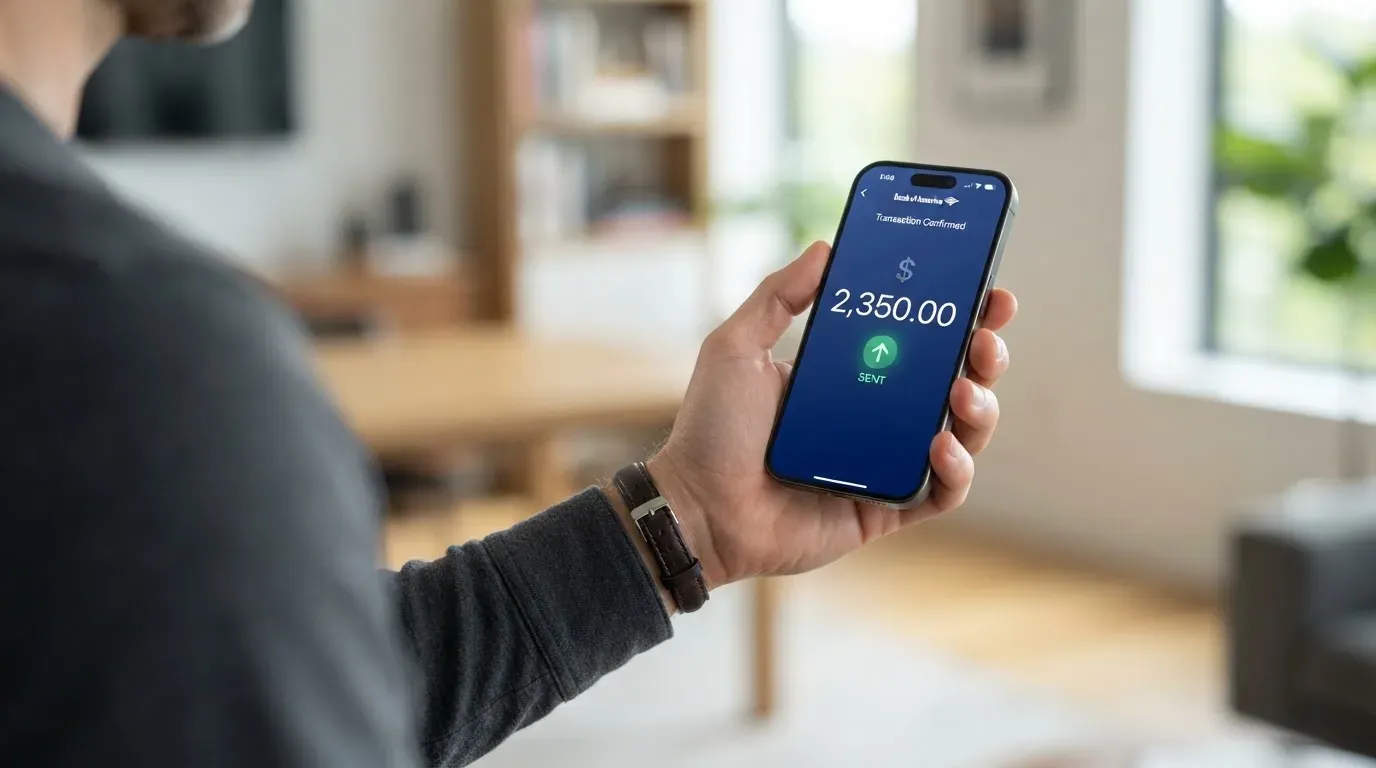
On the demo screen, a 1.00 EUR deposit showed “Fees 0.00 EUR, Network fee 0.00 EUR”. Fiat options are not stated.
Two general points about this step, because this is where people lose money rather than just time.
First, transfers are irreversible. A deposit sent on a network the card provider does not support, or to an address belonging to a different network, can be lost or need manual support recovery with no guarantee. Getting the network right is not advice I can give you around a rule — it is arithmetic. If the card page does not name the networks, then the networks are something you must establish from the app or from support before you send anything, not after.
Second, if you send USDC, note that Circle stopped supporting USDC on Tron in February 2024, so “USDC over TRC20” is not a native option. Circle lists USDC as natively supported on 38 networks as of 16 September 2026, including Ethereum, Solana, Base, Polygon PoS, Avalanche, Arbitrum and Stellar. Tether’s USDT has been issued on networks including Ethereum, Tron, Solana, Polygon and Avalanche. And Tether says it disables tokens in wallets on the OFAC sanctions list and has frozen funds tied to illicit activity, so stablecoins are not censorship-proof.
The withdrawal question belongs here too, because it is the mirror image of the top-up. The FAQ asks whether the balance can be withdrawn to wallet or bank, and there is no answer in the page text. For the reader who cannot get a normal bank card, “can I get my money back out” is not a footnote. It is the question.
Paying with it every day
You can add the Kryptonim Card to Google Pay — that is stated. Apple Pay is not mentioned. Blocked categories are not stated.
The page links Google Pay Terms and says “Add your Kryptonim Card to Google Pay”. That is the whole of the mobile wallet story as published. Apple Pay does not appear on the card page at all, and the difference matters: Apple Pay replaces the card number with a device-specific Device Account Number stored in the Secure Element, never on Apple servers, and each payment uses a one-time dynamic security code. That is a different security path from Google Pay, and I am not going to imply the card offers a protection it has not documented.
Neither is any rewards or cashback described. No tiers, no programme, no rate. If you are choosing on the basis of a rebate, this card does not publish one.
Blocked merchant categories are not stated, and this is worth more thought than it sounds. A merchant category code is a four-digit number classifying a business by goods or services, specified in ISO 18245 and assigned when a business starts accepting a card. MCC 7995 covers gambling — casinos, betting, lotteries — and many issuers block it on specific cards by policy rather than by law, with the blocked list varying by issuer. A card that does not publish its blocked list means you find out by being declined. For a reader in a country where gambling and adult content are the main things an ordinary card is refused for, that ordering matters.
One more everyday item: a dispute. The FAQ asks where a merchant refund goes, and there is no answer in the page text. A chargeback is a refund ordered by the card issuer to settle a dispute, with reason codes such as fraud, duplicate billing or goods not received. Whether a refund returns to the card balance or vanishes into a conversion is a real practical question, and it is unanswered.
So: tap-to-pay on Android via Google Pay, virtual or physical Visa, and a daily routine that works in the straightforward case. The friction appears at the edges — foreign sites, blocked categories, refunds, travel.
What can go wrong
No official incidents were found, and no card-specific complaints were found. The risk here is not a known scandal — it is that the card’s issuer is not named and the surrounding service carries an unofficial complaint history of its own.
Let me separate those two things, because they are different in kind.
On incidents and complaints: I found no official incidents and no card-specific reviews. That is genuinely reassuring and I want to give it its proper weight. It does not, however, tell you the card is safe, because the absence of complaints often reflects the absence of scale rather than the absence of problems.
On the entities: Kryptonim lists Swaps Ltd (England and Wales, no. 11850124, described as “registered with the UK Financial Conduct Authority (FCA) as a cryptoasset business”); QuantiPay AG; KTM Virtual Services Inc. (British Columbia, FINTRAC MSB M23813101); Kryptonim Colombia; and Kryptonim sp. z o.o. as data controller. The card issuer and the e-money institution are not stated, and the page does not link these entities to the card. So if you wanted to know which institution stands behind your Visa when a payment goes wrong — the party who would actually chase the merchant for you — the card pages do not tell you. That is a gap, not a red flag. There is a difference, and it is worth keeping.
Unofficial, third-party, and about a different service: the Trustpilot score for Kryptonim is 3.2 out of 5 from 166 reviews, with complaints of unpaid withdrawals and a deposit not returned for weeks. This is user report data, it is not confirmed by the card, and it concerns the related on-ramp service rather than the card itself. I include it because people search for it and because the withdrawal question above is exactly where those complaints bite.
On security: the guidance is a single line — “Never share your private keys or sensitive information”. Whether the card is custodial or self-custody is not stated. That distinction is the biggest single unknown in this whole review, so here is why it carries so much weight. Control of crypto belongs to whoever holds the private key or seed phrase; with a custodial wallet the provider holds the credentials, so you must trust the provider completely. A seed phrase, typically 12 to 24 words, is an unencrypted form of the private key, and anyone who obtains it can restore the wallet and spend its funds. Transfers are typically irreversible, and a stolen key has no built-in recovery — the network cannot freeze or return the funds. Custodial platforms have a real record of failure: Mt. Gox at about US$350 million reported stolen across 2011–2014, Coincheck at about US$400 million in 2018, and Ronin Network at US$625 million in 2022. With a self-custody-linked card the funds stay in your own wallet until the moment of payment, but you carry sole responsibility for key loss, phishing, and clipboard-hijacking malware that swaps a copied address behind your back.
The history of crypto card programmes themselves is worth one paragraph. Visa terminated its global agreements with FTX on 13 November 2022 and the FTX US debit card was wound down by its issuer. WaveCrest, a Visa issuer that supplied crypto card brands, was suspended by Visa in Europe in 2018, closing all WaveCrest-issued Visa programmes. Closures follow a pattern: a notice period, then spending and loading stop, then users are asked to withdraw remaining balances. So the practical risk to hold in mind is not theft, it is that a programme you depend on can be switched off, and that your exit then depends on a withdrawal process you may not have tested.
Support: a “CHAT WITH US” button on the card page, plus a Help section with FAQs and a contact form on the Kryptonim website. Languages and hours are not stated.
Where you stand if you use this: your remedies are not the same as a bank’s. US debit card reversal rights come from Regulation E and credit card rights from Regulation Z; prepaid-card coverage varies and should not be assumed. EMIs must safeguard customer funds, by segregating them in dedicated accounts or insuring them, but such funds are not the same as bank deposits and may not be covered by deposit guarantee schemes. And I am not offering tax or legal advice here — only the general shape: the IRS treats digital assets as property, so exchanging them for goods, services, dollars or other digital assets generally produces a taxable gain or loss, measured in the local fiat currency using fair market value on the date of the transaction. If each card payment is funded from crypto, each may be a separate disposal. Take your own advice on that from a professional in your country.
What to take instead
If the gap I have described is the deciding factor for you, the alternatives below are all cards I have also scored. None of them is clean either — the same category-wide silence about fees shows up repeatedly — but each is stronger or weaker on specific axes, so here is the comparison as a set of trade-offs rather than a ranking.
| Card | Score | Card | Cost | Top-up |
|---|---|---|---|---|
| Kryptonim | 6.1 / 10 | Virtual or physical Visa, currency not stated | Virtual free, no monthly fee; physical price, FX not stated | QR code in Kryptonim Wallet; coins and networks not named |
| CardFlow | 4.9 / 10 | Virtual USD Mastercard, created in about 3 minutes | “Creating a virtual card is completely free”; monthly fee not stated | Bitcoin, USDT, ETH or Naira bank transfer; networks not stated |
| HyperCard | 4.7 / 10 | Prepaid “HyperCard”; balance in USD or EUR | not stated; App Store page lists no fees | Deposit crypto such as USDT, BTC, ETH; converted to USD or EUR |
| Card.fi | 6.6 / 10 | Virtual Classic and Premium; physical Classic and Premium; metal | one-time Virtual Classic $49, Virtual Premium $249; physical and metal not listed; no monthly, annual, inactivity or minimum-balance fee | 32 coins across 5 networks (Ethereum, Base, BNB Chain, Solana, Kaanch) |
CardFlow scores 4.9 / 10 and is aimed at Nigeria — “Nigeria’s smartest fintech card platform” and “Nigerians and global users”, with no country list or exclusions stated. Its card is a virtual USD Mastercard created in about 3 minutes, which is genuinely faster than anything here. Its funding is the most readable in the group: Bitcoin, USDT, ETH or a Naira bank transfer. But no country list, no monthly fee, no reward programme, and the score is well below Kryptonim’s.
HyperCard scores 4.7 / 10, the lowest here. Official pages state no country list; the App Store says the card works in “more than 176 countries” — that is acceptance, not eligibility, and the difference is exactly the trap described earlier. It is a prepaid card with a balance in USD or EUR, funded by depositing crypto such as USDT, BTC or ETH that is converted to USD or EUR. Network is not stated on the App Store page, and no fees are listed there. If your question is “which countries may apply”, HyperCard gives you the least.
Card.fi scores 6.6 / 10, the highest in this comparison, and it wins on disclosure rather than on price. Its banner says cards ship to “200+ countries”, and its terms bar residents of, or orders from, “a country subject to sanctions that would prohibit the service” — that is an actual stated condition rather than an absence. Its tier structure is the most complete: Virtual Classic and Virtual Premium, physical Classic and Premium, and a metal stainless steel option, with every physical order including a virtual card, cards issued “under licence from the relevant card schemes” (Visa and Mastercard are not named), and no monthly, annual, inactivity or minimum-balance fee. The fees are published: top-up Classic 1.5% plus $1.00, Premium 1%; FX Classic 3.5%, Premium 2.5%; and a conversion fee shown before each top-up. Funding is 32 coins across 5 networks — Ethereum, Base, BNB Chain, Solana, Kaanch — including USDT, USDC, ETH, BNB, SOL and KAANCH, with a deposit address per card and conversion at market rate on arrival, with wrong-chain deposits risking permanent loss.
The catch on Card.fi is that it is not free: $49 for a Virtual Classic, $249 for a Virtual Premium, and physical and metal prices are not listed at all. And its rewards are the most tangled in the group — cashback on card spending only, Classic 0.8% capped at 10 USDT per month, Premium 1%, Metal 1.2% capped at 10 USDT/month and 5,000 USDT, or 2% capped at 250 USDT/month and 20,000 USDT, with a headline 10% at coffee shops capped at 10 USDT per month, and interest on balances “up to 18%” on Metal, variable. Read those caps before you plan around them.
So the honest comparison is: if your priority is price and you already trust the wallet, Kryptonim’s free virtual card beats all three. If your priority is knowing what you are agreeing to, Card.fi beats all three on documentation. If your priority is speed, CardFlow. If your priority is breadth of stated acceptance, HyperCard — with the caveat that acceptance is not eligibility.
Who I would recommend it to
To the Kryptonim wallet user who wants a free virtual Visa and treats the card as one feature of a wallet they already use. For them this is a sensible thing to try at small size: a low-value balance, the virtual card rather than the physical one, and a clear view of what it does when you need it.
I would not recommend it as the answer to “I cannot get a bank card.” That reader deserves better information than this before they commit. The card pages name no issuer, no e-money institution, no country list and no fee schedule, and the FAQ questions on fees, limits and withdrawals are present without answers in the page text. If you are in that position, you are making a decision with less than you need, and no score I can give changes that.
Before you fund it, I would want three things answered: which networks and coins the QR top-up expects; what happens to the balance and whether it can be withdrawn to wallet or bank; and what the conversion and FX costs are on a normal payment. All three are support questions rather than research questions, and the “CHAT WITH US” button is there.
If any of those three come back vague, that is your answer.
Frequently asked questions
What is the Kryptonim card?
It is a Visa payment card offered alongside the Kryptonim Wallet, available in virtual or physical form. The card page says you can get the free virtual card shortly after account verification. It is accepted “anywhere VISA are accepted”, which is a statement about merchants rather than about which countries may apply. The card currency and the issuing institution are both not stated on the card pages.
Does Kryptonim charge any fees?
The card pages say there are no monthly fees for the virtual card, and the virtual card itself is described as free. A demo top-up screen showed “Fees 0.00 EUR, Network fee 0.00 EUR” on a 1.00 EUR deposit. Beyond that: the physical card price is not stated, and conversion, FX and ATM costs are not stated. The FAQ question on the card page asking about fees has no answer in the page text.
Which countries can get the Kryptonim card?
Not stated. The card pages publish no country list, so eligibility has to be established directly with the service rather than from the public pages. The phrase “where VISA cards are accepted” describes merchant acceptance, not who may apply, and those are different questions. Do not read one as the answer to the other — that confusion is common and it costs people time and sometimes money.
Do I need KYC to get the card?
Verification happens — the free virtual card arrives shortly after account verification — but what that verification requires is not stated. No documents, no age requirement and no proof of address are published on the card pages, and no tier structure is described. Expect some form of check regardless: EU due diligence normally covers name, address, date of birth, nationality, ID documentation, a sanctions check and PEP status.
How do I top up the Kryptonim card?
By QR code scanned in the Kryptonim Wallet, with automatic conversion of digital assets available. The coins and networks are not named on the page, and minimums and fiat options are not stated. Get the network confirmed before you send anything: transfers are irreversible, and a deposit sent on an unsupported network or to another network’s address can be lost with no guarantee of recovery.
Can I add it to Apple Pay?
Not on the published information. The card page tells you to add the Kryptonim Card to Google Pay and links Google Pay Terms; Apple Pay is not mentioned anywhere on that page. That is a meaningful difference, since Apple Pay stores a device-specific number in the Secure Element and generates a one-time code per payment. If you rely on an iPhone for payments, confirm the Apple route with support before you count on it.
Can I withdraw money from Kryptonim?
The card FAQ asks whether the balance can be withdrawn to wallet or bank, and there is no answer in the page text. Separately, an unofficial Trustpilot score of 3.2 from 166 reviews for Kryptonim — user report data, not confirmed by the card, and about the related on-ramp service — includes complaints of unpaid withdrawals and a deposit not returned for weeks. If getting money out is your priority, test it before you rely on it.
Is Kryptonim a bank, and who backs the card?
Kryptonim is not described as a bank. Kryptonim lists Swaps Ltd (England and Wales, no. 11850124, registered with the FCA as a cryptoasset business), QuantiPay AG, KTM Virtual Services Inc. (British Columbia, FINTRAC MSB M23813101), Kryptonim Colombia and Kryptonim sp. z o.o. as data controller. The card issuer and e-money institution are not stated, and the page does not link these entities to the card.
Is the card safe?
No official incidents and no card-specific complaints were found, which is worth something. But the card issuer is not named, custodial versus self-custody is not stated, and the only security guidance published is “Never share your private keys or sensitive information”. Card programmes have been switched off before — Visa ended its global agreements with FTX on 13 November 2022, and WaveCrest’s Visa programmes closed in 2018 after a European suspension.
Is the Kryptonim card worth it?
For an existing wallet user, possibly yes: the virtual card is free with no monthly fee, and that is a real saving. For someone deciding whether to trust the card with money, the card pages do not give you enough to decide — no issuer, no country list, no fee schedule, no limits, no withdrawal answer. Ask about networks, withdrawals and conversion costs first, and judge the card on those three answers.
Virtual cards: your questions answered – cryptocardanswers
Content created by the «cryptocardanswers» team