
Brocard is a virtual-only crypto card with a free first 50 cards and a 2.1-out-of-5 rating from users
 Available in US
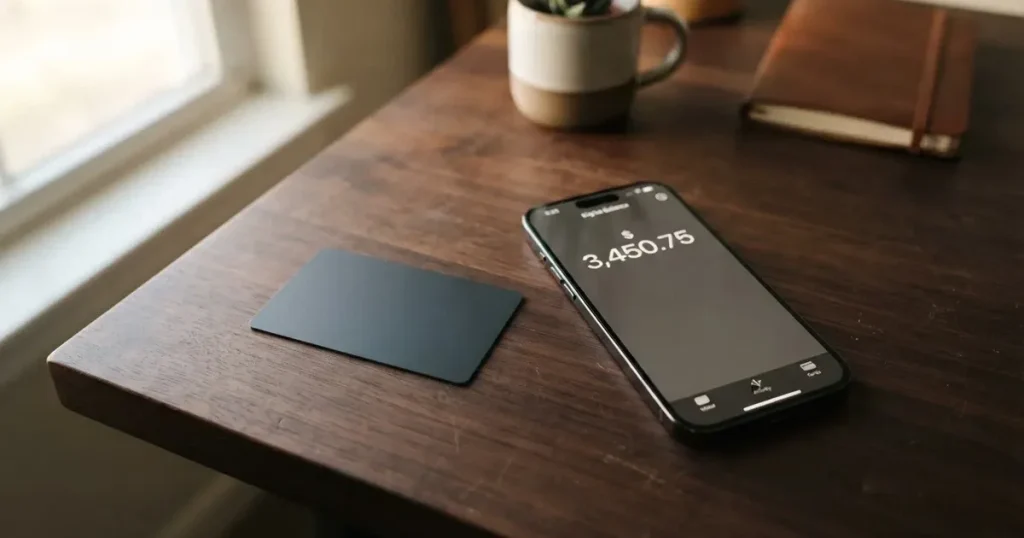
Brocard is a virtual payment card that you fund with crypto or bank money rather than from a current account. It is marketed to people who cannot easily open an ordinary bank card, and to marketers and freelancers who need a lot of separate virtual cards. On paper the offer is generous: the first 50 cards are free, more than 30 BINs across Visa, Mastercard and American Express are on offer, and you can top up with USDT, USDC, BTC, ETH, LTC or TRX, or by bank transfer.
The catch is what the public pages do not tell you. The legal entity behind the brand MyBrocard and the actual card issuer are not named on the pages you can read, the top-up fee is not disclosed, and the card network’s approval could in principle be suspended at any time. Users rate the service 2.1 out of 5 on Trustpilot, with reports of leaked BINs, drained cards and accounts blocked with money left inside. My overall score is 6.2 out of 10.
This review is written for you if you have trouble getting a normal bank card, or if you want a prepaid virtual card you can create in numbers. It is not written for you if you want a physical card, a bank account, or a large balance you can be confident about.
The conditions described here are current as of October 28, 2026.
Verdict: 6.2 out of 10
| Criterion | Mark | Why |
|---|---|---|
| Who can get it | 8 / 10 | Issued worldwide except restricted countries; KYC cannot be completed by citizens of listed countries, which include Republic of Belarus, Canada, Iran, North Korea, Cuba, Hong Kong SAR and others |
| Cost | 7 / 10 | First 50 cards free, then issuance $0 to $2 depending on the BIN; minimum top-up $250; top-up fee not disclosed |
| Top-up options | 8 / 10 | USDT (TRC20, ERC20), USDC (ERC20), BTC, ETH, LTC, TRX; also WIRE, ACH, SWIFT, SEPA |
| Reliability and complaints | 3 / 10 | Legal entity and issuer not named; Trustpilot 2.1 out of 5 across 24 reviews, reporting leaked BINs and accounts blocked with funds inside |
| Everyday use | 4 / 10 | Virtual only, Visa, Mastercard or American Express; some BINs link to Apple Pay and Google Pay; no ATM |
| Total | 6.2 / 10 | Strong access and top-ups, weak on transparency and everyday practicality |
Three things make this card attractive. Access is genuinely wide: the card is issued worldwide apart from a restricted-country list, and the verification is a single step the company says takes no more than five minutes. Topping up is flexible, with six coins and four bank-transfer rails. And the first 50 cards cost nothing, which matters if you are running ads and need a card per campaign.
Three things make me hesitate. The company behind it is not clearly named on the pages you can read. User complaints are serious and specific, including money that could not be withdrawn. And the card is virtual-only with no ATM, so it is a spending tool rather than a general payment account.
My mark is 6.2. If you are a marketer or freelancer who needs many virtual cards and can afford to lose a modest balance while you test the service, it earns its place. If your money has to be safe and available, this is not the card to hold a serious balance in.
Will they give you the card
Brocard is issued worldwide except in restricted countries. The site asks you to confirm that you are not a resident of a restricted country, and states that citizens of listed countries cannot complete KYC. The countries named on the pages are the Republic of Belarus, Canada, Iran, North Korea, Cuba and Hong Kong SAR, among others.
A longer country list circulates on third-party comparison sites, blocking citizens of the USA, Russia, China (Hong Kong SAR), Syria, Venezuela, Yemen, Sudan, South Sudan, Somalia, Libya, Lebanon, Iraq, Afghanistan, Myanmar, Burundi, the Central African Republic, the Democratic Republic of the Congo, Côte d’Ivoire, Liberia, Nicaragua and Zimbabwe. This list is unofficial and is not confirmed on the pages I read in full; I would check with the company before assuming you are eligible.
One point worth understanding, because it is why eligibility is not simply a matter of where you live. Nationality is recorded and screened separately from residence, because sanctions screening and issuer risk policy are applied to citizenship and country of birth as well as to your address. A resident of a permitted country with citizenship of a restricted one can still be refused.
On the wider picture: prepaid and debit cards are generally available to adults (18 and over), and some issuers set higher limits. Brocard’s own pages do not state an age requirement.
How to get it
The verification route is straightforward. You start from Profile, then Verification, then Start Verification. You need one of a passport, driver’s licence, ID card or residence permit, plus a phone with a camera. The decision is automatic, either approved or rejected, and extra documents may be requested. The company describes a single verification step taking no more than five minutes.
Note the one detail that sits oddly on the site: the homepage says “No KYC required” for Virtupayments personal cards, while the rest of the material describes a document check. Read these as two different products, or ask the company directly which applies to you before you upload anything.
The card itself is virtual only; no physical version is mentioned. You choose Visa, Mastercard or American Express, and the company advertises “30+ bins” across the regions USA, UK, Europe and Hong Kong. Three-D Secure is supported. The card currency is not stated.
Rejections are listed, which is unusually helpful. A document can be refused if it is low quality, edited or only partly visible, if it is invalid or expired, if the photo does not match the selfie, if the selfie itself is poor, or if you do not meet the KYC restrictions. Proof of address is not mentioned anywhere in the process.
Once approved, you sign in on the web at private.mybrocard.com. There is no mobile app.
Fees: what it really costs
The headline cost is genuinely low. The first 50 cards are free. From the 51st card there is a one-time issuance fee of $0 to $2 per card depending on the BIN; the homepage quotes $2.00. There is no monthly fee.
| Fee or limit | What the card states |
|---|---|
| Issuance, first 50 cards | Free |
| Issuance, 51st card onward | $0 to $2 per card, depending on the BIN (homepage says $2.00) |
| Monthly fee | Not stated |
| Conversion fee | Not stated |
| Foreign exchange fee | Not stated |
| ATM | Not applicable, virtual cards only |
| Minimum top-up, card account | $250 |
| Minimum top-up, service account | $100 |
| Card spending limits | Not stated |
| Card currency | Not stated |
Three everyday payments, and which fees you may actually hit:
A $30 software subscription. You pay from the card balance. The card provider’s own fee is not stated, so you do not know in advance whether anything is added on top. What is charged by the merchant is the merchant’s own price; what the blockchain charges you is nothing, because no transfer happens at the moment of payment.
A €40 hotel in a country whose currency is not your card’s. This is where unstated fees bite. The conversion rate and any foreign-exchange fee are both not stated, and the card currency is not stated either, so you cannot compute the final amount from the public pages. If you travel regularly, ask the company in writing what rate and what fee apply before you rely on the card.
A $15 top-up of USDT on Tron. The top-up fee is not disclosed, and the network fee is charged by the blockchain, not by the card provider. Affiliate-network top-ups are described as having “lowered fees” but with no figures. The minimum is $250 for a card account, so a $15 top-up is not possible.
How to top it up
The funding list is long. You can send USDT on TRC20, USDT on ERC20, USDC on ERC20, BTC, ETH, LTC or TRX. You can also use WIRE, ACH, SWIFT and SEPA bank transfers. The balance on your account funds the cards.
Mind the minimums: $250 for a card account and $100 for a service account.
The chain you choose matters more here than on most crypto services. USDT exists on both Tron and Ethereum, and the pages list both, so you must match the network the company gives you for that coin. Sending to the wrong network can lose the deposit outright: blockchain transfers are irreversible, and a deposit sent on a network the provider does not support, or to an address belonging to another network, may need manual support recovery with no guarantee of success.
Two related points explain why people get this wrong. On ERC-20, fees are paid only in ETH, so a wallet holding USDT but no ETH cannot send. And on Tron, fees are paid through bandwidth and energy resources, often by burning TRX. So the coin you are sending and the coin that pays for sending it are not always the same.
One more caution on USDC: Circle stopped supporting USDC on Tron in February 2024, so “USDC over TRC20” is not a native option. On the pages I read, USDC is offered on ERC20 only.
Withdrawal terms are not stated on the pages I read, and one Trustpilot reviewer reports being unable to withdraw a remaining balance.
Paying with it every day
The card is virtual, so “every day” means online payments and, for some BINs, phone taps.
Some BINs can be linked to Apple Pay or Google Pay. That matters because Apple Pay replaces the card number with a device-specific number stored in the phone’s Secure Element and generates a one-time code per payment, which is a meaningful upgrade in security over typing card numbers into sites. The issuer can also restrict a tokenised number to certain channels.
Blocked spending categories are not stated. One Trustpilot reviewer reports a card being refused for a Forex prop-firm evaluation. That is a user report, not a published rule, but it hints at the general problem: prepaid and foreign BINs get declined. When a merchant looks up your BIN it can see which institution and which country issued the card, and if that differs from your billing address the shop may apply extra scrutiny. Address verification, which compares the numeric parts of the address you type with the issuer’s records, is mainly offered in the US, Canada and the UK and is generally unavailable for foreign-issued cards, which causes declines.
Cashback exists but is unusual: the card states that cashback is based on your decline rate, and the lower it is the more you earn. The rate is not stated. So the reward is effectively a payment for not being declined, not for spending.
Two more absences. There is no mobile app, only web sign-in. And dispute handling is not stated, which matters if a payment goes wrong.
Background worth knowing: a merchant category code is a four-digit number classifying a business, and many issuers block gambling code 7995 by policy rather than by law, with the list varying by issuer. And a declined payment can leave a hold on your funds for several days, typically up to seven.
What can go wrong
Here is the honest part. Brocard’s own pages show no official incident record; none was found. That is not the same as no problems.
On Trustpilot the service scores 2.1 out of 5 across 24 reviews, read on 21 October 2026, with 54% one-star and 42% five-star. The themes in user reports are consistent and specific:
- Leaked BINs and drained cards, reported June 2026
- Accounts blocked with a balance inside and withdrawal problems, reported June 2026
- Slow support, reported June 2026
- Fees on deposits and top-ups, reported across 2024 to 2026
- Payments on closed cards, reported March 2025
Who is behind the service is the other big unknown. The brand is MyBrocard, but the legal entity, its registration and the card issuer are not stated on the pages you can read. That is not automatically a red flag, but it means you are asked to trust a company you cannot identify from its public site. It also means you cannot check which regulator licenses it.
What you can check: in the EU, an electronic money institution can issue e-money, payment cards and e-wallets but cannot lend, and may serve the whole EU from one member state’s licence. Under MiCA, e-money tokens may be issued only by a credit institution or an electronic money institution. If you are in the EU and the provider claims a licence, that licence is checkable. MiCA’s transitional period means providers operating under national law continue only until 1 July 2026 or until they receive or are refused a MiCA authorisation, whichever comes first, so a provider’s absence from the register may reflect timing rather than non-compliance. ESMA maintains an interim register of authorised crypto-asset service providers that you can search. Note too that a card is a payment service regulated separately from the crypto side, so a crypto card often depends on two licences.
Support is live chat and email, with no address or hours published. There is a knowledge base in English and Russian and a Telegram channel at t.me/mybrocard.
On the security features themselves: Three-D Secure is supported on some cards, with a code sent to the owner’s email. Two-factor authentication and card freeze are not stated. Standard safeguards such as instant freeze, spending limits and app-based 2FA are common in the category but are not something the card promises here.
There is a broader caution about crypto balances held with a provider. Control of crypto belongs to whoever holds the private key; with a custodial wallet the provider holds the credentials, so you must trust them completely. Transfers are typically irreversible and a stolen key has no built-in recovery. Custodial platforms have failed before: Mt. Gox, about US$350 million reported stolen between 2011 and 2014; Coincheck, about US$400 million in 2018; Ronin Network, US$625 million in 2022. And the card networks themselves can switch a programme off: Visa terminated its global agreements with FTX on 13 November 2022, and Visa suspended WaveCrest in Europe in 2018, closing all WaveCrest-issued Visa programmes. That is a risk of the category, not a prediction about this card.
I am not a tax adviser and this is not tax advice. One general point from the category is worth knowing: in the US the IRS treats digital assets as property, so exchanging them for goods or services generally produces a taxable gain or loss, and each payment funded from crypto may be a separate disposal. Ask a professional about your own position.
What to take instead
Two alternatives have scores close to this one and different trade-offs, and one is materially higher.
| Card | Score | Card type | Cost to open | Top-up |
|---|---|---|---|---|
| Brocard | 6.2 / 10 | Virtual, Visa / Mastercard / American Express | First 50 free, then $0–$2 | 6 coins plus WIRE, ACH, SWIFT, SEPA |
| Card.fi | 6.6 / 10 | Virtual and physical, including metal | Virtual Classic $49, Virtual Premium $249; physical prices not listed | 32 coins across 5 networks |
| HyperCard | 4.7 / 10 | Prepaid, network not stated on the App Store page | Not stated; App Store page lists no fees | Crypto such as USDT, BTC, ETH in the app |
| CardFlow | 4.9 / 10 | Virtual USD Mastercard, created in about 3 minutes | Creating a virtual card is completely free | Bitcoin, USDT, ETH or Naira bank transfer |
CardFlow is aimed at Nigeria, described as “Nigeria’s smartest fintech card platform” for “Nigerians and global users”, with no country list or exclusions stated. Its advantage is simplicity: a virtual USD Mastercard in 3 minutes, and creating the card is free.
HyperCard’s official pages state no country list, though the App Store says the card works in “more than 176 countries”, which describes acceptance rather than eligibility. It is a prepaid card with a balance in USD or EUR, funded by depositing crypto in the app. It scores lowest of the three because the fees are not stated on the pages I could read.
Card.fi is the strongest alternative on the evidence here, at 6.6. It ships to “200+ countries” and its terms bar residents of, or orders from, a country subject to sanctions that would prohibit the service. It offers Virtual Classic and Virtual Premium plus physical Classic and Premium, with a metal stainless steel option, and every physical order includes a virtual card. Its pricing is the most transparent of any card here: top-up fees of 1.5% plus $1.00 for Classic and 1% for Premium, foreign-exchange fees of 3.5% and 2.5%, and the conversion fee shown before each top-up. It takes 32 coins across 5 networks with a deposit address per card, and it warns that the wrong chain risks permanent loss. Its terms say the cards are issued “under licence from the relevant card schemes” without naming them. Cashback on spending ranges from 0.8% on Classic, capped at 10 USDT a month, to 2% on Metal capped at 250 USDT a month, with 10% at coffee shops capped at 10 USDT a month.
The trade-off is clear. Card.fi charges you properly and tells you what it charges; Brocard is cheaper to open and broader in top-up options. If transparency is your priority, Card.fi wins on the evidence. If the first 50 free cards are the point, Brocard wins that.
Who I would recommend it to
I would recommend Brocard to a marketer or freelancer who needs many virtual cards, runs ad platforms, and can treat the balance as working capital rather than savings. The free first 50 cards and the range of BINs across regions make it genuinely useful for that, and if you already hold crypto, topping up is easy.
I would also recommend it to someone who cannot open an ordinary bank card and needs to pay ordinary online bills, provided you keep the balance small and understand that this is a prepaid card with an unnamed issuer behind it.
I would not recommend it as your only payment card, and I would not recommend holding a large balance in it. I would not recommend it if you need cash, because there is no ATM. And I would be cautious if you travel and pay in foreign currencies, because the conversion rate, the foreign-exchange fee and the card currency are all not stated.
Before you start, three things are worth doing. Ask the company, in writing, which legal entity you are contracting with and who the issuing bank is. Ask what the top-up fee and the conversion fee are, since neither is published. And read the terms on cashback, withdrawal and card closure before you fund the account.
Frequently asked questions
What is the Brocard card?
Brocard is a virtual payment card funded with crypto or bank money rather than a bank current account. It is issued worldwide except in restricted countries, offers more than 30 BINs on Visa, Mastercard and American Express, and is virtual only with no physical version mentioned. The first 50 cards are free. Users rate it 2.1 out of 5 on Trustpilot.
Is Brocard a bank?
No. The card behaves like a prepaid card: you load a balance and the card spends that balance, so it cannot overdraw. The brand is MyBrocard, but the legal entity, its registration and the card issuer are not stated on the public pages you can read, so you cannot verify from the site which institution actually holds your money.
How does the Brocard card work?
You verify your identity with a passport, driver’s licence, ID card or residence permit plus a phone with a camera, starting from Profile, Verification, Start Verification. You receive card details for a virtual Visa, Mastercard or American Express. You fund the account with crypto or a bank transfer, and the balance pays for your purchases. Some BINs can be added to Apple Pay or Google Pay.
Does Brocard require KYC?
Yes, for the main product. You submit an identity document and a selfie, and the decision is automatic. The homepage separately says “No KYC required” for Virtupayments personal cards, which reads as a different product. Rejection reasons given are low-quality, edited or partly visible documents, invalid or expired documents, a photo-selfie mismatch, a poor selfie, or not meeting the KYC restrictions.
How much does a Brocard card cost?
The first 50 cards are free. From the 51st card there is a one-time issuance fee of $0 to $2 per card depending on the BIN, with the homepage quoting $2.00. There is no monthly fee. The conversion fee, the foreign-exchange fee and the top-up fee are not stated, and the minimum top-up is $250 for a card account or $100 for a service account.
How do I top up a Brocard card?
You can send USDT on TRC20 or ERC20, USDC on ERC20, BTC, ETH, LTC or TRX, or use a WIRE, ACH, SWIFT or SEPA bank transfer. Choose the network to match the coin exactly: sending on the wrong network can lose the deposit, since blockchain transfers are irreversible. Note that on ERC-20 fees are paid in ETH, so you need a little ETH as well as your USDT.
Is the Brocard card safe?
Treat it as a low-trust option. Trustpilot scores it 2.1 out of 5 across 24 reviews, with reports of leaked BINs, drained cards, accounts blocked with a balance inside, and slow support. Three-D Secure is supported on some cards but two-factor authentication and card freeze are not stated, and the legal entity and issuer are not named publicly. Keep the balance small.
Can I use the Brocard card in my country?
The card is accepted wherever its network is accepted, but your own country determines whether you can be issued one. Issuance is worldwide except restricted countries, and citizens of listed countries cannot complete KYC; those named include Republic of Belarus, Canada, Iran, North Korea, Cuba and Hong Kong SAR. A longer unofficial list circulates on third-party sites but is not confirmed on the company’s pages.
Does Brocard have an app or cards I can hold?
No mobile app; you sign in on the web at private.mybrocard.com. The card is virtual only, with no physical version and no ATM mentioned, so you cannot withdraw cash. What you can do is add some BINs to Apple Pay or Google Pay, which replaces the card number with a device-specific number and uses a one-time code for each payment.
Is the Brocard card worth it?
Worth it if you need many virtual cards cheaply or cannot open a bank card, since the first 50 are free and 30+ BINs are offered across Visa, Mastercard and American Express. Not worth it if you need a physical card, cash withdrawals, or a large balance you can rely on. Card.fi scores slightly higher at 6.6 and publishes its fees openly, which is worth weighing before you commit.
Virtual cards: your questions answered – cryptocardanswers
Content created by the «cryptocardanswers» team