
Cadmos card review: a self-custody crypto card with sharp edges left unstated
 Available in US
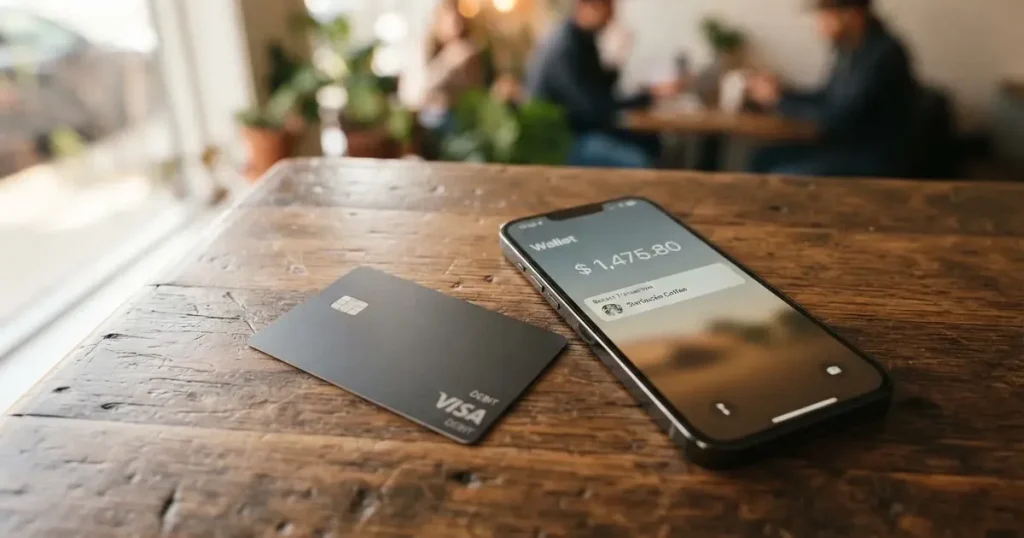
Cadmos is a crypto payment card built on a simple promise: your money stays in your own wallet, and only what you push to the card gets spent. On paper that is a genuinely appealing design, because the failure modes that killed earlier crypto card programmes — a custodian going down with your balance — are structurally removed. I came away thinking the idea is sound and the disclosure is thin. The card’s own pages name a monthly spend cap, a currency conversion fee and a set of transfer networks, but they leave issuance fees, cash withdrawal terms, delivery times and the identity of the actual card issuer unstated. That asymmetry is the story here: a good mechanism wrapped in an incomplete description.
If you already hold USDC or USDT in a wallet you control, this card does one specific thing well — turning those balances into everyday spending money. If you need a bank card that is simply certain to work, everywhere, with costs written down in advance, the missing numbers are a problem you will hit rather than a footnote.
The conditions described here are current as of October 28, 2026.
Verdict: 7.0 out of 10
My score for Cadmos is 7.0 out of 10. That is a card I would recommend selectively, to people who already understand what they are holding, and not to someone looking for their first bank card. The self-custody design is the reason the number is not lower. The incomplete public terms are the reason it is not higher.
| Criterion | Mark | Why |
|---|---|---|
| Who can get it | 7 / 10 | The list of countries is not published; the terms cover only countries under a US embargo |
| Cost | 7 / 10 | Premium: 0 USD a month, 1.75% FX; the issuance fee and the crypto conversion fee are not disclosed. Standard: prices shown on the order screen |
| Top-up options | 9 / 10 | USDC and USDT from your own wallet, over the Arbitrum, Solana and Tron networks |
| Reliability and complaints | 6 / 10 | Cadmos LTD, Limassol, Cyprus, since 2021; the issuer and its licence are not named; no complaints found; the wallet holds no funds |
| Everyday use | 6 / 10 | Premium: Apple Pay and Google Pay. Standard: Apple Pay. Whether the card is virtual or plastic, and whether ATMs work, are not disclosed |
The audience this card suits is narrow and specific: people who spend USDC and USDT out of a wallet they hold the keys to. For them, a $0 monthly fee and a 1.75% currency conversion fee are the visible costs, and the top-up setup is the strongest part of the offer — three networks, two major stablecoins, no bank account in the loop.
The audience it does not suit is everyone who needs certainty before they commit. There is no published country list, no stated issuance fee, no stated cash withdrawal terms, no named issuer and no named licence. If your decision depends on any of those, you cannot make it from the public pages. You have to ask.
I want to be careful about one thing before going further. I have not used this card. Everything below is what the card’s own public pages state, what they do not state, and how I read the gap between those two things.
Who will get the card
Cadmos does not publish a list of supported countries. What the terms say is narrower and vaguer: availability depends on your eligibility and on the options shown in the app, and the terms require that users not be in a country under a US embargo.
Read that carefully, because it is doing a lot of work. It is not a country whitelist. It is a prohibition on embargoed countries, plus an unspecified eligibility filter that the app applies at the point where you try. So the practical answer to “is Cadmos card available in my country?” is: the app will show you, and the website will not. If you are in the US-embargoed set, you are excluded on the face of the terms. If you are not, whether you land in a supported state depends on the options the app offers you — which I cannot inspect on your behalf.
Compare that with the cards in the comparison section below. KAST shows a residence-based country list at the identity check, MetaMask publishes a list of 45 countries and territories with a waitlist for everyone else, and TokenPocket names specific European countries for one network and a specific set of Asia-Pacific countries for the other. Cadmos publishes nothing. That is not a disqualifying answer, but it is an answer you have to get by trying.
Two related things the site leaves open, which will matter to you if you are weighing this seriously:
- Proof of address and age are not stated as requirements. That is a silence, not a permission. The identity check that is described — and it differs by card product, and is shown to you on the order screen — can include a government ID, personal information and proof of liveness. What exactly gets asked of you depends on which product you pick.
- Nationality is not addressed. The terms rule on country of residence and US embargoes, not on citizenship.
I would treat “will they give me the card” as a question with a good chance of the answer being yes, and no way to know in advance. If your situation is delicate — you travel, you hold a second nationality, you live somewhere with a difficult banking relationship — read the rest of this page before you download anything, because the next sections explain where your funds actually sit while you wait.
How to get it
The application path is short, and its details are also thin.
The card comes in two products, and they differ more than the marketing suggests:
- Premium is a Visa Signature card, billed at 0 USD a month, with a 1.75% foreign exchange fee and a stated monthly spend limit of $175,000. It carries the usual Signature benefit list: lounge access at more than 1,300 lounges in over 500 cities, 24/7 concierge, and Visa Airport Companion.
- Standard is a Visa or Mastercard — the app shows which — with no benefits listed at all. Its costs are not published; the prices appear on the order screen. Its limits are set by the programme and shown in the app, and Cadmos states no cap on wallet balance and no cumulative transfer cap of its own.
The identity check is where the real information is. Cadmos says KYC differs by card product and is shown on the order screen; it can involve a government ID, personal information and proof of liveness. Proof of address and age are not stated, and the number of KYC levels, if there is more than one, is not stated either.
Four things the site simply does not tell you:
- Whether the card arrives as a virtual card or a plastic one — not stated. This matters more than it sounds; see the everyday-use section below.
- Which currency the card is denominated in — not stated.
- How long delivery takes — not stated.
- How you activate it once it arrives — not stated.
I would say the honest characterisation of the signup flow is: short, product-dependent, and largely self-describing inside the app. You will learn what you need at the order screen, which is later than most people want to learn it. That is a legitimate design choice for a fintech app. It is not a comfortable one if you are trying to compare two providers side by side.
Fees: what it really costs
The cost story splits cleanly down the middle, and the split is exactly where your decision will be made. For Premium, the numbers exist. For Standard, they do not exist publicly.

| Fee or limit | Premium | Standard |
|---|---|---|
| Monthly fee | $0 | Not stated |
| Issuance fee | Not stated | Not stated |
| Crypto conversion fee | Not stated | Not stated |
| Foreign exchange fee | 1.75% | Cross-border/FX fees per its programme terms, no figures |
| ATM / cash withdrawal | Not stated | Not stated |
| Card currency | Not stated | Not stated |
| Monthly spend limit | $175,000 | No wallet-balance or cumulative transfer cap by Cadmos; card limits set by the programme and shown in the app |
| Benefits | Visa Signature benefits, lounge access at 1,300+ lounges in 500+ cities, 24/7 concierge, Visa Airport Companion, $0 monthly | No benefits listed |
Three ordinary payments, walked through so the fees stop being abstractions.
A coffee in your own currency, on Premium. You buy something priced in euros while your card is spending dollars. The 1.75% foreign exchange fee is the cost you know about. On a $5 coffee that is under ten cents — noticeable if you think about it, invisible if you do not. The fee you do *not* know about is the crypto conversion fee, which Cadmos does not state. If a conversion charge exists on top, a small purchase carries a small unknown percentage on it, and that is the arithmetic that decides whether a card like this makes sense for everyday spending or only for larger amounts.
An online subscription on Premium. Here the FX fee may not apply at all, if you are billed in your card’s own currency — but the card’s currency is not stated, which is exactly the uncertainty. Add the possibility of a merchant declining a foreign-issued card, or a prepaid one, and you have a recurring payment that can fail without anything being wrong on your side. Declined authorisations can also leave a hold on your funds that lingers, typically up to seven days, which is money out of your balance for a purchase you never made.
Any purchase on Standard. Here I cannot help you. Standard’s cross-border and FX fees are described only as being set by its programme terms, with no figures. Its issuance fee is not stated. Its costs appear on the order screen. If you are considering Standard, the order screen is where the real price of this card is written, and you should read it there before you commit to anything.
The structural point, which matters more than any single number: this is a card without a full fee schedule. Anyone who has applied for a normal bank card has seen a document listing every charge the provider may apply. Cadmos does not publish one. For a card aimed at people who cannot easily get an ordinary one, that asymmetry is worth weighing.
Top up: how the money gets in
This is the part Cadmos does best, and it is worth understanding precisely, because the mechanism is what makes the card safe from the failure modes that killed its predecessors.
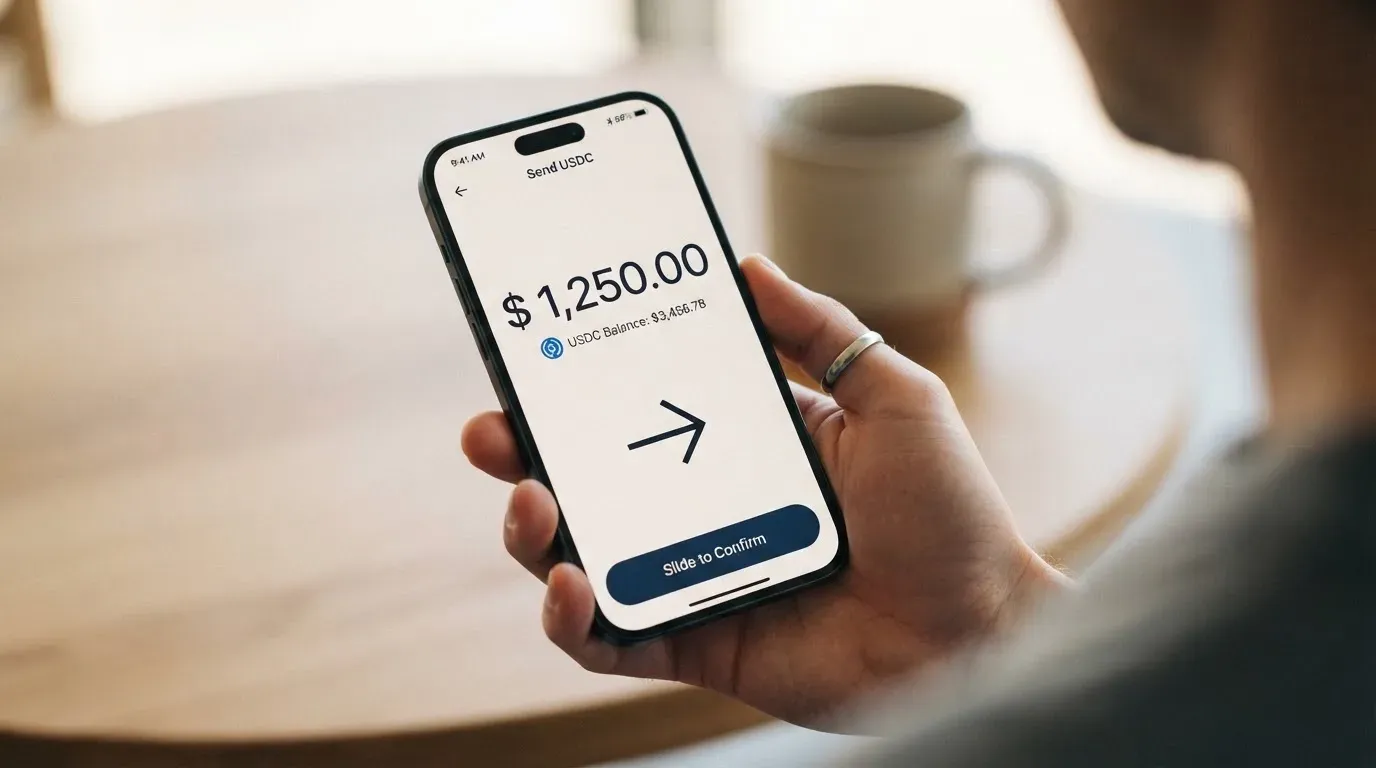
You hold a self-custodial wallet. Into that wallet you bring stablecoins — USDC or USDT — over one of three listed networks: Arbitrum, Solana or Tron. From there the card is funded. Two points about how the value arrives:
- The stablecoins settle as fiat at the merchant. So when you pay, the merchant sees fiat, not crypto, and does not need to accept crypto itself.
- Your wallet balance stays self-custodial until a card top-up is approved. The coins do not move into a company account the moment you decide to spend; they move when a top-up is approved.
The second point is the whole design. Cadmos states plainly that it does not receive, hold, safeguard, or acquire title to your digital assets or fiat funds. Your recovery phrase stays with you. If the company disappears tomorrow, the coins in your wallet are still your coins. This is the opposite of the custodial model, and it is the single strongest argument for the card.
Now the practical cautions, which are real and which I would not skip:
- Network choice is not cosmetic. Blockchain transfers are irreversible. Send a deposit over a network Cadmos does not support, or to an address belonging to another network, and the funds can be lost or need manual recovery from support with no guarantee. Pick from the three listed networks and check twice before you confirm.
- On-chain fees are separate. The gas or bandwidth cost of your deposit is charged by the blockchain, not by Cadmos. On Ethereum-standard chains that means gas is paid in ETH, so a wallet holding USDT with no ETH cannot send. On Tron, fees are paid through bandwidth and energy resources, often burning TRX. Card providers rarely mention this; it catches people out.
- Top-up fees and minimums are not stated. Neither is any withdrawal mechanism for a card balance — see the risks section, where closing the account comes up.
- One asset trap worth knowing. Circle stopped supporting USDC on Tron in February 2024, so “USDC over TRC20” is not a native option on that network. On Tron, USDT is the native one. If you follow a guide that tells you to send USDC to Tron, that guide is out of date.
So: the funding flow is clean, cheap and self-custodial, and the way to get hurt is not the card but the transfer. Slow down at the network step.
Paying with it every day
The everyday-use picture is where the gaps show most, so let me separate what is known from what you will have to find out.
Mobile wallets. Premium works with Apple Pay and Google Pay. Standard works with Apple Pay — for both the Visa and Mastercard versions — and Google Pay is not mentioned. This matters a great deal in practice: for most people, adding a card to a phone wallet is how the card gets used day to day, and if your phone is Android, Premium is the product that gives you both options.
Blocked categories are not stated. Every card issuer keeps a list of merchant categories it declines, and gambling is the classic example: merchant category code 7995 covers casinos, betting and lotteries, and many issuers block it by policy rather than by law. The list varies by issuer. Cadmos does not publish one. If gambling is something you do, or if you travel and want to know that the card will work in an adult-entertainment venue, you will have to ask.
The physical/virtual question. The site does not say whether the card comes as plastic, as a virtual card, or both. That single unstated fact changes the day-to-day answer more than anything else here. A virtual card is useful for online payments and useless in a shop that wants to tap or hand you something back; a physical card works in a shop but takes time to arrive, and delivery timing is also not stated.
Cash is unresolved. ATM access and cash withdrawal terms are not stated. This is a genuine gap, not a technicality. In many countries, cash is how you actually pay — for a street vendor, a small shop, a tip. A card that cannot or will not give you notes is not a replacement for a bank card, however well it works online.
Rewards are not stated for either product. Premium’s Visa Signature benefits are not rewards in the cashback sense; they are lounge access, concierge and the airport companion service.
The app exists — there is a download page at /download — and I did not read the app-store ratings, so I have nothing to offer you there.
One more thing about payments, which is the sort of detail that only surfaces at the worst moment: address verification. The AVS system compares the numeric parts of the billing address a buyer types with the issuer’s records, and it is mainly offered in the US, Canada and the UK. It is generally unavailable for foreign-issued cards, which can cause declines. Combined with the fact that merchants can look up the card’s BIN and see which institution and country issued it — and may apply extra scrutiny when the issuer country differs from the billing address — a card from a Cyprus-registered programme can look foreign to a shop in another country. This is normal for crypto cards, not a defect in this one. It will still make the occasional payment fail.
What can go wrong
Ordered by how much it should actually worry you.
You hold the keys, so you hold the risk. This is the trade the design makes. A seed phrase — typically 12 to 24 words — is the unencrypted form of your private key, and anyone who obtains it can restore the wallet and spend everything in it. Blockchain transfers are typically irreversible, and a stolen key has no built-in recovery: the network cannot freeze or return the funds. No one at Cadmos can reverse a transfer you authorised in error, and no one there can restore a wallet you locked yourself out of. Common safeguards — app-based two-factor authentication, instant card freeze, spending limits, 3-D Secure confirmation — protect the card, but none of them protects the wallet the card draws from.
No — and the card issuer is not even named. Cadmos LTD is a company registered in Limassol, Cyprus, registration number HE 457316, founded 2021. Its Terms name no licence. In these products the regulated entity is usually the issuer bank or e-money institution holding the card programme, while the crypto brand is the front end. Who that issuer is here is not stated, which is a fair question to ask before you rely on the card.
Europe’s rules are moving underneath this. MiCA, the EU’s markets-in-crypto-assets regulation, took legal effect in June 2023; its rules on stablecoins applied from 30 June 2024 and the remaining provisions, including the crypto-asset service provider rules, from 30 December 2024. Under MiCA, e-money tokens may be issued only by a credit institution or an electronic money institution. The transitional period lets providers operating under national law continue only until 1 July 2026, or until they receive or are refused authorisation, whichever comes first — a date that has now passed. And the card is regulated separately anyway: it is a payment service under e-money and payment-services law, so a crypto card often depends on two licences. If you want to know whether Cadmos is on the right side of this, ESMA maintains an interim register of authorised providers and non-compliant entities, and that register is where I would look before you rely on anything.
No complaints is not the same as a good record. I searched for reviews of Cadmos Pay on Trustpilot and Reddit and found none. No complaints page is published either. That is genuinely ambiguous: a young card with a small user base produces no complaints, and a card nobody uses also produces none. It is not evidence of a well-run service, and I would not present it as reassurance.
Programme closure is a real category of risk. Card programmes do end. Visa terminated its global agreements with FTX on 13 November 2022 and the FTX US debit card was wound down. WaveCrest, a Visa card issuer that supplied crypto card brands, was suspended by Visa in Europe in 2018, closing all WaveCrest-issued Visa programmes. Visa and Mastercard can suspend a programme. Closures typically follow a pattern: a notice period, then spending and loading stop, then you are asked to withdraw remaining balances.
And this is the one that would keep me awake. Cadmos says account closure is handled by email, and — stated plainly — closure does not freeze or move digital assets. There is no statement anywhere about withdrawing a card balance. If the programme shuts down and the card balance is not automatically returned to your wallet, you are in the awkward position of having self-custodied funds that no longer have anywhere to be spent, emailing a company that may no longer have an obligation to answer. I would not expect the worst, but I would want to know the answer in advance.
Disputes. The Terms point to French law and the courts of Paris, and allow 30 days for good-faith resolution after written notice. The card’s chargeback process is not stated. And the protections you may be assuming do not transfer automatically: US debit card reversal rights come from Regulation E and credit card rights from Regulation Z, prepaid-card coverage varies by state and country, and you should not assume it applies. Under 3-D Secure — Visa’s version is Visa Secure, Mastercard’s is Identity Check — liability for a fraudulent online payment can shift from the merchant to your bank, or, as critics put it, to you.
Support. There is an email address, [email protected]; support tickets live in Settings, under Help Center; and there is a phone number, +1 (845) 588-8434. Premium members get 24/7 concierge by email and WhatsApp. There is no stated response time on Standard, which is the version most people would start with.
Taxes are yours to work out, not mine. I am not going to advise you on tax. What I will say is the shape of the issue: in the US the IRS treats digital assets as property, so exchanging them for goods, services or dollars generally produces a taxable gain or loss, measured in local fiat currency at fair market value on the date of the transaction. That means each card payment funded from crypto can be a separate disposal. Somewhere in this there may be an accountant for you.
What to take instead
If any of the above made you pause, these are the alternatives I compared — and I would rather show you the comparison than tell you which one to pick.
| Card | Score | Who it is for | Main costs |
|---|---|---|---|
| Cadmos | 7.0 / 10 | Self-custody users spending USDC and USDT from their own wallet | Premium 0 USD/month, 1.75% FX; issuance and crypto conversion fees not disclosed; Standard priced on the order screen |
| MetaMask | 7.1 / 10 | 45 listed countries and territories; proof of residency required; US/UK sign-ups temporarily closed | Virtual free with no annual or maintenance fee; Metal $199/year; “minimal” per-transaction fee, amount not stated; no foreign transaction fee |
| KAST | 6.1 / 10 | Residence-based list shown at KYC; country list not published; citizenship and ID origin matter | Standard 0 USD/year, Premium 1,000 USD/year, Private 10,000 USD/year; non-USD FX 0.5%–1.75%; 0.50 USD decline fee; 40 USD delivery on a Standard physical card |
| TokenPocket | 5.8 / 10 | Named European countries on Visa; named Asia-Pacific countries on Mastercard | 1% fee on crypto deposits into the card, said to be refunded later via rewards; no other fees stated |
A few honest comparisons.
MetaMask is the closest rival and the one I would tell a reader to look at first. It scores 7.1, runs on a published list of 45 countries and territories with a waitlist for everyone else, and makes a point of its price: the virtual card is free with no annual or maintenance fee, while the metal version is $199 a year. It issues through a named issuer, Monovate. It spends directly from your connected wallet over Linea, Base, Monad and Solana — no pre-loading step — and it states no foreign transaction fee. Its costs are softer than its competitors’: a “minimal fee for each transaction” with the amount not stated on the pages read. Its cashback is the most concrete of the group, 1% on the virtual card, and 3% on metal up to the first $10,000 spent then 1%. Against Cadmos it wins on disclosure and country clarity; it loses if you hold USDT on Tron, since Solana-only wallets cannot withdraw credit.
KAST is the most expensive and the most transparent about the running costs. Its tiers are annual and upfront: Standard at 0 USD, Premium at 1,000 USD, Private at 10,000 USD. Its spend-side fees are unusually clear — stablecoin top-up 0%, card spend in USD 0%, transaction fee 0%, Apple and Google Pay 0%, non-USD foreign exchange 0.5%–1.75% depending on where you live, where you spend and which programme you are on, 0.10 USD for non-USD transactions under 25 USD, and 0.50 USD for a declined transaction. Cashback is tiered at 1.5%, 2% and 3% on capped monthly spend. Its own terms contain a contradiction you should notice: the site names USDT, USDC, PYUSD and RLUSD, while the Terms say acceptable tokens are “currently USDT and USDC”. Two things go against it: the price of the top tiers, and that its eligibility rules turn on ID origin, not just residence — if you live in a supported country but hold an ID from a restricted region, you may still fail, and a VPN does not bypass it.
TokenPocket takes 1% on crypto deposits into the card, which it says is refunded later through rewards and reduced transaction fees. Beyond that it states no additional fees. Its country coverage is the most specific of the four — Visa debit for a list of European countries and territories such as Germany, France, Spain and Switzerland; Mastercard debit for Australia, Canada, Hong Kong, Japan, Taiwan, New Zealand, Singapore, South Korea and the UK, among others. Its rewards are the least defined: no cashback figure, just the promise of a refund.
Why Cadmos still ranks where it does. Its top-up section scores 9 out of 10, higher than anything else about it. Two major stablecoins, three networks, no bank account in the loop, and funds that never leave your wallet until you approve a top-up. If you already run your life that way, that is a real advantage, and no competitor on this list matches it on that specific point.
Who I would recommend it to
Yes, if you keep USDC or USDT in a self-custodial wallet and spend most of it in one or two currencies. If you value that the company never holds your funds — genuinely, structurally never — you will not find that elsewhere. If you are on Android and want both Apple Pay and Google Pay, Premium is the product that gives it to you. And if you are comfortable with a provider whose public terms are incomplete, because you will verify the gaps yourself.
No, if you need a card that works everywhere with no surprises. If cash withdrawal matters to you, this card’s silence on ATMs is disqualifying. If you need to know what a fee is before you spend, not after. If you are in a country not on any published list, and the app turning you away would be a genuine setback. If you plan to hold a balance on the card and would rather not think about a shutdown scenario in which email is the only way out and nothing is said about getting the money back.
Ask before you commit — and these are the questions I would send:
- Which entity is the card issuer, and under which licence?
- What is the issuance fee, on each product?
- Is there a crypto conversion fee, and what is it?
- What are the ATM and cash withdrawal terms?
- Is the card physical, virtual, or both, and how long does delivery take?
- Which currency is the card denominated in?
- Which merchant categories are blocked?
- Which KYC levels exist, and is proof of address required?
- If the programme ends, how does a card balance get back to my wallet?
None of those questions is unreasonable. All of them have the same answer on the public pages: not stated. An email to [email protected] is a reasonable way to spend ten minutes before you move real money. I am not asking you to send anything, or to sign up for anything — just to go and read the terms with the questions above in your hand.
Frequently asked questions
What is the Cadmos card?
Cadmos is a crypto payment card that spends stablecoins you already hold. You fund it from a self-custodial wallet using USDC or USDT over the Arbitrum, Solana or Tron networks, and the card settles each payment as fiat at the merchant. Two products exist: Premium, a Visa Signature card at $0 a month with a 1.75% FX fee, and Standard, a Visa or Mastercard priced on the order screen. Cadmos states it never receives, holds or safeguards your digital assets.
How does the Cadmos card work?
Your coins stay in your own wallet until you approve a top-up, and only the topped-up balance is spendable. The card converts to fiat at the merchant, so the shop never handles crypto. Premium carries a stated $175,000 monthly spend limit; Standard has no Cadmos-imposed wallet or transfer cap, though the card programme sets its own limits shown in the app. Withdrawing money from the card is not covered in the public terms.
Is Cadmos a bank?
No — and the card issuer is not even named. Cadmos LTD is a company registered in Limassol, Cyprus, registration number HE 457316, founded 2021. Its Terms name no licence. In these products the regulated entity is usually the issuer bank or e-money institution holding the card programme, while the crypto brand is the front end. Who that issuer is here is not stated, which is a fair question to ask before you rely on the card.
Who owns Cadmos?
Cadmos LTD is the company behind it, registered in Limassol, Cyprus in 2021. What is not disclosed is the ownership structure, the card issuer and any licence. There is no public complaints page and I found no Trustpilot or Reddit reviews of Cadmos Pay — which is ambiguous rather than reassuring, since a young card with few users produces no complaints either.
Can I use the Cadmos card in my country?
Possibly, and you will have to find out by trying. Cadmos does not publish a country list. The terms say availability depends on eligibility and the options shown in the app, and require that users not be in a US-embargoed country. Nationality is not addressed. Compare that with MetaMask, which names 45 countries and territories, and KAST, which shows a residence list at the identity check.
How much does the Cadmos card cost?
Premium is $0 a month with a 1.75% foreign exchange fee. Beyond that, the issuance fee and the crypto conversion fee are both not stated, and those two gaps matter most for small everyday purchases. Standard’s costs are not published at all — they appear on the order screen. ATM and cash withdrawal terms are not stated for either product. So the honest answer is that Premium’s headline cost is known and its full cost is not.
How do I top up the Cadmos card?
Send USDC or USDT from your own wallet to the card, over one of the three listed networks: Arbitrum, Solana or Tron. Your wallet balance stays self-custodial until the top-up is approved. Check the network carefully before sending, because blockchain transfers are irreversible and a deposit on an unsupported network can be lost or need manual recovery. On-chain gas or bandwidth is charged by the blockchain, not by Cadmos, and top-up fees and minimums are not stated.
Is the Cadmos card safe?
The self-custody design is genuinely safer than custodial alternatives: Cadmos states it does not receive, hold or acquire title to your funds, and you hold the recovery phrase. But that also means you carry the risk of key loss, phishing and address-swapping malware with no recourse. Beyond that, the issuer and licence are not named, ATM terms are unknown, and closure is by email with the explicit note that it does not freeze or move digital assets.
Does Cadmos work with Apple Pay and Google Pay?
Premium supports both Apple Pay and Google Pay. Standard supports Apple Pay on its Visa and Mastercard versions, and Google Pay is not mentioned for it. That distinction alone decides the product for many people, since the mobile wallet is how most cards get used day to day. Which merchant categories are blocked is not stated, so if you spend somewhere unusual, ask before you rely on it.
Is the Cadmos card worth it?
For someone already holding USDC or USDT in a wallet they control, and spending mainly in one or two currencies, yes — a $0 monthly fee and self-custodied funds are real advantages, and the top-up setup is the strongest of the cards I looked at. For someone who needs guaranteed acceptance, cash withdrawal, or a published fee schedule, no: the missing numbers are not a footnote but the decision. Before committing, ask which entity is the issuer and what the issuance and conversion fees are.
Wallet cards: your questions answered – cryptocardanswers
Content created by the «cryptocardanswers» team