
CardFlow card, examined: a fast virtual card, plenty of missing details
 Available in US

CardFlow sells itself as “Nigeria’s smartest fintech card platform”, a virtual USD Mastercard you can create in about 3 minutes, fund with Bitcoin, USDT, ETH or a naira bank transfer, and then use to pay online at the kinds of places where a normal Mastercard is accepted. If you are weighing it against other crypto-linked cards, the headline finding is that what CardFlow tells you on its own site is thin: the issuing company, monthly fees, conversion fees, ATM access and a country list are all left unstated. That alone shapes how I read the rest of the offer, and it is the reason my final score is a modest 4.9 out of 10.
Conditions are current as of October 28, 2026.
Verdict
CardFlow is built for a specific use case: a Nigerian who wants a quick virtual dollar card funded with crypto or a naira transfer, with no monthly statement in the picture. Inside that narrow lane the product is simple and fast. Outside it, the silence is the problem. There is no stated list of countries, no stated monthly fee, no stated conversion fee, no stated ATM support (the card is virtual only), and no stated legal entity behind the programme. For a reader outside Nigeria, or for anyone who plans to spend at scale, those gaps matter.
I scored CardFlow 4.9 out of 10 after weighting how openly the card is published, who can use it, what it costs, how it is funded, how reliable it looks and how it works day to day. The breakdown is below.
| Criterion | Mark | Reason |
|---|---|---|
| Who can get it | 5 / 10 | Aimed at Nigeria and “Nigerians and global users”, but no list of supported or excluded countries, and no KYC detail published |
| Cost | 6 / 10 | Creating the virtual card is free; monthly fee, conversion fee and FX margin are not stated |
| Top-up options | 6 / 10 | Bitcoin, USDT and ETH are supported, plus naira bank transfer; USDT on TRC-20 lands near-instantly, BTC and ETH take 5–30 minutes; networks and minimums not stated |
| Reliability and complaints | 4 / 10 | Issuing company and legal entity are not named; no Trustpilot or Reddit thread located; no independent reviews found |
| Everyday use | 3 / 10 | Virtual USD Mastercard only, no physical card, no ATM, no stated support for Apple Pay or Google Pay, and no stated list of blocked merchant categories |
| Total | 4.9 / 10 |
The audience I would steer this card towards is narrow: a Nigerian-based user who wants to top up a USD card with naira or crypto and spend it online, and who is comfortable filling in the missing details by contacting support before any meaningful amount is on the line. For anyone else — readers in Europe, the US or elsewhere, anyone who needs a physical card, anyone who needs an ATM, or anyone who wants a clearly regulated issuer with a published fee schedule — CardFlow is not the right fit, and the alternatives section at the end of this review looks at the cards that are.
Who will they give you the card
CardFlow’s own site frames the product as “Nigeria’s smartest fintech card platform” and says it is for “Nigerians and global users”. That is the whole of the published eligibility story. There is no country list, no list of excluded jurisdictions, no separate rule for citizens versus residents, and no KYC statement that I could find — the FAQ mentions only that a card can be created “in about 3 minutes”. This is one of those cases where the marketing line is broader than the legal reality almost certainly is: any regulated card programme sits behind a real issuer, and that issuer has to apply its own country and sanctions rules. With CardFlow, the issuer is not named on the public pages, so you cannot read those rules in advance.
What that means for you in practice is that eligibility is, at the moment, something you can only confirm by signing up and trying. If you live in a country that mainstream card programmes tend to exclude — for sanctions reasons, because the local regulator has not been satisfied, or because the issuer has not onboarded there — you may not learn the answer until the application is rejected or, worse, after you have already moved money in.
A few practical implications follow from this. First, anyone who needs a published country list to decide whether to apply will not find one here. Second, the gap between “Nigerians and global users” on the homepage and the absence of any stated cross-border KYC rule means a non-Nigerian user is being asked to take the eligibility check on trust. Third, because no KYC level is described, you cannot tell from the outside whether a small first top-up will be enough to test the card or whether the platform will require documents before the first spend. If you need certainty before you put money in, treat that uncertainty as a cost.
The audience that fits this profile best is a Nigerian user funding a USD card with naira or crypto, which the company clearly designs for. For that reader, the unstated country list is less of an obstacle. For everyone else, the silence is the answer.
How to get it
The signup path is the cleanest part of the offer. According to the site, a user creates a virtual USD Mastercard in about 3 minutes; the only cost described for doing so is none, since the FAQ explicitly says “Creating a virtual card is completely free” under the “Create Free Card” entry. The card is virtual only: there is no physical variant, no metal variant, and no delivery step to think about, because there is nothing to ship.
What the site does not publish is what you have to do to be allowed to do that. The KYC requirements are not stated, the document types and thresholds are not stated, and the difference between an unverified account and a verified one is not stated either. In practice, with a regulated card behind it, there is always a point at which an account moves from “created in three minutes” to “needs documents before the next top-up or spend”. CardFlow just does not tell you where that line is.
The practical shape of the signup, then, is: open an account, generate a card, get a card number, expiry and CVC, and start using the balance you load into it. If you are the kind of person who likes to read a full terms page before putting a card in your wallet, you will not find one here. The only stated friction is time — the three-minute figure — and the only stated condition is that you are willing to fund it with crypto or a naira transfer.
A side note on tiers: the site does not describe any tier system, so the only “level” you can be sure of is the single virtual USD Mastercard on the dashboard. There is no stated upgrade path to a different card, a higher limit or a lower fee schedule. That is consistent with a product that is built for one job and not trying to be several cards at once.
Fees: what it really costs
The most important number in the cost section is the one the company does publish: creating the virtual card is free. Beyond that, the schedule is largely empty. The site does not state a monthly fee, an annual fee, a conversion fee, a foreign-exchange (FX) margin, a top-up fee, an ATM fee, an inactivity fee or any of the daily and monthly limits that a normal prepaid-card product would publish. The card is virtual, so an ATM fee is moot, but the rest of the blanks still stand.

Here is the cost picture as the public pages describe it, with the gaps marked plainly.
| Fee or limit | Amount |
|---|---|
| Card issuance (virtual) | Free |
| Monthly or annual fee | Not stated |
| Conversion fee (crypto to USD) | Not stated |
| FX fee (USD card spending in another currency) | Not stated |
| ATM withdrawal fee | Not stated (card is virtual only) |
| Daily spending limit | Not stated |
| Monthly spending limit | Not stated |
| Tier-based pricing | Not stated |
The wallet is dual-currency: the platform supports both an NGN wallet (a virtual naira account) and a USD wallet, and the card itself spends in USD. In other words, you can fund the card in naira or in crypto, but the balance the card actually draws on is USD. That means a conversion happens somewhere — either when naira lands in the wallet or when the card is debited in a non-USD currency at the merchant. The fee on that conversion is the part you cannot see in advance.
A few everyday payments show why this matters. Take a Netflix subscription at roughly $15.99 a month, billed in US dollars to a USD Mastercard: there is no FX leg, so the cost is the subscription price plus whatever the platform’s USD balance already absorbed. If you topped up in naira, the naira-to-USD conversion is the line that will determine what you actually paid in naira, and the rate and fee for that conversion are not published. A Shopify purchase of, say, $50 in US dollars works the same way: USD in, USD out, but with the cost of getting the USD onto the card in the first place sitting invisibly underneath.
The harder case is a payment in a currency other than USD. Imagine a $100 equivalent booking in euros. The merchant’s acquirer converts euros to USD at the card-network rate, then your card balance is debited in USD, and somewhere in there a fee is being taken. With CardFlow, that fee is not disclosed, so the only way to learn it is to do a small test transaction first and read the receipt carefully. The same logic applies to AWS-style billing: the bill is in USD, so the FX leg is zero, but the cost of loading the USD balance from naira is still the silent line.
If you are the kind of reader who plans a budget in advance, the safe move is to assume the worst reasonable conversion and FX margin, top up a small amount first, and check the difference between the amount you sent and the amount the card recorded. Until CardFlow publishes its schedule, that test is the only published protection you have.
Top up: how to fund the card
The funding story is the part of the offer CardFlow writes about most clearly. There are two routes: a naira bank transfer into the virtual naira account, or a crypto transfer in Bitcoin, USDT or ETH. The site’s FAQ frames this as “Bank Transfer or Crypto (BTC, ETH, USDT)”, and the headline figures are that USDT on TRC-20 lands almost instantly, while BTC and ETH take 5 to 30 minutes.
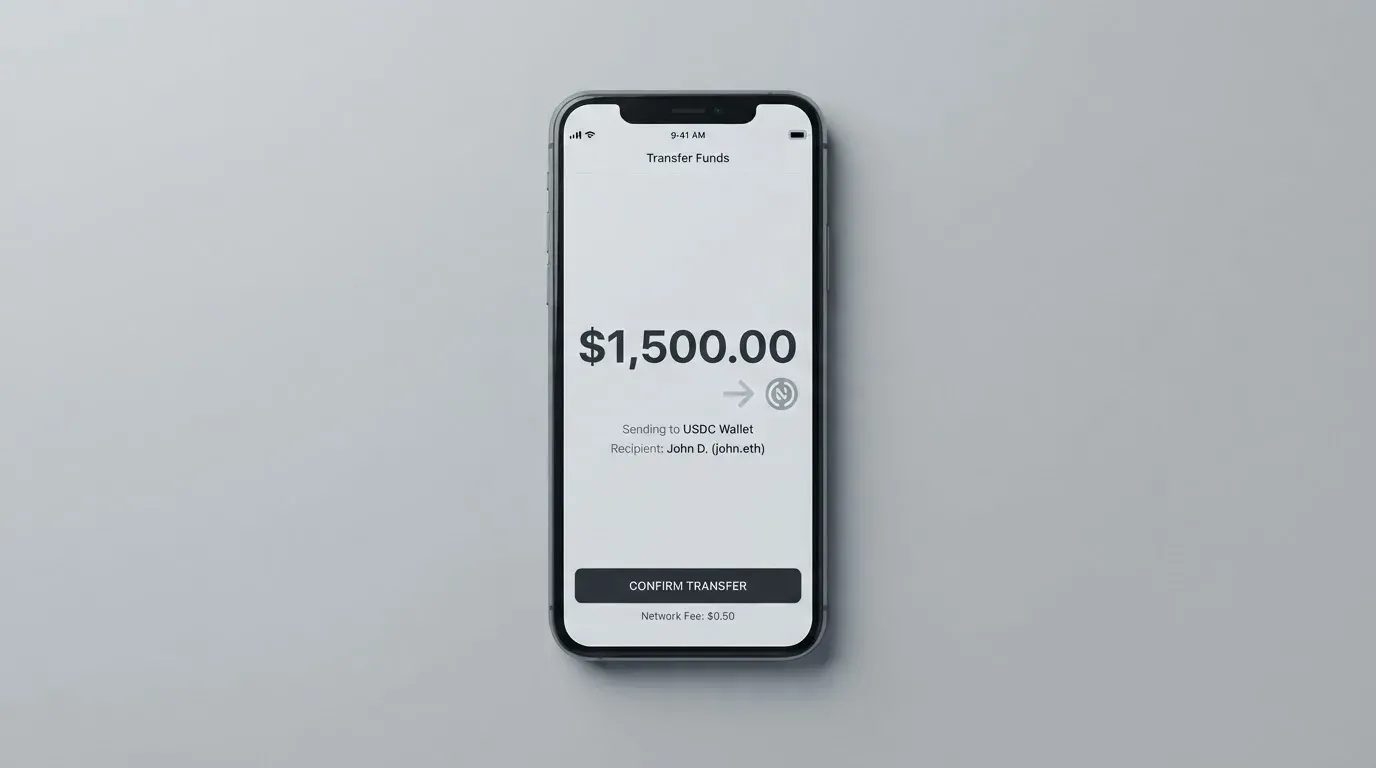
What is less clear is the rest of the picture. The networks for BTC and ETH are not stated — there is no list of supported networks, no address-format example, and no warning about wrong-network transfers that I could find on the public pages. For USDT, the near-instant timing is associated with TRC-20, but a reader who holds USDT on ERC-20 or on another chain is left to guess whether those routes are accepted. Minimum top-up amounts, maximum top-up amounts, top-up fees and any time-of-day cut-offs are also not stated. Withdrawal from the wallet back to a bank or to a crypto address is not stated either.
For a Nigerian user funding with naira, the workflow is the most concrete: a bank transfer into the NGN wallet, conversion into USD, and the card drawing on the USD balance. The conversion is the line that determines the effective cost, and again that rate and any fee are not published. For a user funding with crypto, the workflow is: send BTC, ETH or USDT to an address the platform provides, wait for confirmations, see the balance land in the USD wallet. Because the network is not stated for BTC and ETH, the only safe way to do this on a first try is a small test transfer.
A few practical points are worth flagging because they are general to the category rather than specific to CardFlow. On-chain transfers are irreversible, so a deposit sent on a network the platform does not support, or to an address of another network, can be lost. Gas or bandwidth fees on the source network are paid by the sender, not by CardFlow. And for USDT specifically, the choice of chain matters: Tether issues USDT on multiple blockchains, and sending USDT on a chain the platform does not watch for will look like nothing arrived. The near-instant timing the site quotes for TRC-20 is the clearest sign that this is the network they watch most closely, but the absence of a published list of supported networks means a first-time user is taking the rest on trust.
The shape of a sensible first top-up, then, is small, on TRC-20 for USDT, and with a confirmation that the USD balance has credited before sending a larger amount.
Paying with it every day
For day-to-day spending, what CardFlow publishes is short. The site says the CardFlow Mastercard works on Amazon, Netflix, Shopify, AWS and “more”, which is the kind of line that tells you the card is accepted wherever a normal Mastercard is accepted online, but it does not tell you the rate at which a given merchant will let a Nigerian-issued, USD-denominated prepaid card through. In practice, what tends to happen with prepaid or foreign-issuer cards is that some merchants apply extra checks, and the cardholder only finds out at the moment of payment.
What the site does not say covers most of the rest. Apple Pay and Google Pay support is not stated, which is a meaningful gap because tokenised mobile wallets often smooth over the rough edges of prepaid and foreign-issuer cards at the point of sale. There is no stated list of blocked merchant categories: gambling merchants (MCC 7995) and similar codes are commonly restricted, but whether CardFlow restricts them is not something the public pages tell you. The dispute and chargeback process is not described. There is no app listing in the usual stores, and the service appears to be web-based, although the public pages do not say so in those words either. A rewards or cashback programme is not stated. The “in-site chat widget” labelled “CardFlow Support” with the “Online · Replies in minutes” tag is the only stated support channel, alongside the FAQ.
The card controls that are described lean toward basic safety rather than spend management. The site’s FAQ explains that you can click “Freeze” on any card from the Cards page, and unfreeze it at any time, which is the one-tap freeze that most card programmes now offer. The platform also mentions 2FA. Beyond those, nothing is published: no spending limits, no merchant-category controls, no single-use virtual cards for trial subscriptions, and no statement download.
The honest read of “everyday use” for CardFlow is that it is a virtual USD card for online checkout, on a web platform, with mobile-wallet support and offline payments unstated and a support function that is chat-only. For a reader whose everyday is “I want a dollar card to put into a US storefront”, that is workable. For a reader whose everyday includes contactless in a shop, a gym subscription, a ride-hailing app, and a few recurring bills, the gaps will be felt quickly.
What can go wrong
The biggest risk with CardFlow is the silence around who is actually behind it. The legal entity, the issuing bank or e-money institution, the programme manager and the country of regulation are not stated on the public pages I could read. That is not the same as saying the platform is unsafe, but it is the same as saying you cannot check it from the outside, and the difference matters.
A second cluster of risks is operational. The complaint searches I ran — for “CardFlow cardflowpayment card reviews trustpilot reddit” and for a Nigeria-specific long-tail query — returned only other companies. There is no Trustpilot page for cardflowpayment.com, and the page for the lookalike domain cardflo.io is a different business. The absence of complaints is not the same as the presence of a good track record, and the lack of independent reviews is itself a piece of information: when a product has been around long enough to build a reputation, that reputation usually shows up in search.
A third cluster is the safety floor the platform itself describes. Freeze, unfreeze and 2FA are the only stated controls. Custody and safeguarding of customer funds are not stated. That means you cannot tell from the public pages whether the USD balance is held in a segregated client account, an insured trust, or a treasury account that ranks behind other creditors of the operator. The card controls are a useful speed-bump if a card number leaks, but they are not a substitute for knowing where the underlying money sits.
A fourth cluster is the usual category risk for any prepaid or crypto-funded card. A card-issuer programme can be wound down — Visa terminated its global agreement with FTX on 13 November 2022, and the FTX US debit card was wound down by its issuer; WaveCrest, a Visa card issuer that supplied crypto card brands, was suspended by Visa in Europe in 2018 and its programmes closed. Programmes that close typically give a notice period, stop loading, then ask users to withdraw remaining balances. None of that is unique to CardFlow, but it is the reason a “what happens to my balance if this card programme closes” question is worth asking before the balance is large.
A fifth, smaller risk is the way a virtual USD card can be declined at the point of sale. Address Verification Service is mostly a US, Canada and UK construct, and a card issued in another country can look “foreign” to a merchant’s BIN lookup, which can in turn trigger extra checks. Some merchants decline prepaid or foreign-BIN cards outright. 3-D Secure challenges add friction. Authorization holds can remain on a prepaid balance for up to several days, even if the merchant later releases the hold. None of this is a CardFlow-specific flaw, but it is part of the texture of using a card like this.
The practical takeaway is that the safest posture with CardFlow is to keep the balance modest, treat the card as a small top-up tool rather than a primary card, and ask support the questions the public pages do not answer before any meaningful amount is on the line.
What to take instead
I compared CardFlow against three other crypto-linked cards the reader is likely to see alongside it. The table below puts the headline facts side by side; details follow.
| Card | Score | Card type | Stated eligibility | Stated cost | Stated funding | Stated rewards |
|---|---|---|---|---|---|---|
| CardFlow | 4.9 / 10 | Virtual USD Mastercard | Aimed at Nigeria and “global users”; no country list, no KYC detail | Issuance free; monthly, conversion, FX fees not stated | BTC, USDT, ETH or naira bank transfer | Not stated |
| HyperCard | 4.7 / 10 | Prepaid HyperCard (network not stated) | No country list on official pages; App Store says accepted in 176+ countries | No fees listed on the App Store page | Crypto (USDT, BTC, ETH) converted to USD or EUR | Not stated |
| Card.fi | 6.6 / 10 | Virtual Classic and Premium, physical Classic and Premium, and metal (stainless steel) | Ships to 200+ countries; sanctions clause only | Virtual Classic $49, Virtual Premium $249 one-time; no monthly or inactivity fee; top-up Classic 1.5% + $1, Premium 1%; FX Classic 3.5%, Premium 2.5% | 32 coins across 5 networks (Ethereum, Base, BNB Chain, Solana, Kaanch) | Cashback on spending: Classic 0.8%, Premium 1%, Metal up to 1.2–2%; “up to 18%” on balances for Metal |
| Nero | 4.8 / 10 | Virtual card (network not named) | Restricted countries exist; list not stated | One-time issuance fee, amount not stated; no monthly fee stated | USDT or USDC, converted to fiat at payment | Not stated |
HyperCard is the closest in spirit: a prepaid card whose balance is held in USD or EUR and funded by crypto. The published score, 4.7 out of 10, is slightly lower than CardFlow’s, and the gaps are similar — no published country list, no published fees on the pages I could read, no stated network, no stated rewards. The card works in “more than 176 countries” on the App Store page, but that is a statement about acceptance, not about who is allowed to apply. If you are weighing HyperCard against CardFlow, you are weighing two products that are both short on the same kind of detail.
Card.fi is a different shape of product. It is the strongest of the four in this comparison at 6.6 out of 10, and it is also the most explicit: the country story is “200+ countries” with a sanctions carve-out, the cost story is a published one-time price (Virtual Classic $49, Virtual Premium $249) and published fees (top-up 1.5% + $1 on Classic, 1% on Premium; FX 3.5% on Classic, 2.5% on Premium), and the funding story lists 32 coins on five named networks. The trade-off is that the entry price is real money, and the rewards are the kind of headline figures (10% at coffee shops, “up to 18%” on Metal balances) that read better in the marketing than in the small print, with monthly caps to match. If you want a published fee schedule and a physical option, Card.fi is the more transparent of the four.
Nero sits closest to CardFlow on the score line at 4.8 out of 10, and the shape is similar: a virtual card funded with USDT or USDC, with a 4% top-up commission and conversion to fiat at the moment of payment. The country list is not published, the network is not named, and rewards are not stated. If you are looking at Nero because you already hold USDT or USDC and you want a virtual card, the comparison with CardFlow is essentially about the conversion fee, the speed of the TRC-20 route and the issuer behind each programme — and on all three, the public pages are quiet.
The honest reading of this comparison is that none of the four cards is a clean win, and that the right choice depends on which gaps you can live with. CardFlow is the fastest to start and the cheapest to start with. Card.fi is the most transparent and the most expensive. HyperCard and Nero sit in between on the score line and on the amount of detail published.
Who I would recommend it to
If you are a Nigerian-based reader funding a USD card with naira or crypto, who plans to use it for online USD spending, who is comfortable with a chat-only support channel, and who is willing to ask the unstated questions (monthly fee, conversion fee, FX margin, supported crypto networks, what happens to a balance if the programme closes) before moving more than a small amount onto the card, CardFlow is workable. The “free to create, near-instant TRC-20 top-up” combination is genuinely useful for that use case, and the three-minute setup is real.
If you are anyone else, I would steer you elsewhere. A reader outside Nigeria who needs a country list to plan around will not find one. A reader who needs a physical card or ATM access has no option here at all, because the card is virtual only. A reader who needs Apple Pay or Google Pay support has no published answer. A reader who needs a clearly named issuer and a published fee schedule will find the gaps too wide. A reader who plans to keep a meaningful balance on the card should not put a meaningful balance on a card whose issuer they cannot name from the public pages.
The way I would frame the decision is this: CardFlow is a top-up tool, not a primary card. Use it for the small, fast, dollar-denominated online payments it is built for, and keep the balance low enough that the worst plausible programme shutdown would not be a serious loss. Anything bigger than that, and the missing pieces in the published offer start to outweigh what is there.
Frequently asked questions
What is CardFlow?
CardFlow is a web-based platform that issues a virtual USD Mastercard you can fund with Bitcoin, USDT, ETH or a naira bank transfer, and use for online payments wherever Mastercard is accepted. The site describes it as “Nigeria’s smartest fintech card platform” and says it is built for “Nigerians and global users”.
How does CardFlow card work?
You create an account, generate a virtual USD Mastercard in about 3 minutes, top up the USD balance from a naira transfer or from a supported crypto transfer (USDT on TRC-20 is near-instant, BTC and ETH take 5 to 30 minutes), and then spend that USD balance online at Mastercard-accepting merchants.
Is CardFlow a bank?
The public pages do not name the legal entity behind CardFlow, do not name the card issuer, and do not say whether the platform is a bank, an electronic money institution, or another kind of regulated entity. So from the outside, the question cannot be answered with what the company has published.
Who owns CardFlow?
Ownership of the platform is not stated on the public pages I could read. The only stated support channel is the in-site chat widget, and the only stated company information is the brand name and the cardflowpayment.com domain.
Is CardFlow available in my country?
The site says CardFlow is for “Nigerians and global users”, but it does not publish a list of supported countries, a list of excluded countries, or a separate rule for citizens versus residents. The only way to confirm eligibility for a specific country is to sign up and try.
How do I get a CardFlow card?
You sign up on the CardFlow site and create a virtual card from the dashboard. The site says this takes about 3 minutes and that creating a virtual card is free. There is no physical card and no delivery step.
Does CardFlow require KYC?
The site does not state the KYC requirements, the document types accepted, the thresholds at which verification is triggered, or what the difference is between an unverified and a verified account. The only stated friction is the three-minute card creation time.
How do I top up CardFlow?
You fund the wallet by naira bank transfer or by sending Bitcoin, USDT or ETH from your own wallet to an address the platform provides. USDT on TRC-20 is near-instant, BTC and ETH take 5 to 30 minutes, and the networks for BTC and ETH are not separately stated.
Is CardFlow free?
Creating a virtual card is free, according to the FAQ. Monthly fee, conversion fee, FX margin, top-up fee and the rest of the cost schedule are not stated on the public pages, so a precise total cost of using the card cannot be given from the published information alone.
Is CardFlow safe?
The site describes a one-tap freeze, an unfreeze option, and 2FA, and the platform runs an in-site support chat. The legal entity, the card issuer, the country of regulation and how customer funds are safeguarded are not stated, so an outside reader cannot independently confirm the safety floor of the underlying programme.
Virtual cards: your questions answered – cryptocardanswers
Content created by the «cryptocardanswers» team