
The crypto card that converts at the till and leaves you holding a phone
 Available in US

Coinspot’s card is not a bank account in a pocket. It is a prepaid, reloadable Mastercard that draws on crypto sitting in up to five linked CoinSpot wallets, converts what you spend into Australian dollars at the moment of the transaction, and settles the rest back to your CoinSpot balance. On that description alone it scores 6.2 out of 10 in my assessment: no setup or annual fees, no lock-in period, a large catalogue of coins behind it, a named Australian issuer, and — the catch that shapes everything else — a card that appears to exist only inside Apple Pay and Google Pay. If you have been trying to get an ordinary bank card and cannot, this belongs on your shortlist. If you want something that slides into a wallet at home, works at any ATM, and draws from your everyday bank balance, it is the wrong shape of product entirely.
The conditions described below are current as of October 28, 2026.
Verdict: 6.2 out of 10
| Criterion | Mark | Why |
|---|---|---|
| Who can get it | 3 / 10 | The card page names no country list at all, talks in AUD and Australian licensing, and demands a fully verified CoinSpot account with 2FA. Third-party sites report it as open to Australian customers only. |
| Cost | 8 / 10 | “No startup or annual fees” and no lock-in periods, with crypto converted at CoinSpot’s own exchange rates. The conversion fee is 1% according to third-party sources, not confirmed on the card’s own pages. |
| Top-up options | 7 / 10 | Any coin listed on CoinSpot, 470+ of them, drawn from up to five linked wallets in an order you choose. Which networks are supported is not stated. |
| Reliability and complaints | 8 / 10 | Issued by EML Payment Solutions Limited (AFSL 404131), distributed by Casey Block Services Pty Ltd. The exchange itself sits at 4.3/5 on Trustpilot from 2,823 reviews, with account restrictions the recurring theme. |
| Everyday use | 5 / 10 | Prepaid Mastercard working through Apple Pay and Google Pay. No physical card is mentioned on the page, and third-party reporting describes a digital-only product with no ATM. |
| Total | 6.2 / 10 | Strong on cost and custody, weak on reach and on the physical side of everyday spending. |
The audience this suits is narrower than the marketing suggests: Australian residents who already hold crypto on CoinSpot and want to spend it at a shop without converting it manually every time. The person it does not suit is anyone outside Australia, anyone without a fully verified CoinSpot account, and anyone who needs cash from a machine or a plastic card in their hand.
Will they give you the card?
Yes — if you are Australian and verified. The card page itself names no country list, which sounds like a gap rather than an opening. What it does say is that it works in AUD and points to Australian licensing. On top of that, you need a fully verified CoinSpot account with two-factor authentication switched on. Third-party write-ups from September 2024 put it more plainly: available to Australian customers with a verified CoinSpot account. Treat that as unofficial rather than settled, because the card’s own pages never say it.
The verification route is the standard one: a fully verified individual CoinSpot account, individual verification, plus 2FA. Which documents are needed, what age you must be, what the tier levels are, how long verification takes, and what gets a person rejected — none of that is stated on the public pages. That is a real gap for anyone planning around it, because “verified” is doing a lot of work in the eligibility sentence.
You should know before you start that the person who verifies you is an exchange, and under anti-money-laundering law it is obliged to. If your documents do not add up, the platform is expected to hold off or close the relationship rather than proceed. That is the law working as intended, not a quirk of this product.
How to get it
There is no long application form described. The sequence is: get a CoinSpot account, complete individual verification, turn on 2FA, then add the card to your CoinSpot app and push it into Apple Pay or Google Pay.
Because there is no physical card mentioned, “how to activate” has a simpler answer than it does with most cards — there is nothing to activate in an envelope. The app is the control surface: balances and transactions live there, and third-party reporting describes app controls for freezing the card, setting spending limits and switching the card on or off. That last one is the single most useful feature on this page for anyone worried about a compromised phone.
Two setup details do matter. The card currency is AUD, and the crypto is converted to AUD at the time of each transaction. And while the card page describes Apple Pay and Google Pay use, the card is not mentioned as a piece of plastic at all.
Fees and what a purchase really costs
The headline is genuinely good: “No startup or annual fees” and no lock-in periods. What you pay instead is the conversion, and the card’s own pages are vague about it — the crypto is converted to AUD in real time at the point of transaction at “CoinSpot’s best exchange rates”, with no margin or FX fee figures given. Third-party sources from 2024 put a 1% conversion fee on buys, sells and swaps, and launch coverage from savings.com.au and Accountants Daily repeats the same figure with no annual or activation fees. Neither is confirmed by CoinSpot’s own card pages, so I would treat 1% as a strong expectation rather than a promise.
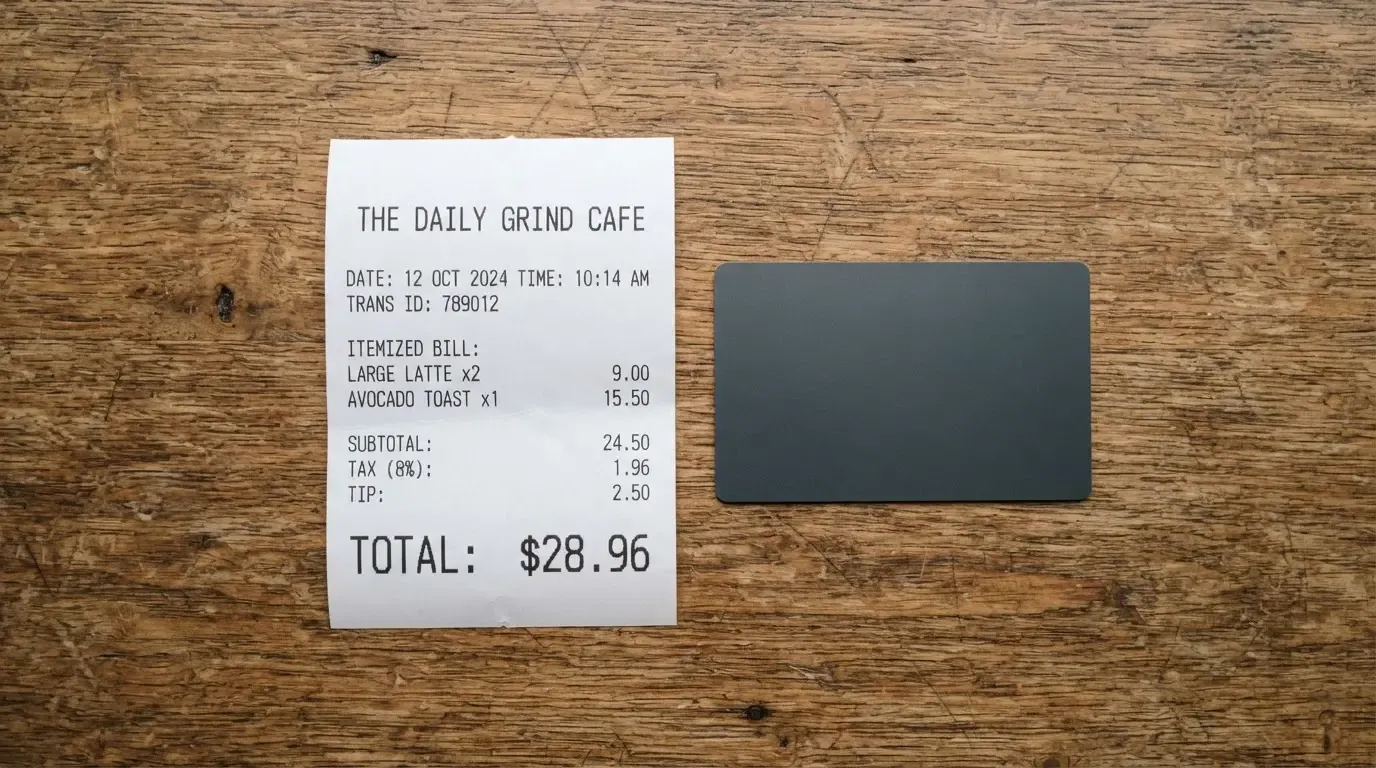
There are no ATM fees because there is, apparently, no ATM. And daily and monthly spending limits are not stated on the card pages; Finder reported a $4,999 daily spending limit in September 2024, unofficial and unconfirmed.
| Fee or limit | What the card says | Third-party reports |
|---|---|---|
| Issuance | “No startup or annual fees” | No annual or activation fees reported at launch |
| Monthly fee | None | None reported |
| Conversion | Crypto converted to AUD in real time at the point of transaction at “CoinSpot’s best exchange rates”; no margin or FX figures published | 1% conversion fee on buys, sells and swaps |
| Foreign currency | Not stated | Not reported |
| ATM | Not stated | Digital-only, no ATM withdrawals described; no ATM fee found in any source |
| Daily limit | Not stated | $4,999 |
| Monthly limit | Not stated | Not reported |
| Tiers | One prepaid reloadable Mastercard, no tiers, no metal card | — |
Three everyday payments, so you can see where the money goes:
Coffee in a Sydney café, $6. Apple Pay, the crypto converts to AUD at that moment, and the 1% is taken out of the conversion. This is the clean case: no fees at the till, one conversion, one visible percentage. Assuming the reported 1% holds, the cost of the conversion on $6 is six cents.
An online subscription in euros, €9,99. Here the picture gets worse. The page says a refund returns the AUD value to your CoinSpot account and the coins spent are not returned, and it says nothing about a foreign-currency fee or about holding multi-currency balances. So you are converting crypto to AUD and then the network handles a euro charge. What lands in that euro merchant’s account is whatever AUD amount the network presents, and the spread on that second leg is not disclosed anywhere I can find.
Fuel or a parking meter. Here a different problem appears. A prepaid card’s BIN is visible to the merchant, and some merchants treat prepaid and foreign-issued cards differently — this is ordinary card-network behaviour, not something specific to CoinSpot. The other thing to watch is that a declined authorisation can leave a hold on your balance for days. On a prepaid balance you fund from crypto, a hold is a real freeze of real coins’ worth.
The refunds point deserves emphasis because it is easy to misread. You get the AUD value back into your CoinSpot account. You do not get the specific coins back. If you bought a token, spent it, and got it refunded, you are holding Australian dollars, not the token — at whatever the market does next.
Top up: how the card gets money
There is no bank transfer and no direct AUD payment from the card page. The card is funded by spending crypto from up to five linked CoinSpot wallets, drawn in an order you choose. The card page mentions over 470 cryptocurrencies.
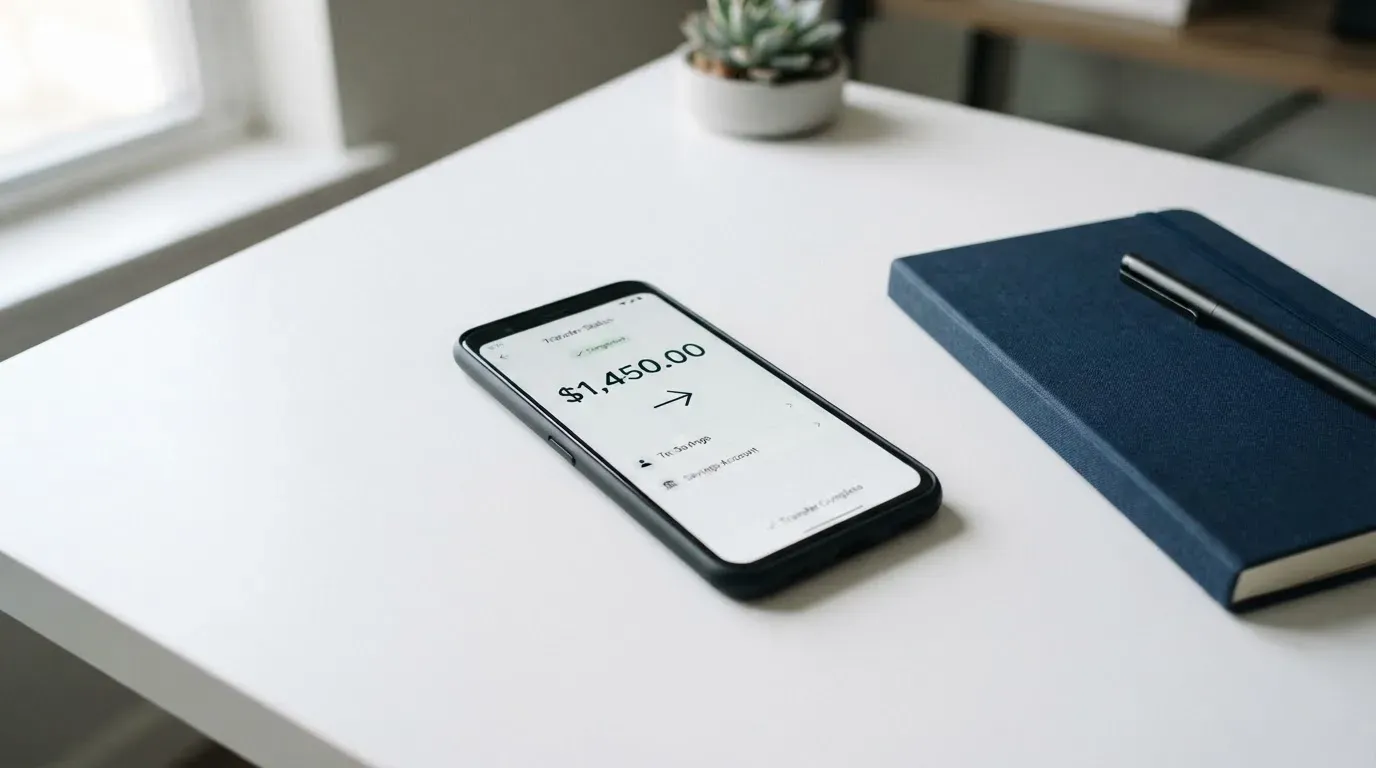
That is the whole mechanism, and it is worth pausing on what it means. You are not topping up a card; you are spending coins and letting the card work out what that means in dollars. There is no top-up fee, minimum or network fee stated on the card pages. CoinSpot’s own fees page does list card (AUD) deposits to the exchange as free, which is a separate thing — funding your exchange account with dollars, rather than funding the card with crypto.
The five-wallet, chosen-order design is quietly the most thoughtful part of the whole product. It means you can line up your Bitcoin, your stablecoin, and whatever else so that each purchase draws from the one you actually meant to spend, rather than from a single pooled balance at whatever moment the market happens to be.
Which networks those 470-plus coins are reachable on is not stated, and that is not a small omission. If you hold a token on a network the platform does not support for this card, the transfer can fail or need manual recovery with no guarantee — the address has to be right or the money is simply gone. Ask before you rely on a specific coin.
Paying with it every day
Day to day, this is Apple Pay and Google Pay. That is the whole interface. You unlock your phone, double-click the side button, authenticate, and the card pays from whichever wallet the conversion touched.
What is missing is as important as what is there. Blocked merchant category codes are not stated, so you cannot tell in advance whether gambling categories — the ones most cards restrict — are shut off here. Rewards and cashback are not mentioned on the card page, and third-party reporting from September 2024 says there is no rewards programme at all. The dispute process is not stated on the card page either; it references product terms that are not linked, so a chargeback path exists in paper form and nowhere else.
The app itself is a strong point. CoinSpot’s iOS app carries 4.8 out of 5 from 46K ratings, read on 20 October 2026 at version 3.11.14. The Google Play rating was not readable. For a product whose entire value proposition is “spend without thinking about it”, the app being the thing you touch fifty times a week matters more than it would for a normal bank’s app.
What can go wrong
The card’s own pages list no complaints, and that is where I found the real material.
There are no card-specific complaints or Reddit threads in what I could find. What exists is exchange-level: reports of accounts frozen for “security review” when a withdrawal starts, with funds held, accounts and transfers restricted without a clear explanation, difficulty with withdrawals and 2FA, and slow support giving repetitive replies. Those themes date from September and October 2026. The Trustpilot picture is better than the themes suggest — coinspot.com.au at 4.3, 2,823 reviews, 7% one-star — with CoinSpot replying to 89% of negative reviews. Read that as: a well-run service with a minority of genuinely bad experiences, concentrated around the moment money is trying to leave.
The structural risks are worth naming plainly. CoinSpot is a custodial exchange. That word means they hold the credentials to your coins, so the trust question is not a detail — it is the whole arrangement. Custodians have a documented history: Mt. Gox at roughly US$350 million, Coincheck at roughly four hundred million dollars in 2018, Ronin Network at US$625 million in 2022. Blockchains cannot freeze or return a stolen transfer, and a seed phrase cannot be un-shared.
The issuer and distributor are named and traceable: EML Payment Solutions Limited (AFSL 404131) issues the card, and Casey Block Services Pty Ltd, trading as CoinSpot, promotes and distributes it. That is the structure you want to see — the card runs on a licensed Australian issuer’s rails rather than on a crypto company’s own promise.
What is not stated on the card page is as notable: freeze controls and spending limits are unofficial, and insurance is not mentioned at all. If those balances are not covered by a deposit guarantee scheme, then “my crypto is safe” is a question for CoinSpot and EML, not a fact.
Support is genuinely good on paper: live chat with a local team 24/7, email at [email protected], a Help Centre at coinspot.zendesk.com, and a contact form on the site.
What to take instead
Compared with the alternatives below, the honest summary is this: OKX scores the same 6.2 but is euro-denominated and aimed at the EU; Coinbase scores 6.4 but is a US product; Young Card scores 5.7 and pays cashback in its own token. None of them is dramatically better on this evidence — the differences are geographic and structural, not quality.
OKX — 6.2 / 10. A euro-denominated virtual Mastercard linked to OKX Pay, aimed at the EU plus Norway, launched 28 January 2026, with Iceland and Liechtenstein excluded. No card fee, no transaction fee, and a conversion spread quoted as 0.1% by a May 2026 explainer against 0.4% in the launch press release — the newer source wins, but treat it as a moving figure. Funded by USDC or USDG in OKX Pay; other coins must be converted first, and there is no auto top-up. Cashback runs on USDG purchases only, with tier caps in EUR from 2% capped at 10 for Regular up to 10% capped at 1,000 at VIP4+, and the source text is internally inconsistent on that range.
Coinbase Card — 6.4 / 10. Visa prepaid debit, virtual or physical, all US states except Hawaii, identity checks under the USA PATRIOT Act, and no other countries. “Zero spending fees and no annual fees”, funded by a linked bank account or a paycheck deposit. Optional crypto rewards on every purchase for US card users, at a variable rate shown in the app. Its advantage over Coinspot is the physical card and the ATM; its advantage in score is thin.
Young Card — 5.7 / 10. Eligibility, card type, fees and funding are not stated officially. What is stated is cashback paid in YNG tokens, varying by club tier: Essential 0.1%, Gold 1.8%, Platinum 3.6%, with Bronze and Silver not stated.
| Coinspot | OKX | Coinbase | Young | |
|---|---|---|---|---|
| Score | 6.2 | 6.2 | 6.4 | 5.7 |
| Currency | AUD | EUR | USD | Not stated |
| Where | Australia (per third-party sources) | EU + Norway, minus Iceland and Liechtenstein | US states except Hawaii | Not stated |
| Card form | Prepaid Mastercard, no physical card mentioned | Virtual Mastercard, physical not mentioned | Virtual or physical | Not stated |
| Top up | Up to five linked crypto wallets, 470+ coins | USDC or USDG in OKX Pay | Linked bank account or paycheck | Not stated |
| Rewards | None mentioned | Cashback on USDG only | Optional crypto rewards | YNG token cashback by tier |
The real alternative for many readers is not another crypto card. It is the boring route the card is built to replace: a normal debit card with your bank’s fees and your bank’s ATM network. Coinspot’s case is not that it is cheaper — it is that it is available when that is not on offer.
Who I would recommend it to
I would recommend it to an Australian resident who already keeps crypto on CoinSpot, has a fully verified account with 2FA on, and spends steadily at shops that accept contactless card payment. For that person it is a tidy tool: no setup fee, no annual fee, no lock-in, a large coin catalogue, five linked wallets in a controllable order, and a licensed Australian issuer behind it.
I would not recommend it to you if any of these are true:
- You live outside Australia. The card’s own pages name no country list and speak only of AUD and Australian licensing; third-party reporting says Australia only.
- You need a physical card or want to take money out of an ATM. No physical card is mentioned, and third-party sources describe the product as digital-only with no ATM described.
- You want cashback. Nothing is mentioned on the card page, and third-party reporting says there is no rewards programme.
- You are near a withdrawal or a large balance you need to move. The recurring complaint pattern on the exchange is accounts and transfers restricted without clear explanation, concentrated exactly there.
- You are going to hold significant value and want deposit-guarantee protection. Insurance is not stated on the card page.
Before you sign up for anything, the questions worth asking are short: which networks support the specific coins I hold; what the limit structure is when a purchase declines; and what happens to my balance if I want to leave. None of those three has a published answer on the card’s pages, and all three are the ones that matter after the first month.
Frequently asked questions
What is the Coinspot card?
It is a prepaid, reloadable Mastercard that spends cryptocurrency rather than bank money. You link up to five CoinSpot wallets, and when you pay, the crypto converts to Australian dollars at the moment of the transaction. The card currency is AUD, and it works through Apple Pay and Google Pay. The card itself is issued by EML Payment Solutions Limited and distributed by CoinSpot.
Does the Coinspot card need KYC?
Yes. You need a fully verified individual CoinSpot account with two-factor authentication enabled before the card is available. Which documents are required, what age applies, and how long verification takes are not stated on the public card pages. Verification is an anti-money-laundering requirement, so an incomplete check can hold up the account rather than just delay the card.
How do I top up the Coinspot card?
There is no bank transfer and no direct AUD top-up from the card page. The card draws on crypto from up to five linked CoinSpot wallets, used in an order you set, across more than 470 listed cryptocurrencies. Which networks are supported is not stated, and sending on an unsupported network can mean a transfer that needs manual recovery with no guarantee attached.
Can I use the Coinspot card in my country?
Only Australia, as far as the available information goes. The card page names no country list and refers to AUD and Australian licensing; third-party reporting from September 2024 describes it as available to Australian customers. If you are elsewhere, this card is not for you, and I have not found evidence that it is offered outside Australia.
Is the Coinspot card free?
There are no startup or annual fees and no lock-in period — that is stated. What you pay is the conversion, and here the card’s own pages are vague, saying only that crypto is converted at CoinSpot’s best exchange rates. Third-party sources put a 1% conversion fee on buys, sells and swaps. That figure is not confirmed by CoinSpot’s card pages, so treat it as an expectation.
Is there a physical Coinspot card or ATM access?
Probably not. The card page describes Apple Pay and Google Pay use only and never mentions a physical card, and third-party reporting from September 2024 states that physical cards are not available and that ATM fees are not mentioned. On that basis, treat this as a digital-only card: your phone is the card, and cash from a machine is not part of the product.
Does the Coinspot card offer cashback or rewards?
Nothing on the card’s own pages mentions cashback or rewards, and third-party reporting from September 2024 says there is no rewards programme. If cashback is part of why you are comparing cards, count this card as offering none. Some alternatives do pay cashback — OKX on USDG purchases, Coinbase in optional crypto rewards, Young Card in YNG tokens — though each on its own terms.
What fees apply to a foreign purchase?
Unknown, and that is the honest answer. The card converts your crypto to AUD at the transaction, and a foreign merchant then charges the network in its own currency. No foreign-currency fee is stated, no multi-currency balances are described, and no FX figures are published. So the second conversion on an overseas purchase happens at a spread nobody has told you about, which is a good reason to check the app’s conversion display before you rely on it abroad.
Is the Coinspot card safe?
The issuer is named and licensed: EML Payment Solutions Limited, AFSL 404131, with Casey Block Services Pty Ltd trading as CoinSpot distributing it. Two-factor authentication is required, and third-party reporting describes app controls to freeze the card, set spending limits and switch it off. But CoinSpot is a custodial exchange, which means they hold access to the coins, and insurance on card balances is not stated on the page.
What should I do if a purchase is declined or a payment is stuck?
A declined authorisation can leave a hold on your balance that persists for several days, and on a card funded from crypto that hold is real value. CoinSpot runs 24/7 live chat with a local support team, plus email at [email protected] and a Help Centre. Be aware that the most common complaint themes on the exchange concern restricted accounts and withdrawals rather than card payments specifically.
Exchange cards: your questions answered – cryptocardanswers
Content created by the «cryptocardanswers» team