
A self-custody Visa debit card that spends straight from on-chain USDC — strong on cost and top-up, weaker on everyday banking
 Available in US
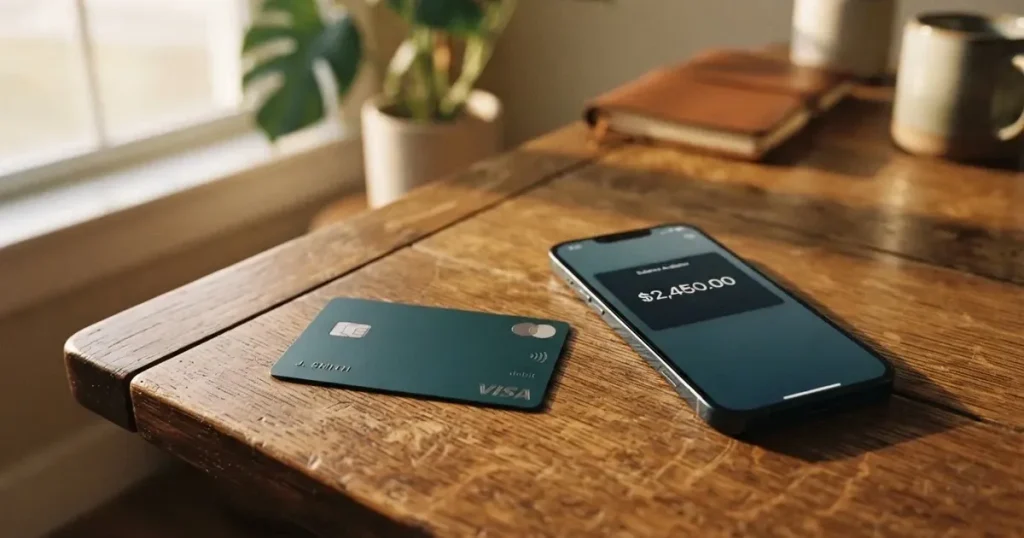
Encrypto is a Visa debit card that draws directly on your own crypto wallet rather than on a bank account. The idea is simple and, on paper, tidy: keep your USDC on-chain, tap the card, and the payment goes through. If you are the kind of person who already holds stablecoins across several networks and wants to spend them without first converting to fiat in a bank account, that model is genuinely appealing — and on cost, Encrypto scores very well. The card is free to open virtually, free to keep, and spends USDC with no conversion fee at all.
But there are trade-offs, and they are the kind you find out about on a Tuesday when you need to pay for something. There is no Apple Pay-only frictionless wallet experience yet: Google Pay is listed as coming soon, and cash-point withdrawals are marked coming soon too. The card is invite-only. Onboarding runs through an X account and an identity check handled by Bridge. If you want a bank replacement — one you can pay rent with, take out money at a cash machine, and use everywhere a normal card works — the honest verdict is that Encrypto is a crypto spending tool first, and only then a bank card substitute.
I gave Encrypto 7.9 out of 10 overall. The short version: excellent if you already live on stablecoins and think in networks; incomplete if you need the ATM, the full set of mobile wallets, or a card that does not care about where your balance sits.
The conditions described on this page are current as of October 28, 2026.
Score out of 10
Before the details, here is how the card scored on the criteria I check, with the reasoning attached.
| Criterion | Score | Why |
|---|---|---|
| Who can get it | 7 / 10 | Markets are the United States, Brazil, Mexico, Argentina, Colombia and Europe; the card’s availability is decided at signup by your region, the wallet is global, and access is by invitation |
| Cost | 9 / 10 | Virtual card is free, physical card is $5.00 one-time, no monthly fee; 0.5% conversion on non-USDC assets, USDC spends with no commission, FX at the Visa rate with no markup |
| Top-up options | 9 / 10 | A self-custody wallet on nine blockchains (Ethereum, Base, Arbitrum, Optimism, Polygon, Avalanche, Solana, Stellar, Tron); you spend straight from USDC and other coins convert at payment |
| Reliability and complaints | 8 / 10 | Visa debit issued by Lead Bank, transfers handled by Bridge Building Inc., keys held by Privy; one report of a refund that did not display (Sep 2026) |
| Everyday use | 6 / 10 | Virtual card instantly, physical card shipped out, Apple Pay is there, Google Pay is “coming soon” and the ATM is “Coming soon” |
| Total | 7.9 / 10 | A strong crypto-spending card with visible gaps in everyday banking |
The strongest criterion here is cost, and that is not an accident — most of the fee structure is either zero or applied only when you spend a coin other than USDC. The weakest is everyday use, and that is exactly where the “coming soon” labels cluster. Encrypto is at its best the moment you hold USDC; it is at its least complete the moment you want cash or a phone wallet it has not yet built.
Who will they give you the card
Encrypto names its supported markets as the United States, Brazil, Mexico, Argentina, Colombia and Europe. The important caveat is how it applies that list: the card’s page says that “card availability is determined during signup based on your region.” So the country list is a guide, not a promise — the moment of truth is when you sign up. The wallet itself is described as available globally, which is a broader statement than the card’s. Encrypto does not name any excluded countries on the pages I read.
That distinction matters for you if you are outside those markets. You may be able to create and use the wallet in more places than you can get the card, and the card is the part you actually need for spending. If you live somewhere not on that list, the honest thing to do is attempt the signup and see what the region check says, rather than assume from this review that you are in or out.
Two other things to keep in mind. The markets named span very different regulatory environments — the United States is one, and Colombia and Europe are quite another — and the card is a Visa debit issued by a US bank, which is precisely the setup that can make a card look “foreign” to some merchants. I have written more about that below.
In short: the card is aimed at people who already hold stablecoins on-chain and want to spend them. It is not aimed at someone opening their first crypto wallet.
How to get it
Encrypto is invite-only. That is the first and most important fact about applying, and it is the practical reason many readers will not get past step one.
Here is the path as described:
- You verify with an X (Twitter) account.
- Once approved, you complete identity verification.
- That identity verification is handled by Bridge, a Stripe company — the same Bridge that also processes Encrypto’s transfers.
- Activation is instant after your KYC is approved.
So the practical sequence is: X account, approval, KYC through Bridge, then your virtual card is live immediately and a physical card ships to your address.
A few things the public pages do not tell you. The specific documents you will need, whether proof of address is required, and any minimum age beyond the standard adult requirement are not stated. Nor are any KYC tiers — whether there is a lighter tier and a higher one, with higher limits, is not something the card’s own pages describe. If you are trying to work out in advance whether you will clear the checks, you cannot from this page alone; you will have to go through the flow.
The card itself is a Visa debit, usable wherever Visa is accepted. The virtual card is usable immediately; the physical card is shipped to your address, which means the virtual card is what covers you in the gap. What the card is made of — whether the physical card is metal, plastic or standard — is not stated. It spends in USD.
Delivery deserves a small separate mention. The physical card ships to your address, but which countries it ships to, how long it takes, and what a replacement costs are not stated. There is a $5.00 one-time fee for the physical card, but that is issuance, not replacement. If you lose the card abroad, nobody has publicly committed to a price for getting you a new one.
Fees: what it really costs
This is where Encrypto is genuinely good, and where it beats most of the field. The headline is that the virtual card is free, the physical card costs $5.00 once, and there is no monthly maintenance fee at all.

The detail is what makes it interesting. The one conversion fee Encrypto charges is 0.5%, and only on non-USDC assets, charged at the point of sale. If you spend USDC directly, there is no conversion fee. Separately, a decentralised-exchange swap inside the app runs at the market rate, typically 0.01–0.3%. Domestic and international purchases are free. On international purchases the currency conversion uses the Visa exchange rate with no Encrypto markup — this is the line that separates Encrypto from many cards that quietly add a foreign-exchange surcharge.
Here is the fee and limit picture in one place.
| Fee or limit | Amount |
|---|---|
| Virtual card issuance | Free (instant) |
| Physical card issuance | $5.00 one-time |
| Monthly maintenance | Free |
| Conversion fee | 0.5% on non-USDC assets, at point of sale |
| DEX swap fee | Market rate, typically 0.01–0.3% |
| Spending USDC directly | No conversion fee |
| Domestic purchases | Free |
| International purchases | Free; uses the Visa FX rate with no markup |
| ATM withdrawal | “Coming soon” (fee not stated) |
| Daily spend limit | $10,000 |
| Overdraft | None — declines if balance is insufficient |
| Monthly limits | Not stated |
| KYC-level limits | Not stated |
Two details deserve your attention. First, the ATM line is the one you will miss most, and the fee for it is not stated because the feature itself is not there yet. Second, the $10,000 daily spend limit is generous for most people and irrelevant for a few; if you buy something large in one go, this is the number that governs you. There is no overdraft — if your balance is short, the payment simply declines. That is a feature if you are careful and a nuisance at a checkout.
Let me make the abstract cost concrete with three everyday payments, because that is where fees usually reveal themselves.
Coffee, $5, paid from USDC. You tap. The card spends USDC straight from your balance. No conversion fee, no monthly fee, nothing. This is the case the card is designed for and it costs you nothing beyond what the café charges.
An online subscription in euros, €10. International purchase. Free on Encrypto’s side; the euro is converted at the Visa rate. So your effective cost is the Visa rate plus whatever spread Visa itself carries, with no Encrypto markup stacked on top. A card that added its own foreign-exchange fee would make this noticeably worse.
A purchase paid with a non-USDC coin, say $20 of ETH. Here the 0.5% conversion fee applies at the point of sale, so $0.20, on top of any network gas the swap involves. If you instead convert the ETH to USDC yourself in the app first, you pay the DEX swap fee at market rate (typically 0.01–0.3%) and then the purchase is fee-free. For small everyday buys, spending USDC directly and occasionally converting in-app is usually the cheaper habit.
One thing to watch, unofficial and not confirmed by the card: third-party listings mention a “Black Tier” with collateral that can waive certain transaction fees, but the threshold for it is not stated and the card’s own pages do not describe it. I would not plan around that.
How to Top up the wallet
Top-up is the other place Encrypto scores highly, and the reason is the self-custody design. Your funds sit in your own wallet across nine blockchains — Ethereum, Base, Arbitrum, Optimism, Polygon, Avalanche, Solana, Stellar and Tron. You spend directly from your on-chain USDC balance; any other crypto you hold is converted at the moment of payment.
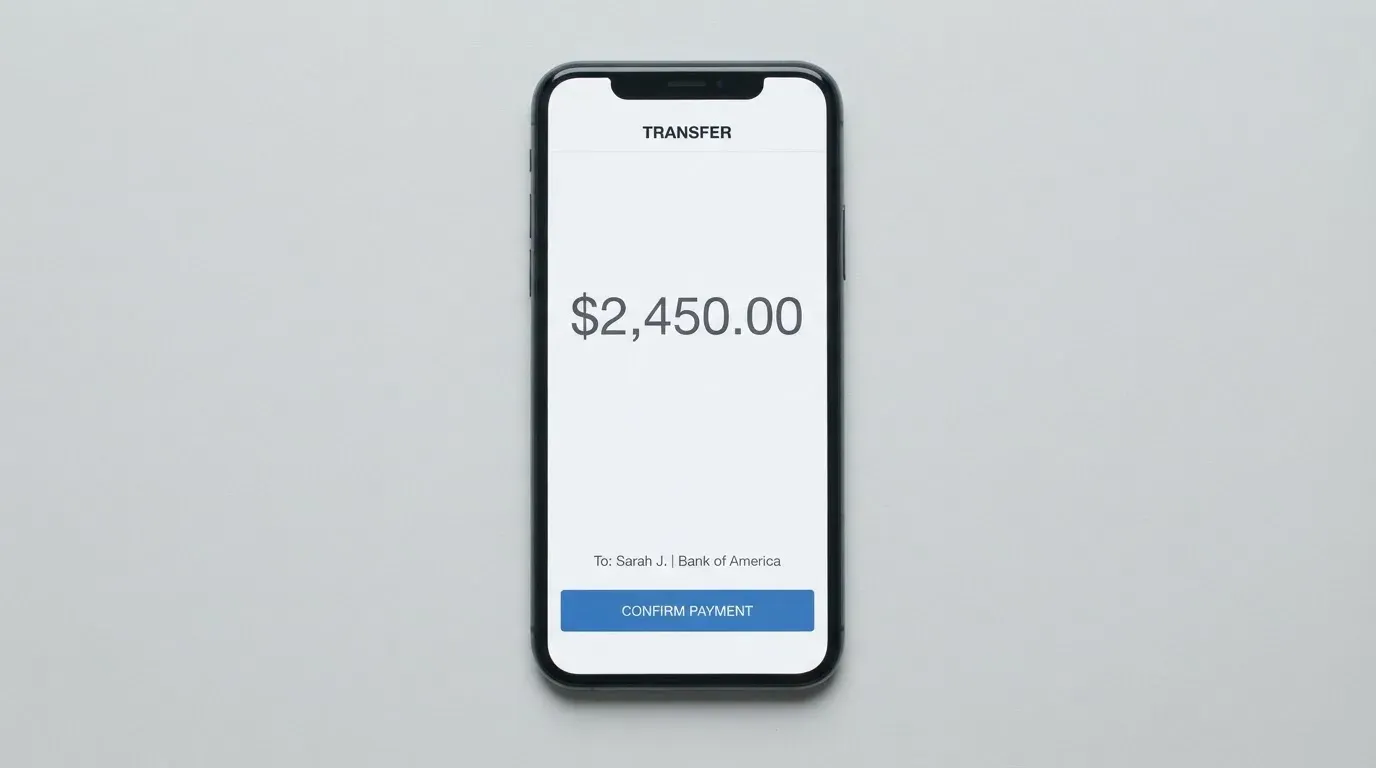
Adding money is straightforward in three flavours.
On-chain USDC. Sending and receiving USDC on-chain is free. Cross-chain transfers cost network gas only — the blockchain’s fee, not Encrypto’s. If you already hold USDC, moving it in is the cheapest path and, on many networks, effectively instant to feel.
ACH on-ramp. Free, arriving in 1–3 business days. Where available, same-day ACH costs $1.00. This is the route if you want to move dollars in from a bank account without touching a crypto exchange.
Local rails. PIX in Brazil and SPEI in Mexico are both free.
The minimum top-up is not stated.
When you want money back out, the picture is thinner and worth understanding before you rely on the card. Bank off-ramp is free ACH in the United States in 1–3 business days, and PIX in Brazil and SPEI in Mexico. CVU in Argentina is rolling out. Colombia and Europe are not available or not listed. So the largest of the named markets — Europe, and Colombia which the card lists as rolling out — do not have a stated way to convert your balance back to bank money. What happens to a remaining balance if you close the account is also not stated.
That asymmetry is the practical point: getting money in is well covered, getting money out depends heavily on where you live. If you are in Europe and intend to use this as a one-way spend card for crypto you already hold, that may be fine. If you need a reliable path from the card back to your bank account, Encrypto currently cannot promise you one.
Paying with it every day
This is the criterion Encrypto scored lowest on, at 6 out of 10, and the reason is mostly about what is not finished yet rather than what is broken.
What works:
- Apple Pay is available.
- The virtual card is live the moment you clear KYC, so you are not waiting on post.
- The card works wherever Visa is accepted.
- Spending is in USD, with automatic FX conversion when you pay abroad.
What is not there yet:
- Google Pay is “coming soon.”
- ATM withdrawals are “Coming soon.”
Blocked merchant categories are not stated — that is, the card’s pages do not tell you whether gambling or similar high-risk codes are switched off. Given that many issuers block gambling merchant codes as policy, it is worth checking in the app once you have it rather than assuming.
On rewards: no cashback is stated on the official pages. Unofficial and not confirmed by the card, third-party listings say no cashback rate is published, and that Encrypto Points are earned on purchases during early access with no cash value stated. So: do not model a rewards rate into your budgeting for this card.
The app itself is a web app at app.encrypto.fun. I did not find App Store or Google Play listings or ratings, which tells you two things — it is web-first, and there is no public body of user reviews on the app stores to lean on.
Dispute handling is not stated either. When something goes wrong with a purchase, the card’s own pages do not set out how you raise a chargeback or who you go to. For a card spending a balance that is, functionally, like a stored-value balance, that is a real gap to be aware of rather than a technicality.
What can go wrong
Encrypto’s own public record is short, which cuts both ways. I found no official incidents, and I found no Trustpilot page for Encrypto. The single user report I found was about a refund notification that did not appear in the card or wallet, dated September 2026 and, on that page, unresolved. One report is not a pattern, and a page with almost no reviews is as likely to reflect a young product as a good one.
The real risks here are structural, and they are worth naming plainly.
Irreversibility. Blockchain transfers are typically irreversible. A stablecoin transfer cannot be clawed back the way a bank transfer can. If you send USDC on a network the card does not support, or to an address belonging to a different network, the funds can be lost or need manual recovery with no guarantee. This is the single most practical mistake available to make with this card, and it is entirely avoidable by sending on a network from the nine listed, to an address you copied yourself rather than one you pasted from a message.
Key loss is yours. The wallet is self-custody, with key custody managed by Privy and social login and recovery without a seed phrase — the card’s framing is that “Encrypto cannot access or move user funds” and that “at no time will Encrypto receive, control, or hold your funds.” That is the security upside. The flip side is the standard one: control belongs to whoever holds the key, and a seed phrase is an unencrypted private key that anyone who obtains it can use to spend the funds, with no built-in recovery on the network. Private-key theft has no undo.
No deposit insurance. On-chain balances are not bank deposits. Unofficial and not confirmed by the card: third-party listings note that on-chain balances carry no FDIC insurance. They are also not e-money safeguarded in the way an EU EMI’s customer funds are. Your balance is your balance.
Stablecoins can move. A stablecoin aims to hold a stable value, but as the BIS put it, “despite the name, stablecoins are not necessarily stable.” USDC temporarily lost its peg in March 2023 during the US banking crisis. You are spending a token that is designed to behave like a dollar, not one that is guaranteed to be a dollar.
The programmes can close. This is the category risk, and it is not hypothetical. Visa terminated its global agreements with FTX in November 2022 and the FTX US debit card was wound down. Visa suspended WaveCrest in Europe in 2018, closing every WaveCrest-issued Visa programme. When a programme winds down, the pattern is: a notice period, then spending and loading stop, then you are asked to withdraw what is left. On-chain transfers being irreversible cuts both ways here — it does not make your exit smoother.
Not censorship-proof. Stablecoin issuers do act. Tether says it disables tokens in wallets on the OFAC sanctions list and has frozen funds tied to illicit activity.
Merchant-side friction. A Visa card issued by a US bank can look foreign to a merchant elsewhere. Merchants can look up the issuer from the card number and apply extra scrutiny when the issuer country differs from the billing address, and some decline prepaid or foreign-issued cards as a result. Address verification, which compares the numeric parts of the billing address a buyer types against issuer records, is generally unavailable for foreign-issued cards and can cause declines.
Support runs through X, at @encryptotfun. That is the whole stated picture.
What to take instead
Encrypto’s 7.9 makes it the strongest of the options I looked at, and the comparison is instructive. Here is how the three alternatives score against the same criteria I applied.
| Option | Score | Cost basics | Where it stands |
|---|---|---|---|
| Encrypto | 7.9 / 10 | Virtual free, physical $5.00 one-time, no monthly fee; 0.5% conversion on non-USDC | Invite-only; strong multi-network self-custody; Google Pay and ATM not yet live |
| MetaMask | 7.1 / 10 | Virtual free, no annual or maintenance fee; Metal $199/year | 45 listed countries, proof of residency required; Mastercard; 1% cashback on Virtual |
| KAST | 6.1 / 10 | Standard 0 USD/year; Premium 1,000 USD/year; Private 10,000 USD/year | Tiered by residence with hard limits; 0% card spend but a non-USD FX fee of 0.5–1.75% |
| TokenPocket | 5.8 / 10 | Small NFT-creation fee partly covered; 1% fee on crypto deposits | Visa for parts of Europe, Mastercard for Asia-Pacific; deposit fee refunded later via rewards |
MetaMask is the closest thing to a full alternative, and in some ways it is more generous on paper. Sign-up is open in 45 listed countries and territories with proof of residency required (ineligible regions limit sign-ups, not spending). The virtual card is free with no annual or maintenance fee, though the metal card is $199 a year. It is a Mastercard, and it pays 1% cashback in mUSD on the Virtual tier (the Metal headline is 3%, but the footnote limits 3% to the first $10,000 spent, then 1%). It spends from a connected wallet across Linea, Base, Monad and Solana. Two caveats: US and UK sign-ups are temporarily closed per its FAQ, and citizenship rules are not stated.
KAST is the one to look at if you want a visible tier structure and cashback in dollars. But the tiers are expensive above Standard — Premium is 1,000 USD a year and Private 10,000 USD a year, billed annually upfront — and its availability is residence-based, shown only at KYC. Its FX fee on non-USD transactions runs 0.5% to 1.75% depending on your country, which is exactly the cost Encrypto avoids by using the Visa rate with no markup. It also carries fees Encrypto does not: a 0.50 USD declined-transaction fee and a 0.10 USD fee on non-USD transactions under 25 USD.
TokenPocket is the weakest of the four here. It charges 1% on depositing cryptocurrency into the card, refunded later through rewards rather than at the point of sale, and its coverage is split by network — Visa for a list of European countries, Mastercard for Australia, Canada, Hong Kong, Japan, Taiwan, New Zealand, Singapore, South Korea and the UK, among others.
The honest summary of the comparison: if your crypto is on a single network and you want cashback, MetaMask is competitive and the cashback is real. If you hold across many chains, Encrypto’s nine-network wallet and its USDC-direct, no-conversion-fee spend are hard to match. If you want a membership ladder and dollar cashback, KAST is the shape of product you are looking at — at a price.
Who I would recommend it to
I would recommend Encrypto to someone who already has USDC sitting on-chain — ideally across several of the nine supported networks — and wants to spend it directly without routing through a bank account or an exchange. For that person the fee structure is excellent, the self-custody model means the card cannot move their funds, and the nine-network support is the best in this comparison. If you spend mostly USDC, your effective card cost is essentially zero.
I would not recommend it to someone who needs a bank substitute. If you need an ATM, you cannot have one today. If you need Google Pay, you cannot have it today. If you are in Europe or Colombia, there is no stated way to get your balance back to a bank account. If you have never held crypto, this is not the gentle introduction — a self-custody wallet with irreversible transfers is a learning environment whether or not the card is the friendly part.
And I would hold off if you plan to use it as your only card, because of the two unnamed gaps: merchant categories that may be blocked but are not stated, and dispute handling that is not stated either. Those are the two questions I would ask the company directly before depending on it — how chargebacks work on a self-custody card, and what happens to a balance at account closure.
Encrypto’s direction is right. A card that spends stablecoins without a conversion fee, at the network rate, with no monthly charge, is a better product than most of what exists. It is just, at the moment, a card for crypto people rather than a card for everyone.
Frequently asked questions
What is Encrypto card?
Encrypto is a Visa debit card that spends directly from your own self-custody crypto wallet instead of a bank account. You hold USDC on one of nine supported blockchains, and paying with the card draws on that balance; any other crypto you hold is converted at the point of sale. It is issued by Lead Bank under a Visa licence, with transfers handled by Bridge Building Inc. and wallet keys held by Privy.
How does the Encrypto card work?
You get a virtual card the moment your identity check clears, and a physical card is shipped to your address. The virtual card works wherever Visa is accepted and spends in USD. When you tap or pay online, the value comes from your on-chain USDC balance. Spending USDC directly carries no conversion fee; spending a non-USDC asset costs 0.5% at the point of sale.
Is Encrypto a bank?
No. Encrypto Inc. is a card programme front-end, not a bank. The Visa debit card is issued by Lead Bank under a licence from Visa U.S.A. Inc., and money transmission is handled by Bridge Building Inc. and Lead Bank. Your balance is on-chain crypto, not a bank deposit, so it is not covered by deposit insurance.
Who owns Encrypto?
Encrypto is run by Encrypto Inc. The card programme itself is owned by Lead Bank, which holds the Visa programme licence. Wallet key custody is handled by Privy, and transfers go through Bridge Building Inc., a Stripe company. Encrypto’s own place of registration is not stated on its public pages.
Does Encrypto card require KYC?
Yes. Encrypto is invite-only: you verify with an X account first, then complete identity verification, which is handled by Bridge. Activation is instant after your KYC is approved. The specific documents required, whether proof of address is needed, and any KYC tiers are not stated on the public pages.
How do I top up the Encrypto card?
There are three routes. Sending or receiving USDC on-chain is free, and cross-chain transfers cost network gas only. The ACH on-ramp is free and arrives in 1–3 business days, or the same day for $1.00 where available. PIX in Brazil and SPEI in Mexico are free. The minimum top-up amount is not stated.
Can I withdraw money from Encrypto to my bank?
Partly, and it depends where you are. ACH in the United States is free and takes 1–3 business days; PIX in Brazil and SPEI in Mexico are supported, and CVU in Argentina is rolling out. Colombia and Europe are not available or not listed. What happens to a leftover balance if you close the account is also not stated.
Is Encrypto card safe?
The safety model is genuinely strong on custody: the wallet is self-custody, and the card states that “Encrypto cannot access or move user funds” and that “at no time will Encrypto receive, control, or hold your funds.” The trade-off is that blockchain transfers are irreversible, so a wrong-network or wrong-address send can be lost with no guaranteed recovery, and on-chain balances carry no deposit insurance.
Is Encrypto card available in my country?
Encrypto names the United States, Brazil, Mexico, Argentina, Colombia and Europe as its supported markets, and says that “card availability is determined during signup based on your region.” No excluded countries are named. The wallet is described as available globally, which is broader than the card, so the region check at signup is what actually decides it.
Is Encrypto card worth it?
For someone spending USDC directly, yes: no conversion fee, no monthly fee, no foreign-exchange markup, and a $5.00 one-time cost for the physical card. For someone who needs an ATM, Google Pay, a cash-out route in Europe, or clear dispute handling, no — Google Pay and withdrawals are both marked “coming soon” and those details are not stated.
Wallet cards: your questions answered – cryptocardanswers
Content created by the «cryptocardanswers» team