
A prepaid crypto card with an unnamed issuer, unnamed fees and a 3.3 rating
 Available in US

There is a particular kind of frustration that crypto card buyers meet early. You find a card that promises to turn your crypto into everyday spending money, the app looks clean, the marketing is confident, and then you go looking for the three things that actually decide whether you can live with it: who is allowed to have one, what it costs, and who is legally responsible when something goes wrong. For HyperCard, I went through the public pages and found those three things largely undocumented. The card’s own pages state no eligibility list, no fee schedule and no issuing bank. The App Store listing shows 3.3 out of 5 across 135 ratings on the main storefront, and a user report on those reviews describes accusations of fraud, unexpected charges and support that never answers. I scored it 4.7 out of 10, and I want to be clear about which parts of that number are the card’s silence and which parts are its record.
The conditions described here are current as of October 28, 2026.
Who this fits, in one line: if you already keep a balance in the HyperPay wallet and you want a prepaid USD or EUR card that spends that balance without linking a bank account, the product has a coherent shape for you. Who it does not fit: anyone who needs to know the fee before they spend, anyone who needs a named issuer and a named regulator, and anyone whose country’s rules depend on citizenship screening that the card never explains.
Score card
| Criterion | Mark | Why |
|---|---|---|
| Who can get it | 5 / 10 | No country list on the official pages; the App Store says the card works in “more than 176 countries”, which is acceptance, not eligibility |
| Cost | 6 / 10 | No fees stated officially; unofficial material says “0 KYC fee”, no annual fee and no transaction fee for certain cards |
| Top-up options | 6 / 10 | Deposit USDT, BTC or ETH in the app with conversion to USD or EUR; networks not named |
| Reliability and complaints | 2 / 10 | App Store reviews accuse it of fraud: unexpected charges, withdrawal problems, automated support. 3.3 out of 135 ratings, with many negative reviews. Issuer and licences not named |
| Everyday use | 4 / 10 | Prepaid HyperCard, balance in USD or EUR, “tens of thousands of ATMs”, Apple Pay and Google Pay; card network not named |
| Total | 4.7 / 10 | A working concept held back by missing information and a visible complaint pattern |
The 5 for eligibility is generous in one direction and stingy in another. Generous because nothing in public text closes the door on your country. Stingy because “more than 176 countries” describes where the card is accepted at a terminal, which is a completely different question from whether you may open an account and hold a balance.
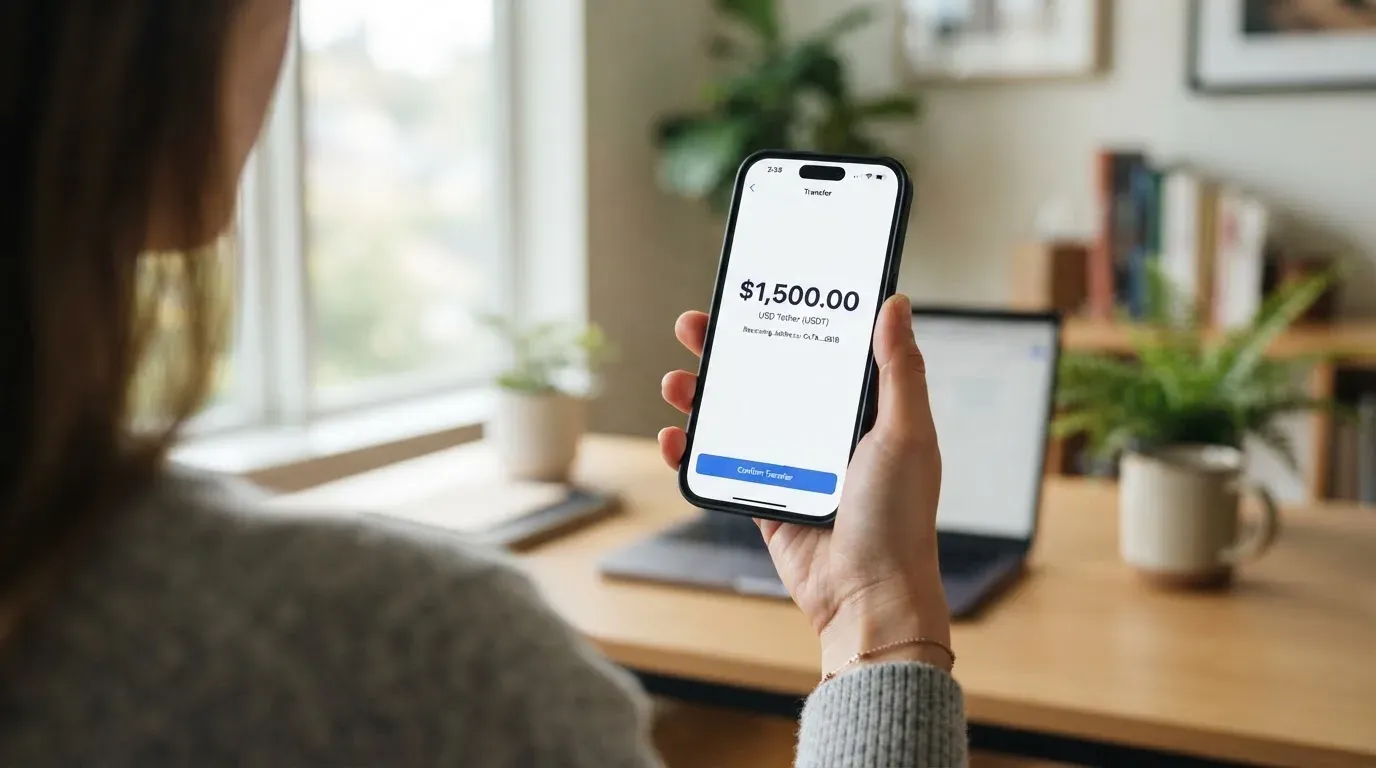
Will they give you the card?
Short answer: the official pages do not say. There is no country list, no statement about citizenship, no mention of residence requirements and no exclusions I could find. That is the whole answer, and I am not going to pad it with an inference.
What the App Store listing does say is that the card works in “more than 176 countries”. I read that wording carefully, because it is the kind of sentence that gets quoted as “available in 176 countries” and then repeated by people who assume it means what it does not. Acceptance is a merchant-side fact: a shop abroad can take the card. Eligibility is an issuer-side fact: whether your identity will be opened. A card can be accepted in a country where nobody may sign up from it, and that is not a contradiction, it is just two different tables.
The second thing to check is that identity verification exists at all, and at what level. The card’s public pages do not state their KYC requirements. Not “we don’t need documents” — they simply do not publish it. And here the category background matters: KYC is not a favour the card does you. EU rules require regulated firms to collect name, address, date of birth, nationality and identity documents, run a sanctions check, work out the purpose of the relationship, and establish whether you are a politically exposed person. In the US, the customer identification programme requires name, date of birth, address and an identification number. Nationality is screened separately from residence, because sanctions lists and issuer risk policy are applied to citizenship and country of birth, not just to your address.
So if you are in a country with its own crypto rules, or you hold citizenship somewhere that appears on a sanctions list, the answer will depend on a screening process that this card has not described. Ask the operator directly and get it in writing before you move any money. I cannot tell you how to work around a screening outcome, and I would not try to.
The audience the card actually seems built for is narrower than the “176 countries” line suggests: people who already use the HyperPay wallet and want its balance on a prepaid card. If you are starting from zero, you are adopting a wallet and a card at the same time, and you are doing both without a fee schedule.
How to get it
The mechanics are thin on official pages, so here is exactly what exists and what does not. There is no official description of the application flow, no official statement of what documents are required, no official delivery time, and no statement of how many identity-check levels exist.
The unofficial picture comes from a HyperPay tutorial published on Medium, undated, and I am labelling it that way because the card has not confirmed it. According to it, after you pay, your status changes to “Applying” while a bank reviews, approval can take up to 24 hours on working days, and activation is then immediate. That is a useful shape to expect — a payment, then a review, then a working card — but two things in it deserve attention. First, a bank is doing the review, and the card does not name that bank anywhere I could read. Second, “Applying” for up to a day means your money is committed while a decision is pending, and the page says nothing about what happens to that payment if the application is declined.
The card itself is a prepaid “HyperCard” with the balance in USD or EUR. The App Store page does not name the card network, so I cannot tell you whether it runs on Visa or Mastercard, and that matters more than it sounds: it decides which merchants will take it, which online authorisation flows apply, and what happens at a terminal abroad. Delivery is not stated either — whether the physical card comes in the post, or whether you get only app numbers, is not something the public pages tell you.
| What you would want to know | What the public pages say |
|---|---|
| Countries eligible | Not stated |
| Documents needed for KYC | Not stated |
| Number of KYC levels | Not stated |
| Card network | Not stated |
| Balance currency | USD or EUR |
| Delivery of the physical card | Not stated |
| Approval timing | Unofficial: up to 24 hours on working days |
| Android availability | Not stated |
That last row deserves a beat. The app is iOS as far as the public information goes; Google Play availability is not stated. If your phone is Android, you are already blocked at step one, and no fee arrangement will change that.
Fees: what it really costs
Here is the honest situation: I could not find a fee schedule. The App Store page lists no fees, and the official pages say nothing about what a payment costs, what a conversion costs, what a foreign-currency payment costs, or what the ATM allowance is. If you spend from this card without asking first, you are spending without knowing the price of the transaction.

What circulates unofficial, from an undated HyperPay Medium tutorial, is that there is a “0 KYC fee”, no annual fee and no transaction fee for certain cards. Note the shape of that sentence — “for certain cards” leaves the door open that other cards in the same family do charge. And it is a tutorial, not a tariff.
| Fee or limit | What is stated |
|---|---|
| Issuance | Not stated |
| Monthly fee | Not stated |
| Conversion fee | Not stated |
| Foreign-exchange fee | Not stated |
| ATM fee | Not stated; “tens of thousands of ATMs worldwide accept it” |
| Daily spending limit | Not stated officially; unofficial wording: “50,000 US dollars / no limit” |
| Monthly limits | Not stated |
Now let me take three ordinary payments and walk through which fees could apply. This is the exercise I would do before tapping the card, because each of these hits a different unknown.
A coffee, in the currency of the country you are standing in. If your card balance is USD and you pay in euros, something has to change hands at a rate. Who absorbs the spread — you or the card — is exactly the FX fee the pages do not state. You may also be paying a conversion fee if the provider converts crypto into fiat at the point of sale rather than at top-up. Two unpublished numbers, stacked, on the smallest purchase you make all week.
An online subscription, priced in dollars, while your balance is in euros. If the balance is already euro-denominated, the FX layer may not apply, but the online payment still runs through the card network’s authorisation rules. Some merchants decline prepaid or foreign-issued cards outright because the BIN lookup shows the card type and issuer country. Address verification is another trap: the address check that compares the street number and postal code you type against issuer records is mostly offered in the US, Canada and the UK and is generally unavailable for foreign-issued cards, which produces declines rather than fraud. A declined payment can also leave a hold on your money for several days.
Withdrawal from an ATM in cash. The card claims acceptance at “tens of thousands of ATMs worldwide” and states neither the fee nor the allowance. The network charges for ATM access, and any ATM operator sets its own surcharge on top. With no published allowance, you have no idea how many free withdrawals you have before charges start, or whether there is a minimum.
One more charge that is not the card’s and still lands on you: the blockchain network fee for your deposit. On-chain gas or bandwidth is charged by the network, not by the card provider, so it never appears in a card fee table and is easy to forget when budgeting a top-up.
My advice is narrow and practical. Ask the operator for the current tariff in writing, ask which network the card runs on, and run one small transaction on each of the three paths above before you depend on it. A card you cannot price is not free; it is unpriced.
How to top it up
The mechanism is the one part of the card that is described plainly. You deposit crypto — USDT, BTC or ETH are the examples given — in the app, and it is converted to USD or EUR on the card. The card then spends that fiat balance. That is the prepaid model: you load a balance first, and the card can only spend what is loaded, so it cannot overdraw.
What is not stated is the network, and that omission is more consequential than it looks. USDT, for instance, exists on Ethereum, Tron, Solana, Polygon, Avalanche and others. Send it on the chain the provider expects and it works; send it on a chain they do not support, or to an address belonging to another network, and blockchain transfers are irreversible. The funds can be lost outright, or recovered only through manual support work with no guarantee. Add to that the well-known ERC-20 detail: gas on Ethereum is paid in ETH, so a wallet holding USDT and nothing else cannot send. On Tron, fees are paid through bandwidth and energy, often burning TRX.
Whether the conversion happens at the moment you deposit, at the moment you spend, or on a schedule is not stated, and the difference is real: it decides whose rate you get and how long your money is exposed to a moving market. Whether withdrawals from the card balance are possible at all is also not stated — a search for “how to withdraw money from HyperCard” is one of the commonest queries, and the public pages do not answer it.
A few background points that shape your expectations. USDT and USDC are dollar-pegged, and the BIS in July 2025 put roughly 90% of stablecoin market capitalisation in those two. Circle says USDC is redeemable 1:1 for USD and fully backed by cash and cash equivalents with monthly reserve attestations. Tether describes USDT as a token built on multiple blockchains with reserves intended to back it one-to-one. None of that makes a stablecoin free of risk: TerraUSD collapsed in May 2022, and USDC temporarily lost its peg in March 2023 during the US banking crisis. Nor are they censorship-proof — Tether says it disables tokens in wallets on the OFAC sanctions list and has frozen funds tied to illicit activity.
So: check the network before you press send, keep a small buffer of the gas coin, and expect the conversion rate to be whatever the operator gives you.
Paying with it every day
Day-to-day, the card behaves like a prepaid card in the ordinary sense: you load it, you spend it, and it runs out. Apple Pay and Google Pay are both supported, which is where most of the everyday convenience lives. The kind of card is not named — no “virtual” or “physical” designation appears in the public pages — and that is a small mystery that matters if you wanted a card number to paste into a form rather than tap.
Wallets, cashback and rewards are all not stated. That last one is worth a second look, because rewards are the usual reason a crypto card prices its fees at zero. If a card charges nothing per transaction, it has to earn somewhere, and the answer is frequently cashback, spread or interchange. I am not alleging anything about this card in particular; I am saying that a fee of zero with no rewards programme and no FX disclosure is a set of terms I would want explained rather than assumed.
The everyday practicalities that catch people:
- Apple Pay replaces the card number with a device-specific number held in the Secure Element, never on Apple’s servers, and each payment uses a one-time code. That is a genuine security improvement over a magnetic stripe, and it is also a way for a shop to decline your card if you try to pay with the physical card online.
- Online payments may raise a 3-D Secure challenge, where the issuer assesses the risk and either approves without friction or asks for a one-time code or biometric. Visa’s brand is Visa Secure, Mastercard’s is Identity Check. On a card with no named network, you cannot predict which flow you will meet.
- Merchant category codes matter more than people expect. MCC 7995 covers gambling, and many issuers block that category on specific cards by policy rather than by law, with the blocked list differing by issuer. If gambling is part of your spending, you need to know this card’s policy, and it is not published.
- Declines leave holds. A refused authorisation can tie up funds for days.
Where the balance sits is not stated. The wallet is described as off-chain (exchange, multi-signature) with an on-chain option for importing a private key, but whether your card balance is custodial — held by the provider — is not said. That single fact determines what happens if the company behind it stops answering you.
What can go wrong
This is the section where the card’s rating drags the whole score down, and I want to be careful to separate what users report from what the card has confirmed.
No official incident was found — no dated licence or issuer event, no announced breach. But the user record is consistent and it is not good. App Store reviews accuse the app of being a scam, citing unexpected credit card charges, withdrawal problems and automated support. A Justuseapp aggregate of 135 reviews is two-thirds negative, with reports of a BTC balance stuck in “reviewing” for three days, failed deposits and unreachable support; those dates are not shown, so I cannot tell you whether the complaints are current or historical. The App Store themes are the same three: scam accusations and unexpected charges, deposit and withdrawal problems, support that is automated or unreachable. No Trustpilot page was found, which means the complaints are not corroborated by a second large public source — and it also means there is no bigger pile of them, which is not the same thing as reassurance.
The company layer is thin. The App developer is CIPHERBC PTE. LTD., and the copyright line reads HYPER BC PTE. LTD. The issuing bank and licences are not stated. In this category that is the single most important gap, and here is why. A crypto card typically rests on two licences: the card itself is a payment service regulated under e-money or payment-services law, while the crypto side — custody, exchange, transfer — sits under markets-in-crypto rules. MiCA, the EU’s crypto regulation, took legal effect in June 2023; its rules on asset-referenced tokens and e-money tokens applied from 30 June 2024 and the remaining provisions, including crypto-asset service provider rules, from 30 December 2024. Under MiCA, e-money tokens may be issued only by a credit institution or an electronic money institution. Providers operating under national law could continue only until 1 July 2026, or until a MiCA authorisation was granted or refused, whichever came first, and ESMA keeps an interim register you can check a provider against. So a card can be entirely legal and still be the wrong choice for you — but you cannot tell which, from public pages that name no issuer and no licence.
There is one nameable rebranding to note: the brand was renamed HyperPay to HPX, and hyperpay.tech now redirects to the company’s new site. Redirects are ordinary in this industry and mean nothing on their own; I mention it because you will meet both names while searching, and because a rebrand is a moment when licence and issuer details are supposed to be restated clearly.
Support is in-app only: a “Help Center” and “My Work Order”, plus a Telegram “Contact Us” group per a developer response. Languages and hours are not stated. If your money is stuck in “reviewing” on a Friday night, the quality of that channel is the difference between a bad week and a lost balance.
| Risk | What I can actually tell you |
|---|---|
| Issuer and licence | Not stated — you cannot verify the card against a regulator from public pages |
| Unexpected charges | Named as a recurring user complaint, unconfirmed by the card |
| Deposits failing | Named as a recurring user complaint, unconfirmed by the card |
| Withdrawals not arriving | Named as a recurring user complaint, unconfirmed by the card |
| Support quality | In-app Help Center, work orders, Telegram group; hours and languages not stated |
| Reversibility of crypto transfers | None by design — blockchain transfers are irreversible |
| Programme closure | Real in this category: WaveCrest’s Visa programmes were shut down by Visa in Europe in 2018, and Visa terminated its global agreements with FTX on 13 November 2022 |
| Chargeback protection | Not stated; prepaid-card coverage varies and should not be assumed |
That closure row is not a scare tactic about this card specifically. Programme shutdowns happen in this category with a documented pattern: a notice period, then spending and loading stop, then users are asked to withdraw remaining balances. I found one 2026 closure reported by a single secondary source — new loads ended 8 July 2026 and spending stopped 8 August 2026 — which I am passing on as unconfirmed, purely to show the shape such an event takes.
What to take instead
None of these is a recommendation, and all of them have gaps of their own. I include them because comparing a thin disclosure against a fuller one is the fastest way to see which gaps you can live with. All scores are mine on the same ten-point scale.
CardFlow — 4.9 / 10. Aimed at Nigeria, describing itself as “Nigeria’s smartest fintech card platform” for “Nigerians and global users”, with no country list or exclusions stated. A virtual USD Mastercard created in three minutes; creating a virtual card is “completely free” per the site FAQ, but no monthly fee is stated and transaction fees are not stated either. Funded by Bitcoin, USDT, ETH or a Naira bank transfer, networks not stated. Rewards not stated. Its appeal is speed and a named network; its weakness is that it is built for one market and its pricing is as unpublished as HyperCard’s.
Card.fi — 6.6 / 10, the most fully documented of the three. Cards ship to “200+ countries”, and the terms bar residents of, or orders from, a country subject to sanctions that would prohibit the service; beyond that there is no citizenship-versus-residence rule stated. Virtual Classic and Virtual Premium, physical Classic and Premium, and a stainless-steel metal version, with a virtual card included in every physical order; cards are issued “under licence from the relevant card schemes”, with Visa and Mastercard not named, and the card currency not stated. Pricing is explicit: Virtual Classic $49 one-time, Virtual Premium $249 one-time, physical and metal prices not listed, and no monthly, annual, inactivity or minimum-balance fee. Fees: top-up 1.5% plus $1.00 on Classic and 1% on Premium, FX 3.5% on Classic and 2.5% on Premium, with the conversion fee shown before each top-up. Funding covers 32 coins across 5 networks — Ethereum, Base, BNB Chain, Solana and Kaanch — including USDT, USDC, ETH, BNB, SOL and KAANCH, with a deposit address per card, conversion at market rate on arrival, and an explicit warning that the wrong chain risks permanent loss. Rewards are cashback on card spending only: Classic 0.8% capped at 10 USDT a month, Premium 1%, Metal 1.2% capped at 100 USDT a month and 5,000 USDT, or 2% capped at 250 USDT a month and 20,000 USDT; a headline 10% at coffee shops capped at 10 USDT a month, and “up to 18%” on balances on Metal, variable.
Nero — 4.8 / 10. Eligibility is not stated on the readable pages; the site says restricted countries exist but the list was not read, and no statement about Russian or Belarusian citizens or residents was found. A virtual card with a standard number, expiry and CVC, network not named, currency not stated. A one-time issuance fee with the amount not stated and no monthly fee stated. Top-up commission 4%, conversion to fiat at the moment of payment, FX fee not stated. Funded with USDT or USDC, with networks not confirmed on the readable pages. Rewards not stated.
Read that list as a whole and the lesson is about disclosure rather than about any one product. Card.fi tells you what it charges before you charge it; HyperCard tells you almost nothing. If your reason for wanting a crypto card is that you have a balance you need to spend, the second product may serve you better even at 6.6 than the first at 4.7. And note what none of the three does: none of them tells you plainly which bank stands behind the card.
| HyperCard | CardFlow | Card.fi | Nero | |
|---|---|---|---|---|
| Score | 4.7 / 10 | 4.9 / 10 | 6.6 / 10 | 4.8 / 10 |
| Eligibility | Not stated | Nigeria-focused, no list | “200+ countries”, sanctions bar | Not stated; restricted countries exist |
| Card type | Prepaid, network not named | Virtual USD Mastercard | Virtual, physical, metal; scheme licence not named | Virtual, network not named |
| Issuance cost | Not stated | Free virtual | $49 / $249 for virtual tiers | One-time, amount not stated |
| Transaction or FX fees | Not stated | Not stated | Top-up 1.5% + $1.00 / 1%; FX 3.5% / 2.5% | Top-up 4%; FX not stated |
| Funding | USDT, BTC, ETH; networks not stated | BTC, USDT, ETH, Naira transfer | 32 coins, 5 networks, named | USDT, USDC; networks not confirmed |
| Rewards | Not stated | Not stated | Cashback tiers and balance rates | Not stated |
Who I would recommend it to
I would recommend HyperCard to one kind of person specifically: someone already inside the HyperPay wallet who wants to move that balance onto a prepaid card in USD or EUR, and who treats the card as one tool among several rather than as a main bank account. For that person, the mechanics are simple, the balance model is safe from overdrawing, and tapping to pay in Apple Pay or Google Pay is a real convenience.
To everyone else I would say: not yet, or not without answers. The pattern of complaints in the App Store — unexpected charges, deposits that fail, a balance stuck in review, support that does not respond — is exactly the pattern that makes a card unusable at the moment you need it. And the missing issuer is not paperwork pedantry. In this category the crypto brand is often only a programme manager or front-end, while a bank or licensed e-money institution actually holds the card programme and must safeguard customer funds, whether by segregating them in dedicated accounts or insuring them; those funds are not bank deposits and may not sit under a deposit guarantee scheme. An electronic money institution can issue e-money and cards across the EU from a licence granted in one member state; a crypto card often depends on two licences, one on the crypto side and one on the payments side. If you cannot see either one, you do not know who you are banking with.
So the checklist, in order. Who is the issuing bank, and what licence is it operating under — check the relevant register. What does a payment cost in total, including conversion and FX. Which network do I send USDT on. What happens to my balance if the programme shuts down. If the operator will not answer the first question clearly, the other three do not matter.
None of that makes the card a fraud — I found no official incident, and I would be overstating my evidence to say otherwise. It makes it a card I would fund with an amount I could afford to be uncomfortable about, which is a different and more useful judgment.
Frequently asked questions
What is HyperCard card?
HyperCard is a prepaid payment card offered through the HyperPay app, with its balance held in USD or EUR rather than in crypto. You load it by depositing crypto such as USDT, BTC or ETH, which the app converts, and then you spend the fiat balance as you would any prepaid card. The card’s public pages do not name the card network or the issuing bank.
How does HyperCard card work?
It works on the pre-loaded balance model. You convert or top up a balance first, and the card can only spend what is loaded, so it cannot overdraw. Payments work through Apple Pay and Google Pay, and the listing says tens of thousands of ATMs worldwide accept the card. Whether the crypto converts on deposit or on spending is not stated.
Is HyperCard a bank?
The public pages do not say, and that is the important part. The App developer is CIPHERBC PTE. LTD. and the copyright line reads HYPER BC PTE. LTD., but no issuing bank and no licences are named. In this category the crypto brand is usually only a programme manager, with a licensed bank or e-money institution holding the card programme.
Who owns HyperCard?
The app is listed under CIPHERBC PTE. LTD. The brand HyperPay was renamed to HPX, and hyperpay.tech now redirects to the company’s new site. I found no dated licence or issuer events that would tell you more about ownership, and no Trustpilot page that would add a second view of its reputation.
Does HyperCard require KYC?
The card’s official pages do not state its identity requirements, and an unofficial HyperPay tutorial mentions a status of “Applying” while a bank reviews, with approval taking up to 24 hours on working days. Since EU and US rules require regulated firms to verify identity, nationality and sanctions status, you should assume some verification exists and ask what documents are needed.
How much does HyperCard cost?
The App Store page lists no fees and the official pages publish no tariff, so issuance, monthly, conversion and foreign-exchange fees are all not stated. Unofficial material mentions a “0 KYC fee” and no annual or transaction fee for certain cards. I would not treat any of that as a price you can rely on without confirmation in writing.
Is HyperCard card safe?
Safety here splits into two questions. Card security is ordinary — tokenised mobile wallets and one-time codes are used — but custody of your balance is not stated, so I cannot tell you who holds your money. The complaint record is the bigger concern: App Store reviews accuse it of unexpected charges, failed deposits and unreachable automated support, with a 3.3 rating from 135 ratings.
Which network do I send USDT on for HyperCard?
The card’s public pages do not name a supported network, and that is the first thing to ask before depositing anything. USDT exists on Ethereum, Tron, Solana, Polygon, Avalanche and others, and blockchain transfers are irreversible, so the wrong chain can mean losing the deposit or needing manual recovery with no guarantee.
Can I withdraw money from HyperCard?
The public pages do not say whether a balance withdrawal is possible, and withdrawal problems are among the most common user complaints about the app. That combination is why I would load only what you can spend rather than treating the card balance as savings.
Is HyperCard worth it?
For someone already holding a HyperPay balance who just wants it on a prepaid card, the mechanics are straightforward and the score of 4.7 out of 10 reflects missing information rather than a broken product. For anyone choosing a crypto card for the first time, the absent issuer, absent fee schedule and absent answer on eligibility make it hard to justify against a card that publishes its prices before you commit.
Virtual cards: your questions answered – cryptocardanswers
Content created by the «cryptocardanswers» team