
A Gulf-facing Visa card on a USDT balance, with free fees and an unresolved issuer question
 Available in US
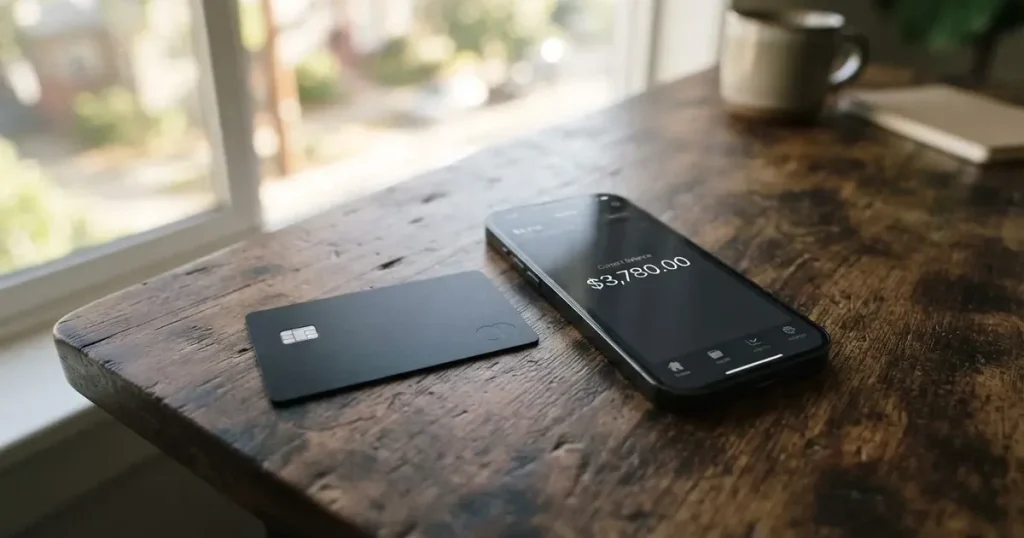
Kem is a Visa card that spends a balance you load with Tether, marketed mainly to people in Gulf countries who hold USDT and want to spend it like ordinary money. On paper it is one of the cheapest cards in this category: no issuance fee, no monthly or annual fee, and the company says no FX fees. What stops it scoring higher is not the pricing. It is that the card’s own pages say surprisingly little about who issues the card, what the conversion actually costs, which networks you can deposit on, and how long verification takes — while the small number of public reviews that exist are close to uniformly bad.
I read all of this as someone deciding whether to try it, not as someone who has used it. Everything below is what the card’s public pages state, what third-party reviewers report, and how those two fit together. Where the official pages are silent I say so, and I flag unofficial claims as unofficial.
Conditions described here are current as of October 28, 2026.
Verdict: 5.8 out of 10
The number is not a rounding of something better or worse; it is the sum of six separate marks, and they pull in opposite directions. Two of them are good, one is middling, and one is poor.
| Criterion | Mark | Why |
|---|---|---|
| Who can get it | 6 / 10 | Visa is accepted in 150+ countries and the card is marketed to residents of Kuwait, Bahrain, UAE and Qatar; a 13-country restricted list comes from starting data, not from the card’s blog page |
| Cost | 8 / 10 | No issuance fee, no monthly or annual fee, “No FX fees”; a 1% conversion figure appears in starting data but is not confirmed on the page; unofficial sources say ATM and top-up are free |
| Top-up options | 4 / 10 | USDT from any wallet or exchange, plus gold and crypto swaps to USDT in the app, but no networks are named |
| Reliability and complaints | 3 / 10 | Operator is KEM TECHNOLOGIES HOLDING (ADGM), while issuer and licences are not named; Trustpilot shows 2.5 out of 5, with complaints about failed withdrawals and unanswered support, and KYC reported as taking up to 4 weeks |
| Everyday use | 7 / 10 | Virtual card immediately, physical card on request, tap-to-pay; unofficial sources say Apple Pay works and Google Pay is unsupported |
| Total | 5.8 / 10 |
Read as a person rather than as a table, the fit is narrower than the 5.8 suggests in either direction. If you are a resident of Kuwait, Bahrain, UAE or Qatar, you hold USDT, and you want a plain Visa to spend it without a monthly charge, this is one of the more logical cards to look at. If you are anywhere else and are hoping a Gulf card will simply work for you, the marketing emphasis on Gulf residents is a warning: the card is built around that base, its support hours and languages are not published, and the restricted-country list exists even if the current version of the site does not show it.
The score is held down by the weakest dimension, reliability, not by the price. A free card that works is more valuable than a cheap card that stalls, and the complaints I found are about stalling.
Will they give you the card?
The short answer is: probably, if you are in the intended market, and it starts with an identity check that the card’s own documentation barely describes.
Usable wherever Visa is accepted — the card’s blog puts this at “150+ countries”. Marketing is aimed at residents of Kuwait, Bahrain, UAE and Qatar. There is a restricted-country list too: Belarus, China, Cuba, India, Iran, Iraq, Israel, Russia, Syria, Turkey, Ukraine, Venezuela and Vietnam. That list comes from the starting data rather than from the blog page, so I would not treat the current thirteen names as the card’s live policy without asking them directly. Age requirements, proof of address and which documents qualify are not stated on the public pages.
None of this is unusual in itself. Cards in this category generally go to adults, and eligibility rules based on residence rather than citizenship are common. What I would want to know before applying is whether your country of residence appears anywhere in the onboarding flow — because a card you cannot open is not a backup plan.
How to get it
You sign up in the app and “provide your identity documents for KYC verification”. That sentence is the whole official process description. Which documents count, whether a proof of address is required, and the minimum age: not stated.
The card itself is a Visa. You get a virtual card immediately and a physical card “available upon request”, with tap-to-pay. The card’s currency is not stated by the official page. Delivery countries, delivery time, delivery cost and replacement terms for a lost or stolen card are also not stated — which, for a card aimed at people who may not be in the country it was issued from, is a real gap.
On KYC, an unofficial source (cryptocards.so, 2026) describes the requirements as email, phone, ID, proof of address and a selfie, claims setup in under 3 minutes, and in the same breath reports reviewers seeing delays of up to four weeks. Both halves of that come from third-party sites, not from Kem. Nobody should count on a three-minute setup time; the four-week reports are the ones that would hurt.
Fees and what a payment really costs
This is the strongest part of the card, and the part where I have the least to criticise — provided you accept that the card’s public fee information is admittedly thin.

- Issuance: no fee. “No issuance fees.”
- Monthly and annual: none. “no monthly or annual fees”.
- FX: “No FX fees”, stated in the blog introduction.
- Conversion: a 1% figure on purchases appears in the starting data but is not confirmed on the card’s page.
- ATM, top-up and declined-payment fees: listed as free by an unofficial source; the card itself notes that public fee information is limited.
- Limits: daily spend, monthly spend and ATM are shown as “Unlimited” by an unofficial source. Officially: not stated.
- Tiers: none published. There is a single card named “Kem Infinity Card”.
- Card currency: not stated officially. The App Store lists swaps between crypto and gold, KWD, SAR and AED, and an unofficial source says KWD, SAR and AED are supported.
| Fee or limit | What the card says |
|---|---|
| Issuance | No issuance fee |
| Monthly / annual | No monthly or annual fee |
| Conversion | 1% on purchases per starting data; not confirmed on the page |
| FX | “No FX fees” |
| ATM | Free, withdrawals unlimited (unofficial) |
| Top-up | Free (unofficial) |
| Declined payment | Free (unofficial) |
| Daily / monthly limits | “Unlimited” (unofficial); not stated officially |
| Card currency | Not stated officially; KWD, SAR, AED listed as supported (unofficial) |
Three everyday payments, so this is concrete rather than abstract:
A coffee in Kuwait paid from a KWD balance — if your balance is already in the currency you are spending in, there is no FX fee and no conversion to argue about. This is the case the card is built for, and it is the one that costs you nothing.
The same coffee paid from a USDT balance — here the 1% figure from the starting data would apply if it is accurate. On a small purchase this is invisible; over a month of daily spending it becomes the number that actually matters, more than the absent monthly fee ever was. I would not spend at scale until you have seen one real conversion in your own account history and can price it.
A purchase in a currency you hold none of, in a country that is not one of the four Gulf markets — this is where a card issued in one country can look foreign to a merchant. Merchants can look up the issuing institution from the card’s first digits and apply extra scrutiny when the issuer country differs from the billing address. Declines at unfamiliar merchants, or a hold on your balance for a declined authorisation that can linger several days, are the realistic failure modes here.
One more everyday cost that never appears on a fee list: if you top up from a crypto wallet, the blockchain charges its own network fee for the deposit, and that fee is set by the network, not by Kem. On the Ethereum network, for example, fees are paid only in ETH, which means a wallet holding USDT but no ETH cannot send at all.
How to Top up the card
“Deposit Tether from any wallet or exchange to your Kem balance” — that is the funding line, and before spending you can swap gold or crypto to USDT inside the app.
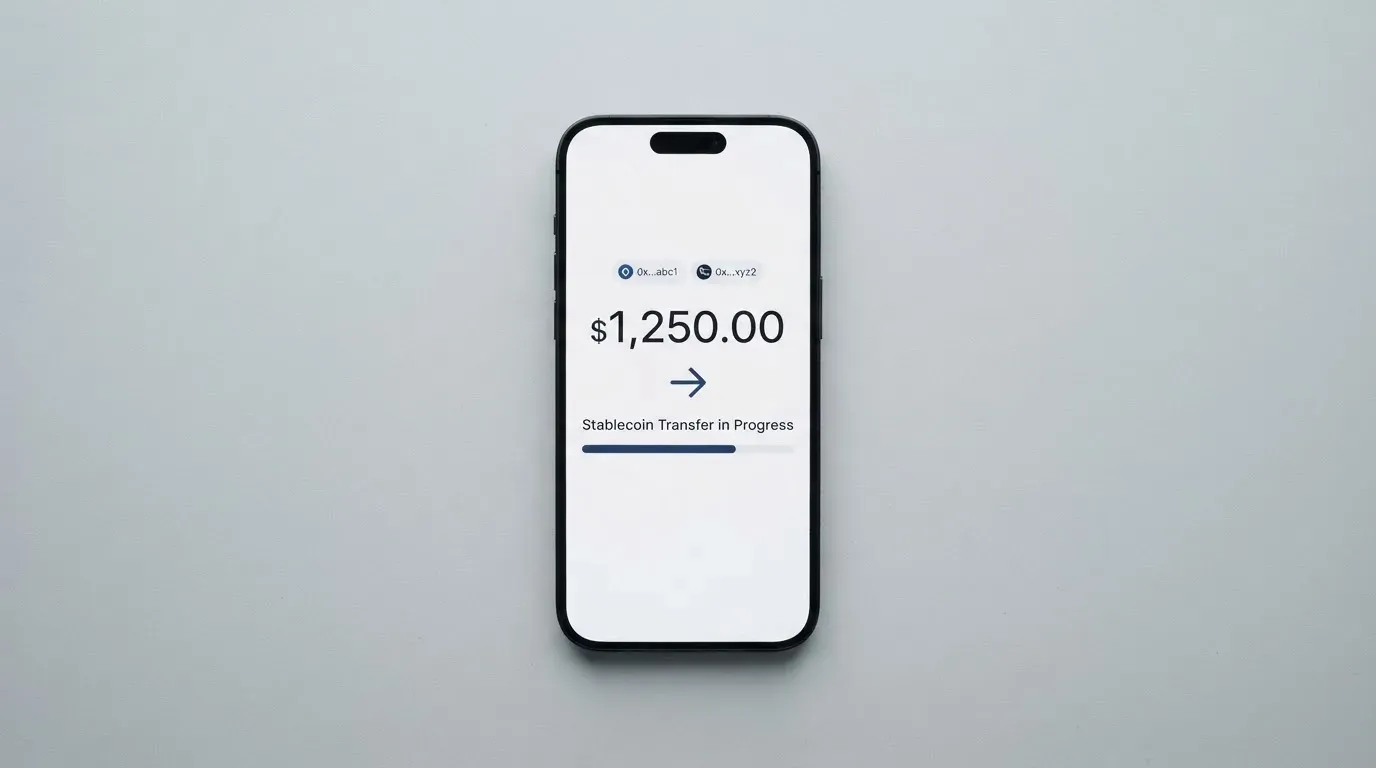
Here is the problem in one sentence: no networks are named. Which chain you must send USDT on is the single most consequential thing to know before you send anything, because blockchain transfers are irreversible, and a deposit sent on a network the provider does not support, or to an address belonging to another network, can be lost or require manual recovery with no guarantee of success.
USDT exists on several chains — Ethereum, Tron, Solana, Polygon, Avalanche and others — and they are not interchangeable. Sending on the wrong one is a mistake people make constantly. The App Store listing adds that transfers and withdrawals “may be subject to review or network delays”. Fees, minimums, and whether you or the provider pay the network fee: not stated. A third party quoting Kem’s FAQ mentions variable network and administrative fees for external withdrawals, which suggests that at least some cost exists somewhere outside the app.
My advice, before you send a single dollar: open a support ticket and get the supported networks written down in writing. The score of 4 out of 10 for top-up is not about the mechanism, which is standard, but about the absence of the one fact you cannot afford to be missing.
Paying with it every day
Virtual card immediately, physical card on request, tap-to-pay. That is the official daily-use picture, and it is enough to live on.
Apple Pay and Google Pay: not stated on the blog. Unofficial sources say Apple Pay is supported and Google Pay is marked unsupported, with one user reporting that Google Wallet works anyway. Blocked merchant categories are also not stated, which is worth asking about if you intend to spend in a category that card issuers commonly restrict.
Rewards: not stated by the official page. Unofficial sources say there is no cashback and no welcome or referral bonus, and that staking runs at 5.5% APR. I would treat the staking figure as the kind of number that needs its terms read before you count on it.
The app is on iOS and Android. The App Store shows 4.2 out of 5 from 31 ratings as I read it on 2026-10-21. Thirty-one ratings is a very small sample, and Google Play was not read, so I would not treat the score as a settled verdict on the app’s reliability.
Two more everyday things that are unstated and that you will notice only when they go wrong. The card issuer can restrict a tokenised number — for example blocking it on phone or website use — so if Apple Pay stops working, that is a possibility rather than a mystery. And address verification, which compares the numeric parts of the billing address you type with the issuer’s records, is mainly offered in the US, Canada and the UK and is generally unavailable for foreign-issued cards, which can cause declines at checkout for no visible reason.
What can go wrong
No official incidents are recorded. The problems come from users, and they cluster around one theme: money that does not move and support that does not answer.
- Failed withdrawals and stuck funds, reported on Google Play and review aggregators in 2026, with failed withdrawals specifically reported for October–November 2025.
- Deductions on failed transactions.
- No support replies, also October–November 2025.
- KYC waits of up to four weeks, and cards still pending after verification completed, reported December 2025.
- Scam allegations spanning October 2025 to April 2026 — allegations, not findings, but the kind of thing that makes a small provider worth approaching carefully.
- Trustpilot shows 2.5 out of 5 from five reviews, all of them one-star, as I read it on 2026-10-21. Five reviews is not a statistically meaningful sample of anything; it is a signal that the people who felt strongly enough to write did not feel well.
The company behind it: the operator is KEM TECHNOLOGIES HOLDING Ltd in the Abu Dhabi Global Market, company number 000008598. The App Store seller is KEM Company for Electronic Payment and Settlement Services, with developer KEM LLC. The card says plainly that “Kem is a crypto financial platform, not a bank”. The card issuer and its licences are not stated. A Czech entity, Kemfinity s.r.o., appears in starting data and third-party material only.
That last group of facts is the one I would not skip. A card number works because a licensed issuer holds a programme with Visa or Mastercard, and the crypto brand is often only a programme manager or front end. Visa and Mastercard do not themselves issue crypto cards to consumers — they license issuers and can suspend a programme. So the entity that actually owes you money when a payment goes wrong is the part of this picture that is missing from the public pages.
Other risk facts worth holding: the app balance is custodial, meaning Kem holds the credentials and you trust it completely. A PCI DSS badge is shown, assessed by ControlCase, but 2FA, card freeze and safeguarding arrangements are not stated. Support runs through the Kem contact page, with no languages or hours published. The blog says Tether “has invested directly in Kem”, and no dated events were found. And the broader category has a history worth remembering: custodial platforms have failed before, at Mt. Gox, Coincheck and Ronin, and stablecoins can lose their peg — TerraUSD collapsed in May 2022, and USDC wobbled in March 2023.
What none of this means is that Kem is unsafe. It means the safety question cannot be answered from the public pages, and for a card holding real money, an unanswerable question is itself the risk.
What to take instead
If the reason you are reading about Kem is that an ordinary bank card is hard to get where you live, or that your bank will not serve you, then the comparison below is the honest one. These are the alternatives I compared, with their own scores from the same exercise.
| Card | Score | Issuance / monthly | FX | Who it is for |
|---|---|---|---|---|
| Kem | 5.8 / 10 | None / none | “No FX fees”; conversion figure unconfirmed | Gulf residents spending USDT |
| Morse | 7.5 / 10 | Not stated / not stated; cardholder agreement warns fees may apply | Zero FX fees or markups, real-time Visa rate; paying with the card online and contactless is free | Residents of supported countries; virtual-only for now |
| International Visa Card | 6.7 / 10 | $5 one-time virtual / none on Classic; Pro $9.00/month, Max $19.00/month | Visa rate + 2% FX fee | Users outside a long restricted-country list |
| UNi Card | 6.1 / 10 | Issuance not stated / “No annual fee” | “No annual fee or foreign transaction fee”, live OTC rates | Multicurrency spending from a UNi.Global balance |
Morse scores highest of the four, and the reason is structural rather than promotional. It is fully virtual for now, a Visa prepaid debit that spends from a Morse Balance in any currency, and it charges zero foreign exchange fees or markups at the real-time Visa rate. Its wallet is self-custodial, which flips the central risk: the funds stay in your own wallet until the moment of payment, so key loss and provider failure are your problem rather than the provider’s. Eligibility is by residence, not citizenship — you must be at least 18 and resident in a supported country, with the app available in over 140 countries and local add/withdraw in over 70. It cannot serve customers subject to US sanctions, and a set of countries including the UK, Australia, Japan, Singapore, Switzerland and Türkiye is in closed beta behind an invite code. Deposits by debit card, stablecoin transfer and Account Details in USD, EUR, MXN, COP are available, with USDC, USDG and EURC via Solana free and other tokens or blockchains carrying a fee.
International Visa Card has a published restricted list that is longer than Kem’s in one direction and different in another: Belarus, mainland China, North Korea, Cuba, India, Iraq, Iran, Israel, Myanmar, Nepal, Nicaragua, Russia, Syria, Turkey, Ukraine, Venezuela, Vietnam are excluded, FATF grey-list countries are reviewed case by case, and purchases are blocked in seven countries. It is a US-issued Platinum Visa, virtual, paying in USD, with the physical card listed as coming soon. The 2% FX fee is the sharpest edge in this comparison — you pay it on every foreign-currency purchase.
UNi Card is a multicurrency card on the Mastercard network spending from a UNi.Global balance, with no annual fee, no foreign transaction fee, conversion at live over-the-counter rates, and spend-to-earn rewards up to 3%. Eligibility and funding routes are not stated on the pages I have, which is itself a reason to ask before committing.
Against all three, Kem’s genuine advantages are the absence of any issuance or monthly charge and its explicit Gulf focus. Against Morse specifically, it loses on custody and on having published a conversion number at all.
Who I would recommend it to
I would recommend Kem to someone in Kuwait, Bahrain, UAE or Qatar who already holds USDT, spends most of it locally, and wants a Visa without an account fee. For that person it is a sensible, cheap tool with a real gap between what it promises and what it has failed to publish — and the local focus is a feature, not a limitation.
I would not recommend it as your only card, or as the card holding money you cannot afford to have stuck. I would not recommend it to anyone who cannot get the supported networks confirmed in writing first, because that single unanswered question is enough to lose funds irreversibly. And I would hesitate for anyone whose main concern is support and reliability, given five one-star reviews and complaints about withdrawals that never arrived.
Before you apply, four things: get the supported deposit networks in writing; watch one real conversion and price it yourself; ask who the card issuer and its licence actually are; and keep a balance small enough that being stuck for a month would inconvenience you rather than hurt you.
Frequently asked questions
What is the Kem card?
Kem is a Visa payment card that spends a balance you fund with Tether (USDT), with an app on iOS and Android. You get a virtual card straight away and can request a physical one. It is marketed mainly to residents of Kuwait, Bahrain, UAE and Qatar, and the card states that Kem is a crypto financial platform, not a bank.
How does the Kem card work?
You deposit USDT into your Kem balance, optionally swapping gold or crypto to USDT in the app, and the card then spends that balance like a prepaid card. The card cannot overdraw because there is nothing to overdraw. Kem converts between your funding asset and whatever you pay in, at a conversion figure the public pages do not clearly confirm.
Is Kem a bank?
No, and the card says so itself: “Kem is a crypto financial platform, not a bank.” The operator is KEM TECHNOLOGIES HOLDING Ltd in the Abu Dhabi Global Market. The entity that actually issues the card and the licences it holds are not stated on the public pages, which is worth asking before you fund it.
How do I top up the Kem card?
You deposit USDT from any wallet or exchange to your Kem balance, and you can swap gold or crypto into USDT inside the app first. Fees, minimum amounts and who pays the network fee are not stated. Critically, no networks are named, so confirm which chain is supported before sending anything.
Can I use the Kem card in my country?
The card works wherever Visa is accepted, which the card’s blog puts at 150+ countries. Marketing is aimed at Gulf residents, and a 13-country restricted list exists in starting data but not on the current blog page. Run your own country by the onboarding flow before you assume, and do not treat the published list as live policy.
What are the Kem card’s fees?
There is no issuance fee, no monthly fee and no annual fee, and the card states “No FX fees”. A 1% conversion figure appears in starting data but is not confirmed on the page. Unofficial sources list ATM, top-up and declined-payment fees as free, and limits as unlimited, none of which the card itself publishes.
Is the Kem card safe to use?
It carries a PCI DSS badge assessed by ControlCase, and the balance is custodial, meaning Kem holds your credentials. Two-factor authentication, card freeze and safeguarding arrangements are not stated. Public reviews are thin and poor — Trustpilot shows 2.5 out of 5 from five one-star reviews — so treat safety as an open question rather than a answered one.
Does the Kem card require KYC, and how long does it take?
You sign up in the app and provide identity documents for KYC verification; the accepted documents, proof of address and age requirement are not stated. Unofficial sources claim setup in under three minutes while also reporting delays of up to four weeks. Plan on the longer figure if your money is on a deadline.
Can I add the Kem card to Apple Wallet or Google Pay?
The card’s blog does not say. Unofficial sources report Apple Pay is supported and Google Pay is marked unsupported, with one user saying Google Wallet works. If mobile wallet use matters to you, ask support directly rather than relying on third-party listings.
How do I withdraw money from Kem?
The card’s public pages do not describe withdrawal. The App Store listing notes that transfers and withdrawals “may be subject to review or network delays”, and users have reported withdrawals that failed outright in late 2025. Test a small withdrawal early, before you have a large balance sitting there.
App and neobank cards: your questions answered – cryptocardanswers
Content created by the «cryptocardanswers» team