
A free virtual Visa for stablecoin holders in Asia-Pacific — thin on everyday features
 Available in US
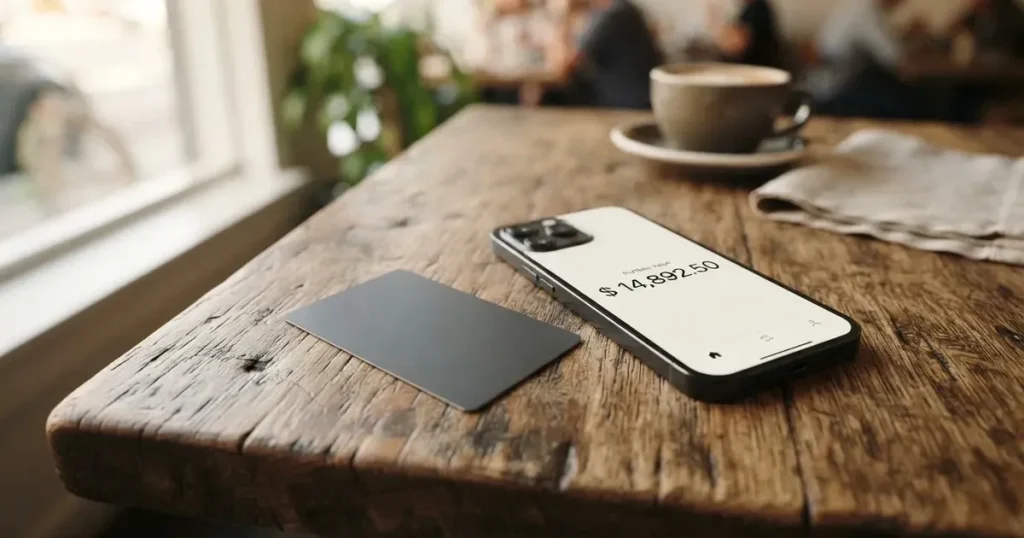
The Kite card is a prepaid Visa virtual card that you load with USDC or USDT and then spend like an ordinary payment card. On paper it is unusually cheap: no annual fee, no issuance fee, free spending in dollars, and a 0.53% top-up fee. In practice it is a virtual-only card, restricted to residents of nine Asia-Pacific countries, with no Apple Pay, no physical card and no ATM. My score is 5.9 out of 10 — a solid payment tool for a narrow group of people, and the wrong tool for everyone else.
The conditions described here are current as of October 28, 2026.
Verdict: 5.9 / 10 — good value, narrow reach
| Criterion | Score | Why |
|---|---|---|
| Who can get it | 4 / 10 | Card only for residents of Australia, Japan, Malaysia, Philippines, Singapore, South Korea, Taiwan, Thailand, Vietnam |
| Cost | 8 / 10 | Annual fee $0, issuance $0, virtual replacement free; top-up 0.53%; non-USD spend 1.8%, USD spend free, gas covered by Kite |
| Top-up options | 8 / 10 | USDT on Ethereum, Polygon, Arbitrum, BSC; USDC on Base, Ethereum, Polygon, Arbitrum, BSC |
| Reliability and complaints | 6 / 10 | Kite App Limited, Hong Kong, issuer not named in the terms (unofficial: DCS Card Centre Pte. Ltd.); no complaints found, App Store 5.0 from 8 ratings |
| Everyday use | 3 / 10 | Virtual Visa only, Google Pay available, Apple Pay not named, ATM “coming soon” |
| Total | 5.9 / 10 |
That table is the whole story, honestly. The two high marks are money: the card charges you almost nothing to hold or load. The one low mark is reach: nine countries, and you have to live in one of them. Everyday use scores 3 out of 10 because there is no plastic in your hand, no Apple Pay, and no cash machine.
So who does this suit? In my reading of it, the audience is Asia-Pacific residents who already hold USDC or USDT and want to spend them at ordinary shops without touching an exchange every time. If you keep stablecoins on several chains and travel or shop locally, the fee structure is genuinely attractive. The card balance sits in USD after topping up, so dollar spending is free, and only non-dollar spending pays the 1.8%.
And who does it not suit? If you need a physical card in your wallet, Apple Pay, cash withdrawals, or a card you can use from Europe or the Americas, this is not the product. If you are in the United States, Russia, Vietnam for anything other than residence there, or most of the rest of the world, you cannot get the card at all. The wallet itself is much wider — send and receive works in many more countries — but the card is the narrow part.
One thing to keep in mind before you fall for the score: the crypto wallet inside Kite is self-custodial, which is genuinely better than most, but the card balance is held with the card provider, and the issuer’s name is not published in Kite’s terms. That gap is why I do not score reliability higher.
Will they give you the card?
Short answer: only if you live in one of nine Asia-Pacific countries and are 18 or older with an identity document that passes verification.
Kite’s site says the service is “available in 46 countries” but does not publish the full list. The card itself is live in nine: Australia, Japan, Malaysia, the Philippines, Singapore, South Korea, Taiwan, Thailand and Vietnam. The distinction matters. Your crypto wallet can send and receive in many more places — India, Hong Kong, the UAE, Nigeria and Mexico are named among others — so you might be able to hold and move assets with Kite while being unable to hold the card. Card access follows residence, not citizenship, and the terms name only these nine countries for eligibility.
The verification is described as “Smart Verification” and the partner logos include Sumsub. There is a single KYC level, no tiers. What that means in practice is that you submit a government ID, a selfie or liveness check, and proof of address, and you are either through or you are not. Kite lists official rejection reasons, which is unusually helpful:
- a blurry photo of your ID
- a name on the ID that does not match your proof of address
- an expired ID, or one expiring within six months
- a selfie that does not match the ID
- an unsupported document type
- being under 18
- being a resident of a country the card does not support
Read that last line and the third line again. Country and age are not fixable by trying again with better paperwork. If you are in one of the nine countries and over 18, the rest is a document problem, and a document problem you can solve.
How to get it
The application is short, and Kite says sign-up and verification together take about 2 minutes. You install the app, verify your identity, and request the free virtual card. The card appears in the app once your verification and your “Get Card” request have cleared — there is no plastic arriving in the post, because a physical card is not mentioned anywhere in the public material.
What you get is the Stable Card, virtual, prepaid, with a balance in USD, spendable anywhere Visa is accepted and loadable into Google Pay. A second product, the Select Card, is marked “Soon” with no details, and the comparison page lists only the Stable Card. “Priority support” is mentioned on the site. The card currency itself is not stated in the public pages.
Replacement of a virtual card is free. Replacement of a physical card, if one ever arrives, would be subject to fair usage under the terms — a small thing to note now, since there is no physical card to lose yet.
My honest summary of the signup: the process looks painless, but the number of people behind it is eight, and an App Store rating of 5.0 from eight ratings is not a track record. That is not a warning so much as a fact to hold lightly. Nothing about the flow suggests difficulty; there is simply not much history in it.
What it really costs: Fees and limits
This is where Kite looks best. There is no annual fee and no issuance fee for the virtual card, and spending in USD costs nothing at all. The two fees you will actually meet are a 0.53% top-up fee and 1.8% on any purchase that is not in dollars. Network gas for a deposit is covered by Kite.
One caveat, and I want to be straight about it: a separate statistics block on the same page shows a “$100” annual fee. The page does not say which card that refers to, and the Stable Card itself is listed at $0. I take $0 as the real number for the card you can actually apply for, but I am telling you the contradiction exists because you would find it too.
Here is the full picture, with every figure as the card states it:
| Fee or limit | Value |
|---|---|
| Annual fee | $0 (a separate block shows $100, conflicting, unattributed) |
| Virtual card issuance | $0 |
| Virtual card replacement | Free |
| Inactivity fee | None currently; 30 days’ notice if introduced |
| Top-up fee | 0.53% of amount |
| Spending in USD | No fee |
| Spending in non-USD | 1.8%, plus possible FX fees |
| Crypto conversion fee | Not stated |
| Send/receive network fee | $0; gas covered by Kite |
| ATM | Not yet available, “coming soon”; limits not published |
| Daily spending limit | $50,000 and 50 transactions, reset 12:00 AM UTC+8 |
| Monthly and per-transaction limits | Not stated |
| Subscription tiers | None on the Stable Card; Select Card “coming soon” |
Now let me walk through three ordinary days, because that is where fees stop being a table and start being money.
Paying for a coffee in dollars. You top up 100 USDT, pay 0.53% — 53 cents — and your card balance holds 99.47 dollars’ worth. You buy a 4-dollar coffee in dollars. Nothing else is charged. This is the best case and, for anyone spending in dollars, the normal case.
Buying something priced in euros or yen. Same 100-USDT top-up, 0.53% fee, then a purchase in a non-dollar currency pays 1.8% on top of whatever the card network’s own exchange rate does to it. On a 50-euro purchase, 1.8% is 0.90 euros before any network spread. The card’s own pages mention possible additional FX fees on top of the 1.8%, and I have not read a rate table that quantifies them.
Withdrawing cash. You cannot, today. ATM is “coming soon” and no limits are published for when it arrives. If cash is part of your plan, this card currently does not do it at all.
Multi-currency balances are not stated, and the card balance and the wallet balance are separate pots. That separation is worth understanding before you deposit: money in the wallet is yours under your own keys; money loaded to the card sits with the card provider. If you are loading the card, you are choosing to hold a fiat balance with an issuer whose name is not published in the terms. An unofficial source names DCS Card Centre Pte. Ltd., a Singapore entity, as the issuer; treat that as unconfirmed.
How to Top up the card
Topping up is the part Kite does well. You load with USDC or USDT, and the card supports specific networks for each coin:
- USDT on Ethereum, Polygon, Arbitrum and BSC
- USDC on Base, Ethereum, Polygon, Arbitrum and BSC
The fee is 0.53% of the amount, and the conversion happens at a rate that is not guaranteed in advance — you are converting your stablecoin into a card balance, and the rate you get is the rate at the moment of conversion. Kite says the top-up takes <200s. Minimum top-up and top-up limits are not stated. Network gas is covered.
Underneath, the wallet is non-custodial: keys are split using TSS-MPC, you can back up with Google or Apple social login, you can export your private key, and Kite says it holds neither your funds nor your keys. That is the strong point of this product and it is a real one. The card side is different, and I covered that above.
Getting money back out is thinner than getting it in, and this is where I would slow down. Withdrawal of the card balance back to crypto is not described in the terms. The terms do say that on account closure you email [email protected], withdraw digital assets first, and have at least 30 days to withdraw on termination. Any remaining fiat balance on a cancelled card is handled under the separate cardholder agreement, which I have not read and which is the document that would actually govern your money in that moment. If being able to reverse the load matters to you, ask support for that agreement before you load.
Paying with it every day
Everyday use is the weak flank of this card, and it is worth being blunt about it. You add it to Google Pay and pay online or in stores by phone. Apple Pay is not named anywhere on Kite’s site. One unofficial source claims Alipay and WeChat Pay are also supported and that Apple Pay is not — that is not confirmed by the card, and it matters a great deal if you are used to paying by phone.
There is no cash option and no plastic option. There is no cashback or rewards mentioned anywhere in the public material. Which merchants or merchant categories are blocked is not stated, so you cannot predict the one shop that will refuse it.
Some of this is not Kite’s fault and is worth knowing so you are not surprised. A card number starts with a six or eight digit issuer identification number that any shop can look up, which reveals the issuing institution and country; if that country differs from your billing address, the merchant may apply extra scrutiny or decline. Address verification, which compares the numeric parts of the address you type with the issuer’s records, is mainly available in the US, Canada and the UK and is generally unavailable for foreign-issued cards. Some merchants decline prepaid or foreign card numbers precisely because the lookup reveals what they are. So a virtual card from a Hong Kong-run programme can read as foreign or prepaid at the till, and that is a category property, not a rumour about your application.
If your phone is Android, this card is straightforward. If your phone is iPhone, ask yourself honestly how much you rely on Apple Pay before you apply, because the answer on the public pages is silence.
What can go wrong
The honest list is short on complaints and long on unknowns. I searched for Trustpilot threads, Reddit posts and news about Kite App and found nothing: no complaint themes, no reports of frozen funds, no shutdown story. An eight-rating App Store presence is too small to signal anything in either direction.
What I would weigh instead is structure. Kite App Limited is registered in Hong Kong, registration number 78561804. The terms say the card is issued by licensed third-party partners without naming them; the Singapore issuer name above comes from an unofficial source. Kite’s terms list restricted jurisdictions including the United States, Cuba, Iran, North Korea, Syria, Russia, and the Crimea, Donetsk and Luhansk regions. Issuer licensing is not stated on the official pages.
Two dated signals are worth your attention because they show the product is young and moving: app version 1.1.4 on 12 October, and version 1.1.0 whose notes still said 39 countries where the site now says 46. A young programme in a fast-moving jurisdiction is not a red flag on its own; it is a reason to keep modest sums on it rather than your month’s money.
Then the category risks. Blockchain transfers are typically irreversible, and a deposit sent on a network the provider does not support, or to an address belonging to a different network, can be lost or need manual recovery with no guarantee of success. A declined online payment can leave a hold on your money for several days. Chargeback rights are not covered in Kite’s terms — disputes fall under the card partner’s cardholder agreement, which I have not read, and in the United States prepaid-card coverage in particular should not be assumed. Visa itself can suspend a card programme, and has: in November 2022 Visa terminated its global agreements with FTX, and WaveCrest, a card issuer that supplied several crypto brands, was suspended by Visa in Europe in 2018, closing every WaveCrest-issued Visa programme it ran. If a programme closes, the pattern is a notice period, then loading and spending stop, then you are asked to withdraw what remains.
On the positive side, Kite says the wallet is self-custodial and does not hold funds or keys. Freeze, two-factor authentication and insurance are not stated officially, though the terms do say Kite may restrict card use for fraud; an unofficial source says the card can be frozen in the app with spending settings and transaction alerts. Support is [email protected], usually replying within a day, with an App Store listing that mentions 24×7 chat support and a help centre at kiteapp.xyz/help. English is the language listed.
What to take instead
If Kite is not right for you, these are the three alternatives I compared it against, with the same scepticism applied.
| Card | Score | Cost | Foreign currency | Who it is for |
|---|---|---|---|---|
| Kite | 5.9 / 10 | $0 annual, $0 issuance, 0.53% top-up | 1.8% | Residents of nine Asia-Pacific countries with stablecoins |
| Morse | 7.5 / 10 | Issuance and monthly fee not stated; card page points to the Cardholder Agreement | Zero FX fees or markups, real-time Visa rate | Residents of supported countries; self-custodial wallet; free USDC, USDG and EURC on Solana |
| International Visa Card | 6.7 / 10 | $5 one-time virtual issuance, no maintenance fee; Pro $9.00/month, Max $19.00/month | Visa exchange rate plus 2% FX fee | Residents outside a long exclusion list; deposits in USDC, USDT, USD, EUR, SEPA, SWIFT, FedNow |
| UNi Card | 6.1 / 10 | No annual fee; issuance not stated | No FX fee; live OTC rates, “no hidden exchange fees” | Mastercard users wanting multi-currency balances and up to 3% spend-to-earn |
Morse scores highest of the four. It is a fully virtual Visa prepaid debit that spends from a balance in any currency, charges zero foreign exchange fees or markups at the real-time Visa rate, converts at the real rate with no markup, and pays online and contactless free. You can fund it by debit card, stablecoin transfer or account details in USD, EUR, MXN and COP, deposit USDC, USDG and EURC over Solana for free, and the wallet is self-custodial. Its catch is residence again, plus a closed beta list including Australia, Hong Kong, Japan, Singapore, Switzerland, Thailand, Türkiye and the United Kingdom that needs an invite code — so some of Kite’s nine countries are not straightforward with Morse. It cannot serve anyone under US, UK, EU or UN sanctions, and the supported-country list is in the app, not on the card page. Its issuance and monthly fees are not stated.
The International Visa Card is a US-issued Platinum Visa, virtual, paying in dollars, with a physical card “coming soon”. Deposits of any kind, including USDC and USDT, are free; you can also fund by USD, EUR, SEPA, SWIFT and FedNow. Its strength is reach: it is open to residents outside Belarus, mainland China, North Korea, Cuba, India, Iraq, Iran, Israel, Myanmar, Nepal, Nicaragua, Russia, Syria, Turkey, Ukraine, Venezuela and Vietnam, with FATF grey-list countries reviewed case by case — and it blocks purchases in North Korea, Cuba, Iran, Russia, Syria, Ukraine and Venezuela. Its price is 2% on foreign currency, worse than Kite’s 1.8%, and its tiers cost $9 and $19 a month if you want more.
UNi Card is the simplest of the four: a multicurrency Mastercard spending from a UNi.Global balance, no annual fee, no FX fee, live OTC conversion rates, and spend-to-earn rewards up to 3%. Its eligibility, funding routes and whether it is physical or virtual are not stated, so I would read its own pages before trusting the simplicity.
One warning that applies to all four: a card that lets you spend stablecoins is usually two things at once. The card is a payment service under e-money and payments law; the crypto side is separate, and under EU rules a stablecoin may be issued only by a credit institution or an electronic money institution. Providers already operating under national law could continue only until 1 July 2026 or until they are authorised or refused under MiCA, whichever came first, and ESMA keeps an interim public register of authorised providers. If you are in the EU, look your provider up there. And if you are in the United States, FinCEN guidance treats administrators and exchangers of convertible virtual currency as money transmitters; using a card is not itself the regulated activity.
Who I would recommend it to
I would recommend Kite to someone who already holds USDC or USDT on Base, Ethereum, Polygon, Arbitrum or BSC, lives in one of the nine eligible countries, and wants to spend dollars from a stablecoin balance at zero ongoing cost. If you pay in dollars most of the time, the effective cost of using this card is the 0.53% top-up and very little else — hard to beat.
I would not recommend it as your only card. There is no physical card, no Apple Pay on the official pages, and no ATM. If any one of those is not optional for you, the comparison above is more useful than this review. And if you are holding a large balance, remember that the self-custody applies to the wallet, not to the loaded card balance, and that the issuer behind the card is not named in the terms.
Two habits would make it comfortable for me: keep the card balance small enough that a programme shutdown would not hurt, and read the cardholder agreement before your first large load, because that document — not the app — governs disputes, chargebacks and what happens to a remaining balance if you close the account.
Frequently asked questions
What is the Kite card?
The Kite card is a prepaid Visa virtual card you load with crypto and spend like any payment card. You convert USDC or USDT into a dollar-denominated card balance, then pay online or in stores wherever Visa is accepted, including through Google Pay. There is no physical card in the public material, no ATM, and no annual or issuance fee. The company behind the app is Kite App Limited, registered in Hong Kong.
How does the Kite card work?
Top up with USDC or USDT, Kite converts it to a card balance in dollars, and the card spends only that balance. Because it is prepaid rather than a debit card linked to a bank account, it cannot overdraw. The card balance and the crypto wallet balance are separate: the wallet is non-custodial with keys split via TSS-MPC, while the loaded balance sits with the card provider.
Who can get the Kite card?
Only residents of Australia, Japan, Malaysia, the Philippines, Singapore, South Korea, Taiwan, Thailand and Vietnam, aged 18 or over, who pass identity verification. Residence is what counts, not citizenship. The site says the service is available in 46 countries and the crypto wallet works in many more, but the card itself is limited to those nine.
How much does the Kite card cost?
The Stable Card has no annual fee and no issuance fee, and replacing a virtual card is free. Topping up costs 0.53% of the amount, spending in USD costs nothing, and spending in a non-dollar currency costs 1.8% plus any exchange-rate spread. Network gas is covered. One page block shows a conflicting $100 annual figure that the card pages do not attribute to a specific product.
Is the Kite card safe?
There is nothing alarming in the record I could find: no Trustpilot or Reddit complaints, no news of frozen funds, and a 5.0 App Store rating from only eight ratings. Kite says the wallet is non-custodial and it holds neither funds nor keys. But the card balance is held with an unnamed card partner, freeze and two-factor features are not stated officially, and dispute rights live in a cardholder agreement I have not read.
Which countries can I use the Kite card in?
You can spend anywhere Visa is accepted, and the card is issued to residents of nine Asia-Pacific countries. The terms list restricted jurisdictions including the United States, Cuba, Iran, North Korea, Syria, Russia, and the Crimea, Donetsk and Luhansk regions. Practical caution: a foreign-issued or prepaid card number can be declined at some merchants, and address verification is often unavailable for such cards.
How do I top up the Kite card?
Send USDC on Ethereum, Polygon, Arbitrum or BSC, or USDC on Base, Ethereum, Polygon, Arbitrum or BSC, from your own wallet or another exchange, to the address the app gives you. The fee is 0.53%, the conversion rate is whatever applies at that moment and is not guaranteed in advance, gas is covered, and Kite says the balance arrives in <200s.
Does Kite support Apple Pay?
Not officially. Kite’s site names Google Pay as compatible and does not mention Apple Pay at all. An unofficial source states Apple Pay is not supported while Alipay and WeChat Pay are, which you should treat as unconfirmed. If you pay by phone on an iPhone, check this in the app before applying, because it may decide the question for you.
Can I withdraw cash or my money from Kite?
Cash is not available yet — ATM is marked “coming soon” with no limits published. Withdrawing the card balance back to crypto is not described in the terms. On account closure you email support, withdraw digital assets first, and have at least 30 days to withdraw; any leftover fiat balance is handled under the separate cardholder agreement.
Is Kite a bank, and who owns it?
No, it is not a bank. Kite App Limited, a Hong Kong-registered company, operates the app and manages the card programme; the actual issuer is described only as licensed third-party partners, though an unofficial source names a Singapore entity. This matters: crypto card programmes have been shut down before, and the card network can end an agreement with the issuer at any time.
App and neobank cards: your questions answered – cryptocardanswers
Content created by the «cryptocardanswers» team