
KNGPay card review — what a no-KYC virtual Visa really costs and who it is for
 Available in US
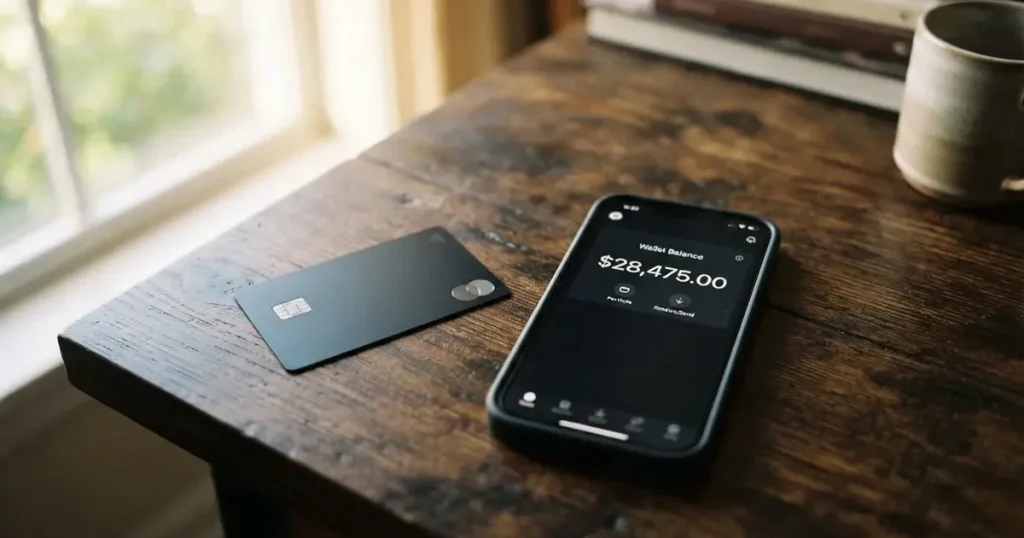
KNGPay sells itself in three short phrases: a worldwide Visa, no identity check, paid for with crypto. That combination is rare, and for some readers it is exactly what they need. For everyone else, the same combination is a warning sign — because a card that no one regulates and that takes your Tether to issue is one that also has very little obligation to give the money back. I went through KNGPay’s pages, terms and the public complaint trail to figure out which side of that line this card sits on, and the short answer is that the product is simple and the trust around it is thin. The score is 5.2 out of 10, and a large slice of that is the cost, the missing issuer and the user reports.
Conditions are current as of October 28, 2026.
The conditions described here are current as of October 2026.
Verdict
KNGPay is, on paper, the most convenient crypto-funded virtual card I have come across for a reader who has been turned away by a normal bank. There is no country list, no identity document to upload, and you can go from a Telegram message to a card number in about the time it takes a USDT transfer to confirm. That is the upside. The downside is that almost everything around that card is also missing: no named issuer, no licence, no monthly fee, no FX fee, no ATM, no physical card, no app on a normal app store, and a Trustpilot page where every single one of the 13 reviews gives it one star and accuses the operator of taking payments without delivering cards. The card works as a payment instrument, but the company behind it works in the dark, and the price for the convenience is a 5% deposit fee on top of the network fee you already pay, a $15 issuance fee, and a $10 charge to get your own money back.
You should consider KNGPay only if you want a disposable virtual Visa, you are comfortable holding the balance in USD on someone else’s ledger, and the amounts are small enough that losing them would not ruin you. If any of that makes you uncomfortable, the alternatives further down give you more for less risk.
Score
| Criterion | Mark | Why it matters |
|---|---|---|
| Who can get it | 9/10 | Marketed as “Worldwide Visa” with no country list or restrictions published |
| Cost | 3/10 | $15 one-off issue fee, 5% on every top-up, $10 to refund a balance; monthly and FX fees not disclosed |
| Top-up options | 8/10 | USDT on Ethereum and Tron, USDC on Ethereum, BTC and XMR; $50 minimum per load |
| Reliability and complaints | 1/10 | Issuer and licences not named; Trustpilot 1.9/5 from 13 reviews, all one star; allegations of payments taken with no card issued |
| Everyday use | 5/10 | Virtual Visa only; works with Apple Pay, Google Pay and inside PayPal; no physical card, no ATM |
| Total | 5.2/10 |
Who will give you the card
KNGPay describes itself as a “Worldwide Visa”. The site does not publish a list of supported countries, a list of excluded countries, or any kind of residence or citizenship check, and the only condition attached to the offer is the one in the terms: users must follow the laws of their own jurisdiction. In practice that means KNGPay does not filter where you live, but it also does not promise to be legal for you, and that is your problem to solve.
Age and proof of address are not stated on the public pages, and the order flow is built around the assumption that you can order a balance in USD on the website or through a Telegram bot, send crypto to a one-time address, and receive a card. There is no account-verification step to fail, because the whole point of the product is that no such step exists. The company itself reminds you, more than once on its own pages, that it is “not a bank or financial institution” and that the card is a prepaid product funded by crypto deposits.
The reader this fits is the one who is locked out of normal banking — because of where they live, because of their immigration status, because of how they earn, or because they simply do not want to upload an ID. The reader it does not fit is the one who needs a regulated dispute path, a real bank behind the BIN, or any kind of comfort that the operator will be in business in two years.
How to get it
KNGPay’s signup is short on purpose. You go to kngpay.com/app or to a Telegram bot, order a card balance in USD, and the system gives you a one-time deposit address. You send crypto to that address, and once the transaction confirms, the card is issued. There is no application form, no identity document upload, no selfie, no proof of address, and no waiting for a manual review. The product is also a virtual card only — there is no physical card mentioned in the public pages, so there is no shipping address, no courier and no waiting for delivery.
What is missing is just as telling. There is no app on the Apple App Store or on Google Play, only a web app, so you cannot install it from the usual store and you have to trust the URL. There is no published age rule, and there is no published procedure for what happens if the system needs to verify you later — for example if a payment triggers a manual review. And there is no “Black tier” detail to read, even though a lower-fee tier is mentioned on the reviews page. The ordering flow is built around trust at the moment of payment, not around paperwork.
For a reader who is used to a normal issuer, the absence of all this is the feature. For a reader who is used to regulated finance, the absence of all this is the entire problem.
What it really costs (Fees)
The card’s pricing has two parts you can see, two parts you can guess at, and one part that is genuinely hidden. The visible part is the one-time issuance fee of $15, the 5% fee on every deposit you make, and a $10 processing fee if you ever ask for your balance back. The hidden part is the monthly fee (not stated), the FX fee for spending in anything other than USD (not stated), the ATM fee (not stated, and there is no physical card anyway), and the network fee you pay on the blockchain side of the top-up, which the card provider does not control but which you still pay.
A “Black tier” with lower fees is mentioned in passing, but the price, the eligibility and the rules for that tier are not described. I treat the published pricing as the baseline, because the page does not tell me anything else to work with.
Costs
| Fee or limit | Amount |
|---|---|
| Card issuance | $15 one-time |
| Monthly fee | Not stated |
| Deposit fee | 5% |
| Refund processing | $10 |
| FX / conversion | Not stated |
| ATM | Not stated (no physical card) |
| Minimum top-up | $50 per load |
| Maximum top-up | $100,000 per load |
| Spend limits | Not stated |
| Card balance currency | USD only |
| Black tier (lower fees) | Mentioned, not detailed |
Three everyday payments
- A $50 online subscription paid in USD. The card is denominated in USD, so there is no conversion to worry about. The fee that does bite is the 5% you already paid on the $50 load — $2.50, plus the $15 issue fee amortised over the life of the card. If you cancel and ask for the unused balance back, that refund will cost another $10.
- A €40 dinner in a country that uses euros. KNGPay does not state its FX fee, so the only honest description is that you do not know what Visa’s wholesale rate minus KNGPay’s margin will be. The hidden part of the cost is exactly this kind of transaction.
- A cash withdrawal at an ATM. Not possible — there is no physical card and no ATM facility is described, so this row exists to make clear that the card is online-only.
The “no stated monthly fee” line is worth sitting with. It is a good thing if the fee is genuinely zero, but it is also the kind of line a prepaid product uses when the deposit fee is doing the earning. A 5% load fee is high for a card whose main competition is 1.5% or 2%, and it is paid every time you add money, not just the first time. If you top up $200 a month, you are giving KNGPay $10 a month before you have bought anything.
How to top it up (Top up)
Topping up is the part of KNGPay that is described in real detail, and it is also the part you have to get right because the network you choose decides whether your money arrives. The accepted coins are USDT on Ethereum (ERC-20) and on Tron (TRC-20), USDC on Ethereum, native Bitcoin, and Monero (XMR). Each deposit gets its own unique amount, and that amount is the way the system matches an incoming transaction to your order — if you send a different amount, the matching may fail. The minimum is $50 per load and the maximum is $100,000 per load, and the deposit fee is 5% on top of the network fee you pay the blockchain.
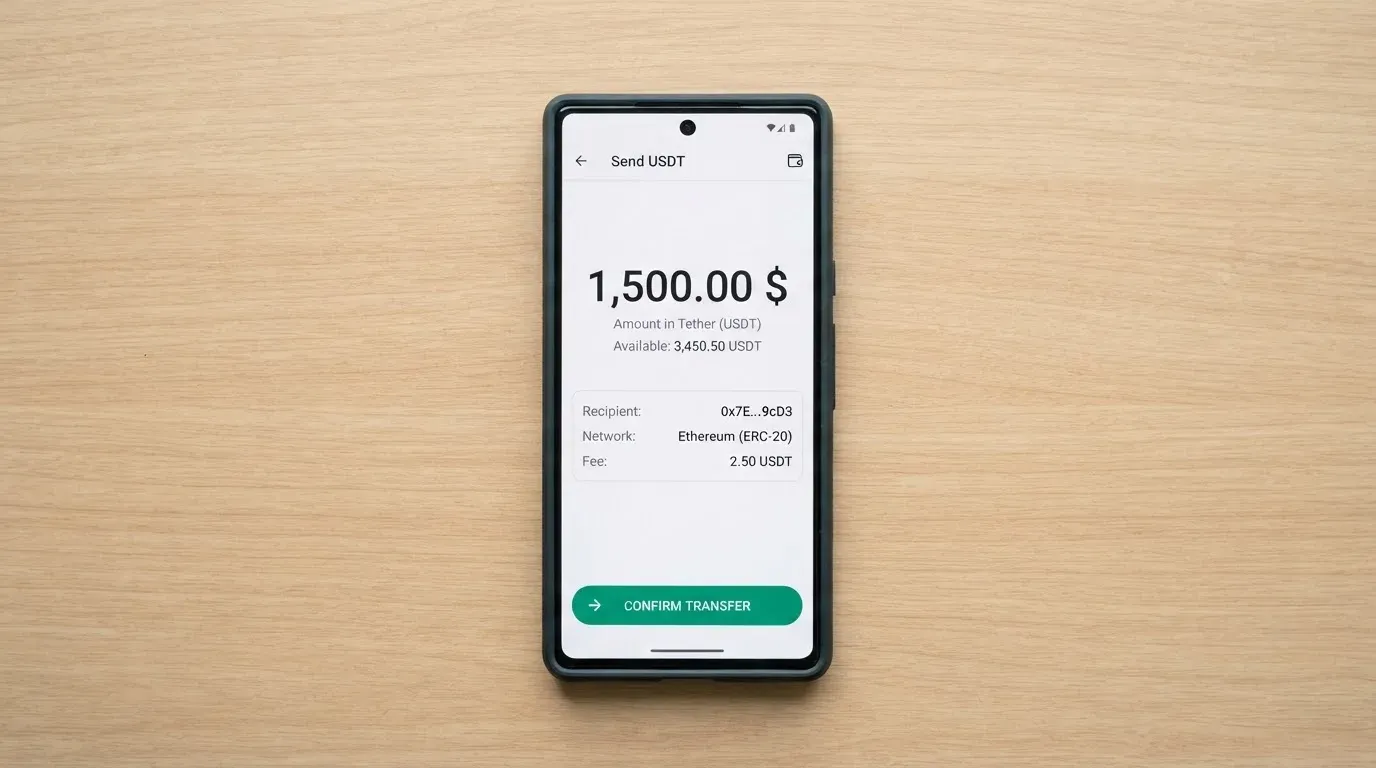
A few things are not stated. Who pays the network fee is not spelled out, and the only safe reading is that you pay it from the wallet that sends the transfer, because the blockchain charges the sender, not the recipient. There is no fiat top-up — no card, no bank transfer, no Apple Pay load. The card only fills from the four coins above. The Black tier, if it changes any of this, is not described.
A Monero option stands out. Most crypto cards will not touch XMR, because it is designed to be untraceable, and the exchanges that touch it carefully. The fact that KNGPay accepts it is a real differentiator for a reader who holds XMR, and it is also a tell about how this product is regulated: a regulated issuer in the EU or the UK cannot process Monero without a fight, and so a card that does process Monero is, almost by definition, operating outside that perimeter. Treat that as information, not as advice.
If you want to move the balance back the other way, the only option is a refund. The card and the account balances are both refundable, the fee is $10, the timeline is “typically within 3 business days” through support, and the terms say refunds are handled case by case. There is no on-chain withdrawal, no option to send the balance back to your own wallet, and no described procedure for what happens to the balance if you close the account.
Paying with it every day
The card is virtual, denominated in USD, and it works where Visa works online. KNGPay’s pages say it can be added to Apple Pay and Google Pay, and that you can add it to PayPal as a funding source, which means you can use it for a much wider set of merchants than the ones that take Visa directly — including some that only accept PayPal. There is no physical card, so there is no contactless tap, no chip-and-PIN at a physical till and no ATM.
What the page does not describe is more interesting than what it does. Blocked merchant categories are not listed — most issuers block gambling (MCC 7995), some block crypto, and a few block adult content, but KNGPay does not tell you which categories are open and which are closed. Cashback or rewards are not mentioned, so the only way the card pays you back is the difference between the deposit fee and the 1.5%–2% charged by cheaper cards. 3-D Secure is not described, even though it is the standard way Visa fights online fraud, and AVS — the address check that American and British shops use — is generally unreliable on foreign-issued prepaid cards, which is worth knowing if a checkout starts asking for the billing ZIP and you do not know what to type.
The web app at kngpay.com/app is the only interface. There is no iOS app, no Android app, no desktop client, and no third-party wallet integration. Support is reached through Telegram and a contact page, with no published hours, no published languages and no published response-time commitment. If your card declines late on a Saturday, the path to a human is a Telegram message to a team whose working hours you do not know.
The day-to-day experience, then, is: a virtual card number in a web app, added to a phone wallet for tap-to-pay where the merchant takes contactless, used online for the rest. For online subscription, online shopping and one-off digital purchases, that is enough. For everything else, it is not.
What can go wrong
Three risks matter here, and each one is more serious than the equivalent risk on a regulated card.
The company is not what it appears to be. KNGPay says, in its own words, that it is “not a bank or financial institution” and that the card is “prepaid card services funded by crypto deposits”. The legal entity that operates it, the issuer of the card, the BIN sponsor, the licence under which it issues — none of these are named on the pages I could read. KNG Group LTD appears in some of the starting data but is not visible on the public site. A prepaid Visa has to be issued by an institution that is licensed somewhere, and KNGPay is not telling you where. That does not prove anything is wrong, but it does mean you are trusting a counterparty whose regulator you cannot identify, in a market where “no regulator” is a marketing line rather than a feature.
The complaint trail is small, recent and uniformly bad. Trustpilot, read on 21 October 2026, shows KNGPay at 1.9 out of 5 from 13 reviews, and every one of those reviews gives the card one star. The pattern is the same in almost every report: a payment was sent in USDT, the card never arrived or the balance was never credited, support stopped responding, the refund request was denied or blocked, and the reviewer concluded they had been scammed. The reports run from January 2026 to July 2026. A small sample is not proof of widespread failure, but a sample in which every voice says the same thing, and that thing is “they took the money and gave nothing back”, is a loud signal that something is going wrong on the operations side, whether that is fraud, insolvency or a system that simply does not scale.
The technology is also the risk. The card holds a custodial prepaid balance, which means your money sits on KNGPay’s books and you have a claim against an entity that is not a bank. The page does not describe any safeguarding — no segregated account, no insurance, no audit, no security features beyond “No KYC”. If the platform is hacked, goes bankrupt or simply stops answering support, the path back to your money is the $10 refund process handled “case by case”. Crypto transfers are irreversible, and the deposit fee is paid before the card is issued, so a wrong network or a wrong amount is your problem, not KNGPay’s.
There is also the smaller, structural risk: a Visa programme can be suspended. Visa and Mastercard do not issue cards to consumers; they license issuers, and they can pull that licence. When WaveCrest lost its European licence in 2018, every crypto card running on it stopped working overnight. When FTX collapsed in November 2022, Visa terminated its global agreements with FTX and the US debit card programme was wound down by the issuer. The lesson is the same in both cases: a Visa logo is not a guarantee of continuity, and a prepaid product whose issuer is not named is a product whose continuity is hardest to check.
What to take instead
The honest reading of KNGPay is that it sits in a specific niche — small balances, online-only spending, no KYC — and the alternatives in that niche all trade some of that niche for something the reader probably wants. I have grouped three below by what they give up and what they get in return.
CardFlow
- Score: 4.9/10.
- Who can get it. Aimed at Nigeria, with “Nigerians and global users” mentioned; no country list or exclusions stated.
- Card. Virtual USD Mastercard, created in minutes.
- Cost. “Creating a virtual card is completely free” according to the site FAQ, with the monthly fee not stated.
- Fees. Not stated.
- Funding. Bitcoin, USDT, ETH or Naira bank transfer; networks not stated.
- Rewards. Not stated.
The trade-off versus KNGPay is the issuer geography. A card aimed at a single market may handle Naira and local merchants more naturally, but the lack of stated fees and the lack of any country eligibility list mean the same kind of guesswork that KNGPay asks of you.
HyperCard
- Score: 4.7/10.
- Who can get it. Official pages do not list countries; the App Store page says the card is accepted “in more than 176 countries”, which is about acceptance, not eligibility.
- Card. Prepaid “HyperCard”; network not stated on the App Store page; balance in USD or EUR.
- Cost. Not stated; the App Store page lists no fees.
- Fees. Not stated on the pages I could read.
- Funding. USDT, BTC or ETH in the app, converted to USD or EUR on the card; networks not stated.
- Rewards. Not stated.
The trade-off versus KNGPay is the dual-currency balance — USD and EUR, where KNGPay is USD-only — but the same fee opacity applies and the network and licence information is just as thin.
Card.fi
- Score: 6.6/10.
- Who can get it. Ships cards to “200+ countries” according to the site banner; terms bar residents of, or orders from, “a country subject to sanctions that would prohibit the service”.
- Card. Virtual Classic and Virtual Premium; physical Classic and Premium; metal (stainless steel); every physical order comes with a virtual card; cards issued “under licence from the relevant card schemes” (Visa/Mastercard not named); card currency not stated.
- Cost. One-time Virtual Classic $49, Virtual Premium $249; physical and metal prices not listed; no monthly, annual, inactivity or minimum-balance fee.
- Fees. Top-up fee Classic 1.5% plus $1.00, Premium 1%; FX fee Classic 3.5%, Premium 2.5%; conversion fee shown before each top-up.
- Funding. 32 coins across five networks (Ethereum, Base, BNB Chain, Solana, Kaanch) including USDT, USDC, ETH, BNB, SOL and KAANCH; a deposit address per card; converted at market rate on arrival; wrong chain can mean permanent loss.
- Rewards. Cashback on card spending only — Classic 0.8% (cap 10 USDT/month), Premium 1%, Metal 1.2% or 2% with higher caps; headline 10% at coffee shops capped at 10 USDT/month; earn on balances “up to 18%” on Metal, variable.
The trade-off versus KNGPay is straightforward: Card.fi costs more to start (the virtual Classic is $49 versus KNGPay’s $15) but the deposit fee is lower than KNGPay’s, the FX fee is stated rather than hidden, the network list is published so you do not have to guess, and the rewards are real. For a reader who can afford the higher entry price, Card.fi is the more transparent product.
| Card | Score | Min. card cost | Deposit fee | FX fee | Networks | KYC | Physical card |
|---|---|---|---|---|---|---|---|
| KNGPay | 5.2/10 | $15 | 5% | Not stated | 4 (USDT ERC20/TRC20, USDC ERC20, BTC, XMR) | No | No |
| CardFlow | 4.9/10 | Free | Not stated | Not stated | 3 (BTC, USDT, ETH) plus Naira | Not stated | No |
| HyperCard | 4.7/10 | Not stated | Not stated | Not stated | 3 (USDT, BTC, ETH) | Not stated | No |
| Card.fi Classic | 6.6/10 | $49 | 1.5% + $1.00 | 3.5% | 5 (Ethereum, Base, BNB Chain, Solana, Kaanch) | Yes | Yes |
Who I would recommend it to
I would recommend KNGPay to a narrow reader. The shape of that reader is: someone who cannot or will not complete KYC, who is comfortable holding a USD balance with an unlicensed counterparty, who needs the card for online spending only, and who is willing to lose the balance if anything goes wrong because the amounts are small enough that the loss would sting rather than ruin. For that reader, the 5% deposit fee, the $15 issue fee and the $10 refund fee are the price of admission to a card that exists for them at all.
I would not recommend KNGPay to anyone whose use case fits inside a normal crypto card — that is, anyone who can complete KYC, anyone who holds more than a couple of hundred dollars at a time on a prepaid balance, anyone who needs a physical card, anyone who needs to withdraw cash, anyone who needs a regulator to call if the operator disappears, and anyone who needs FX costs to be visible before the payment is made. For all of those readers, the alternatives above do the same job with more transparency and lower ongoing cost.
The single piece of advice I would give any reader who has read this far: top up the minimum, treat the balance as a one-time spend, and do not load more than you can afford to write off. KNGPay’s price for being able to skip KYC is paid in fees and in the absence of a safety net, and the second of those is the larger of the two.
Frequently asked questions
What is KNGPay card?
KNGPay is a virtual Visa prepaid card funded by cryptocurrency. The brand describes it as a “Worldwide Visa” and a “prepaid card service funded by crypto deposits”, and the public pages repeatedly say the operator is “not a bank or financial institution”. There is no physical version of the card.
How does KNGPay card work?
You order a balance in USD on the KNGPay web app or via a Telegram bot, send one of the accepted cryptocurrencies to a one-time deposit address with a unique amount, and a virtual Visa is issued once the transaction confirms. The card holds a prepaid USD balance and can be added to Apple Pay, Google Pay or PayPal for spending.
Is KNGPay a bank?
No. KNGPay’s own pages state that it is “not a bank or financial institution” and that the product is “prepaid card services funded by crypto deposits”. The legal entity behind the brand, the card issuer, the BIN sponsor and the licence under which the card is issued are not named on the public pages I could read.
Who owns KNGPay?
The public pages do not name the owner, the issuer or the licence. A “KNG Group LTD” appears in some starting data but is not visible on the site. The product is presented as a prepaid service funded by crypto, and the absence of a named operator is a feature you should price into your decision, not a detail to skip past.
Is KNGPay card available in my country?
KNGPay markets the card as “Worldwide” and does not publish a country list or any country exclusions on the pages I could read. The terms require you to follow the laws of your own jurisdiction, but the card itself does not run a country check. If your country restricts prepaid cards or crypto-funded cards, that is your responsibility to verify, not the operator’s.
How to get KNGPay card?
You go to kngpay.com/app or to the brand’s Telegram bot, order a USD balance, and send USDT (Ethereum or Tron), USDC (Ethereum), BTC or XMR to the deposit address shown, using the exact amount the system gives you. Once the transfer confirms, the virtual Visa is issued. There is no application form, no identity check and no waiting for a manual review.
Does KNGPay card require KYC?
No. KNGPay’s marketing line is “No KYC required”, and the order flow has no document upload, no selfie and no identity verification step. The price for that is paid in fees, in the absence of a regulated dispute path, and in the absence of any published safeguarding of the custodial balance.
How to top up KNGPay card?
You request a new top-up in the app or bot, send one of the accepted cryptocurrencies to the one-time address with the unique amount the system provides, and the balance is credited once the transaction confirms on chain. The minimum per load is $50, the maximum is $100,000, and the deposit fee is 5% on top of the network fee you pay.
How to withdraw money from KNGPay?
You cannot withdraw the balance to a bank account or to your own crypto wallet. The only way to get money back is a refund request, which costs $10 in processing and is handled “case by case” through support, typically within three business days. There is no described procedure for what happens to the balance on account closure.
Is KNGPay card safe?
That depends on what you mean by safe. The card is a custodial prepaid balance with an operator that is not a bank and does not name its issuer, regulator or licence, and a Trustpilot page (1.9 out of 5 from 13 reviews, all one star) where the recurring complaint is a payment sent in crypto with no card or refund to show for it. If “safe” means a regulated dispute path and segregated funds, no. If “safe” means a virtual Visa for small online spends, the product works as described — at the cost of a 5% deposit fee, a $10 refund fee, and the risk of the balance.
Virtual cards: your questions answered – cryptocardanswers
Content created by the «cryptocardanswers» team