
A crypto Visa that keeps its promises quiet: 7.7 out of 10, with a fee sheet you will not find on the site
 Available in US
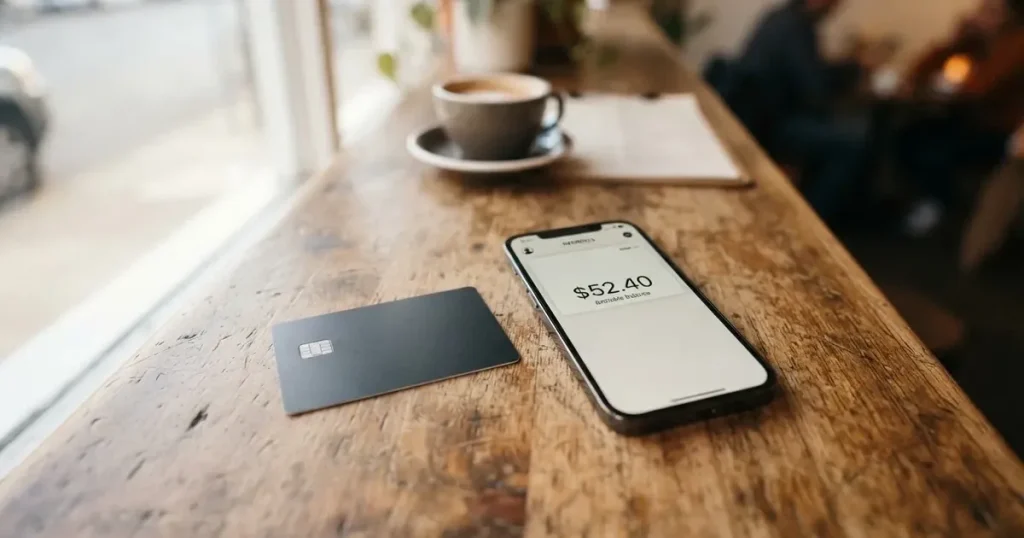
If you hold USDT or USDC and want to spend it in a shop, at a restaurant or online without going through an exchange every time, Anytap is one of the cards built for exactly that. On paper it ticks the boxes that matter: a Visa debit card, virtual or physical, loaded from stablecoins, usable through Apple Pay, Samsung Pay and Google Pay, and open broadly rather than to one country. What it does not do is explain itself. The public pages leave the issuance fee, the monthly fee, the conversion rate, the spending limits and even the issuing entity unnamed. That silence is the whole review, in one sentence — this is a card with a good idea and a thin public file. I scored it 7.7 out of 10.
The conditions described here are current as of October 28, 2026.
Verdict: 7.7 out of 10, best for the crypto holder already holding dollars
Anytap is worth a second look if you are paying in USDT or USDC across Asia, you would rather not keep a bank account open in the country you actually live in, and you are comfortable with a provider whose paperwork you cannot yet read. It suits people who already understand networks, chains and addresses, because the product asks you to make one important choice — which network to send on — and get it right.
It does not suit you if your priority is published, fixed fees, a named issuer you can hold accountable, or an app you can download today. All three are missing from what I could find. Nor does it suit anyone who wants to earn rewards or use the card as a status object; there is nothing on offer on either front.
Where I land: promising mechanics, unverified paperwork. Do not treat it as finished; treat it as something you would test with a small amount.
| Criterion | Mark | Why |
|---|---|---|
| Who can get it | 9 / 10 | Per starting data, the world except OFAC-sanctioned countries |
| Cost | 6 / 10 | Issuance is paid, amount undisclosed; unofficial figures for cross-border, ATM and minimum top-up |
| Top-up options | 9 / 10 | USDT and USDC, USDT on TRC-20 “faster and cheaper”, 350+ supported coins |
| Reliability and complaints | 6 / 10 | U.S.-headquartered per starting data; issuer and licences not named; no reviews, Trustpilot page or Reddit threads found |
| Everyday use | 9 / 10 | Virtual or physical Visa, Apple Pay, Samsung Pay, Google Pay, ATM; wallets reported rolling out gradually |
| Total | 7.7 / 10 | Strong mechanics, thin documentation |
Will they give you the card
Yes, most likely, provided your country is not under OFAC sanctions. That is the shape of it: per starting data that was not verified on the page itself, the card is offered worldwide except OFAC-sanctioned countries, and the application form lists United States, Singapore, UAE, United Kingdom, Vietnam, Japan and “Other”. The form is a list of options on a dropdown, not an eligibility statement, so treat it as a hint about where the product is aimed rather than a promise of approval.
The unofficial picture is more specific and narrower. The Asia launch was aimed at Asia, “starting with South Korea, Japan and Indonesia”, according to the title of a press release carried by nny360.com and kdhnews.com, whose date I did not read. Treat that as a third-party report about a launch, not as a coverage guarantee, and not as something the card’s own pages confirm.
So: what actually decides whether you get it is not the country list, it is the identity check. On that, the public information is thinner than the country’s openness suggests.
How to get it
The route on paper is short. You sign up on the web with your email, name and address, you pay the issuance fee, and then you activate the card. Identity checking is passport or ID plus a selfie, and approval is described as happening in minutes.
Here is the first real gap, and it is worth sitting with before you type your details anywhere. Proof of address is not stated. Age requirements are not stated. Nor is any tiering of verification levels, so I cannot tell you whether a light sign-up gets you a low-limit card and a full document check unlocks more, or whether everyone gets the same pass. Nor is delivery time stated, for either the physical card or anything else.
The card itself is a Visa debit card, available as a virtual or a physical one. The currency of the card is not stated — that matters more than it sounds, and I will come back to it in the costs section.
The unofficial line, again from the press report, is that both forms run on the Visa network and that a person may hold up to three cards. Third-party reporting, not confirmed by the card.
What to check first, then, is not a question of eligibility but of substance: before you pay anything, look for the issuer’s name, the amount of the issuance fee, and what happens to your balance if you stop using the card.
What it really costs: Fees
This is the section where a review of a crypto card either earns trust or loses it, and Anytap is at the second stage. An issuance fee is payable before activation — that much is stated — but the amount is not disclosed, and no monthly fee is stated either. The full fee schedule is not published. Everything specific I have below is unofficial, drawn from the press release report on nny360.com, and I would want you to see each figure confirmed in your own account screen before relying on it.
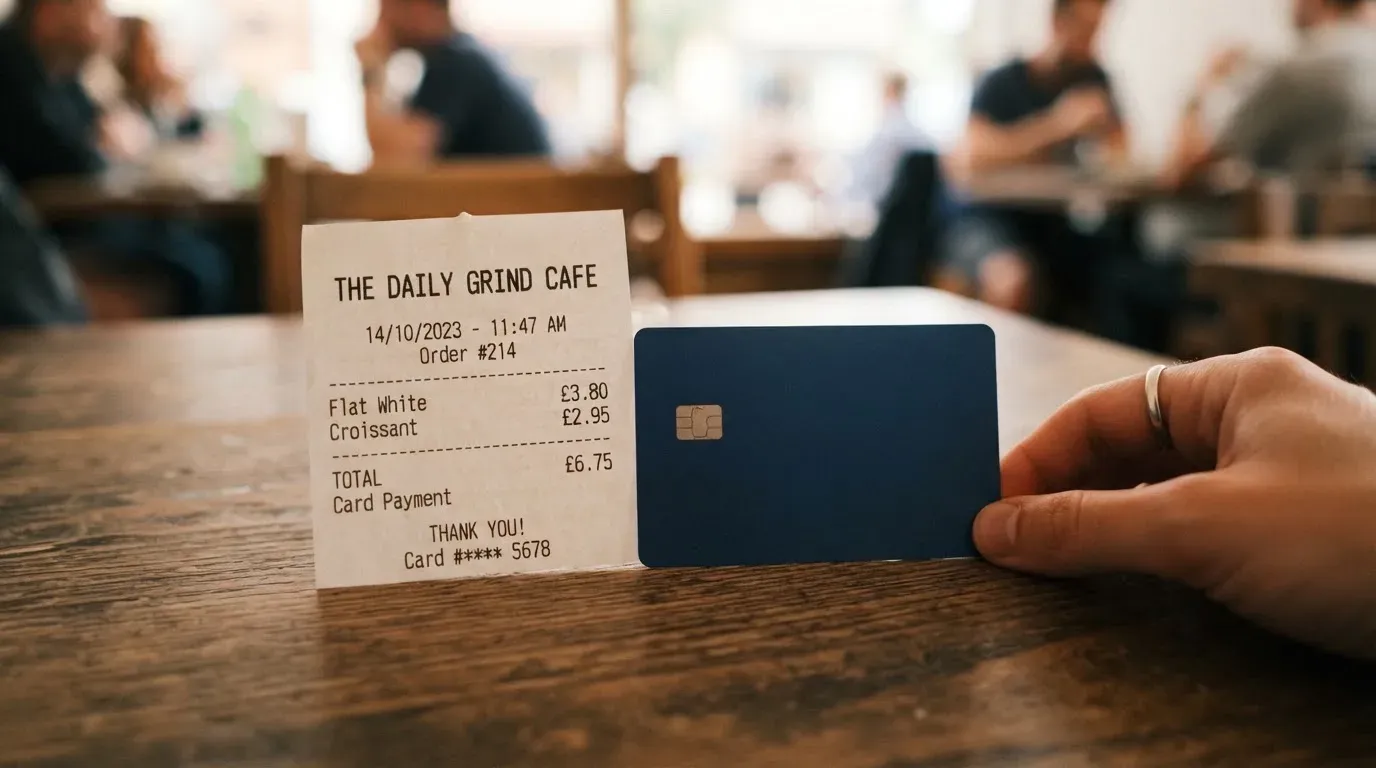
So the honest state of the cost sheet is this:
| Item | What is stated | What is unofficial |
|---|---|---|
| Issuance | A fee is paid before activation; amount not stated | — |
| Monthly fee | Not stated | — |
| Conversion | Not stated officially; starting data describes crypto converted to fiat at the point of sale | — |
| Cross-border transactions | Not stated | 1% plus $0.30 per transaction |
| ATM cash withdrawal | Available; fee and allowance not stated | 2% of the amount, minimum $1 |
| FX rate / card currency | Card currency not stated | — |
| Daily and monthly limits | Not stated | — |
| Top-up fee | Per starting data, not verified on the page: 3%; network fee payer not stated | Minimum top-up 30 USDT |
Now the part that matters more than any single line: run three ordinary payments through your head before you commit, because that is where fee structure bites.
A coffee in a local currency. This is the payment most likely to involve a currency conversion between what your stablecoin becomes and what the terminal charges. The cross-border figure, if it applies to you, is the 1% plus $0.30 quoted above. The FX rate itself is not stated anywhere I could find, and the card’s currency is not stated either. On a small purchase the fixed 30-cent component is proportionally heavy; on a large one, the percentage dominates. You cannot compute this from public information, which is precisely the problem.
A monthly subscription in USD. Here you are usually spending a balance already denominated in dollars, so the conversion layer may not bite — but a recurring payment is exactly the kind that a merchant’s fraud checks scrutinise, and 3-D Secure or a one-time code may appear in a way that differs from a one-off shop purchase. Address verification is worth knowing about in general: it compares the numeric parts of the billing address you type with issuer records, it is mostly a US, Canada and UK mechanism, and it is generally unavailable for foreign-issued cards, which can cause declines.
A cash withdrawal at an ATM. Withdrawal is available, but the fee and the allowance are not stated. The unofficial figure is 2% of the amount with a $1 minimum. A withdrawal also puts a hold pattern into play elsewhere in the industry: a declined authorisation can leave funds held for several days, typically up to seven.
None of the everyday figures can be checked against a published schedule, because no schedule is published. That is the finding, and it is the one I would want a reader to act on.
How to Top up
Topping up is where this card looks its best. The stated options are USDT and USDC, with USDT on TRC-20 described as “faster and cheaper”, and “350+ supported coins” advertised. Per my starting data, which was not verified on the page, the load assets are USDT on TRC-20 or ERC-20, or USDC.
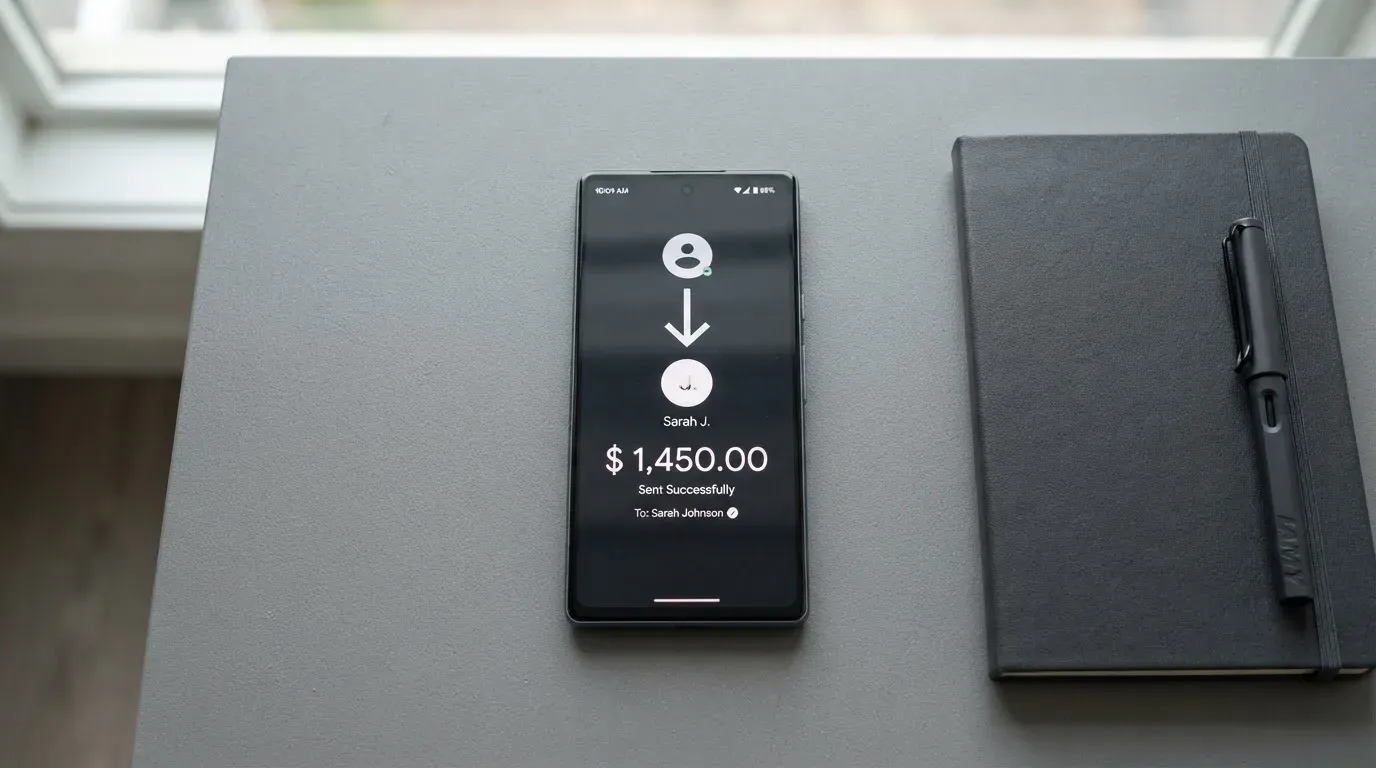
The choice of network is yours to get right, and the consequences of getting it wrong are severe in a way that has nothing to do with this card’s quality. Blockchain transfers are irreversible. A deposit sent on a network the provider does not support, or to an address belonging to a different network, can be lost, or need manual support recovery with no guarantee. The industry background is worth holding in mind here: on ERC-20 the gas fee is paid only in ETH, so a wallet holding USDT with no ETH cannot send at all; on Tron, fees are paid through bandwidth and energy resources, often burning TRX, which is part of why TRC-20 transfers are typically the cheaper of the two.
One trap deserves a specific warning. “USDC over TRC20” is not a native option: Circle stopped supporting USDC on Tron in February 2024. If you see a route to send USDC on TRC-20, that is not the same thing as a supported Circle asset, and I would not send on the strength of a generic-looking address.
There is a top-up fee of 3% per my starting data, not verified on the page, and it is not stated who pays the network fee. Unofficial, the minimum top-up is 30 USDT. For withdrawals, nothing is stated officially; unofficial reporting says balances can move between your own cards and that loaded funds can be withdrawn to an external wallet. Nothing is stated about limits or tiers for holding.
My practical advice: send a small test amount on the network you intend to use, confirm it lands, and only then move size.
Paying with it every day
Everyday use is the strongest part of the offer, and this is where the card scores 9. You get a Visa debit card, virtual or physical, plus Apple Pay, Samsung Pay and Google Pay, and ATM access. In practice, paying by phone is likely to be how you use this most: tokenised wallet payments replace your card number with a device-specific number held in the secure hardware of the phone, never on the vendor’s servers, and each payment carries a one-time dynamic code.
Two caveats. First, mobile wallet support is reported — by the press release, not by the card’s own pages — to have been “rolled out progressively depending on card type and local market conditions”. So the wallet you expect may not be available to your card in your market today. Second, blocked merchant categories are not stated. That matters more than it sounds, because many issuers restrict entire categories by policy rather than by law, and the blocked list varies by issuer: gambling, for instance, sits under a specific merchant category code that many cards decline by choice.
Two things you might expect to find here and will not. There are no rewards described anywhere — no cashback, no tier, no headline rate. And I found no Anytap card app: the App Store search on 2026-10-22 returned only an unrelated “AnyTap Accessible Camera” product, and Google Play was not found. How you manage the card, set limits, freeze it or read a transaction is therefore not something I can point you to. If a card manages itself only through a web page, that is a different security posture from one with a mobile app, and you should weigh it accordingly.
Dispute handling is not stated either. Chargeback rights depend on the scheme and the issuing entity, and prepaid-card coverage varies — it should not be assumed.
What can go wrong
Let me separate what I did not find from what went wrong, because the distinction matters when you are holding money.
No complaints found — and no review history at all. I found no official incidents, and equally no reviews, no Trustpilot page and no Reddit threads for Anytap. A young or small product often looks like this, and it is genuinely ambiguous: no complaints from a thin user base is not the same as a clean record. But it does mean you have no crowd-sourced history to lean on. You are the early adopter, whether or not anyone has said so.
The company behind it. Per my starting data, Anytap is a U.S.-headquartered fintech. The issuer is not stated and the licences are not stated. This is the single largest gap in the file. It matters because of how the structure works: the card network sets the rules and routes the messages, the licensed issuer holds the actual card programme, and the crypto brand is often only a programme manager or front end that markets the thing. If you do not know which of those Anytap is, you do not know who is obliged to make you whole when something goes wrong. Security arrangements are not stated either, and neither is what support looks like after launch.
Where the regulation actually stands. In the EU, MiCA took legal effect in June 2023; its rules on stablecoins applied from 30 June 2024, and the crypto-asset service provider rules from 30 December 2024. E-money tokens may be issued only by a credit institution or an electronic money institution. The transitional period lets providers operating under national law continue only until 1 July 2026 or until they are authorised or refused authorisation, whichever comes first — a date that has since passed, which makes checking a provider’s standing more relevant, not less. ESMA maintains an interim register of authorised providers, white papers and non-compliant entities, and that is the first place I would look. Note the two-licence structure: a card is a payment service regulated separately from the crypto side, so a crypto card commonly depends on both. In the US, FinCEN treats administrators and exchangers of convertible virtual currency as money transmitters; ordinary users spending are not.
Why programmes end. This category has a history. Visa terminated its global agreements with FTX on 13 November 2022 and the FTX US debit card was wound down. WaveCrest, a Visa issuer that supplied crypto card brands, was suspended by Visa in Europe in 2018, closing all its Visa programmes. The pattern in closures is a notice period, then spending and loading stop, then users are asked to withdraw remaining balances. I saw one 2026 closure reported by a single secondary source, which I am not treating as verified.
Custody, and what “not your keys” means. If the balance is custodial, the provider holds the credentials and you trust them completely. If a card is linked to your own wallet, funds stay with you until the moment of payment, and you carry sole responsibility for key loss, phishing and clipboard malware that swaps a copied address. With custodial platforms there is a documented record: Mt. Gox at roughly US$350 million reported stolen between 2011 and 2014, Coincheck at roughly US$400 million in 2018, Ronin Network at US$625 million in 2022. Seed phrases are typically 12 to 24 words, unencrypted, and anyone who has them can restore the wallet and spend it. Transfers are typically irreversible and a stolen key has no recovery path.
And two smaller traps. Stablecoins can and do lose their peg — TerraUSD collapsed in May 2022, and USDC briefly lost its peg in March 2023 during the US banking crisis. And stablecoins are not censorship-proof: Tether disables tokens in wallets on the OFAC sanctions list and has frozen funds tied to illicit activity. A card with a foreign BIN can also simply look foreign to a shop, which may decline it; some merchants decline prepaid or foreign-issued cards because a BIN lookup reveals the card type and issuer country.
I am not going to tell you it is safe. I am telling you what is documented and what is not, and the undocumented part here is larger than I would like.
What to take instead
If the reason you want this card is that an ordinary bank card is awkward or unavailable where you live, the alternatives below are worth an hour of your time. I score each of them myself; the numbers are mine, not the card’s.
| Alternative | Score | Who it targets | Card and cost shape |
|---|---|---|---|
| CardFlow | 4.9 / 10 | Nigeria and global users; no country list or exclusions stated | Virtual USD Mastercard, created in about 3 minutes; virtual card creation is free |
| HyperCard | 4.7 / 10 | Official pages state no country list; the app says it works in more than 176 countries, which is acceptance, not eligibility | Prepaid; network not stated on the app page; balance in USD or EUR; no fees listed |
| Card.fi | 6.6 / 10 | Ships to 200+ countries; terms bar residents of, or orders from, sanctioned countries | Virtual and physical, Classic and Premium, plus metal; virtual Classic $49, virtual Premium $249, no monthly or inactivity fee |
CardFlow is the narrowest option: aimed at Nigeria, loaded with Bitcoin, USDT, ETH or a Naira bank transfer, with networks unstated. Its fees beyond the free virtual card are not stated. If you are in Nigeria it is a focused product; if you are elsewhere, the pitch thins out fast.
HyperCard is a prepaid card holding USD or EUR, loaded with crypto such as USDT, BTC or ETH in the app. Its pages are quiet in a similar way — no network stated, no fees stated on what I could read.
Card.fi is the one that publishes. This is what a transparent fee sheet looks like by comparison: top-up fees of 1.5% plus $1.00 on Classic and 1% on Premium, FX fees of 3.5% and 2.5% respectively, with the conversion fee shown before each top-up; 32 coins across 5 networks including Ethereum, Base, BNB Chain, Solana and Kaanch; a deposit address per card with conversion at the market rate on arrival; cashback of 0.8% on Classic capped at 10 USDT a month, 1% on Premium, and 1.2% or 2% on Metal with caps of 100 or 250 USDT a month. Every physical order includes a virtual card. Its own warning is the one I made above about network choice: sending on the wrong chain risks permanent loss.
Two honest observations. Card.fi’s virtual cards are the most expensive to buy at $49 and $249, and it names no card network explicitly, saying only that cards are issued under licence from the relevant schemes. And none of the three is obviously better than Anytap for someone whose priority is simply spending dollars from a stablecoin balance; they are better documented, which is a different thing.
Who I would recommend it to
I would recommend Anytap to a specific person: someone who already lives in the stablecoin world, who can name the difference between TRC-20 and ERC-20 without being asked, who is in Asia or one of the countries on that application dropdown, and who would rather load a card and pay than convert back and forth on an exchange. For that person, the mechanics are good, the top-up options are genuinely broad, and the mobile wallet support means you would mostly live in Apple Pay or Google Pay rather than handle a plastic card.
I would not recommend it as a first card, and I would not recommend it as your only card. I would not recommend it if you need to know, in advance and in writing, what a coffee costs or what a foreign purchase charges — because those numbers are not published, and the figures floating around are unofficial. And I would steer anyone away who needs a rewards programme, an app today, or a named licensed issuer they can point to.
Before you commit anything, here is my short list. Find out the issuer and its licence. Find out the issuance fee before you pay it. Confirm the card currency and the FX rate inside your own account. Send a small test on your intended network. And check the provider’s regulatory standing in the register that applies where you live.
Treat any small test as money at risk, not as free money — that is how I would hold it.
Frequently asked questions
What is the Anytap card?
Anytap is a Visa debit card that spends a stablecoin balance, so you can pay in shops or online without converting back to your bank currency first. You load it with USDT or USDC and the balance is spent as ordinary card funds. It comes as a virtual or a physical card, and can be added to mobile wallets.
Is Anytap a bank?
On the information I could verify, no — and the card does not describe itself as one. Per my starting data it is a U.S.-headquartered fintech, with the issuer and the licences not stated on the public pages. That distinction matters, because an e-money institution is not the same as a bank and its customer funds are not bank deposits.
Who owns Anytap?
Ownership is not stated on the public pages I read, which is unusual and worth pressing on. Per my starting data the company is a U.S.-headquartered fintech, and unofficial reporting describes an Asia launch starting with South Korea, Japan and Indonesia. Who actually licenses and issues the card is the question to ask before you fund it.
Which countries can use the card?
Per starting data, not verified on the page, worldwide except OFAC-sanctioned countries, and the application form lists the United States, Singapore, UAE, United Kingdom, Vietnam, Japan and Other. Availability to you is less about geography than about the identity check passing, since the criteria for that are not stated.
Does applying require KYC?
Yes. Identity checking is passport or ID plus a selfie, with approval described as happening in minutes. Proof of address is not stated, and neither is any minimum age, though prepaid and debit cards are generally available to adults aged 18 and over. No tiering of verification levels is described either.
How much does the Anytap card cost to get?
An issuance fee must be paid before you activate the card, but the amount is not published, and no monthly fee is stated. Unofficial figures put the cross-border transaction fee at 1% plus $0.30, an ATM withdrawal at 2% with a $1 minimum, and the minimum top-up at 30 USDT. Confirm each in your own account before relying on it.
How do I top up the card?
The stated options are USDT and USDC, with USDT on TRC-20 described as faster and cheaper, and 350+ coins supported. Per my starting data there is a 3% top-up fee, and who pays the network fee is not stated. Send a small test first: transfers are irreversible, and the wrong network can mean lost funds.
Can I add it to Apple Pay?
Apple Pay, Samsung Pay and Google Pay are all listed as supported, which makes the phone the likely way you would use this card day to day. But unofficial reporting says mobile wallet support was rolled out progressively depending on card type and local market conditions, so confirm it is live for your card in your market before you rely on it.
Is Anytap safe to use?
I found no official incidents, and also no reviews, no Trustpilot page and no Reddit threads, so there is no track record to lean on either way. Security arrangements, support and dispute handling are not stated, and the issuer and licences are unnamed. Custodial balances carry counterparty risk that this category has a documented history of.
Is the card worth it?
Worth it if you already live in stablecoins and want to spend them without converting each time, particularly in Asia. Worth thinking twice about if you need published fixed fees, a downloadable app, a named issuer or a rewards programme — on all four counts, the public record is currently thin. Start with a small test amount.
Virtual cards: your questions answered – cryptocardanswers
Content created by the «cryptocardanswers» team