
The virtual card that spends stablecoins abroad with no FX markup
 Available in US
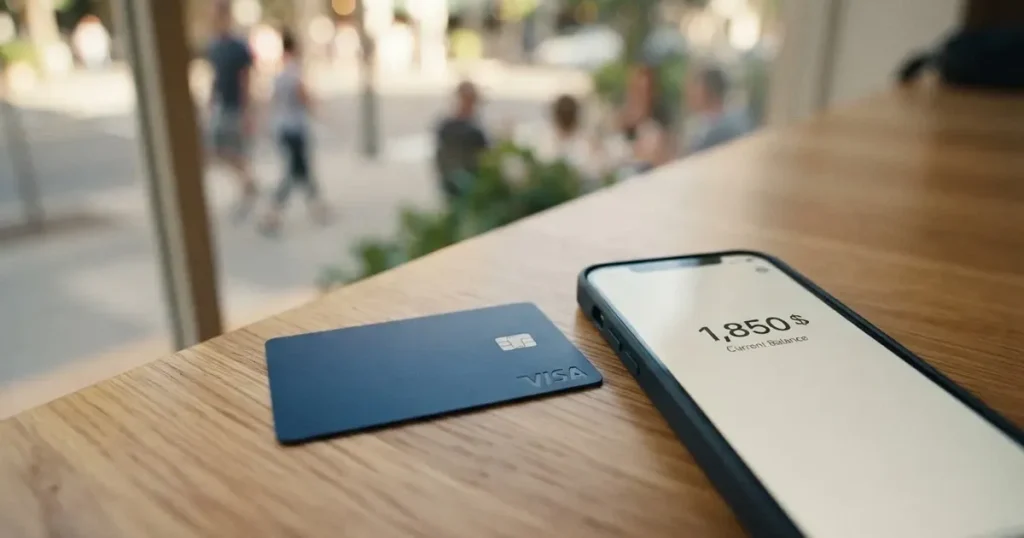
The Morse card is a virtual Visa prepaid debit card that spends from a crypto balance, and the pitch is narrow and specific: hold stablecoins, travel or buy things abroad, and pay without a foreign-exchange markup added on top of the real rate. If that is your situation, the card does something genuinely useful. If you want a card for everyday spending at home, or one you can withdraw cash from, or one that works at shops that insist on a physical card, it will disappoint you — because it is virtual only, there is no ATM support, and the list of countries where it is actually issued is short.
My score for the card is 7.5 out of 10. That is not a compliment about polish; it is a judgement that a narrow product, doing exactly one thing reasonably well and cheaply, still leaves plenty of practical gaps.
The conditions described below are current as of October 28, 2026.
The score, criterion by criterion
Before the details, here is how the number was built up. Each line is one of the things I checked, the mark it earned, and why.
| Criterion | Mark | Why |
|---|---|---|
| Who can get it | 7 / 10 | App in 140+ countries and local add/withdraw in 70+, but the card itself is only in certain countries, the list lives inside the app, and sanctioned countries are closed |
| Cost | 8 / 10 | Issuance and monthly fee are not disclosed; conversion carries no markup, card payments are free, and the currency fee is zero |
| Top-up options | 8 / 10 | USDC, USDG and EURC over Solana are free; Bitcoin, USDT, Ethereum and other tokens are accepted too; the wallet is self-custodial |
| Reliability and complaints | 8 / 10 | Issued by Lead Bank, platform by Avian Labs (a US MSB) and AFM-authorised in the Netherlands under MiCAR; no official incidents found and no reviews surfaced |
| Everyday use | 6 / 10 | Apple Pay and Google Pay work; the card is virtual only; no ATM support |
Total: 7.5 / 10
Notice where the weight sits. Reliability scores well, and that is not nothing — plenty of crypto card brands have collapsed or been wound down. Costs score well for the same reason: what is disclosed is genuinely cheap. Everyday use is the weak point, and it is weak for a structural reason, not a quality one: the product is a virtual card, and some things a card does simply require the card to be physical.
Will they give you the card?
Yes, if you are 18 or older and live in a supported country — and the country you live in matters far more than the country you hold a passport from.
Eligibility is by residence, not citizenship. You must be “at least 18 years old” and “a resident in a supported country”. The app is available in over 140 countries, and local add-and-withdraw functionality exists in more than 70. Those numbers are app coverage, not card coverage, and the difference matters if you are skimming quickly.
Morse “cannot serve customers subject to sanctions issued by the United States”, and the same restriction is applied for UK, EU and UN sanctions. That is a hard exclusion, not a soft one.
Then there is the awkward category: countries where Morse is in closed beta and needs an invite code. This is the list the card publishes — American Samoa, Australia, Cape Verde, Guernsey, Hong Kong SAR China, Isle of Man, Japan, Jersey, New Zealand, Serbia, Singapore, Switzerland, Thailand, Türkiye, United Kingdom, Western Sahara. Some of those are affluent, card-friendly places, which tells you something about how the card rollout is prioritising.
The card itself is “available only in certain countries”, and the card page does not publish that list. You have to check inside the app. That is the single most useful thing to do before you get excited about anything else: download the app, look, and see. What happens to your balance if you are in a supported app country but not a supported card country is also not stated publicly, so ask before you commit funds.
How to get it
Four steps: install the app, verify your identity, fund the Morse balance, add the virtual card.
Verification may require your name, phone number, date of birth, residential address, “a selfie” and “a picture of a photo ID card”. The card’s own wording is that “requirements vary by country”. Proof of address is not stated as a separate requirement.
The card itself: “Morse Card is fully virtual for now”. It is a Visa prepaid debit card, and it spends from your Morse Balance “in any currency”.
Two things this section should leave you thinking about. First, there is no delivery step, because there is no physical card — the virtual card appears in the app, and you can push it to your phone’s wallet. Second, the card does not publish verification tiers. There is a single identity verification, with one warning attached: “We may review larger deposits for compliance”. If you intend to hold five figures on the balance, expect questions.
Fees: what it really costs
Paying with the card is free, conversion carries no markup, and there are zero foreign-exchange fees — but the price of issuing and maintaining the card is not disclosed at all.
That last point deserves emphasis, because it is unusual. Most cards in this category publish a fee table. Morse’s card page says “Fees may apply. See Cardholder Agreement”. Issuance and monthly fee are not stated on the public pages.

| Fee or limit | What Morse says |
|---|---|
| Issuance fee | Not stated on the public pages; “Fees may apply. See Cardholder Agreement” |
| Monthly fee | Not stated on the public pages |
| Conversion | Real exchange rate, “with no markup” |
| Foreign exchange | “Zero foreign exchange fees or markups”, real-time Visa exchange rate |
| Card payment (online and contactless) | Free |
| ATM withdrawal | Not available: “Morse Card does not currently support ATM withdrawals” |
| Daily card spending limit | 2,000 USD in the first 30 days, rising automatically to 5,000 USD per day after 30 days |
| Money-transfer services | Weekly cap 500 USD |
| Weekly/monthly deposit and withdrawal limits | Shown in the app Limits screen; amounts not stated |
There is one tier. No card tiers are published, so there is no paid upgrade path to unlock better limits — the limits move on their own schedule after 30 days, and after that the numbers shown in the table are the ceiling.
Now the part you asked for — two or three ordinary payments, and which fees actually bite:
- A coffee abroad, paid by tapping your phone. Zero. The card payment is free, and the conversion from your stablecoin balance happens at the real exchange rate with no markup. This is the case the product is built for, and there is genuinely nothing to pay.
- An online subscription billed in dollars while you hold euros. Zero foreign-exchange fee, and the conversion itself has no markup. There is no percentage line item to hunt for in the fee schedule because there is no percentage.
- Taking money out at a cash machine. Impossible. No ATM withdrawals. Whatever cash you need, you have to plan around not having.
The honest way to read this table: the visible costs are near zero and the hidden one is unspecified. That is a fine trade if you use the card exactly as intended, and an annoying one if your spending pattern changes. Read the Cardholder Agreement before you load money — that is where “fees may apply” becomes actual numbers.
For context on what a percentage looks like when one is charged, look at the alternatives below. One of them applies a 2% FX fee on foreign currency; another has no annual fee and no foreign transaction fee but converts at “live OTC (Over-the-Counter) rates”, which is a different trade entirely.
Top up: where the money comes from
Deposits by debit card, stablecoin transfer or account details, with USDC, USDG and EURC over Solana free — and domestic deposits free in most countries.
The full menu:
- Debit card. Domestic deposits in most countries are free. International deposits via a linked bank account, card or mobile money carry a fee — but the first three international transactions with linked payment methods are free, then US$0.50 flat.
- Account details. USD, EUR, MXN, COP, with BRL requiring a Brazilian CPF. International deposits to account details are 0.1%.
- Stablecoin transfer. USDC, USDG and EURC over Solana are free. Other tokens and other blockchains carry a fee. Bitcoin, USDT, Ethereum and other tokens can all be deposited.
- Blockchain network fees are charged by the blockchain itself, separately from anything Morse charges.
Two things to hold on to. The Morse Wallet is self-custodial, which means the private key is exportable and yours — that is a genuine advantage over custodial crypto cards, and it also means a mistake on your side is a mistake on your side. And Morse shows any fee before you confirm, so the number you approve is the number you get.
The minimum top-up is not stated, so there is no published floor to plan around.
On the way out: withdrawals go to a bank account, a debit card or a stablecoin transfer. Domestic withdrawals are free in most countries, USDC/USDG/EURC via Solana are free, and international withdrawals and other tokens or chains carry a fee. If you close the account, you must withdraw any money from your Morse balance first. Closure is permanent, and what happens to an unwithdrawn balance is not stated — which is the single thing I would ask about before closing anything.
Paying with it every day
Works in the phone wallet, does not work where a physical card is required.
The card can be added to Apple Pay or Google Pay, which is how most people will actually use it. What is not supported is merchants that only accept physical debit cards — think a parking barrier that wants to swipe, or a shop with a terminal that has no contactless path for your tokenised card.
Rewards are not stated on the card pages. The help centre has an “Earn rewards” collection, which suggests something exists, but it is not something I can report to you as a fact. The app is on iOS and Android, and it used to be called Sling Money. One unofficial data point: a rating of 4.5 stars from 400 reviews on the App Store, read under the old Sling Money name, from a third-party site and undated — treat it as a snapshot, not a current score, and note it is App Store only. Disputes and complaints are not described on the card pages either; the help centre has a “Make a complaint” article I did not read.
The currency mechanics are worth understanding. The card spends from the Morse Balance “in any currency”. Per starting data, crypto converts to USDC — digital euros in Europe — and your account currencies are USD, EUR, MXN, COP and BRL, visible under Account Details. That is a sensible set of choices for the audience the card seems aimed at.
What can go wrong
No official incidents found. The real risks are the ordinary ones: an issuer can end the programme, a transfer on the wrong network is gone, and nobody has published the fee schedule.
Let me take the reassuring part first, and then the parts that deserve your scepticism.
- No official incidents found. A search of reviews turned up no reviews of this product — only an unrelated company with a similar name. No Trustpilot page for Morse was found either. Absence of evidence is not evidence of a clean bill of health, but for a product that has rebranded from Sling Money to Morse, having no public complaint history is better than the reverse.
- Who is actually behind it. The platform provider is Avian Labs: Avian Labs, Inc. in Delaware, registered as a US Money Services Business, NMLS ID 2639252, FinCEN MSB registration 31000315485256. Avian Netherlands B.V. (company registration 91273323) is authorised by the Dutch AFM under MiCA as a CASP, registration 41000005. The card issuer is Lead Bank under licence from Visa U.S.A. Inc., and the programme manager is Bridge Ventures LLC, which “operates as an agent of Lead Bank”. That is a real regulatory stack with named registrable entities, not a shell with a logo.
- Self-custody cuts both ways. The Morse Wallet is self-custodial and the private key is exportable. The network cannot freeze or reverse a blockchain transfer, and crypto transfers are typically irreversible. So the same property that protects you from the provider protects you from nobody when you make a mistake.
- Wrong network, wrong address. A deposit sent on a network the provider does not support, or to an address of another network, can be lost or need manual support recovery with no guarantee. One relevant detail: Circle stopped supporting USDC on Tron in February 2024, so USDC over TRC-20 is not a native option. Check the network before you confirm a transfer.
- Programme closure. This category has a history. Visa terminated its global agreements with FTX on 13 November 2022 and the FTX US debit card was wound down. WaveCrest, a Visa issuer that supplied crypto card brands, was suspended by Visa in Europe in 2018, closing all WaveCrest-issued Visa programmes. Closures typically follow a pattern: a notice period, then spending and loading stop, then you are asked to withdraw what is left. One 2026 closure reported by a secondary source had new loads ending 8 July 2026 and spending stopping 8 August 2026 — a single unconfirmed source, but the shape of it is what to watch for.
- The named security features. Card lock and unlock in the app, instant transaction notifications, and 24/7 fraud monitoring. Two things are not stated and you should assume nothing: how funds are safeguarded, and whether two-factor authentication is available. If it is not, the app lock is doing more work than it should.
- Support. In-app chat under profile > Support > Chat, email, AI support “24/7/365”, and human chat support. Hours for the human support are not stated.
- Declines and holds. A declined authorisation can leave a hold on your funds for several days, typically up to 7. And because merchants can look up the BIN to see which institution and country issued the card, a card issued in one country can look “foreign” to a shop in another — some merchants decline prepaid or foreign-issued cards for exactly that reason.
On the regulatory side, the split matters. A card is a payment service regulated separately — e-money or payments law — while MiCA covers the crypto side: custody, exchange, transfer. A crypto card often depends on two licences, and here you have the crypto side covered by AFM authorisation in the Netherlands and the card side by a US bank under Visa’s licence. Under MiCA, e-money tokens may be issued only by a credit institution or an electronic money institution. Electronic money institutions must safeguard customer funds by segregating them in dedicated accounts or insuring them, and such funds are not the same as bank deposits and may not be covered by deposit guarantee schemes. If that distinction matters to you, Morse does not describe its safeguarding arrangements on the pages I read.
One more category fact worth knowing: gambling has its own four-digit merchant category code, 7995, and many issuers block it by policy rather than by law, with the blocked list varying by issuer. Morse does not publish its blocked merchant categories.
What to take instead
Three alternatives, none of which is a clear upgrade — each trades away the thing Morse is good at.
If your problem is “I need a card that works abroad without an FX penalty”, the honest comparison is not against other crypto cards alone. It is against a plain virtual card with one visible fee. Here are the three I looked at, with their scores from my own testing.
International Visa Card — score 6.7 / 10
A “U.S.-issued Platinum Visa card”, virtual, paying in USD, with a physical card marked “coming soon”. Virtual issuance is $5 one-time with no maintenance fee, and there are plans: Classic free, Pro $9.00/month, Max $19.00/month. Card use in USD is free on all plans; foreign currency costs “Visa exchange rate + 2% FX fee”. Deposits of any kind are free, including USDC or USDT into the USD account at 1:1 per an earlier check, plus USD, EUR, SEPA, SWIFT and FedNow deposits. No cashback is stated.
The eligibility list is much longer than Morse’s. Not available to residents or legal registrants of Belarus, mainland China, North Korea, Cuba, India, Iraq, Iran, Israel, Myanmar, Nepal, Nicaragua, Russia, Syria, Turkey, Ukraine, Venezuela and Vietnam, with FATF grey-list countries reviewed case by case. Purchases are blocked in North Korea, Cuba, Iran, Russia, Syria, Ukraine and Venezuela. It also shares Morse’s weakness: virtual only, physical “coming soon”.
Take this if a flat 2% is easier to budget than an unstated fee schedule, and if you want plans rather than a single tier. Skip it if that 2% is exactly the cost you are trying to avoid.
UNi Card — score 6.1 / 10
A multicurrency UNi Card on the Mastercard network, spending from the UNi.Global account balance. “No annual fee” and “no foreign transaction fee”. Assets are converted at “live OTC (Over-the-Counter) rates” with, in their words, “No hidden exchange fees”. Issuance fee not stated, physical or virtual not stated, top-up methods not stated, and eligibility not stated. There is “Spend-to-Earn rewards” up to 3% with the card.
Take this if a Mastercard network, a rewards line and no annual fee sound better to you than Morse’s zero-markup conversion. Skip it if you need to know the eligibility rules before you commit — I could not find them.
Bitpanda — score 6.5 / 10
A regulated exchange with a card attached, and the most conventional option here. It requires a verified Bitpanda account and residence in a euro-area country, and users verified via “Bankident” cannot order. The card is a physical Visa debit card, EUR only, one active card at a time. Account opening and monthly cost, and the first shipment, are free; reissue is EUR 5.90, though the FAQ says lost/stolen is EUR 9.90, and each additional physical card is EUR 10. The non-EUR FX fee is EUR 0, but “VISA mark-up fees apply”, and the crypto conversion fee or spread is not stated — assets are auto-converted to EUR on spending. You can spend from a chosen main asset, with an optional fallback: listed cryptocurrencies, precious metals or EUR, with Crypto Indices excluded and a minimum payment of EUR 1. On rewards, the body of the page says 1% cashback on crypto spending while the page summary says “up to 2%” — unreconciled, and fiat, stocks, metals and stablecoins are excluded, with the payout currency not stated.
Take this if you are in the euro area and want a real physical card from an exchange you can read the fee list of. Skip it if you are outside the euro area or need a card for travel rather than local spending.
| Morse | International Visa Card | UNi Card | Bitpanda | |
|---|---|---|---|---|
| My score | 7.5 / 10 | 6.7 / 10 | 6.1 / 10 | 6.5 / 10 |
| Network / card type | Visa prepaid, virtual only | US-issued Platinum Visa, virtual (physical coming soon) | Mastercard multicurrency, physical/virtual not stated | Visa debit, physical, EUR only |
| Annual or maintenance fee | Not stated; “Fees may apply” | No maintenance fee; plans from free to $19.00/month | “No annual fee”; issuance not stated | Account opening and monthly cost free |
| FX cost | Zero FX fees or markups | Visa rate + 2% FX fee | No foreign transaction fee; live OTC rates | EUR 0 fee, but VISA mark-up fees apply |
| Card payments | Free online and contactless | Free in USD on all plans | Not stated | Not stated |
| Rewards | Not stated | No cashback stated | Spend-to-Earn up to 3% | 1% (body) or “up to 2%” (summary), unreconciled |
| Who can get it | 18+, resident in a supported country; card only in certain countries | Not residents/registrants of a 17-country list | Not stated | Verified account, residence in a euro-area country |
Who I would recommend it to
I would recommend this card to someone who already holds stablecoins, earns or saves in a currency other than the one they spend in, and pays for things mostly by tapping a phone. For that person it is a clean, cheap tool: the conversion uses the real rate, the FX markup is zero, the payment itself is free, and the wallet is self-custodial so the private key is theirs. The 8 out of 10 on top-up options is well earned.
I would not recommend it as a first card, as a card to withdraw cash with, or as a way to keep a large balance without reading the Cardholder Agreement. The 6 out of 10 on everyday use is the number to weigh most heavily, because “everyday” is exactly what a virtual, ATM-less card is not.
Two checks before you act on any of this. Open the app and confirm the card is actually available in your country, since that list is not published. And read the Cardholder Agreement, since issuance and monthly fees are the one thing this card does not tell you.
Frequently asked questions
What is Morse card?
Morse is a crypto card product built around one job: holding a stablecoin balance and spending it. You get a virtual Visa prepaid debit card that draws on your Morse Balance “in any currency”, backed by a self-custodial wallet. It is not a bank account with a card attached, and it is not a physical card — the card exists only in the app and in your phone’s wallet.
How does Morse card work?
You install the app, verify your identity, fund your balance, and add the virtual card to Apple Pay or Google Pay. When you pay, the balance converts to the transaction currency at the real exchange rate with no markup, and the card payment itself is free. It behaves like a prepaid card: it spends only what is loaded, so it cannot overdraw.
Is Morse a bank?
No — and this is worth being precise about. The platform provider is Avian Labs, registered in the US as a Money Services Business with NMLS ID 2639252, and its Dutch entity is AFM-authorised under MiCA as a CASP. The card itself is issued by Lead Bank under licence from Visa U.S.A. Inc. So the card comes from a bank; the wallet comes from a licensed crypto company.
Who owns Morse?
Avian Labs, Inc. (Delaware) is the platform provider, with a FinCEN MSB registration of 31000315485256, and Avian Netherlands B.V. (registration 91273323) holds the AFM authorisation 41000005. Bridge Ventures LLC is the programme manager and “operates as an agent of Lead Bank”. The company rebranded from Sling Money to Morse — that rebrand is reported by third-party news, and the date is not stated.
Is Morse card available in my country?
Possibly, but you have to check rather than assume. The app is available in over 140 countries with local add and withdraw in 70+, but the card is “available only in certain countries” and that list is not published. Separately, 16 countries including Australia, Japan, Singapore, Switzerland, the United Kingdom and Hong Kong SAR China are in closed beta and need an invite code.
How do I get Morse card, and does it require KYC?
Four steps: install the app, verify identity, fund the balance, add the virtual card. Verification may require your name, phone number, date of birth, residential address, a selfie and a photo ID card, with requirements varying by country. Proof of address is not stated. You must be 18 or older and resident in a supported country.
How do I top up Morse card?
By debit card, stablecoin transfer or account details. USDC, USDG and EURC over Solana are free, as are domestic deposits in most countries; Bitcoin, USDT, Ethereum and other tokens can also be deposited but other networks carry a fee. International deposits via a linked method are free for the first three, then US$0.50 flat, and to account details 0.1%. Morse shows any fee before you confirm.
Is Morse card free, and what are the limits?
Paying with the card online and contactless is free, conversion has no markup, and there are zero foreign-exchange fees or markups. But issuance and monthly fee are not stated — the card page says only “Fees may apply. See Cardholder Agreement”. The daily card spending limit is 2,000 USD in the first 30 days, rising automatically to 5,000 USD per day after 30 days.
Can I use Morse card in Apple Wallet and at ATMs?
Apple Pay and Google Pay both work, and that is the intended way to pay. ATMs do not: “Morse Card does not currently support ATM withdrawals”. Merchants that only accept physical debit cards are also not supported. There is one card tier and no published card tiers, so nothing to upgrade into.
Is Morse card safe, and can I withdraw money and close the account?
The Morse Wallet is self-custodial, so the private key is exportable and yours; the card can be locked and unlocked in the app, with instant transaction notifications and 24/7 fraud monitoring. Safeguarding and two-factor authentication are not stated. You can withdraw to a bank account, a debit card or a stablecoin transfer, and you must withdraw any balance before closing — closure is permanent, and what happens to an unwithdrawn balance is not stated.
*This review covers a financial product and its stated terms. It is not tax or legal advice, and figures and conditions can change — check the card’s own pages and the Cardholder Agreement before you decide anything.*
App and neobank cards: your questions answered – cryptocardanswers
Content created by the «cryptocardanswers» team