
Is the Plumex card worth using, or is the fine print hiding the real cost?
 Available in US
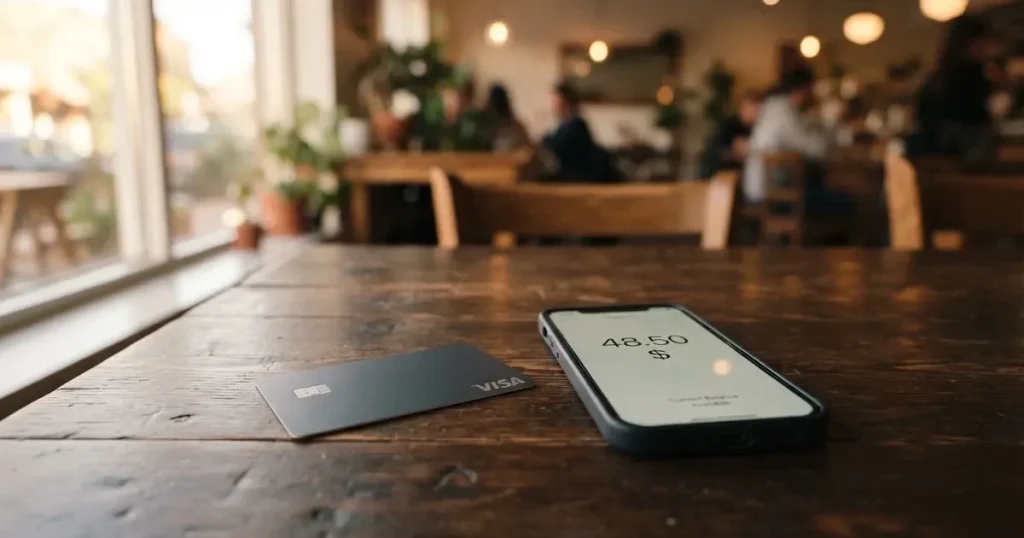
Plumex pitches itself as a crypto-to-payment-card service for everyday spending in Europe and Ukraine, converting your crypto balance at the point of payment. The pitch is clean; the public paperwork is thin. After going through the company’s own pages, its app description, and what third parties have published, the picture is a product that does the basics, with costs partly hidden and several basic details, from the card network to the issuer, not publicly stated. This review walks through what Plumex actually says, what it doesn’t, and whether the card makes sense for someone in Europe or Ukraine who already holds crypto and wants a payment card to spend it.
Conditions are current as of October 28, 2026.
Verdict
Plumex earns 5.9 out of 10. That score is not a comment on whether the team is building a useful product; it reflects the gap between what Plumex promises and what it documents. The card works as a way to spend a crypto balance, it supports Apple Pay and Google Pay, and the swap fee on the free plan is a reasonable 0.5%. But basic things a cardholder needs to know, including the card type and network, the FX markup, ATM fees, daily limits, who actually issues the card, and which licence Plumex holds, are not on the public site. The Trustpilot page has no reviews yet, so there is no track record to lean on either way.
Score table
| Criterion | Mark | Reason |
|---|---|---|
| Who can get it | 5/10 | Positioned for Europe and Ukraine, but the country list lives in the app and depends on residence and location, with no public list. |
| Cost | 7/10 | 0.5% swap on the free plan, free on Premium; other fees listed without numbers, FX not disclosed. |
| Top-up options | 5/10 | Spends directly from a crypto balance, with coins and networks not spelled out; crypto deposits are advertised as fee-free. |
| Reliability and complaints | 6/10 | Operated by a Czech company, with a Panamanian custodian, no published licence numbers, no card issuer named, and no Trustpilot reviews yet. |
| Everyday use | 6/10 | Apple Pay and Google Pay work; physical card, network, and ATM support are not stated. |
For Europeans and Ukrainians who want a crypto app with a card and are comfortable with a young product, Plumex can fit. For anyone who needs a well-documented fee schedule, a clear issuer, or a long public track record, the score will feel generous.
Who can get a Plumex card
Plumex describes itself as “built for everyday money needs in Europe and Ukraine.” That sentence does most of the work on the marketing page, and it is also the closest thing to a country list you will find in public. Plumex does not publish a table of supported countries on its site; instead, it tells prospective users that availability “may vary by country and local requirements” and that the supported countries are shown inside the app. Whether you can sign up, in other words, depends on where you live and where you actually are when you open the account, not just on the passport you hold.
The company also offers a separate route for users in Ukraine. That route is not available to people residing in or accessing the service from the European Union. The rule is based on your place of residence and your actual location, not on your citizenship. If you are a Ukrainian citizen living in Poland, for example, the Ukraine route is not the one you would use; the EU-resident rule applies.
A few practical points follow from how Plumex writes its eligibility rules:
- Residence and physical location both matter. A VPN or proxy that misrepresents your location is listed as a reason for rejection.
- Sanctions screening is part of the process. If your name or country matches a sanctions list, the application does not go through.
- The app is the source of truth. The country list is updated inside the app, so anything you read on a blog post (including this one) can be out of date by the time you check.
If you are somewhere outside Europe and Ukraine, the product is not aimed at you, and there is no public roadmap to suggest when, or if, that will change. If you are in Europe, the app itself is the only way to confirm whether your specific country is supported.
How to sign up
Plumex advertises a “5-minute KYC” process, which is shorthand for the identity check that any regulated financial service has to run before letting you move money. In practice, the KYC step is the same kind of check any European fintech would do, and Plumex’s provider reserves the right to ask for more if your profile looks unusual. Specifically, the check can include:
- A government-issued ID, such as a passport or national ID card.
- Proof of address, typically a recent utility bill or bank statement.
- A selfie, a liveness check, or a short video verification.
You must be at least 18 years old. Plumex does not publish a fixed review window, which is normal for risk-based KYC: most applicants get through quickly, and a smaller share are flagged for manual review, where the timing depends on how busy the compliance team is and how clean your documents are.
There is no public list of KYC tiers in the way some exchanges publish bronze, silver, and gold levels. Limits are set on a risk basis, which means a clean profile gets more headroom than a profile that triggers extra checks. Plumex does, however, list the reasons an application is likely to be rejected, and it is worth reading them before you start:
- Your residence or location is not eligible, including if you are using a VPN or proxy to hide it.
- Your name or details match a sanctions list.
- Your activity looks unexplained or structured in a way that suggests an attempt to avoid reporting thresholds.
- Your documents are inconsistent with each other or with the details on your account.
- The funds you are paying with come from a third party rather than from you.
- Information required under the Travel Rule (a set of rules for transferring sender and recipient details with crypto transfers) is missing.
- Your wallet has exposure to high-risk blockchain activity.
Two things about the card itself are not stated on Plumex’s public site. The card type and network (Visa or Mastercard, debit or prepaid, virtual or physical) are not specified in the writing the company has published. The same is true for delivery times; you will only see that inside the app once you have an account. An earlier check did confirm that the card draws directly from your crypto balance, so the spending model is the “convert at payment” kind, not the “pre-load fiat” kind.
Fees: what it really costs
The cost picture for Plumex is half clear and half opaque. The clearest number is the swap fee: 0.5% on the free Basic plan, and free on the Premium plan, which is listed as $14.99 per month and marked “Coming soon” on the public pricing page. Everything else is either stated without numbers, or not stated at all.

Costs table
| Fee or limit | Amount |
|---|---|
| Card issuance | not stated |
| Monthly fee | Basic free; Premium $14.99/month (Coming soon) |
| Swap/conversion | 0.5% on Basic, free on Premium |
| Foreign exchange (FX) markup | not stated |
| ATM withdrawal | not stated |
| Daily spending limit | not stated |
| Monthly spending limit | not stated |
Plumex has a “Fees and Limits Schedule” in its paperwork, but the version of it that the public can see lists categories (swap, deposits, withdrawals, and so on) without attaching amounts to them. The FX markup, which matters every time you pay in a currency other than the card’s base, is not disclosed. ATM fees are not disclosed either. For a card aimed at everyday use, that is a meaningful gap.
Two small details round out the picture. Cash in and cash out are advertised as free up to $499 per month on the Premium tier, and one free cash in or cash out per month is included with Premium. Basic does not get that. The Premium plan also lists exclusive card designs, lounge and Fast Track access, eSIM best prices, and priority support, all of which sit alongside the free swap as the perks meant to justify the monthly fee.
To make this concrete, here is how a few everyday payments would look under the public fee rules. The illustrations use the public 0.5% swap on Basic, and flag the unknowns where they apply.
- A €40 lunch on a card paying from a euro balance, in euros. The 0.5% swap is charged only if the conversion happens, and Plumex’s documentation is not specific on which conversions trigger it. If a swap is needed, that is €0.20. The FX markup is not stated, so the worst case is whatever the card network plus Plumex adds on top, which is the part to be careful about.
- A $100 online subscription paid in US dollars from a euro crypto balance. The crypto is converted to dollars at payment, the 0.5% swap applies, and any FX margin Plumex takes is not visible. If the FX margin is, say, 1%, you are paying $1.50 in fees on a $100 charge before the network’s own exchange rate even comes in.
- A €20 contactless coffee via Apple Pay. There is no interchange fee for the cardholder, and the 0.5% swap only applies if a conversion takes place. This is the cheapest shape of payment on Plumex, and the closest thing to a free transaction the card offers on Basic.
The pattern: the smaller and more local the payment, the less Plumex’s hidden fees can hurt you. The larger or more cross-border the payment, the more those same gaps can add up.
Top up: how to fund the card
Plumex’s spending model is to draw directly from your crypto balance at the point of payment, which is different from the “pre-load fiat, then spend” model that some prepaid-style crypto cards use. The card converts your crypto to the currency of the merchant in real time, and the conversion uses the 0.5% swap on Basic, or free on Premium.
How the crypto gets into your Plumex account in the first place is the part that the public site leaves open. The team has said in a LinkedIn post that crypto deposits are fee-free, and the fees page lists “deposits” as a category without giving a number. Which coins and which networks are supported, and whether there is a minimum or maximum deposit, are not in the public paperwork at the time of this review. In practice, this is the kind of detail that shows up in the app once you have an account, and it is also the kind of detail that matters most when something goes wrong: a deposit sent on the wrong network, or in a coin the platform does not support, is typically irrecoverable, or only recoverable through manual support with no guarantee.
For fiat top-up, Plumex does not publish a list of bank transfer, card top-up, or local payment options on the card side. The company does offer a MoneyGram cash pickup feature that lets you move cash “in 200+ countries. 100,000+ locations,” but that is a cash-in rail for the account, not a way to load the card directly. The card spends from crypto, so the path is crypto in, payment out, with the swap happening on the way.
For getting value back out of Plumex, the company describes crypto withdrawals done inside the app, with a service fee plus a network fee, both unstated. Closing the account is allowed once any pending transactions have cleared, and the company says it will return your assets at that point. A frozen or restricted account during a compliance review, however, is a different story: if your profile has been flagged, returning assets can take time, and the process is not documented.
Paying with Plumex day to day
The day-to-day picture is the part of Plumex that is easiest to recommend. The company confirms that the card works with Apple Pay and Google Pay under the slogan “Crypto behind the tap,” which is the single most useful detail for someone who plans to use the card in a shop rather than typing a card number into a checkout form. Mobile wallet support is the difference between fumbling with a plastic card and just tapping a phone, and it is also how most users will get around declines from older terminals that do not handle contactless reliably.
Beyond that, the public details run out fast. The card type (debit, prepaid, credit) is not stated. Whether you get a physical card, a virtual card, or both is not stated, although an earlier check did confirm that the card draws directly from a crypto balance. ATM support, including fees and limits, is not stated. The list of merchant categories the card will not work with (gambling, adult content, and so on) is not stated. And the rewards or cashback structure is not stated, beyond a “Coming soon” note in the marketing.
A few things are still worth knowing about how the card behaves in the wild, because they apply to any card of this shape, not just Plumex:
- Mobile wallet tokens behave like the card. If the underlying card is declined or restricted, the Apple Pay or Google Pay version is declined or restricted too, because the token points back to the same card number.
- Address Verification System (AVS) and 3-D Secure are the two main reasons a card payment gets challenged online. AVS mainly works in the US, Canada, and the UK, and a foreign-issued card can be more likely to be declined for that reason.
- A declined authorisation can leave a hold on your available balance for several days, even if the merchant never actually charged you. That is standard card-rail behaviour, not a Plumex quirk.
For app control, Plumex is on the App Store and Google Play. The exact feature set inside the app (instant card freeze, spending caps, notifications, 2FA, device management) is not described in the public documentation, so the only way to know what is there is to sign up and look.
On the disputes and refunds side, Plumex does publish a process. Refunds are not automatic, and they go back to the original source of the payment. A routine decision is targeted within 10 business days, with complex cases targeted within 30 calendar days. The company’s paperwork also says your right to dispute a charge through your bank or through the card scheme is not limited by going through Plumex first, which is worth keeping in mind if a refund is refused or delayed.
What can go wrong
The honest way to talk about Plumex’s risks is to separate the things the company has put on the record from the things it has not. A young product with a thin public track record has fewer known incidents, but it also has less proof that the safeguards work.
On the company side, Plumex is operated by Plum Labs s.r.o., a company registered in the Czech Republic (Company ID 243 80 792, Prague). Custody of user assets is handled by Plum Global Inc., based in Panama. Exchange and fiat services are run through Innovate Payments Inc. in British Columbia, Canada, and identity-verification routing is handled by LMLP consulting s.r.o. in the Czech Republic. The structure is not unusual for a European-facing crypto product, but two things are missing: no licence numbers are published, and the card issuer is not named. The card has to be issued by a bank or e-money institution somewhere, and Plumex does not say who that is. For a regulated product, that is a meaningful gap.
On the regulatory side, the Czech company sits inside the EU, which means MiCA rules apply, but Plumex does not appear on the publicly searchable CASP registers in a way that confirms a specific authorisation, and the public paperwork does not name one. The card itself is a payment service, regulated separately from the crypto side, which is why a product like this often depends on two licences. The crypto side covers custody, exchange, and transfer; the card side covers issuing the card and processing the payments. Plumex describes both, names neither, and leaves the reader to take it on trust.
On the security side, the wallet is custodial, which means Plumex (through Plum Global Inc.) holds the credentials for your crypto. That is the more convenient model, because losing your phone does not lose your funds, but it is also the model where the user has to trust the platform completely, because if Plumex or its custodian fails, the user has no key to move the funds themselves. Public protections such as two-factor authentication and an instant card-freeze toggle are not described in the materials Plumex publishes. For a custodian, the lack of a public security page is itself a signal.
On the support side, Plumex publishes a support email ([email protected]) and a complaints email ([email protected]), with a stated acknowledgement time of 3 business days and a target for a final reply within 30 calendar days. The languages supported and the hours of operation are not stated, which matters if you need help outside European working hours and you do not speak the languages the team works in.
On the public track record, there are no reported incidents and no user complaints in the materials reviewed. Trustpilot shows no reviews (TrustScore 0), which is the kind of number that says “we have not yet been around long enough for people to form a public opinion.” That is a fact about Plumex, not a verdict. A clean Trustpilot page in 2026 can mean a product is new, and it can mean a product is small. It cannot tell you either way whether your money will be safe a year from now.
A few risks come from how Plumex is built, rather than from anything the company has done:
- Crypto deposited to the wrong network or address is typically lost. Blockchain transfers are irreversible, and the platform can only recover what its support team can trace and return, with no guarantee.
- Sanctions screening can close an account quickly. If a wallet you funded from gets flagged after the fact, the custodian can freeze the funds, and getting them back is a legal process, not a customer service ticket.
- A prepaid-style balance that draws on crypto at the time of payment will be marked to market. If the price of your crypto falls between deposit and spend, the card will spend less than you expected, in fiat terms, with no recourse.
For context, the broader category has had real failures: Mt. Gox in the early part of the last decade, Coincheck in 2018, the Ronin Network hack in 2022, and the FTX collapse, which led Visa to terminate its global agreements with FTX in November 2022, with the FTX US debit card programme wound down by its issuer. Earlier still, WaveCrest, a Visa card issuer that supplied crypto card brands, was suspended by Visa in Europe in 2018, which closed every WaveCrest-issued Visa programme at once. Plumex has had none of these problems, but it is also newer than any of them were at the same age.
What to take instead
Plumex is not the only crypto-to-card option aimed at people in Europe. Three alternatives cover the most common reasons someone would look at Plumex in the first place: spending USDC or USDT in a non-US account, getting a multicurrency card on Mastercard, and using a self-custody-linked virtual card.
International Visa Card
International Visa Card scores 6.7 out of 10. It is positioned as a US-issued Platinum Visa (virtual, with a physical card marked “Coming soon”) that pays in US dollars. The account and card are not available to residents or legal registrants of a long list of countries, including Belarus, mainland China, North Korea, Cuba, India, Iraq, Iran, Israel, Myanmar, Nepal, Nicaragua, Russia, Syria, Turkey, Ukraine, Venezuela, and Vietnam, with FATF grey-list countries reviewed case by case. Card purchases are blocked in North Korea, Cuba, Iran, Russia, Syria, Ukraine, and Venezuela.
On cost, virtual card issuance is $5 one-time, with no maintenance fee. Plans run from Classic (free) to Pro ($9.00/month) to Max ($19.00/month). Card use in USD is free on every plan, and foreign-currency payments are charged at “Visa exchange rate + 2% FX fee.” Deposits of any kind are free. Funding is in USDC or USDT into a USD account at 1:1, plus USD, EUR, SEPA, SWIFT, and FedNow deposits. No cashback is advertised.
The case for it: a US-issued Visa is accepted in more places than most European products, and the fee structure is published. The case against it: it explicitly excludes Ukraine, and the country list is longer than Plumex’s “Europe and Ukraine” pitch.
UNi Card
UNi Card scores 6.1 out of 10. It is a multicurrency card on the Mastercard network, spending from a UNi.Global account balance, with physical and virtual formats not specified in the public pages. There is no annual fee, and no foreign transaction fee, with conversions done at live OTC rates and no hidden exchange fees. No issuance fee is stated.
The case for it: the fee structure is unusually clean for the category, and the “no FX” claim is stated plainly. The case against it: eligibility is not stated on the public pages, so you have to check the app to know whether you can sign up, and rewards are described only as “Spend-to-Earn rewards up to 3%,” with no detail on the conditions.
Morse
Morse scores 7.5 out of 10. It is currently in a closed beta, and the card is “fully virtual for now” on the Visa prepaid debit network, spending from a Morse Balance in any currency. The card is “available only in certain countries,” and the list is not published on the card page, so the app is the only way to check. Closed-beta countries that need an invite code include American Samoa, Australia, Cape Verde, Guernsey, Hong Kong SAR China, Isle of Man, Japan, Jersey, New Zealand, Serbia, Singapore, Switzerland, Thailand, Türkiye, the United Kingdom, and Western Sahara.
On cost, issuance and monthly fees are not stated (the card page says “Fees may apply. See Cardholder Agreement”). Foreign exchange and markups are “zero,” with the real-time Visa exchange rate and conversions at the real rate with no markup. Paying with the card online and contactless is free. Funding is by debit card, stablecoin transfer, or Account Details (USD, EUR, MXN, COP, with BRL needing a Brazilian CPF). USDC, USDG, and EURC over Solana are free to deposit, other tokens and blockchains carry a fee, and Bitcoin, USDT, Ethereum, and other tokens can be deposited. The wallet is self-custodial.
The case for it: the FX story is the clearest of the three, the card is self-custody-linked so the user keeps control of the funds until payment, and the network coverage (140-plus countries for the app, 70-plus for local add and withdraw) is broader than Plumex’s. The case against it: the closed-beta invite system is a real friction, and the card is fully virtual for now.
Quick comparison
| Feature | Plumex | International Visa Card | UNi Card | Morse |
|---|---|---|---|---|
| Score | 5.9 | 6.7 | 6.1 | 7.5 |
| Network | not stated | Visa | Mastercard | Visa (prepaid) |
| FX markup | not stated | 2% | none stated | none |
| Main markets | Europe, Ukraine | not Belarus, China, Cuba, India, Iran, Russia, Ukraine, others | not stated | 140+ countries, invite-only beta |
| Custody | custodial (Plum Global Inc., Panama) | not stated | not stated | self-custodial |
The short version: if you need a US-issued Visa and you are not on International Visa Card’s blocklist, that product has the clearest fee page. If you want a self-custody-linked card and you have an invite to Morse’s beta, that is the strongest of the three. UNi Card sits in the middle on fee transparency but lags on disclosed eligibility. Plumex is the easiest to sign up for inside its supported countries, but the least well documented.
Who I would recommend Plumex to
Plumex is a reasonable choice for someone in Europe or Ukraine who already holds crypto, wants a card that spends directly from a crypto balance, and is happy to discover the fees inside the app rather than read them on a fee page. The 0.5% swap on Basic is competitive, Apple Pay and Google Pay cover the most common ways to pay in a shop, and the company is incorporated in a regulated European jurisdiction with named service providers.
Plumex is not the right card for someone who needs to know the FX markup, ATM fees, and spending limits before they sign up. It is not the right card for someone outside Europe or Ukraine, for someone who needs a physical card with a clear delivery time, or for someone who wants a self-custody wallet where they hold the keys. It is also not the right card for someone with a long public track record as a buying criterion, because Plumex’s track record is short, and the public reviews on Trustpilot simply do not exist yet.
If you are in the target audience, the practical move is to download the app, check that your country is in the supported list, complete the KYC, and run a small test payment before you load the card with anything serious. If your country is not on the list, the rest of the review does not change the answer, and you should look at the alternatives instead.
Frequently asked questions
What is the Plumex card?
The Plumex card is a payment card that draws directly from a crypto balance held inside the Plumex app, converting crypto to the merchant’s currency at the time of payment. The card works with Apple Pay and Google Pay, and it is positioned for everyday use in Europe and Ukraine. The card type, network, and physical or virtual format are not stated on Plumex’s public pages.
How does the Plumex card work?
When you pay, Plumex converts the relevant amount from your crypto balance to the merchant’s currency and routes the payment through the card network. The conversion uses a 0.5% swap on the free Basic plan, or free on the Premium plan. Other fees, including any foreign-exchange markup, are not publicly stated, and they apply on top of the swap wherever the platform charges them.
Is Plumex a bank?
No. Plumex is operated by Plum Labs s.r.o., a Czech company, with custody by Plum Global Inc. in Panama and exchange and fiat services through Innovate Payments Inc. in British Columbia, Canada. The card is a payment product, but no card-issuing bank or e-money institution is named on Plumex’s public pages, and no licence numbers are published.
Who owns Plumex?
Plumex is owned and operated by Plum Labs s.r.o., a company registered in the Czech Republic (Company ID 243 80 792, Prague). The custody side of the business sits with Plum Global Inc. in Panama. Public ownership beyond that, including any investors, is not stated.
How do I get a Plumex card?
You download the Plumex app, create an account, and complete the KYC check, which Plumex advertises as a “5-minute” process that can ask for a government ID, proof of address, and a selfie or liveness check. The app then shows you whether a card is available in your country, and the card itself is set up inside the app. Delivery times for a physical card are not stated on the public site.
Does the Plumex card require KYC?
Yes. As a regulated financial service, Plumex has to verify your identity before letting you use the card. The check can include a government ID, proof of address, a selfie or liveness check, and additional documents in some cases. You must be at least 18. There is no fixed review window because the limits are set on a risk basis rather than by tier.
How do I add the Plumex card to Apple Wallet?
Inside the Plumex app, you choose the option to add the card to a mobile wallet, and you complete Apple’s verification step. The same process works for Google Pay. Because the card token points back to the underlying card number, any restriction on the card (such as a freeze or a decline from the issuer) also affects the wallet version.
How do I top up the Plumex card?
The card spends directly from your crypto balance, so “top up” means depositing crypto into your Plumex account. Plumex’s team has said in a LinkedIn post that crypto deposits are fee-free, but the public fees page lists deposit categories without numbers, and the supported coins and networks are not published. Deposits on the wrong network or in unsupported coins are typically lost, because blockchain transfers are irreversible.
Is the Plumex card free?
The Basic plan is free, with a 0.5% swap on conversions and no published monthly fee. The Premium plan is listed at $14.99 per month and is marked “Coming soon” on the public pricing page. Other fees (issuance, FX, ATM, and limits) are not stated in public, which means the “free” label on Basic applies only to the monthly subscription, not to every charge on the card.
Is the Plumex card safe?
The custody is with a Panamanian company (Plum Global Inc.), which means the user does not hold the private keys. There are no public incidents or user complaints in the materials reviewed, and Trustpilot has no reviews yet. Public safeguards such as two-factor authentication and an instant card-freeze toggle are not described on Plumex’s site, and the card issuer is not named, which is a gap for a regulated payment product.
App and neobank cards: your questions answered – cryptocardanswers
Content created by the «cryptocardanswers» team