
I read the Ruvo terms and reports. Here is what I found about this virtual dollar card.
 Available in US
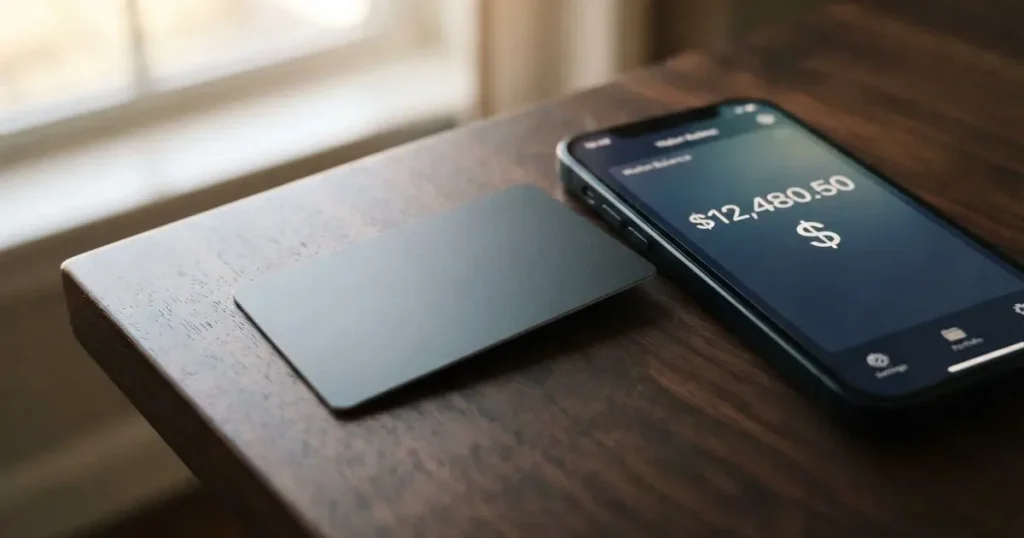
Ruvo is a virtual payment card denominated in US dollars, funded in Brazilian reais through Pix or in dollars, spendable anywhere a card is accepted, and addable to Apple Pay and Google Pay. The interesting part is not the card itself — it is the plumbing underneath it: a self-custodial wallet on one side, regulated partners in the US and Brazil on the other, and a brand that is explicit that it is not a bank. My score for it is 6.1 out of 10. That is not a bad score. It is a narrow one, and it reflects a service that is genuinely built for one corridor — moving dollars from a self-custody wallet into everyday spending in Brazil and the United States — while telling you very little about the things you would want to know before trusting it with anything else.
If you are in that corridor, this is worth reading to the end. If you are looking for a general-purpose card that works everywhere with no surprises, the gaps I describe below are going to decide it for you.
The conditions described here are current as of October 28, 2026.
Verdict: 6.1 / 10, aimed at a specific corridor rather than at everyone
Here is the whole score in one table, criterion by criterion, exactly as I marked it.
| Criterion | Mark | Why |
|---|---|---|
| Who can get it | 5 / 10 | “Accepted worldwide”, with Brazil (Pix) and the US (USD balance) called out; availability “varies by jurisdiction, user type, provider, and product” |
| Cost | 8 / 10 | USD purchases with no fee; other currencies 1% foreign transaction fee plus the rate; IOF 0%; 0.5% fee in the Pix example; issuance not disclosed |
| Top-up options | 5 / 10 | Top up in reais (Pix) or dollars, arriving in under a minute; earlier checks mention USDT in a self-custodial wallet and ACH/wire for USD; coins and networks are not named |
| Reliability and complaints | 6 / 10 | Ruvo Financial Inc., “NOT A BANK”, issuer not named, US and Brazilian partners are licensed; no complaints found; App Store 4.9 from 31 ratings |
| Everyday use | 6 / 10 | Virtual card in USD, Apple Pay and Google Pay available; plastic card and ATM details not disclosed |
| Total | 6.1 / 10 | A focused product with thin public detail |
Read that table the way I read it. The strongest mark is cost, and it is strong because the published numbers are good — no fee on dollar purchases, a flat 1% on anything else, zero IOF. The weakest marks are the ones that would require Ruvo to say more than it does. Who can get the card, how you fund it, whether you can hold physical plastic or use an ATM — each of these is answered with a shrug and a pointer to terms of use.
The card suits you if you are moving dollars between a self-custody wallet and everyday spending, if Brazil or the US is where you live or spend most of your money, and if you are comfortable with a product whose issuer you cannot name from its public pages. It does not suit you if you need a physical card in the post, ATM withdrawals, a published monthly fee, or a clear statement of which coins and networks it accepts — because the card’s public pages say none of those things.
One more thing before you read on. Nothing in this review is an instruction to open an account, and nothing in it is a way around a rule. Identity checks, sanctions screening and country restrictions apply to Ruvo as they do to any regulated partner’s product, and if you fall outside them the honest answer is that the card will not work for you.
Will they give you the card?
The card’s own page says the card is “accepted worldwide” and highlights two places in particular: Brazil, where funding runs through Pix, and the United States, where the balance sits in dollars. That is the sales pitch, and it is a real one.
The terms are blunter. They say availability “varies by jurisdiction, user type, provider, and product” (1.1). That single sentence does a lot of work. It means the card is not actually available everywhere the marketing implies, and it means the exact answer to “can I get it in my country” depends on which partner Ruvo has routed you to. Ruvo reserves the right to restrict access by jurisdiction and sanctions. And in its terms you, the user, represent that you are not a person on the sanctions lists of the US, the UN, the EU, the UK or Brazil (1.4). That is a representation you make, not a formality the system runs for you.
So the honest answer to “will they give you the card” is: probably, if you are in Brazil or the US and your details check out; possibly elsewhere, through a partner; and not at all if you fall inside one of those sanctions regimes. Where you live and what citizenship you hold both matter, and Ruvo’s terms lean on both.
How to get it
The card’s terms tell you what identity verification may involve before a partner lets you in. A partner may require your legal name, date of birth, address, a government ID, a taxpayer ID and biometric verification (3.2). You must be 18 or older (1.5). And if that process fails or flags something, the terms are explicit about the consequences: limits, suspension, or termination (3.4).
What the public pages do not give you is the sequence. The steps to apply are not stated. Nor is the level of KYC you will be assigned, which in practice decides how much of the above you are actually asked for. Both of these are not stated on the pages I read — a distinction worth keeping in mind, because “not stated” is not the same as “not required”, but it does mean you cannot plan around it.
The card itself, once you have it, is digital and virtual, and managed in an app. You can view the card’s details, freeze it, set a PIN, replace it, manage limits, and add it to Apple Wallet. It is denominated in US dollars. The card network is not stated on the page — I cannot tell you from Ruvo’s own materials whether this runs on Visa or Mastercard. One third-party source, Brazil Journal in January 2026, described it as a Visa Platinum card for USD spending; that is unofficial, and the card has not confirmed it to me.
Delivery is not stated. The page shows only the digital card and the wallet setup. If you are hoping for plastic in the post, you will not find that promise anywhere on Ruvo’s public pages.
Fees: what it really costs
This is where Ruvo is at its clearest, and it is the section that most deserves your attention — not because the numbers are bad, but because they are published, when so much else here is not.
| Fee or limit | What the card states |
|---|---|
| Issuance fee | not stated — no issuance figure published |
| Monthly fee | not stated — no monthly figure published |
| USD purchase fee | No fee |
| Non-USD purchase | 1% foreign transaction fee, plus the applicable exchange rate |
| IOF | 0% |
| Pix conversion example | R$1,000 converts to about 196.41 USDC at 5.0915 BRL per USDC “after a 0.5% fee” |
| ATM fees | not stated |
| Card balance ceiling | Spending capped by your own Ruvo balance; you choose how much balance is available on the card; no figures published |
| Limits | Managed in the app |
Three everyday payments, and which fees bite:
- A coffee in São Paulo, paid from a dollar balance. This is the case where the 1% foreign transaction fee applies on top of the exchange rate. It is the normal case for anyone holding the card in USD and spending in reais, and it is the cost you will feel most often.
- A subscription billed in dollars, from a balance you funded in dollars. No fee. The card spends dollars, you funded dollars, and nothing is converted. This is the Ruvo case that works exactly as advertised.
- Loading the card from a Pix transfer in reais. The card’s own example: R$1,000 becomes about 196.41 USDC at 5.0915 BRL per USDC, “after a 0.5% fee”. That is the top-up cost, not the spend cost, and it is separate.
Two costs the card’s pages do not quantify. On-chain network fees are charged by the blockchain itself and fluctuate, and are separate from anything Ruvo takes (terms 4.7). And settlement between institutions can introduce costs of its own that the card does not itemise.
There is also an unofficial fee schedule from Brazil Journal, January 2026, which lists 0.9% for individuals converting USDT to USD or BRL and 1.8% for USD to BRL, with lower rates for businesses at 0.2% and 0.4%, and crypto-to-crypto conversions free. I have not seen that confirmed by the card itself, so treat it as a third-party reading rather than the official schedule. The official numbers are the ones in the table.
Where Ruvo says nothing at all: whether there is a monthly fee, whether issuance costs anything, what ATMs charge, and what any tier structure looks like — the card’s pages describe a single card, with no tiers published.
How to Top up the card
Ruvo’s stated funding routes are two, and they are simple. You add money in reais, through Pix, or in dollars. Funds arrive in under a minute. The card states 0% IOF on this.
An earlier check of Ruvo’s materials described a wider picture: USDT held in a self-custodial wallet, and ACH or wire for dollar funding. That is a real option for someone already holding stablecoins and running their own keys.
What the card does not tell you, and this is the part that matters most for anyone sending crypto: which coins and which networks are accepted. They are not listed on the card page. If you are the kind of person who funds a card by sending USDT on Tron or USDC on Base, you cannot confirm from Ruvo’s own pages that your network is one it will accept — and if you send on the wrong network, the funds are gone, because blockchain transfers do not reverse and recovery is a manual support process with no guarantee. That is not a Ravo-specific warning; it is true of any card you fund this way, and it is exactly the sort of thing that should be confirmed before your first transfer rather than after.
There is no published minimum top-up amount either. And when you want out, the terms are honest but thin: closure is handled by email to [email protected] or [email protected], and is processed within a reasonable time. Your self-custodial wallet is unaffected by closing a Ruvo account — which is the whole point of the self-custody design, and also the reason no withdrawal figure for the card balance is given.
Paying with it every day
The day-to-day mechanics are competent and small. You add the virtual card to Apple Pay or Google Pay, for contactless and online payments. In the app you can freeze the card, set a PIN, replace it, and manage limits. The card is virtual; there is no disclosed plastic option.
What the pages do not disclose matters here. Blocked merchant categories are not stated. So you cannot tell from the card whether gambling, crypto exchanges or certain adult merchants will be declined. Many issuers block certain categories as policy rather than by law, and the list varies by issuer — Ruvo is not telling you theirs.
The iOS app, “Ruvo – Global Dollar Account”, sits at 4.9 from 31 ratings as I read it, version 2.1.9. A high score from a small number of ratings is a good sign and a thin one. Google Play is listed on the site; I did not read its rating.
If a payment goes wrong, the terms set out your position and it is not a soft one. Fiat and card transactions may be returned, reversed or charged back, and you remain liable (4.11). Disputes on the fiat rails follow the provider’s own rules (4.4). Resolution is informal first, and Ruvo has up to 30 days to respond (10.3). The card’s own help FAQ on this is not shown to me. Thirty days is not fast when a payment is disputed.
What can go wrong
Let me separate what I could not find from what I found worrying.
On the company side: Ruvo Financial Inc., governed by Delaware law (10.4), headquartered in Brazil, CEO Alec Howard. The card says “NOT A BANK” and works with regulated partners in the US and Brazil. The issuer is not named. Ruvo does not custody funds and does not perform regulated activities in Brazil. Its own licences are not listed — the licences cited are its partners’, who hold VASP and payment licences (4.3). So the regulated entity you are actually dealing with on a given transaction is a partner you cannot identify from the card’s pages. For a product touching dollars and euros, that is a structural feature, not a scandal, but it is something to be comfortable with.
On money: a self-custodial wallet means Ruvo does not hold your private keys and does not custody your fiat (terms 4.2). That is a genuine benefit — a provider failure does not take your coins. But it also means the self-custody risk is entirely yours: lose the seed phrase and the funds are unrecoverable, because blockchain transfers are irreversible and a stolen key has no built-in recovery. And the fiat side is not bank-deposit-insured: Ruvo is not FDIC or SIPC insured. What you get instead is app-level control — freeze, PIN, limits. Two-factor authentication is not stated.
On track record: I found no official incident reports and no complaints. There is no Trustpilot page for the Ruvo website as of 2026-10-21, and no recurring complaint themes surfaced. On one hand, that is what you would want to find. On the other, it is partly a function of size — a product this young and this narrow has not been around long enough to have a complaint history, and a card with no plastic, no ATM and no published fee schedule is not the sort of thing that generates many complaints either way.
On funding: Ruvo raised a seed round of US$4.6 million led by 1confirmation in 2026, per latamfintech.co and startupi. YC lists the company under a former name, Cacao. That is a company with a real existence and real backing; it is also a young one, and a young company is exactly the kind that changes its terms.
Two structural things worth holding in mind, even though they are not Ruvo’s fault. A declined payment can leave a hold on funds that lingers, sometimes up to seven days. And because prepaid and foreign-issued cards are visible in their BIN — merchants can look up which institution and country issued the card — a Ruvo card can look “foreign” in a shop and attract extra scrutiny or a decline. That is a property of the category, not a defect in this card.
What to take instead
If Ruvo’s thinness on plastic, ATMs and published fees is a problem for you, the three alternatives below each publish more detail. All three scored at or near Ruvo’s own 6.1, and each is a different bet.
| Alternative | Score | Card | Cost | Rewards |
|---|---|---|---|---|
| TokenPocket | 5.8 / 10 | Visa debit in a list of European countries, Mastercard debit in Australia, Canada, Hong Kong, Japan, Taiwan, New Zealand, Singapore, South Korea, UK and others; runs on Arbitrum; virtual | A small portion of NFT creation fee partly covered; otherwise no additional fees; 1% fee on crypto deposits, later refunded via rewards | No cashback stated; the 1% deposit fee refunded later through rewards or reduced transaction fees |
| MetaMask | 7.1 / 10 | Mastercard virtual card issued instantly, metal pre-orderable after approval, one per user; issuer Monovate | Virtual free, no annual or maintenance fee; metal $199/year | Cashback in mUSD: virtual 1%, metal headline 3% but 3% capped at the first $10,000 spent then 1%; $FLY bonus 5X/7X via the Blackbird dining app |
| KAST | 6.1 / 10 | Virtual and physical, up to 10 cards; Visa Platinum (Standard), Visa Infinite metal (Premium), Visa Infinite gold (Private); USD balance | Standard 0 USD, Premium 1,000 USD/year, Private 10,000 USD/year, billed annually; extra virtual card 2 USD; Standard physical 0 USD plus 40 USD delivery; inactivity 1 USD/month after 12 months | Cashback in USD: Standard 1.5% on first 2,000 USD/month, Premium 2% on first 10,000, Private 3% on first 40,000; KAST Points add 0%, 1% or 2% by tier |
Three notes on reading that table:
- MetaMask is the strongest of the three at 7.1, and it is the one with the widest published detail. It opens sign-ups in 45 listed countries and territories, and it is frank that ineligible regions limit sign-ups, not spending. Proof of residency is required. It spends directly from your connected wallet across Linea, Base, Monad and Solana, holding mUSD, wETH, EURe, GBPe, USDC and USDT. US and UK sign-ups are temporarily closed per its FAQ. Fees are a “minimal fee for each transaction” with the amount not stated on the pages I read, and no MetaMask fees or foreign transaction fee on top, using the Mastercard rate. In exchange for the metal tier you pay $199 a year, and the headline 3% cashback drops to 1% after the first $10,000 spent.
- KAST ties Ruvo at 6.1 and is the most expensive and the most explicit. It gives you the most detail on any of them: annual membership from 0 to 10,000 USD, stablecoin top-ups at 0%, USD spend at 0%, transaction fee 0%, Apple and Google Pay 0%, and a non-USD FX fee of 0.5%–1.75% depending on your country. It is honest about its residency gate too — if your country is not listed, it is not available, and holding an ID from a restricted region can disqualify you even from a supported country, with VPN not a way through. Its terms and its token list already conflict with each other on which stablecoins are acceptable.
- TokenPocket trails at 5.8 and is the least finished. Its Americas launch was “planned for Q2 2025”, which tells you how to read the rest of it. Cards are virtual, no physical card is mentioned, and the 1% deposit fee is only refunded later.
Who I would recommend it to
I would recommend Ruvo to someone specific: a person in Brazil or the United States, or between them, who already runs a self-custodial wallet, wants to move dollars or reais into an ordinary card without going through a bank, and is content to accept that the partner handling their money is behind a page they cannot read. The Pix-in-under-a-minute funding and the flat 1% foreign transaction fee are real, concrete advantages in exactly that corridor, and the self-custody design means a provider failure would not take their crypto with it.
I would not recommend it as a first card, as a card for a trip, or as a card for someone who needs a physical one or an ATM. It would also not be my choice for someone who wants to hold a balance for months, because the card’s protections are not deposit insurance and its terms reserve wide latitude to change.
Before your first transfer, my advice is unglamorous and specific: confirm which coins and networks Ruvo accepts, in writing, because the card does not publish them. Read the fee line for your own corridor rather than the headline. And keep the self-custody warnings in view — the seed phrase is yours, and no one at Ruvo can recover it for you.
Frequently asked questions
What is the Ruvo card?
Ruvo is a virtual payment card denominated in US dollars, spendable wherever cards are accepted and addable to Apple Pay and Google Pay. You fund it with Brazilian reais through Pix or with dollars, and it draws on a balance you control rather than a bank account. Ruvo describes itself as “NOT A BANK” and works through regulated partners in the US and Brazil. The card is virtual and managed in an app.
How does the Ruvo card work?
You add money in reais via Pix or in dollars, and the funds arrive in under a minute. The card spends only the balance you have loaded, so it cannot overdraw, and you choose how much of that balance is available on the card. Purchases in dollars carry no fee. Purchases in other currencies add a 1% foreign transaction fee plus the applicable exchange rate.
Is Ruvo a bank?
No. Ruvo’s own terms say “NOT A BANK”. The company is Ruvo Financial Inc., governed by Delaware law, and it works with regulated partners in the US and Brazil who hold the relevant licences. Ruvo does not custody funds and does not perform regulated activities in Brazil. The issuer of the card is not named on the public pages, so the regulated entity behind your transaction is a partner you cannot identify.
Who owns Ruvo?
Ruvo is Ruvo Financial Inc., a company headquartered in Brazil with Alec Howard as CEO. YC lists the company under a former name, Cacao. Ruvo raised a seed round of US$4.6 million led by 1confirmation in 2026. The card’s public pages do not state who issues the card itself.
Is the Ruvo card available in my country?
The card’s page says “accepted worldwide” but highlights Brazil (Pix funding) and the US (USD balance). Its terms say availability “varies by jurisdiction, user type, provider, and product”. Ruvo may restrict access by jurisdiction and sanctions, and you represent that you are not on the US, UN, EU, UK or Brazil sanctions lists. Ask Ruvo directly for your country before you rely on it.
Does the Ruvo card require KYC?
Yes, in substance. The terms say partners may require your legal name, date of birth, address, a government ID, a taxpayer ID and biometric verification, and you must be 18 or older. Failure to complete it leads to limits, suspension or termination. The specific steps and the KYC level you will be assigned are not stated on the public pages, so plan on supplying documents rather than on a quick sign-up.
How much does the Ruvo card cost?
Spending in US dollars carries no fee. Spending in another currency adds a 1% foreign transaction fee plus the applicable exchange rate, and IOF is 0%. Ruvo’s Pix example converts R$1,000 to about 196.41 USDC at 5.0915 BRL per USDC after a 0.5% fee. Whether there is an issuance fee or a monthly fee is not stated on the card’s pages.
How do I top up the Ruvo card?
You add money in reais through Pix or in dollars, and funds arrive in under one minute. Earlier checks also described USDT from a self-custodial wallet, and ACH or wire for dollar funding. Critically, the coins and networks accepted are not listed on the card page, so confirm those with Ruvo before sending a blockchain transfer — a transfer on an unsupported network cannot be reversed.
Is the Ruvo card safe?
The self-custodial design means Ruvo does not hold your private keys and does not custody your fiat, so a provider failure would not take your crypto. But the funds are not FDIC or SIPC insured, and you alone carry the seed-phrase risk, since blockchain transfers are irreversible and have no built-in recovery. You can freeze the card and set limits in the app; whether two-factor authentication is offered is not stated.
Is the Ruvo card worth it?
If you move dollars between a self-custody wallet and everyday spending in Brazil or the US, the fast Pix funding and the flat 1% foreign transaction fee make it worth a look. If you need a physical card, ATM access, a published monthly fee, or a clear list of accepted networks, it is not — the card discloses none of those. I scored it 6.1 out of 10, and the score is about how narrow and how quiet it is, not how bad it is.
Wallet cards: your questions answered – cryptocardanswers
Content created by the «cryptocardanswers» team