
A Solana-first Visa for stablecoin holders, with fees and rules you should read first
 Available in US
The Solayer card is a Visa debit that spends from a stablecoin balance on Solana, with a virtual card in the Solayer Pay app and a physical card you can order for an extra shipping fee. If you already hold stablecoins and your country is not on the card’s restricted list, the proposition is simple: load the card, tap to pay, and the network converts at the moment of swipe. If your country is on the restricted list, or if you rely on cash withdrawals, the experience is narrower than it first looks.
This review walks through who can get the card, what it costs in real-world payments, how the top-up actually works, and where the product still feels unfinished. Conditions are current as of October 28, 2026.
Verdict
I rate the Solayer card 6.2 out of 10. It is a competent stablecoin-to-Visa product for people who already live in the Solana ecosystem, but several things hold it back: a $20 yearly membership, conflicting information between official pages on the physical card and ATM use, an unnamed legal entity behind the Solayer brand, and a marketing line that calls the card non-custodial while the documents describe a hybrid custody model. For readers who need a polished, well-documented crypto card today, the score puts Solayer a step below MetaMask (7.1) and roughly level with KAST (6.1) on my comparison scale.
The card suits stablecoin holders on Solana who live in supported countries and want a Visa they can top up from their own wallet. It does not suit readers in restricted countries, anyone who needs predictable cash access, or anyone looking for a self-custody product with clear technical guarantees.
| Criterion | Mark | Why |
|---|---|---|
| Who can get it | 7/10 | Broad list of supported countries, but US coverage is partial and a long list of large markets is excluded |
| Cost | 5/10 | $20/year membership and a one-time activation fee, plus fees on non-USD spending and cross-border use |
| Top-up options | 5/10 | Stablecoins on Solana, with no fiat on-ramp and no named coins on the public page |
| Reliability and complaints | 6/10 | Issuer named, but Solayer’s own entity and licences are not, and the marketing copy conflicts with the custody description |
| Everyday use | 8/10 | Virtual and physical Visa, Apple Pay, Google Pay, and a published ATM limit on the physical card |
| Total | 6.2/10 |
Will they give you the card
Solayer runs the eligibility rule twice, and the two rules do not match. The terms of service list residents and citizens of certain countries as ineligible “regardless of their current place of residence,” so the check applies to both where you live and what passport you hold. The list is long and includes, alongside the United States in general, countries you might expect to be open: most of the European Union, the United Kingdom, Switzerland, Turkey, the United Arab Emirates, India, China, Ukraine, Canada and Australia. Georgia, Serbia, Moldova, Montenegro and Belarus are also on the restricted list.
The card is unavailable to residents and citizens of many countries, including Russia, Belarus, and much of the European Union, the United Kingdom, Switzerland, Turkey, the United Arab Emirates, India and China. Countries that are not on the restricted list, and where eligibility is therefore not confirmed one way or the other, include Armenia, Kazakhstan, Azerbaijan, Uzbekistan and Kyrgyzstan. Solayer’s own page does not publish a positive “supported countries” list, only the exclusion list, and an unofficial count by CryptoCardHub puts the figure at around 120 supported and 94 restricted.
The United States has a second layer of friction. Sixteen states are restricted: Arizona, Delaware, Georgia, Idaho, Louisiana, Maryland, Montana, Nevada, New Mexico, North Dakota, Ohio, Oregon, Rhode Island, South Dakota, Vermont, Washington and Wisconsin. Separately, the card terms say users must attest they are not US citizens, since the product is “intended for those outside of the United States.” The two documents point in slightly different directions on US persons, so if you are a US citizen living abroad, expect to be asked about your status at sign-up.
The age rule is the usual 18+, and you must pass a KYC check. The check is run by Sumsub and asks for your country of residence, address, occupation and annual salary, then a one-time code by email, then a government photo ID (passport, driving licence or Aadhaar card, both sides, in JPG, PNG, HEIC, WEBP or PDF up to 50MB) and a face liveness check. Approval takes 3 to 5 business days. Solayer’s own pages do not list the proof-of-address document or the specific rejection reasons, so you only learn what the system requires by going through it.
How to get it
The application itself is straightforward once you pass the eligibility test. You install Solayer Pay, create an account, complete the KYC steps above, and pay a one-time $20 account activation fee that covers the virtual card for the first year. Once approved, you have a virtual Visa in the app that you can use for online payments and add to a mobile wallet.
A physical card is optional and is ordered from the app. There is no card-issuance fee, but you do pay shipping. US Express shipping is $24.99 and takes 2 to 5 business days with tracking; International Express is $59.99 and takes 5 to 11 business days with tracking and includes production. Once the order is placed, the delivery address cannot be changed. If the card is lost or stolen, you freeze it in the app and order a replacement; the replacement fee is not stated.
Two things to notice before you start. First, the virtual card is included only for the first year, which is one reason the membership sits separately at $20 per year. Second, the public pages disagree on whether a physical card exists. A fee page reads as if cards are digital only with a physical card “coming soon,” while the Physical Card page describes ordering one and gives a shipping price. I have based the costs and signup above on the page that does describe the physical card, because it is the one that lists a price.
What it really costs: Fees
The cost story is split across several pages and the numbers do not fully agree. Below is what the public documents say, with the disagreement called out where it matters.
| Fee or limit | Value |
|---|---|
| Account activation (first time) | $20 one-time, covers the virtual card for the first year |
| Annual membership | $20/year, single product, no tiers |
| Virtual card (after first year) | $20/year, included in the membership |
| Physical card issuance | $0 (shipping only) |
| Physical card shipping | $24.99 US Express (2–5 business days) or $59.99 International Express (5–11 business days) |
| USD transaction | $0.15 (fee page) |
| Non-USD spend | $0.10 + 1.5% (fee page) or $0.10 + 1.75% (FAQ) |
| Cross-border fee | Up to 3% on top of the spend fee |
| Crypto conversion fee | Not stated |
| Late payment | Up to $40 |
| Returned payment | Up to $29 |
| APR | 0% (may be introduced later) |
| ATM withdrawal | Up to $250 per withdrawal including surcharges, max 3 attempts per rolling 24 hours (physical card, where supported) |
| Cash advance | Not available per terms; a news report describes ATM withdrawals (pages conflict) |
| Daily and monthly spending limits | Dynamic, set by the issuer; specific figures not stated in official pages; an unofficial listing mentions $10,000 daily and $30,000 monthly |
| Cards per account | Up to 10 in total, including cancelled |
| Inactivity | Card deactivates after 6 months of inactivity; reactivation needs a new card |
To make those fees less abstract, here is what three common payments look like on the card, using the fee page’s numbers.
- A $50 coffee in London, paid in pounds. The card is denominated in US dollars, so your pounds are converted to dollars at the card-network rate, then a non-USD fee of $0.10 plus 1.5% is added, and if your billing country is treated as different from the merchant country a cross-border fee of up to 3% can be added on top. On a $50 charge that is roughly $0.85 in non-USD fees, and up to another $1.50 in cross-border fees, before any markup on the network rate.
- A $200 online subscription in US dollars, billed by a US merchant, paid from a euro balance. The USD transaction fee of $0.15 applies, but the cross-border fee may not, because the merchant settles in the card’s currency. If you top up from a non-USD balance, the conversion rate the issuer uses is not stated on the public pages, which is the part that costs you the most in real life.
- A $250 ATM withdrawal in a country that supports cash access on the physical card. The $250 is the per-withdrawal cap including any ATM-network surcharge, so the cash you actually receive is $250 minus the ATM owner’s fee. The terms also call cash advances “not available,” which is a contradiction the public pages have not resolved.
If you only ever spend in US dollars inside the United States, the only fee that applies is the $0.15 per transaction. If you spend abroad, on a card settled in US dollars, the non-USD and cross-border fees will stack.
How to top it up: Top up
Top-up is the part of the flow that the card does the most to keep simple on the surface and the least to keep predictable in writing. The supported asset class is stablecoins; the specific coins are not named on the public page. The supported chain is Solana, and the issuer reserves the right to add other networks at its discretion. Steps in the app are: open the Card tab, tap Deposit, approve the transaction in your wallet.
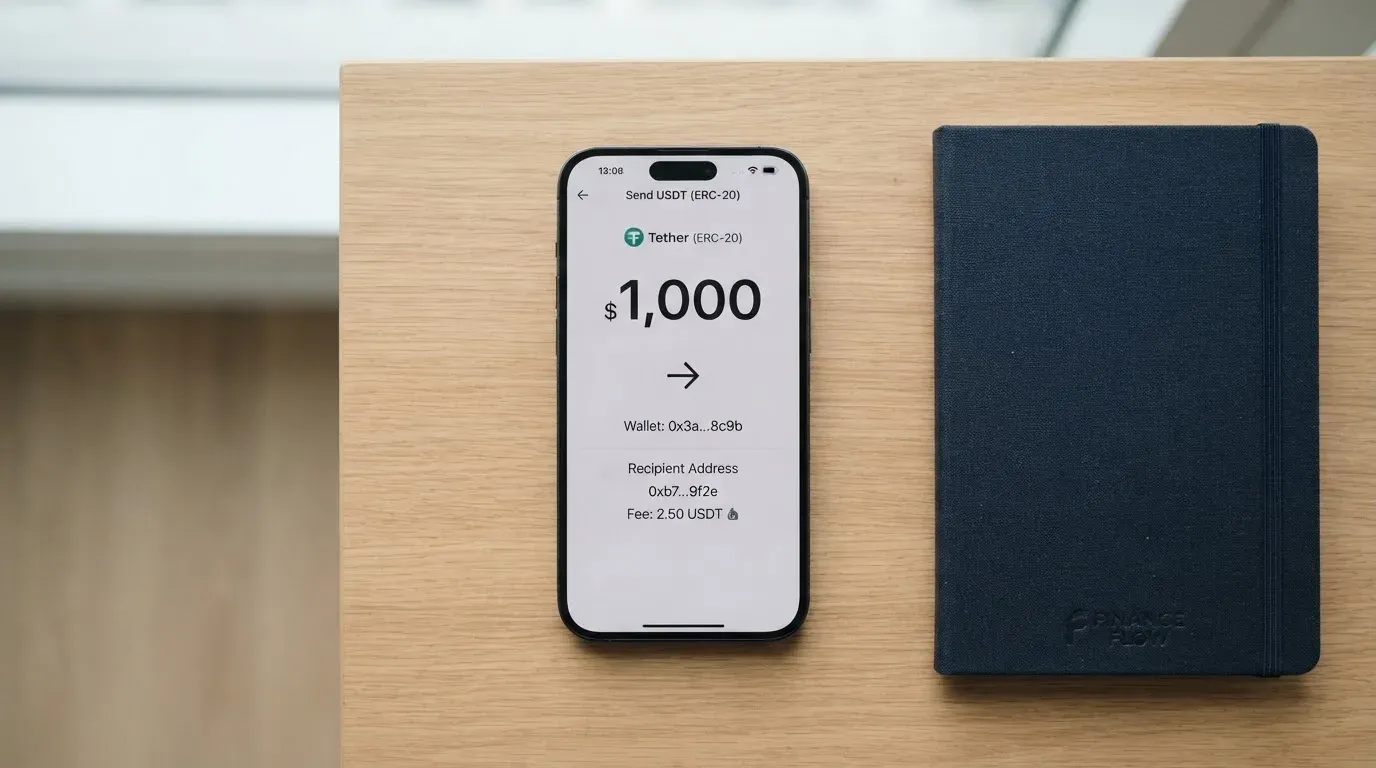
The top-up fee is the single most inconsistent figure in the documentation. The fee page says 1% per top-up. The FAQ says 0.5%. The top-up tutorial says $0.10 per top-up transaction. I cannot tell you which one you will pay, so plan for the 1% figure and treat the lower numbers as a surprise if they hold for your account.
What the pages do not say is just as important. There is no minimum top-up stated, no fiat on-ramp (so you cannot load the card from a bank transfer), no list of which stablecoins are accepted, and no description of how to move a balance back from the card into your own wallet. The terms say you can repay your balance at any time without penalty, and that successful chargebacks are credited to the Solayer account, but the top-up page and the terms do not describe a withdrawal flow. If you load $1,000 of USDC and decide the next day that you would rather hold it, the route back to your own wallet is not spelled out.
There is also an inactivity rule. If the card is not used for six months, it deactivates. Reactivation is treated as a new card issuance, which in practice means a new virtual card at the start of the next membership year and, for the physical card, a new order with shipping paid again.
Paying with it every day
In day-to-day use the card behaves like a regular Visa. The Solayer Pay app is on the Apple App Store and Google Play, and the virtual card can be added to Apple Pay and Google Pay for contactless payment. The product page does not say anything about a desktop extension, so online checkout is handled by the virtual card details in the app or by the mobile wallet.
There are restrictions. Prohibited activity covers gambling-related transactions, which the card blocks on policy rather than by law, and the same logic catches “cash-like” transactions: travellers’ cheques, foreign currency, money orders, wire transfers and cryptocurrency purchases. If you use the card to buy crypto on an exchange, the transaction is likely to be declined at authorisation.
There is no cashback rate on the public pages. The card earns points from spending and referrals, and the product page describes ecosystem perks and yield on eligible balances, but there is no percentage you can count on. The widely-quoted 1% cashback and a 10% first-purchase offer are described in third-party listings as a 2025 launch campaign, not a current default rate, so I would not build a budget around them.
On disputes, the process is to contact the merchant first, and if that does not resolve the issue, or if the charge was unauthorised, start a chargeback through your Solayer account. The card terms give you no more than 60 days from the date the charge appears on your periodic statement. Card-network rules may require additional documents, and the disputed amount can stay due while the dispute is open. If you win, the money is credited back to the Solayer account, not to your external wallet.
App store ratings are thin. CryptoCardHub, on 11 August 2026, listed the App Store US rating as 5.0 from two ratings, and Google Play at 500+ downloads; a third-party report from 3 March 2026 showed a 0.0 score. Both numbers are too small to be meaningful, which is itself a signal: the product is new enough that very few people have rated it.
What can go wrong
The two structural risks are the ones that matter most, because they are not about fees or features, they are about who actually holds the money and who regulates them.
The card is issued by Third National, which is named in the card terms. The Solayer legal entity, the licences it holds and the regulatory perimeter it operates inside are not stated on the public pages. A regulated issuer in the US, an EMI in the EU or a CASP under MiCA each come with their own safeguarding rules, complaint routes and disclosure obligations, and you cannot tell from the website which one applies. If something goes wrong, “Third National” is the only name you can point to in a complaint.
The second risk is custody. The product page describes a hybrid custody model: a small operational balance in hot wallets, the rest in cold wallets held offline under multi-signature, with “circuit breakers” that freeze suspicious activity, and instant card freeze from the dashboard. The marketing copy on the same product describes the card as non-custodial and fully on-chain. The two descriptions do not match. Hybrid custody means a custodian holds the bulk of the funds, so a user who reads “non-custodial” and acts on it (for example, by treating the card balance as if it were still in their own wallet) is taking on counterparty risk they did not agree to.
There is also a thin public record of user complaints, which is informative in both directions. There is no Trustpilot page for the Solayer card, no Reddit or forum thread with multiple reports, and CryptoCardHub’s 11 August 2026 entry says independent feedback is minimal. The product is new enough that there is not much to complain about, but also not much to reassure you. Coverage so far is the launch news in April 2025 (then called the Emerald Card), the May 2026 rebrand to Solayer Pay, the physical card announcement dated 14 May 2026 from Palo Alto, and a Coin Bureau protocol review.
Support runs through the Solayer Discord at discord.gg/solayerlabs, with email at [email protected] and a US phone number +1 (734) 510 1402. Two-factor authentication, insurance on the balance and any formal spending controls are not described in the documents I read.
What to take instead
Three alternatives, each with a different trade-off, give a sense of where Solayer sits in the market.
TokenPocket (5.8/10) runs a Visa debit in several European countries (Germany, France, Spain, Switzerland among them) and a Mastercard debit in Australia, Canada, Hong Kong, Japan, Taiwan, New Zealand, Singapore, South Korea and the UK, with the Americas planned for Q2 2025. Cards are virtual and balances are held in EUR24 or USD24. The deposit fee is 1% (refundable later through rewards and reduced transaction fees) and TokenPocket says there are no other card fees. Compared with Solayer, the upside is a cleaner fee story and an explicit fiat balance; the downside is a smaller country list and a virtual-only product.
MetaMask (7.1/10) is the strongest of the three on documentation. The card is Mastercard, issued by Monovate with Crypto Life as provider, virtual first with a Metal tier at $199 per year, and a card per user. Sign-up is open in 45 listed countries and territories (Andorra, Argentina, Brazil, Canada, Mexico, Germany, France, Spain, Uruguay and others); other regions join a waitlist, and US and UK sign-ups are temporarily closed per the FAQ. The card spends directly from the connected wallet on Linea, Base, Monad and Solana, in mUSD, wETH, EURe, GBPe, USDC and USDT (nine tokens per the page). Cashback is paid in mUSD: 1% on the virtual card, 3% on Metal up to the first $10,000 spent then 1%, with a $FLY bonus of 5X on Virtual and 7X on Metal through the Blackbird dining app. If you want a self-custody-linked card with named networks, named tokens and a published reward rate, MetaMask is the easier recommendation.
KAST (6.1/10) sits between the two. It issues Visa Platinum (Standard), Visa Infinite metal (Premium) and Visa Infinite gold-plated (Private) cards, with up to 10 cards per user, and lists Visa, Mastercard, Pengu, Solana and Bitcoin designs. Residence-based eligibility is checked at KYC: if your country is not listed at that step, the card is not available where you live, and a VPN does not bypass the check. The cost structure is layered: Standard is $0/year, Premium is $1,000/year and Private is $10,000/year, all billed annually. Standard physical card has no card fee but a $40 delivery charge, Premium and Private physical cards are included, and there is a $1/month inactivity fee after 12 months. Fees on spending are unusually low: stablecoin top-up 0%, USD card spend 0%, transaction 0%, Apple and Google Pay 0%, and a non-USD FX fee of 0.5% to 1.75% depending on country and programme. Cashback in USD is 1.5% on Standard up to $2,000/month, 2% on Premium up to $10,000/month and 3% on Private up to $40,000/month, paid when the transaction is authorised. If you live in a country KAST supports and you can live with the membership fee, the reward structure is more generous than Solayer’s.
Solayer, then, is a step behind MetaMask on documentation and self-custody clarity, broadly comparable to KAST on cost once you account for the membership and shipping, and a long way ahead of TokenPocket on physical-card and mobile-wallet support, but only if you are in a country the card actually serves.
Who I would recommend it to
I would recommend the Solayer card to a stablecoin holder on Solana who already lives outside the restricted list, is comfortable paying $20 a year plus shipping for a physical card, and is not relying on the marketing claim that the card is non-custodial. If your day-to-day spending is online and in US dollars, the fees are predictable; if you travel often or you want cash, the cross-border percentage and the contradictory ATM rules make it harder to budget.
I would not recommend it to a reader in a restricted country, since the exclusion list covers most of the EU, the UK, Switzerland, Turkey, the UAE, India, China, Ukraine, Canada and Australia, and the list is enforced against both residence and citizenship. I would also be cautious if you specifically need a self-custody product, because the official custody description places the funds with a provider rather than in your own wallet, and the marketing copy does not match the documentation. Until the Solayer entity, the licences it holds and the resolution path for a failed top-up are made public, the card is a reasonable first product, not a core account.
Frequently asked questions
What is the Solayer card?
The Solayer card is a Visa debit card that spends from a stablecoin balance. It comes as a virtual card in the Solayer Pay app and, for an extra shipping fee, as a physical card. The card is denominated in US dollars, so any non-USD purchase is converted at the card-network rate and the non-USD fee applies.
How does the Solayer card work?
You install Solayer Pay, complete KYC, pay the $20 activation fee, and receive a virtual Visa. You top up the card with stablecoins on Solana, and the balance is held against your card. When you pay, the card charges in US dollars; if you pay in another currency, the amount is converted and the non-USD and possible cross-border fees are added.
Is Solayer a bank?
No. The card is issued by Third National, which is named in the card terms. Solayer is the brand and programme manager; the legal entity behind it and the licences it holds are not described on the public pages.
Who owns Solayer?
The ownership of the Solayer brand is not disclosed in the documents I read. The only named regulated counterparty on the card is the issuer, Third National.
Is the Solayer card available in my country?
The card excludes residents and citizens of a long list of countries, including most of the European Union, the United Kingdom, Switzerland, Turkey, the United Arab Emirates, India, China, Ukraine, Canada and Australia. The list is enforced against both residence and citizenship. An unofficial count puts around 120 countries as available and 94 as restricted. The United States is restricted in 16 states, and the terms also require users to attest they are not US citizens.
How do I get the Solayer card?
You download Solayer Pay, create an account, complete the Sumsub KYC flow with a government photo ID and a face liveness check, pay the $20 activation fee, and the virtual card becomes available in the app. A physical card can be ordered from the app, with US shipping at $24.99 and international shipping at $59.99.
Does the Solayer card require KYC?
Yes. The check is run by Sumsub, covers residence, address, occupation and salary, and asks for a passport, driving licence or Aadhaar card plus a face liveness check. Approval takes 3 to 5 business days.
How do I top up the Solayer card?
In the app, open the Card tab, tap Deposit, and approve the transaction in your wallet. The supported chain is Solana; other networks can be added by the issuer. The specific stablecoins are not named, and the top-up fee is given as 1% on the fee page, 0.5% in the FAQ and $0.10 per transaction in the top-up tutorial.
Is the Solayer card free?
No. There is a $20 one-time activation fee, then a $20 yearly membership that covers the virtual card. The physical card has no issuance fee but costs $24.99 to ship in the US or $59.99 internationally. Non-USD spending adds $0.10 plus 1.5% (or 1.75% per the FAQ), and a cross-border fee of up to 3% can be added on top.
Is the Solayer card safe?
The card uses provider-operated hybrid custody with hot and cold wallets, multi-signature and circuit breakers, and a lost card can be frozen in the app. The marketing material calls the card non-custodial, which conflicts with the custody description, so the safest reading is that the bulk of the funds sit with a custodian. The card is issued by Third National, but the Solayer entity, its licences and the safeguards on the balance are not described in the public documents.
Wallet cards: your questions answered – cryptocardanswers
Content created by the «cryptocardanswers» team