
A no-KYC crypto card that sells convenience, not cheapness
 Available in US

The Sovrae card is one of those crypto payment cards that skips identity verification entirely and lets you hold a Visa or Mastercard number funded straight from stablecoins. On paper that is a genuinely useful thing for a lot of people — a card number that works online and in stores, topped up in USDT or USDC, with no passport, no selfie, and no bank account in the country where you live. It is also, by the numbers attached to it, an expensive way to buy convenience. The one-time cost is $89 for a virtual card and $349 for a physical one, top-ups take a cut of 2% or 1.5%, and every single purchase carries a foreign-exchange fee and a transaction fee the card does not put a figure on. My score for the card is 6.5 out of 10: excellent for access and everyday mechanics, poor for cost, middling for anything about trust.
The conditions described below are current as of October 28, 2026.
The verdict: 6.5 / 10, and who it is actually for
Here is the score, criterion by criterion, with the reasons in my own words.
| Criterion | Mark | Why |
|---|---|---|
| Who can get it | 9 / 10 | Almost everywhere: the card excludes a list of restricted countries — Afghanistan, Belarus, Cuba, Iran, North Korea, Syria, Venezuela, Russia, Ukraine, Myanmar, Somalia, Yemen “among others” — because of Visa and Mastercard policy |
| Cost | 2 / 10 | $89 to issue a virtual card, $349 for a physical one; a 2% top-up fee on virtual and 1.5% on physical; foreign-exchange and per-transaction fees on top, with no figures given |
| Top-up options | 9 / 10 | USDT or USDC on BEP-20, ERC-20 or TRC-20; other coins swappable inside the app; every card has a permanent deposit address |
| Reliability and complaints | 5 / 10 | Cards are issued by partners in Hong Kong and Singapore, and no licences are named; there is no KYC, and equally no complaints or reviews to be found |
| Everyday use | 9 / 10 | A virtual card that activates instantly and a physical card in 5 to 7 days; Apple Pay and Google Pay on both; an ATM on the physical card |
| Total | 6.5 / 10 | Access and convenience are top marks; cost is where the card loses |
The audience this card suits is narrow but real: privacy-minded users who want a virtual or a physical card without KYC. If that is you — if the idea of handing over your documents to a payments company is the thing you are avoiding, or you simply cannot pass a bank’s checks where you live — the card does the job cleanly. You get a card number you can load with stablecoins and spend anywhere Visa or Mastercard is accepted.
What it does not suit is anyone who cares what a payment costs. The issuance price is high, the top-up fee is permanent, and the two fees that hit you on every single purchase are described only as existing, with a promise that “the full breakdown is shown in the app”. A card at $89 to open, plus 2% every time you move money onto it, plus an unnamed conversion charge at the till, is a poor deal for everyday spending. If your goal is simply to pay for things cheaply, look elsewhere; the same section below suggests what to consider instead.
One more thing to weigh before you go further: no KYC is not a bonus handed to you for free. It is also the reason the card lands at 5 out of 10 on reliability. Nobody is checking who you are, which means there is very little on the public record about this card at all — no reviews, no complaints, no Trustpilot page. You would be an early adopter whether you want to be or not.
Who they will give you the card to
The short answer: almost everyone, subject to a country list. Sovrae states the card is available globally except in restricted countries, and it attributes those exclusions to Visa and Mastercard policy rather than to its own rules. The named countries are Afghanistan, Belarus, Cuba, Iran, North Korea, Syria, Venezuela, Russia, Ukraine, Myanmar, Somalia and Yemen, with “among others” attached — meaning the list the card publishes is not necessarily the whole list. If you are in a country not named, the full list is available on request by email or Telegram.
That distinction matters if you are in one of the awkward cases. The card says it is about restricted countries, not restricted citizenship, and it does not state whether the test follows your citizenship, your residence, or where your money sits. If you are a citizen of a restricted country living elsewhere, or a resident of one holding a card from somewhere else, the card’s own pages do not tell you the answer — you would need to ask them. Treat that as an open question, not a solved one.
Otherwise the picture is as open as crypto cards get. There is no residency requirement, no credit check, no bank account in your name. That openness is the card’s strongest single feature, and it is why it scores 9 out of 10 on access.
How to get it
Getting a Sovrae card is a short process, because there is almost nothing to it. There is no identity verification of any kind — no passport, no selfie, no address proof. The card’s own description is that cards come “pre-verified upon purchase”, which in plain terms means the checks were done before you arrived, not by you. The card also states that your personal details are never passed to third parties.
The sequence runs like this:
- Buy the card — virtual or physical.
- Fund it with USDT or USDC.
- Use it.
That is the whole application. There is no waiting period, no review queue, no documents to send. Documents and age requirements are not stated on the card’s public pages, so if you are under 18 the card’s pages will not tell you whether you may open one; check with them directly rather than assuming.
Once you have chosen a card type, the two versions differ in useful ways:
| Card type | How you get it | Validity | Cardholder name |
|---|---|---|---|
| Virtual | Activates instantly | 3 years | Not stated |
| Physical | Arrives in 5–7 days | 4 years | No name by default; personalisation on request |
Both are described as “Visa & Mastercard worldwide”. The currency of the card is not stated, which matters more than it sounds — see the costs section. On delivery of the physical card, the 5–7 day figure is what the card gives; which countries it ships to, and what delivery costs, are not stated, and neither is the cost of a replacement if you lose it.
Fees and what a day of spending really adds up to
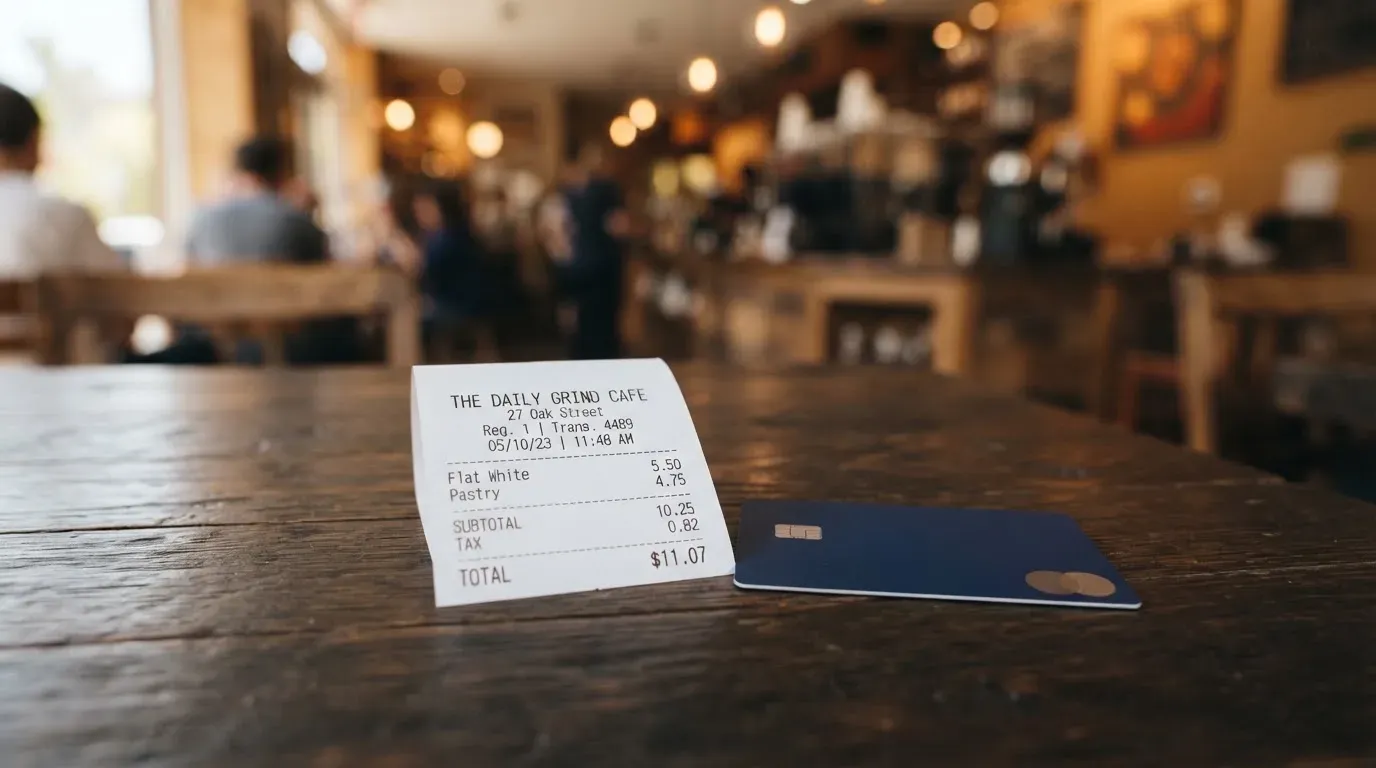
This is where the card is at its weakest, and it is worth slowing down here before anything else. One-time issuance is $89 for a virtual card and $349 for a physical one. There is no monthly fee listed. On top of that, topping up costs 2% on a virtual card and 1.5% on a physical one. And then, on every single transaction, there is a foreign-exchange fee and a transaction fee — the card names both but gives no amounts, saying only that the “full breakdown is shown in the app”.
| Fee or limit | Virtual card | Physical card |
|---|---|---|
| One-time issuance | $89 | $349 |
| Monthly fee | Not listed | Not listed |
| Top-up fee | 2% | 1.5% |
| Foreign-exchange fee | Charged on every transaction, amount not stated | Charged on every transaction, amount not stated |
| Transaction fee | Charged on every transaction, amount not stated | Charged on every transaction, amount not stated |
| ATM access | Not available | Yes; ATM fee not stated |
| ATM limits | — | $3,750 daily; $80k monthly |
| Spending limits | $80,000 per transaction; $1M daily | $80,000 per transaction; $1M daily |
Those spending limits are enormous — $80,000 in one transaction and $1M in a day — and they are the same on both cards. There is nothing to verify them against, because there is no KYC, so per-KYC-level limits simply do not apply to this card.
Now, three ordinary payments, to show what the fees do in practice.
A $20 coffee in your own country. If the card is denominated in the currency you are spending in, you may still pay a transaction fee, but there should be no conversion. The card does not state the card currency, so I cannot tell you whether this case is even clean. What you can say is that the $89 you paid is already sunk, and any top-up you funded with crypto was reduced by 2% or 1.5% before you ever reached the balance.
A $60 dinner while travelling. Here the foreign-exchange fee bites, because the purchase is priced in a currency other than the card’s. The card names the fee but does not quantify it, so the honest position is that you cannot compute this payment’s true cost from public information — you would have to read the app. Add the transaction fee on top, and the 2% or 1.5% you already paid at top-up, and a trip abroad is the scenario where this card is most expensive relative to alternatives.
A $15 subscription billed monthly. This is the case that quietly hurts. Every month you pay $15 plus a transaction fee, and every top-up behind it costs 2% or 1.5%. The small, frequent payments are where percentage fees are least forgiving — a fixed fee hurts a large payment less than a small one, but a percentage hurts everything, forever. If your $89 was spent to avoid a subscription this size, the maths is unfriendly.
The comparison that matters: there are no tiers to climb, only two card types, so nothing gets cheaper with loyalty or volume. Cost is 2 out of 10 because the structure is expensive at every layer — at purchase, at top-up, and again at every payment, twice over.
Top up: how you fund the card
Top-up is the part the card does best, scoring 9 out of 10. You fund it with USDT or USDC on one of three networks — BEP-20, ERC-20 or TRC-20. Any other coin can be converted with the in-app swap. Every card has its own permanent crypto deposit address, so you are not generating a new address each time, and the funds stay in a non-custodial wallet until you top up.
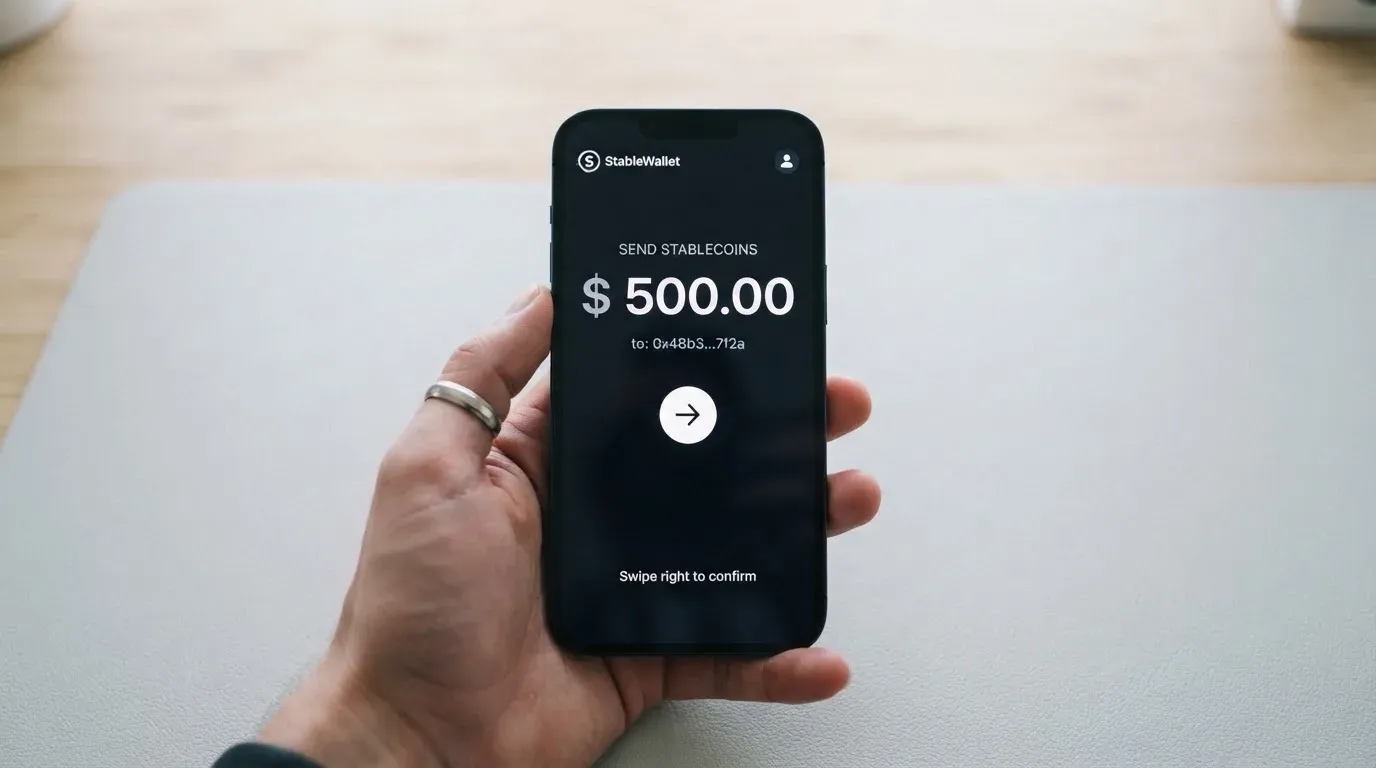
The card describes top-ups as “instant” and says they “reflect in minutes”. The top-up fee is 2% on virtual and 1.5% on physical, already listed above. What the card does not state is the minimum top-up, who pays the blockchain network fee — the charge the network itself levies for the transfer, separate from the card’s own cut — or whether fiat top-ups are possible at all. On the evidence of public pages, this is a crypto-to-crypto card, not a crypto-to-bank-card one.
Two practical warnings about stablecoins, because they apply here more than anywhere else. First, on ERC-20 networks, fees are paid in ETH, so a wallet holding USDT with no ETH in it cannot send — you need both. Second, and more important: pick the network the card supports for your token, because blockchain transfers are irreversible. Circle, for example, stopped supporting USDC on Tron in February 2024, which means “USDC over TRC-20” is not a native option — that pairing has to be resolved before you send, not after.
One more thing about withdrawal, because people ask it constantly: how to withdraw money from a Sovrae card is not stated on the card’s public pages. Do not assume you can pull funds back out to a bank account. That is a question to ask before you commit $89, not after.
Paying with it every day
Everyday use is the other 9 out of 10, and for a simple reason: the card behaves like an ordinary payment card once it is loaded. Apple Pay and Google Pay are supported on both the virtual and the physical card, which is how most people will actually use it day to day — you add it to your phone’s wallet and tap. The physical card also works at ATMs.
There are blocked categories, and knowing them saves a declined payment at a till. You cannot spend on petrol, betting, crypto, military supplies, gaming credits, non-profits or government agencies. Some of these are standard card-network restrictions on prepaid products; others reflect the card’s own policy. Either way, plan around them.
What is not there is as notable as what is. There is no cashback listed. There is a referral programme — up to $50 per card bought by users you referred, across three levels — which is not a reward for spending but a recruitment scheme, and I would read it that way. The app itself is not listed in any directory the card’s page points to. And the dispute process, the thing that matters most if a payment goes wrong, is not stated. That last gap is the one I would want filled before loading real money.
Two mechanics worth knowing, because they explain declines that have nothing to do with you. A declined authorisation can leave a hold on your funds for several days, typically up to seven. And some merchants decline prepaid or foreign-issued card numbers outright, because the issuer’s country is visible in the card’s first digits and some shops apply extra scrutiny to cards that look foreign.
What can go wrong
This is the section I would ask you to read twice, because the card is young in the public record and honesty about that is more useful than reassurance.
You cannot verify much, because there is almost nothing written down. No official incidents have been found, and searches for reviews and discussions turn up nothing about this card. That sounds reassuring and is not: silence in a search is what a brand looks like both before it gets into trouble and after nobody is looking. There is no Trustpilot page either. You are not choosing between a card with a bad record and one with a good record — you are choosing between a card with no record and something else.
The regulatory picture is thin. The card is issued by partners in Hong Kong and Singapore, and no licences are named. The card describes itself simply as “Sovrae”, with a 2022-2026 copyright line and nothing about who is accountable to a regulator. When you ask “is Sovrae a bank” or “who owns Sovrae”, the public pages do not give you an answer, and that is not a neutral fact — it means you have no named entity to complain to, no named regulator to escalate to, and no deposit guarantee behind your balance.
“Segregated” is not the same as “safe”. The card says funds are held in segregated accounts with providers. That is a real protection in principle — segregated means customer money is kept apart from the company’s own — but it is not a bank deposit, and segregated accounts at a provider you cannot name are not the same thing as a deposit guarantee scheme. The funds stay in a non-custodial wallet until top-up, which is genuinely better than handing over control permanently; the trade is that once you do top up, you are in the balance model, not the self-custody model.
Counterparty risk is real and has bitten this category before. Custodial platforms have a history of large failures — Mt. Gox, Coincheck, Ronin Network among them, hundreds of millions of dollars each. And card programmes themselves close: a supplier of crypto card programmes was suspended by Visa in Europe in 2018, and Visa terminated its agreements with FTX in November 2022, after which the associated debit card was wound down. When a programme winds down, the pattern is: a notice period, then loading stops, then spending stops, then you are asked to withdraw a balance — if the provider is still there to pay it.
Crypto transfers cannot be reversed. If you send on the wrong network or to an address for a network the card does not support, the money can be gone, with no guarantee of recovery even through support. This is why the deposit-address detail matters more than it looks.
And the category’s own watch-outs apply. Stablecoins are not actually stable — one collapsed in 2022 and another briefly lost its peg during the 2023 banking crisis — and they are not censorship-proof, since issuers have frozen tokens tied to illicit activity. Some cards also use 3-D Secure, which shifts liability for a fraudulent online payment in ways that are still argued about.
Support, when you need it, is Telegram and X under the handle @sovrae_io, plus an email address. The languages and working hours are not stated, which is worth knowing if you are relying on this card as your only way to pay for something.
What to take instead
If the reason you are here is “I need a card that works”, here is where the alternatives land — and none of them is a clean win either, which is itself a fact worth internalising about this corner of the market.
| Alternative | Score | Cost to open | Top-up | What stands out |
|---|---|---|---|---|
| Sovrae | 6.5 / 10 | $89 virtual, $349 physical | USDT/USDC on BEP-20, ERC-20, TRC-20 | No KYC; high fees at every layer |
| CardFlow | 4.9 / 10 | Free virtual card | BTC, USDT, ETH or Naira transfer | Built for Nigeria; global users welcome |
| HyperCard | 4.7 / 10 | Not stated | USDT, BTC, ETH in the app | Works in “more than 176 countries” |
| Card.fi | 6.6 / 10 | $49 virtual Classic, $249 virtual Premium | 32 coins across 5 networks | Cashback on spending; classic but pricier top-ups |
CardFlow is aimed at Nigeria — its own description is “Nigeria’s smartest fintech card platform”, with “Nigerians and global users” — and a virtual USD Mastercard that takes about 3 minutes to create and is free to create. No country list or exclusions are stated. Beyond free card creation, its fees are not stated, and so are its monthly fee and networks.
HyperCard is a prepaid card holding USD or EUR. Official pages list no country restrictions; the App Store says it works in “more than 176 countries”, which describes where it is accepted rather than who can sign up. You deposit crypto such as USDT, BTC or ETH in the app and it is converted to dollars or euros on the card. Fees are not stated on the pages available.
Card.fi is the closest to a conventional product, and it is also the only one of the four with real rewards. Cards ship to 200-plus countries, with terms barring residents of, or orders from, sanctioned countries. It offers virtual and physical Classic and Premium tiers plus a metal card, every physical order including a virtual one, and cards issued under licence from the card schemes. Virtual Classic costs $49 and Virtual Premium $249; physical and metal prices are not listed, and there is no monthly, annual, inactivity or minimum-balance fee. But the fees bite too: Classic charges a 1.5% plus $1.00 top-up fee and a 3.5% FX fee; Premium charges 1% and 2.5% respectively. It supports 32 coins across five networks with a deposit address per card, converted at market rate on arrival — and sending on the wrong chain risks permanent loss. The reward is cashback on card spending only: 0.8% on Classic capped at 10 USDT a month, 1% on Premium, and 1.2% or 2% on Metal depending on the tier, with caps from 100 to 250 USDT a month. It also advertises a headline 10% at coffee shops capped at 10 USDT a month, and variable returns on balances up to 18% on Metal.
Read that table and the shape of the choice becomes clear. Card.fi is cheaper to open, has proper licensing language and real rewards, but its FX fee can be worse than Sovrae’s unnamed one. HyperCard is the cheapest-feeling route if its unstated fees turn out modest. CardFlow is free and fast but built for a specific market. Sovrae is the only one of the four with no KYC — and that is either the whole reason you are reading this or the whole reason to look elsewhere.
Who I would recommend it to
I would recommend this card to a specific person: someone who cannot or will not pass identity checks, who needs a card number that works today, and who treats the money on it as travelling money rather than savings. If that is you, the card delivers — instant virtual access, a physical option in under a week, phone wallets on both, and a funding route that accepts the stablecoins you probably already hold.
I would not recommend it to someone spending from it every day. The costs are wrong for that. Two percent on every top-up, two unnamed fees on every purchase, and $89 or $349 before you begin is a structure that only makes sense when the alternative is no card at all.
And I would hold anyone back on one specific question, because it is the one I could not answer: who stands behind it? The card is issued by partners in Hong Kong and Singapore, no licences are named, the dispute process is not stated, and withdrawal is not stated. Those are not technicalities. They are the difference between a payment method and an introduction to a counterparty. So before you load anything, ask — in writing, so you have the answer — what happens to your balance if the issuing partner stops, whether you can withdraw to a bank account, how a disputed payment is handled, and which entity is legally responsible for your money.
Those are the right questions for anyone, and they are the questions that would move this card from a 6.5 toward a 7 or an 8.
Frequently asked questions
What is the Sovrae card?
Sovrae is a crypto payment card offered in two forms, virtual and physical, described as working on Visa and Mastercard worldwide. It has no identity verification at all — cards come pre-verified at purchase — and is funded with USDT or USDC. You convert or transfer stablecoins to the card’s deposit address, and the balance is spent as ordinary card payments online, in stores, or through Apple Pay and Google Pay.
How does the Sovrae card work?
You buy a card, send USDT or USDC to its permanent deposit address on BEP-20, ERC-20 or TRC-20, and the balance loads within minutes. From then on it behaves like a prepaid card: the card spends only the balance you have loaded. Other cryptocurrencies can be swapped into a supported stablecoin in the app first. Card payments can decline at some merchants, and a declined authorisation can leave a hold on funds for up to seven days.
Is Sovrae a bank?
Not on the evidence of its public pages. Sovrae describes itself as an issuer working through partners in Hong Kong and Singapore, and names no banking or payment licence. Funds are described as held in segregated accounts with providers, which is a real arrangement but not a bank deposit and not covered by a deposit guarantee scheme. Treat it as a payment service, not a bank, and check its pages for the latest wording.
Does the Sovrae card require KYC?
No. There is no identity verification: no passport, no selfie, no address proof, and no documents or age requirements are stated. Cards are sold as pre-verified, and the card says personal details are never passed to third parties. That privacy is the card’s main attraction — and the reason there is no independent track record to check it against.
Is the Sovrae card available in my country?
It is available globally except in restricted countries, because of Visa and Mastercard policy: Afghanistan, Belarus, Cuba, Iran, North Korea, Syria, Venezuela, Russia, Ukraine, Myanmar, Somalia and Yemen, “among others”. The card does not say whether the test follows citizenship or residence, and the full list is available on request by email or Telegram, so ask if your situation is unusual.
How much does a Sovrae card cost?
A virtual card costs $89 to issue and a physical one $349, with no monthly fee listed. Top-ups cost 2% on a virtual card and 1.5% on a physical one. Every transaction also carries a foreign-exchange fee and a transaction fee, with no amounts published — the card says only that the full breakdown appears in the app. That is why I score cost at 2 out of 10.
Can I use the Sovrae card with Apple Pay?
Yes, and Google Pay too — both are supported on the virtual and the physical card. Adding the card to your phone’s wallet and tapping is the most convenient way to use it day to day. Spending categories are restricted: petrol, betting, crypto, military supplies, gaming credits, non-profits and government agencies are all blocked.
Is the Sovrae card safe?
There is no evidence of problems, but there is also almost no evidence at all — no reviews, no complaints, no Trustpilot page, and no named licences. Funds stay in a non-custodial wallet until you top up, and are described as held in segregated accounts after. The real risks are the unnamed partner, the unpublished fee breakdown, irreversible transfers, and the possibility that a card programme can close. Not unsafe on the evidence — simply unproven.
Can I withdraw money from my Sovrae card?
The card’s public pages do not say, and that is the single question I would settle in writing before loading money. What is stated is the direction that works: USDT or USDC to the card’s deposit address, with other coins swappable in-app, top-ups reflecting within minutes. The card currency is also not stated. If cashing out matters to you, treat it as unconfirmed.
Is the Sovrae card worth it?
Worth it if you need a working card number with no identity checks and treat the balance as travel money: 9 out of 10 on access and top-ups, virtual cards instantly, physical in 5–7 days. Not worth it for everyday spending — $89 or $349 to open, 2% or 1.5% every top-up, and two unnamed fees per payment. It scores 6.5 out of 10 overall, and cost is the reason for the gap.
Virtual cards: your questions answered – cryptocardanswers
Content created by the «cryptocardanswers» team