
A self-custody-friendly Visa that loads from many chains, weighed against its limits and unknowns
 Available in US
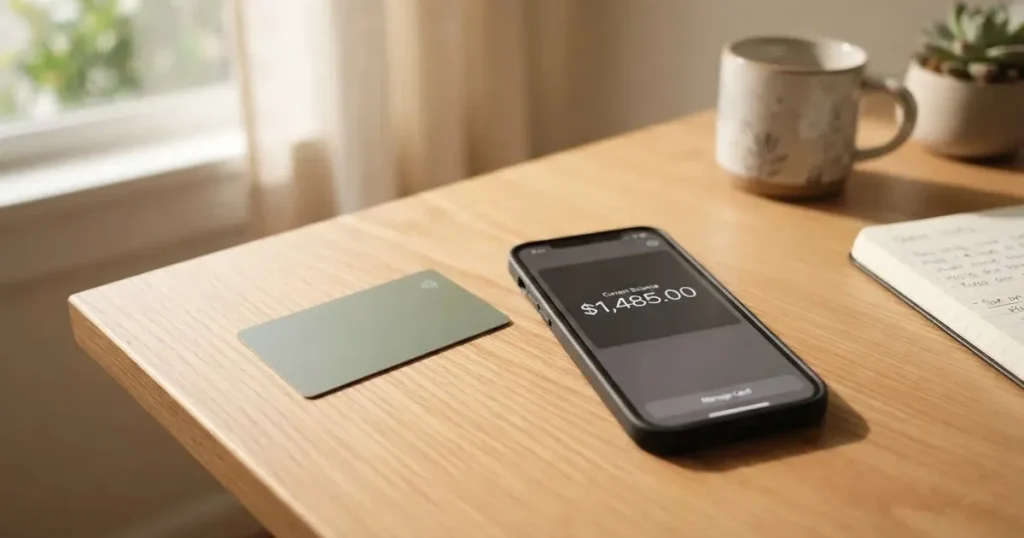
If you already hold your own crypto in a self-custody wallet and you’d like a payment card that draws on that balance rather than asking you to sell first and then transfer dollars somewhere, the Spritz card is one of a small group of products designed for that situation. Spritz is not a bank, and the card is not a credit card; it is a Visa-branded prepaid card whose balance is funded from your own wallet, in stablecoins or other tokens, and held in USD inside the app. The pitch is flexibility: many networks, many tokens, no monthly fee. The trade-off is that the public material around the card is thin, the physical card is in short supply, and several important numbers are simply not published. This review walks through what I found, what is confirmed, what is not, and where Spritz makes sense and where it does not.
The conditions described here are current as of October 28, 2026.
Verdict
Spritz scores 7.4 out of 10 in my reading. That puts it ahead of several well-known crypto cards on top-up flexibility and everyday cost, but it loses points on transparency (the issuer is not named officially, the FX fee is not stated, the issuance fee is not stated, and the physical card is a limited release) and on the fact that once money is on the card it cannot be taken back out. For a self-custody user who already holds USDC on multiple chains and is comfortable managing gas and network choices, the card does what it says: convert your balance to USD, let you spend it anywhere Visa is taken, and keep the account free. For someone who needs a physical card today, lives in an unlisted country, or wants a named regulated issuer behind the product, Spritz is a worse fit.
The breakdown, with my reasoning, looks like this:
| Criterion | Score | Why |
|---|---|---|
| Who can get it | 7 / 10 | Residence-based coverage, not citizenship; many international countries and territories but no full public list; Nigeria needs conditional approval |
| Cost | 8 / 10 | No spending or maintenance fees, but a base 1% load fee with network-specific adjustments; FX and issuance fees not stated |
| Top-up options | 9 / 10 | 50,000+ tokens across 5 chains, plus USDC and USDT on Tron and USDC on several L2s and Solana; Bitcoin, DASH, XRP, Sui all listed |
| Reliability and complaints | 6 / 10 | Spritz Finance is the brand; the card’s issuing institution is not named officially; loaded funds cannot be returned to crypto; physical card is in limited release |
| Everyday use | 7 / 10 | Apple Pay and Google Pay are supported; virtual and physical card both exist; cashback programme details are not stated officially |
The audience this card fits best is the self-custody holder who already moves USDC between Arbitrum, Base, Polygon, Optimism, Avalanche and Solana and wants a Visa that draws on that stack without an off-ramp step. If that is you, Spritz does the job. If you need a card you can hold in your hand tomorrow, want a named bank behind it, or expect to be able to move money back from the card to your wallet, look elsewhere.
Who will they give you the card
Spritz uses your country of residence, not your citizenship, to decide whether you can sign up. That distinction matters: someone living in one country but holding a passport from another is judged on where they live, which is closer to how tax residency works than how sanctions screening usually does. The card is available in what Spritz calls “many international countries and territories” on its blog, and the help centre keeps the full list in a table that the public page does not always surface in one place. If your country is not on that list, Spritz will not issue you the card. Nigeria sits in a slightly different bucket: it is on the list, but the application goes through a conditional approval step rather than the standard path.
Unofficial sources put the available count at around 42 countries, including the United States (though only 30 US states at last count), with Belarus, Cuba, Iran, North Korea, Russia, Syria and Venezuela excluded. I have not been able to confirm that exact list against an official Spritz page, so treat it as a working number rather than a guarantee. The most reliable way to find out whether you qualify is to look at the help-centre country table directly, because the marketing pages do not link to it prominently and the wording is careful rather than exhaustive.
A few things to keep in mind as you check:
- You must be at least 18 years old.
- You need a verified Spritz account, which means uploading an ID; manual verification is available if automated checks fail.
- The card is activated inside the web app at app.spritz.finance/card, and the brand says this happens “in minutes” once KYC clears.
Spritz does not publish what the KYC process actually collects. Unofficial reporting from August 2026 lists a government photo ID, a phone number, your legal name, date of birth, ID number, address, and a live face check, with the partner bank potentially adding citizenship, passport and proof-of-address requests on top. None of this is unusual for a regulated card product, and you should expect to provide it. If you cannot, the card is not for you, and no workaround changes that.
How to get it
The signup path is the standard one for a crypto card: create a Spritz account, complete identity verification, fund the card, and activate it. The card itself is described as the “premium Spritz Card” with Visa Signature benefits, and the API documentation refers to both virtual and physical card types. All funds you add to the card are denominated and stored in USD, which keeps the spending experience simple even if you top up in a token that is not a stablecoin.
The virtual card is the default and the path most users will follow. There is no published price for the physical card, and the help centre does not include a delivery article. Unofficial reporting from August 2026 describes the physical card as a limited release, with a 3,000-card Alpha allocation for US customers and no published price, replacement fee or shipping schedule. If a physical card matters to you, plan around the possibility that you will not get one immediately, and treat the unofficial numbers as best-effort, not as commitments.
Processing time and the specific reasons an application might be rejected are not stated in the public material I read. If you are in a hurry or have had trouble with KYC elsewhere, expect to email support and follow up rather than rely on a published timeline. The activation step itself, once your account is verified, is described as taking minutes inside the app.
Fees: what it really costs
The cost picture is mixed: spending on the card and maintaining the account are free, but loading the card carries a fee that varies by network and token, and several fees that you would normally expect to see published (FX, issuance, ATM) are simply not stated on the official pages.

Here is the cost table as it stands, with everything I could confirm from the help centre and blog. Where a number is not stated, the row says so; I am not filling in figures the card does not publish.
| Fee or limit | Amount |
|---|---|
| Issuance (virtual) | Not stated |
| Issuance (physical) | Not stated |
| Monthly / annual account fee | None |
| Spending on the card | None |
| Card load (base) | 1% (0.5% base + 0.5% virtual card load), $2 minimum |
| USDC on Arbitrum, Avalanche, Base, Optimism, Polygon, Solana | +0% on top of base |
| Other tokens on the same networks | +0.5% |
| Ethereum (all tokens) | +0.5% |
| Sui USDC | +1%; SUI +2% |
| BSC | +1% |
| XRP | +1.5% |
| Tron USDC | +0.5%; USDT +1.5% |
| Bitcoin | +1.5% (min $5) |
| DASH | +1.25% |
| FX fee on non-USD purchases | Not stated |
| ATM withdrawal | Not stated |
| Daily card limit | $10,000 |
| Maximum card balance | $10,000 |
A few everyday examples help make the table concrete. Suppose you load $500 of USDC from Arbitrum: the base 1% is $5, and the network adjustment for USDC on Arbitrum is +0%, so the load fee is $5. That same $500 in USDT on Tron: the base 1% plus 1.5% for USDT on Tron, so $12.50. A $100 Bitcoin load: 1.5% network adjustment plus the $5 minimum, so $5 (the minimum, not the percentage). Outside the load fee, the card itself does not charge for spending, and the blog notes that load fees were waived for 30 days after launch, which has since passed.
The numbers I do not have are the ones most card comparisons centre on. There is no published FX fee for using the card in a currency other than USD; the help centre has no ATM article; the issuance fee, including for the physical card, is not stated. Unofficial reporting says there is no Spritz fee on card purchases and that the exchange rate used abroad is Visa’s, but that does not amount to a fee schedule. If you intend to spend heavily in non-USD currencies, that gap matters: the rate Visa or the issuer applies can be 1% to 3% on its own, and you have no published ceiling from Spritz.
Limits are clearer. The SpritzCard has a $10,000 daily limit and a $10,000 maximum balance, and the help centre states plainly that “the SpritzCard limit cannot be increased at this time”. Unofficial sources report a $5,000 per-load maximum and no overall spending cap, but that conflicts with the official limit table, and where the two disagree I would plan around the official numbers.
The card is sold as a single premium product, with no paid tiers, no extra card designs and no upgrade path. If you want a metal card or a higher cashback rate, this is not the product that offers it.
How to top up the card
Topping up starts in your own wallet. The blog puts the headline figure at 50,000+ tokens across 5 chains, and the help-centre fee table backs that up with a more concrete list: Bitcoin, DASH, USDT and USDC on Tron, plus USDC on Arbitrum, Avalanche, Base, Optimism, Polygon and Solana, with Ethereum, Sui, BSC, Ripple and Tron rounding out the network list. The way it works in practice is that you send a supported token on a supported network to the address the app gives you, the system converts it to USD via an on-chain quote (the card_deposit rail), and the equivalent USD lands on your card balance.
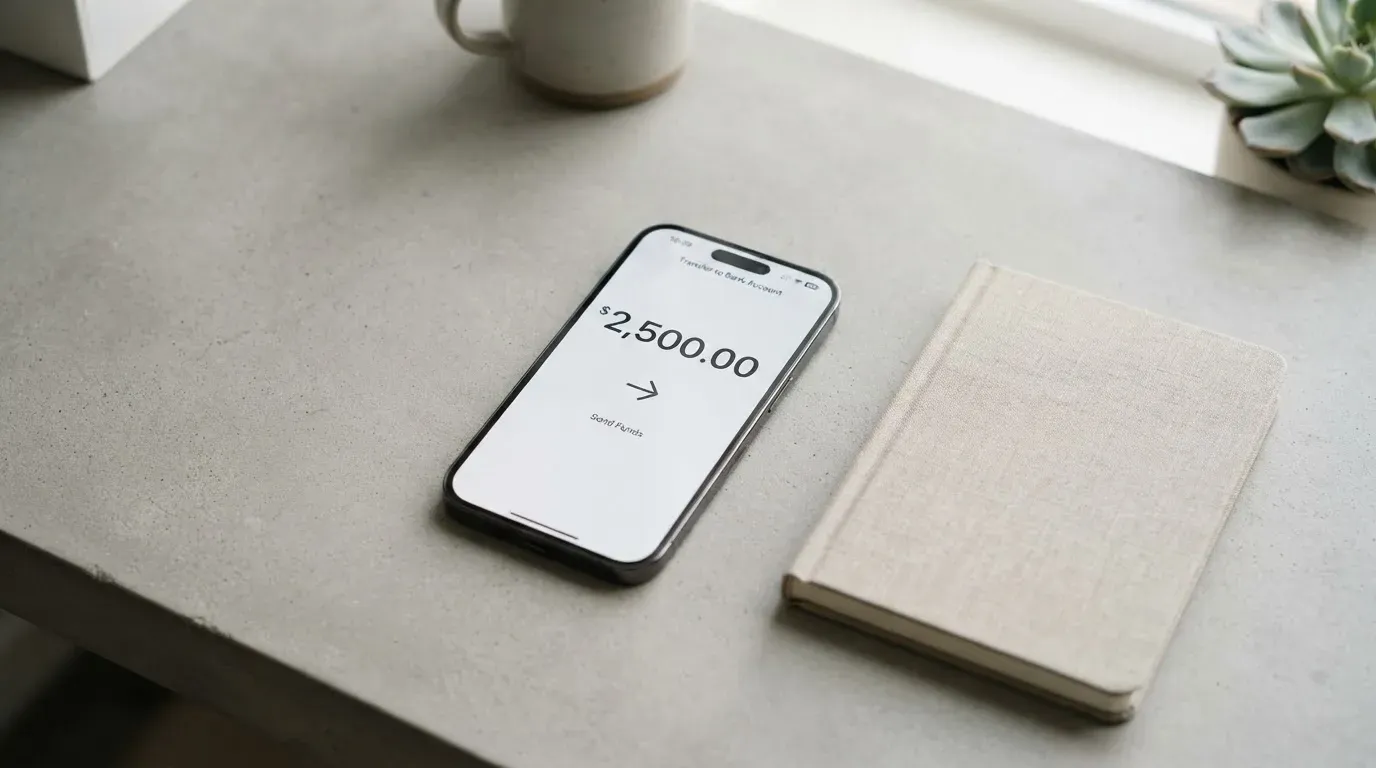
A few practical points that are easy to miss:
- The card balance is held in USD. You can top up with a non-stablecoin such as Bitcoin or DASH, but the conversion happens at quote time, so the dollar amount you receive depends on the rate when the deposit clears.
- Network (gas) fees are paid by you, separately from Spritz’s load fee. The help centre is explicit that these are different, which is useful when you compare the headline 1% to the actual amount leaving your wallet.
- The minimum load is governed by the per-network minimum in the fee table ($2 for most, $5 for Bitcoin). The minimum top-up amount itself is not stated separately; in practice, the network minimum is the floor.
- Fiat top-up via bank transfer is not stated. There is a separate on-ramp service in the app, priced at 1% flat, that handles crypto purchases for users without existing tokens, but that is distinct from loading the card.
The most important rule is also the most annoying: once funds are on your Spritz card, they cannot be returned or transferred out. The help centre says this in plain terms: “Once funds are on your Spritz Card we cannot return or transfer them”, and the only way to extract value is to spend them. There is an Off-Ramp service for crypto, but it works on crypto you have not yet moved to the card, not on the card balance itself. This is the single most important behavioural fact to internalise: treat the card like cash in a wallet, not like a bank account you can drain at will.
Paying with it every day
Once loaded, the card behaves like a prepaid Visa. You can spend the balance online, in store, or through Apple Pay and Google Pay; the help centre confirms both mobile wallets are supported, including in-store contactless. The card is a Visa Signature product, which means it carries the standard Signature benefits: lounge access, travel insurance and purchase protection, where the merchant participates and the terms of the benefit apply. That is not a Spritz-specific feature, but it is a real one.
There is no published cashback programme in the official material I read. Unofficial reporting from August 2026 describes a “Shopping Sprees” feature paying 5% at airlines, hotels, restaurants and travel agencies during a 3-day promotional window, with caps of $20 per merchant, $40 per spree and $80 per month, paid as withdrawable Spritz Credits. I have not been able to confirm that against an official Spritz page, and the same source notes that the points programme is not yet redeemable. If cashback matters to your decision, I would wait until you can verify the current terms in the app rather than plan around the unofficial figures.
Refunds and disputes are handled in a low-key way. The help centre says refunds should process back to the card within 7 business days, after which you can contact the support chat if the money has not arrived. There is no separate chargeback process described, which is a noticeable gap compared to cards that publish a clear dispute flow; unofficial sources put merchant refunds at up to 30 business days, but again, that is not an official number.
The app is the web app at app.spritz.finance and an iOS app. I could not read the official store listings directly, and the user ratings are thin and inconsistent: one unofficial reading of the App Store gives 3.2 out of 5 from 11 ratings, another lists 3.4 out of 5 from 10. For a product at this scale, those are small samples, and a 3.2 average is not a strong vote of confidence, but it is also not a verdict.
A few things to expect when you start using the card:
- Declines can come from the merchant rather than Spritz: blocked merchant categories, 3-D Secure challenges on online purchases, or AVS mismatches where the billing address on file does not match what the merchant sends.
- Prepaid cards sometimes face extra friction at foreign merchants, who can see the issuer country through the BIN and decline on policy grounds rather than on the balance.
- Authorisation holds can sit on the balance for several days, which matters because the card has a $10,000 cap and a non-returnable balance.
What can go wrong
The list of things to watch for is short but worth going through.
First, the issuer. Spritz Finance is the brand you interact with, but the help centre does not name the bank or e-money institution that actually issues the card. Unofficial reporting from August 2026 says the Visa Signature card is “powered by Rain” and issued through licensed partners by jurisdiction, with the specific institution not named. If you are the kind of person who wants a regulator’s name, a licence number and a deposit guarantee before you put $10,000 on a prepaid card, this is the gap that will bother you. A prepaid card balance is not a bank deposit in any case, but the regulatory wrapper still matters when something goes wrong.
Second, the no-withdrawal rule. I mentioned it in the funding section and it is worth repeating here: once the money is on the card, it stays there until you spend it. If the card programme is wound down, your balance is at the mercy of the shutdown timeline. The category has examples. Visa terminated its global agreements with FTX in November 2022, and the FTX US debit card was wound down by its issuer. WaveCrest, a Visa issuer that supplied several crypto card brands, was suspended in Europe in 2018 and the programmes it ran were closed. Programme closures typically give a notice period, then stop loading, then stop spending, and then ask users to withdraw remaining balances; the timeline varies and the user has limited leverage. Treat the card balance as cash you would not leave in a wallet you might lose.
Third, the physical card is in short supply. If your plan depends on having a physical card in your hand, the limited release and the absence of a published delivery schedule mean you should not assume you will get one. The virtual card, which is the default, works with mobile wallets and online, so most users will not need the physical card; but if you do, the gap is real.
Fourth, transparency around cost. The load fee schedule is published in detail, but the FX fee, the ATM fee, the issuance fee and the replacement fee are not. Unofficial sources say there is no Spritz fee on foreign-currency card purchases, but the official pages do not confirm that. If you intend to use the card abroad, assume the worst from the published numbers and treat anything better as a pleasant surprise.
Fifth, the points and rewards programme. The official pages do not describe it in detail; unofficial reporting says Spritz Points are not yet redeemable and cashback is limited. Do not decide to use the card because of a rewards programme you have not been able to read in the app itself.
Sixth, the regulatory backdrop. The card exists in a moving regulatory environment: in the EU, MiCA’s e-money token and stablecoin rules applied from 30 June 2024, with the rest of the framework including crypto-asset service provider rules from 30 December 2024, and a transitional period running until 1 July 2026 for providers operating under national law. In the US, FinCEN guidance treats administrators and exchangers of convertible virtual currency as money services businesses. The card is a payment service, the crypto side is regulated separately, and depending on the issuer’s jurisdiction, your protections can be thinner than they would be for a bank-issued debit card. US debit card reversal rights come from Regulation E; prepaid card coverage is less consistent and should not be assumed.
The complaint themes I saw in unofficial reporting (Trustpilot in the 3.8 to 4.0 range from a few hundred reviews) were consistent with the published limits: users who expected to be able to move card balances back to crypto, users frustrated that the physical card is hard to get, and users who could not redeem the points programme. None of that is a scandal, but it is a pattern, and it is worth knowing before you load the maximum.
What to take instead
Spritz sits in a crowded field, and the right alternative depends on what you actually need. Three cards come up most often as comparisons, and each makes a different trade-off.
TokenPocket (5.8 / 10) is the entry-level option for users already inside the TokenPocket wallet ecosystem. It runs on Arbitrum, offers a Visa or Mastercard debit card depending on the country (a list of European countries for Visa, a separate list including Australia, Canada, Hong Kong, Japan, Singapore and the UK for Mastercard, with the Americas still listed as planned for Q2 2025), and balances in EUR24 and USD24. The card is virtual only, and the headline cost is a 1% fee on crypto deposits, with a note that the fee is intended to be refunded through rewards or reduced transaction fees. If you already use TokenPocket, it is a low-friction option; if you do not, the cost is broadly similar to Spritz’s without the network flexibility.
MetaMask Card (7.1 / 10) is the natural comparison for self-custody users, because the card spends directly from the connected wallet rather than from a pre-loaded balance. Sign-up is open in 45 listed countries, with other regions on a waitlist, and the card is a Mastercard: a free Virtual card issued first and instant, with a Metal card pre-orderable in the app for $199 a year. Networks include Linea, Base, Monad and Solana, and the named tokens are mUSD, wETH, EURe, GBPe, USDC and USDT. Cashback is paid in mUSD into a Money Account: 1% on Virtual, 3% on Metal up to the first $10,000 spent, then 1%, with an additional $FLY bonus through the Blackbird dining app. US and UK sign-ups were temporarily closed at last reading. If you want the card to draw straight from your wallet without a load step, MetaMask is the cleaner design; if you want many chains, Spritz has more.
KAST (6.1 / 10) is the most explicit about pricing. It is a Visa card programme (Standard / Premium / Private) with virtual and physical options, stablecoin top-up at 0%, card spend in USD at 0%, and a non-USD FX fee that varies by residence country, transaction country and card programme between 0.5% and 1.75%. Annual membership runs from $0 on Standard to $1,000 on Premium to $10,000 on Private, and cashback in USD scales with tier (1.5%, 2%, 3% on monthly caps of $2,000, $10,000 and $40,000 respectively). Account balance is in USD with stablecoins converted 1:1, and the KYC list is residence-based. If pricing transparency and tier choice matter more than chain flexibility, KAST is a stronger fit.
| Card | Score | Networks | Account model | Cashback | Annual fee |
|---|---|---|---|---|---|
| Spritz | 7.4 | 5 chains, 50,000+ tokens | Pre-load to USD balance, no return | Not stated officially | None |
| MetaMask Card | 7.1 | Linea, Base, Monad, Solana | Spends from connected wallet | 1% Virtual, 3% Metal (first $10k) | $0 Virtual, $199 Metal |
| KAST | 6.1 | Ethereum, Solana, Polygon, Arbitrum, Tron | Pre-load, USD balance | 1.5% / 2% / 3% by tier | $0 / $1,000 / $10,000 |
| TokenPocket | 5.8 | Arbitrum | Pre-load to EUR24/USD24 | None stated | None |
The right choice depends on what is scarce for you. If you want many chains and a flat account fee, Spritz wins. If you want to spend from your wallet without a load step, MetaMask is better. If you want a published FX fee and tier choice, KAST is the most predictable. If you already use TokenPocket, the integration may matter more than the headline score.
Who I would recommend it to
Spritz is a good card for a specific kind of user, and a frustrating one for almost everyone else.
It is a good card if you already hold your own crypto in a self-custody wallet, you understand gas and network selection, you hold USDC on more than one of the supported L2s, and you want a Visa you can top up from that stack without selling through an exchange. It is also a good card if you do most of your spending in USD and you are happy to leave the balance on the card and spend it down, because the no-withdrawal rule stops being a problem the moment you accept the model. The free account, the lack of spending fees, and the range of tokens and networks all reinforce that picture.
It is a frustrating card if you need a physical card right now, because the limited release and the absence of a published delivery schedule mean you may wait. It is frustrating if you live in an unlisted country or hold citizenship from one, because the eligibility check will not go in your favour. It is frustrating if the FX fee matters to your decision, because it is not published. It is frustrating if you want a named issuer with a regulator and a licence number you can look up, because the help centre does not name one. It is frustrating if you expect to be able to move the card balance back to your wallet, because you cannot.
For me, the bottom line is that Spritz is a serious option for the self-custody USDC user, and a poor option for everyone else. The score of 7.4 reflects that asymmetry: high marks on top-up flexibility and everyday cost, real marks off on transparency and the limited physical card. If you are inside the target audience, the card does what it says; if you are not, the gaps will annoy you faster than the headline features will delight you.
Frequently asked questions
What is the Spritz card?
The Spritz card is a Visa Signature prepaid card whose balance is held in USD and funded from your own self-custody wallet. It is offered by Spritz Finance, supports virtual and physical card types, and the account is free to hold with no spending fees. The card is designed for users who want to spend from a crypto balance without selling first.
Is Spritz a bank?
No. Spritz is not a bank, and the card is not a credit card or a bank-issued debit card. It is a prepaid Visa card, which means the balance is held by the programme issuer rather than by a deposit-taking institution, and prepaid card balances are not covered by deposit guarantee schemes in the same way bank deposits are. The specific issuing institution is not named on the public pages.
Who can get the Spritz card?
Eligibility is based on your country of residence, not your citizenship, and Spritz describes the coverage as “many international countries and territories”. The full list is in the help-centre table; unofficial sources put the count at around 42 countries including the US (around 30 states), with several sanctioned jurisdictions excluded. You must be at least 18 and pass identity verification before the card can be activated.
How do I apply for the Spritz card?
You create a Spritz account, complete KYC (identity document upload, with manual verification available if automated checks fail), and activate the card inside the web app at app.spritz.finance/card. The brand says activation happens “in minutes” once verification is complete, and processing times beyond that are not stated publicly.
Does the Spritz card require KYC?
Yes. A verified Spritz account is required before the card can be activated, and the help centre lists identity document upload as part of that step. Unofficial reporting from August 2026 describes a standard set of checks (photo ID, address, live face check) with the partner bank able to add extra documents. There is no workaround; the card is regulated and verification is mandatory.
How do I top up the Spritz card?
You send a supported token on a supported network from your own wallet to the address the app gives you. The system converts the deposit to USD at a quoted rate and credits your card balance. The blog lists 50,000+ tokens across 5 chains, and the fee table covers USDC and USDT on Tron, USDC on Arbitrum, Avalanche, Base, Optimism, Polygon and Solana, plus Bitcoin, DASH, XRP and Sui. Network (gas) fees are paid by you, on top of the Spritz load fee.
Can I withdraw money from the Spritz card?
Not back to crypto. The help centre states that “Once funds are on your Spritz Card we cannot return or transfer them”, and the only way to extract value is to spend the balance on the card. There is an Off-Ramp service in the app for crypto you have not yet moved to the card, but that is separate. Plan your loads around what you intend to spend, not around what you might want to keep.
Is the Spritz card free?
There is no monthly or annual account fee, and spending on the card does not carry a Spritz fee. The cost is in loading: a base 1% load fee with network-specific adjustments, a $2 minimum for most networks and a $5 minimum for Bitcoin. The FX fee, the ATM fee and the issuance fee are not stated officially, so treat them as unknowns in your calculation rather than as zero.
Where can I use the Spritz card?
Anywhere Visa is accepted, online, in store and through Apple Pay and Google Pay, subject to merchant category restrictions and 3-D Secure challenges. The card is a Visa Signature product, so it carries the standard Signature benefits where merchants and terms apply: lounge access, travel insurance, purchase protection. The card balance is held in USD, so non-USD transactions go through the FX rate set by Visa or the issuer, with the Spritz fee on top not stated.
Is the Spritz card safe?
The card uses standard prepaid card safeguards: PIN and card details are end-to-end encrypted, card statuses (active, frozen, not activated, cancelled) are managed in the app, and the underlying rails are Visa’s. The risks are the ones that apply to any prepaid programme: the issuing institution is not named officially, the card balance is not a bank deposit, and the card programme can in principle be wound down. Treat the balance as cash in a wallet, not as a long-term store of value.
Wallet cards: your questions answered – cryptocardanswers
Content created by the «cryptocardanswers» team