
A crypto card with a euro heart and a new multi-currency card on the way
 Available in US
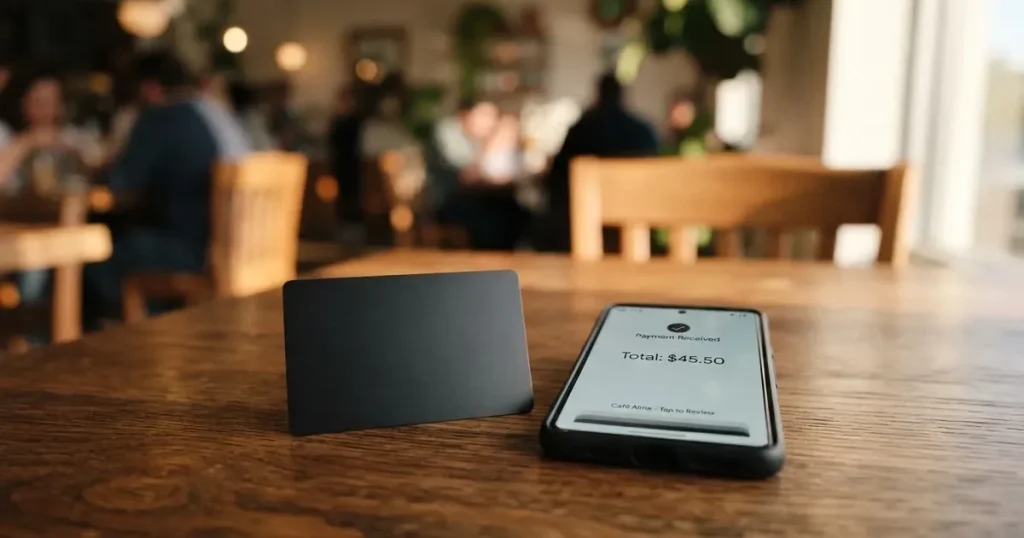
Tap is a crypto-linked payment card, and that phrase means different things to different people. For some of us it is the only ordinary-looking card we can get a handle on; for others it is simply a way to spend a balance that sits in crypto rather than in a bank current account. Tap belongs to the second group by design and drifts into the first by circumstance, and understanding which of those two situations you are in explains almost everything else about whether this card will work for you.
Conditions are current as of October 28, 2026.
My overall mark for Tap is 5.6 out of 10. That is not a rounding of a better number, and I want to be straight about why the figure sits in the middle rather than above it: the card’s own public pages leave several of the things you need in order to decide almost blank, and the reviews people leave describe an app that works well for some people and stalls badly for others. But the product itself is not obscure or gimmicky — a real Mastercard, a real app, cashback, cash access, and a licence from a real regulator. It is a mid-scoring card made by a company doing sensible things at the edges, not a disaster and not a standout.
The clearest single fact about Tap, and the one I would want you to hold on to, is this: as of 5 October 2026 the existing card is euro-denominated, and on the same day Tap announced a new multi-currency Mastercard for the future. So the question “is this card right for me” has two different answers depending on whether you are being onboarded today or in a few months’ time, and almost every article about Tap — including most of what you will read in forums — describes the older, euro-only reality.
Who this suits: you already hold crypto, you want to spend it or convert it to fiat without opening another exchange account, you want a physical and a virtual card from one app, and you are comfortable with a prepaid-style balance rather than a bank current account. Who it does not suit: anyone who needs a normal bank card with a salary account, a credit line, dispute handling you can rely on, or a published list of countries and fees before they commit money. If you are turned away by ordinary banks and Tap is your only candidate, the calculus changes — but so does your tolerance for risk, because this is a prepaid e-money arrangement, not a deposit.
The conditions described here are current as of 2026.
Score card
Here is how the six criteria broke down. The mark in each row is the number Tap earned; the reason is mine, in plain words, and where a fact came from outside Tap’s own pages I have said so rather than passing it off as confirmed.
| Criterion | Mark | Why |
|---|---|---|
| Who can get it | 6 / 10 | Tap publishes no country list, only “Services May Not Be Available In All Jurisdictions” and a line telling you to verify eligibility in your region. The number of countries is not disclosed. |
| Cost | 6 / 10 | Not disclosed officially. Unofficially: monthly fee, issuance, top-up and ATM free, FX at 1.5%, plus user reports of a $35 withdrawal fee and an inactivity fee. |
| Top-up options | 5 / 10 | No coin list published. Stablecoins, USDT, BTC and SOL are mentioned, and a bank/crypto on-and-off ramp. Unofficially, crypto has to be converted before it reaches the card. |
| Reliability and complaints | 4 / 10 | Tap Global Limited (Gibraltar), Gibraltar FSC DLT licence No. 25532, Moorwand Ltd named as issuer for the new card. Trustpilot 3.4 out of 5, with accounts frozen for days and weeks and delayed withdrawals. |
| Everyday use | 7 / 10 | Physical and virtual Mastercard, free ATM withdrawals unofficially, Apple Pay and Google Pay noted — but also listed among the drawbacks as “No Apple Pay”. The everyday-use mark is the highest of the six. |
| Total | 5.6 / 10 | A competent card with an unusually large number of unstated basics. |
The score is not a sum you can reconstruct from the rows, and I am not going to present it as one. What I can say is where the weight sits: everyday use is genuinely the strongest part, reliability and top-up flexibility are the weakest, and the “who can get it” row is held down by an absence rather than by a restriction.
Will they give you the card?
Short answer: probably, if your region is supported — but you cannot find out from Tap’s website which region that is.
There is no country list. What exists instead is a warning and an instruction. The site’s position is “Services May Not Be Available In All Jurisdictions” and a line telling you to check eligibility where you live. That is all. It is not a restriction the way a sanctions list is a restriction; it is an absence, and an absence is harder to plan around, because you cannot check it before you try.
That matters more than it sounds. Tap is a crypto company and its own partner structure means the issuing partner can vary by region, currency and account type. In practice that means the experience is not identical everywhere: the entity behind your account, and possibly the conditions attached to it, may depend on where you are. Tap itself is Tap Global Limited, Gibraltar (No. 118724), Madison Building, Midtown, Line Wall Road, Gibraltar GX11 1AA, licensed by the Gibraltar FSC under the DLT Regulatory Framework, Licence No. 25532. Banking and e-money sit with “Our Authorised Issuing Partners”, and the specific provider is shown in the app rather than named on the site.
One thing worth being clear about, because it comes up constantly and is not card-specific: citizenship and residence are not the same question. Regulators screen on nationality and country of birth as well as country of address, because sanctions lists and issuer risk policy work that way. So “I live in X” does not settle whether you can be served. If you hold citizenship of a sanctioned state but live and bank lawfully elsewhere, you are in a genuinely different and more sensitive position than someone whose only issue is a country not appearing on a list — and the honest answer is that Tap’s public pages give you nothing to work with, which is a fact about the pages, not a judgement about you.
The one thing I can tell you about onboarding is what third-party reporting says, and I am labelling it as unofficial because Tap does not confirm it: according to cryptocards.so, in 2026, ID verification involves an email address, a phone number and an identity document, with no proof of address and no selfie required. I have not verified that against Tap, and I would not build a decision on it. What I will say is that it fits the general pattern — most regulated products will still verify identity, because anti-money-laundering rules require it, and the difference between a document-only check and a document-plus-address check matters far less to whether you are approved than most product pages imply.
There is also a network discrepancy you should know about before you buy anything that depends on it. Tap’s own pages show a Mastercard. The unofficial listing names Visa. I would go with Mastercard, because that is what the card issuer’s own material shows, and I would treat the third-party listing as simply out of date. Card currency is not stated on the pages I checked.
How to get it
Tap issues both a physical and a virtual card, on the Mastercard network, with a dark-finish Mastercard shown on its own site. Delivery arrangements are not stated. Which identity verification levels exist, and whether the tiers differ, is also not stated.
So the honest picture is: two card forms, one network, and a set of unanswered practical questions. That is unusual for a live financial product and it is the main reason this review reads the way it does. When a card does not tell you how long delivery takes, whether the virtual card is issued instantly, or what happens to the physical one if it is delivered to an address you have moved from, you are going to find out by finding out.
What I would do, in order, if I were you. Check that your region actually passes the in-app eligibility check before you prepare anything. Have an email address and a phone number ready, since that is the minimum every regulated product needs and, if the unofficial reporting is right, what Tap asks for. Have an identity document to hand. And expect to be asked for more at a later stage rather than less — that is the normal shape of anti-money-laundering due diligence, not a sign that something has gone wrong.
On that last point, it is worth knowing what the rules actually require, because it explains a lot of behaviour you will encounter with any card in this category. In the EU, customer due diligence covers name, address, date of birth, nationality and identity documentation, a sanctions check, establishing the purpose of the relationship, and determining whether you are a politically exposed person. In the US, the customer identification programme requires name, date of birth, address and an identification number, with electronic systems also validating proof-of-address documents. If due diligence cannot be completed, EU rules require the institution to decline the transaction or relationship and, where necessary, end an existing one. That is the legal reason accounts get frozen and closed — and it is the single most important thing to understand before you keep money on a crypto card.
Fees: what it really costs
The headline answer is that Tap’s own pages do not publish a fee schedule, and everything in this section is therefore either a gap or a third-party figure.

That is not a small gap. Fee schedules are the document you actually compare cards on. Tap’s pages carry no “Zero”-style claims, no conversion figure, no FX percentage, no ATM note and no limits. So if you are the kind of person who reads a pricing page before opening an app, Tap is going to feel opaque, and you should know that going in rather than discovering it when a withdrawal eats a chunk of your balance.
What follows is everything I could find. The unofficial figures all come from cryptocards.so, dated 2026, with the month not shown, and they are not confirmed by Tap:
| Item | Tap’s official pages | Unofficial figure (cryptocards.so, 2026) |
|---|---|---|
| Issuance | not stated | Free |
| Monthly fee | not stated | Free |
| Top-up fee | not stated | Free |
| ATM withdrawal | not stated | Free and unlimited |
| Conversion | not stated, no figures given | Not separately stated; crypto must be converted before loading the card |
| FX | not stated | 1.5% |
| Withdrawal fee | not stated | User reports of a $35 charge |
| Inactivity | not stated | User reports of a fee draining a balance |
| Daily limit | not stated | “Unlimited” in one place, a 15,000 EUR daily cap in another |
| Monthly limit | not stated | not stated |
| Cashback | “up to 8%” on qualified purchases | up to 8%, with VIP tiers, entry level 0.5% |
Two things in that table deserve more than a footnote. First, the daily limit is quoted both ways on the same third-party page — “Unlimited” in the advantages and a 15,000 EUR cap in the disadvantages. When a source contradicts itself, the safe assumption is that some limit exists. Plan for one. Second, the $35 withdrawal fee and the inactivity fee appear in user reports rather than on a fee page, which means they may be conditional — a fee for a particular withdrawal type, or one applied to a dormant account. Tap’s response to the complaint pattern has been to point at its terms. That is a legitimate answer, but it leaves you in the position of having to go and find the terms yourself.
Now the part I find most useful, which is what this means for three ordinary payments rather than a table of abstractions.
Coffee, in the country you live in. Tap’s cards are Mastercard, the existing card is euro-denominated, and there is no published conversion or FX figure of its own. If you are in the euro area and paying in euros, the unofficial evidence points to no card fee at all — but I would still check the app at the point of sale, because that is the only place the number will be real.
Coffee, in a country that is not the euro area. This is where the 1.5% unofficial FX figure does its work. If it holds, paying a euro card abroad costs you roughly one and a half percent of the transaction on top of whatever the network rate does. If you spend a lot abroad, that is the number to hold against any cashback you earn — and cashback here is quoted as “up to 8%”, which is a ceiling, not a rate you should plan around.
Withdrawing cash. Unofficially free and unlimited, which is unusually generous for this category and the strongest single argument for the card. But two cautions. The card is euro-denominated, so an ATM abroad may decline it or charge you the ATM owner’s own fee, which is not something Tap controls. And the $35 withdrawal fee that users report may apply to a different kind of withdrawal — moving money out to a bank or wallet rather than pulling cash from a machine. Those are easy to confuse and expensive to conflate. Ask in the app which one you are doing.
I would also keep a small buffer in mind. Prepaid cards fail in a specific way: the balance is the limit, and if it runs out mid-month there is nothing to fall back on. That is not a Tap problem but it is a prepaid problem.
How to top it up
Tap’s pages contain no funding list and name no networks. What they do mention is stablecoins, USDT/BTC/SOL yields, a Bitcoin on-and-off ramp, dedicated IBANs to hold seven national currencies, and a bank-or-wallet-to-crypto ramp available “anytime”. Fees and minimums for top-ups are not stated, nor is what happens to your balance when you close the account.
That is the honest inventory: the routes exist, the specifics are not published.
The unofficial picture adds two things worth knowing before you commit. First, crypto has to be converted before it is loaded onto the card — the card spends a fiat balance, not a crypto balance, so a transfer from a wallet to a Tap balance is not a direct movement of your tokens. Second, the number of supported cryptocurrencies is quoted as 48 in one part of the third-party listing and 0 in another, which I read as a listing error rather than a fact about the product; treat 48 as unverified.
The route most people will use is the bank and wallet on-and-off ramp, described as available at any time between a bank account or a wallet and crypto. If you are new to this, the mental model matters more than the specifics: you are converting from one form of value to another, and the conversion is where cost lives. On-chain network fees for your deposit are charged by the blockchain, not by Tap — a distinction worth internalising, because when a transfer is slow or a fee is small and puzzling, the network is usually the reason.
Stablecoins are the part of this that carries real risk, and it is not Tap-specific risk. A stablecoin aims to hold a stable value against a fiat currency, but despite the name, stablecoins are not necessarily stable: TerraUSD collapsed in May 2022 and USDC temporarily lost its peg in March 2023 during the US banking crisis. Tether’s USDT and Circle’s USDC are the two dominant dollar-pegged tokens, together about 90% of stablecoin market capitalisation as the BIS put it in July 2025. Circle says USDC is redeemable 1:1 for USD and fully backed by cash and cash equivalents, mostly in an SEC-registered government money market fund, with monthly reserve attestations.
The practical rule that follows: know which network you are sending on, because blockchain transfers are irreversible. USDC is natively supported on 38 networks as of 16 September 2026, and USDT has been issued on Ethereum, Tron, Solana, Polygon, Avalanche and others. But sending to an address of the wrong network can mean the funds are lost or need manual support recovery with no guarantee. Circle stopped supporting USDC on Tron in February 2024, so “USDC over TRC20” is not a native option. And one Ethereum-specific trap catches people constantly: ERC-20 fees are paid only in ETH, so a wallet holding USDT and no ETH cannot send it at all.
Paying with it every day
This is where Tap scores best, and the reason is straightforward: the everyday mechanics are conventional. Physical and virtual Mastercard, an app, in-app PIN reveal, instant freeze and lock.
The card features that make daily use work are the unglamorous ones. You can freeze your card or lock your account instantly from the app. You can reveal your PIN in the app, freeze the card, and view transactions. Tap says support is “Available 24/7”, though the channels are not named, and the app lists English, French, Greek, Italian, Spanish and Swedish.
The app itself rates well on the store I could read: 4.5 out of 5 from 25 ratings on the App Store, version 3.8.8, requiring iOS 15.6 or later, read on 20 October 2026. The Google Play listing under com.tapngo.tap was not read, so I have no rating for Android and am not going to imply one. Twenty-five ratings is a small sample; a 4.5 from twenty-five people is encouraging and not conclusive.
Cashback is quoted officially as “up to 8%” on qualified purchases. The payout asset, the tiers and any caps are not stated. Unofficially, there are VIP tiers with an entry level of 0.5% — which reframes the headline number usefully: 8% is the ceiling at the top of a ladder, not your rate on day one.
Mobile wallets are the single most useful daily feature and the one where Tap’s public record is muddiest. Apple Pay and Google Pay are not stated on the app’s own pages. The third-party listing marks both as supported, and then, two lines later, lists “No Apple Pay support” among the disadvantages. I would treat this as unresolved rather than as a contradiction in Tap’s product — most likely the third-party page carries stale text — but it is exactly the feature people mean when they say a card is convenient, so I would check it yourself in the app before deciding. The mechanics when it does work are worth knowing: Apple Pay replaces the card number with a device-specific Device Account Number held in the Secure Element, never on Apple’s servers, and each payment uses a one-time dynamic security code. Your issuer can also restrict a tokenised number, for example blocking it on magnetic-stripe, phone or website use.
Two everyday frictions apply to every card in this category, so do not read them as Tap-specific but do expect them. A merchant category code is a four-digit number classifying a business, assigned under ISO 18245 when it starts accepting cards; MCC 7995 covers gambling, and many issuers block it by policy rather than law, with the blocked list varying by issuer. Tap’s blocked categories are not stated, so you cannot know in advance. And because a merchant can look up the BIN to see which institution and country issued a card, applying extra scrutiny where the issuer country differs from the billing address, a card issued in one country can look foreign to a shop in another. Some merchants decline prepaid or foreign BINs for exactly that reason. A related trap: Address Verification Service compares the numeric parts of your billing address with issuer records, is mainly offered in the US, Canada and the UK, and is generally unavailable for foreign-issued cards, which can cause declines online.
One last everyday annoyance: a declined authorisation can leave a hold on your funds that stays for several days, typically up to seven.
What can go wrong
The complaints are the reason reliability scores 4 out of 10, so I am going to give you the actual pattern rather than a reassurance.
Tap’s Trustpilot profile reads 3.4 out of 5 from 321 reviews, 36 of them in the last twelve months, as I read it on 20 October 2026. A separate figure of 3.5 from roughly 309 reviews appears on Trustpilot UK, which is close enough to be the same picture seen at a different moment. The individual reviews are undated as a set, but the pattern across them is dated and consistent: accounts frozen or locked for days to weeks between December 2025 and February 2026, deposits or withdrawals not arriving in January, June and September 2026, inactivity or monthly fees draining a balance between April and June 2026, and slow support at weekends.
Read that list again and notice what it contains. Not “the card was declined at a shop” or “the exchange rate was bad”. Frozen accounts. Money that did not arrive. Balances emptied by fees. Support that is not answering at weekends. If you are holding a meaningful balance on Tap, the realistic risk is not being charged 1.5% on a coffee; it is that access to your money becomes conditional on someone else’s systems and someone else’s response time. Tap’s answer to this pattern is to point to its terms.
Now the harder part: understanding why, so you can judge whether it applies to you. Crypto platforms that hold customer money carry counterparty risk by definition, and the category’s record is not reassuring on that point — Mt. Gox with about US$350 million reported stolen between 2011 and 2014, Coincheck at about US$400 million in 2018, and Ronin Network at US$625 million in 2022. Tap’s structure is narrower than those failures, but the structural shape is the same: someone else holds the keys.
There is also the programme-closure risk, which is specific to cards and which almost no review mentions. Card programmes do get shut down. Visa terminated its global agreements with FTX on 13 November 2022 and the FTX US debit card was wound down by its issuer. Visa also suspended WaveCrest in Europe in 2018, closing all WaveCrest-issued Visa programmes. The typical shutdown sequence gives notice, stops spending and loading, then asks users to withdraw remaining balances. That is the scenario in which a fee you did not read becomes expensive and a frozen account becomes permanent.
Two structural facts soften and harden this at the same time. Soften: Tap says its accounts are held by authorised issuing partners and that it is “not a bank”. Harden: that also means your balance is e-money safeguarded by those partners — segregated in dedicated accounts or insured, as EU rules require of electronic money institutions — and e-money funds are not the same as bank deposits, so a deposit guarantee scheme may not cover them.
The regulatory position is genuinely stronger than it was a few years ago, which matters if you are in the EU. MiCA, Regulation (EU) 2023/1114, took legal effect in June 2023; its rules on asset-referenced tokens and e-money tokens applied from 30 June 2024 and the remaining provisions, including crypto-asset service provider rules, from 30 December 2024. The transitional period lets providers operating under national law continue only until 1 July 2026 or until they receive or are refused a MiCA authorisation, whichever comes first — so the sector is mid-transition right now, which is a fair description of what the complaint pattern reflects. ESMA maintains an interim register of authorised providers, white papers and non-compliant entities, and it is the place to check a provider. A card is regulated separately from the crypto side: MiCA covers custody, exchange and transfer, while the card is a payment service under e-money law, so a crypto card like Tap depends on two licences. Note too that e-money tokens may be issued only by a credit institution or an electronic money institution, and an EMI may offer services across the EU/EEA from a licence granted in one member state.
One more thing nobody promises about: anonymity and censorship resistance are not features you get here. Tether says it disables tokens in wallets on the OFAC sanctions list and has frozen funds tied to illicit activity. Stated plainly, because the crypto-adjacent marketing sometimes implies otherwise, this is a KYC product.
What Tap does offer against this is worth its due: instant freeze and account lock from the app, in-app card freezing and PIN viewing, a Gibraltar FSC DLT licence, and 24/7 support. Two-factor authentication and any insurance are not stated. Disputes and chargeback handling are also not stated — the terms page did not load text when I checked — and that is a real gap rather than a technicality. A chargeback is a refund ordered by the issuer to settle a dispute, with reason codes such as fraud, duplicate billing or goods not received; US debit card reversal rights come from Regulation E, prepaid-card coverage varies and should not be assumed. If a disputed payment matters to you, raise it in the app immediately and keep your own record.
I want to add one planning point rather than advice: if you are keeping money on Tap, treat the balance as money in transit rather than money parked. That framing is not pessimism about the company — it is the direct consequence of frozen accounts, delayed withdrawals and closure history elsewhere in the category.
What to take instead
Three alternatives came up in this category that state more of their terms than Tap does, which is itself a reason to look at them.
| Tap | International Visa Card | UNi Card | Morse | |
|---|---|---|---|---|
| Score here | 5.6 / 10 | 6.7 / 10 | 6.1 / 10 | 7.5 / 10 |
| Network | Mastercard (official) | Visa, US-issued Platinum | Mastercard, multicurrency | Visa, virtual prepaid |
| Physical card | Yes, plus virtual | “Coming soon” | not stated | Virtual only for now |
| Card currency | euro-denominated; multi-currency card announced for 5 October 2026 | USD | multicurrency | Spends from balance in any currency |
| Issuance | not stated | $5 one-time, virtual | not stated | not stated |
| Monthly fee | not stated | None on Classic; Pro $9.00; Max $19.00 | “No annual fee” | not stated (“Fees may apply”) |
| FX | 1.5% unofficial | Visa rate + 2% FX fee | No foreign transaction fee | Zero FX fees or markups, real-time Visa rate |
| Funding | Stablecoins, USDT/BTC/SOL, bank/wallet ramp; networks not stated | USDC or USDT 1:1, plus USD, EUR, SEPA, SWIFT, FedNow | not stated | Debit card, stablecoin transfer, USDC/USDG/EURC via Solana free, self-custodial wallet |
| Cashback | “up to 8%” | none stated | up to 3% | not stated |
Reading that table the way I would read it:
Morse scores highest here, at 7.5. Its distinguishing feature is honesty about money handling: a self-custodial wallet, “Zero foreign exchange fees or markups” at the real-time Visa rate, and paying with the card online and contactless stated as free. Its friction is eligibility — by residence rather than citizenship, 18+, resident in a supported country, app in over 140 countries, and a closed-beta list of countries needing an invite code that includes Australia, Japan, New Zealand, Singapore, Switzerland, the United Kingdom, Serbia, Hong Kong SAR China, Jersey, Guernsey, the Isle of Man, Thailand, Türkiye, Cape Verde, American Samoa and Western Sahara. It cannot serve customers subject to US, UK, EU or UN sanctions. The card is fully virtual for now.
International Visa Card scores 6.7 and is the one with the most explicit terms on fees: virtual issuance $5 one-time, no maintenance fee, free card use in USD on all plans, “Visa exchange rate + 2% FX fee” on foreign currency, and no fee on deposits of any kind, which includes USDC and USDT into the USD account. The catch is who it serves — it is not available to residents or legal registrants of Belarus, mainland China, North Korea, Cuba, India, Iraq, Iran, Israel, Myanmar, Nepal, Nicaragua, Russia, Syria, Turkey, Ukraine, Venezuela or Vietnam, with FATF grey-list countries reviewed case by case, and purchases are blocked in seven of those. That rule runs on residence or registration, not citizenship. Its physical card is “Coming soon”, so it is a virtual-only option today.
UNi Card scores 6.1: a multicurrency Mastercard spending from the UNi.Global account balance, “No annual fee or foreign transaction fee”, assets converted at live over-the-counter rates with “No hidden exchange fees”, and spend-to-earn rewards up to 3%. Eligibility is not stated, which is the same problem Tap has, just with better fee disclosure.
Where all three beat Tap is the same thing — they tell you what things cost. Where Tap is not beaten is breadth: it is the only one of the four with a physical card available now alongside a virtual one, the only one with cashback quoted as high as 8%, and the only one of the three alternatives that mentions cash withdrawals at all.
Who I would recommend it to
I would recommend Tap, without much hesitation, to someone who already has crypto and wants to spend it without a second exchange account. If you hold stablecoins or the major coins, if you want a physical card and a virtual one from the same app, and if you are comfortable with a prepaid balance model where your money is loaded rather than drawn on account, the everyday mechanics here are good — and everyday use is the one criterion where Tap scores 7.
I would recommend it with a caveat to someone who mainly wants cheap access to cash. Unofficial figures say ATM withdrawals are free and unlimited, which is better than most of this category, but the euro denomination and the $35 withdrawal report both need checking in the app first.
I would not recommend it as a first card, or as a place to hold a month of money, or to anyone who needs a published country list before they apply. The gaps are not fatal but they are real: no fee schedule, no coin list, no networks, no limits, no country list, no stated dispute process, and a card that is mid-way through a currency change announced for 5 October 2026.
And I would think twice, specifically, if your reason for wanting this card is that ordinary banks have been difficult. Tap’s complaint profile — frozen accounts, delayed withdrawals, weekend silence — is precisely the experience that gets worse when you have no alternative. If Tap is genuinely your only door, then the questions in this review matter far more, not less, and you should get answers to them in the app before you commit funds. It is also worth saying plainly: the answer to a banking access problem is usually better served by solving the banking access problem.
What would move my score? A published fee and limit schedule, a clear country list, a stated dispute process, and confirmed mobile wallet support. Any three of those would put it in different territory, because none of them are hard.
Frequently asked questions
What is Tap card?
Tap is a crypto-linked payment card from Tap Global Limited, a Gibraltar-licensed company. You hold crypto or stablecoins in the app, convert them into a spendable balance, and pay with a Mastercard — either the physical card or a virtual one. It behaves more like a prepaid card than a bank card, so it draws on a loaded balance rather than a current account.
How does the Tap card work?
Most crypto cards, Tap included, run on a pre-loaded balance model: you convert or top up first, then the card spends only what is on it, which is why it cannot overdraw. Under the hood, the card network routes the payment, the issuer holds the programme, and the crypto brand is usually the front end. With Tap, anything you hold is converted before it reaches the card.
Is Tap a bank?
No — Tap says so itself. It is not a bank, and your balance is held by its authorised issuing partners rather than by a bank in your own name. That money is safeguarded as e-money, which is not the same as a bank deposit, so a deposit guarantee scheme may not cover it.
Who owns Tap?
Tap Global Limited, registered in Gibraltar (No. 118724), at Madison Building, Midtown, Line Wall Road, Gibraltar GX11 1AA. It is licensed by the Gibraltar Financial Services Commission under the DLT Regulatory Framework, Licence No. 25532. On 5 October 2026 it announced Moorwand Ltd as issuer and BIN sponsor for its new multi-currency Mastercard.
Does the Tap card require KYC?
Almost certainly yes, in some form, because regulated businesses must verify customers under anti-money-laundering rules. Tap does not state its verification requirements on its public pages. Third-party reporting from 2026 says email, phone and an identity document, with no proof of address and no selfie, but I could not confirm that with Tap.
Is Tap card free?
The official pages do not say. Unofficially, and not confirmed by Tap, the monthly fee, issuance, top-ups and ATM withdrawals are all free, with FX at 1.5%. Users have separately reported a $35 withdrawal fee and an inactivity charge — so check which kind of withdrawal you are making before you assume it costs nothing.
Is Tap card available in my country?
Tap does not publish a country list. Its pages only say “Services May Not Be Available In All Jurisdictions” and tell you to verify eligibility in your region, so the only real answer comes from the app’s own eligibility check. And note that residence and citizenship are screened separately, since sanctions screening applies to both.
How do I top up the Tap card?
Through the bank and wallet on-and-off ramp, which Tap describes as available at any time, plus stablecoins, USDT/BTC/SOL balances and a Bitcoin on-and-off ramp. Networks, fees and minimums are not stated, so check the network before sending anything: blockchain transfers are irreversible, and ERC-20 tokens need ETH in the wallet to pay the fee.
Can I add the Tap card to Apple Wallet?
Unconfirmed, and this is the muddiest point on the card. Tap’s own pages do not state mobile wallet support. A third-party site marks Apple Pay and Google Pay as supported and then lists “No Apple Pay support” as a drawback in the same entry. Most likely stale information, but check in the app — it is the feature that decides how convenient the card is day to day.
Is Tap card safe?
The fundamentals are ordinary: instant card freeze, in-app PIN viewing, account lock, a Gibraltar FSC DLT licence and 24/7 support. Two-factor authentication and any insurance are not stated. The practical risk sits in the reviews — Trustpilot 3.4 from 5 across 321 reviews, with accounts frozen for days to weeks and withdrawals delayed — so I would keep only what I need on it.
App and neobank cards: your questions answered – cryptocardanswers
Content created by the «cryptocardanswers» team