
UNi Card: The Multicurrency Mastercard Reviewed for Crypto Users
 Available in US
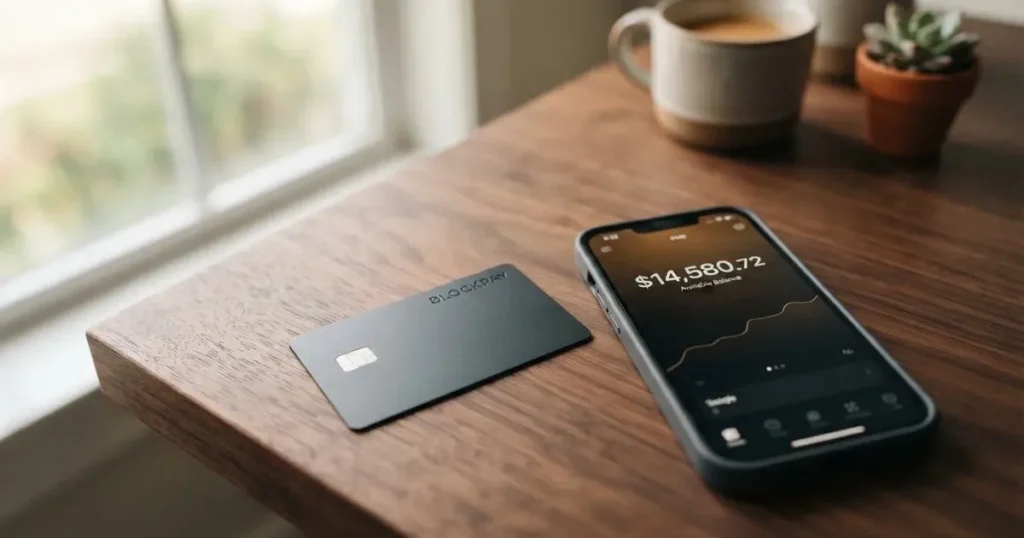
The UNi card is interesting for a specific kind of person: someone who holds a range of currencies or stablecoins, wants a card that spends from that balance without an annual fee, and values being able to switch currencies at the till. But it’s also, in several important respects, a card whose public pages leave gaps. Who can apply, what the card costs to issue, how you fund it, what the ATM fees are, what the daily limits are — none of that is stated openly. For a reader choosing where to hold and spend money, those gaps matter as much as the features that are advertised. Here’s what I found after going through the card’s own materials and independent sources, and an honest picture of where UNi is strong, where it’s unclear, and who should look elsewhere.
The conditions described here are current as of October 28, 2026.
Verdict: 6.1 out of 10
I scored UNi at 6.1 out of 10. It’s not a bad card — the fee structure is genuinely attractive, with no annual fee and no foreign transaction fee, and the multicurrency feature plus Apple Pay and Google Pay make it pleasant to use day to day. The problem isn’t what it does; it’s what it doesn’t tell you. The card’s own pages leave the eligibility countries, the issuance fee, the ATM fees, and the daily and monthly limits unstated, and those are precisely the facts a prospective cardholder most needs.
Who it suits. If you already have crypto or stablecoins sitting in a wallet, you want to spend them on ordinary things, you’d rather not pay a foreign transaction fee every time you travel or buy from an overseas merchant, and you’re comfortable with a provider that leaves some details to be discovered inside the app rather than on the website — UNi is a reasonable fit. Multi-currency spenders who want rewards of up to 3% are the audience the card is really built for.
Who it should stay away from. If you need to know your exact daily spending limit before you commit, if you’re in a hurry to close an account, or if you’d rather your funds sat in a wallet where you personally hold the keys — this card is custodial, and the details you’d want aren’t published. If you’re in a sanctioned or high-risk jurisdiction, note that the card applies “jurisdictional limitations” without saying which ones; if that ambiguity worries you, choose a provider that names its excluded countries outright.
Scorecard
| Criterion | Mark | Why |
|---|---|---|
| Who can get it | 5 / 10 | Countries aren’t named; eligibility is “subject to jurisdictional limitations”, and the specifics aren’t disclosed |
| Cost | 8 / 10 | No annual fee and no foreign transaction fee; assets convert at “live OTC rates”, but the issuance fee isn’t disclosed |
| Top-up options | 5 / 10 | The ways to fund the card aren’t published; the wallet holds 12+ currencies and the card spends from the UNi.Global balance |
| Reliability and complaints | 6 / 10 | UNI.Global is described as an AUSTRAC-regulated provider with teams in Sydney, Auckland, Hong Kong and Taipei; the issuer isn’t named and no complaints were found |
| Everyday use | 6 / 10 | A multicurrency Mastercard with Apple Pay and Google Pay and in-app freeze; the card form and ATM situation aren’t disclosed |
| Total | 6.1 / 10 | A solid fee structure held back by a great deal of silence on the practical details |
Who will they give you the card
Here’s the honest answer on eligibility: the card’s public pages do not state which countries qualify. What they do say is that access is “subject to jurisdictional limitations” — a phrase that tells you there are exclusions without telling you what they are. That’s an unusual thing to encounter, and it’s the first thing I’d want clarified if I were about to hand over identity documents.
This matters because eligibility for crypto services is rarely about citizenship alone. It usually turns on where you live or where your company is registered, because that’s what banks and regulators can screen cheaply and reliably. When a provider doesn’t publish its list, you’re left to find out by trying. I’ll come back to this in the section on alternatives, because some of the cards I compared do name their excluded countries explicitly — and that transparency, on its own, is worth something.
What the card *does* tell you is who it’s aimed at: adults, 18 and over, who can complete identity verification. Beyond that, the practical answer to “will they give you the card” has to come from inside the app, and you should treat any money or documents you part with during that process accordingly.
How to get it
The path to applying is a single verification that unlocks both the fiat services and the UNi Card together — you don’t do one process for the account and another for the card. Before you can use fiat services or the card at all, you must complete KYC, which the card describes as follows:
- Personal information, and confirmation you’re 18 or older
- A scan of an identity document
- A selfie
- Your address, with proof of address — a bank statement or a utility bill
The card says verification takes 1–2 business days. That’s the one timeline the card actually commits to, and it’s worth noting that it’s a business-day figure, not a calendar one, so a Friday submission could realistically sit over the weekend.
What you end up with is a multicurrency UNi Card on the Mastercard network that spends from the balance in your UNi.Global account. That network detail matters: Mastercard is the rail that routes the payment and enforces the rules, and a Mastercard card is one of the more widely accepted networks at ordinary shops, online merchants and for recurring subscriptions. The card’s own pages don’t say whether the card is physical or virtual, or whether you get a choice — so you’ll find out when you get there. Delivery timing and shipping cost also aren’t stated.
One clarification for people who’ve been around this space: “verification” here means the KYC checks. Activating the card itself, if there’s a separate step, isn’t described on the public pages — you’ll handle that in the app.
What it really costs: Fees, daily payments and hidden traps
This is the strongest part of the card, and the reason it scores 8 out of 10 for cost. The card advertises no annual fee and no foreign transaction fee. It says assets are converted at “live OTC (Over-the-Counter) rates” and that there are “no hidden exchange fees.” Those are the exact phrases a frequent traveller wants to see, because the foreign transaction fee — usually a percentage on top of the real exchange rate — is the thing that quietly eats into every overseas purchase on most cards.
Where the picture is less complete: the issuance fee is not stated. There may well be a one-time cost to produce the card, and if there is, the “no annual fee” headline won’t cover it. Membership levels also exist, though what each one gives you isn’t described, so you can’t tell whether tiers matter for fees or for rewards. And two everyday costs are simply blank: ATM fees aren’t stated, and daily and monthly limits aren’t stated. If you rely on cash withdrawal, that’s a real gap; if you want to know your ceiling before a big purchase, it’s a gap too.
The costs table
| Item | What the card says |
|---|---|
| Annual fee | “No annual fee” |
| Issuance fee | Not stated |
| Foreign transaction fee | “No foreign transaction fee” |
| Currency conversion | Assets converted at “live OTC rates”; “no hidden exchange fees” |
| ATM withdrawal fees | Not stated |
| Daily limits | Not stated |
| Monthly limits | Not stated |
| Membership levels | Exist; what each one provides isn’t stated |
Let me walk through three everyday payments and show you which of these fees actually bites.
Buying coffee in your home currency. You tap the card, the balance is charged, and if you’re spending from a balance already in your local currency there’s no conversion at all — no spread, no fee. This is the cleanest case, and it’s the reason the multicurrency feature exists. You’re paying from money you already hold in the right denomination.
Buying something priced in a currency you don’t hold. This is where the multicurrency design earns its keep. You switch to the currency of the purchase, and the card converts at the live OTC rate with no foreign transaction fee added. The cost to you is the spread inherent in that rate — the difference between the mid-market rate and the rate you actually get — but not the usual two or three percent card surcharge. You still want to know which currency you’re actually paying in at checkout, because a till that “accepts everything” might convert a second time, in its favour.
A subscription or a recurring charge. The Mastercard network handles this like any card. But here’s a category fact worth knowing that has nothing to do with UNi: a merchant category code (MCC) is a four-digit number classifying a business by goods or services, specified in ISO 18245. MCC 7995 covers gambling — casinos, betting, lotteries — and many issuers block it on specific cards by policy rather than by law. The blocked list varies by issuer, and UNi doesn’t publish one. If you expect to pay for anything in that category, find out before you need to.
How to Top up the card
I’ll level with you: the ways to fund the UNi card are not disclosed on the card’s public pages. No list of payment methods, no minimums, no networks, no timing. This is the single largest gap in the whole review, and if topping up is the part you most need to understand, treat it as the thing to confirm in the app before you rely on the card.
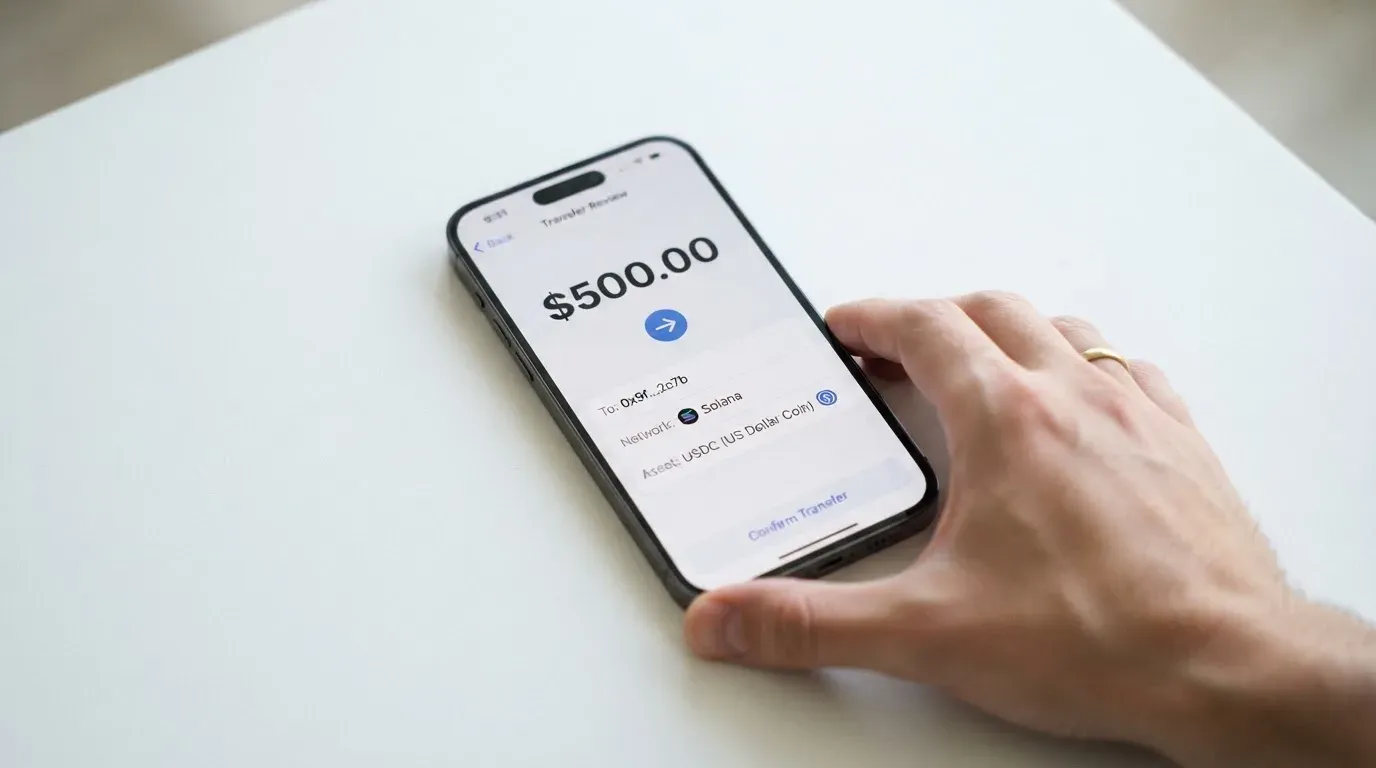
What we can say structurally: the card spends from your UNi.Global account balance, so funding is the process of getting value into that account. The account holds 12+ currencies in its wallet, and the card draws down that balance as you spend. That’s a multicurrency wallet with a card attached, not just a card.
There are some general principles about crypto funding that will help you think about it, whatever UNi turns out to support. The network you send on has to match what the provider expects. Blockchain transfers are typically irreversible, so a deposit sent on an unsupported network, or to an address belonging to a different network, can be lost or need manual support recovery with no guarantee. On-chain network fees — gas, or bandwidth on Tron-style chains — are charged by the blockchain, not by the card provider, so they’re a separate line item from anything UNi might charge. If you’re depositing a stablecoin, it’s worth knowing that the major dollar-pegged tokens have very different footprints: USDT has been issued across Ethereum, Tron, Solana, Polygon, Avalanche and others, and Circle listed USDC as natively supported on 38 networks as of 16 September 2026.
Withdrawal also isn’t stated — whether you can pull funds back out, to where, and at what cost. For a card you might hold funds on, that’s not a detail to discover later. And if you’re a reader who wants to know the crypto half of this, note that custodial wallets hold your credentials for you, so you must trust the provider completely; a seed phrase is an unencrypted form of the private key, and anyone who obtains it can restore the wallet and spend the funds.
Paying with it every day
In use, the card is a multicurrency Mastercard that spends from your UNi.Global balance, and you switch among currencies to pay. On the phone side it works with Apple Pay and Google Wallet — and there’s a category fact behind why that’s a genuine convenience rather than a gimmick: Apple Pay replaces the card number with a device-specific Device Account Number stored in the Secure Element, never on Apple servers, and each payment uses a one-time dynamic security code. That’s a meaningfully different security posture from handing a plastic card to a waiter.
The safety features the card does advertise are good ones for daily use. You can freeze and unfreeze the card in the app, without limit — a fast way to cut off a card you’ve lost or spotted a fraud alert on. There are real-time alerts for each transaction, so you see spending as it happens rather than finding out at month end. Both are the sort of thing that, for many people, is worth more than a small cashback rate.
Then there’s the rewards. The card advertises “Spend-to-Earn rewards” of up to 3% with the UNi Card. That “up to” is doing real work in the sentence, and I’d want to see the tier structure and conditions before you build any spending around it — how much you have to hold, which categories qualify, whether it applies to all currencies.
The app itself is the hub. It’s the UNi.Global app on the App Store (“UNi.Global: Invest & Spend BTC”, listed in the Estonian store) and on Google Play. I didn’t read the store ratings, so I won’t characterise them either way; the app is where you’ll manage the card, freeze it, see alerts, and reach support, and where most of the unpublished details above will become visible to you.
Support, where it’s stated: live chat and an FAQ inside the app for registered customers, plus an email at [email protected]. The in-app-only nature of the chat is worth noting — it’s a little less accessible than a public support page, but it’s also where the account-specific answers live.
What can go wrong
Let me split this into things specific to UNi and things generic to crypto cards, because both apply to you.
On UNi specifically. The most obvious risk is the issuer. The card doesn’t name the bank that actually issues it. In this category that matters more than it might sound: a payment card involves several parties, and while the card network routes the message, the issuer is the licensed bank or e-money institution that holds the card programme and is the party you’d deal with in a dispute or a freeze. UNI.Global describes itself as “an AUSTRAC-regulated service provider with teams strategically located in Sydney, Auckland, Hong Kong and Taipei” — an Australian regulator and a Pacific-and-Asia footprint — but that is the programme provider, and the issuer behind the card isn’t identified. If something goes wrong, knowing who holds your funds is the first question worth asking.
Second, the complaints picture is genuinely empty, and empty cuts both ways. A search for reviews turned up only unrelated Indian “Uni Cards” and “UnCard” products, and there’s no Trustpilot page for uni.global. That means there’s no public record either of complaints *or* of a long, clean track record from satisfied users. You’re not inheriting a scandal, and you’re not inheriting a reputation either.
Third, the disputes process isn’t stated. What happens when a charge is wrong, a merchant doesn’t deliver, or a payment is duplicated isn’t described. There’s no published chargeback policy to lean on.
Fourth — and this is the background risk that applies to any custodial setup — history is not reassuring for the category. Custodial platforms have failed before: Mt. Gox (about US$350 million reported stolen, 2011–2014), Coincheck (about US$400 million, 2018), and the Ronin Network bridge (US$625 million, 2022). Holding funds with a custodian carries counterparty and hack risk, and crypto transfers have no built-in recovery because the network can’t freeze or return funds. It’s also worth remembering that a stablecoin isn’t guaranteed stable — TerraUSD collapsed in May 2022 and USDC briefly lost its peg in March 2023 during the US banking crisis.
And a category fact about declined payments that catches people out: a declined authorisation can leave a hold on your funds that lingers for several days, typically up to seven. A card that “declined” because the balance was momentarily short can still tie up the money behind it.
One more, on cards from this category generally: Visa and Mastercard don’t issue crypto cards to consumers themselves — they license issuers, and they can suspend a programme. There’s precedent. Visa terminated its global agreements with FTX in November 2022 and the FTX US debit card was wound down; WaveCrest, a Visa issuer that supplied crypto card brands, was suspended by Visa in Europe in 2018, closing all its programmes. Programme closures typically mean a notice period, then spending and loading stop, then you’re asked to withdraw remaining balances. None of that is a prediction about UNi — it’s context for holding a balance on any card whose issuer isn’t named.
What to take instead
I compared UNi against three other cards in this space. None is perfect, and the comparison is really about which trade-offs you’re willing to make — transparency versus features, self-custody versus convenience, and how much of the fine print each one actually publishes.
| Card | Score | Card type | Issuance / monthly fee | FX fee | Who can get it |
|---|---|---|---|---|---|
| UNi | 6.1 / 10 | Multicurrency Mastercard, custodial | Issuance not stated; no annual fee | None; live OTC conversion | Countries not named, “subject to jurisdictional limitations” |
| Morse | 7.5 / 10 | Fully virtual Visa prepaid, self-custodial wallet | Not stated (cardholder agreement applies) | Zero FX fees, real-time Visa rate | 18+, resident in a supported country; 140+ countries |
| International Visa Card | 6.7 / 10 | US-issued Platinum Visa, virtual (physical “coming soon”) | $5 one-time; plans free / $9 Pro / $19 Max per month | Visa rate + 2% FX | Excludes residents and registrants of ~17 named countries |
| Bitpanda | 6.5 / 10 | Physical Visa debit, EUR only | First shipment free; reissue EUR 5.90; extra card EUR 10 | EUR 0 but “VISA mark-up fees apply” | Euro-area residents with a verified account |
A few things stand out when you lay them side by side.
Morse scores highest here, at 7.5. Its card is fully virtual for now and spends from a balance in any currency, with zero foreign exchange fees and no markup on conversions, and paying with the card online and contactless is free. Critically, its wallet is self-custodial — the crypto side is yours. Its weak point is the mirror image of UNi’s: it’s in closed beta in a long list of countries (the UK, Australia, Japan, Singapore, Switzerland, Hong Kong SAR China, New Zealand and others need an invite code), it says it “cannot serve customers subject to sanctions issued by the United States,” and it declines to publish which countries are supported on the card page.
The International Visa Card is the transparency champion by accident. It names every excluded country in plain language — residents and legal registrants of Belarus, mainland China, North Korea, Cuba, India, Iraq, Iran, Israel, Myanmar, Nepal, Nicaragua, Russia, Syria, Turkey, Ukraine, Venezuela and Vietnam — with FATF grey-list countries handled case by case. It also spells out the cost of being wrong about the currency: a 2% FX fee on top of the Visa rate, on top of a $5 issuance. But its physical card is “coming soon,” it’s USD-only, and no cashback is stated. Note the rule is by residence or registration, not citizenship.
Bitpanda is the plainest option: a euro-area card, EUR only, one active card at a time, first shipment free. It’s also the one where I’d want you to read the details carefully — its own pages disagree about rewards (1% cashback on crypto spending in one place, “up to 2%” in another, unreconciled), cashback excludes fiat, stocks, metals and stablecoins, the crypto conversion spread isn’t stated, and users verified via “Bankident” can’t order a card at all.
What UNi does better than all three is the combination of a multicurrency Mastercard with no annual fee, no foreign transaction fee, and rewards of up to 3%. What it does worse is publish less than almost any of them.
Who I would recommend it to
I’d point UNi toward three kinds of reader.
If you hold stablecoins or a spread of currencies and want them spendable. The multicurrency Mastercard, the switchable balance, the no-FX-fee promise, and Apple Pay / Google Pay make this a pleasant way to use crypto that’s already in your possession — spend the balance, don’t hold a separate bank card for it.
If rewards tilt the decision. Up to 3% back on card spend is competitive with the best in the category, and if you qualify for the top of it, it could outweigh a card with a higher headline score on other axes.
If you’re comfortable with a card that answers questions inside the app. This is the honest test. UNi isn’t withholding information maliciously; it appears to be a card that publishes its feature set and leaves the operational detail to the product. If you open the app, complete the verification, and read the fee and limit screens before you commit money, that gap largely closes. If, on the other hand, you need those answers on a webpage before you sign up — or you want to know the issuer’s name in advance — choose a competitor that tells you.
And one last group I’ll advise against: anyone who wants self-custody. UNi’s card draws on a custodial UNi.Global balance. If holding your own keys matters to you, a self-custodial wallet-linked card is a different category of risk, and there are options in it.
Frequently asked questions
What is UNi card?
The UNi card is a multicurrency payment card on the Mastercard network that spends from the balance in your UNi.Global account rather than from a bank account. You can switch among currencies to pay, and it works with Apple Pay and Google Wallet. The wider UNi.Global product is described as an AUSTRAC-regulated service provider with teams in Sydney, Auckland, Hong Kong and Taipei. The card’s own pages don’t state which countries qualify, saying only “subject to jurisdictional limitations”.
How does the UNi card work in practice?
You complete one identity verification that unlocks both the fiat services and the card, then spend from your UNi.Global balance. Purchases go through Mastercard as an ordinary card payment. If you hold a currency other than the one the shop wants, you switch and the balance converts at live OTC rates, with no foreign transaction fee. The app is where you freeze and unfreeze the card, set alerts, and manage everything.
Is UNi a bank, and who owns it?
UNi isn’t a bank — it’s a crypto platform and card programme provider. UNI.Global describes itself as an AUSTRAC-regulated service provider, which in Australia means a registered anti-money-laundering service provider, not a licensed bank. A separate detail worth knowing: the card’s pages don’t name the bank that actually issues the card. That’s normal in this category but worth confirming if you want to know who’s behind a dispute.
Who can apply for the UNi card?
Any adult, 18 or older, who can complete KYC — a document scan, a selfie, personal details and proof of address — and who isn’t caught by “jurisdictional limitations”. Unfortunately the card doesn’t publish which countries those are. If your country isn’t listed as excluded anywhere, the practical test is the app itself. Some competitors do name their exclusions, which is worth weighing if you’re in a place with a complicated regulatory status.
Does the UNi card require KYC, and how long does it take?
Yes. KYC is required before you can use fiat services or the card, and it’s a single verification covering both. You submit personal information, an ID document scan, a selfie, and your address with proof of address such as a bank statement or utility bill. The card says it takes 1–2 business days. After that, physical or virtual delivery, and whether you can choose, isn’t stated on the public pages.
What are the fees on the UNi card?
There’s “no annual fee” and “no foreign transaction fee”, and assets convert at “live OTC rates” with what the card calls “no hidden exchange fees”. That’s the strong part. The gaps: the issuance fee isn’t stated, ATM withdrawal fees aren’t stated, and daily and monthly limits aren’t stated. Membership levels exist but what they include isn’t described, so you can’t tell whether a tier changes costs.
How do I top up the UNi card?
Here’s the honest answer: the card doesn’t say. No payment methods, no networks, no minimums, no timing are published. What we know is that funding goes into your UNi.Global balance, and that balance holds 12+ currencies. If this is the dealbreaker for you, check the app before committing. Remember that blockchain transfers are irreversible, so sending on the wrong network can mean lost funds or a manual support recovery with no guarantee.
Is the UNi card safe, and what happens if I lose it?
You can freeze and unfreeze the card in the app, without limit, and turn on real-time transaction alerts — both genuinely useful. The card’s balance is custodial, which means the provider holds your credentials and you must trust them completely. Custodial platforms have a track record: Mt. Gox, Coincheck and the Ronin bridge all lost enormous sums. If self-custody is non-negotiable for you, this isn’t the card.
Is the UNi card worth it?
For someone already holding crypto who wants no-FX-fee everyday spending and up to 3% rewards on a multicurrency Mastercard, plausibly yes. The fee structure is among the better in the category. But the score is 6.1, not higher, because the eligibility countries, issuance fee, ATM fees, limits, issuer and disputes process are all unstated. Weigh the fee win against how much unpublished detail you’re comfortable discovering in the app.
Can I add the UNi card to Apple Wallet, and where can I use it?
The card works with Apple Pay and Google Wallet, and it sits on the Mastercard network, so acceptance is broad — shops, online merchants and subscriptions. A category note: merchants can look up the card’s issuing country and type, and some decline prepaid or foreign-issued cards because of it, so a decline abroad is possible and isn’t always about your balance. Apple Pay replaces your card number with a device token, so it’s the safer way to carry it day to day.
App and neobank cards: your questions answered – cryptocardanswers
Content created by the «cryptocardanswers» team