
A virtual dollar card for non-US residents, priced like a subscription and rated by its users at 1.9
 Available in US
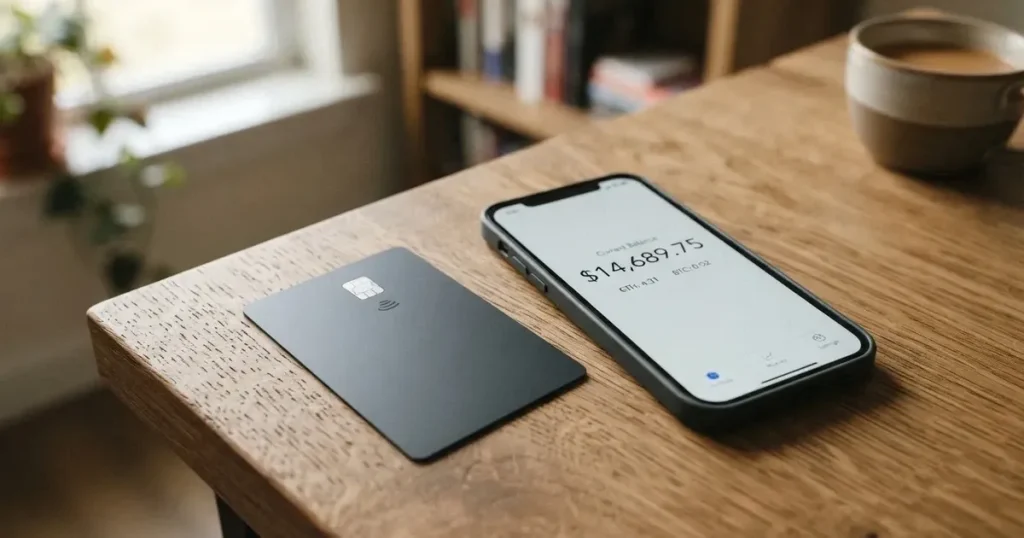
US Unlocked sells one thing: a virtual Visa card in US dollars that you load with crypto and spend on American websites. There is no plastic, no app and no branch. The whole product is a card number in a web dashboard, and everything interesting about it — who can get one, what a dollar of spending actually costs, and what happens when the payment partner has a bad week — follows from that design.
I gave it 5.1 out of 10. That is not a rounding error in either direction: the eligibility rule is unusually open, the price is low, and the crypto top-up works. But the balance cap is small, the card is virtual only, there is no app, and the people who have already tried it rate the service 1.9 out of 5 on Trustpilot from 113 reviews, with accounts placed under review or closed after deposits.
Conditions described here are current as of October 28, 2026.
Verdict: 5.1 out of 10
The card suits one specific person: a non-US resident who earns or holds dollars or stablecoins, shops on US websites that insist on a US billing address, and would rather pay a fixed monthly fee than argue with a card that gets declined at checkout. If that is you, this card does something few others do openly, and the 3% foreign-currency fee is the price of admission rather than a surprise.
It does not suit anyone who needs a bank account, a physical card, cash, or a card that reliably passes merchant scrutiny. It does not suit someone holding large balances, because the maximum is $3,000 per account. And it should make anyone who has been burned by a custodial crypto platform pause, because the complaints on Trustpilot are about deposits and account closures, not about card aesthetics.
Here is how the score breaks down.
| Criterion | Mark | Why |
|---|---|---|
| Who can get it | 9 / 10 | Any resident outside the US with valid ID and proof of address; a countries page lists about 175 available countries and no published exclusions |
| Cost | 4 / 10 | $4.95 a month or $39.95 a year, a $2 One-Time Use Card, 2% to load crypto, 3% when the merchant does not accept USD, $10 to unload |
| Top-up options | 5 / 10 | Crypto and stablecoins in 1-2 hours, plus SEPA, UK Faster Payments, Apple Pay, Google Pay and credit cards; coins and networks unnamed on the pages |
| Reliability and complaints | 3 / 10 | Tern Commerce Inc. operates it, “Third National” issues under licence from Visa; the company itself acknowledged a payment-partner problem in March 2026; Trustpilot 1.9 from 113 reviews |
| Everyday use | 3 / 10 | Virtual USD Visa only, $3,000 maximum balance, no plastic, no ATM, and Apple Pay and Google Pay appear only as ways of loading |
| Total | 5.1 / 10 | Open and cheap to hold, weak to live on |
Two of those marks deserve a word before the rest of the review. Eligibility at 9 out of 10 is close to remarkable for this category: the rule is residence-based, so there is no citizenship screen in the card’s own terms beyond the attestation that you are not a US citizen. Everything-useful at 3 out of 10 is the honest counterpart — a virtual dollar card is a narrow tool, and this one adds a small balance cap and no app on top of the narrowness.
Will they give you the card
Yes, if you live outside the United States and can show two documents. The stated rule is “anyone residing outside the U.S. with valid ID and proof of address”, and US residents are not eligible. The card terms add one attestation: you must confirm that you are not a United States citizen. That is a citizenship statement, layered on top of a residence rule — unusual, and worth noticing, because most cards in this category screen on residence alone.
The countries page lists about 175 available countries, running from Albania to Zambia and including Kazakhstan, Georgia, Armenia, Uzbekistan, Kyrgyzstan, Moldova and Turkmenistan. Two things follow. First, there is no published list of excluded countries, so you cannot check in advance whether your country is one of them — you find out by applying. Second, Russia and Belarus do not appear in the available list, which tells you the list is curated, just without telling you the criteria.
The rule that matters most day to day is that this is residence-based. What your passport says is not the test; where you live is. If you move, your eligibility changes with you, and a card issued against one address is not evidence of anything about another.
I would check the country list yourself before spending time on the application, because it is the one thing you can verify without handing over documents — and because it is published as a positive list rather than a negative one.
How to get it
The sign-up is short and the timing is better than most of this category. You register, verify your identity, choose a plan, load the account, and the card is issued. Verification typically takes under three minutes; the stated ceiling is 24 hours.
What you will need:
- A government-issued photo ID.
- Proof of address — typically a recent utility bill or bank statement, which may also be requested.
- A real address. PO boxes and virtual addresses are not accepted.
There is a single verification step rather than a tiered ladder, and the stated reasons for rejection are narrow: an expired ID, poor image quality, or information that does not match. Additional review can be called for beyond that.
What arrives is digital only. There is no physical card to wait for, and if you need something in your hand, this is the wrong product. The virtual card shows its CVV and expiry in the dashboard after you verify by SMS or OTP — which means the card details live behind a second check rather than on the page itself.
Three card types are offered, and the difference is mostly about exposure rather than price. The US Unlocked Card is open to buy. The Store Locked Card locks to the first merchant, so it cannot wander. The One-Time Use Card deletes itself after one transaction, which makes it the right shape for a single subscription or a single unfamiliar shop.
One thing the sign-up pages do not state is an age requirement. Cards of this kind are generally issued to adults, and I would not assume anything beyond that.
Fees: what it really costs
The subscription is $4.95 a month or $39.95 a year, and the annual plan is advertised as saving 33%. Both tiers include the same things — one Everyday Spend Card, up to 10 cards in total, and no domestic USD transaction fees — so the only question is whether you want to commit for a year. There is no free trial. There is also an inconsistency worth knowing about: extra Everyday Spend Cards are listed at $1 per month each on the pricing page and in the card terms, while the FAQ says $2 each. One-Time Use Cards are $2 each.
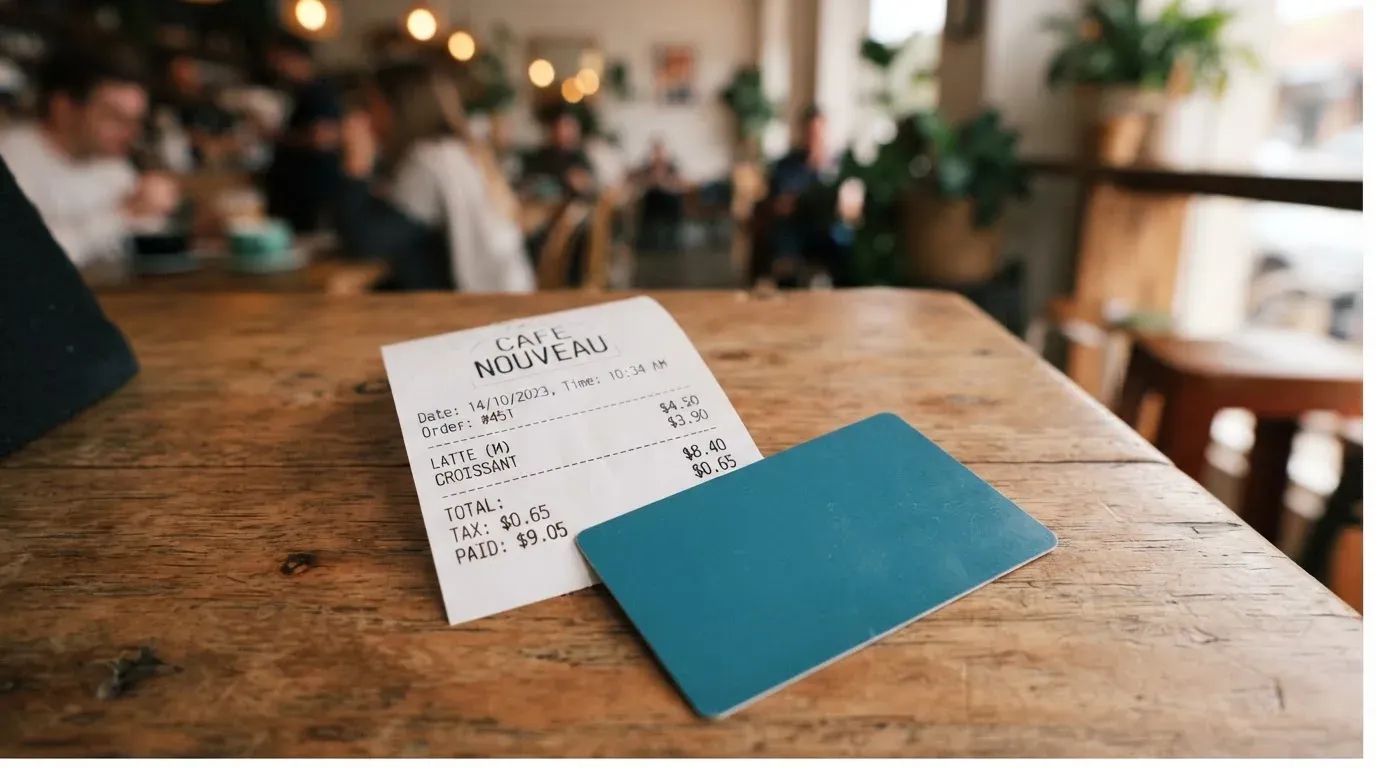
Here is every number the card publishes, in one place.
| Item | Amount | Notes |
|---|---|---|
| Subscription | $4.95 per month or $39.95 per year | Annual plan advertised as saving 33%; same inclusions either way |
| Extra Everyday Spend Cards | $1 per month each (FAQ says $2 each) | Up to 10 cards total |
| One-Time Use Card | $2 each | Deletes after one transaction |
| Free trial | None | — |
| Crypto top-up fee | 2% | Charged on loading |
| SEPA / UK Faster Payments top-up | $2.00 + 2% | FAQ says SEPA $0.70 + 4.5% |
| Apple Pay / Google Pay / credit card top-up | $1.00 + 5% | FAQ: $1 + 5% |
| Foreign currency transaction fee | 3% | When the merchant does not accept USD |
| Zero-dollar transaction fee | $0.50 | For $0.00 transactions |
| Returned or reversed payment fee | $30 | |
| Unload fee | $10 | To take balance out |
| Maximum balance | $3,000 per account | Spending limit generally set by US Unlocked |
| ATM | Not stated | Virtual card, described for US e-commerce |
Now let three real payments go through, because the fee structure only makes sense in context.
A $30 software subscription charged in dollars, merchant accepts USD. You pay $30 and feel nothing. This is the case the card is designed for, and the reason people tolerate a monthly fee.
A €25 purchase at a merchant that will not take dollars. This is where the 3% lands. The FAQ frames cards as billed in USD with no FX, and the card terms say 3% when the merchant does not accept USD — the honest reading is that you pay 3% whenever the merchant’s own system will not settle in dollars, which is not something you control at checkout. Budget it as a real cost of spending abroad, not an edge case.
A cancelled service you forgot about, refunded a month later. The refund does not come back free. A returned or reversed payment costs $30, which is more than most subscriptions and, on a small refund, more than the purchase.
Two limits shape everything else. The maximum balance is $3,000 per account, so this is not a place to hold savings. And the spending limit is “generally set by US Unlocked”, with the issuer free to set additional limits on top — a phrase that means your ceiling is not fully yours to know in advance.
How to Top up
Crypto and stablecoins are the reason the card exists, and they arrive in 1-2 hours. The pages I read do not name which coins or which networks, so I cannot tell you whether your token is on the supported list — and on a card like this that omission matters, because sending on the wrong network is a well-known way to lose money permanently.
The non-crypto routes are SEPA, UK Faster Payments, Apple Pay, Google Pay and credit cards, and these vary by country. PayPal and Venmo are not supported. Arrival times differ sharply: crypto in 1-2 hours, SEPA in 3-5 business days, card loads usually instant. The minimum top-up is not stated.
| Method | Fee | Arrival |
|---|---|---|
| Crypto / stablecoins | 2% | 1-2 hours |
| SEPA / UK Faster Payments | $2.00 + 2% (FAQ: $0.70 + 4.5%) | 3-5 business days |
| Apple Pay / Google Pay / credit card | $1.00 + 5% | Usually instant |
The structure is worth naming plainly: crypto is by far the cheapest way in at 2%, and card-based loading costs $1 plus 5% — so a $20 card load costs you $2, ten cents a dollar. The rational order is to load with crypto and use a card only when you need speed.
One rule to read twice. Loads are non-reversible once submitted. There is no undo on a transfer you have sent, which is why the unnamed-network problem cannot be waved away with a support ticket. And on the way out, the balance is one-directional as far as the public pages describe: withdrawal to crypto or a bank is not described, the only stated figure is the $10 unload fee, and closing the account requires a $0 balance.
So the practical question is not just how you load, but what happens to money you no longer want on the card. That answer, as published, is thin — and I would not send a large balance to a provider whose exit path is a fee line and a zero-balance requirement.
Paying with it every day
Everyday use is where this card scores 3 out of 10, and the reason is structural rather than fixable. It is a virtual Visa in US dollars with a US billing address, and that is all it is. There is no plastic, so nothing works at a shop till; the ATM situation is simply not stated, which for a virtual card means it is not something to plan around.
Apple Pay and Google Pay appear only as ways of loading the account. Adding the card to a phone wallet is not described, so “use it with your phone” is not a claim this card makes.
Some merchant categories are blocked. The restricted list covers high-risk categories such as gambling, crypto, adult, money transfer and weapons, and the terms also name internet gambling and cash-like purchases such as lottery tickets and casino chips. That means no betting, no crypto exchange purchases, no ticket resellers.
On security, the setup is conventional: two-factor authentication through an authenticator app under Account Settings and Security, an SMS or OTP check before card details are displayed, and 3-D Secure mentioned. The account auto-unlocks after 30 minutes, which is a sensible default for a dashboard that holds a live card number. One-time and store-locked cards are genuinely good tools for limiting exposure on a single purchase. What is not described is any safeguarding of the funds themselves.
When something goes wrong, the route is: contact the merchant first, then open a dispute with support; report a disputed charge within 60 days of the statement; a chargeback resolved in your favour is credited back to the account. Pre-authorisation holds can take up to 31 days to release, which is a long time to have money visibly stuck. Fraud is handled by emailing support immediately and marking the charge in the dashboard.
There is no cashback and no rewards of any kind — the card pages mention none — and no mobile app. The dashboard is a website, and that is where you will do everything.
What can go wrong
The most useful thing on this page is the complaints, so I want to be specific rather than diplomatic.
Trustpilot shows 1.9 out of 5 from 113 reviews, 18 of them in the last twelve months, read on 2026-10-21. The recurring themes in user reports are merchants rejecting the card between February and September 2026; accounts suspended or placed under review after deposits between January and September 2026; and billing and refund disputes, including an annual fee charged where a monthly one was expected in September 2026 and fees retained after cancellation in November 2025.
In the company’s own voice, US Unlocked replied on Trustpilot on 7 March 2026 acknowledging an ongoing issue with its payment partner. An operator admitting a live payment-processor problem in public is not a small thing, and it tells you the failures in this category often sit one step away from the brand you are dealing with.
There is also a pattern in the reviews that reads as a policy tightening rather than a series of coincidences: the cards-per-account cap was cut from unlimited, then to 100, then to 10, with the changes appearing across 2025 and 2026. Your own limit can move without notice, in one direction.
Underneath the brand sits Tern Commerce Inc.; the card programme is issued by “Third National” under licence from Visa. The registration country of the operator is not stated. In October 2025 the company announced launches in the UK with Faster Payments and in Australia. I found no licence revocation or fine events in the news — but the absence of a headline is not the same as a clean record.
There are three structural risks the card’s own facts create. First, money you have loaded is money held by a provider, and the reported pattern is accounts reviewed or closed after deposits. Second, a declined payment can leave a hold on funds for days, and a pre-authorisation hold up to 31 days. Third, this is a custodial arrangement in all but name: your crypto is converted into a balance the provider holds, so you are trusting Tern Commerce and its payment partner with the deposit.
If any of that makes you uneasy, the honest response is not to hunt for a workaround but to keep the balance on this card small enough that a bad week is an inconvenience.
What to take instead
None of these is a like-for-like substitute — the category is thin, and I would not claim otherwise. They differ in what they solve.
CardFlow (4.9 / 10) aims at Nigeria, describing itself as “Nigeria’s smartest fintech card platform” for Nigerians and global users, with no country list or exclusions stated. It is a virtual USD Mastercard created in about three minutes, free to create according to its site FAQ, and funded with Bitcoin, USDT, ETH or a Naira bank transfer, networks unstated. Monthly fee and transaction fees are not stated. Choose it if your spending is Nigerian and Naira banking is what you want to spend from.
HyperCard (4.7 / 10) is a prepaid card with a balance in USD or EUR, funded by depositing crypto such as USDT, BTC or ETH in the app and converting to the card currency. Its official pages state no country list; the App Store says the card works in “more than 176 countries” — that is acceptance, not eligibility, and the distinction matters if you are turned away. No fees are stated on the pages I could read. Choose it if you want a EUR balance rather than a dollar one.
Card.fi (6.6 / 10) is the most substantial of the three and the only one with metal. Its banner says cards ship to 200+ countries; its terms bar residents of, or orders from, a country subject to sanctions that would prohibit the service — no citizenship-versus-residence rule beyond that. You get Virtual Classic and Premium, physical Classic and Premium, and a stainless-steel metal card, with a virtual card included in every physical order and cards issued under licence from the relevant schemes (Visa or Mastercard not named). One-time pricing: Virtual Classic $49, Virtual Premium $249; physical and metal prices are not listed. There is no monthly, annual, inactivity or minimum-balance fee. Top-up is Classic 1.5% + $1.00, Premium 1%; FX is Classic 3.5%, Premium 2.5%, with the conversion fee shown before each top-up. Funding covers 32 coins across 5 networks — Ethereum, Base, BNB Chain, Solana, Kaanch — including USDT, USDC, ETH, BNB, SOL and KAANCH, with a deposit address per card and conversion at market rate on arrival; sending on the wrong chain risks permanent loss. And there are rewards where the others have none: cashback on card spending of 0.8% on Classic (capped at 10 USDT a month), 1% on Premium, and 1.2% or 2% on Metal depending on the cap tier.
| US Unlocked | CardFlow | HyperCard | Card.fi | |
|---|---|---|---|---|
| Score | 5.1 / 10 | 4.9 / 10 | 4.7 / 10 | 6.6 / 10 |
| Who | Residents outside the US, ~175 countries | Nigeria-focused | Not stated | 200+ countries, sanctions bar |
| Card | Virtual USD Visa | Virtual USD Mastercard | Prepaid, USD or EUR | Virtual, physical, metal |
| Physical | No | Not stated | Not stated | Yes |
| Entry cost | $4.95/mo or $39.95/yr | Free to create | Not stated | $49 Virtual Classic |
| Top-up | Crypto 2%; card $1 + 5% | BTC, USDT, ETH, Naira | Crypto in app | 32 coins, 5 networks |
| Cashback | None stated | None stated | None stated | 0.8%–2% |
| Balance cap | $3,000 | Not stated | Not stated | Not stated |
The pattern: if your problem is dollars on US websites, US Unlocked is the cheapest way in and the most exposed. If your problem is cards that feel substantial and pay you back, Card.fi costs more upfront and has no subscription. If your problem is Naira or euros, the other two exist.
Who I would recommend it to
I would recommend it to exactly one reader: someone living outside the US, earning in dollars or stablecoins, spending regularly on American online shops, and comfortable with a card that is a number in a browser rather than an object in a wallet.
Before you decide, check four things. Is your country on the published list of about 175, remembering there is no exclusions list to check against? Does the token you hold travel on a network this provider supports — because the pages do not say which, and a wrong-network transfer cannot be undone? Can you live with $3,000 as a ceiling and no way to withdraw described publicly? And is your balance small enough that an account placed under review, as several reviewers report, would be an annoyance rather than a loss?
If you answered no to any of those, Card.fi is the more serious product in this comparison and this is not. If you answered yes to all four, the $4.95 a month is a fair price for what it does, and you should load small and reload rather than parking money on it.
And if what you actually need is a bank account — an IBAN, a deposit guarantee, a statement in your own name — no card in this comparison gives you that, and I would not dress any of them up as one.
Frequently asked questions
What is US Unlocked card?
It is a virtual Visa card issued in US dollars, sold as a subscription, that you load with crypto or with ordinary payment methods and spend on US websites. The brand belongs to Tern Commerce Inc., and the programme is issued by “Third National” under licence from Visa. There is no physical card, no app and no bank account — the whole product is a card number, CVV and expiry shown in a web dashboard after SMS verification.
Does US Unlocked require KYC?
Yes, one verification step. You need a government-issued photo ID and, if requested, proof of address such as a recent utility bill or bank statement. PO boxes and virtual addresses are not accepted. The stated reasons for rejection are an expired ID, poor image quality or mismatched information, and the process is described as typically taking under three minutes, with 24 hours as the outer limit.
Is US Unlocked a bank?
No, and this is the single most important thing to understand. It is a card programme manager or front-end over someone else’s licence: Visa sets the network rules, “Third National” issues under that licence, and Tern Commerce Inc. markets the product. Funds you load sit with the provider rather than in a bank deposit, so deposit guarantee schemes do not apply and the card cannot give you an IBAN or a bank statement in your own name.
Which countries can use US Unlocked?
Any country outside the United States, as long as you are a resident there and can show valid ID and proof of address. The countries page lists about 175 available countries, from Albania to Zambia, including Kazakhstan, Georgia, Armenia, Uzbekistan, Kyrgyzstan, Moldova and Turkmenistan. There is no published list of excluded countries, and Russia and Belarus do not appear among the available ones — so eligibility is confirmed by applying rather than by reading.
How do I top up the card?
With crypto or stablecoins, arriving in 1-2 hours for a 2% fee, which is the cheapest route. Other options are SEPA and UK Faster Payments at $2.00 plus 2% arriving in 3-5 business days, and Apple Pay, Google Pay or credit card at $1.00 plus 5%, usually instant. PayPal and Venmo are not supported. Loads cannot be reversed once submitted, and the pages do not name which coins or networks are accepted.
Can I use the card in Apple Wallet or Google Pay?
Not as far as the card’s own pages describe. Apple Pay and Google Pay are listed only as ways of loading the account, and adding the card to a phone wallet is not described anywhere I read. The card is virtual, there is no ATM service mentioned, and no mobile app — so think web dashboard, not tap-to-pay phone.
What are the main fees?
Subscription is $4.95 a month or $39.95 a year, with no free trial, and One-Time Use Cards cost $2 each. Loading costs 2% for crypto and $1.00 plus 5% by card. Spending costs 3% when the merchant does not accept USD. There is a $0.50 fee on $0.00 transactions, a $30 fee on returned or reversed payments, and a $10 fee to unload the balance.
Is US Unlocked safe to use?
Set expectations correctly rather than looking for reassurance. Security tooling is conventional — authenticator-app 2FA, OTP before card details are shown, 3-D Secure and an auto-lock after 30 minutes — but no safeguarding of funds is described, and the provider holds what you load. Trustpilot shows 1.9 out of 5 from 113 reviews, with accounts placed under review or closed after deposits, and in March 2026 the company acknowledged an ongoing payment-partner problem.
Is US Unlocked worth it?
For non-US residents paying American online shops in dollars, frequently, it can be — the eligibility is open, the annual price is $39.95, and no subscription tier has domestic USD transaction fees. If you need a physical card, cash, a bank account, or a balance above $3,000, it is not worth it, and you should read the section on alternatives before choosing anything else.
How do I close the account and get my money off?
Closing requires a $0 balance, and the only published figure for taking money out is the $10 unload fee. The pages do not describe withdrawing to a crypto wallet or to a bank account, which is a real gap: it means the exit route is thinly documented, so it is worth asking support directly about a specific withdrawal method before you load an amount you would mind losing.
Virtual cards: your questions answered – cryptocardanswers
Content created by the «cryptocardanswers» team