
A crypto wallet that behaves like a prepaid Visa, with the fees hidden and the exit rules blunt
 Available in US

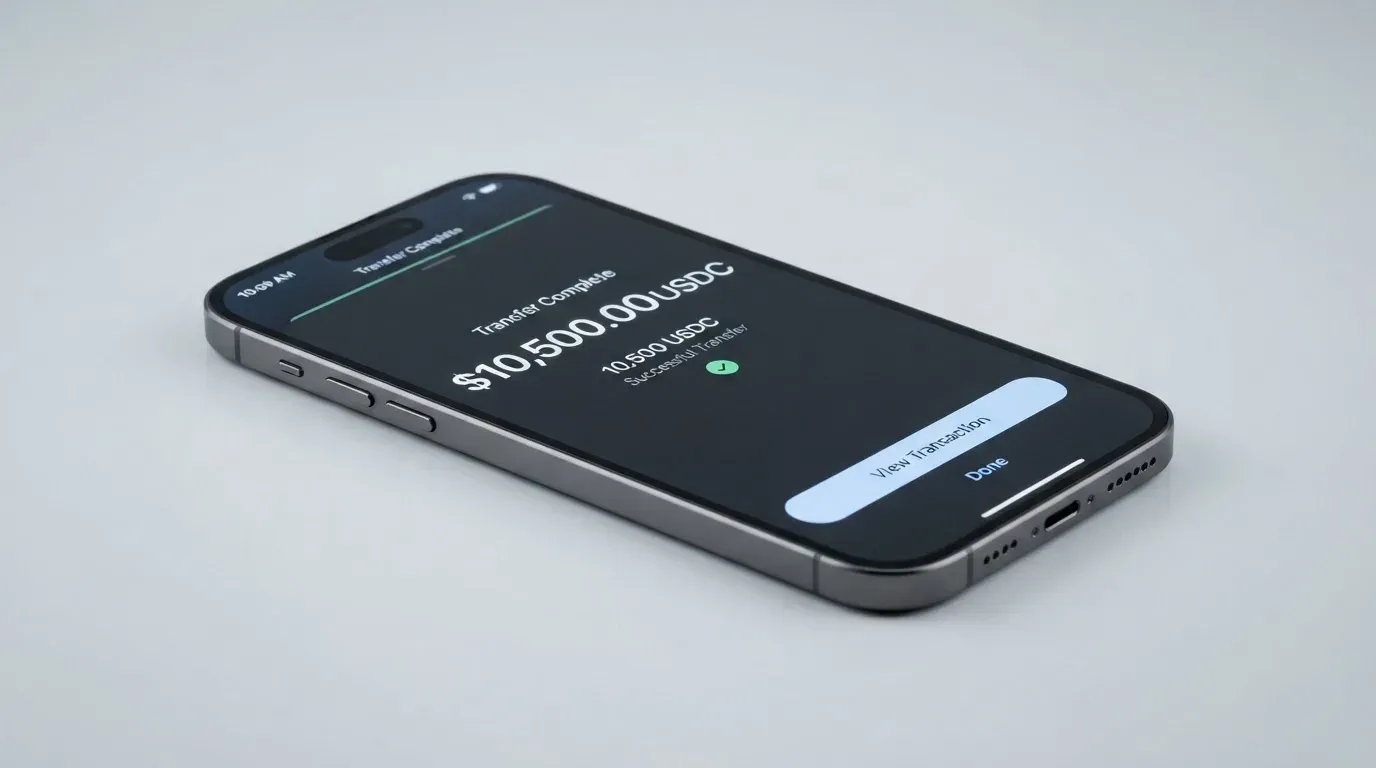
The Utorg card is a payment card that spends out of a crypto balance rather than out of a bank account. You verify your identity once, receive a virtual Visa number in your phone, load it with USDC, and pay. There is no physical card to wait for and no plastic in the post — which is the single most important thing to understand before anything else.
I scored it 6.3 out of 10. That is not a bad score; it is a card with real strengths that sits uneasily on top of unanswered questions. The strengths are concrete: no issuance fee, no monthly fee, no foreign-exchange markup, Apple Pay and Google Pay, and a stated monthly ceiling of up to EUR 30,000. The weaknesses are just as concrete: the card is virtual only, no ATM is mentioned anywhere, the crypto conversion fee is not published, the provider behind the card is named differently in different places, and the terms give the company wide powers over your access while disclaiming nearly all responsibility for refunds and disputes.
Who this suits: someone who already holds USDC, lives in a listed European country or Ukraine, and wants to spend it at ordinary shops without waiting for a bank to open an account. Who it does not suit: anyone who needs a physical card, cash from a machine, a clear answer on the conversion spread, or a firm commitment that the card will still exist in three years.
The conditions described here are current as of October 28, 2026.
Verdict: 6.3 out of 10
A fair summary is that Utorg is a crypto wallet with a payment card attached, not a bank account with a crypto front end. The company’s own material leans into this: the card page calls it “the first non-custodial Crypto Card” and the FAQ says “You hold your keys. You hold your crypto.” The terms, however, state that Utorg does not issue cards, does not provide payment accounts, and issues no e-money and does not custody anything for the card. Those two framings sit side by side, and if you are deciding whether your funds are yours or the company’s, you have to read both.
| Criterion | Mark | Why |
|---|---|---|
| Who can get it | 5 / 10 | EEA countries plus Ukraine, Norway, Iceland and Liechtenstein are listed; the FAQ claims “190+ countries” and the two are not reconciled, and the card does not say whether the test is residence or citizenship |
| Cost | 8 / 10 | No issuance fee, no monthly fee, no FX markup and no payment fees — all marked “for a limited time”; the crypto conversion fee is not disclosed |
| Top-up options | 7 / 10 | USDC on Ethereum, Polygon, Arbitrum, Solana or BSC; no other coin is offered on the card page |
| Reliability and complaints | 6 / 10 | The card is provided by Chain Valley Sp. z o.o. with Wirex Pay, while earlier listings named Utrg UAB as issuer; Trustpilot shows 4.2 out of 5 from 952 reviews |
| Everyday use | 5 / 10 | Only a virtual Visa, issued instantly after KYC; Apple Pay and Google Pay work, but there is no physical card and no ATM |
| Total | 6.3 / 10 | A good virtual card attached to a crypto wallet, with thin disclosure on the numbers that matter most |
The audience the card is actually built for is narrow and worth saying plainly: residents of the EEA and of Ukraine who want to spend USDC. If that is you, the list of things that work is longer than the list of things that do not. If it is not you — you are in the UK, the US or Singapore, you hold euros rather than dollars, or you need a card that works in a cash machine — you should look elsewhere and not spend your time on the fine print here.
Will they give you the card?
They will, if you are in the right place, and the card does not tell you clearly what “the right place” means.
The card page lists EEA countries, with Italy, Germany, Spain, France and the Netherlands given as examples, plus Ukraine, Norway, Iceland and Liechtenstein. A third-party comparison site, unofficial and not confirmed by Utorg, counts 31 available countries and names Afghanistan, China, Japan, Nigeria, Russia, Singapore, the United Kingdom and the United States as restricted. Take that second list as a hint rather than as fact, because the card itself does not name excluded countries anywhere.
The more awkward gap is the FAQ’s claim of support in “190+ countries”. If you are reading that and wondering how it squares with a list of 31, you are not misreading. Utorg does not explain the difference, and until it does, the more specific country list on the card page is the one to plan around.
Then there is the question you asked about your own case specifically: does Utorg test where you live, or where you come from? The card’s public pages do not say. The distinction matters more than it sounds. Sanctions screening and issuer risk policy are frequently applied to citizenship and country of birth as well as to the address on your documents, so a reader who is a citizen of one country and resident in another cannot assume that residence settles it. If that is your situation, your only real test is to attempt registration and see what happens — and to keep in mind that a refusal is entirely within the company’s rights.
| Question the card leaves open | What I can tell you |
|---|---|
| Residence or citizenship? | Not stated anywhere on the public pages |
| Which countries are excluded? | Not named; the official list is of countries where it is available |
| “190+ countries” versus ~30 listed | Claimed in the FAQ, not reconciled with the card page |
| Minimum age | Not stated; prepaid and debit cards are generally adult-only |
None of this is disqualifying. It is just the shape of the disclosure: enough to know the shape, not enough to rely on.
How to get it
The application is described as one of the faster ones in the category. Verification is described as AI-powered and said to take under five minutes. What that means in practice is an identity document upload plus a liveness check — a selfie-style check that you are the person in the document. Whether you need proof of address or a proof-of-age document is not stated.
After that, the card arrives digitally: a virtual Visa, available immediately once you are verified. There is no mention anywhere of a physical card, so there is nothing to wait for and nothing in the post. If your mental image of this product is a piece of plastic in a letterbox, discard that image now and it will not come back later.
One practical detail worth knowing before you start: the help centre states that setting the card up on Android needs app version 2.88.0 or higher. That is the kind of small print that costs an evening if you find out after a failed verification.
The help centre also carries articles titled “What is Source of Funds and Wealth?” and “Source of Funds questionnaire – accepted document types”. I did not read the answers, but the existence of those titles tells you something: expect a second, deeper round of questions about where your money came from at some point after the first five minutes. That is normal in this industry and it is not a bad sign by itself.
What is worth learning from is how rejections happen. In a reply to a March 2023 Trustpilot review, the company gave reasons: a passport missing a signature, and a bank statement sent as a screenshot rather than a PDF. Both are avoidable and both are common across this whole category. A full, signed document and a proper PDF file get through more often than not.
Fees: what it really costs
The headline numbers are good, and the asterisks attached to them matter as much as the numbers.
Zero issuance fee. Zero monthly fee. Zero foreign-exchange markup and no payment fees. The card page attaches “for a limited time” to these. Nobody knows when it ends, and a fee that can be introduced without a code you have agreed to is worth pricing into your own thinking as a real possibility rather than a marketing detail.
| Fee or limit | What the card says |
|---|---|
| Issuance | Zero, marked “for a limited time” |
| Monthly fee | Zero, marked “for a limited time” |
| Foreign-exchange markup | Zero, marked “for a limited time” |
| Payment fee | None claimed, marked “for a limited time” |
| Crypto conversion fee | Not stated |
| ATM | Not stated |
| Monthly limit | Up to EUR 30,000 |
| Daily limit | Not stated |
| Tiers | Not stated; the card page shows no tiers |
| Card currency and spread when paying in another currency | Not stated |
| Multi-currency balances | Not stated |
The conversion fee is the hole in this table, and it is the hole that matters. You hold USDC, the merchant wants euros or dollars or złoty, and something has to happen in between. An unofficial third-party source, not confirmed by Utorg, says conversion happens at a live rate with no fixed public percentage, and that the provider’s terms allow it to charge spreads, markups, network costs and dispute charges. You cannot check that against a published figure, because there isn’t one.
Two more limits deserve a note. The monthly ceiling is stated as up to EUR 30,000 on the card page; the same unofficial source says up to EUR 50,000 and that daily and per-transaction limits are unpublished and may be lowered after risk checks. Where the official page and the third-party page disagree, the official page is the one to believe — which here means the lower number.
There is also a spread on an unlisted card currency. The card states its monthly limit in euros, and that crypto is converted so the merchant receives local currency. That is a description of the mechanism, not of the cost.
Three ordinary payments, priced
Take a week of unremarkable spending and see whether the advertised zeros hold up in practice.
A lunch in Berlin. You want the merchant to receive euros. The card page claims no payment fee and no FX markup. The currency conversion between your USDC and the euro happens somewhere the card page does not itemise. If that conversion is at a live rate with no fixed percentage, then the honest description of this lunch is “no fee, plus whatever the conversion costs you”, and only the second half is knowable.
An online subscription. Same story, with an extra variable: some merchants decline prepaid or foreign-issued cards because the issuer lookup reveals the card type and where it came from. This is the most common quiet failure of any crypto card, and no advertised zero-fee promise prevents it.
A purchase while your balance is in USDC. Here the zero-FX-markup claim is doing real work, because converting euros to dollars at a card would normally carry a spread. If the card converts at the network rate with no markup, as claimed, this is the scenario the product is genuinely built for.
How to top it up
Top up means: move USDC into the card so there is something to spend. The supported asset is USDC, and the supported networks are Ethereum, Polygon, Arbitrum, Solana and BSC. That list is five networks for one coin. If you hold USDT — a very common holding — the help centre has an article titled “Why is USDT not available for card top-up?”, which tells you the answer without needing to read it.
Everything about the mechanics beyond that is unstated. Whether there is a deposit fee, whether there is a minimum, and who pays the network fee for the transfer are all listed as not stated. The card page claims payments and cross-fiat conversions at zero fees, again marked “for a limited time”.
One more article title worth flagging: “What is Gasless top-up?”. The existence of that page suggests there are circumstances where you do not pay the network cost. What those circumstances are, I did not read.
The unofficial line, not confirmed by the card, says the top-up fee is EUR 0 as advertised, that crypto is converted in real time at the point of purchase with no pre-funding advertised, and that the previous version of the card required loading a euro balance first.
Getting the network right is the single most consequential thing in this section. Blockchain transfers are irreversible. Send USDC on a network the provider does not support, or to an address belonging to a different network, and the money can be gone or reduced to a support ticket with no guarantee of recovery. Send ETH-based USDC without a little ETH in the wallet to pay gas and the transfer simply will not move. There is also an order-of-operations point: on-chain transfers out of self-custody depend on the network’s finality, so a top-up may not be spendable instantly even when the transfer has succeeded.
Withdrawals, by contrast, are marked “Coming soon” on the card page for selling crypto, and are otherwise not stated. Read that with the terms below, because the two together are the sharpest edge of this card.
Paying with it every day
Day-to-day use is where the virtual-only design shows. Apple Pay and Google Pay are supported, which is what turns a virtual card number into something you can actually tap in a shop — the phone holds a tokenised number in its secure hardware, and each payment generates its own one-time code, so the card number itself is never handed over. That is the mechanism that makes a card with no plastic genuinely usable.
Blocked merchant categories are not stated. That is a real gap: the whole gaming and gambling block, which most issuers apply by policy rather than by law, is one you simply cannot verify here.
There is no cashback and no rewards. The card page mentions none, and a third-party source, unofficial, confirms none — as does a July 2026 Trustpilot reviewer who praised the card as instant and noted the absence of cashback.
The app is available on iOS and Android. The card page shows a Trustpilot rating of 4.9 out of 5, which is a Trustpilot figure and not an app-store rating; store ratings I did not read.
The dispute problem, which is the part to read twice
The terms, updated 17 September 2026, say Utorg cannot approve, reverse or decide chargebacks and cannot cancel card transactions, and it disclaims responsibility for refunds and disputes. The card is provided by Chain Valley Sp. z o.o. with Wirex Pay, so a dispute goes to the card provider, not to the crypto brand you downloaded the app from. Claims relating to Utorg must be filed within one year or they are barred. How long a dispute actually takes is not stated.
Read that in plain terms: if a shop takes your money and delivers nothing, you are appealing to a company whose card terms say it cannot decide the appeal. That is not a disqualifying defect — it is the standard architecture of this category, where the crypto brand manages the app and a licensed issuer runs the card. But it means your real counterparty in a dispute is a payments company you did not choose and may never have heard of. On top of that, a declined payment can leave a hold on your funds for several days, typically up to seven, so a card with a modest balance can look empty for a week.
What can go wrong
Nothing dramatic has surfaced in the way a collapsed exchange would, but several smaller risks add up.
The terms are broad. The card can be refused, restricted, suspended, terminated or discontinued at any time, and there is nothing in those terms about what happens to the balance on closure. Programme closures have a pattern: a notice period, spending and loading stop, then users are asked to withdraw what is left. Withdrawal is “Coming soon” on the card page. Those two facts sitting next to each other are the combination I would want a reader to weigh hardest.
Non-custodial is a claim, not a guarantee. The marketing says you hold your keys. Your own risk then becomes yours: losing a seed phrase means losing the funds with no network-level recovery, and phishing and clipboard-swapping malware remain the standard ways people lose crypto regardless of who holds the key. Note also that stablecoins themselves can move away from their peg — one collapsed in May 2022, and USDC briefly lost its peg in March 2023 during the US banking crisis. Self-custody of a dollar-pegged token is not the same as self-custody of dollars.
The issuer is described inconsistently. An April 2026 press release says Wirex now powers card spending for Utorg wallet users. The current terms name the card provider / Wirex Limited. A review site earlier named Utrg UAB in Lithuania as the issuer. An unofficial source adds a legacy issuer, Quicko Sp. z o.o., and describes the infrastructure as Wirex Banking-as-a-Service on the Visa network. The company behind the site is clear — UTORG LABS HOLDING LTD, Reg. No. 000008060, Office 18, 11th floor, Tamouh Tower, Al Reem Island, Abu Dhabi, UAE — but who actually issues your card is not nailed down on the card page, and the footer says in its own words that Utorg is not attributed to banking services.
Complaints are not alarming, but they are not card-specific either. Trustpilot for utorg.com shows 4.2 out of 5 from 952 reviews, read on 20 October 2026, with only five reviews in the last twelve months. Themes include a cancelled transaction with a slow refund (January 2024, November 2024), repeated KYC rejections (March 2023), and a wallet reported closed and not reopenable (August 2026), which the company answered by saying the wallet remains available. I found no complaints specifically about the card. The single card-specific review is positive on speed and notes no cashback.
What is not protected is not stated. Whether customer funds are safeguarded or insured, and whether two-factor authentication is available, is not stated on the card page. That question has a structural answer worth knowing: an electronic money institution in the EU must safeguard customer funds, by segregating them or insuring them, but such funds are not bank deposits and are not covered by deposit guarantee schemes. I found no confirmation that this card’s funds sit in that kind of arrangement.
Support exists. There is a Help Centre, a support team, [email protected], available seven days a week with hours not stated, and the help centre itself is in English and Ukrainian.
What to take instead
Three alternatives came up in the same work. None is obviously right for everyone, and the honest summary is that all three have the same weakness: disclosure is thin everywhere in this category, so you are comparing how much is unsaid rather than how much is said.
| Utorg | International Visa Card | UNi Card | Morse | |
|---|---|---|---|---|
| Score | 6.3 / 10 | 6.7 / 10 | 6.1 / 10 | 7.5 / 10 |
| Card | Virtual Visa, no physical mentioned | U.S.-issued Platinum Visa, virtual; physical “Coming soon” | Multicurrency card on Mastercard | Fully virtual Visa prepaid debit |
| Issuance | Zero, “limited time” | $5 one-time | Not stated | Not stated |
| Monthly | Zero, “limited time” | Classic free, Pro $9.00, Max $19.00 | No annual fee | Not stated; agreement referenced |
| FX markup | Zero, “limited time” | Visa rate plus 2% FX fee | No foreign transaction fee | Zero FX fees or markups |
| Crypto conversion | Not stated | Not applicable | Live OTC rates | Real rate, no markup |
| Funding | USDC on Ethereum, Polygon, Arbitrum, Solana, BSC | USDC or USDT into the USD account, plus USD, EUR, SEPA, SWIFT, FedNow | Not stated | Debit card, stablecoin, and Account Details in USD, EUR, MXN, COP |
| Rewards | None | None stated | Spend-to-Earn up to 3% | Not stated on card pages |
| Monthly limit | Up to EUR 30,000 | Not stated here | Not stated | Not stated here |
Morse scores highest at 7.5 and is the one to look at first. Its card is “fully virtual for now”, a Visa prepaid debit spending from a balance in any currency, paying online and contactless is free, and FX fees and markups are zero at the real Visa rate. Funding is broad: debit card, stablecoin transfer, or bank details in several currencies, with USDC, USDG and EURC over Solana free. Its eligibility test is by residence rather than citizenship — you must be at least 18 and resident in a supported country, and the app is said to work in over 140 countries. Some countries are in closed beta and need an invite code, and the card is “available only in certain countries”, so you check the app. Morse cannot serve customers subject to US, UK, EU or UN sanctions. Its own gap: card fees are not published, only a pointer to the cardholder agreement.
International Visa Card is the odd one out because it is not a crypto card in the way Utorg is — it is a U.S.-issued Platinum Visa that happens to accept USDC and USDT deposits. Its strength is that the money sits in a USD account and is not converted every time you spend. Its cost is the one foreign-currency rule everyone should read: “Visa exchange rate + 2% FX fee”. That is a real, permanent, published number, which in its own way is more useful than an unlimited “zero” promise. It also blocks residents and legal registrants of a long list of countries including Belarus, mainland China, North Korea, Cuba, India, Iraq, Iran, Israel, Myanmar, Nepal, Nicaragua, Russia, Syria, Turkey, Ukraine, Venezuela and Vietnam, and purchases are blocked in North Korea, Cuba, Iran, Russia, Syria, Ukraine and Venezuela.
UNi Card scores lowest at 6.1. It is a multicurrency Mastercard spending from your UNi.Global balance, with no annual fee, no foreign transaction fee, conversion at live OTC rates and no hidden exchange fees, plus Spend-to-Earn rewards up to 3% — the only alternative here with any rewards on the table. Who can get one is not stated, and how you fund it is not stated either, which is enough to rule it out for my purposes.
One more option nobody in this category wants to mention: if your problem is that a bank will not open an account for you, a regulated European e-money provider that offers a card can often do it, and the difference is that its licence and safeguarding arrangements are published. It will not hold your crypto, but it will tell you in writing what your money is.
Who I would recommend it to
I would recommend this card to one specific person: a resident of the EEA or Ukraine who already holds USDC, spends it online or in shops via Apple Pay or Google Pay, and has never been able to open an ordinary bank account or simply prefers not to. For that person the card does what it says — no issuance, no monthly, no FX markup, a virtual card in minutes — and the monthly ceiling of up to EUR 30,000 is more than enough.
I would not recommend it to you if any of these are true. You need a physical card, because none is mentioned. You need cash from an ATM, because none is mentioned. You hold coins other than USDC, because USDC is the only asset on the page. You are outside the listed countries, because the “190+ countries” claim is not reconciled with anything. You need a firm published conversion rate, because there is not one. Or you are planning to keep a meaningful balance on the card for months, because the terms allow the card to be suspended or discontinued at any time and the sell function is marked “Coming soon”.
The honest summary is this. Utorg is a competent wallet that has attached a virtual card to it, and it is being honest about the parts that are hard. What it is not doing is publishing the numbers you need to predict your own cost — the conversion fee, the daily limit, the card currency, the spread, the ATM position, the safeguarding position. Where a competitor prints “Visa rate plus 2%”, Utorg prints “zero, for a limited time”. One of those two you can plan around.
Take the card if you are spending USDC you already hold, keep it as one of several tools rather than your only card, and read the terms before you load anything. If you are deciding between cards on price alone, this is not the one where price is knowable.
Frequently asked questions
What is the Utorg card?
The Utorg card is a virtual Visa payment card linked to a crypto wallet rather than to a bank account. You verify your identity, get the card number in your phone, load it with USDC, and it converts crypto so the merchant is paid in local currency. It is virtual only — no physical card is mentioned anywhere on Utorg’s pages.
Is Utorg a bank?
No, and Utorg says so itself. The site owner is UTORG LABS HOLDING LTD, registered in Abu Dhabi, UAE, and the footer states that Utorg is not attributed to banking services. The terms add that Utorg does not issue cards, provide payment accounts, or issue e-money for it — the card is provided by Chain Valley Sp. z o.o. with Wirex Pay.
Which countries can get the card?
The card page lists EEA countries such as Italy, Germany, Spain, France and the Netherlands, plus Ukraine, Norway, Iceland and Liechtenstein. The FAQ also claims support in “190+ countries”, which is not reconciled with that list. The pages do not say whether eligibility is tested against your residence or your citizenship.
What does it cost to hold the card?
Nothing on the card page: zero issuance and zero monthly fee, plus zero FX markup and no payment fees — all marked “for a limited time”. The crypto conversion fee is not stated, which is the cost you cannot calculate in advance. An unofficial third-party source says conversion runs at a live rate with no fixed published percentage.
What is the monthly limit?
The card page states a monthly limit of up to EUR 30,000. Daily and per-transaction limits are not stated, and an unofficial source says lower limits may apply after risk checks and puts the monthly ceiling at EUR 50,000. Where the official page and a third party disagree, believe the official page.
How do I top up the card?
With USDC, on the Ethereum, Polygon, Arbitrum, Solana or BSC networks. That is the only asset and the only networks listed. Get the network right: blockchain transfers are irreversible, and sending USDC on an unsupported network or to another network’s address can lose the funds.
Can I use it in Apple Pay and Google Pay?
Yes, both are supported, and they are the practical answer to having no physical card — the phone holds a tokenised number and generates a fresh code for each payment. You cannot use the card in a cash machine, because no ATM arrangement is mentioned. Whether any merchant categories are blocked is not stated.
Is the card safe, and is my money protected?
That depends on which layer you mean. Self-custody means key loss, phishing and clipboard malware become your problem, with no network-level recovery available. Utorg’s pages do not state whether customer funds are safeguarded or insured, or whether two-factor authentication is offered. Note also that the terms let the card be suspended or discontinued at any time, and selling crypto is marked “Coming soon”.
What happens if a shop takes my money and does not deliver?
You take it up with the card provider, not with Utorg. The terms, updated 17 September 2026, say Utorg cannot approve, reverse or decide chargebacks and disclaims refunds and disputes; disputes go to Chain Valley Sp. z o.o. with Wirex Pay. Claims against Utorg itself must be filed within a year. No dispute timescale is published.
Is it worth it?
For someone already holding USDC in the EEA or Ukraine who needs a working virtual card quickly, yes — the zero fees and instant issuance are genuinely useful. If you need cash, a physical card, other coins, a firm conversion rate or certainty the card will exist in three years, it is not worth it, and a published-fee competitor will suit you better.
App and neobank cards: your questions answered – cryptocardanswers
Content created by the «cryptocardanswers» team