
VCCHQ, reviewed by someone who read the small print so you don't have to
 Available in US
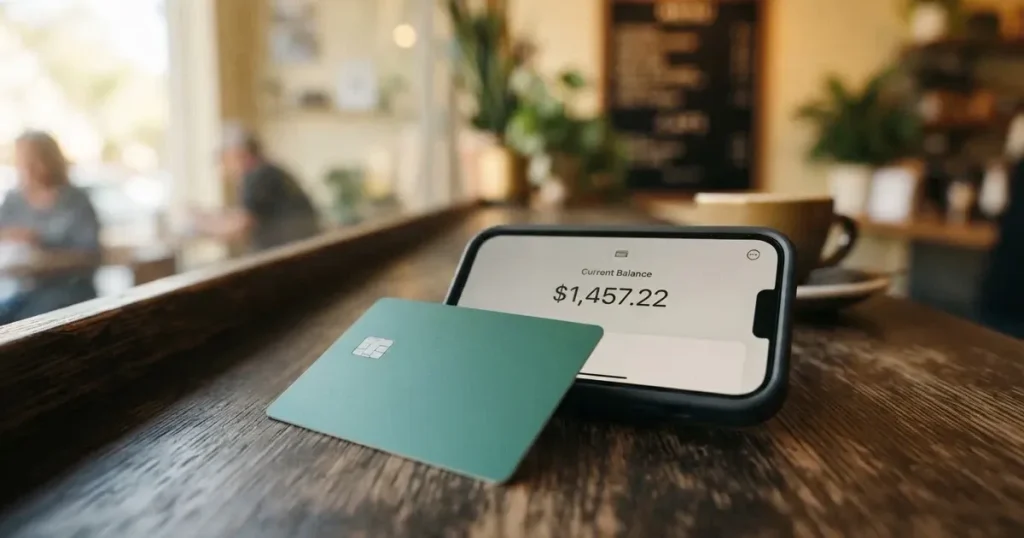
VCCHQ sells virtual Visa and Mastercard cards that you buy and load with USDT, with no identity check. Three tiers are on offer — Standard, Premium and Ultra Premium — and the headline pitch is global reach, instant delivery and a flat 8% fee on every top-up. If that mix of convenience and low friction sounds like what you need, this review is for you, because the same openness that makes the card easy to get also makes it hard to verify, and the small print leaves a lot unsaid. I went through the public pages, the Trustpilot trail and the company’s own contact details, and I want to walk you through what I found before you commit any money.
The conditions described below are current as of October 28, 2026.
Verdict
VCCHQ scores 4.9 out of 10. The strengths are real: anyone, anywhere can order a card, there is no identity verification to slow you down, and you can be holding a virtual card number within minutes of paying in USDT. The weaknesses are equally real, and they are the kind that bite you in everyday use. The cost is high — 8% on every top-up plus a $2 flat fee — and the company does not name a legal entity, an issuer, a regulator or a country of operation. There is no mobile app, no Apple Pay or Google Pay, and nothing about ATM withdrawals, FX fees or a refund process. For someone who needs a quiet, well-supported prepaid card for daily spending, the gap between the pitch and the paperwork is too wide. For someone who needs a one-off virtual card to spend crypto online and is comfortable with the trade-offs, it can do the job, but only just.
| Criterion | Mark | Why it matters |
|---|---|---|
| Who can get it | 9 / 10 | Sold as global with no country list and no KYC; an email is the only data you hand over at order. |
| Cost | 2 / 10 | 8% on every top-up plus a $2 flat fee; card prices from $3 to $15; nothing is said about monthly, FX or ATM costs. |
| Top-up options | 6 / 10 | USDT only, on TRC20 or BEP20, to a per-order address; minimum load $5 to $30. |
| Reliability and complaints | 4 / 10 | No named company, no named issuer, no regulator; Trustpilot score 3.5 from a handful of reviews, one negative from December 2021 about a delayed order. |
| Everyday use | 3 / 10 | Virtual cards only, no app, no mobile wallet support disclosed, no ATM, no disputes process explained. |
| Total | 4.9 / 10 |
Will they give you the card
The single most striking thing about VCCHQ is the eligibility page, because there isn’t one. The site says the card is “Global” and stops there. There is no list of supported countries, no list of excluded countries, no residency check, no sanctions statement, and no separate rule for citizens versus residents. If you have an email address and a way to send USDT, you can, in principle, order.
That simplicity is the entire product. Most crypto cards on the market ask you for a government ID and a selfie before they will let you spend a single dollar. VCCHQ’s order flow has no such step. You choose a tier, enter an email, pay in USDT, send the transaction hash (TXID) to support, and receive the card details once the payment is confirmed. The minimum age for a cardholder is not stated, and there are no KYC tiers to graduate through later.
I want to flag what “no KYC” actually means in practice, because readers often read it as a green light. Even on a card with no identity check, the payment rails underneath still belong to a licensed network, and merchants, networks and your own bank can still decline transactions or freeze balances if something looks off. The card’s openness is real, but it is not a passport to bypass any rule a network or a merchant might apply. If you have been declined by other cards because of your country of residence or your citizenship, this one is worth trying, but treat it as a tool with limits rather than a workaround.
One other point worth keeping in mind: the company does not say who issues the card. The site offers a Premium and an Ultra Premium under BIN 428842, which is a real Visa BIN range, but the legal entity behind the programme is not named anywhere I could read. That matters for two reasons. First, when something goes wrong, you need a counterparty to write to. Second, BIN ranges can be reassigned, suspended or closed by the network if the issuer falls out of compliance, and that has happened to other crypto programmes in the past.
How to get it
The order process is a fixed four-step loop, and it lives entirely in your browser and your crypto wallet.
First, you pick a tier. Standard is the cheapest, Premium is sold as an “Enhanced Approval BIN”, and Ultra Premium is the “Elite Flagship BIN” 428842. The page does not spell out what “enhanced approval” or “elite” actually mean in terms of acceptance rates or spending limits, so you are choosing on trust.
Second, you enter an email address. This is the only personal data the order captures, and it is the address the card details will be sent to.
Third, you pay in USDT. The site generates a wallet address for your specific order, and you send the card price plus the top-up fee to that address. The funding section below covers the supported networks and the fee math in detail.
Fourth, you submit the transaction hash, also called the TXID, to support. Once the team verifies the payment, you receive the virtual card details. The site advertises “Instant Delivery” once the TXID is confirmed.
A few practical details to keep in mind. Because there is no app, you do not have a dashboard to log in to. Your card lives in your email inbox, and that email is your only handle on the account. If you lose access to the address, recovering the card may not be possible. There is also no public activation step beyond payment — the card is ready to use as soon as the details arrive. And because everything is virtual, there is no shipping address, no courier to wait for and no signature on delivery. For a reader who has been burned by physical card shipping delays, that is genuinely useful; for a reader who likes the option of a plastic card in a wallet, it is a real gap.
Fees and what a card payment really costs
The fee structure is the part of the page you want to read twice, because the cheap-looking card price is not the only number that will show up on your statement.
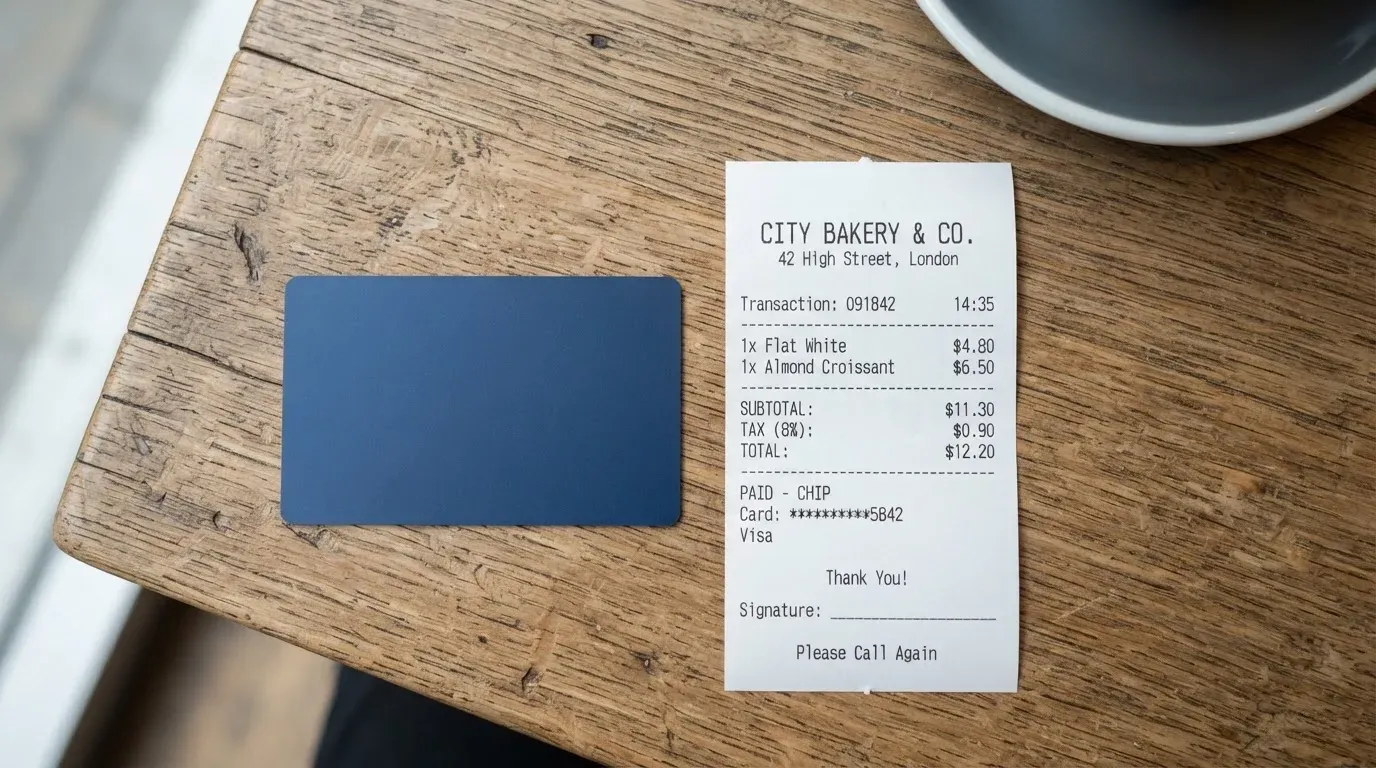
The card price itself is paid once, at order. Standard costs $3, Premium $6, and Ultra Premium with the 428842 BIN costs $15. There is no monthly fee, no annual fee, no inactivity fee and no minimum balance stated on the public pages. That much is clean.
The top-up fee is where the math turns. Every time you load the card, the site charges $2 plus 8% of the loaded amount, and the page spells this out with an example: a $30 top-up costs $34.40, so $30 of value lands on the card and $4.40 is the combined fee. If you fund the card often and in small amounts, that 8% compounds fast. If you fund it once with a larger amount, the flat $2 stings less.
What is not stated is just as important as what is. The site does not publish an FX or conversion fee, which means there is no published number for the spread between USDT and whatever currency the merchant charges you in. If the card settles in USD, a merchant in euros or pounds will apply the network’s wholesale rate plus whatever markup the issuer adds, and VCCHQ does not tell you what that markup is. The site is also silent on ATM withdrawal fees, and given that the card is virtual, an ATM cash withdrawal is unlikely to work anyway. Daily and monthly spending limits are not stated for any tier.
| Fee or limit | Standard | Premium | Ultra Premium (BIN 428842) |
|---|---|---|---|
| Card price (one-time) | $3 | $6 | $15 |
| Top-up fee | $2 + 8% | $2 + 8% | $2 + 8% |
| Example: $30 top-up lands as | $30 ($4.40 in fees) | $30 ($4.40 in fees) | $30 ($4.40 in fees) |
| Minimum top-up | $5 | $30 | $30 |
| Maximum top-up | Not stated | Not stated | Not stated |
| Daily spending limit | Not stated | Not stated | Not stated |
| Monthly spending limit | Not stated | Not stated | Not stated |
| FX / conversion fee | Not stated | Not stated | Not stated |
| ATM withdrawal fee | Not stated | Not stated | Not stated |
| Monthly account fee | Not stated | Not stated | Not stated |
Let me walk you through what this looks like in real everyday payments, because the cost of a card is not the same as the cost of a card payment.
Say you buy a $50 game online with a Standard card. You first had to load the card, so you sent roughly $54.50 in USDT to the deposit address, of which $50 lands as card balance and $4.50 is the load fee. If the merchant charges you in dollars, you pay the $50 and you are done. If the merchant charges you in euros, the network converts the amount at its wholesale rate and the issuer may add a margin, and VCCHQ has not told you what that margin is. In the worst case, a 2% to 3% FX markup on a €45 game is another $1 to $1.50 on top.
Say you buy a $5 coffee in London. To have $5 on the card, you had to load $7.40 in USDT — the $2 flat fee plus 8% of $5 — so the effective cost of that coffee is $7.40 before any FX. Add a 2% FX margin if the merchant charges in pounds, and you are closer to $7.55 for a $5 drink. That is a significant premium over the sticker price for the smallest possible purchase, and it is the kind of number that explains why the cost score is so low.
Say you top up $300 once and use it across a month of spending. The load fee is $26 ($2 + 8% of $300), so $274 lands on the card. Across $274 of spending, that is a notable effective load cost. Compared with a typical bank card with a 1% to 2% FX margin, the gap is wide, and it is the gap VCCHQ charges you for the privilege of no KYC and instant delivery.
How to top up the card
Top-ups are USDT only, and the choice of network is the first decision you make after the card price. The site supports two networks: TRC20, which runs on Tron, and BEP20, which runs on BNB Chain. You do not get to mix and match within a single card; the deposit address you receive with your order is tied to a specific network, and you must send USDT to that exact address on that exact network.
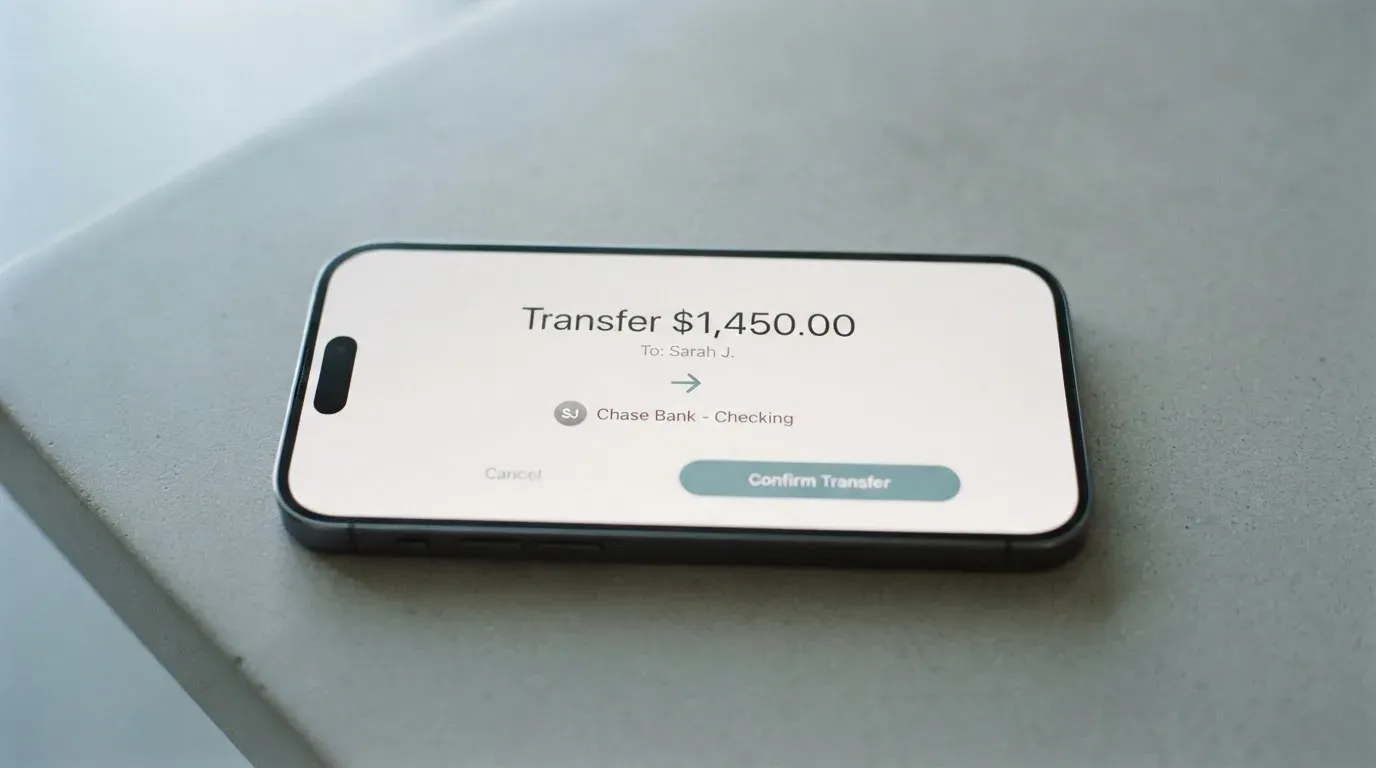
The order flow is the same every time. The site generates a wallet address for your order, you send USDT from your own wallet to that address on the supported network, you pay the on-chain network fee that the blockchain itself charges — not VCCHQ — and you then send the TXID to support for verification. There is no in-app button, no QR code in an app, no saved payment method, because there is no app at all. Every top-up is a manual transfer from your wallet to a fresh address, followed by a manual message to support.
There are three things to be very careful about. First, USDT sent on the wrong network can be lost permanently. If your card’s deposit address is on TRC20 and you send USDT on ERC20, the standard Ethereum mainnet, the funds will arrive at an address that the receiving system does not watch, and there is no guaranteed recovery. Stablecoin transfers are irreversible on the network level, and the receiving platform can only credit what it sees on the chain it monitors. Second, the minimum load differs by tier. Standard takes a minimum of $5, while Premium and Ultra take a minimum of $30, and below those amounts your top-up will either be rejected or sit unprocessed. Third, the $2 flat fee plus 8% applies on every top-up, including the first one, so a $5 load on Standard effectively costs you more in USDT to put $5 on the card.
Network fees are not stated by VCCHQ because they are not the card issuer’s to charge. On Tron, sending USDT on TRC20 typically costs a fraction of a US cent in TRX if you have bandwidth, or a small amount of TRX if you do not. On BNB Chain, sending USDT on BEP20 costs a few cents in BNB. The catch is that your wallet must hold the native gas token of the network you are using, even though you are sending a stablecoin. A wallet with USDT but no TRX cannot send on Tron, and a wallet with USDT but no BNB cannot send on BNB Chain. This is a common stumbling block for first-time users of stablecoins, and it is worth checking before you start the order.
Withdrawals — moving money from the card back to your own wallet or to a bank account — are not stated. The site does not describe a withdrawal flow, and that is consistent with the prepaid model: you spend what you load, and any remaining balance sits on the card. If you need to cash out, you will need a separate route.
Paying with the card every day
The everyday-use picture is short, and not in a good way. VCCHQ issues only virtual cards, so there is no plastic to put in a wallet. The cards are Visa or Mastercard at the standard tier, and Premium and Ultra Premium use the 428842 BIN range. The currency the card settles in is not stated, which is unusual and worth a paragraph.
In practice, a card settles in a single currency, and the choice matters when you travel. If the card settles in USD and you buy something priced in pounds or euros, the network converts at the wholesale rate and the issuer adds a margin. If the card settles in EUR, the same logic applies the other way. Without a published currency or a published FX margin, you cannot tell in advance what a foreign purchase will cost, and that is one of the larger gaps on the page.
There is no mobile app, so there is no in-app balance check, no transaction history, no spending analytics and no card freeze. There is no support for Apple Pay or Google Pay, which means you cannot tokenise the card into a phone wallet. Most modern merchants accept a virtual card number typed into a checkout form, and for online-only spending that is enough. For in-store contactless payment, you would need either a plastic card or a tokenised card in a wallet, and VCCHQ offers neither.
There are no rewards, no cashback, no staking yield and no bonus for holding a balance. The cost section above is the whole financial picture: you pay to load, you spend what you load, and you keep nothing extra.
For disputes, the site links to a “Refund Policy” in the footer but does not publish the policy text where I could read it. That matters because a virtual card from an unknown issuer is precisely the kind of card where chargeback rights are most useful and least clear. Card networks do allow chargebacks on most card payments, but the practical process depends on the issuer’s own procedure, and an absent or hard-to-find policy is a real risk if a merchant refuses to refund you.
If you are using the card for online subscriptions, online shopping and digital goods where you type the card details in, it will work the way a virtual Visa or Mastercard normally works. If you are hoping to walk into a shop and tap to pay, or to add the card to your phone wallet, you cannot.
What can go wrong
The honest answer is: a fair amount, and a lot of it is not the card’s fault.
The first risk is the company behind the card. The public pages do not name a legal entity, do not give a registered address, do not name an issuing bank or e-money institution, and do not name a regulator. The footer says “© 2018 – 2026 VCCHQ” and that is the most concrete piece of information about who is on the other side. The contact details that are published are a Telegram handle, a WhatsApp number with a UK country code and a support email, and none of those are the kind of channel you would rely on for a regulatory complaint. A card programme can be wound down by its network if the issuer falls out of compliance, and the bigger card programmes in the crypto space have been terminated in the past for that reason.
The second risk is the top-up cost. A flat $2 plus 8% is competitive for a no-KYC, instant virtual card, but it is high compared with mainstream prepaid and debit cards. If you load the card frequently in small amounts, the 8% is the largest single cost you will pay for the privilege of spending crypto online. If you only load it once with a larger amount, the percentage matters less but the $2 still applies.
The third risk is the network. USDT on TRC20 and BEP20 is fast and cheap, but the irreversibility that makes those networks efficient is exactly what makes a mistake expensive. A wrong network, a wrong address, or a top-up below the tier’s minimum can leave funds in limbo or lost, and the only support route is a Telegram, WhatsApp or email message to a small team. There is no published recovery process and no SLA for response times.
The fourth risk is merchant treatment. Some online merchants actively decline prepaid cards, foreign-issued BINs, or virtual cards, and AVS (address verification) is generally unavailable for non-US cards, which can cause declines on US-facing sites. The Ultra Premium’s 428842 BIN is sold as “enhanced approval”, which is a marketing claim I cannot verify; in practice, acceptance depends on the merchant’s own policy, not on the card’s tier.
The fifth risk is the thin public record. Trustpilot shows a 3.5 score across a small number of reviews, with no reviews in the last twelve months at the time of reading. The only negative review I could see, from December 2021, was about a delayed order, which is not unusual for a virtual card but is also not the kind of data that gives confidence either way. There is no major incident, but the absence of a major incident on a small review base is not the same as a clean track record.
The sixth risk is your own country. “Global” is a marketing claim, not a licence to operate. Local rules on prepaid cards, e-money and virtual cards vary widely, and a card bought from a website that does not name a regulator is not a card you can assume is legal in your jurisdiction. If the local rules matter to you — and they often do for tax, sanctions or employment purposes — that is a question for a local professional, not for the card.
What to take instead
The honest framing is that VCCHQ sits in a niche: no-KYC, USDT-funded, instant virtual cards. If that is what you need, the alternatives are not exact, but three are close enough to compare.
CardFlow is a virtual USD Mastercard aimed at “Nigerians and global users”. Creating a virtual card is free, so the entry cost is lower than VCCHQ, and funding is broader: Bitcoin, USDT, ETH or Nigerian Naira bank transfer. The trade-off is that the funding networks are not specified in the public FAQ, and the country pitch is regional. If you are outside Nigeria, “global users” is promising but vague. CardFlow scores 4.9 out of 10 on the same scale.
HyperCard is a prepaid card whose App Store listing says it works in “more than 176 countries” for acceptance, not eligibility. Funding is in-app with USDT, BTC or ETH, and the card balance is in USD or EUR. The App Store page does not list any fees, which is a positive signal but also an absence of detail. HyperCard scores 4.7 out of 10.
Card.fi sits at the other end of the spectrum. Cards ship to “200+ countries” subject to a sanctions carve-out, and you can choose Virtual Classic ($49), Virtual Premium ($249), a physical card or a metal card, with a virtual card included in every physical order. Funding accepts 32 coins across 5 networks (Ethereum, Base, BNB Chain, Solana, Kaanch), and the fee structure is published: 1.5% plus $1 on Classic top-ups, 1% on Premium, FX margins of 3.5% on Classic and 2.5% on Premium, and cashback from 0.8% on Classic to 2% on Metal. The trade-off is the price: a $49 or $249 card fee is a real commitment before you have spent anything. Card.fi scores 6.6 out of 10.
| Card | Score | KYC | Funding | Card price | Top-up fee | Best for |
|---|---|---|---|---|---|---|
| VCCHQ | 4.9 / 10 | None | USDT on TRC20 or BEP20 | $3 to $15 | $2 + 8% | A quick no-KYC virtual card paid in USDT |
| CardFlow | 4.9 / 10 | Not stated | BTC, USDT, ETH, Naira | Free | Not stated | A free virtual card, especially for Nigeria |
| HyperCard | 4.7 / 10 | Not stated | USDT, BTC, ETH in-app | Not stated | Not stated | A prepaid card with a published 176-country acceptance list |
| Card.fi | 6.6 / 10 | Yes | 32 coins on 5 networks | $49 to $249 | 1% to 1.5% + $1 | A multi-network, fee-transparent card with cashback |
The short version: if the no-KYC promise is the deciding factor, VCCHQ is one of the few cards in this niche. If the deciding factor is fee transparency, Card.fi is the cleaner choice. If the deciding factor is a free entry tier, CardFlow is worth a look. HyperCard sits between them with a stronger app experience but a thinner published fee schedule.
Who I would recommend it to
I would recommend VCCHQ to a narrow reader: someone who needs a one-off virtual Visa or Mastercard, has USDT in a self-custody wallet, does not want to share an ID with a card provider, and is comfortable treating the card as a single-use tool rather than a daily driver. For that reader, the $3 to $15 entry price is reasonable, the 8% load fee is the cost of the privacy, and the lack of an app is a feature rather than a bug.
I would not recommend it to a reader who plans to spend the card every day, who needs a published FX margin, who wants a card in their phone wallet, who needs reliable in-store contactless payment, or who needs a clear disputes process. For those readers, the 4.9 score reflects the real-world fit, and a card with a published fee schedule, a named issuer and a mobile app is a better answer.
I would also not recommend it to a reader who needs to load and unload frequently, because the $2 flat fee plus 8% adds up faster than it looks. A $20 top-up three times a month is $60 in card value and the load fees add up quickly, and that is before any FX margin on foreign purchases.
If the open questions in your situation are about whether the card works in your country, whether the merchant you want to pay will accept it, or whether the lack of KYC creates a problem for you, the next section is the place to look.
Frequently asked questions
What is the VCCHQ card?
The VCCHQ card is a virtual Visa or Mastercard you buy on the VCCHQ website and load with USDT. There is no identity check, no plastic card, and no app; the card details arrive by email once your USDT payment is confirmed.
How does the VCCHQ card work?
You pick a tier, pay the card price plus any top-up in USDT on TRC20 or BEP20, send the transaction hash to support, and receive the card details. The card then works like a normal prepaid Visa or Mastercard at online merchants that accept it.
Is VCCHQ a bank?
VCCHQ is not described as a bank on its public pages. The site does not name an issuing bank, an e-money institution or a regulator, and the contact details are an email, a Telegram handle and a WhatsApp number.
Who owns VCCHQ?
The public pages do not name a legal entity, a registered address, an owner or a parent company. The footer says “© 2018 – 2026 VCCHQ” and the only named contacts are a support email, a Telegram handle and a WhatsApp number with a UK country code.
Is the VCCHQ card available in my country?
The site describes the card as “Global” and does not publish a country list, an exclusion list or a residency rule. That does not mean the card is necessarily legal or operational in your country; local rules on prepaid cards, e-money and virtual cards vary, and you should treat the “Global” claim as a marketing statement rather than a regulatory one.
How do I get a VCCHQ card?
Choose a tier on the site, enter your email, send the card price in USDT on TRC20 or BEP20 to the address shown for your order, send the transaction hash to support, and wait for the card details to arrive by email.
Does the VCCHQ card require KYC?
No. The public order flow does not ask for a government ID, a selfie, an address or any other personal document. The only data the site collects at order is your email address.
How do I top up the VCCHQ card?
Send USDT to the deposit address shown for your order, on the network the address is for (TRC20 or BEP20), then send the transaction hash to support. The top-up fee is $2 plus 8% of the loaded amount; Standard has a $5 minimum, Premium and Ultra have a $30 minimum.
How do I add the VCCHQ card to Apple Wallet or Google Pay?
The site does not describe Apple Pay or Google Pay support, and there is no mobile app to mediate a tokenised card. If wallet support is essential for you, this is a gap to check directly with support before ordering.
Is the VCCHQ card safe?
The card is prepaid, so the most you can lose is the loaded balance, and a stolen card number is replaceable. The wider risk is the company behind it: no named issuer, no named regulator, and a thin public review trail. Treat the card as a small-balance tool rather than a long-term store of value.
Virtual cards: your questions answered – cryptocardanswers
Content created by the «cryptocardanswers» team