
A virtual Visa and Mastercard paid in crypto, weighed against the limits that come with it
 Available in US
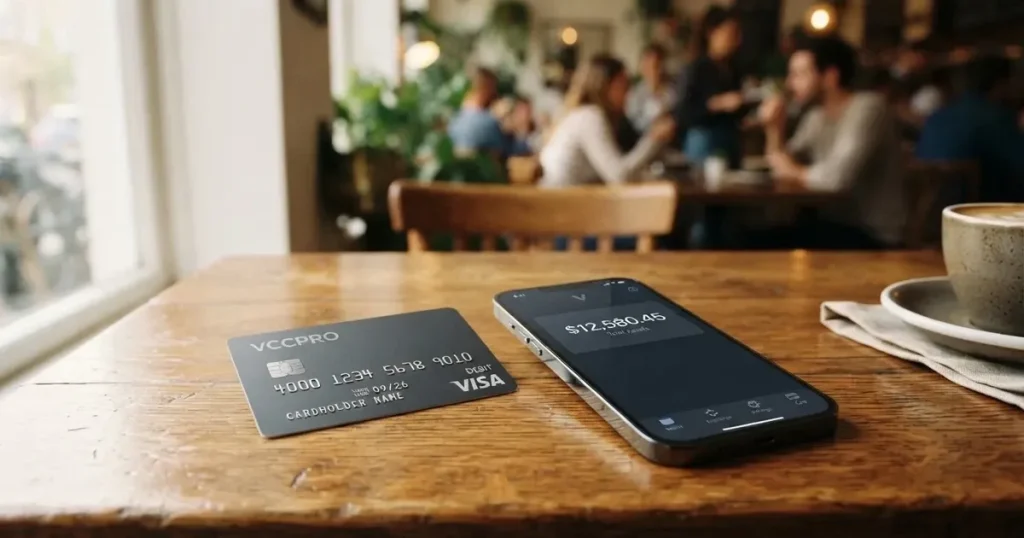
VCCPRO is a virtual-only payment card you pay for and top up with crypto, delivered as a card number through a web shop. It is built for a specific situation: you need a card number quickly, you have crypto or Perfect Money rather than a bank account, and you do not mind working inside a small, lightly-disclosed product. It is less built for someone who wants a long-term, regulated primary card, because the company itself says it is not a bank, the issuer is not named, and the everyday economics of the card are only partially published.
Conditions are current as of October 28, 2026.
I went through the official pages, the published Terms and the public complaints, and I will walk you through the same way: who can actually get one, what it costs, how the top-up works, what daily life with the card looks like, what the risks are, and the alternatives you might pick instead. I score VCCPRO 6.1 out of 10, and the breakdown below explains where that score comes from. The conditions described are current as of 2026-10-20.
Verdict
VCCPRO earns 6.1 out of 10 in my review. The breakdown by criterion is:
| Criterion | Score | Why it lands there |
|---|---|---|
| Who can get it | 9 / 10 | “Accepted Worldwide By Top Global Platforms” with BINs from the US, UK, EU and Asia; no country list, no closed countries published. |
| Cost | 6 / 10 | $4.99 to issue, $5.00 (2.0%) load fee, no monthly fee, but the conversion spread and FX markup are not disclosed. |
| Top-up options | 5 / 10 | Bitcoin and USDT are named, “such as” other coins, plus Perfect Money; networks are not published; $10 to $1,000 per load. |
| Reliability and complaints | 4 / 10 | VCCPRO Ltd, Poole, UK; “not a bank”; issuer and licences not named; Trustpilot 3.5 from 294 reviews, with themes of undelivered or on-hold orders and slow support. |
| Everyday use | 5 / 10 | Virtual Visa and Mastercard only; the “NFC Contactless” card works with Apple Pay and Google Pay; no physical card, no ATM detail. |
You should think of VCCPRO as a quick virtual card for online payments, paid in crypto. If that is exactly your situation, the product is fit for purpose. If you want a regulated primary card with a transparent fee schedule, a published issuer, and a track record of answered support tickets, you will want to read on, because several of the things I would normally check are not stated on VCCPRO’s own pages.
Who will they give you the card
VCCPRO does not publish a country list. The site says the cards are “Accepted Worldwide By Top Global Platforms” and points to BIN ranges from “US, UK, EU and Asia”. That is the closest thing to an eligibility map: there is no list of countries where the card is refused, and the BINs suggest the cards will look like American, British, European or Asian cards to a merchant.
In practice that means two things for you. First, where you live is unlikely to be the deciding factor; the bigger filter is what funding you have. Second, because there is no closed-country list, the only public screens are the ones in the Terms: identity verification, sanctions screening and politically exposed person screening “may be required, depending on service providers, issuing partners, or applicable law”. You must be 18 or older. Whether the screen is actually run on your order is not stated, and there are no published tiers (no Bronze, Silver, Gold; no spending tiers based on how much ID you hand over).
The same “may be required” wording is important to understand. The homepage does not mention KYC, but the Terms do, and the difference matters when something goes wrong. If your order is later flagged, the company reserves the right to ask for documents and to refuse the order. That is standard for the category, but it is not the same as “no KYC, ever”.
A second way the company sets the boundary is through its own product description. VCCPRO says it is “a technology platform and is not a bank, electronic money institution, or card issuer”. The cards are issued by unnamed “licensed third-party providers”. There is no licence number on the company page, no reference to the FCA register, no reference to a specific Visa or Mastercard principal issuer. If you are a reader who likes to check a regulator’s register before paying, there is nothing to check here.
What you can verify, in lieu of that, is the legal entity: VCCPRO Ltd, Lytchett House 13 Freeland Park, Wareham Road, Poole, Dorset, UK BH16 6FA. That is a UK limited company at a real mail-forwarding address, not a shell, but it is also not a regulatory disclosure. The relevant question is whether the cards come from a regulated issuer at all, and that question is not answered on the site.
How to get it
The signup flow is short by design. You open the VCCPRO shop, pick a card from the product line, pay for it with crypto (or Perfect Money) at checkout, and the card details are delivered to you. The About page says cards are “issued instantly”, and the FAQ gives a more honest range: usually 30 minutes to 6 hours, with rare delays of up to 24 hours. There is no app and no account dashboard in the usual sense; the shop is web-based.
The product line has six entries in the navigation: Cheap Visa and MasterCard, NFC Contactless, Reloadable Premium, Platinum High-Limit Visa, Premium VCC and Exclusive BINs. The shop pages let you click into each, but the public pages do not publish per-tier benefits or per-tier prices beyond the headline $4.99 issuance fee. So “Platinum High-Limit” sounds like a high-spending product, but the actual limit is not on the page you would buy from. If you need to know the spending cap before you pay, the only honest answer is to ask support first, and the support reality is described in the risks section below.
What is published about delivery is virtual-only. VCCPRO does not sell a physical card, which simplifies the timeline: there is nothing to ship, and the 30-minute to 24-hour window is the time between payment and receiving card numbers. If you need a physical card to tap at a turnstile or to use at a cash desk, this product will not give you one. If you need card numbers for an online checkout within the hour, that is what the product is built for.
The Terms also note that, once a card is issued and delivered, the order is final. That is consistent with the virtual model, but it does mean you cannot return an unused card because you changed your mind, and “card details received” is the moment your right of withdrawal effectively ends.
Fees and what it really costs
The headline pricing is simple. The less-headline pricing is where the questions start.

| Fee or limit | Amount | Notes |
|---|---|---|
| Issuance | $4.99 | One-time, paid in crypto at checkout. |
| Monthly fee | Not stated | The site lists no monthly or annual charge. |
| Top-up (load) fee | $5.00 (2.0%) | Applied on each load. The published example is a $250 load producing an estimated total of $259.99. |
| Crypto conversion spread | Not stated | The Terms do not publish a spread or markup on the crypto-to-fiat conversion. |
| FX (foreign currency) fee | Not stated | No FX percentage is published for spending in a currency other than the card’s base. |
| ATM | Not stated | The card is virtual; ATM use is not described. |
| Per-transaction load | $10 to $1,000 | Minimum and maximum load per virtual card transaction. |
| Daily / monthly spend | Not stated | The site does not publish overall spend caps. |
What I would do with this table: I would treat the published numbers as a floor, not a ceiling. The $4.99 issuance and the $5.00 (2.0%) load are real and visible. The crypto conversion spread — the difference between the market rate and the rate the card credits you at — is not published. Neither is the FX markup you will pay if you spend in a currency other than the card’s base. Both are the kinds of fees that quietly compound over a year of regular use, and they are the reason a card that “looks free” can be expensive in practice.
Two everyday payments, walked through the way you would actually use the card:
- A $50 online subscription paid in US dollars, with a US-dollar base card. You paid $4.99 once for the card, you loaded $50 with a $5.00 (2.0%) load fee, and the subscription charged your balance. The only fee you saw was the 2.0% on the load, because no FX was involved. Total fees for that purchase: about $5.00 plus the $4.99 you already paid when you opened the card.
- A €45 in-store payment in Europe, paid with a US-dollar base card. The merchant charged in euros, the card network converted to dollars, and VCCPRO applied an FX markup that the company has not published. The load fee of $5.00 (2.0%) is also in there. The honest estimate is “the 2.0% on the load, plus an unknown FX margin on the conversion”. This is where the cost is genuinely uncertain.
A third pattern, common with this product category, is paying for a card you cannot use. If your order is delayed past 24 hours, or arrives and does not work at the merchant you bought it for, the load fee is already taken and the order is final. There is no published grace period for a non-working card.
Top up: how to fund the card
The funding list, as published, is short and partly vague. Bitcoin and USDT are named directly. The site then uses the phrase “such as other cryptocurrencies” without listing them, and adds Perfect Money as a fiat-style e-money option. PayPal is not accepted.
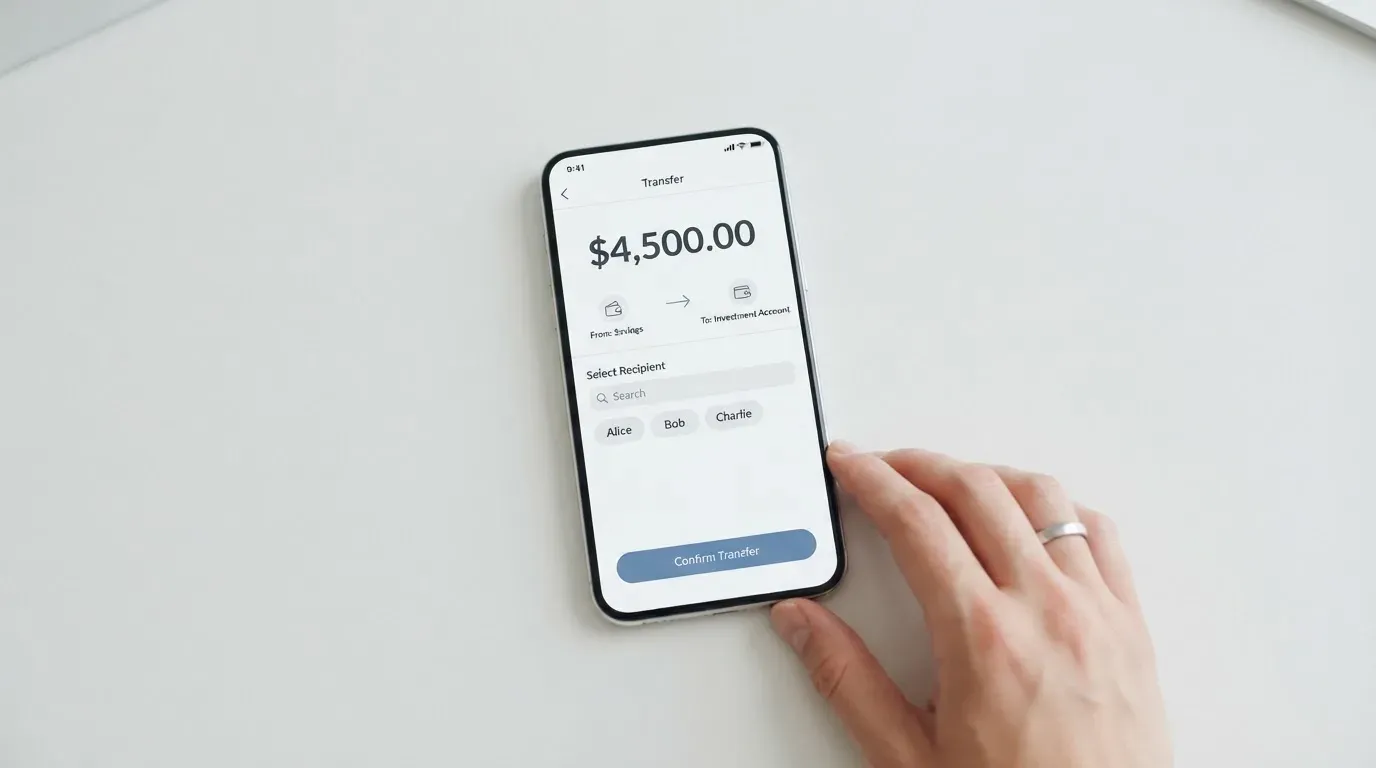
That vagueness matters more than it looks. The card accepts a coin, but the Terms do not publish the network on which it expects to receive that coin. USDT exists on several chains, and the difference is not cosmetic: an ERC-20 USDT transfer is settled on Ethereum, a TRC-20 USDT transfer is settled on Tron, and the two are not interchangeable. If the card provider expects one and you send another, the deposit can be lost or stranded and require manual support recovery, with no guarantee of a refund. This is the single most common way a crypto-funded cardholder loses money, and VCCPRO’s silence on the network is a meaningful gap.
On the economics of the load itself, the same $5.00 (2.0%) fee applies to each top-up, and the minimum and maximum per transaction are $10 and $1,000 respectively. The published example is a $250 load producing an estimated total of $259.99. The 2.0% is in the same range as a mid-market crypto on-ramp and is therefore not unusual, but it is a flat 2.0% with no volume discount, so a $1,000 load still costs you $20 to put money on the card. The blockchain network fee for the deposit is paid by the blockchain, not by VCCPRO, but who actually pays it on your side (you as the sender, or VCCPRO as the receiver) is not stated. Fiat top-up is not offered; the checkout is crypto or Perfect Money.
A related gap is withdrawals. VCCPRO does not publish a withdrawal process. The Refund Policy is short and unsympathetic: orders are final once the card is issued and delivered, approved refunds generally take up to 5 business days, and the policy is silent on what happens to a remaining balance when an account is closed. If your plan is to load, spend a small amount, and then want the rest back, that path is not documented.
Paying with it every day
The day-to-day reality of a VCCPRO card is shaped by three facts: it is virtual, it runs on Visa or Mastercard rails, and there is no app.
The virtual-only model means there is no plastic to tap on a card reader, no embossed number, and nothing to insert into a payment terminal. What you get is a card number, an expiry and a CVV, which is enough for an online checkout and is the form factor most people buying a VCCPRO actually want. The FAQ adds a second option: the “NFC Contactless Virtual Card” line “fully supports Apple Pay and Google Pay integration”, so a virtual card can be tokenised into a phone wallet and used at a contactless terminal. The way to think about it is that the card exists in two forms, a number you type and a token you tap, and both forms spend the same balance.
Because the cards are Visa and Mastercard, the standard payment network protections apply at the merchant end: 3-D Secure for online payments, fraud screening by the issuer, and so on. What the issuer does is the unknown layer. VCCPRO’s site does not publish a list of blocked merchant categories, and the Refund Policy is clear that there is no refund for “prohibited or high-risk merchants” — which is a category defined by the company, not by you. If you are buying from a small subscription service, a dating site, a crypto exchange, a gambling site or anything on the company’s internal risk list, the card can decline or be blocked after the fact with no refund.
The other day-to-day gap is the missing app. There is no iOS or Android app described on the site. That means there is no in-app card freeze, no in-app 2FA, no in-app transaction feed, and no push notifications. If the card details leak, your only mitigation is to contact support and hope the response is timely. The published contact channels are a WhatsApp number (+447723833291), a Telegram handle (@worklinkx) and a contact form. Hours and languages are not stated.
Three things I would check on day one, before you load a meaningful balance:
- That the card number works at the specific merchant you actually need (a virtual card from an unfamiliar BIN is exactly the kind of card that some merchants decline).
- That the Apple Pay or Google Pay tokenisation succeeds on your phone, because the NFC line is described as compatible but the path is not documented.
- That you can reach support in a reasonable time on the channel you intend to use, because the public feedback is that support is the slowest part of the product.
What can go wrong
The risk picture has three layers: what the company is, what users are reporting, and what the Terms do not promise.
On what the company is: VCCPRO describes itself as a technology platform and explicitly says it is not a bank, electronic money institution, or card issuer. Cards are issued by “licensed third-party providers” who are not named. There is no licence number, no reference to a regulator’s register, and no published list of jurisdictions in which the cards are issued. For a regulated card programme you would normally see the issuer’s name, the regulator who supervises it, and the licence number; none of those are on VCCPRO’s site. The UK company registration is the only corporate fact you can verify, and a company registration is not a financial services licence.
On what users are reporting: I read the public feedback on Trustpilot on 2026-10-21. The score is 3.5 out of 5 from 294 reviews, with about 70% five-star and 22% one-star. The themes, in the rough order of how often they came up, are:
- Non-delivery or “on hold” orders. Buyers report paying in crypto and either not receiving the card details, or seeing the order sit in an on-hold state past the 30-minute to 24-hour window. Most reports cluster between October 2025 and September 2026.
- Slow or no support response. Buyers who did not receive their card or who had a card that did not work say support took days to reply, or did not reply at all. Most reports cluster between December 2025 and May 2026.
- Scam accusations versus company replies. A smaller group of reviewers called the company a scam. The company, in its public replies, attributes these to a single individual conducting a harassment campaign, in a window around December 2025 to January 2026. I cannot independently verify either side; I can tell you that the pattern exists in the public reviews.
On what the Terms do not promise: the Refund Policy is short, the dispute path is narrow, and the order is final the moment the card is delivered. There is no published chargeback process, no published regulator you can complain to, and no segregation of customer funds. The Terms talk about a “secure user account” and record retention for fraud prevention, but there is no mention of 2FA, no mention of an in-app card freeze, and no mention of what happens to your balance if the platform goes offline. None of this is unique to VCCPRO, but the gap is wider here than on a card issued by a regulated EMI or bank.
The risk this leaves you with, plainly stated, is counterparty risk. If the company stops operating, if a programme partner is suspended, or if an order is held past the published window, your path to a refund is the Refund Policy and a support ticket. There is no deposit guarantee, no FSCS cover, no equivalent.
What to take instead
I compared VCCPRO with three alternatives that are also crypto-funded, virtual-first products. The differences come down to who is in the room, what is published, and how the fees add up.
| Card | Score | Funding | Card form | Notable trade-off |
|---|---|---|---|---|
| VCCPRO | 6.1 / 10 | BTC, USDT, others “such as”, Perfect Money | Virtual Visa and Mastercard, NFC tokenisation for Apple/Google Pay | Networks and FX not published, thin support track record |
| CardFlow | 4.9 / 10 | BTC, USDT, ETH or Naira bank transfer | Virtual USD Mastercard, created in about 3 minutes | Aimed at Nigeria and “global users”, fees not stated |
| HyperCard | 4.7 / 10 | USDT, BTC, ETH in the app; balances in USD or EUR | Prepaid “HyperCard”, network not stated on the App Store page | Works “in more than 176 countries” by acceptance, not eligibility; fees not stated |
| Card.fi | 6.6 / 10 | 32 coins across 5 networks (Ethereum, Base, BNB Chain, Solana, Kaanch), USDC, USDT, ETH, BNB, SOL, KAANCH | Virtual Classic and Premium, physical Classic and Premium, metal | Higher one-time prices ($49 Virtual, $249 Premium), but the only card here that publishes FX and conversion fees |
A few honest notes on this comparison. CardFlow is positioned for the Nigerian market and “global users”, and it scores lower here because so much of the economics is not stated on the site. HyperCard’s “176 countries” figure is about where the card is accepted, not where you can sign up from, and its fees are not on the public page I could read. Card.fi is the only one of the four that publishes its FX markup (3.5% on Classic, 2.5% on Premium) and its top-up fee (1.5% + $1.00 on Classic, 1% on Premium), which is why its score is the highest, even with a higher sticker price.
If you are choosing between these, the question to ask yourself is: am I optimising for “card in the next hour” or for “a card whose issuer and fees I can verify”. The first one points to VCCPRO. The second one points to Card.fi, with the trade-off that you pay $49 to $249 up front for the card itself and you must send the deposit on a specific network from a list of five.
Who I would recommend it to
VCCPRO is a reasonable product for a narrow reader.
It fits you if you need card details for an online purchase within the hour, you have crypto or Perfect Money rather than a bank account, you do not need a physical card, and you are comfortable with a small, lightly-disclosed company that says it is not a bank. You should also be willing to test the card on a small load before committing a larger balance, and to keep a record of the support contact details (WhatsApp, Telegram, contact form) in case your order is delayed.
It does not fit you if you want a long-term primary card, if you need a card with a transparent fee schedule that you can check before you spend, if you need to use an ATM, if you need a physical card in your wallet, or if you specifically need a card whose issuer and regulator you can look up. For all of those, Card.fi’s published fees and CardFlow’s or HyperCard’s app-based flows are the more honest fit, even with the higher sticker prices or the thinner public information.
One last thing I would actually do, regardless of which card you pick: top up only the amount you intend to spend in the next 24 to 48 hours, treat the load fee as the cost of a fast service rather than a long-term arrangement, and never store a balance you cannot afford to lose on a platform whose issuer is not named on its own pages. The product category is improving, but it is not yet at the point where any of these cards should hold a meaningful float.
Frequently asked questions
What is VCCPRO card?
VCCPRO is a virtual Visa and Mastercard sold through a web shop and paid for with crypto or Perfect Money. The company describes itself as a technology platform rather than a bank, and the cards are issued by unnamed licensed third-party providers. There is no physical card and no companion app; you receive card details by email.
How does VCCPRO card work?
You choose a card in the shop, pay for it with crypto (Bitcoin, USDT, or other coins listed as “such as”) or Perfect Money, and receive the card number, expiry and CVV. You can then spend online or tokenise the “NFC Contactless” line into Apple Pay or Google Pay. Spending is from a pre-loaded balance, so the card cannot overdraw.
Is VCCPRO a bank?
No. The company says it is “a technology platform and is not a bank, electronic money institution, or card issuer”. Cards are issued by licensed third-party providers whose names are not on the site. The company itself, VCCPRO Ltd, is registered at a Poole, UK address.
Does VCCPRO card require KYC?
The homepage does not mention KYC, but the Terms do. The published wording is that identity verification, sanctions screening and PEP screening “may be required, depending on service providers, issuing partners, or applicable law”. You must be 18 or older, and there is no published tiered verification scheme.
How to top up VCCPRO card?
You top up through the same checkout as buying a card, using Bitcoin, USDT, other listed coins or Perfect Money. Each load costs $5.00 (2.0%) and must be between $10 and $1,000. The Terms do not publish the network the card expects the deposit on, so confirm the chain with support before sending a non-Bitcoin coin.
How to add VCCPRO card to Apple Wallet?
VCCPRO’s FAQ says the NFC Contactless Virtual Card line “fully supports Apple Pay and Google Pay integration”. The site does not publish a step-by-step, so the practical path is to open the Apple Wallet app on your iPhone, tap the plus sign, choose “Debit or Credit Card”, and enter the card details you received. If the tokenisation fails, contact support through WhatsApp, Telegram or the contact form.
Is VCCPRO card safe?
It is as safe as the company behind it. VCCPRO is not a regulated bank or EMI, the issuer is not named, and there is no published segregation of customer funds. Trustpilot scores 3.5 out of 5 from 294 reviews, with recurring themes of non-delivery and slow support. Treat any balance you load as money you can afford to lose, and load only what you intend to spend soon.
How to withdraw money from VCCPRO?
The site does not publish a withdrawal process. The Refund Policy treats orders as final once the card is issued and delivered, and the policy is silent on what happens to a remaining balance if you close the card. In practice, the spendable option is to load only what you intend to use and to spend it down rather than trying to withdraw it back out.
Is VCCPRO card available in my country?
VCCPRO does not publish a country list. The site says the cards are “Accepted Worldwide By Top Global Platforms” and points to BINs from the US, UK, EU and Asia. There is no list of excluded countries, so eligibility in practice depends on whether the order is flagged by the company’s own checks, not on a published map.
How long does it take to get a VCCPRO card?
The About page says cards are issued instantly, and the FAQ puts the realistic window at 30 minutes to 6 hours, with rare delays of up to 24 hours. If your order is past 24 hours, the public feedback is that support is the slowest part of the experience, so the safe move is to contact support the same day rather than waiting.
Virtual cards: your questions answered – cryptocardanswers
Content created by the «cryptocardanswers» team