
A no-KYC virtual card you fund with stablecoins — and a company that tells you very little about itself
 Available in US
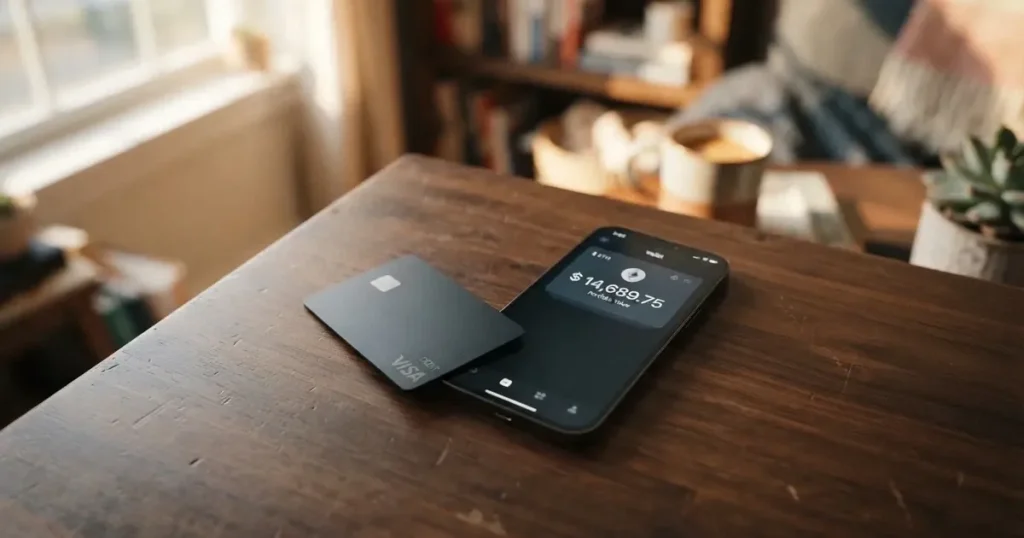
If you have tried to open an ordinary bank card and hit a wall — a country the bank will not serve, a documentation problem, a sanctions list, an address that does not fit a form — then a card like Walme exists precisely because of that wall. It is a virtual card, no documents required, funded by converting crypto into a spendable balance, and it reports a total score of 5.8 out of 10. That middle-of-the-road number is not a shrug. It reflects one genuinely excellent feature (the top-up options), one genuinely poor area (what you pay), and a company that publishes almost nothing about itself.
Before you decide anything, here is my line: the conditions described here are current as of October 28, 2026.
I want to be direct about what this review can and cannot do. Walme’s public pages are thin. They do not name the legal entity behind the card, they do not name the issuer, they do not publish a country list, they do not state a fee for ATM withdrawals, and they say nothing about what verification levels exist beyond “no documents.” I have marked every gap as a gap rather than filling it with an assumption. Where third-party sites say something different from the official pages, I tell you both and say which is which.
Verdict: 5.8 out of 10, a strong top-up story attached to a card that asks a lot of trust for very little disclosure
The score is 5.8 out of 10. Walme suits you if you hold stablecoins — USDT or USDC, on Tron, Ethereum or Solana — and want a card number quickly, without handing over documents, to spend that balance in ordinary shops or to add it to a phone wallet. It does not suit you if you need a physical card in the post, if you need to know precisely which company holds your money, if ATM access matters, or if predictable costs matter more than access.
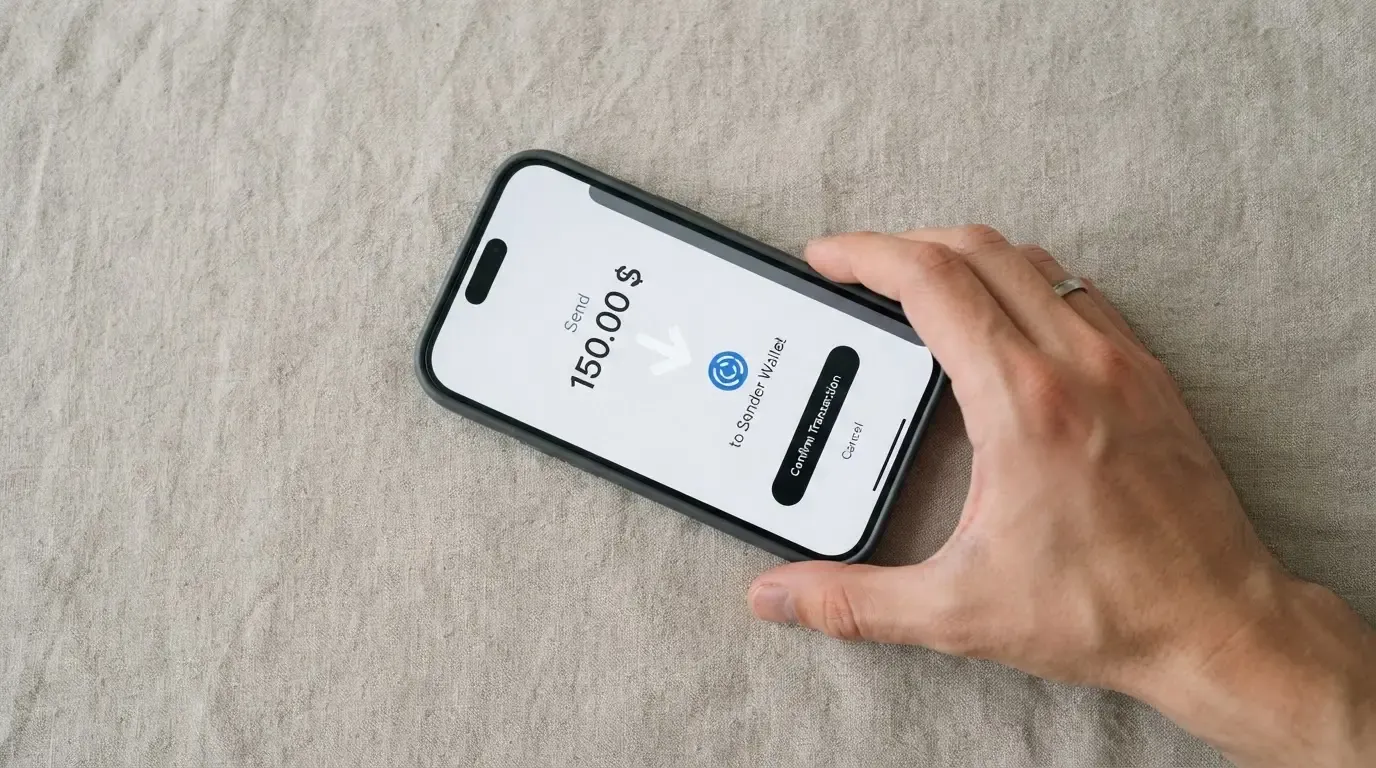
The single best thing about Walme is how you fund it. Stablecoin top-ups across TRC-20, ERC-20 and Solana, plus a native WLM token, is a genuinely generous range — I scored that 9 out of 10, the highest mark on the card. The single worst thing is what it costs: $10 to issue, a 3% top-up fee, $0.25 per transaction, $0.25 per cancellation, 0.4% per successful transaction, and a $30 minimum first top-up. I gave cost 3 out of 10. The 3% top-up fee alone eats most of what a card like this should cost, and it sits on top of a per-transaction fee rather than replacing it.
Availability is the quiet risk. Walme’s own words are that “Card availability may vary by region,” and the region list is not disclosed. Unofficially — from a Walme team reply on Product Hunt, not from the official pages — merchant transactions are blocked in several countries including Belarus, Iran, Russia, Ukraine and Venezuela. That is not the same as a country whitelist, and it does not tell you whether you qualify where you live. Treat it as an unanswered question you must ask before you rely on the card.
Reliability I scored 5 out of 10. I searched for reviews and found none — no Trustpilot page, nothing on Reddit under the obvious searches. Silence is not evidence of anything. It usually means a young product: the card was unveiled in November 2025, with early activations at Web Summit Lisbon and a waitlist. It can also mean nobody has written yet. You get no reassurance from it either way.
| Criterion | Mark | Why |
|---|---|---|
| Who can get it | 7 / 10 | “Card availability may vary by region”, and the list is not disclosed; some countries reportedly blocked |
| Cost | 3 / 10 | $10 issuance, 3% top-up, $0.25 per transaction and per cancellation, 0.4% per successful payment, $30 minimum |
| Top-up options | 9 / 10 | USDT and USDC on TRC-20, ERC-20 and SOL, with WLM also usable |
| Reliability and complaints | 5 / 10 | Legal entity and issuer not named publicly; no reviews found; card presented in November 2025 |
| Everyday use | 6 / 10 | Virtual card valid 2 years, Apple Pay and Google Pay; no plastic, ATM details unstated, Android app still “Coming Soon” |
| Total | 5.8 / 10 | Strong funding, costly spending, thin disclosure |
Will they give you the card?
Walme will give you a card without documents, and that is the appeal — but the card’s own pages stop one sentence short of telling you where you stand. The stated position is: “Card availability may vary by region.” No country list is published. No exclusions are published. That means the honest answer to “will they give me the card in my country?” is that Walme has not told you, and the only way to find out is to try.
What I do have is unofficial and comes from a Walme team member replying on Product Hunt: merchant transactions are blocked in several countries, including Belarus, Iran, Russia, Ukraine and Venezuela. Read that precisely, because it is easy to read more into it than it says. It is a statement about where *transactions* will be blocked — not a list of who can open an account, and not the same as a whitelist of countries that are accepted. It does not tell you whether a resident of, say, Nigeria or India is eligible. It does not tell you whether the block list is country of residence, country of nationality, or both.
That distinction is not pedantry. Sanctions screening and issuer risk policy are often applied to citizenship and country of birth as well as to the country you live in, and a card can be blocked on one basis while the account remains open on another. Which is why I would not try to reason your way around it from the outside. There is one thing to do: ask Walme directly, in writing, before you fund anything, and keep the answer. If the answer is vague, that vagueness is information.
Two related things the card does not state anywhere public: whether there are verification tiers, and where the physical product would be delivered — because there is no physical product. It is a virtual card only. Unofficially, per stablecoininsider.org in November 2025, it is a virtual Mastercard. The official pages do not name the network.
How to get it
The path is short, which is the point. Walme issues a virtual card with no documents required, and that card is valid for two years. There is no plastic in the post, no delivery timeline to wait for, no branch appointment. That two-year validity is worth noting on its own: most virtual cards in this category are annual, so you are not signing up to re-issue every twelve months.
What I cannot tell you is how many verification levels exist, because the card does not say. Where a regulated provider operates, customer due diligence is usually a ladder — full identity checks for higher limits, lighter or no checks for smaller balances. Walme’s “no documents” position suggests the lower end of that ladder is the only rung offered, but I want to be clear that this is my inference from the marketing, not a stated policy. If larger balances or higher limits are what you need, ask about verification tiers before you assume they can be unlocked later.
Practical consequence: the account is the card. Since there is nothing physical and nothing to post, what you need to keep is your account access. Note that the product lives on the web at app.walme.io. The Android app is listed on Google Play as “Coming Soon,” and ratings are not available — so at the time of checking, the reliable route is the browser. That is not necessarily a flaw; plenty of people prefer it. It does mean that if you are on Android, your day-to-day path is the web version.
On activating the card: the official pages do not walk through an activation sequence beyond the card existing in your account, so I am not going to invent steps. What I would expect, and what you should verify on your own dashboard, is that a card number appears once your balance is there, and that it can be added to a phone wallet from the same place.
Fees: what it really costs, and what that does to an ordinary purchase
This is where the card is weakest, so I want to walk through it carefully rather than just list numbers. The published fees are: $10 to issue the card; a top-up fee of 3%; $0.25 per transaction; $0.25 per cancellation; 0.4% per successful transaction; and a minimum top-up of $30. There are also “reduced fees” for holders of the WLM token. On top of this, ATM withdrawals are limited — the limits exist — but the fee for them is not stated anywhere I could read.
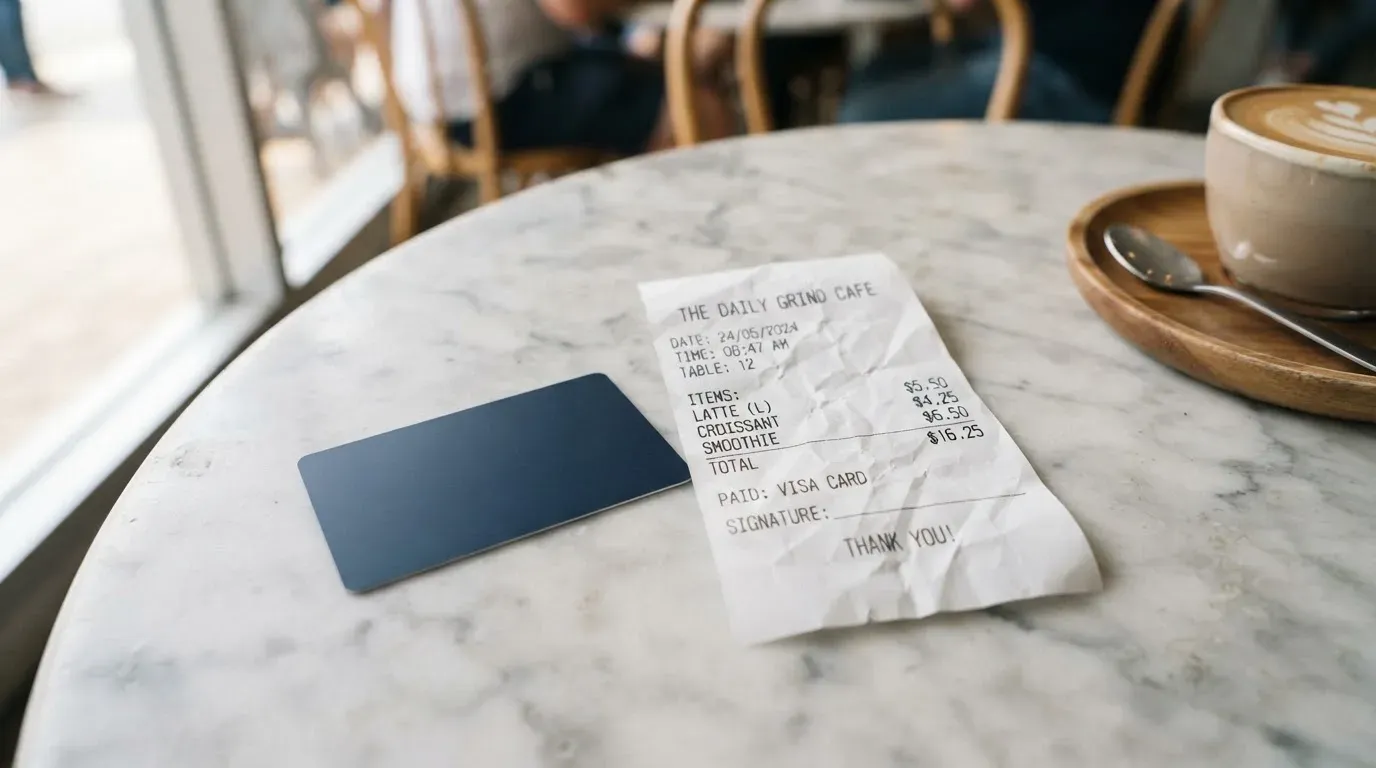
Two things are conspicuously absent rather than merely zero. There is no fee listed for currency conversion or foreign exchange, and no statement of which currencies the balance is held in. That does not mean the conversion is free; it means the card does not publish it. For a card whose whole purpose is spending a crypto balance across borders, an unstated conversion cost is the largest open number in the price list, because it is the one you pay at checkout without noticing.
The 3% top-up fee is structural, and it is worth understanding why. It is charged on the way in, not on the way out. So every dollar you ever spend on this card has first passed through a 3% toll. Put that next to the 0.4% per successful transaction and the $0.25 line, and the layering matters more than any single number. A card that charged 3% once and nothing else would be defensible for this category. A card that charges 3% once *and* 0.4% *and* $0.25 on every payment is charging you repeatedly for the same conversion work.
| Item | Value | Notes |
|---|---|---|
| Issuance | $10 | One-off |
| Top-up fee | 3% | Charged on the way in |
| Per transaction | $0.25 | Listed separately from the success fee |
| Cancellation | $0.25 | Charged when a payment is cancelled |
| Successful transaction | 0.4% | On top of the $0.25 |
| Reduced fees | For WLM token holders | Card states reduced fees exist; amounts not published |
| ATM fee | not stated | Limits exist, cost does not |
| Currency / FX fee | not stated | Currency of balance not stated |
| Minimum top-up | $30 | |
| Per-transaction limit | $10,000 | |
| Daily limit | $500,000 | |
| Monthly limit | none | Card states no monthly limit |
| Tiers | not stated | No loyalty tiers published |
Now three ordinary payments, so you can feel the shape of it.
A $12 taxi. The 0.4% success fee comes to about five cents. Add the $0.25 per-transaction charge and you are paying about $0.30 in fees, plus whatever an unstated conversion step does to the rate. That is a tolerable percentage on a large purchase and a visible, slightly silly fixed cost on a small one.
A $4 coffee. Four cents of success fee, plus $0.25 — a significant fixed charge on a small purchase. At that size the fixed fee, not the percentage, is what you are paying. Two coffees double the fixed charge again. If your plan involves small daily spends, the $0.25 line is the one that will irritate you, and the card does not offer a way around it short of holding WLM for the stated “reduced fees” — whose actual amounts are not published.
A $300 supermarket run. 0.4% is $1.20, plus $0.25, so about $1.45 on top. Here the maths is tolerable. But notice what the table above does *not* resolve: if you are outside the currency the balance is denominated in — and the card does not say what that currency is — there may be a conversion cost on the $300 itself, and it is not in any figure I have been given. I would not treat $1.45 as the true cost of that shop until you have seen a real statement line for a real purchase.
One thing that can quietly cost you money without a fee at all: a declined authorisation may leave a hold on the funds that stays for several days, typically up to seven. On a prepaid-style balance, a hold is money you cannot spend. This happens to anyone whose card is declined at a till, and with an unfamiliar BIN it is not a rare event — see the section on why foreign cards get declined.
Top up: the strongest part of the whole product
Here Walme is genuinely good, and I scored it accordingly. You top up in USDT or USDC, on the TRC-20, ERC-20 or Solana networks, and the crypto is converted to fiat at the point of purchase, so the card spends a fiat balance rather than tapping a crypto wallet directly. The card also says the WLM token is usable. Unofficially, per stablecoininsider.org in November 2025, the routes are USDT via TRC20 or ERC20.
The minimum top-up is $30 and the top-up fee is 3%. Two of those are the friction. $30 sets a floor under your experiment — fine if you want a first small test, awkward if you wanted a genuine first payment. The 3% I have already discussed and it is the number that makes this card expensive rather than merely costly.
The network choice matters more than it looks, so let me take you through it, because getting it wrong is one of the few ways to lose money outright on a good card. On Tron, fees are paid through the network’s internal resource pricing, often burning TRX — so a USDT top-up on TRC-20 is usually cheap, and this is the most-used route for USDT. On Ethereum, the token standard is ERC-20 and gas is paid only in ETH, which means a wallet holding USDT but no ETH cannot send: the transfer simply fails. Solana is the third option on offer. Circle, the issuer of USDC, stopped supporting USDC on Tron in February 2024, so “USDC over TRC-20” is not a native option — if you hold USDC and want the cheap network, that combination needs care.
And the general rule underneath all of it: blockchain transfers are irreversible. A deposit sent on a network Walme does not support, or to an address belonging to a different network, can be lost or may need manual support recovery with no guarantee attached. The card supports three networks, so before you send, match the network on your sending side to the network in your Walme deposit details. Slow down here. A mistake at this step is the one error in this whole review that has no undo button.
How you get money *out* is a separate question and the card does not say: withdrawal terms are not stated. If your plan involves pulling funds back rather than only spending them, that is an unanswered question for support.
Paying with it every day
Day to day, Walme is a virtual card and a phone wallet. Apple Pay and Google Pay are both supported, unofficially confirmed per stablecoininsider.org in November 2025. That is the practical route most people will take, since there is no plastic to carry.
Adding it to Apple Wallet works the way it works for any card: the number is replaced by a device-specific account number stored in the phone’s secure hardware, and each payment carries a one-time code. That means you are not typing your Walme card number into checkout for online purchases, which is worth something. It does not mean you are protected from phishing.
Where it may not work is the unglamorous stuff. Some merchants decline prepaid or foreign cards, because the merchant can look up the issuing institution and country from the first six or eight digits of the card number and may apply extra scrutiny when the issuer country differs from the billing address. That is why a card issued in one country can look foreign to a shop in another — and why a small café may wave you away for reasons that have nothing to do with you. Address verification, which compares the numeric parts of the billing address you type against issuer records, is mainly offered in the US, Canada and the UK and is generally unavailable for foreign-issued cards, which can cause declines on their own.
Online payments may also involve 3-D Secure, an identity check where the issuer either approves silently or challenges you with a one-time code or a biometric prompt. The card does not describe its own 3-D Secure setup, so I cannot tell you what you will be asked for.
What is not there: no physical card, no stated ATM arrangements beyond the existence of limits, no rewards or cashback published, and no published dispute or chargeback process. That last one matters more than it sounds. A chargeback is a refund ordered by the issuer to settle a dispute — fraud, duplicate billing, goods not received. Prepaid-card coverage varies by jurisdiction and should not be assumed. If a purchase goes wrong, the card’s own pages do not tell you who you complain to or on what terms.
For a walk-through of how a card network, an issuer and a crypto brand divide the work, see the section on what actually stands behind these cards.
What can go wrong
Let me take the trust question first, because it is the one I could not resolve.
Walme’s official pages do not name a legal entity and do not name the issuer. That is the finding. Around November 2025, an unofficial article claimed the product is non-custodial, with two-factor authentication and fraud monitoring. Walme’s own GitHub page describes custodial wallets with KYC for cards. Those two sources contradict each other, and I am not going to pick a winner for you. What I can tell you is what the contradiction means: whether your funds sit in a wallet you control the keys to, or in an account a company controls, changes who you are relying on, and right now the public sources disagree.
Whichever it turns out to be, the failure history of this category is instructive. Custodial platforms have failed before: Mt. Gox with roughly $350 million reported stolen between 2011 and 2014, Coincheck with about $400 million in 2018, and the Ronin Network with $625 million in 2022. That is counterparty and hack risk, and it belongs to whoever holds the keys.
Card programmes themselves close. Visa terminated its global agreements with FTX on 13 November 2022 and the FTX US debit card was wound down by its issuer. WaveCrest, a Visa issuer that supplied crypto card brands, was suspended by Visa in Europe in 2018, closing all WaveCrest-issued Visa programmes. When that happens the sequence is usually: a notice period, then loading and spending stop, then you are asked to withdraw what is left. That is the specific shape of the risk with a card like this one — not that your money vanishes, but that the rails you planned around stop moving while you were using them.
Regulation is the other half. In the EU, e-money institutions may issue e-money and payment cards but cannot lend; under the crypto side of the law, MiCA, e-money tokens may be issued only by a credit institution or an electronic money institution. Providers operating under national rules had a transitional period running until 1 July 2026, or until they received or were refused an authorisation, whichever came first — so the regulatory ground under any card in this category is still moving. ESMA keeps a public register of authorised providers that you can check. In the US, FinCEN guidance treats administrators and exchangers of convertible virtual currency as money transmitters. I am not telling you what Walme’s status is; I am telling you that a status is something you can and should establish rather than assume.
On security practice, the card’s official pages say nothing. The typical safeguards in this category — app-based two-factor authentication, instant freeze, spending limits, 3-D Secure, tokenised mobile wallets — are the things to look for, and their absence from the public pages is not proof they are absent from the product, only that nobody has promised them.
Two smaller risks, then. A blocked country list you cannot see, and a cancelled payment that still costs $0.25 — the card states a cancellation fee, so a declined or reversed transaction has a price tag.
What to take instead
I want to be careful here. These are alternatives I looked at on the same basis as Walme, not endorsements, and each has the same class of “please check before you commit” problem.
CardFlow scores 4.9 out of 10 in the same exercise. It positions itself around Nigeria — “Nigeria’s smartest fintech card platform,” aimed at “Nigerians and global users” — with no country list or exclusions stated. The card is a virtual USD Mastercard created in 3 minutes, and creating a virtual card is stated as completely free. Transaction fees are not stated, and top-ups come from Bitcoin, USDT, ETH or a Naira bank transfer, with networks not published.
HyperCard scores 4.7 out of 10. It is a prepaid card with a balance in USD or EUR; the network is not stated on the App Store page, and no fees are listed there either. Its App Store listing says the card works in “more than 176 countries” — that is acceptance at the till, not eligibility to hold one, and the official pages give no country list. You deposit crypto such as USDT, BTC or ETH in the app, converted to USD or EUR.
Card.fi scores 6.6 out of 10, the highest of the four. It is the one with the most published detail and the highest one-time price: Virtual Classic $49, Virtual Premium $249, with physical and metal prices not listed. Its per-transaction costs are lower than Walme’s percentage costs — top-up 1.5% plus $1.00 on Classic, 1% on Premium, with FX fees of 3.5% and 2.5% respectively and a conversion fee shown before each top-up. It accepts 32 coins across five networks including Ethereum, Base, BNB Chain, Solana and Kaanch, with a deposit address per card, converted at market rate on arrival — and the same warning applies as to Walme: the wrong chain risks permanent loss. It also publishes cashback tiers Walme does not mention at all, and its terms bar residents of, or orders from, a country subject to sanctions that would prohibit the service.
| Option | Score | Card | Cost picture |
|---|---|---|---|
| Walme | 5.8 / 10 | Virtual, 2 years, no documents | $10 issue, 3% top-up, 0.4% + $0.25 per payment |
| Card.fi | 6.6 / 10 | Virtual and physical tiers, metal option | $49 / $249 one-time; top-up 1.5% + $1.00 (Classic) or 1% (Premium) |
| CardFlow | 4.9 / 10 | Virtual USD Mastercard, ~3 minutes | Free to create; fees not stated |
| HyperCard | 4.7 / 10 | Prepaid, USD or EUR balance | No fees listed; funding by crypto deposit |
The pattern worth noticing: the higher-scoring alternative is more expensive to open and cheaper to use, and it publishes far more about both. If Walme’s 3% top-up is the thing that stops you, Card.fi is the comparison to actually run — assuming its own eligibility rules suit you and you can live with the higher entry cost. The two Nigeria-focused and prepaid options are weaker on disclosure than Walme, not stronger.
What stands behind these cards, in general
Since a lot of the risk above comes from the category rather than the brand, here is the machinery. A payment card number starts with a 6- or 8-digit issuer identification number — the BIN — which tells the merchant which institution and country issued it. That is the mechanism behind the foreign-card declines I mentioned. Many crypto cards behave like prepaid cards: crypto is converted and loaded as a fiat balance, and the card can only spend that balance, so it cannot overdraw.
Three parties usually sit behind one card. The network — Visa or Mastercard — routes the messages and sets the rules. The issuer is a bank or e-money institution licensed to issue under that network’s licence, and it holds the card programme. The crypto brand is often only a programme manager or a front end that markets the card. That last point is the one to carry with you: the name you know may not be the company that holds your balance, and it is not necessarily the institution that would answer a complaint.
Visa and Mastercard do not issue crypto cards to consumers themselves. They license issuers, and they can suspend a programme — as with FTX in November 2022 and WaveCrest in Europe in 2018. And where EU rules apply, safeguarding is required, but safeguarded funds are not the same as bank deposits and may not sit under a deposit guarantee scheme.
One more layer worth knowing: merchant category codes. The four-digit MCC that classifies a business is set when it starts accepting cards. MCC 7995 covers gambling, and many issuers block it on specific cards by policy rather than by law — with the blocked list differing by issuer. Cards in this category are commonly restricted in ways that are policy, not regulation, and the policy is not published.
Who I would recommend it to
I would recommend Walme to someone in a specific and fairly narrow position: you already hold USDT or USDC, you cannot get an ordinary card for a reason that is not going to resolve, you want a spendable balance rather than a wallet, and you are comfortable with a cost of roughly 3% on the way in plus a small per-payment charge on the way out. If that is you, the top-up options are as good as this category gets and the two-year virtual card removes the annual re-issue chore.
I would steer you away if any of these apply:
- You need a physical card. There is no plastic, so if a shop or a payment method needs a card in hand, this does not serve you.
- You need certainty about who holds your money. The legal entity and issuer are not named on the official pages, and the custodial-versus-self-custodial question is contradicted across sources. If that answer is a precondition for you, ask until you get it.
- Small daily spends are your main use. The $0.25 per-transaction charge is a large share of a $4 purchase. Above roughly $25 the arithmetic becomes reasonable.
- You are outside the region. “Card availability may vary by region” with no list, plus unofficial reports of blocked countries. Ask first.
- You need cash or refunds. ATM fees are not stated, and the dispute and chargeback process is not stated either.
One last thing, and it is not advice so much as a fact to plan around. In most places the tax treatment follows the property treatment of the asset: exchanging crypto for goods, services or fiat generally produces a taxable gain or loss, measured in local currency at the value on the date of the transaction. If you fund this card from crypto, each payment may be a separate disposal. That is a fact about how the rule generally works, not a view about your situation — check it with someone who knows your jurisdiction before you treat the balance as spendable income.
Frequently asked questions
What is the Walme card?
Walme is a virtual payment card funded with cryptocurrency rather than a bank account. You load it with stablecoins, they are converted to a fiat balance at the point of purchase, and the card spends that balance like a prepaid card. There is no physical version: it exists as a card number in your account, valid for two years, and it can be added to Apple Pay or Google Pay. Sources outside the card describe it as a virtual Mastercard, though the official pages do not name the network.
Does the Walme card require KYC?
Walme states that no documents are required, which is one of its main attractions and the reason people look at it. It does not publish whether verification tiers exist at any higher level. That matters if you would want higher limits later: if there is a ladder, it is not described anywhere public. Where regulated providers operate, identity checks are legally expected, so “no documents” often corresponds to a smaller, more restricted product rather than an unregulated one.
How much does a Walme card cost?
Issuance is $10. The top-up fee is 3%, with a minimum top-up of $30. Each payment carries $0.25 per transaction plus 0.4% on successful transactions, and a cancellation costs $0.25. Holders of the WLM token are promised reduced fees, though the reduced amounts are not published. The two figures I would not accept as final are the ATM fee and any currency conversion cost: both are listed as not stated, and both would change what a purchase really costs you.
How do I top up the Walme card?
You send USDT or USDC to the card, on one of three supported networks: TRC-20, ERC-20 or Solana, and the WLM token is also usable. The minimum is $30 and the fee is 3%. Check the network on both sides before sending, because transfers are irreversible and a mismatch can lose the funds or require manual support recovery with no guarantee. If you hold USDC, note that Circle stopped supporting USDC on Tron in February 2024.
Can I use the Walme card in my country?
Unofficially, and this is the honest answer: I cannot tell you from public information. Walme states only that card availability may vary by region, without a list, and an unofficial Walme reply on Product Hunt mentions blocked merchant transactions in Belarus, Iran, Russia, Ukraine and Venezuela. That is a transaction block list, not an eligibility list. Ask Walme in writing, in your own country and nationality terms, and keep the answer before you fund anything.
Is Walme a bank, and who owns it?
Not stated. Walme’s official pages do not name a legal entity or a card issuer, and that is a finding rather than an oversight on my part. It matters because the brand you know may not be the institution holding your balance. Around November 2025 an unofficial article called the product non-custodial, while Walme’s GitHub describes custodial wallets with KYC for cards. Those sources disagree, and establishing the answer is your job before you commit.
Is the Walme card safe?
There is nothing to reassure you here, because there is nothing published. The card says nothing of two-factor authentication, fraud monitoring, freezing the card or spending limits. I also found no reviews — no Trustpilot page and nothing under the obvious searches — so there is no user track record either way. In this category, weigh three background facts: custodial platforms have failed before at Mt. Gox, Coincheck and Ronin Network; card programmes have been wound down, as with FTX and WaveCrest; and blockchain transfers cannot be reversed.
Where can I use the Walme card?
At any merchant that accepts its network, in practice through Apple Pay or Google Pay. Expect friction in specific places: some shops decline prepaid or foreign-issued cards after looking up the issuer country in the card number’s first digits, and address verification is generally unavailable for foreign-issued cards, causing declines on its own. Gambling merchants fall under a category code many issuers block by policy. Also note that a declined payment can leave a hold on your balance for days, and cancellation carries a $0.25 fee.
Is the Walme card free?
No. Creation is $10, top-ups cost 3% with a $30 minimum, and each payment adds $0.25 and 0.4%. Compared with free-to-create virtual cards elsewhere, Walme’s total cost of ownership is what pulls its score down: the funding options score 9 out of 10, the cost picture scores 3 out of 10. The card’s only stated discount is reduced fees for WLM holders, without published amounts.
Is the Walme card worth it?
Worth it if you already hold USDT or USDC, cannot get an ordinary card, and can accept roughly 3% to load plus a per-payment charge to spend. Not worth it if you need physical plastic, cash withdrawals, a published fee schedule, or certainty about the company behind it. If your spending is small and frequent, the $0.25 per transaction is the number that decides it — above roughly $25 a purchase, the arithmetic turns reasonable.
Virtual cards: your questions answered – cryptocardanswers
Content created by the «cryptocardanswers» team