
A virtual card that lives in Telegram and charges you for the privilege
 Available in US
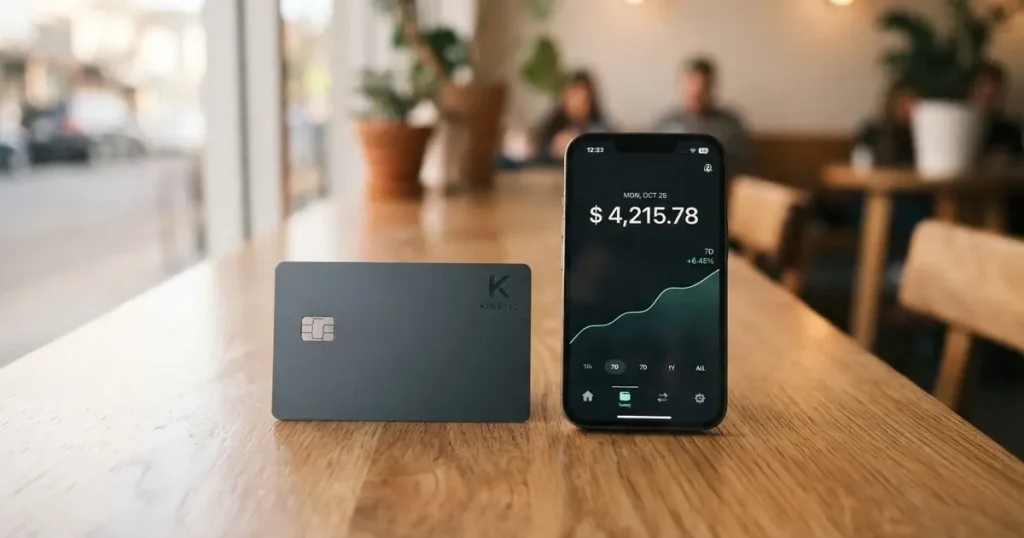
The WantToPay card is a virtual payment card that lives inside Telegram rather than in an app store. You identify yourself once with an ID document and a selfie, you load money — rubles by phone number or crypto from a handful of networks — and you get card details you can drop into a checkout box for foreign services that will not take your usual payment method. It is built for exactly one job: spending a balance you control, on a card that has no plastic, no ATM and no monthly app to update.
I gave it 4.5 out of 10. That is not a mark of a broken product. It is a mark of a narrow, inexpensive-to-enter product whose costs, limits and country rules are hard to see, whose support is reachable mainly through a Telegram bot, and whose most common user complaint is a card that quietly stops working. If you read nothing else, read the cost section. The headline numbers are lower than they look.
The conditions described here are current as of October 28, 2026.
Verdict: 4.5 out of 10, and for a specific kind of user
WantToPay is a reasonable answer for one situation: you are inside the Telegram ecosystem, you hold some crypto or rubles, you want to pay a recurring foreign service with a card number rather than argue with that service, and you do not care about a physical card because you never leave home with it. Its audience, in effect, is Telegram users paying foreign services by virtual card. For that person it removes a real obstacle at a moment’s notice, and the card can be up and spending within minutes of finishing identity checks.
It is a poor answer for anyone who wants an ordinary bank card with ordinary protections. There is no App Store or Google Play app to rate or review; the product is a Telegram Mini App and a website. There is no physical card and no ATM, so it is not a replacement for everyday banking. The issuing institution is not named on the public pages. The country and residency rules are not listed. Several of the facts a careful buyer would want — monthly fee details on some tiers, exchange-rate behaviour when you pay in a non-dollar currency, chargeback handling, in-app card freeze, two-factor authentication, spending limits, insurance — are simply not stated. When a page is silent, I say so rather than guess.
| Criterion | Mark | Why |
|---|---|---|
| Who can get it | 6 / 10 | Countries and residency are not listed on the site; there is a new-user promotion for people 18 and over; the number of supported countries is not disclosed. |
| Cost | 2 / 10 | Easy 990 RUB, Smart 1,590 RUB, Pro 3,490 RUB; maintenance $6 a month on Easy, Smart and Pro; crypto top-up is 9% on Easy and 7% on Smart. |
| Top-up options | 6 / 10 | Rubles by phone number or bank card; crypto in BTC, ETH, BNB, USDT, USDC, TON; networks are not named. |
| Reliability and complaints | 4 / 10 | WTP Technology Limited (Hong Kong), issuer not named; the Trustpilot score is hidden for a breach of guidelines, with 274 reviews; complaints about cards that stop working and funds that become unreachable. |
| Everyday use | 5 / 10 | Virtual card only; Apple Pay, Google Pay and Samsung Pay only on Smart and Pro; no physical card and no ATM. |
| Total | 4.5 / 10 | A narrow tool that works well for a Telegram user paying a foreign bill, weak on transparency, cost and support. |
The pattern in that table is the whole review in miniature. Access is a six because it is easy but unexplained. Cost is a two, and that is where most of the pain sits. Top-up is a six: plenty of ways in, but networks unnamed. Reliability is a four, and it is the score I weigh most heavily, because a card that fails is worse than a card that costs. Everyday use is a five: fine for online payments, empty for anything physical.
Who it does not suit: if you need cash, a physical card, a clear fee schedule in your own currency, a named European or American issuer, or a support line that is not a bot, look elsewhere. The comparison further down names alternatives that publish more of their terms.
Will they give you the card?
Here is the blunt answer: almost certainly yes if you are 18 or over and your identity document passes inspection, but the site does not tell you in advance whether your country is allowed. Countries and residency requirements are not stated on the home page, and the terms index gave no list either. There is a new-user promotion for people aged 18 and up, which is the only age statement you get. I am marking this a six rather than a lower number because the barrier to entry is genuinely low, but “low barrier” is not the same as “clear rules,” and you should know the difference before you upload a passport.
So the practical question is not “will they accept me” but “will they accept me, and what happens to my money if they later decide not to.” Because there is no published country list, the honest test is to read the terms yourself and see whether your country of residence is among the barred ones, and then try a small top-up before you commit real money. I will not tell you how to get around any country restriction — if your country is barred, the answer is no, and it should be. I am telling you that the card does not publish the list, so the ambiguity is the product’s, not yours to resolve.
One thing that is clearly stated, and is unusual enough to note: verification is done by Sumsub, the provider says it does not store document copies, and proof of address is not mentioned. More on the identity process in the signup section; the country point is the one to weigh here.
How to get it
Getting a WantToPay card is a Telegram process end to end. There is no App Store or Google Play app; the product is a Telegram Mini App and a website. If you do not already use Telegram, that is a real barrier, not a technicality — the card is issued inside the Telegram Mini App, and support runs through a Telegram bot.
The identity check is the main step. It is run by Sumsub, described as “verification with one document,” and the provider says it does not store copies of your documents. The single level of verification asks for an email address, a phone confirmation, a photo of your identity document — a passport, a foreign passport or a driver’s licence, both sides if it is an ID card or a licence — and a selfie that may ask you to blink or turn your head. The official steps list no proof of address, only the ID document and the selfie. Processing is described as usually taking a few minutes. Specific rejection codes are not listed; the stated failure mode is usually poor photo quality, and the advice is to contact support after several failed attempts.
The card that comes out is virtual only. There is no physical card and nothing is delivered. The network is not specified, the primary currency is USD, and online payments run through 3-D Secure. New users who verify within seven days of registration get a 30% promotion on the Easy tier. Some of these terms come from an unofficial third-party write-up and should be treated as such: that source reports that Smart cards are issued in the USA per the tariff terms, that some Prepaid and Easy cards carry Singapore BINs, and that the card network is not named. Unofficial means the card’s own public pages do not confirm it — I am passing it on because it helps you picture the card, not because it is verified.
Two practical notes on getting set up. First, the network of the card is not named on official pages, so before you rely on the card at a checkout, confirm at the shop what networks it accepts. Second, keep your Telegram account secure and its support bot handy; when something goes wrong on a card like this, the support channel is the product.
Fees and what a payment actually costs
This is the section that decides the score. WantToPay has four tiers and each one takes a cut somewhere other than the obvious one. The issue price looks small; the recurring fee and the per-payment fee are where the money goes.

Here is the table, drawn from the card’s published comparison and tariff terms:
| Fee or limit | What it is |
|---|---|
| Issue price, Prepaid | Fixed denominations of $10–$200; issuing the card costs the card’s face value |
| Issue price, Easy | 990 RUB / $10 |
| Issue price, Smart | 1,590 RUB |
| Issue price, Pro | 3,490 RUB / $35 |
| Validity | Prepaid and Easy 24 months; Smart 36–60 months |
| Monthly service fee | $0 for Prepaid; $6 a month for Easy, Smart and Pro |
| Successful transaction fee | Prepaid and Easy $0.25–$0.50; Smart $0.50–$1.00 plus 0.2% for contactless; Pro $0.50 plus 1% of the payment amount |
| Failed transaction fee | Prepaid and Easy $0.25–$0.50; Smart $0.40–$1.00; Pro $1 |
| Crypto top-up fee | 9% on Easy, 7% on Smart; Prepaid is fixed-denomination only |
| Ruble top-up | Converted at the app rate; the conversion commission is not shown in the comparison table, and paying in other currencies is not stated |
| ATM / cash withdrawal | Not applicable; there is no ATM and funds cannot be withdrawn from the card |
| Daily purchase limit | Prepaid up to $20,000/day; Easy up to $50,000/day |
| Single transaction limit | Prepaid $10,000; Easy $20,000; Smart $25,000; Pro not stated |
| Monthly limit | Pro up to $50,000/month; other tiers not stated |
Three everyday payments, so the fees stop being abstract. First: a $30 monthly subscription on an Easy card. The successful transaction fee is $0.25–$0.50, plus whatever the dollar-to-your-currency conversion does, plus the $6 monthly service fee if that month has not been paid, plus — if you topped the card up in crypto that month — 9% of what you loaded. The 9% and the $6 are the numbers that hurt; the transaction fee is the smallest line. Second: two small contactless payments in a row on a Smart card. Each one costs $0.50–$1.00 plus 0.2% for contactless, and the Smart tier also carries the $6 monthly fee. Contactless on Smart is where the 0.2% quietly adds up over a month of small purchases. Third: a $35 one-off on a Pro card. The successful fee is $0.50 plus 1% of the amount, and a failed attempt on Pro costs $1 — so a card that gets declined at a shop is not free to try again.
Two facts you will not find on the official pages, from an unofficial third-party write-up, offered as unofficial: it describes a “Plus” subscription of 690 RUB or 6 USDT per 30 days (1,860 / 3,310 / 4,100 RUB for 3 / 6 / 12 months), required for Easy and Smart, with one subscription covering all cards; that is very likely the same thing as the $6 monthly fee. And ATM and cash are not mentioned, with funds that cannot be withdrawn from the card — consistent with the official position that these cards are not meant for withdrawing funds from services. Also note the card’s own currency line: the base currency is USD, ruble top-ups are converted at the app rate, and the separate currency-conversion commission is not shown in the comparison table. On a card where a single payment fee already ranges by tier, an unshown conversion charge is the line item I would want explained before I load anything large.
I will say this once, plainly, and then leave it: several fees and limits on this card are simply not stated on its public pages. That is the cost score of 2 out of 10. Not because the card is a rip-off, but because you are asked to pay on trust.
Top up options and how the money gets in
You have two doors, and which one you use changes the fee a lot. Rubles or crypto. The minimum deposit is $10 on every tier.
Rubles: on Easy and Smart you can top up by instant transfer to a phone number or by bank card. The ruble amount is converted at the app’s own rate; the card does not state the conversion commission for this. Bank cards cannot be used to receive payments into the card.
Crypto: BTC, ETH, BNB, USDT, USDC and TON are accepted. The home page lists BTC, USDT, USDC and TON. Here is the catch that catches people out — networks are not named. And a new crypto payment detail must be used for every top-up, through Cryptomus; a transfer sent to details you have already used cannot be returned. Crediting is usually immediate and in any case up to 180 minutes. Who pays the network fee is not stated, and blockchain network fees for a deposit are charged by the blockchain, not by the card provider. The top-up fee is 9% on Easy and 7% on Smart; Prepaid takes fixed denominations only.
Given the unnamed networks and the fresh-address-every-time rule, the crypto route rewards care more than the ruble route does. Send to the wrong network or to an address meant for another one and a blockchain transfer is generally irreversible; a deposit on a network the provider does not support can be lost or need manual support recovery with no guarantee. That is not a scare tactic — it is simply how blockchain transfers work, and it is why a single undisplayed network name matters.
There is also a withdrawal side, and it is deliberately thin. These cards are not meant for withdrawing funds from services, and no withdrawal to a bank or to crypto is described. When a card expires it is deleted along with any remaining balance, so do not park money on a card you are not using. A small mercy is the “internal balance”: if the card provider has a technical failure or support asks for it, funds can land there, and from there you can move money back to a Prepaid, Easy, Smart or Pro card at any time, free, with a $2 minimum and up to $500 a day. You cannot add money to the internal balance from a card, though.
The one number I would weigh against the top-up fee every time: 9% on Easy, 7% on Smart. On a $500 load that is real money before you have bought anything.
Paying with it every day
Day to day, this is a card for online checkouts and mobile wallets. The card is virtual, its base currency is USD, and online payments use 3-D Secure. Apple Pay, Google Pay and Samsung Pay are supported on Smart and Pro only — on Easy, the plain card number and a manual checkout entry are your route. Rewards are not stated; there is no cashback described anywhere on the pages.
Rewards not being stated is worth a sentence, because it distinguishes this card from the category. Some crypto cards return a percentage of spending; WantToPay’s published material describes none. So the return on a payment here is zero cashback, and the effective cost of a purchase is the transaction fee plus conversion plus your share of the $6 monthly fee and the top-up percentage.
Where the card works and where it is refused are both worth planning for. Blocked merchant categories are not stated officially. From an unofficial third-party write-up, offered as unofficial: a refusal code #D005 applies to prohibited categories — crypto exchanges, casinos, adult content, mining, e-wallets, government bodies; gambling and donations are prohibited; the tariff terms bar sellers from listed countries including Russia, Belarus, China and Turkey “among others”; and Brawl Stars, Genshin Impact, the Epic Games Store and the PlayStation Store are not payable on any tier, with Apple Pay only on Smart. Two of those matter especially for the Telegram user this card is built for: crypto exchanges are in the prohibited set, and a specific list of game stores is blocked on every tier. If you pay for gaming or try to move funds through a crypto exchange from this card, the terms say no.
Two everyday realities to keep in mind. A declined online payment can still leave a hold on your funds for several days. And if a merchant declines prepaid or foreign-issued cards, that is often the merchant’s policy reacting to what the card’s BIN says about the issuer, not a fault in your card — which is the same reason the network and issuing country not being named on official pages is worth caring about at the moment of payment, not just at sign-up.
What can go wrong
Let me put the worst case first, because it is the one that decides who should use this card. The single most common user complaint is a card that ceases to work, or funds that become inaccessible, with a few users reporting that support went silent. Official incidents are not stated on the company’s pages. User reports also include praise for fast virtual card issuing and responsive support — the picture is genuinely mixed, not uniformly bad — but the failure mode people describe, a card or balance that stops responding, is the kind of problem that strands real money.
The company behind it is WTP Technology Limited, registered in Hong Kong, incorporation number 76394774. The issuing institution is not named on the public pages; an unofficial third-party source reports that the BIN sponsor is not named and that the BIN regions are the USA and Singapore. So the entity whose licence underwrites your card is, on the official record, not something you can read.
Then Trustpilot, read on 20 October 2026. The TrustScore is not displayed — it is “unavailable due to a breach of our guidelines,” with fake reviews removed — and there are 274 reviews, 152 of them in the last twelve months. The star breakdown is 85% five-star and 13% one-star, while the homepage itself claims 4.6. Individual user-reported themes include declined payments and top-ups that take anywhere from ten minutes to nearly an hour (September 2026), a refusal to refund a 693 RUB issue fee (September 2026), and a refund that took “several months” before the money came back (May 2026). One caution about reading these reviews: many positive ones are short, and some come from single-review accounts, so the average is softer evidence than the count suggests.
Support, when it works, is reachable: a live Telegram bot, @WantToPaySupportBot, from 07:00 to 00:00 (GMT+3), an email at [email protected], VIP support on the Pro tier, and an AI assistant in the knowledge base. That is a reasonable set of channels, and the seven-hour-a-day window is a constraint if you are outside that timezone.
On security, some things are stated and some are not. Stated: 3-D Secure for online payments, and that the provider does not store document copies, with KYC handled by Sumsub. Not stated: the custody model, an in-app card freeze, two-factor authentication, spending controls, and any insurance. I am not going to tell you the card is safe or that your money is protected — those are exactly the words I would want to see in writing before I funded it. What I will say is that 3-D Secure and a provider that does not keep your passport scans are genuine positives, and that the missing half — no freeze, no 2FA, no insurance described — is what you are accepting.
One structural risk worth naming from the category rather than from this card’s own pages: programmes like this can close. FTX’s US debit card was wound down after Visa terminated its global agreements in November 2022; a supplier of crypto card programmes, WaveCrest, was suspended by Visa in Europe in 2018, closing every programme it had issued; and a 2026 closure reported by a single secondary source saw new loads end on 8 July 2026 and spending stop on 8 August 2026 — that last one is one source and unconfirmed, but the pattern it illustrates is real. When a programme winds down, the usual sequence is a notice period, then spending and loading stop, then you are asked to withdraw what is left. A prepaid balance on a card whose provider is not publicly named is exposed to exactly that sequence. I am not predicting it for WantToPay; I am telling you it is the shape of the risk, so that an expiry on this card — remember, an expired card is deleted along with its balance — is something you plan for rather than discover.
What to take instead
If any of the above gives you pause, the honest move is to look at a card that publishes more of its terms. Three alternatives came up in my research, and I score them for comparison.
CardFlow (4.9 / 10) is aimed at Nigeria — it describes itself as “Nigeria’s smartest fintech card platform” for “Nigerians and global users” — and states no country list or exclusions. It issues a virtual USD Mastercard; its site FAQ says creating a virtual card is completely free. Monthly fee and transaction fees are not stated. You fund it with Bitcoin, USDT, ETH or a Naira bank transfer, networks not stated. If you are in Nigeria or pay in naira, it is the more clearly positioned of the three.
HyperCard (4.7 / 10) offers a prepaid “HyperCard” with a balance in USD or EUR, funded by depositing crypto such as USDT, BTC or ETH in the app and converting to USD or EUR. Its official pages state no country list; the App Store page says the card works in “more than 176 countries,” which is about acceptance, not about whether you are eligible — a distinction worth holding on to. Cost and fees are not stated on the pages I could read, and the card network is not named on the App Store page.
Card.fi (6.6 / 10) is the most transparent of the three, and the most expensive to enter. Its banner says cards ship to “200+ countries,” and its terms bar residents of, or orders from, “a country subject to sanctions that would prohibit the service” — so the country rule is stated as a rule rather than left open. It has virtual Classic and Virtual Premium, physical Classic and Premium, and a metal stainless-steel option; every physical order includes a virtual card, and cards are issued under licence from the relevant card schemes, though Visa and Mastercard are not named. One-time prices: Virtual Classic $49, Virtual Premium $249; physical and metal prices are not listed. No monthly, annual, inactivity or minimum-balance fee. Top-up fee 1.5% + $1.00 on Classic and 1% on Premium; FX fee 3.5% on Classic and 2.5% on Premium, with the conversion fee shown before each top-up. It funds from 32 coins across five networks — Ethereum, Base, BNB Chain, Solana, Kaanch — with a deposit address per card and conversion at market rate on arrival, though sending on the wrong chain risks permanent loss. It is also the only one of the three with cashback on card spending: Classic 0.8% capped at 10 USDT a month, Premium 1%, Metal 1.2% capped at 100 USDT a month (5,000 USDT) or 2% capped at 250 USDT a month (20,000 USDT), with a headline 10% at coffee shops capped at 10 USDT a month.
| Alternative | Score | Entry cost | Stated fees | Who it names |
|---|---|---|---|---|
| WantToPay | 4.5 / 10 | Easy 990 RUB; $6/month on Easy, Smart, Pro | 9% crypto top-up on Easy, 7% on Smart; transaction fees $0.25–$0.50 up to $0.50 + 1% by tier | No country list; WTP Technology Limited (Hong Kong), issuer not named |
| CardFlow | 4.9 / 10 | Virtual card free to create | Not stated | Nigeria and “global users”; no country list |
| HyperCard | 4.7 / 10 | Not stated | Not stated | No country list on official pages; App Store claims acceptance in 176+ countries |
| Card.fi | 6.6 / 10 | Virtual Classic $49, Virtual Premium $249 | Top-up 1.5% + $1.00 / 1%; FX 3.5% / 2.5%; cashback on spend | “200+ countries”; sanctions-country exclusion stated |
The comparison is not one-sided. Card.fi publishes its fees and its country rule, and it has cashback, but it costs far more to enter and names no card network either. CardFlow and HyperCard are as opaque on fees as WantToPay is, and each is aimed at a narrower or different market. WantToPay’s actual advantage is speed and reach inside Telegram, and its actual cost is that you are asked to accept a $6 monthly fee, a 9% top-up on the entry tier, and an unnamed issuer in exchange. If transparency is what you are buying, Card.fi is the one buying it; if you are already in Telegram and need a card number in five minutes, WantToPay may still be the shortest path.
Who I would recommend it to
I would recommend WantToPay to one person: someone already living in Telegram, holding crypto or rubles, who needs to pay a recurring foreign online service this month and does not care about a physical card, a cash withdrawal, or reading a full fee schedule in their own currency — and who is content to try it with the minimum deposit first. If that is you, the card does its job quickly, and the 30% promotion on Easy for people who verify within seven days of registering is a reason to start with the entry tier rather than a reason to trust it with more.
I would steer everyone else toward Card.fi if they want stated fees and a stated country rule, or away from crypto cards entirely if what they actually need is a normal bank card and the problem is that they cannot open one — because this card will not solve that, and pretending otherwise would help nobody.
What I would not do is load this card heavily on day one. Read the terms yourself, start at $10, keep the balance small, and remember the two numbers that will cost you the most if you ignore them: the 9% crypto top-up fee on Easy and the $6 a month on every tier above Prepaid.
Frequently asked questions
What is the WantToPay card?
The WantToPay card is a virtual payment card issued by WTP Technology Limited, a Hong Kong company, and accessed through a Telegram Mini App rather than a normal mobile app. It works like a prepaid card: you load a balance, in rubles or in crypto, and the card spends only that balance. Its base currency is the US dollar and online payments run through 3-D Secure. There is no physical card, no delivery and no ATM. It is built for paying foreign online services from inside Telegram.
How does the WantToPay card work?
You register in the Telegram Mini App, verify your identity once through Sumsub with an email, a phone confirmation, a document photo and a selfie, and the virtual card is issued — usually within a few minutes. You then top it up, by instant ruble transfer to a phone number or bank card, or in BTC, ETH, BNB, USDT, USDC or TON. Each payment draws down the stored balance and carries a per-transaction fee that depends on your tier. The card is USD-based, and ruble top-ups are converted at the app’s rate.
Who owns WantToPay, and is it a bank?
WantToPay is operated by WTP Technology Limited, registered in Hong Kong with incorporation number 76394774. It is not a bank, and the card’s public pages do not name the institution that actually issues the card. That issuing bank or e-money institution is normally the licensed party behind a card programme, and here it is not disclosed — which is one of the main reasons I rate reliability at 4 out of 10. The company claims to have operated since 2022.
Is the WantToPay card available in my country?
The card’s public pages do not list which countries are supported, and the terms index gave no country list either, so I cannot tell you yes or no for your country. There is a new-user promotion for people aged 18 and over, which is the only age rule stated. Unofficial reports suggest the tariff terms bar sellers from a list of countries including Russia, Belarus, China and Turkey among others. Read the terms yourself for your own country before you verify.
Does the WantToPay card require KYC?
Yes, a single level of identity verification through Sumsub: an email address, a phone confirmation, a photo of a passport, foreign passport or driver’s licence (both sides for an ID card or licence), and a selfie that may ask you to blink or turn your head. The provider says it does not store document copies, and no proof of address is listed among the official steps. Processing is usually a few minutes; failures are most often caused by poor photo quality.
How much does the WantToPay card really cost?
It depends on the tier. Easy costs 990 RUB to issue, Smart 1,590 RUB and Pro 3,490 RUB, and Easy, Smart and Pro each carry a $6 monthly service fee while Prepaid carries none. Crypto top-up is 9% on Easy and 7% on Smart. Successful transaction fees run $0.25–$0.50 on Prepaid and Easy, $0.50–$1.00 plus 0.2% for contactless on Smart, and $0.50 plus 1% of the amount on Pro. Several other charges are not stated.
How do I top up the WantToPay card?
The minimum deposit is $10 on every tier. You can send rubles by instant transfer to a phone number or by bank card, converted at the app’s rate, though bank cards cannot be used to receive money into the card. Or you can send crypto: BTC, ETH, BNB, USDT, USDC or TON, with a top-up fee of 9% on Easy and 7% on Smart. Networks are not named on official pages, and a fresh payment address is required for every top-up.
Can I withdraw money from the WantToPay card?
No, not in the normal sense. These cards are not meant for withdrawing funds from services, there is no ATM and no cash withdrawal is described, and no withdrawal to a bank or to crypto is offered. Note also that when a card expires it is deleted along with any remaining balance, so do not leave money sitting on an unused card. An internal balance can move money back to a card free, in amounts from $2 up to $500 a day.
Is the WantToPay card safe?
Some of it is documented and some is not. Stated: 3-D Secure on online payments, and that identity documents are handled by Sumsub without copies being stored. Not stated: the custody model, an in-app card freeze, two-factor authentication, spending controls, or insurance. The company is WTP Technology Limited in Hong Kong and the issuing institution is not named. Complaints include cards that stopped working and funds that became unreachable. I would fund it small and treat it accordingly.
Is the WantToPay card worth it?
For one narrow case, yes: you are already in Telegram, you need a card number to pay a foreign online service quickly, and you will only hold a small balance. Above that, the 9% crypto top-up on Easy, the $6 monthly fee on every tier above Prepaid, the unnamed issuer and the unnamed card network make it a thin deal. Card.fi publishes more of its terms, at a higher entry cost, and is the more transparent option to compare against.
Virtual cards: your questions answered – cryptocardanswers
Content created by the «cryptocardanswers» team