
Zerocard card review: spending USDC from a non-custodial Base wallet
 Available in US

Zerocard is a debit card that spends directly from a crypto balance, and the angle its team leans on is straightforward: a self-custody wallet, USDC funding, a virtual or physical card, conversion at the till. I spent time going through the project’s own terms and the small number of independent write-ups that exist, and the picture I came away with is mixed. The headline idea is appealing if you already hold USDC and want to spend it without first cashing out to a bank, but the published details are thin in several places that matter, and a few of the most important facts have to be marked as unconfirmed because they come from a single third-party report rather than the company itself.
I gave the card 6.3 out of 10. The breakdown, the reasoning behind each mark, and the practical details you would want before signing up are below. If you only have a couple of minutes, the verdict section tells you who the card is for and who it isn’t; the alternatives section is the place to go if you want a card that has a published list of supported countries, named issuer, or a fee table you can actually read.
Conditions are current as of October 28, 2026.
Verdict
The score I landed on is 6.3 out of 10. That is not a flattering number and it is not a damning one either. It reflects a product that has a clear, narrow pitch — spend USDC from your own Base wallet, in many countries, without the usual bank middleman — and delivers the basics, but does not yet publish the paperwork a careful reader would want to see before loading real money.
Here is how the marks break down, and why.
| Criterion | Mark | Why |
|---|---|---|
| Who can get it | 7 / 10 | The site says the card “works in 150+ countries”, and the restricted-jurisdictions list is published; an eligible-country list and the citizenship-versus-residence rule are not stated. |
| Cost | 7 / 10 | Core services are advertised as a “zero-fee experience”; optional services such as card issuance, express processing, currency conversion and cross-border transactions may carry fees, with no amounts published. |
| Top-up options | 6 / 10 | Funding is in USDC or USDT on Base or Ethereum according to the company’s pages; an unofficial report says the app accepts only USDC on Base, with a non-custodial wallet on Base per user. |
| Reliability and complaints | 5 / 10 | The provider is Notzero Technologies Limited; the issuer is not named; the product launched in beta in Nigeria; the policy allows accounts to be suspended without notice; no public complaint channels were found. |
| Everyday use | 6 / 10 | A virtual or physical debit card is available after KYC; unofficial reporting notes an ATM fee separate from a small per-transaction charge; wallet support and card network are not stated. |
If you are weighing this card, the short version is that Zerocard is reasonable for someone who already holds USDC in a Base wallet and wants a card to spend it from, particularly if you live somewhere an ordinary bank card is hard to get. It is less reasonable if you need predictable published fees, a clearly named card issuer, a complaint history you can read, or country and residency rules spelled out on the company site.
Who they will give the card to
Zerocard says its card “works in 150+ countries”. The Terms list the jurisdictions it will not serve, which is useful in the opposite direction: you can see at a glance whether your country is excluded. The restricted list, as published, is Belarus, Burundi, the Central African Republic, Cuba, Iran, Libya, Myanmar (Burma), North Korea, Russia, Somalia, South Sudan, Sudan, the Syrian Arab Republic, Ukraine, Venezuela and Zimbabwe, with the caveat that the third-party verification provider the company uses can add more.
What the company does not publish is the list of countries it does serve. The phrase “150+ countries” is a marketing number, not a supported-country list, and there is no way from the public pages to confirm whether a specific country is in or out short of starting the sign-up. Citizenship versus residence is not stated either: the rules talk about where the service is not available but do not say whether your passport or your address is what matters. If your situation depends on that distinction — for example, you live in country A but hold a passport from country B — you would have to ask the company directly.
Age and identity rules are the conventional ones. You must be 18 or older; you need a valid International Passport, Driver’s Licence or National Identity Card; and you need a residential address plus a proof of address such as a utility bill no older than three months. The card is a virtual or physical debit card, requested after KYC, and the network and card currency are not stated.
The policy talks in terms of risk categories — High, Medium, Low — rather than tiers, and processing time is not stated. Two consequences are spelled out: failing to provide the information the company asks for will block transactions for new users, and sanctions hits cannot open accounts at all. If you are in any doubt about your status, the practical move is to register first and see what KYC actually asks you for; the public pages do not give a faster answer.
How to get it
The path is the standard three steps for a regulated crypto card: register, pass KYC, request a card. KYC must be completed before you can withdraw funds or request the card, and the documents the company accepts are a valid International Passport, Driver’s Licence or National Identity Card, plus a residential address and a proof of address such as a utility bill not older than three months.
After KYC you can ask for a virtual Zerocard or a physical one. The network the card runs on — Visa, Mastercard, or anything else — is not stated on the public pages, and the card currency is not named either. Delivery time for the physical card is not stated.
Because the policy allows the company to suspend or restrict accounts at its sole discretion and without prior notice, the practical advice is the same as with any new-to-you financial product: do not load more than you can afford to have stuck pending a review, and keep your own records of every deposit. New users in particular should expect that a missed document can block transactions outright until it is supplied.
What it really costs (Fees)
This is the section where I would most like to see more from the company. The Terms describe a “zero-fee experience” for core services and list optional services as possible fee points: card issuance, express processing, currency conversions and cross-border transactions. None of those amounts is published. ATM fees, daily limits, monthly limits, and any tier structure are not stated either. If you need to know what a specific payment will cost you before you make it, this is the gap to flag.

Unofficial reporting from TechCabal in July 2025 mentions that ATM fees exist and that they are described separately from a small per-transaction charge in Nigerian naira, but the actual amounts were not visible in the summary available, so I am treating that as unconfirmed. The same outlet reports that the app accepts only USDC on Base, that each user gets a non-custodial wallet on Base, and that the wallet is non-custodial — again, useful but unconfirmed by the company itself.
The cost section of any crypto card review lives or dies on a few everyday payments, so here is what I can and cannot say for sure about these common cases.
| Everyday payment | What the public terms say | What is not stated |
|---|---|---|
| Buying a coffee in your home currency with USDC already on Base | Crypto is auto-converted to local fiat at the point of sale; “zero-fee experience” for core services | The conversion rate, any markup versus the mid-market rate, and any minimum transaction size |
| Paying a foreign invoice online (for example a USD subscription from a euro account) | Currency conversion and cross-border transactions are listed as possible optional fees | The percentage or the tiered bands; whether non-USD spending is treated as a cross-border transaction |
| Withdrawing local cash from an ATM | Not stated; unofficial reporting says there is an ATM fee separate from a small per-transaction charge | The ATM fee, any per-transaction naira charge for non-Nigerian users, and daily or monthly ATM limits |
The honest summary is this: the company has signalled that some optional services cost money, but it has not published the numbers. Until it does, anyone planning to use Zerocard as a primary card should expect to discover the fees in practice, and should not assume the “zero-fee” framing covers every payment.
How to top it up (Top up)
The official line is that you fund the card with USDC or USDT on Base or Ethereum, and that the crypto is automatically converted to local fiat at the point of sale. Crypto arrives in your card balance as fiat at the moment you tap or insert; there is no manual conversion step.
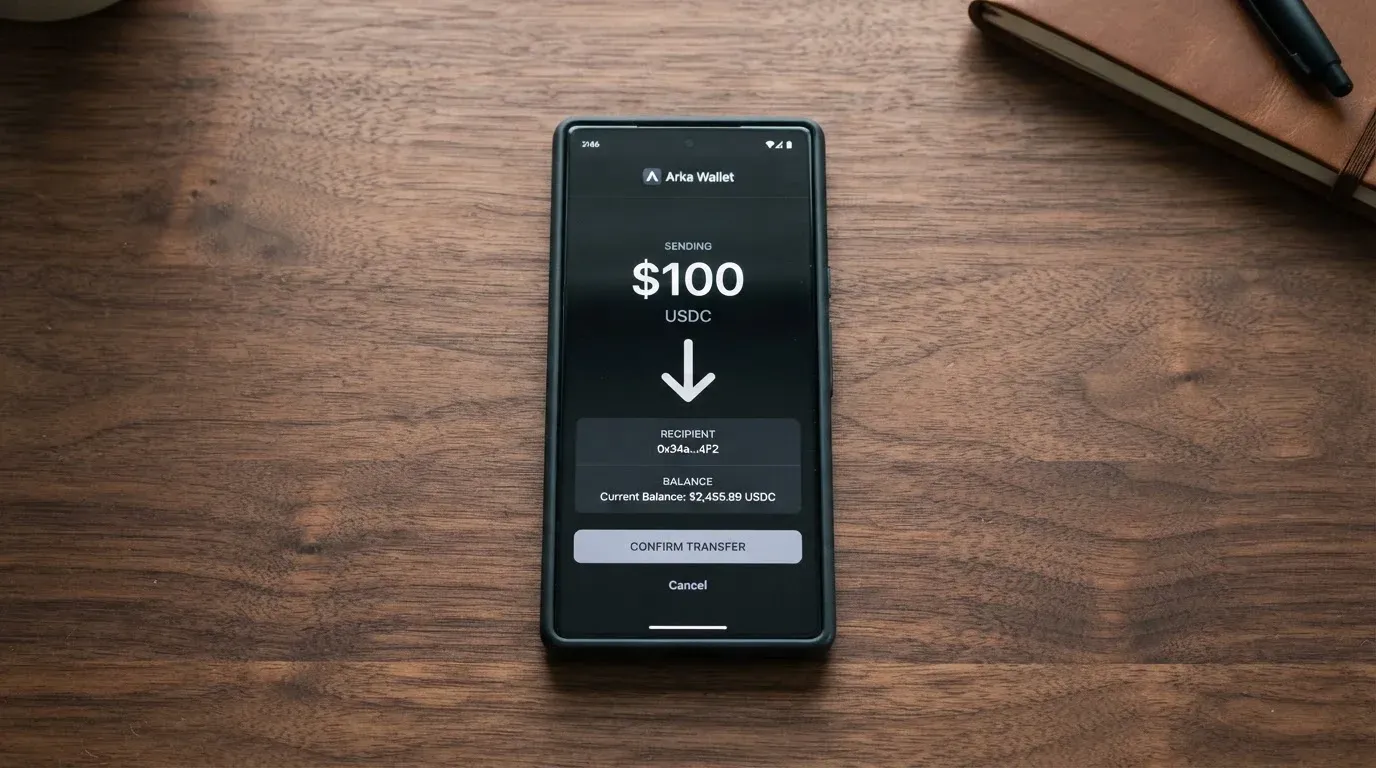
The unofficial line, again from the July 2025 TechCabal beta review, is more specific: the app accepts only USDC on Base, not USDT, and each user gets a non-custodial wallet on Base. That distinction matters if you are coming from a USDT-heavy setup. It also matters for custody: a non-custodial Base wallet means the private key sits with you rather than with the card provider, so the funds in the wallet are yours even if the card programme has problems. The risk shifts to you in the usual self-custody ways: lost seed phrase, phishing, clipboard malware that swaps addresses at copy-paste time.
The networks to know are Base and Ethereum. Two practical points that apply to any card that funds from USDC:
- The standard for USDC on these networks is ERC-20, and on-chain gas is paid in the network’s native asset, not in USDC. If you send USDC from a wallet that holds no ETH for gas, the transfer will not go through.
- Transfers on public blockchains are irreversible. If you send USDC on a network the card does not support, or to an address belonging to a different network, the funds can be lost or stranded pending manual support recovery, and the company has not published a guarantee of recovery.
Withdrawal is the other half of the funding story, and on this the public text is brief: KYC must be completed before any withdrawal. Withdrawal fees, processing times, and how any remaining balance is handled if you close the account are not addressed.
Paying with it every day
Once you are past KYC and hold a virtual or physical Zerocard, the experience described by the company is a familiar one: tap or insert at the till, the merchant sees a normal card payment, the system converts your USDC to local fiat behind the scenes, and your balance drops. The card currency is not named, so it is not possible to say whether the conversion runs through your local currency directly or via an intermediate.
What the company does publish about everyday use is mostly absence. Wallet support, in the sense of which mobile wallets the card tokenises into, is not stated. Cashback or any reward programme is not mentioned; a founder post claims “zero fees” and “free transactions”, which is a pricing claim, not a rewards programme. App store links and ratings were not found; the site shows a “Download app” button but does not point to a specific store page. The dispute path is to contact Customer Support first with a transaction reference and date, with no published timeline and no formal refund policy.
The unofficial pieces, again from the same July 2025 report, are an ATM fee separate from a small per-transaction naira charge and the non-custodial Base wallet per user. Both are useful details, and both should be treated as unconfirmed by the company itself.
A few practical considerations that come from the wider category rather than this specific card:
- Some merchants treat prepaid-style or foreign-issued BIN ranges with extra caution, and address-verification systems are mainly available in the US, Canada and the UK, so a foreign-issued card can occasionally be declined for that reason alone. That is a category-wide pattern, not a Zerocard-specific complaint.
- Online card payments often go through 3-D Secure, where your bank or card programme may add a one-time code or biometric step. Whether Zerocard applies this is not stated.
- A declined authorisation can leave a hold on funds for several days. Plan around that, especially for small balances.
What can go wrong
The risks here are not dramatic, but they are real and several of them are spelled out in the company’s own documents.
- Account suspension without notice. The policy allows the company to suspend or restrict accounts at its sole discretion and without prior notice. That is a stronger statement than most card programmes make, and it is worth taking seriously.
- New-user transaction blocks. The policy says new users can have transactions blocked outright if they fail to provide information the company asks for, with no published timeline for resolution.
- Sanctions and restricted jurisdictions. Sanctioned persons cannot open accounts. The restricted-jurisdiction list is long, and the third-party verification provider can add to it. The eligible-country list is not published.
- Issuer and registration not named. The provider is Notzero Technologies Limited. The Terms name only “Zerocard”. The legal entity registration, the card issuer (the licensed bank or e-money institution that actually issues the card under the network’s licence), and the card network are not stated. A founder post mentions a “card infra partner” in Nigeria. Until the issuer is named on the public site, the card is harder to compare on regulatory footing with alternatives that name theirs.
- ATM costs unconfirmed. Unofficial reporting describes an ATM fee separate from a small per-transaction charge; the actual numbers and how they apply outside Nigeria are not visible.
- Self-custody risks if the unofficial report is right. If your balance sits in a non-custodial Base wallet, you carry the usual key-management risks: lost seed phrase, phishing, address-swap malware. Help from the card provider in those cases is generally limited because the provider does not hold the keys.
- No public complaint channels found. I did not find a Trustpilot page or a Reddit presence for Zerocard. The search results were about an unrelated US card also called Zero. That does not mean there are no complaints; it means there is nowhere on the public web to read them. The dispute path on the company’s side is to contact Customer Support first, with no timeline or formal policy.
- Beta-stage product. The card launched in beta in Nigeria, with a global plan announced in a founder post dated 17 May 2025. A beta product, by definition, is still being adjusted.
What to take instead
Zerocard’s pitch is a self-custody USDC balance on Base spent through a debit card. If that is what you want, the alternatives worth comparing are the ones that overlap on at least one of those points: self-custody or near-self-custody funding, USDC or stablecoin funding, and a card with a named issuer and a published fee table. The three I have included below are not a ranking; they are the ones that come up most often when readers search for cards in this category.
| Card | Score | Funding model | Card | Cost headline | Best for |
|---|---|---|---|---|---|
| TokenPocket (TP Card) | 5.8 / 10 | Crypto deposits from the TokenPocket wallet on Arbitrum | Mastercard/Visa debit, virtual only, balances in EUR24 and USD24 | Apart from an NFT creation fee partly covered by TP, “TP Card does not charge any additional fees”; 1% fee on crypto deposits, refundable later via rewards | Users already inside the TokenPocket ecosystem on Arbitrum, comfortable with virtual cards and EUR24/USD24 balances |
| MetaMask Card | 7.1 / 10 | Spends directly from the connected wallet on Linea, Base, Monad or Solana; tokens include mUSD, wETH, EURe, GBPe, USDC, USDT | Mastercard, virtual first, Metal as an upgrade; one card per user; issuer Monovate, provider Crypto Life | Virtual free, no annual or maintenance fee; Metal US$199/year; “minimal fee” per transaction, no MetaMask fees, no foreign transaction fee | Users who want a named issuer, a real fee table, and a Mastercard with cashback (Virtual 1% / Metal 3% on the first US$10,000 then 1%, paid in mUSD) |
| KAST | 6.1 / 10 | Stablecoins (USDT, USDC, PYUSD, RLUSD) on Ethereum, Solana, Polygon, Arbitrum, TRON; spending is from your own balance, deducted at purchase | Up to 10 cards per user; Visa Platinum (Standard), Visa Infinite metal (Premium), Visa Infinite gold plated (Private); account balance in USD, stablecoin deposits converted 1:1 with a 0% spread | Standard US$0/year; Premium US$1,000/year; Private US$10,000/year; non-USD FX 0.5%–1.75%; 0% on stablecoin top-up and USD card spend; inactivity fee US$1/month after 12 months | Users who want a real tier structure, published fees, and up to 10 cards per user, at a price |
A few reading notes, since the table compresses a lot. MetaMask Card’s eligibility is the most clearly published: a list of 45 countries and territories where sign-up is open, with a waitlist for other regions and the explicit note that ineligibility limits sign-up rather than spending. The card is Mastercard, the issuer Monovate and the provider Crypto Life are named, and there is a fee table on the site. If your priority is “I can read the fee table and the issuer’s name before I sign up”, MetaMask is the easiest comparison point. KAST’s stablecoin-only model and the published FX bands (0.5%–1.75% depending on residence country, transaction country and card programme) are useful if you spend in non-USD currencies often. TokenPocket’s virtual-only, EUR24/USD24-balance approach is narrower but has a low published cost structure once the deposit fee is accounted for.
If you are choosing purely on the self-custody angle, Zerocard’s unofficial non-custodial Base wallet is a genuine differentiator, but the trade-off is the absence of a published fee table, a named issuer, and a complaint history. If you are choosing on price predictability, KAST and MetaMask Card publish their numbers, and TokenPocket’s are mostly published too. If you are choosing on global reach with a published list, MetaMask Card is the only one of the four that names its supported countries on the public page.
Who I would recommend it to
Zerocard is the right card for a fairly specific reader. If you already hold USDC, if you are comfortable managing a self-custodial Base wallet, if you live somewhere an ordinary bank card is hard to get, and if you are happy to discover the actual fees in practice because the company has not published them, then the pitch — spend USDC from your own wallet, convert at the till, in 150-odd countries — is real. It is also a reasonable fit if you want a card that does not require loading from a bank account, since the funding model is a stablecoin transfer from your own wallet rather than a top-up from a bank.
Zerocard is the wrong card if any of the following are deal-breakers for you. You need a published fee table before you commit money. You need a named card issuer on the public site, not only a card-issuing partner mentioned in a founder post. You need a complaint history you can read — there is no Trustpilot or Reddit page for this product. You need to know exactly which countries are supported, because only the restricted list is published. You plan to rely on cash from ATMs, because the ATM fee is unofficial and the limits are not published. You want cashback or a rewards programme, because none is mentioned. You are uncomfortable with an account-suspension clause that explicitly allows suspension “at its sole discretion and without prior notice”.
In practical terms, the safest first move is to register, complete KYC, load a small USDC amount on Base, make a couple of small payments, and watch what actually gets charged before you scale up. That is good advice for any new-to-you financial product, and it is especially good advice here because so much of the cost story is unpublished.
Frequently asked questions
What is Zerocard?
Zerocard is a debit card that spends from a crypto balance, run by Notzero Technologies Limited. You fund it with USDC or USDT on Base or Ethereum, and the crypto is converted to local fiat at the point of sale. A virtual or physical card is available after KYC.
How does Zerocard work?
You register, pass KYC, request a virtual or physical Zerocard, and fund the balance with USDC or USDT on Base or Ethereum. When you pay, the system converts your crypto to local fiat at the till. The card network, the card currency and the conversion rate are not published.
Is Zerocard a bank?
No. The provider is Notzero Technologies Limited, a technology company, not a bank. The card issuer — the licensed bank or e-money institution that issues the card under the network’s licence — is not named on the public pages.
Who owns Zerocard?
The provider is Notzero Technologies Limited. The Terms name only “Zerocard”. The company’s legal registration, its officers, and the card issuer are not stated on the public site.
How do I get a Zerocard?
Register on the site or in the app, complete KYC by providing the requested identification and residence documents, then request a virtual or physical card.
Does Zerocard require KYC?
Yes. KYC is required before you can withdraw funds or request a card, and you will need to provide the same identification and residence documents as for the registration process.
How do I top up Zerocard?
Send USDC or USDT to your card balance on Base or Ethereum. Unofficial reporting from July 2025 says the app accepts only USDC on Base, with a non-custodial Base wallet per user. Treat the official line — USDC or USDT on Base or Ethereum — as the published one.
How do I withdraw money from Zerocard?
You need to have completed KYC first; the public pages do not address withdrawal fees, processing times or how a remaining balance is handled if you close the account.
Is Zerocard free?
The Terms describe a “zero-fee experience” for core services and list optional services such as card issuance, express processing, currency conversion and cross-border transactions as possible fee points. The actual amounts are not published, so “free” is a marketing framing rather than a published fee table.
Is Zerocard safe?
The policy allows the company to suspend or restrict accounts at its sole discretion and without prior notice, which is a stronger clause than most. No public complaint channels were found. The provider and the card-issuing partner are not both named on the site. Treat it as a beta product and do not load more than you can afford to have stuck pending a review.
Wallet cards: your questions answered – cryptocardanswers
Content created by the «cryptocardanswers» team